
Skeletal System Lecture Day 2 Joints Fractures and



- Slides: 26
Skeletal System Lecture Day 2: Joints, Fractures, and the Healing Process
Joints hold bones together, giving stability, yet at the same time, give our skeleton mobility There are three types of joints: • Fibrous • Cartilaginous • Synovial
Fibrous: bones connected by fibrous tissue (no movement) Bones of skull Examples of Fibrous joints Pelvic bones
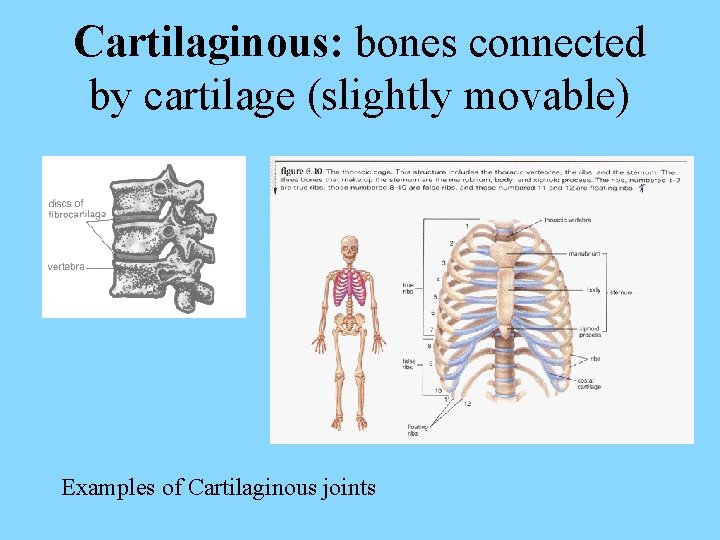
Cartilaginous: bones connected by cartilage (slightly movable) Examples of Cartilaginous joints
Synovial: articulating bone ends are separated by a joint cavity and inside is synovial fluid (allows for more movement) Synovial joints are found in all limbs and allow for various movements. Examples of Synovial joints
There are 6 main types of synovial joints: a) b) c) d) e) f) Plane/gliding joints Hinge joints Pivot/rotating joints Condyloid joints Saddle joints Ball and socket joints
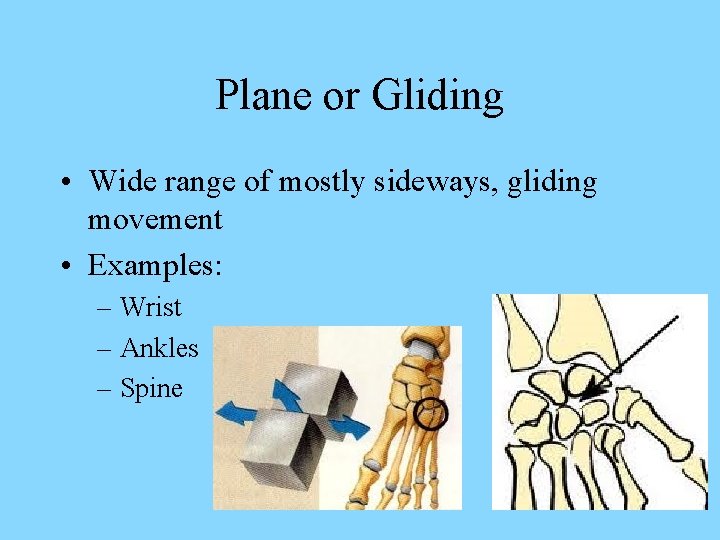
Plane or Gliding • Wide range of mostly sideways, gliding movement • Examples: – Wrist – Ankles – Spine
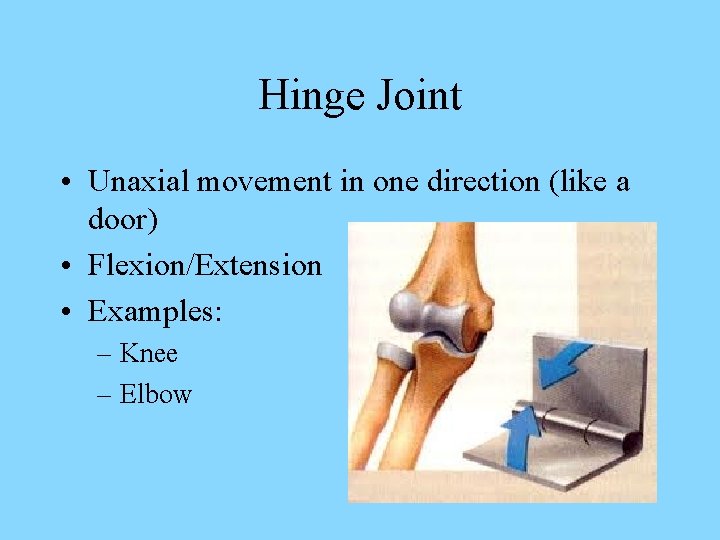
Hinge Joint • Unaxial movement in one direction (like a door) • Flexion/Extension • Examples: – Knee – Elbow
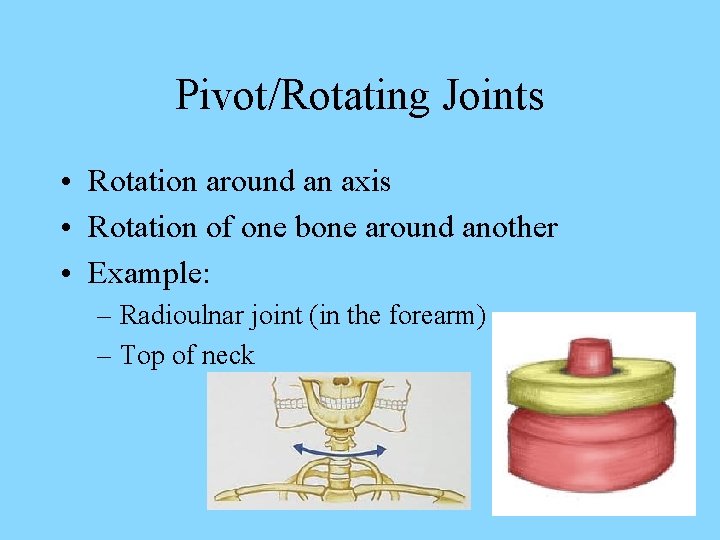
Pivot/Rotating Joints • Rotation around an axis • Rotation of one bone around another • Example: – Radioulnar joint (in the forearm) – Top of neck
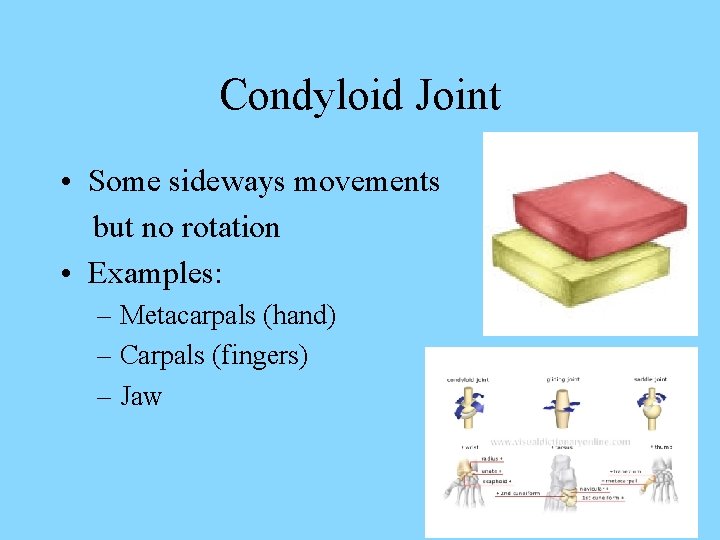
Condyloid Joint • Some sideways movements but no rotation • Examples: – Metacarpals (hand) – Carpals (fingers) – Jaw
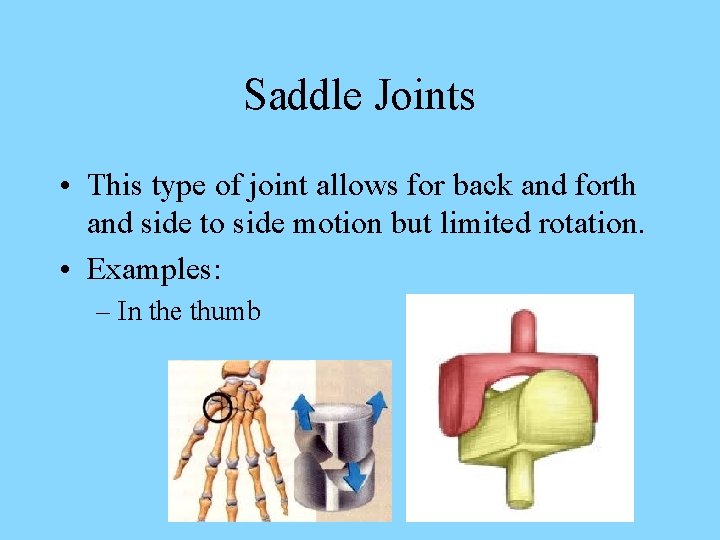
Saddle Joints • This type of joint allows for back and forth and side to side motion but limited rotation. • Examples: – In the thumb
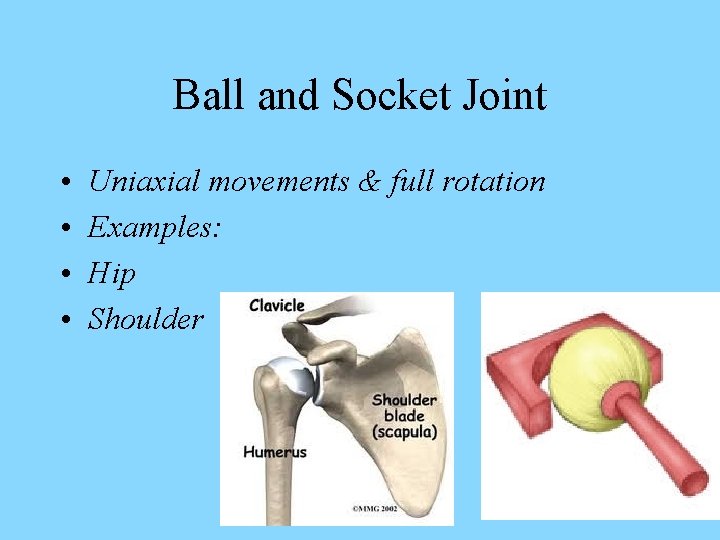
Ball and Socket Joint • • Uniaxial movements & full rotation Examples: Hip Shoulder
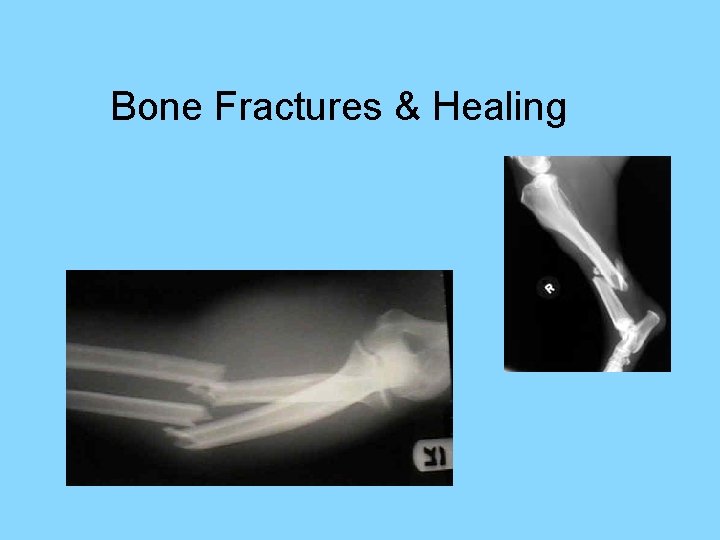
Bone Fractures & Healing
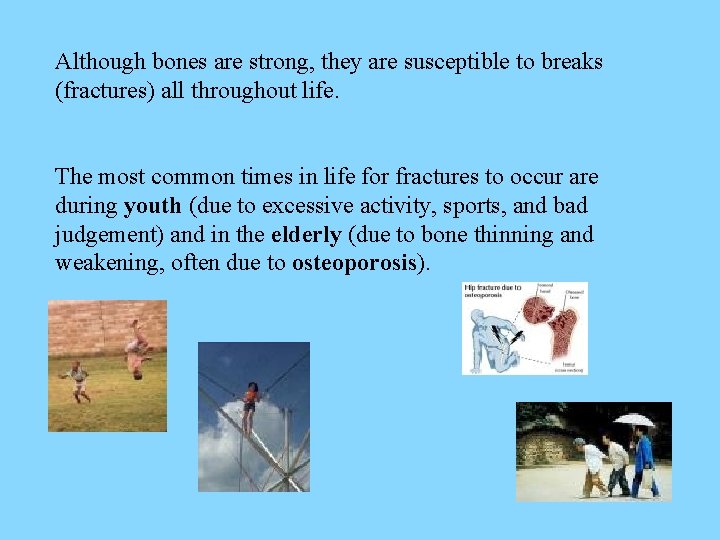
Although bones are strong, they are susceptible to breaks (fractures) all throughout life. The most common times in life for fractures to occur are during youth (due to excessive activity, sports, and bad judgement) and in the elderly (due to bone thinning and weakening, often due to osteoporosis).
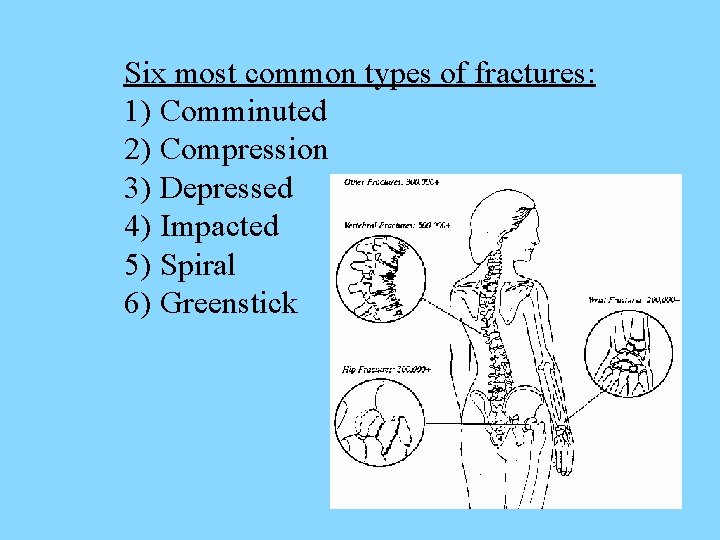
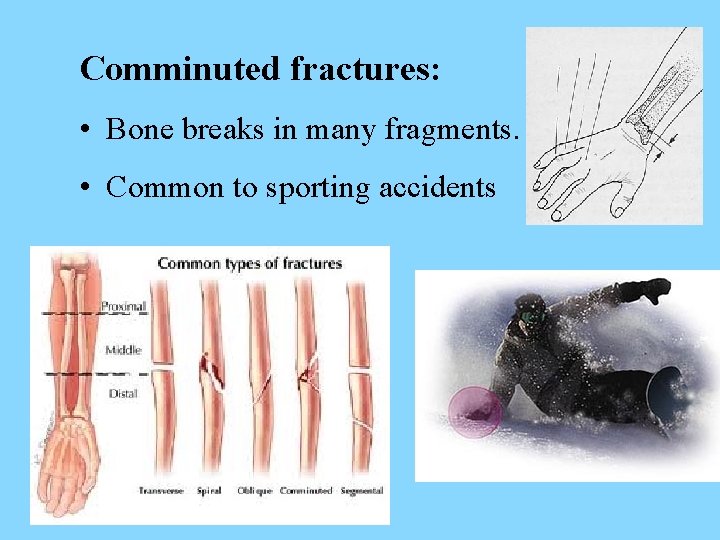
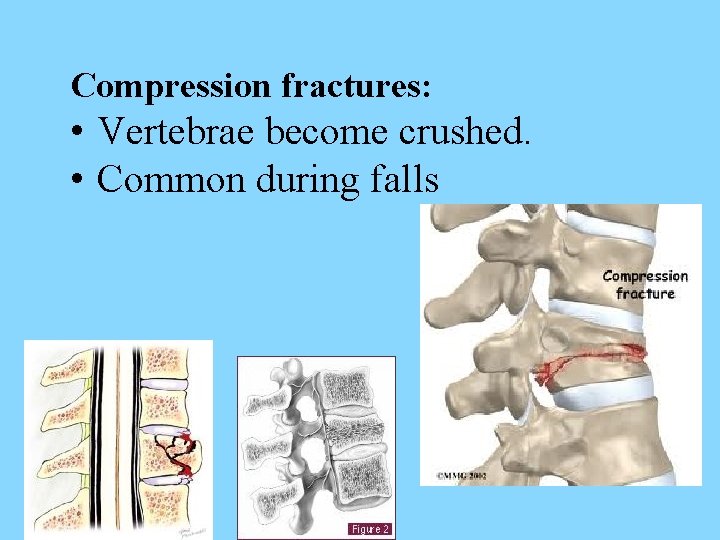
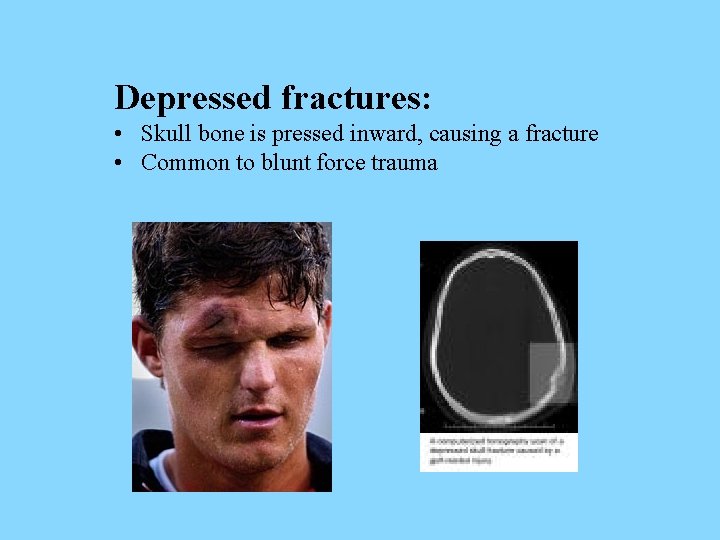
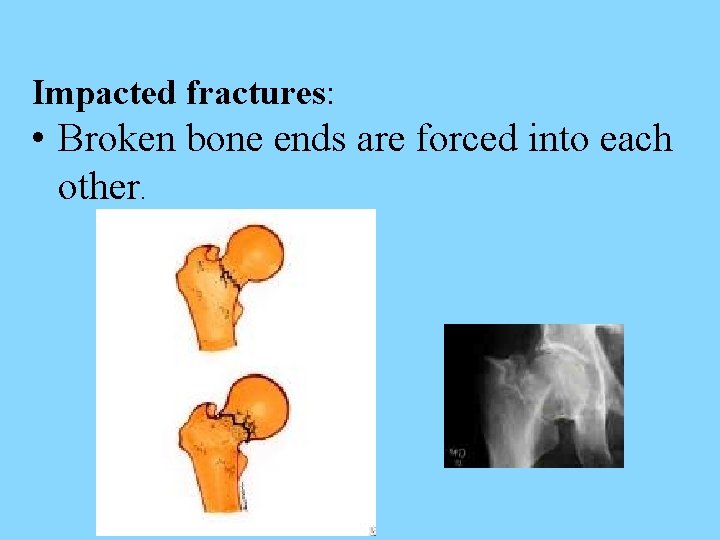
Six most common types of fractures: 1) Comminuted 2) Compression 3) Depressed 4) Impacted 5) Spiral 6) Greenstick
Comminuted fractures: • Bone breaks in many fragments. • Common to sporting accidents
Compression fractures: • Vertebrae become crushed. • Common during falls
Depressed fractures: • Skull bone is pressed inward, causing a fracture • Common to blunt force trauma
Impacted fractures: • Broken bone ends are forced into each other.
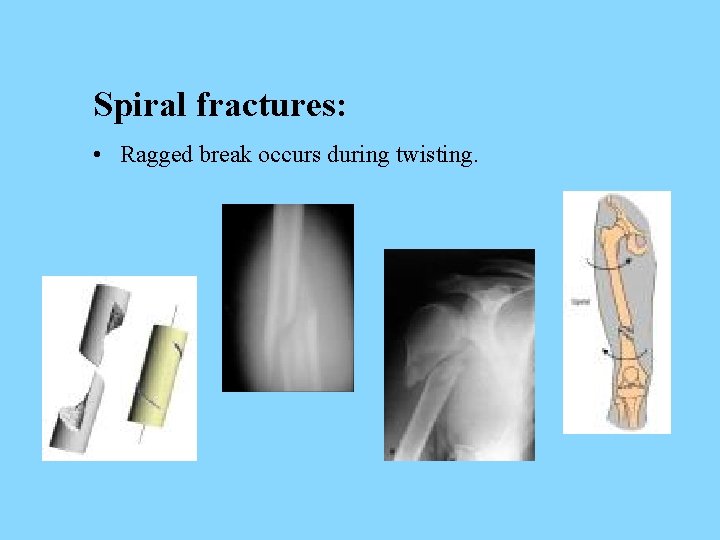
Spiral fractures: • Ragged break occurs during twisting.
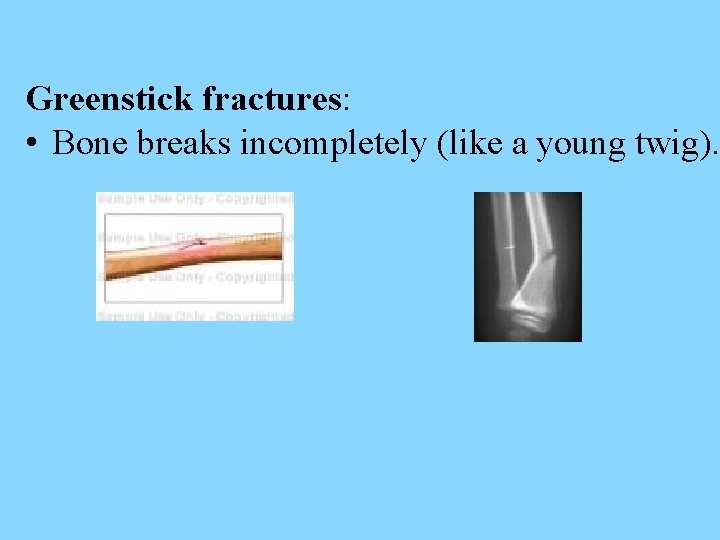
Greenstick fractures: • Bone breaks incompletely (like a young twig).
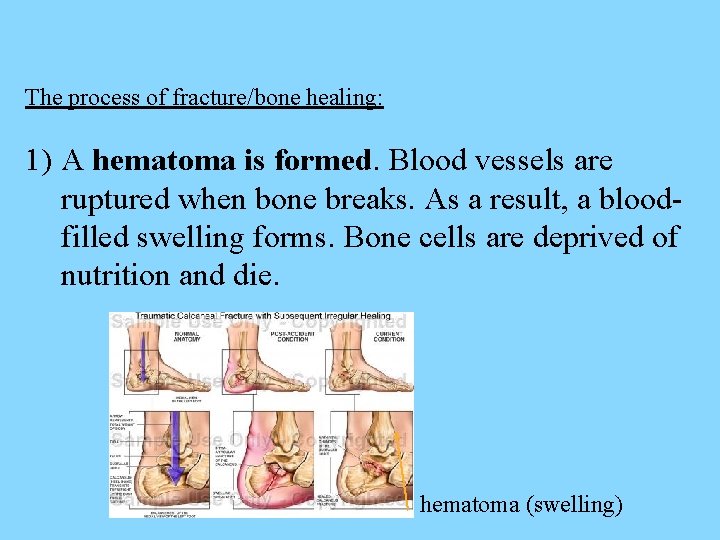
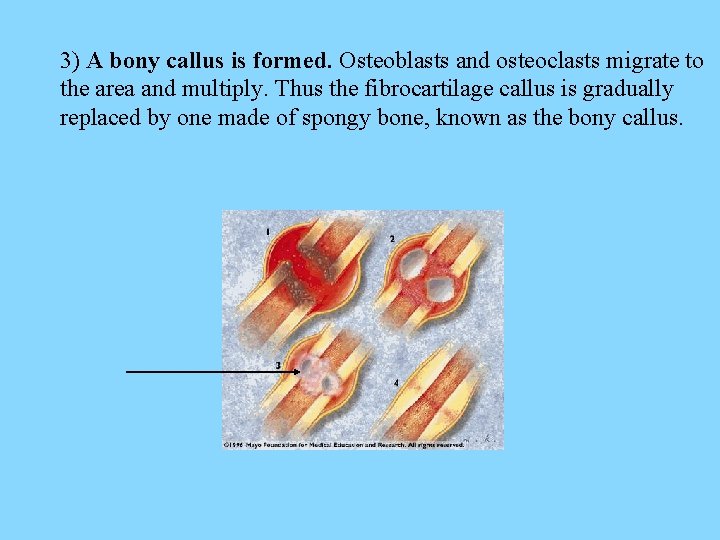
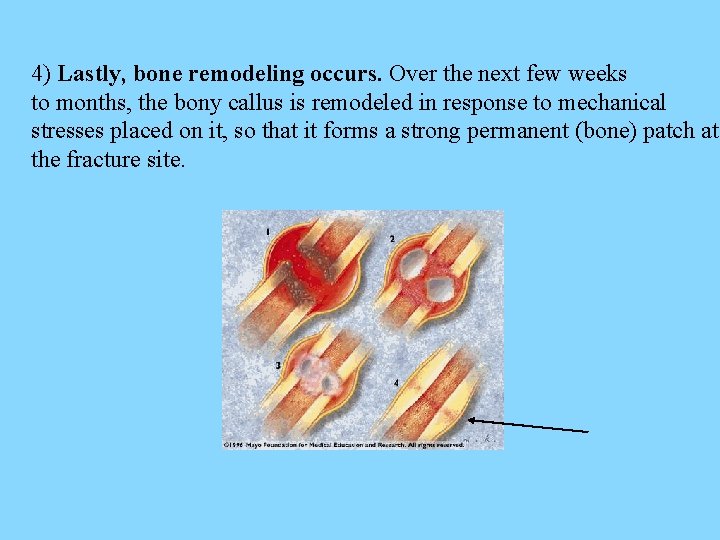
The process of fracture/bone healing: 1) A hematoma is formed. Blood vessels are ruptured when bone breaks. As a result, a bloodfilled swelling forms. Bone cells are deprived of nutrition and die. hematoma (swelling)
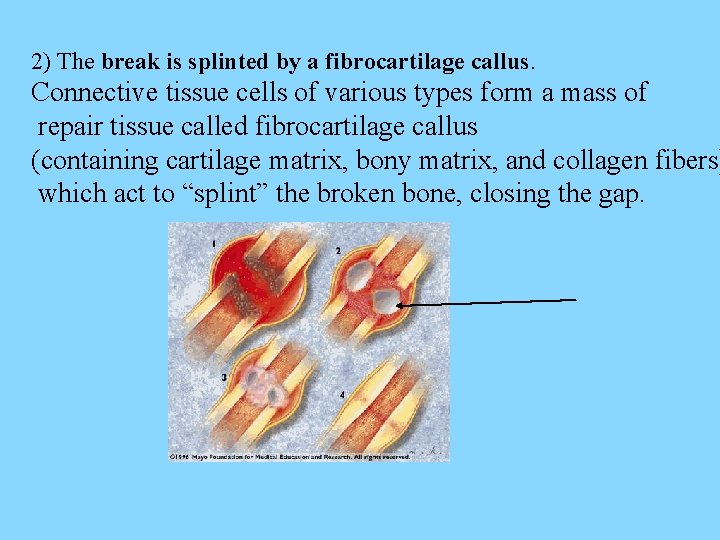
2) The break is splinted by a fibrocartilage callus. Connective tissue cells of various types form a mass of repair tissue called fibrocartilage callus (containing cartilage matrix, bony matrix, and collagen fibers) which act to “splint” the broken bone, closing the gap.
3) A bony callus is formed. Osteoblasts and osteoclasts migrate to the area and multiply. Thus the fibrocartilage callus is gradually replaced by one made of spongy bone, known as the bony callus.
4) Lastly, bone remodeling occurs. Over the next few weeks to months, the bony callus is remodeled in response to mechanical stresses placed on it, so that it forms a strong permanent (bone) patch at the fracture site.
The end!