
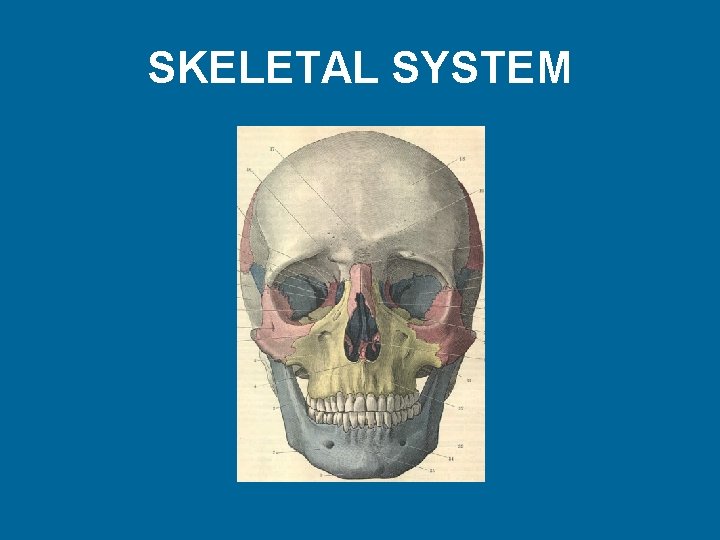
SKELETAL SYSTEM Functions of Bones Support hard framework
SKELETAL SYSTEM

Functions of Bones • • • Support – hard framework that supports and anchors body – bones of legs act as pillars to Protection – fused bones of the skull provide a snug enclosure for the brain – vertebrae surround the spinal cord – rib cage protects vital organs Movement – skeletal muscles attach to bones by tendons and act as levers to move the body Storage – bone matrix (calcium, phosphorus, potassium, sodium, sulfur, magnesium, & copper) – deposits and withdrawals are constant Blood cell formation – hematopoiesis occurs within the marrow cavities of certain bones

Bone Markings • Projections – Tuberosity – large, rounded projection that may be roughened – Crest – Narrow ridge of bone – Trochanter – Very large, blunt, irregularly shaped process (only on the femur) – Spine – sharp, slender, often pointed projection – Process – any bony prominence
Bone Markings (ctd. ) • Projections That Help Form Joints – Facet – smooth, nearly flat, articular surface – Condyle – rounded articular projection – Ramus – Arm-like bar of bone
Bone Markings (ctd. ) • Depressions and Openings – Meatus – canal-like passageway – Sinus – Cavity within a bone filled with air and lined with mucous membrane – Fossa – Shallow, basin-like depression in a bone often serving as an articular surface – Fissure – Narrow, slit-like opening – Foramen – Round or oval opening through a bone
Bone Fractures, Development, and Degeneration http: //www. youtube. com/watch? v=Mz 2 Uuhbtrw. Y
Bone Fractures • Fracture—break in a bone • Types of bone fractures – Closed (simple) fracture—break that does not penetrate the skin – Open (compound) fracture—broken bone penetrates through the skin • Bone fractures are treated by reduction and immobilization
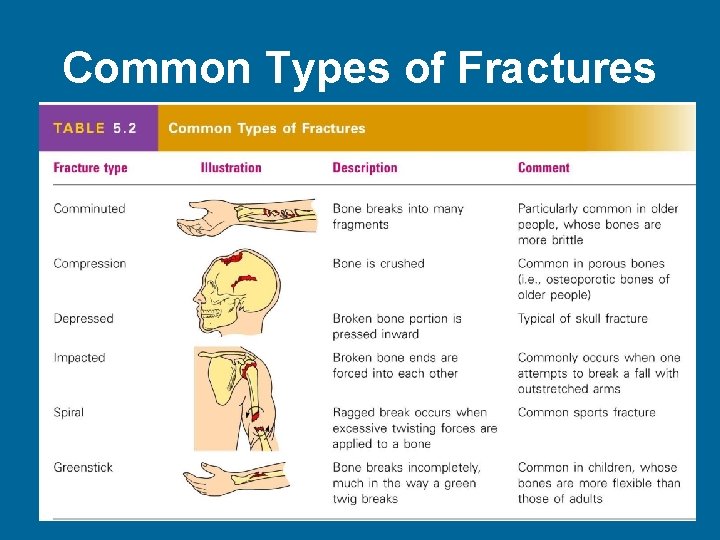
Common Types of Fractures Table 5. 2

Stages in the Healing of a Bone Fracture Hematoma Step 1: Hematoma (blood-filled swelling) is formed Hematoma formation Figure 5. 5, step 1
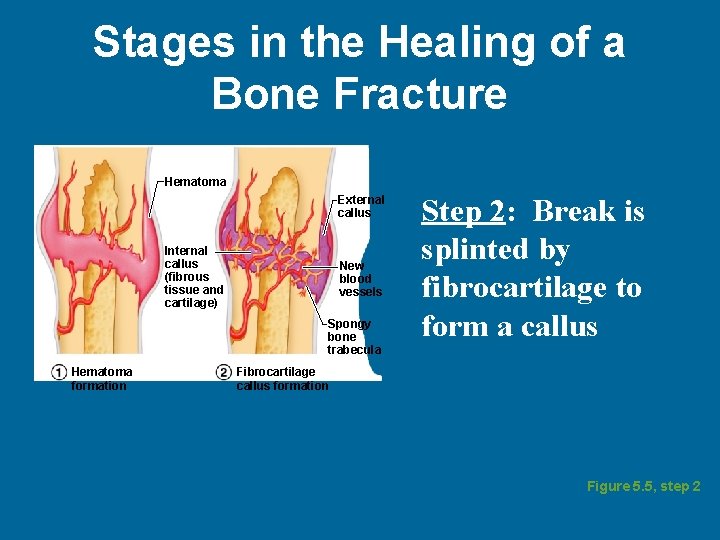
Stages in the Healing of a Bone Fracture Hematoma External callus Internal callus (fibrous tissue and cartilage) New blood vessels Spongy bone trabecula Hematoma formation Step 2: Break is splinted by fibrocartilage to form a callus Fibrocartilage callus formation Figure 5. 5, step 2
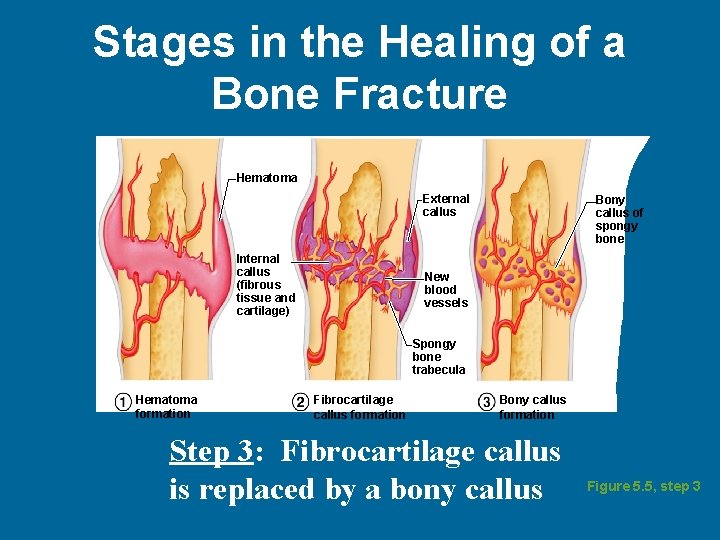
Stages in the Healing of a Bone Fracture Hematoma External callus Internal callus (fibrous tissue and cartilage) Bony callus of spongy bone New blood vessels Spongy bone trabecula Hematoma formation Fibrocartilage callus formation Bony callus formation Step 3: Fibrocartilage callus is replaced by a bony callus Figure 5. 5, step 3
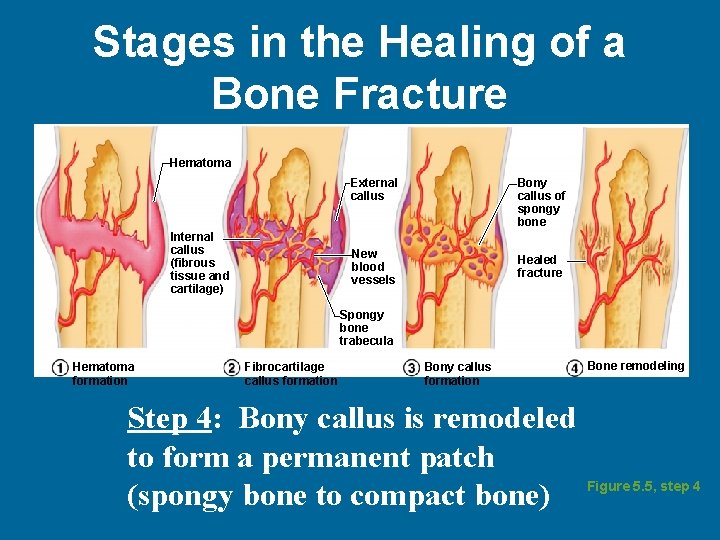
Stages in the Healing of a Bone Fracture Hematoma Internal callus (fibrous tissue and cartilage) External callus Bony callus of spongy bone New blood vessels Healed fracture Spongy bone trabecula Hematoma formation Fibrocartilage callus formation Bony callus formation Step 4: Bony callus is remodeled to form a permanent patch (spongy bone to compact bone) Bone remodeling Figure 5. 5, step 4

Skeletal Changes Throughout Life • Ossification Centers in a 12 -week-old Fetus
Skeletal Changes Throughout Life • Fetus – Long bones are formed of hyaline cartilage – Flat bones begin as fibrous membranes – Flat and long bone models are converted to bone • Birth – Fontanels remain until around age 2
Bone Growth (Ossification) • Bones are remodeled and lengthened until growth stops – Bones are remodeled in response to two factors • Blood calcium levels • Pull of gravity and muscles on the skeleton – Bones grow in width (called appositional growth)
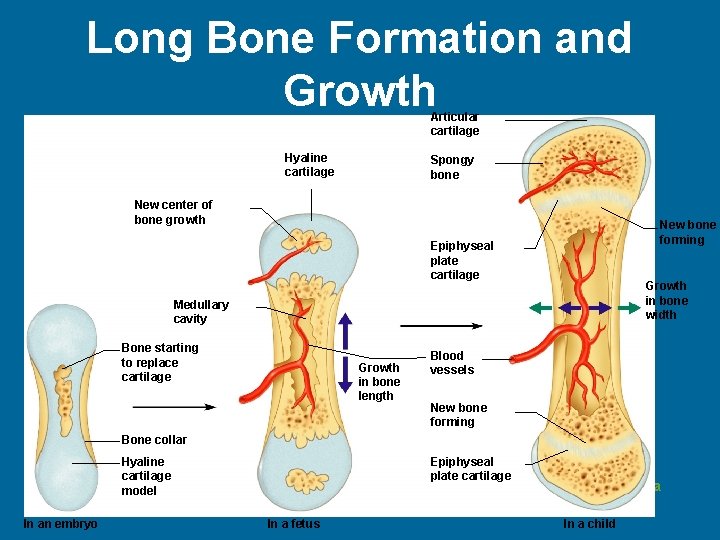
Long Bone Formation and Growth Articular cartilage Hyaline cartilage Spongy bone New center of bone growth New bone forming Epiphyseal plate cartilage Growth in bone width Medullary cavity Bone starting to replace cartilage Growth in bone length Blood vessels New bone forming Bone collar Epiphyseal plate cartilage Hyaline cartilage model In an embryo In a fetus Figure 5. 4 a In a child
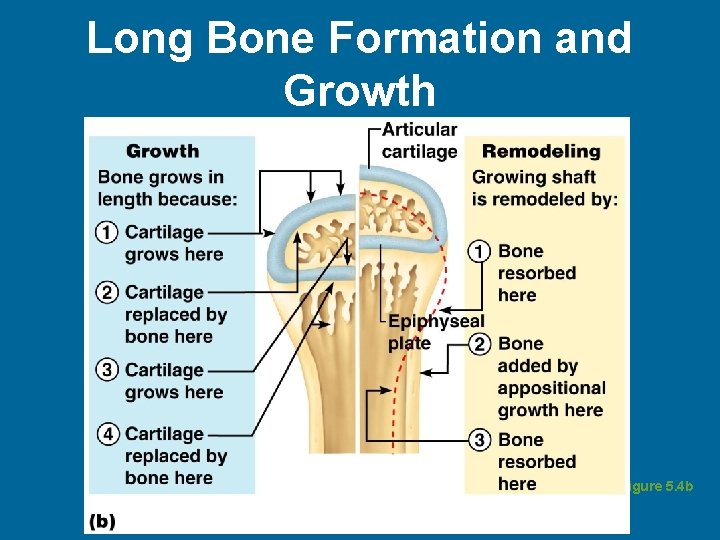
Long Bone Formation and Growth Figure 5. 4 b
The Fetal Skull • The fetal skull is large compared to the infant’s total body length • Fontanels—fibrous membranes connecting the cranial bones – Allow the brain to grow – Convert to bone within 24 months (2 years) after birth
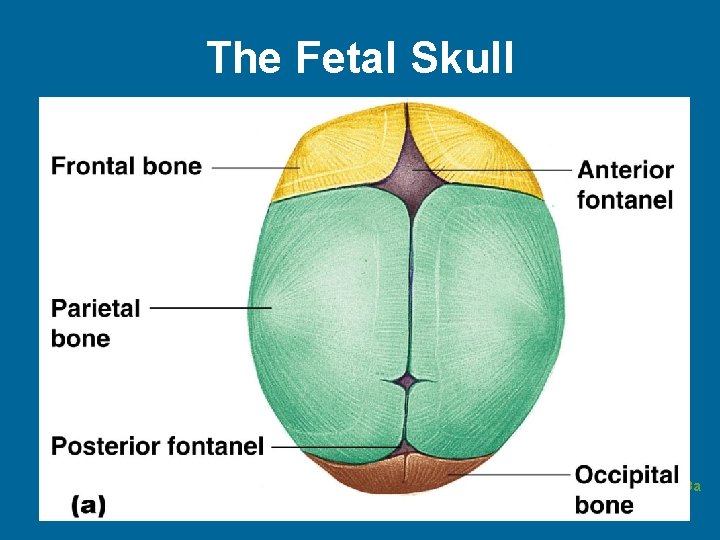
The Fetal Skull Figure 5. 13 a
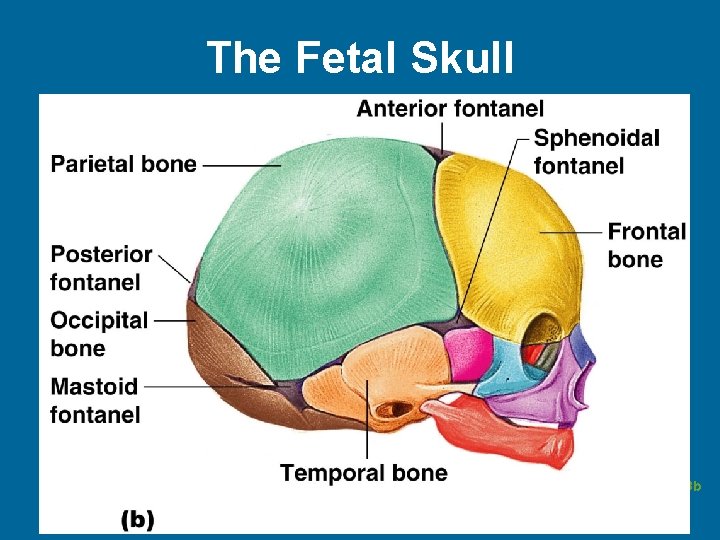
The Fetal Skull Figure 5. 13 b
Skeletal Changes Throughout Life • Adolescence – Epiphyseal plates become ossified and long bone growth ends. These plates become an Epiphyseal line and can be seen on an X-ray. • Size of cranium in relationship to body – 2 years old—skull is larger in proportion to the body compared to that of an adult – 8 or 9 years old—skull is near adult size and proportion – Between ages 6 and 11, the face grows out from the skull
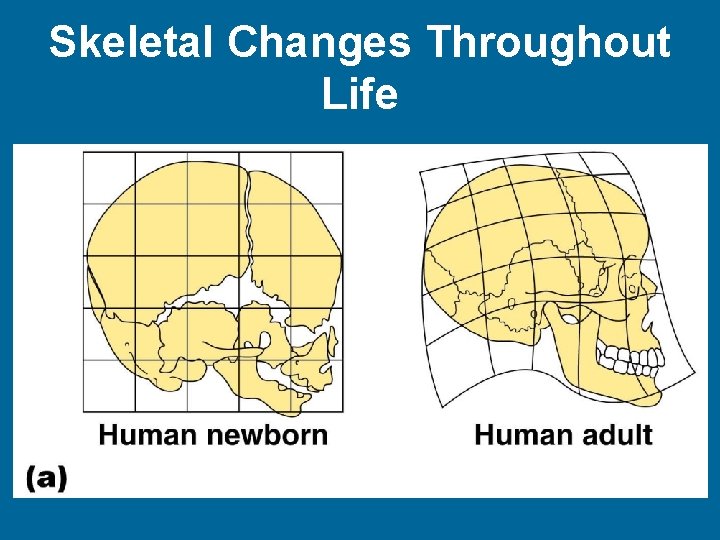
Skeletal Changes Throughout Life Figure 5. 33 a
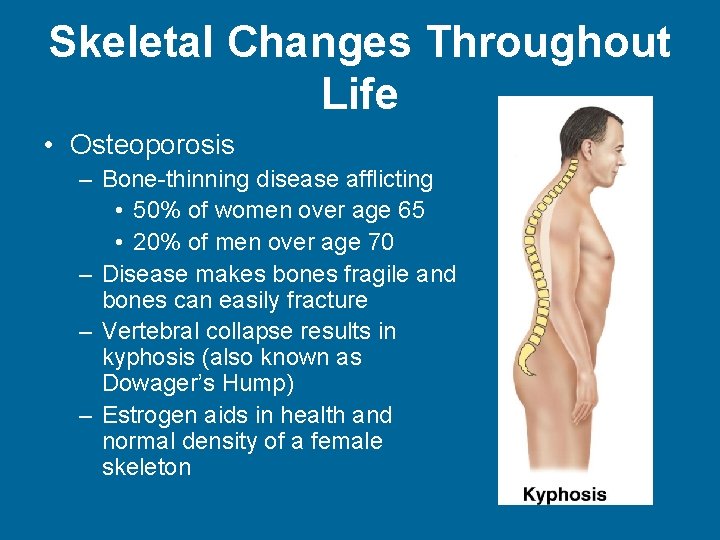
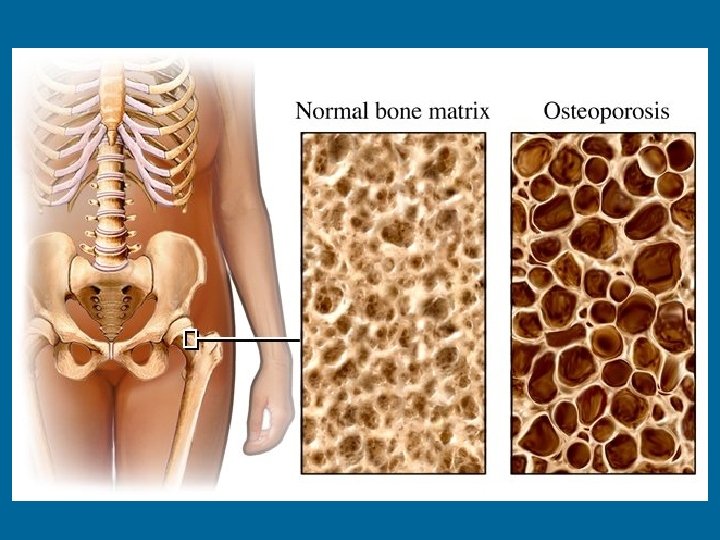
Skeletal Changes Throughout Life • Osteoporosis – Bone-thinning disease afflicting • 50% of women over age 65 • 20% of men over age 70 – Disease makes bones fragile and bones can easily fracture – Vertebral collapse results in kyphosis (also known as Dowager’s Hump) – Estrogen aids in health and normal density of a female skeleton
- Slides: 24