
Skeletal System Ch 3 Structures Introduction Skeletal system
- Slides: 19
Skeletal System Ch 3 Structures
Introduction � Skeletal system is the bony framework of the body � 206 bones in an adult � Functions ◦ Support of the body and shape & structure ◦ Protection of the vital organs ◦ Movement & anchorage of the muscles (levers for muscular action) �Tendons – attach muscle to bone �Ligaments – attach bone to bone ◦ Mineral storage – calcium and phosphorus ◦ Blood cell formation - hematopoiesis
Bone Composition � Collagen – a chief organic constituent (protein) � Inorganic calcium salts (Vit D is essential for the absorption of minerals, i. e. calcium)
Bone Composition � Cells ◦ Osteoblasts-bone building, bone-repairing cells in the periosteum ◦ Osteocytes-mature bone cells within the bone matrix ◦ Osteoclast-causes the reabsorption of bone � Periosteum ◦ A dense, fibrous membrane covering bone ◦ Contains blood vessels ◦ Essential for bone cell survival and bone formation
Bone Growth � Grow in length at the epiphyseal line � Grow in width by the addition of bone to the surface � Controlled by the anterior pituitary (growth hormone) ◦ Dwarfism-hypofunction ◦ Gigantism-hyperfunction ◦ Acromegaly-hyperfunction after puberty; enlarges bones of the hands, feet, and face
Bone Structures
Landmarks � Epiphyseal plate ◦ Growth plate, found towards ends of bones � Diaphysis ◦ The long shaft, major part of the bone � Condyle ◦ A rounded, knuckle-like prominence usually at a point of articulation � Foramen ◦ Opening in bone through which blood vessels, nerves, and ligaments pass � Tubercles ◦ A small, rounded process
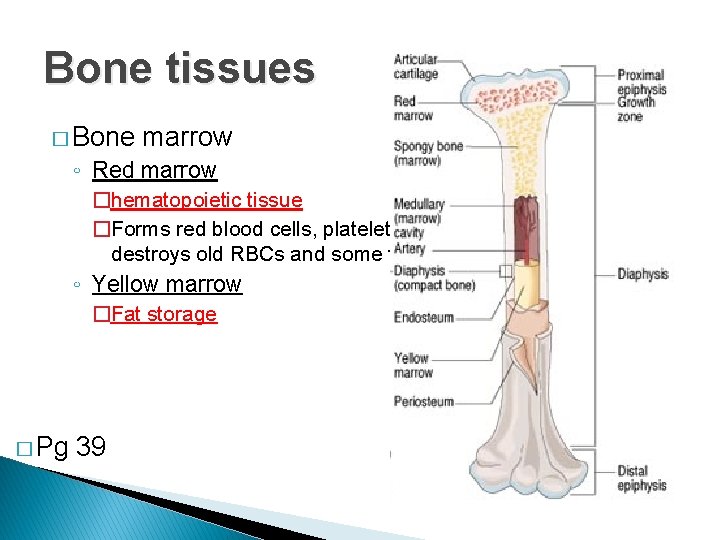
Bone tissues � Bone marrow ◦ Red marrow �hematopoietic tissue �Forms red blood cells, platelets, some white blood cells, destroys old RBCs and some foreign materials ◦ Yellow marrow �Fat storage � Pg 39
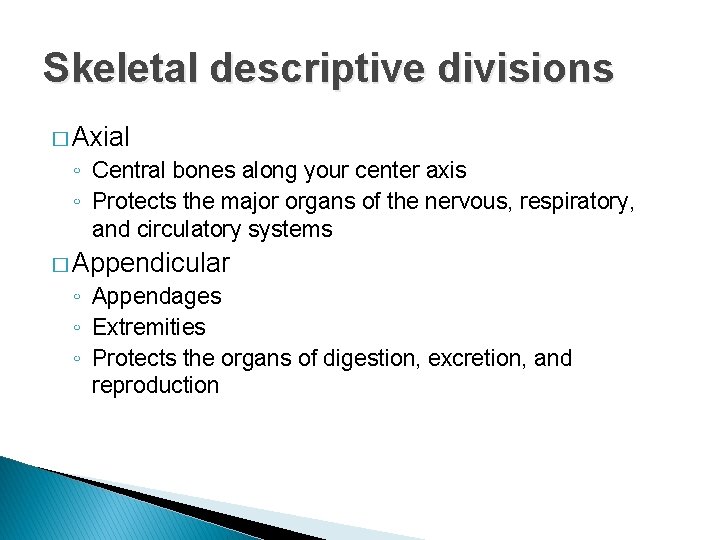
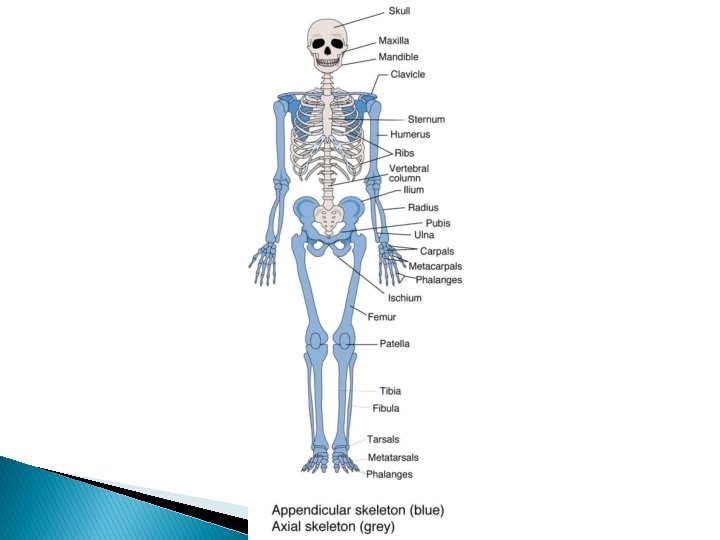
Skeletal descriptive divisions � Axial ◦ Central bones along your center axis ◦ Protects the major organs of the nervous, respiratory, and circulatory systems � Appendicular ◦ Appendages ◦ Extremities ◦ Protects the organs of digestion, excretion, and reproduction
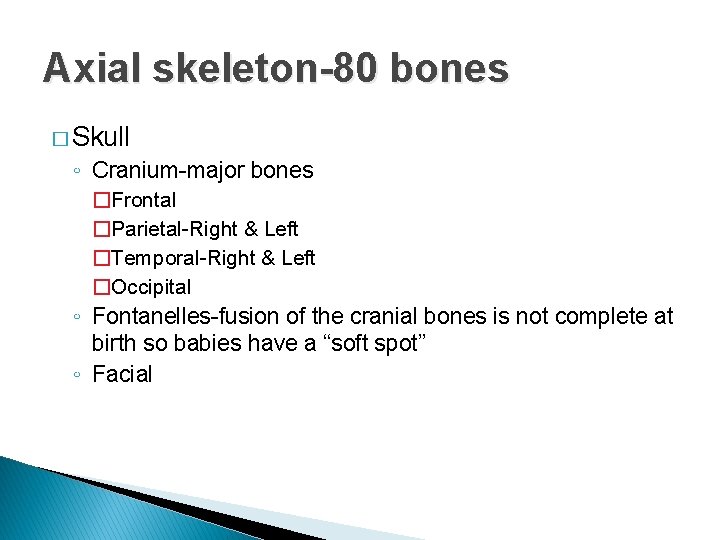
Axial skeleton-80 bones � Skull ◦ Cranium-major bones �Frontal �Parietal-Right & Left �Temporal-Right & Left �Occipital ◦ Fontanelles-fusion of the cranial bones is not complete at birth so babies have a “soft spot” ◦ Facial
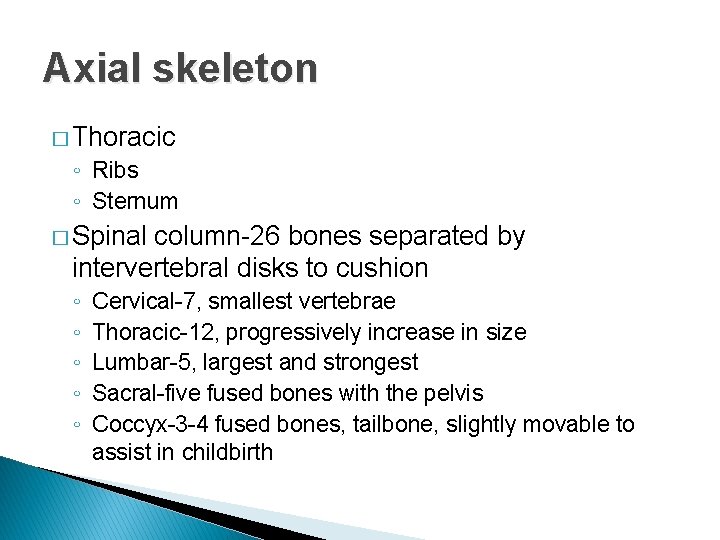
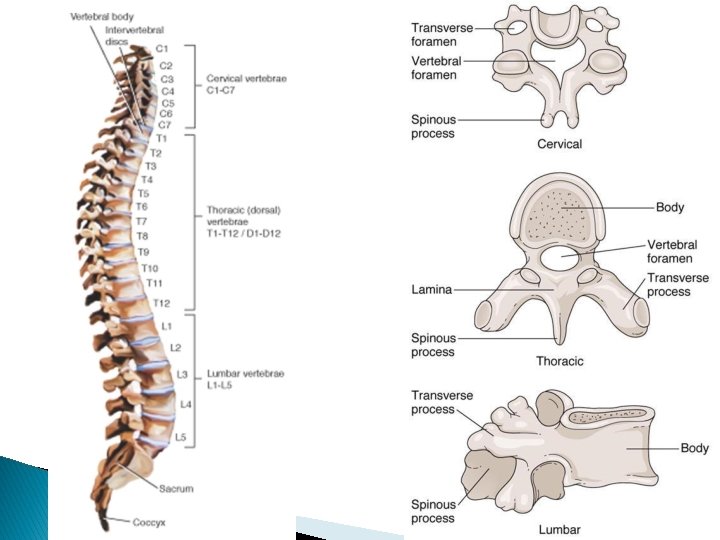
Axial skeleton � Thoracic ◦ Ribs ◦ Sternum � Spinal column-26 bones separated by intervertebral disks to cushion ◦ ◦ ◦ Cervical-7, smallest vertebrae Thoracic-12, progressively increase in size Lumbar-5, largest and strongest Sacral-five fused bones with the pelvis Coccyx-3 -4 fused bones, tailbone, slightly movable to assist in childbirth
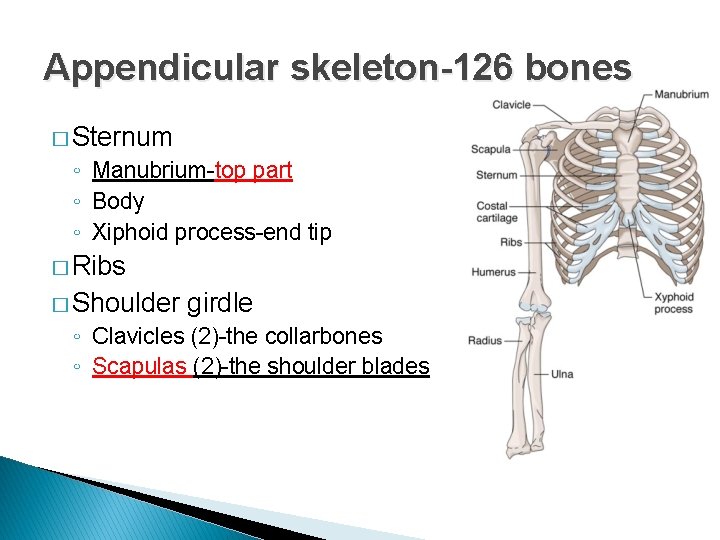
Appendicular skeleton-126 bones � Sternum ◦ Manubrium-top part ◦ Body ◦ Xiphoid process-end tip � Ribs � Shoulder girdle ◦ Clavicles (2)-the collarbones ◦ Scapulas (2)-the shoulder blades
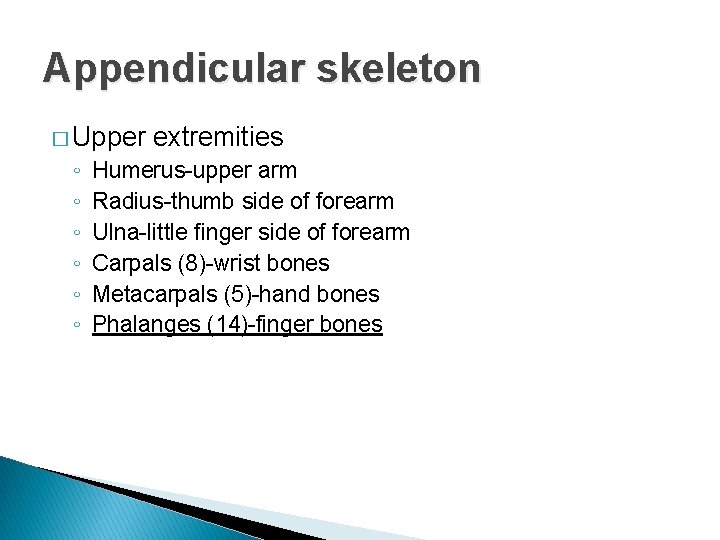
Appendicular skeleton � Upper ◦ ◦ ◦ extremities Humerus-upper arm Radius-thumb side of forearm Ulna-little finger side of forearm Carpals (8)-wrist bones Metacarpals (5)-hand bones Phalanges (14)-finger bones
Appendicular skeleton � Pelvic Girdle ◦ Os coxae (2)-contains the acetabulum (hip socket) �Ilium �Ischium �Pubis ◦ Sacrum
Appendicular skeleton � Lower ◦ ◦ ◦ Extremities Femur-thigh bone Patella-kneecap Tibia-shin bone Fibula-lateral bone of the lower leg Tarsals (7)-ankle bones �Talus �calcaneus ◦ Metatarsals (5)-foot bones ◦ Phalanges (14)-toe bones
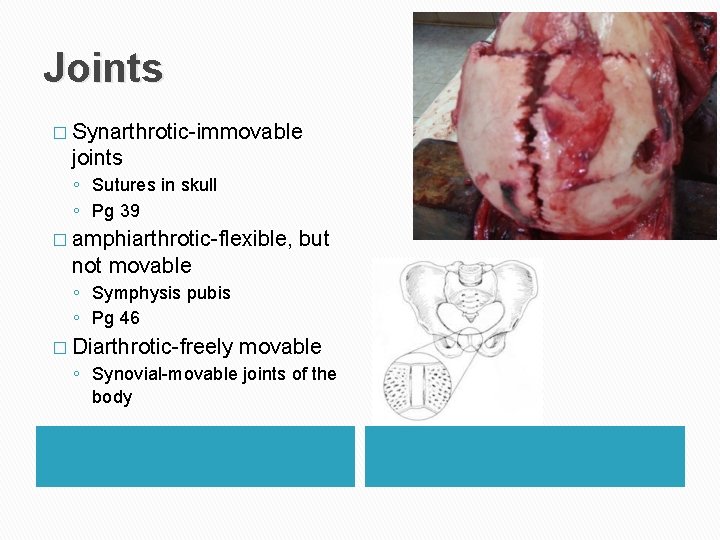
Joints � Synarthrotic-immovable joints ◦ Sutures in skull ◦ Pg 39 � amphiarthrotic-flexible, but not movable ◦ Symphysis pubis ◦ Pg 46 � Diarthrotic-freely movable ◦ Synovial-movable joints of the body
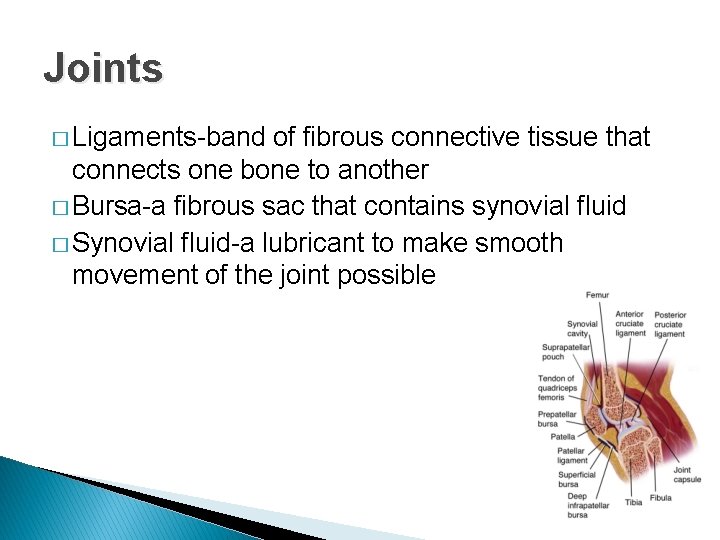
Joints � Ligaments-band of fibrous connective tissue that connects one bone to another � Bursa-a fibrous sac that contains synovial fluid � Synovial fluid-a lubricant to make smooth movement of the joint possible