
SKELETAL SYSTEM ANATOMY Functions Protection for vital organs
- Slides: 40
SKELETAL SYSTEM ANATOMY
Functions : � Protection for vital organs � Serves as levers for movement � Storage site for minerals � Site for blood formation
Parts or layers of bone: � Periosteum � Compact bone � Bone Marrow � Cartilage
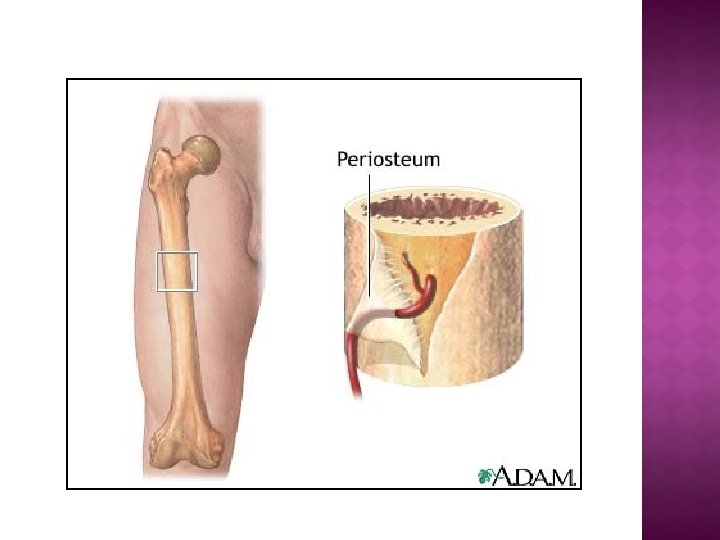
The fibrous sheath that covers bones. It contains the blood vessels and nerves that provide nourishment and sensation to the bone.
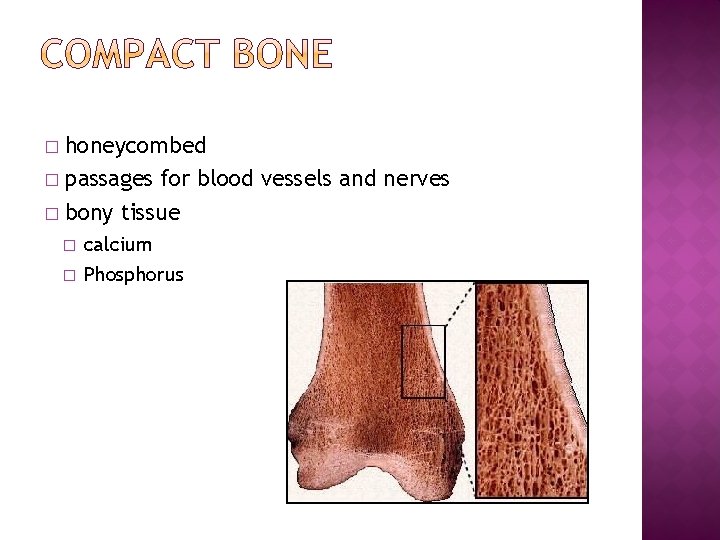
� honeycombed � passages for blood vessels and nerves � bony tissue � � calcium Phosphorus
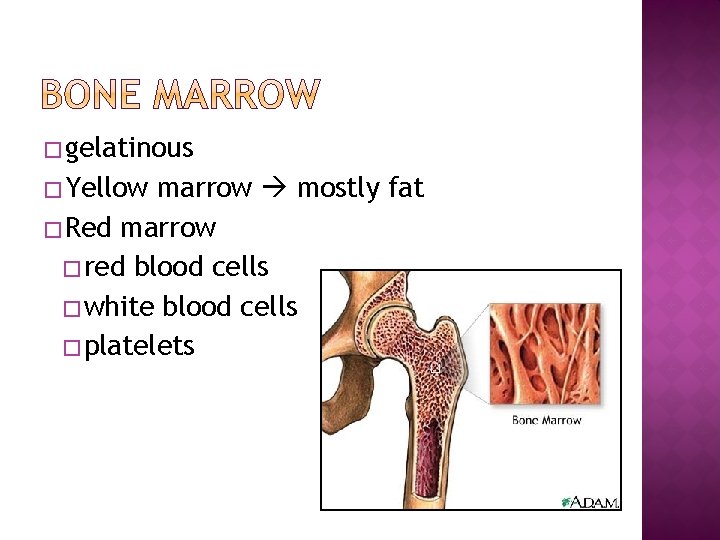
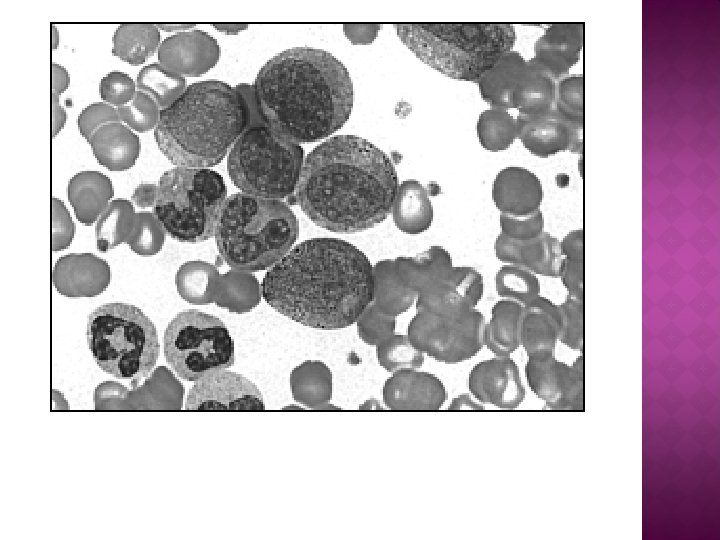
� gelatinous � Yellow marrow mostly fat � Red marrow � red blood cells � white blood cells � platelets
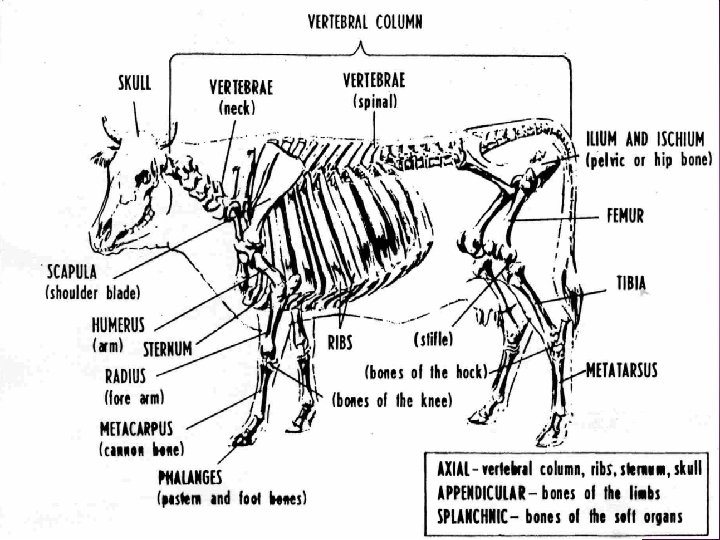
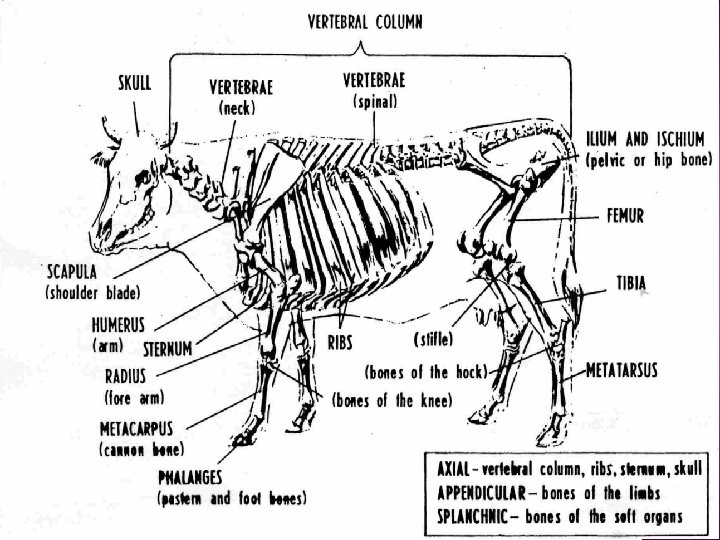
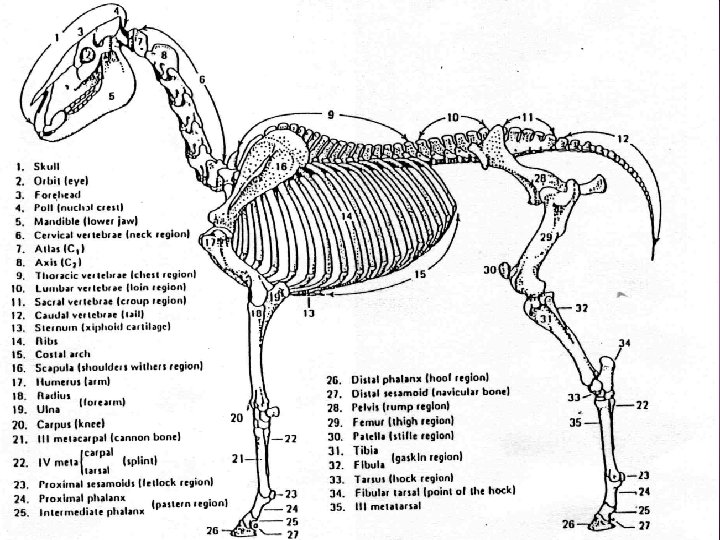
� Axial skeleton � Appendicular skeleton � Viesceral skeleton
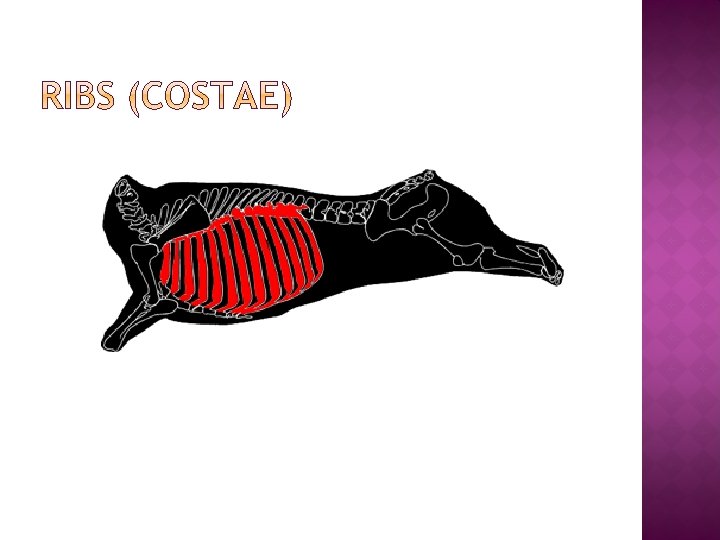
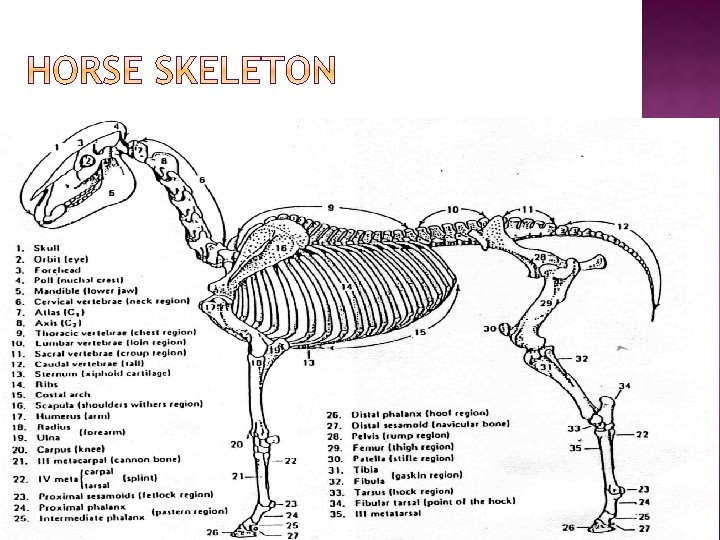
� vertebral column (Columna vertebralis) � Ribs (Os Costae) � Sternum (Os Sternum) � Skull (Ossa Cranii)
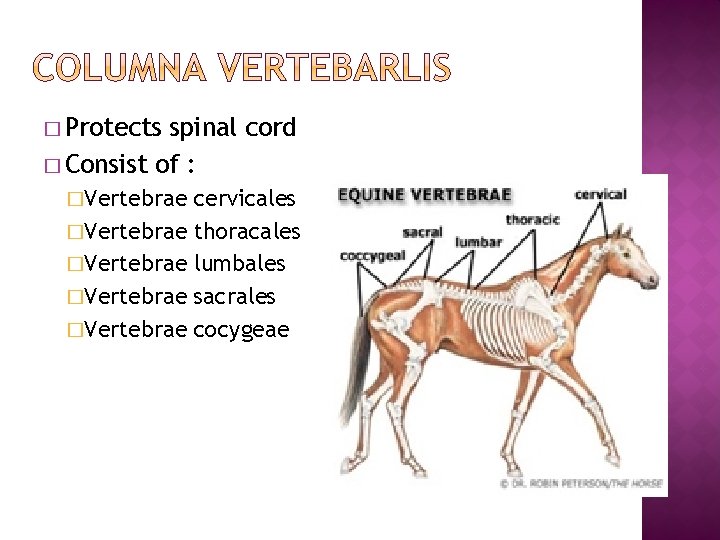
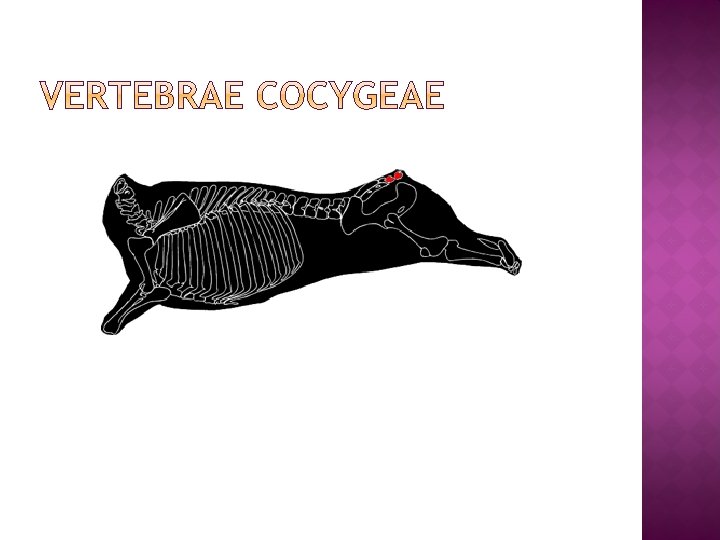
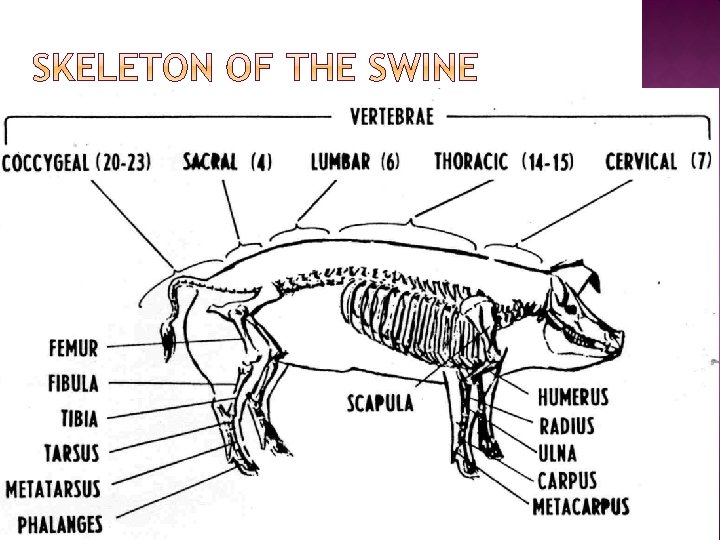
� Protects spinal cord � Consist of : �Vertebrae �Vertebrae cervicales thoracales lumbales sacrales cocygeae
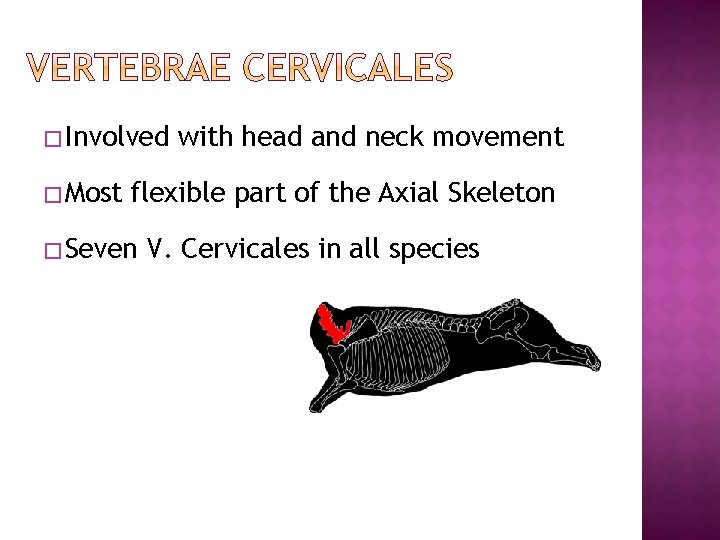
� Involved � Most with head and neck movement flexible part of the Axial Skeleton � Seven V. Cervicales in all species
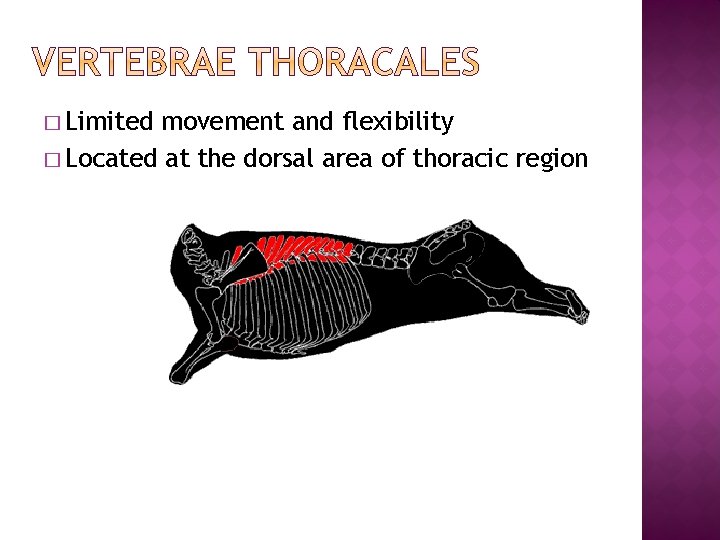
� Limited movement and flexibility � Located at the dorsal area of thoracic region
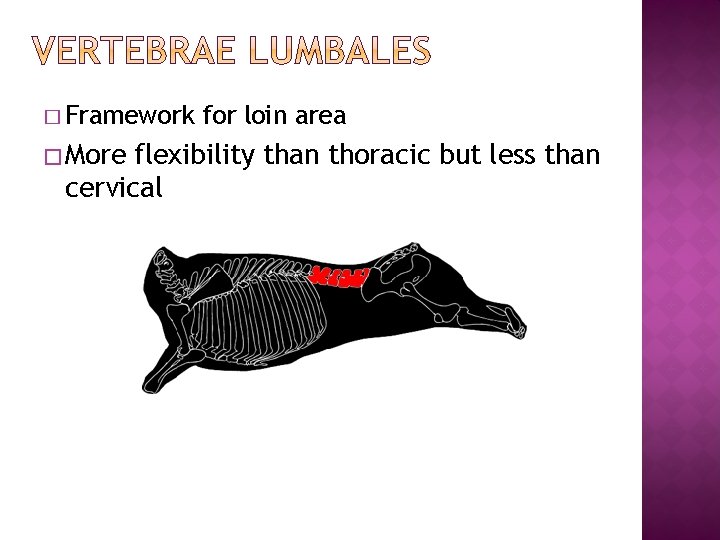
� Framework � More for loin area flexibility than thoracic but less than cervical
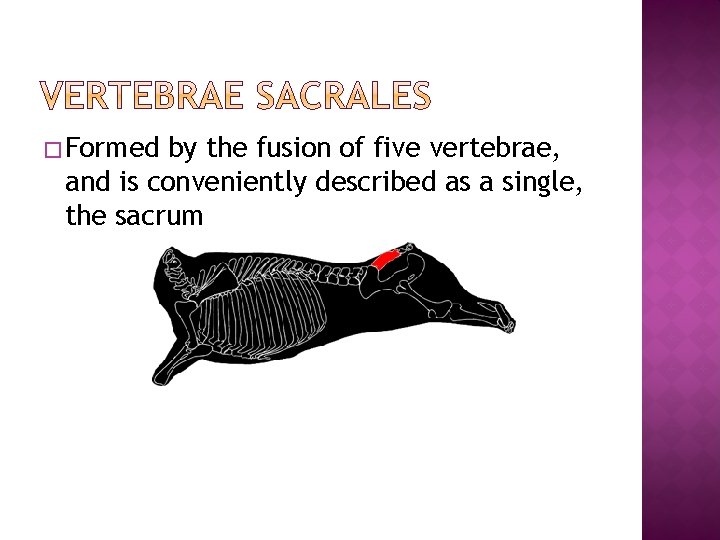
� Formed by the fusion of five vertebrae, and is conveniently described as a single, the sacrum
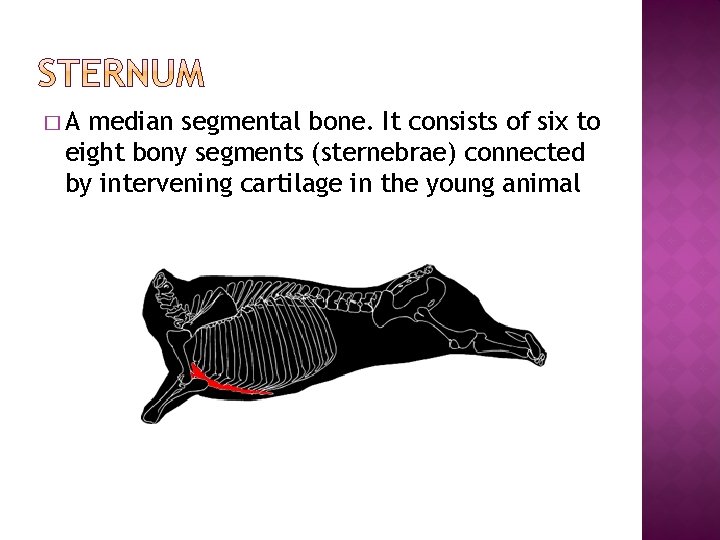
�A median segmental bone. It consists of six to eight bony segments (sternebrae) connected by intervening cartilage in the young animal
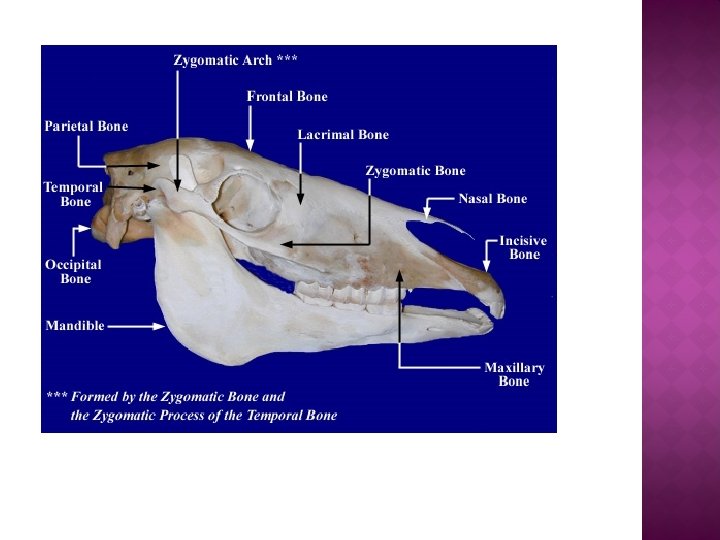
� Divide into : �The cranial bones (Ossa cranii) inclose the brain with its membranes and vessels and the essential organs of hearing �The facial bones (Ossa facici) form the skeleton of the oral and nasal cavities and also support the pharynx, larynx and the root of the tongue
Consist of : � The occipital bone (Os occipitale/tulang kepala belakang) � The sphenoid bone (Os sphenoidale/tulang baji) � The Ethmoid bone (Os ethmoidale/tulang taji) � The parietal bones (Ossa parietalia) � The frontal bones (Ossa frontalia/tulang dahi) � The temporal bone (Os temporale/tulang pelipis)
Consist of : � The maxillae (tulang rahang atas) � The premaxillae (Ossa incisiva/tulang rahang atas muka) � The nasal bones (Ossa nasalia/ tulang hidung) � The lacrimal bones (Ossa lacrimalia/tulang air mata) � The mandible (Mandibula/ rahang bawah)
� Locomotion � Eating � Connected &/or Bony Joints to axial Skeleton by muscles
Divide into : � The thoracic limb (Extremitas thoracalis) � The Pelvic limb (Extremitas pelvina)
� The shoulder girdle (Cingulum extremitatis thoracalis) scapula (shoulder blade) � The arm (Brachium) humerus (arm bone) � Forearm � Manus (Antibrachium) radius and ulna (homologoue of the hand in man) carpus, metacarpus, digits (homologus with fingers in human)
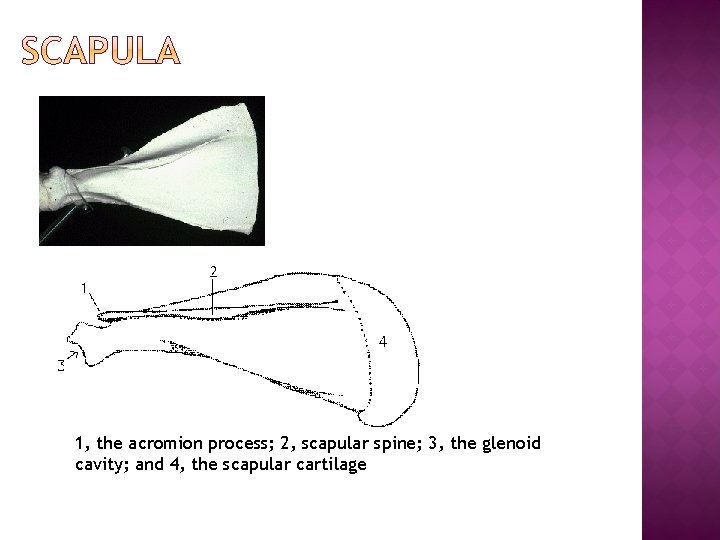
1, the acromion process; 2, scapular spine; 3, the glenoid cavity; and 4, the scapular cartilage
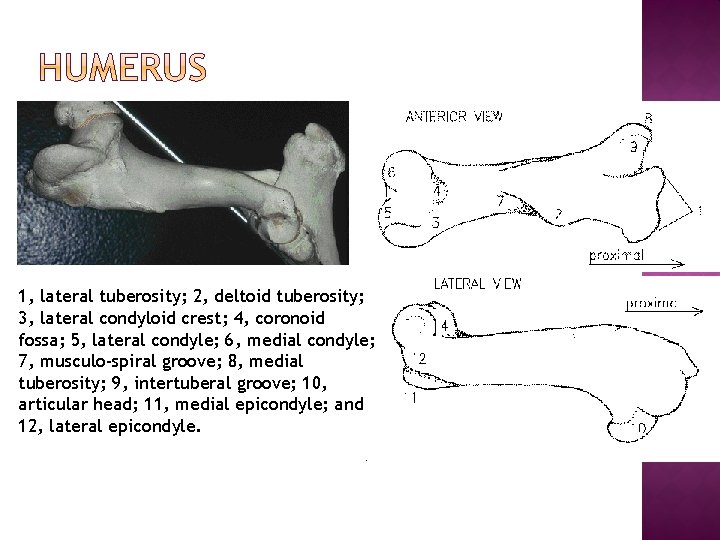
1, lateral tuberosity; 2, deltoid tuberosity; 3, lateral condyloid crest; 4, coronoid fossa; 5, lateral condyle; 6, medial condyle; 7, musculo-spiral groove; 8, medial tuberosity; 9, intertuberal groove; 10, articular head; 11, medial epicondyle; and 12, lateral epicondyle.
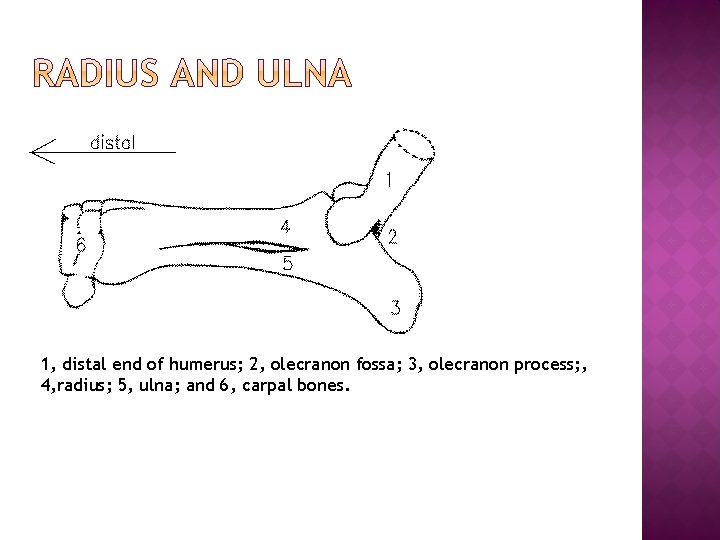
1, distal end of humerus; 2, olecranon fossa; 3, olecranon process; , 4, radius; 5, ulna; and 6, carpal bones.
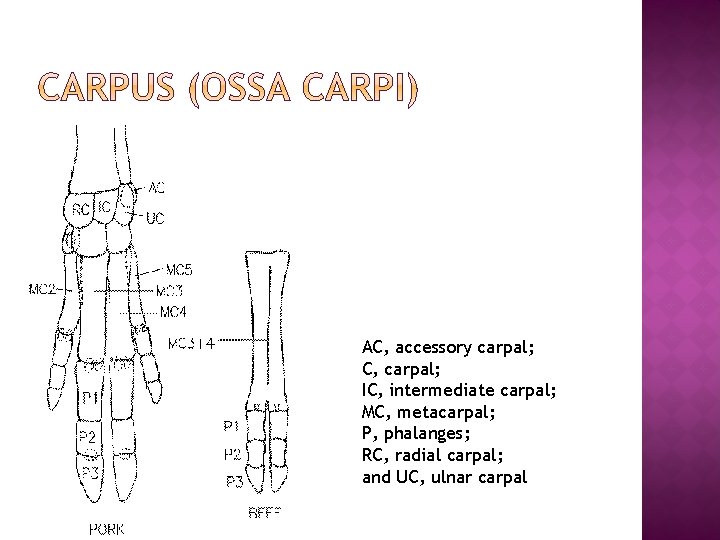
AC, accessory carpal; C, carpal; IC, intermediate carpal; MC, metacarpal; P, phalanges; RC, radial carpal; and UC, ulnar carpal
Consist of : � The pelvic (Cingulum extremitas pelvinae) os coxae/hip bone (Ilium, ischium, and pubis) � The thigh (femur) � The skeleton of the leg (Crus) tibia, fibula and patella � The pes (homologue of the foot in human) tarsus, metatarsus and digits
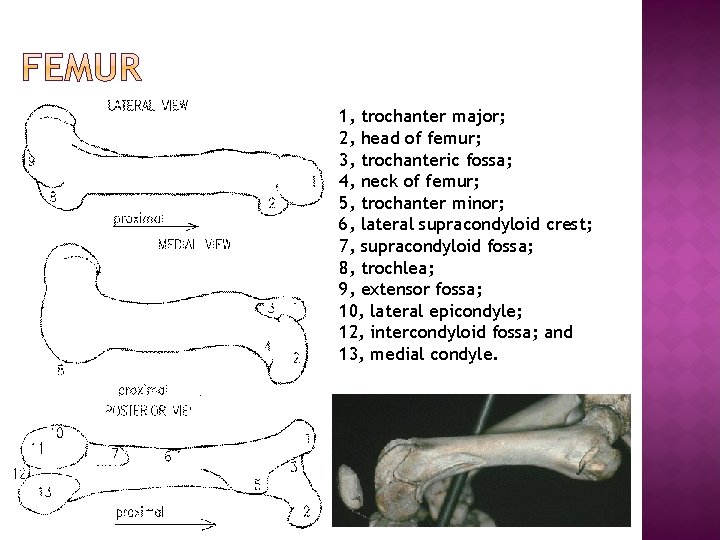
1, trochanter major; 2, head of femur; 3, trochanteric fossa; 4, neck of femur; 5, trochanter minor; 6, lateral supracondyloid crest; 7, supracondyloid fossa; 8, trochlea; 9, extensor fossa; 10, lateral epicondyle; 12, intercondyloid fossa; and 13, medial condyle.
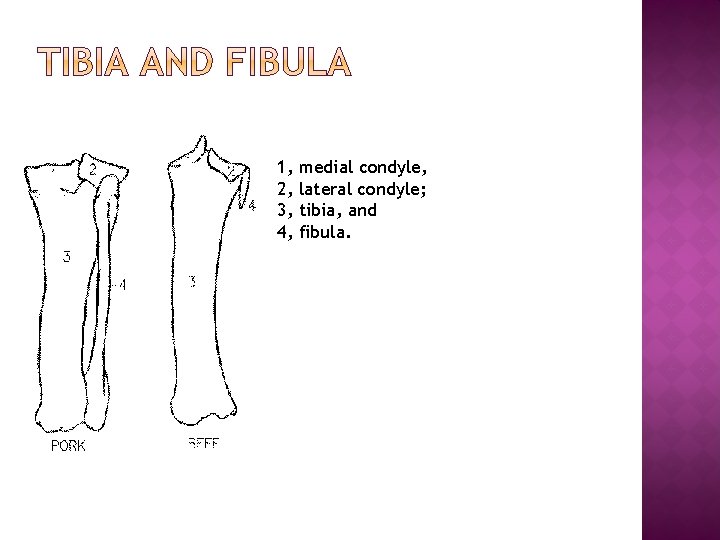
1, 2, 3, 4, medial condyle, lateral condyle; tibia, and fibula.
� Consist of certain bones developed in the substance of some viscera or soft organs, such as : os penis of the dog, and os cordis of the ox
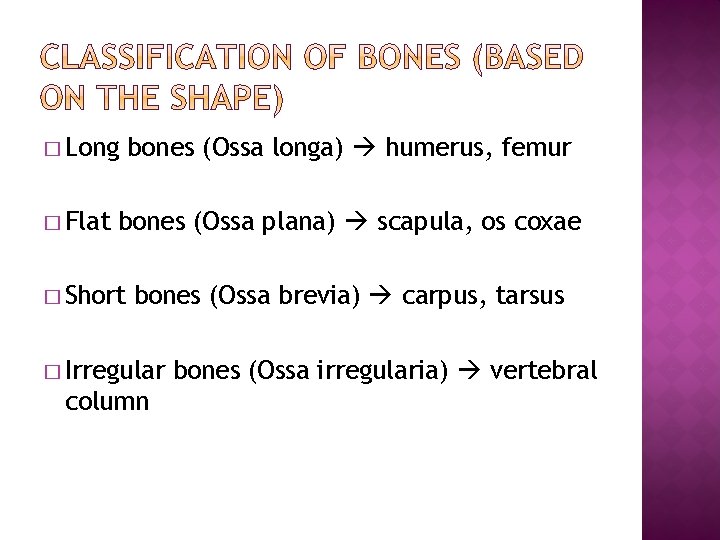
� Long � Flat bones (Ossa longa) humerus, femur bones (Ossa plana) scapula, os coxae � Short bones (Ossa brevia) carpus, tarsus � Irregular column bones (Ossa irregularia) vertebral
�http: //bovine. unl. edu/bovine 3 D/