
Skeletal System 206 Total Bones Types Of Joints
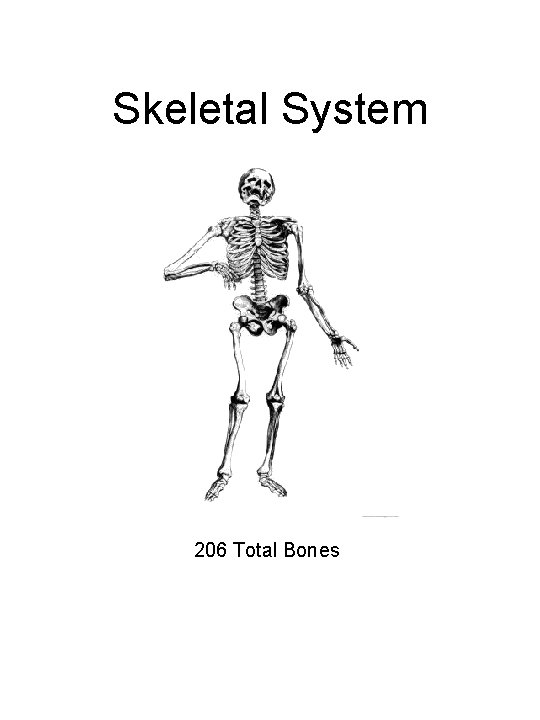
Skeletal System 206 Total Bones
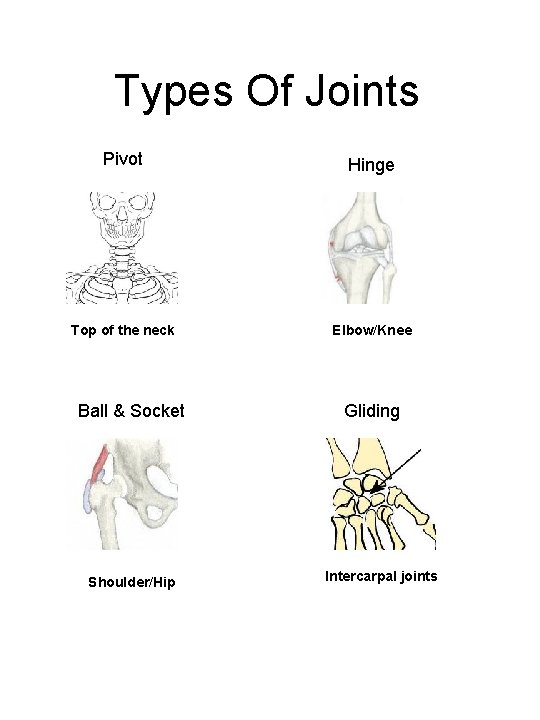
Types Of Joints Pivot Hinge Top of the neck Elbow/Knee Ball & Socket Shoulder/Hip Gliding Intercarpal joints
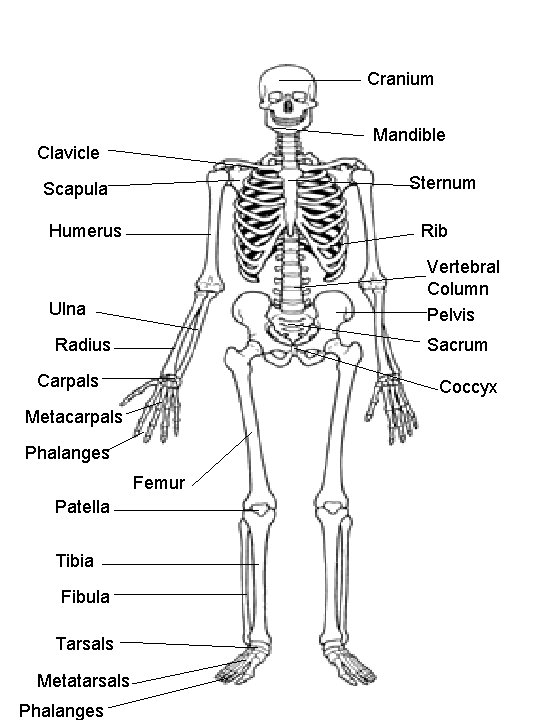
Cranium Mandible Clavicle Sternum Scapula Humerus Rib Vertebral Column Pelvis Ulna Radius Sacrum Carpals Coccyx Metacarpals Phalanges Femur Patella Tibia Fibula Tarsals Metatarsals Phalanges
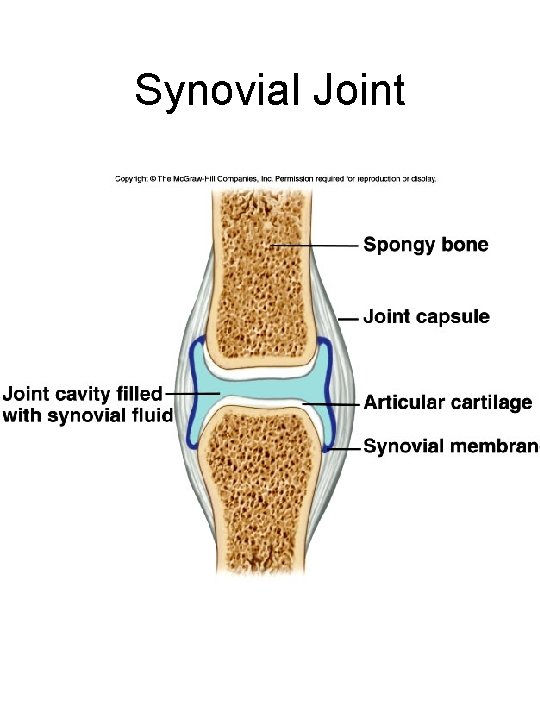
Synovial Joint
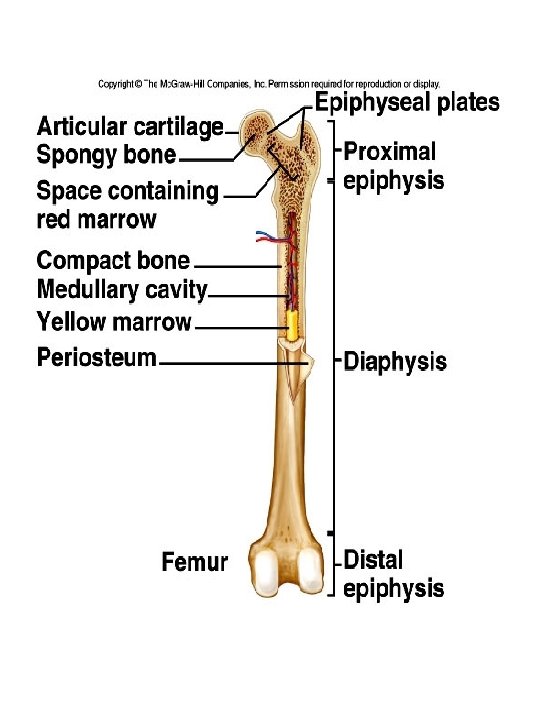
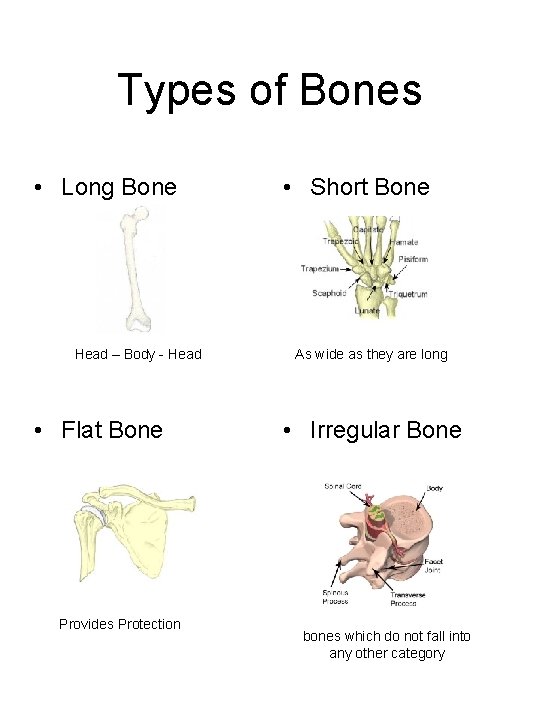
Types of Bones • Long Bone Head – Body - Head • Flat Bone Provides Protection • Short Bone As wide as they are long • Irregular Bone bones which do not fall into any other category
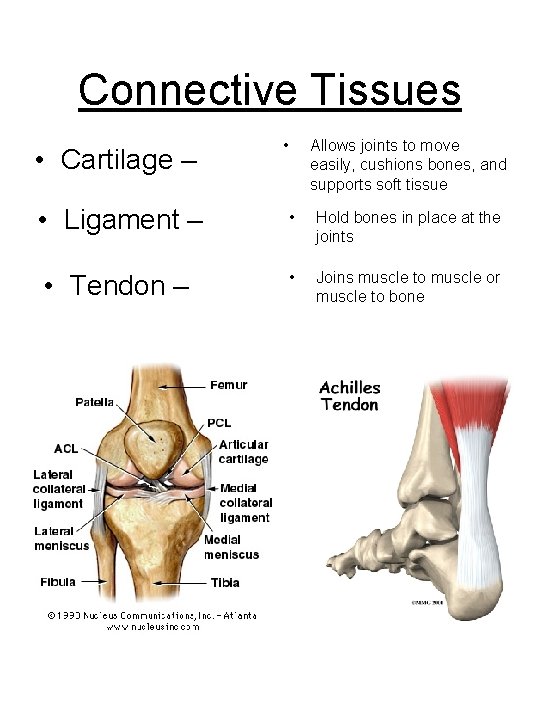
Connective Tissues • Cartilage – • Allows joints to move easily, cushions bones, and supports soft tissue • Ligament – • Hold bones in place at the joints • Tendon – • Joins muscle to muscle or muscle to bone
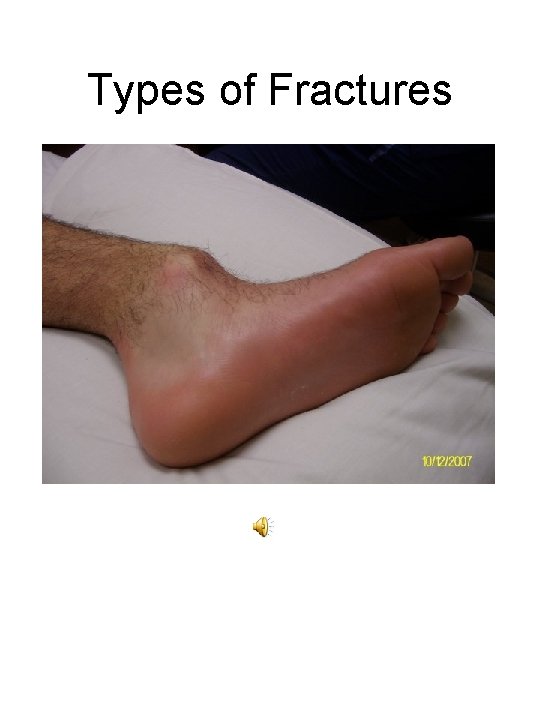
Types of Fractures
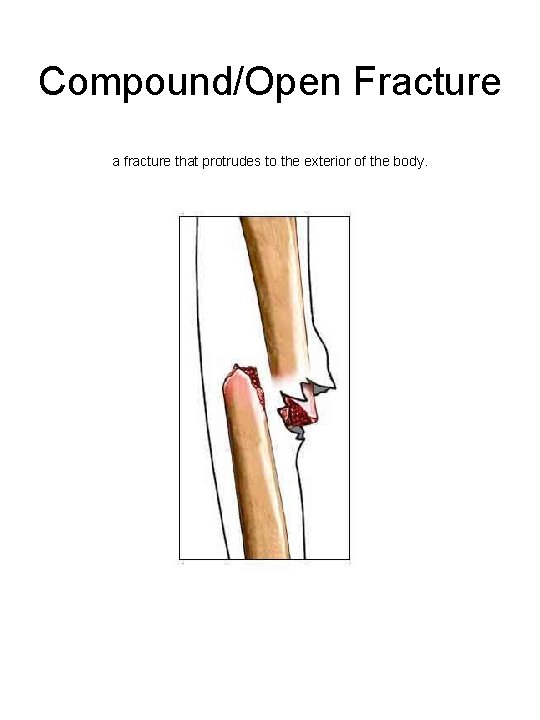
Compound/Open Fracture a fracture that protrudes to the exterior of the body.
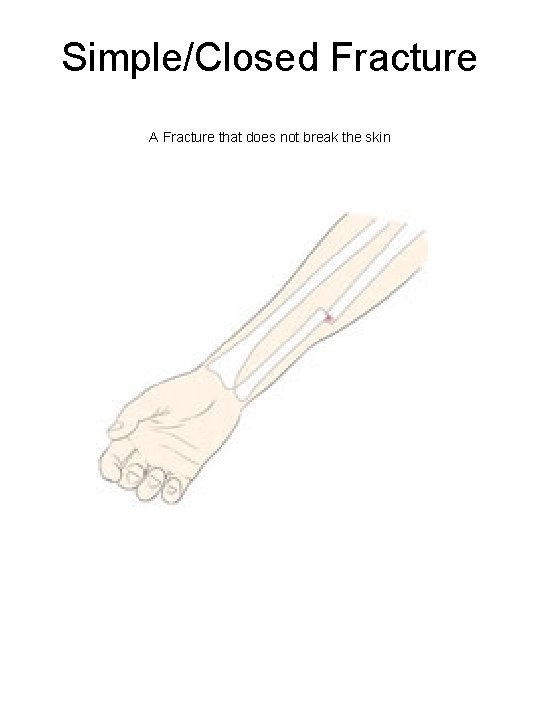
Simple/Closed Fracture A Fracture that does not break the skin
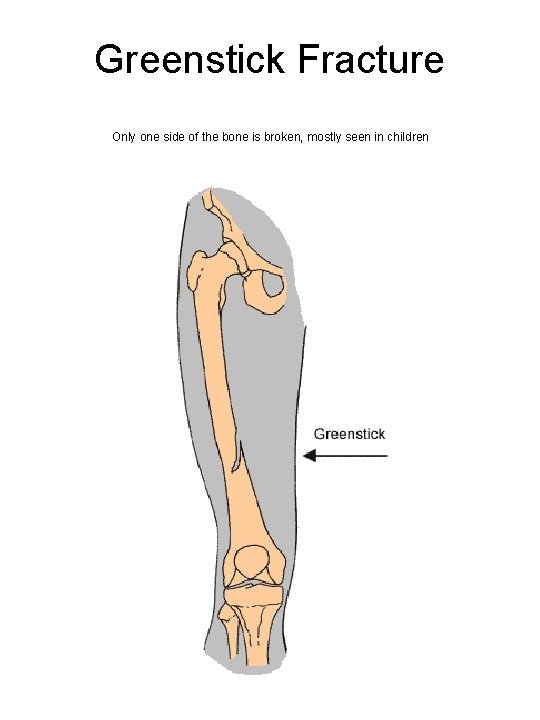
Greenstick Fracture Only one side of the bone is broken, mostly seen in children
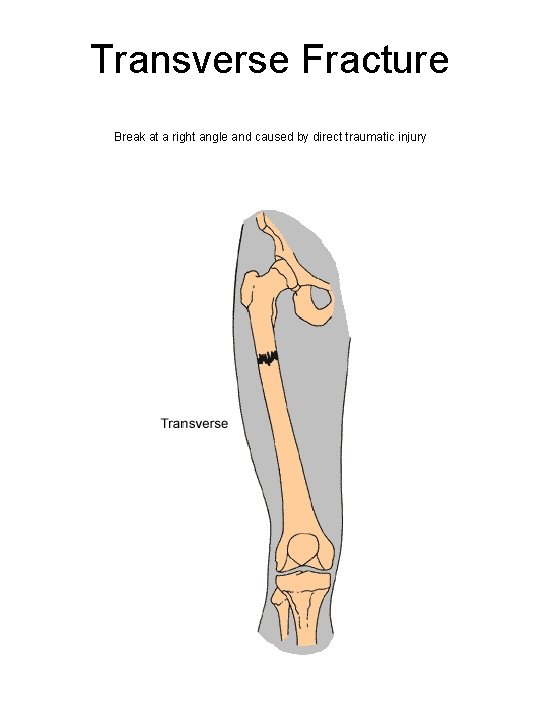
Transverse Fracture Break at a right angle and caused by direct traumatic injury
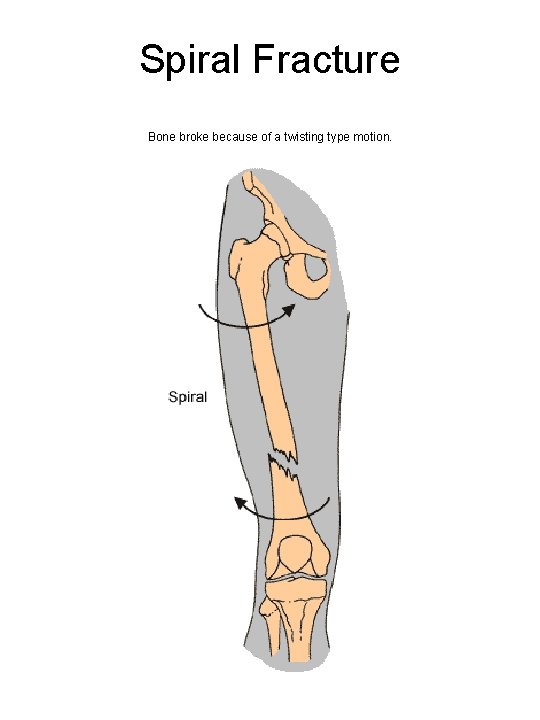
Spiral Fracture Bone broke because of a twisting type motion.
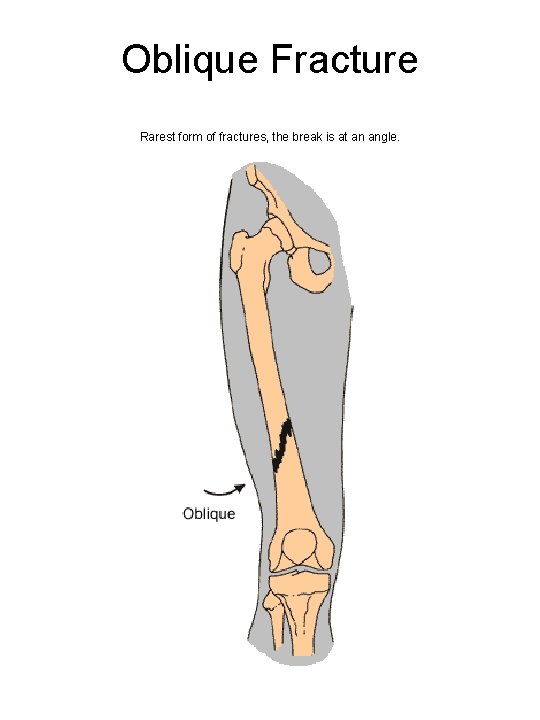
Oblique Fracture Rarest form of fractures, the break is at an angle.
Comminuted • Bone is broken into more than two pieces. Complicated: • Bone damages surrounding tissue and or organs
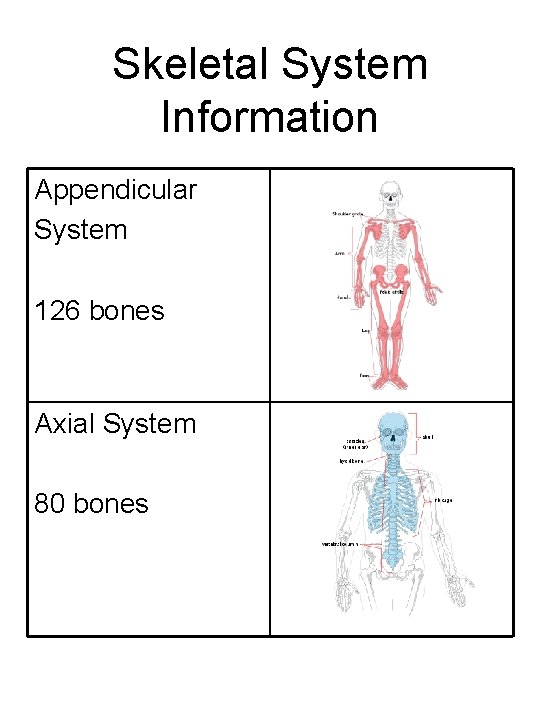
Skeletal System Information Appendicular System 126 bones Axial System 80 bones
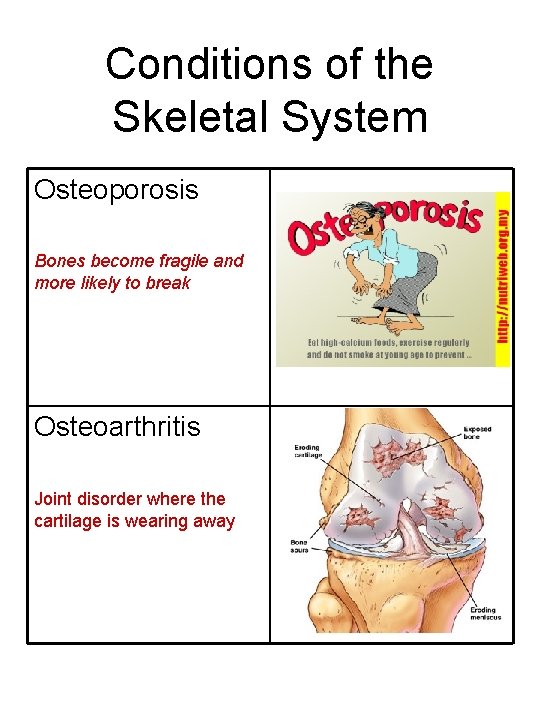
Conditions of the Skeletal System Osteoporosis Bones become fragile and more likely to break Osteoarthritis Joint disorder where the cartilage is wearing away
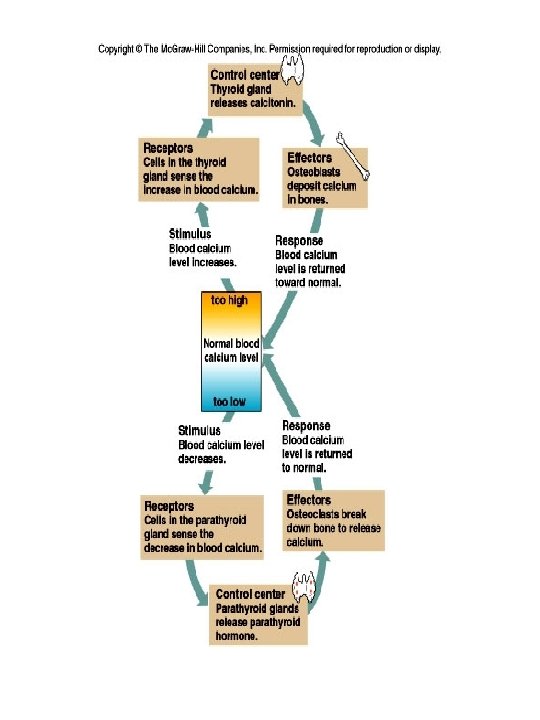
Skeleton and other systems Skin makes vitamin D which enhances calcium absorption Skeleton stores calcium for muscle contraction, nervous stimulation, blood clot formation Red marrow- site of blood cell formation Calcium levels regulated by parathyroid hormone and calcitonin kidneys (can help provide vitamin D) digestive system (can release calcium into blood
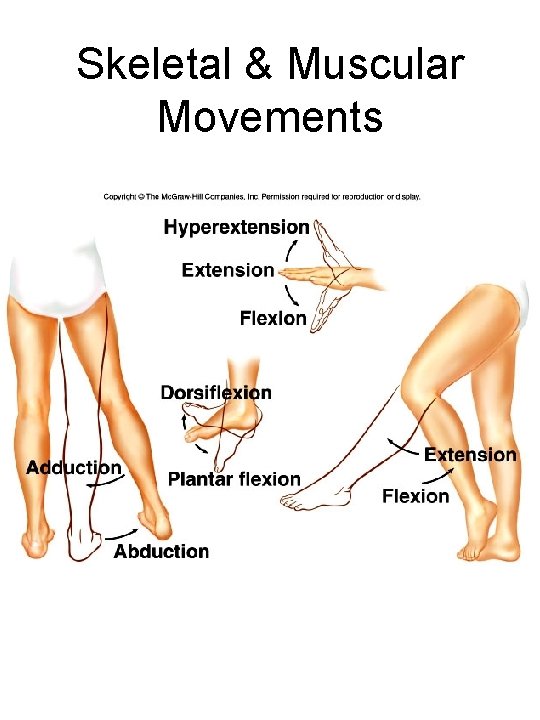
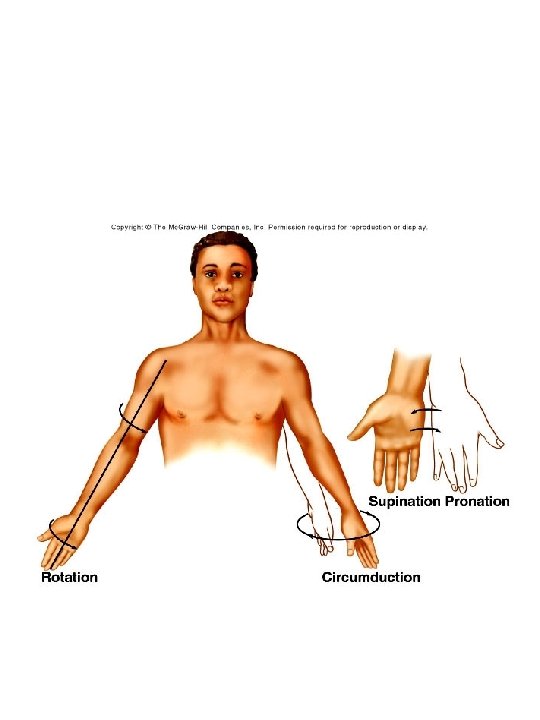
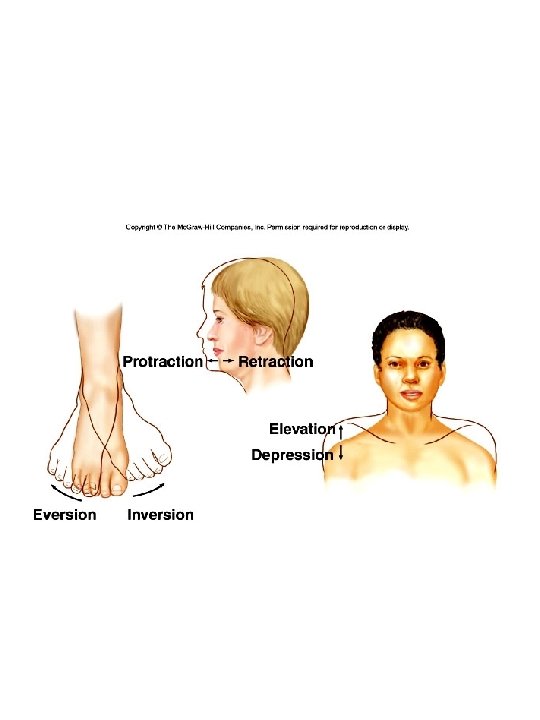
Skeletal & Muscular Movements
Skeletal Revision • Name the carpal bones • Name the tarsal bones • What bones make up the axial skeleton? • What bones make up the appendicular skeleton? • What is compact bone and where is it found? • What is cancellous bone and where is it found?
Skeletal Revision 2 • Name the five different TYPES of bones found in the body and give an example of each • State three functions of the skeletal system • Name one postural deformity of the spine and describe the nature of the deformity.
Skeletal Revision 3 • Explain the treatment considerations that a reflexologist would give someone presenting with this condition, considering the treatment itself and the treatment area. • Give an example of a fixed joint • Give an example of a synovial joint • What type of joint involves the femur and the hip bone? (ilium, ischium and pubis)?
Skeletal Revision 4 • Describe Osteoarthritis • Describe Rheumatoid Arthritis
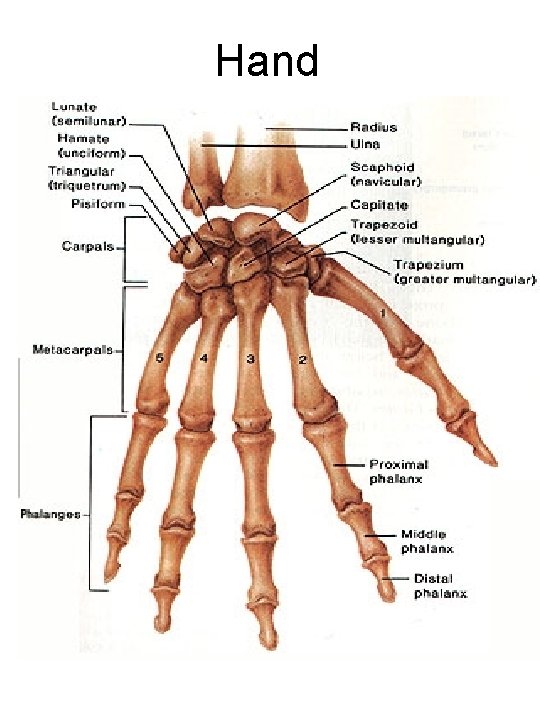
Hand
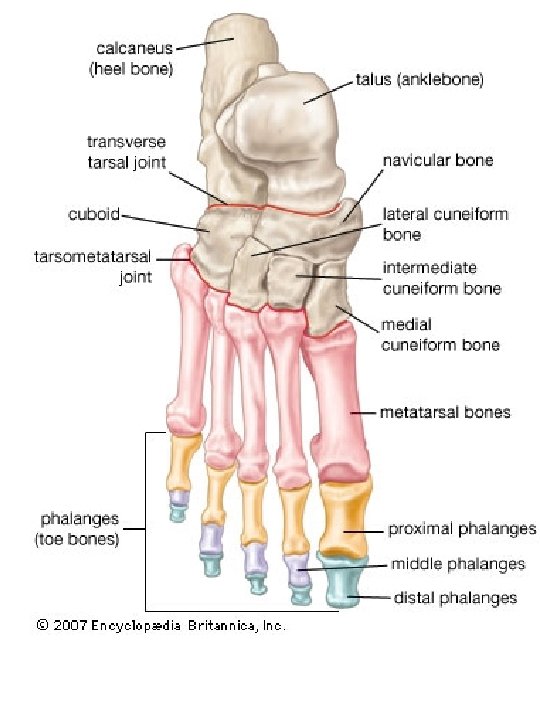
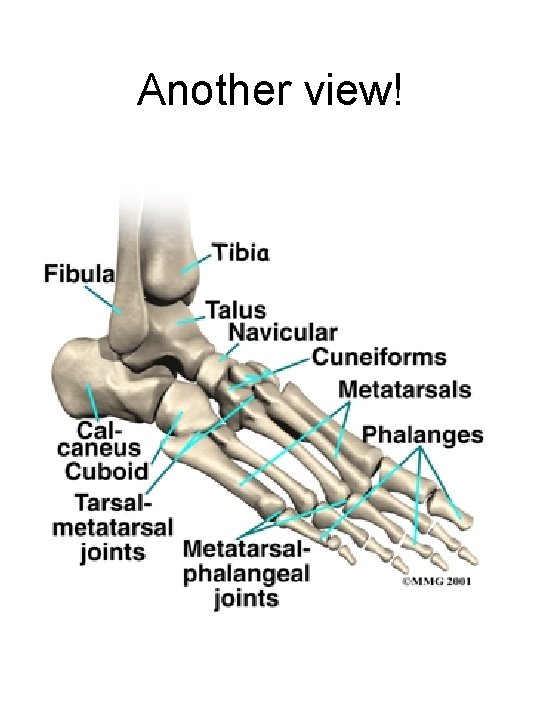
Another view!
- Slides: 29