
Skeletal System 206 bones in the body BONES
Skeletal System 206 bones in the body
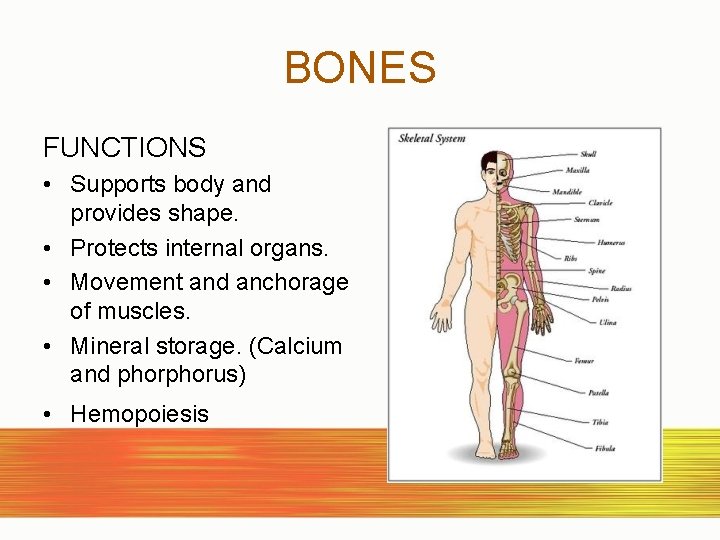
BONES FUNCTIONS • Supports body and provides shape. • Protects internal organs. • Movement and anchorage of muscles. • Mineral storage. (Calcium and phorus) • Hemopoiesis
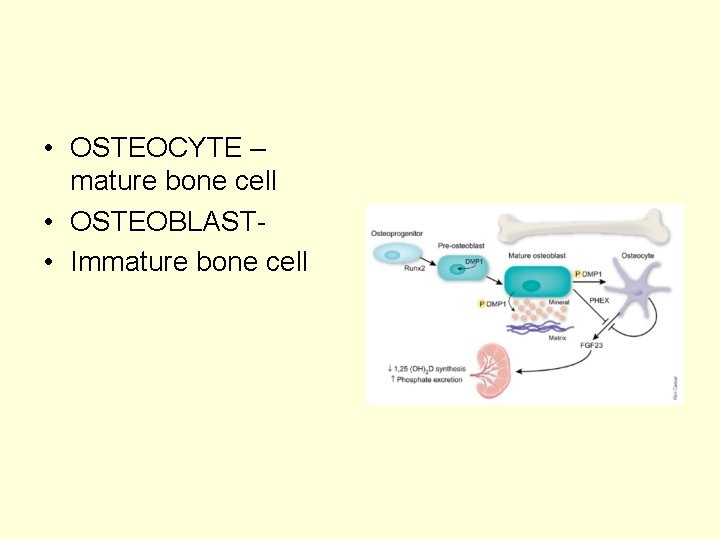
• OSTEOCYTE – mature bone cell • OSTEOBLAST • Immature bone cell
BONE FORMATION • Embryo skeletal starts • At 8 weeks, as osteoblasts OSSIFICATION begins. (Mineral • (primitive embryonic matter begins to cells) – then change replace cartilage to cartilage. • Infant bones soft because ossification not complete at birth
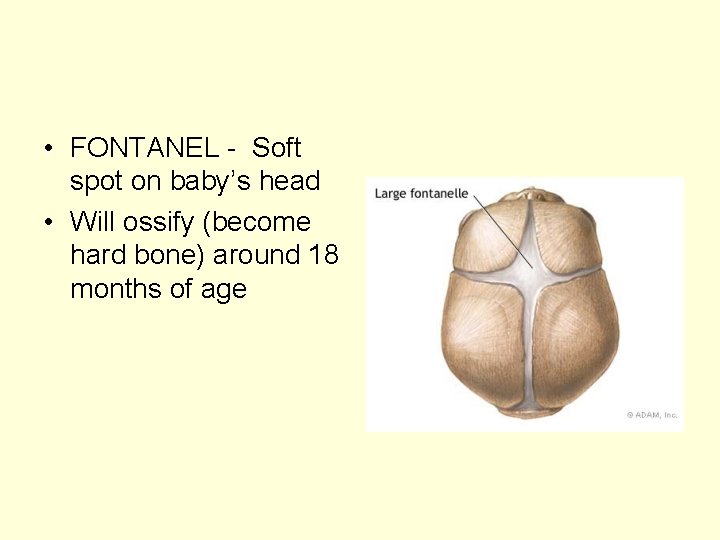
• FONTANEL - Soft spot on baby’s head • Will ossify (become hard bone) around 18 months of age
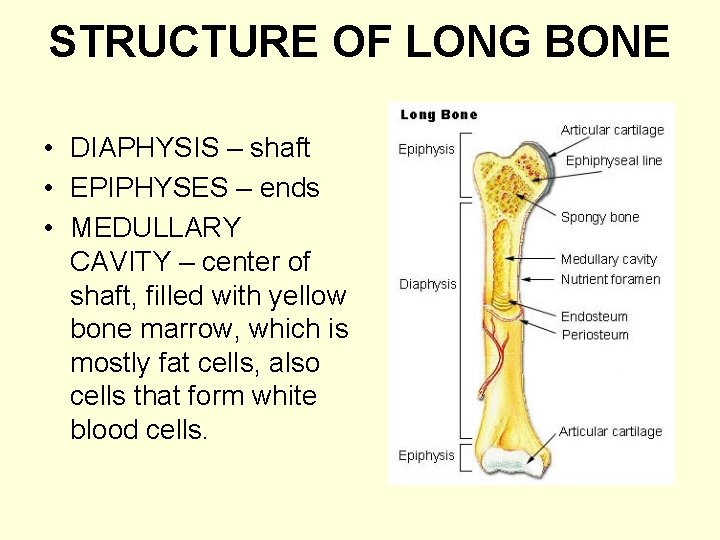
STRUCTURE OF LONG BONE • DIAPHYSIS – shaft • EPIPHYSES – ends • MEDULLARY CAVITY – center of shaft, filled with yellow bone marrow, which is mostly fat cells, also cells that form white blood cells.
• ENDOSTEUM – lines marrow cavity • Shaft is made of COMPACT BONE – ends are SPONGY BONE. Ends contain red marrow where red blood cells are made. • PERIOSTEUM – tough, outside covering of bone – contains blood vessels, lymph vessels and nerves.
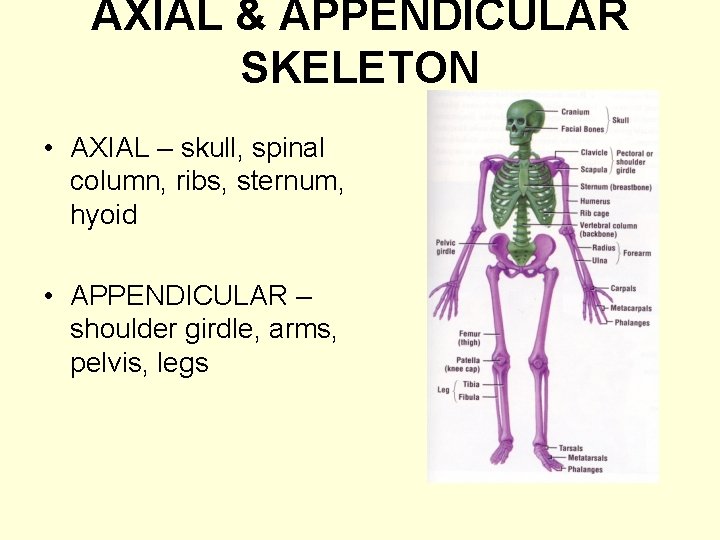
AXIAL & APPENDICULAR SKELETON • AXIAL – skull, spinal column, ribs, sternum, hyoid • APPENDICULAR – shoulder girdle, arms, pelvis, legs
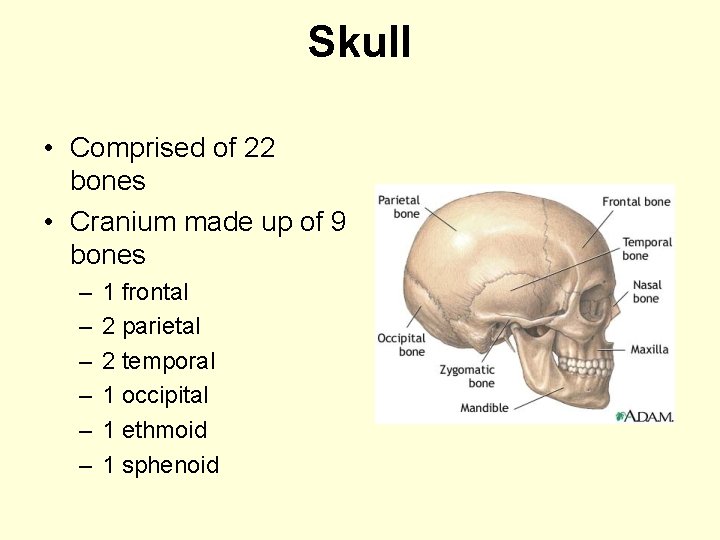
Skull • Comprised of 22 bones • Cranium made up of 9 bones – – – 1 frontal 2 parietal 2 temporal 1 occipital 1 ethmoid 1 sphenoid
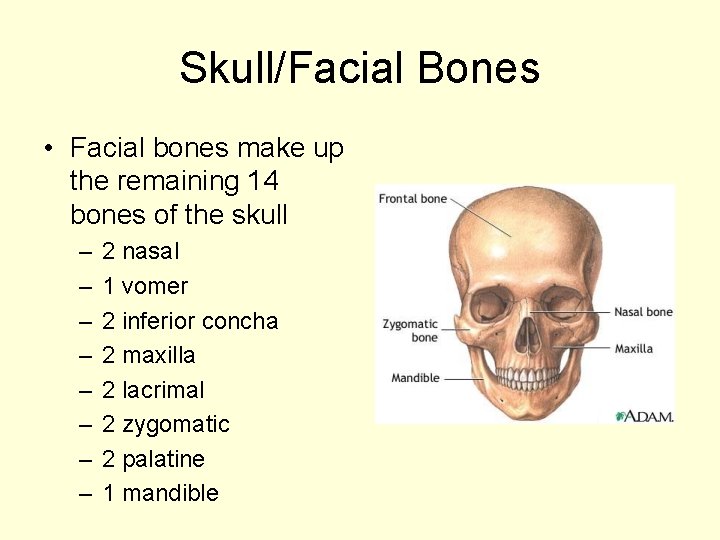
Skull/Facial Bones • Facial bones make up the remaining 14 bones of the skull – – – – 2 nasal 1 vomer 2 inferior concha 2 maxilla 2 lacrimal 2 zygomatic 2 palatine 1 mandible
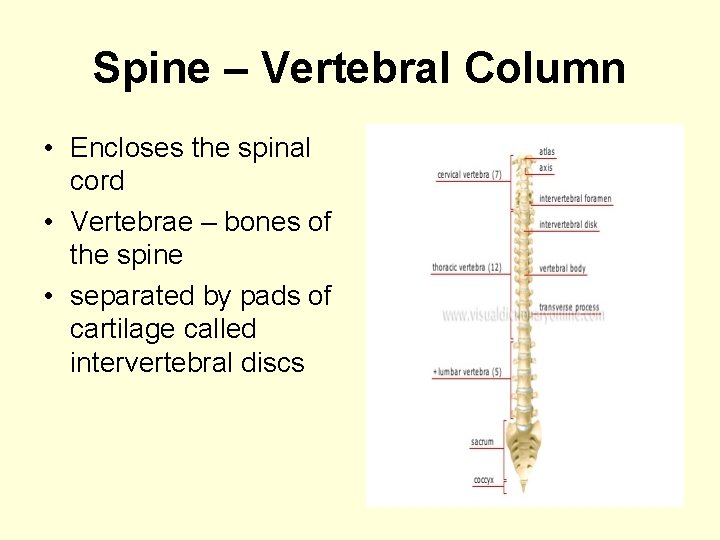
Spine – Vertebral Column • Encloses the spinal cord • Vertebrae – bones of the spine • separated by pads of cartilage called intervertebral discs
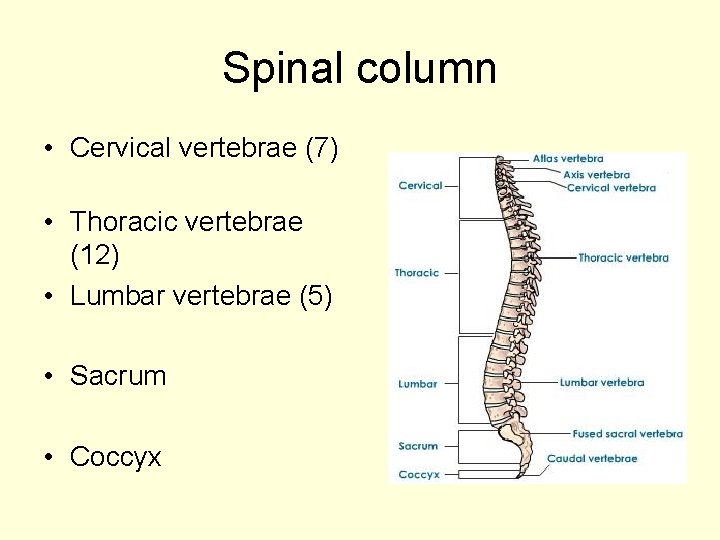
Spinal column • Cervical vertebrae (7) • Thoracic vertebrae (12) • Lumbar vertebrae (5) • Sacrum • Coccyx
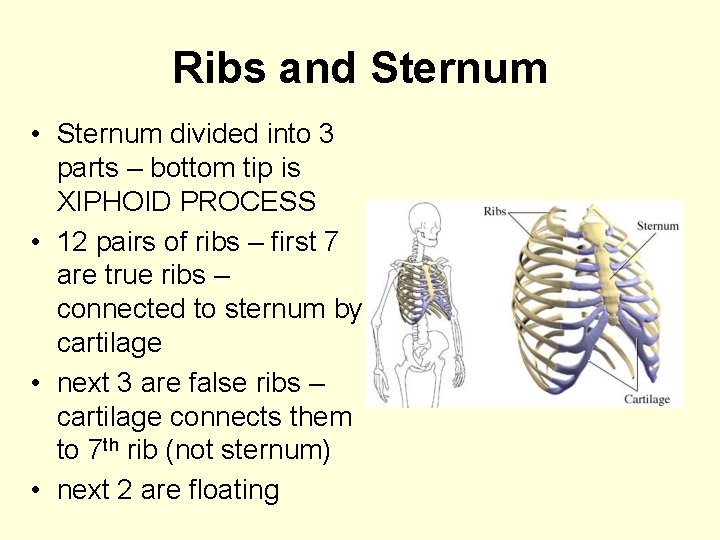
Ribs and Sternum • Sternum divided into 3 parts – bottom tip is XIPHOID PROCESS • 12 pairs of ribs – first 7 are true ribs – connected to sternum by cartilage • next 3 are false ribs – cartilage connects them to 7 th rib (not sternum) • next 2 are floating
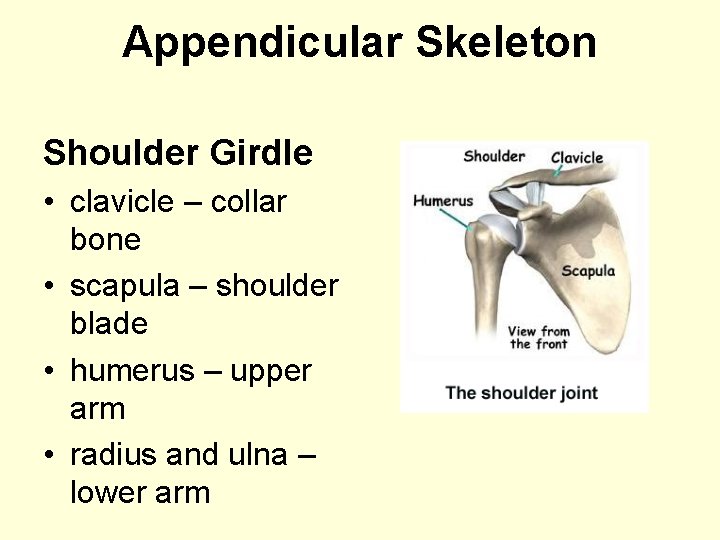
Appendicular Skeleton Shoulder Girdle • clavicle – collar bone • scapula – shoulder blade • humerus – upper arm • radius and ulna – lower arm
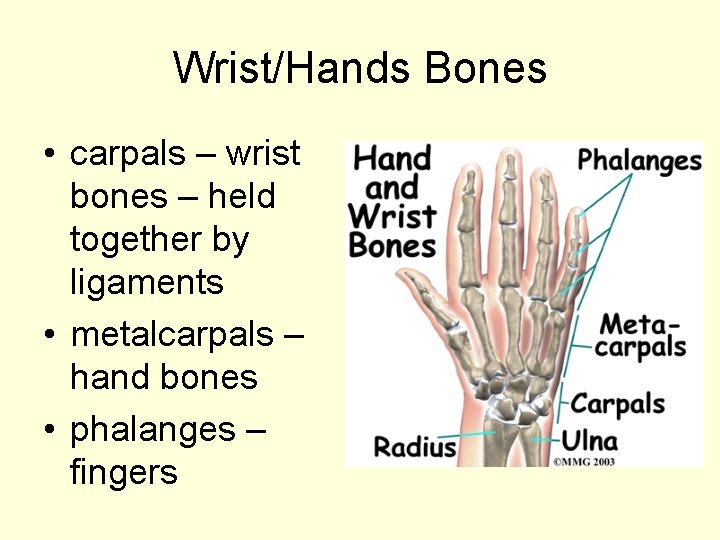
Wrist/Hands Bones • carpals – wrist bones – held together by ligaments • metalcarpals – hand bones • phalanges – fingers
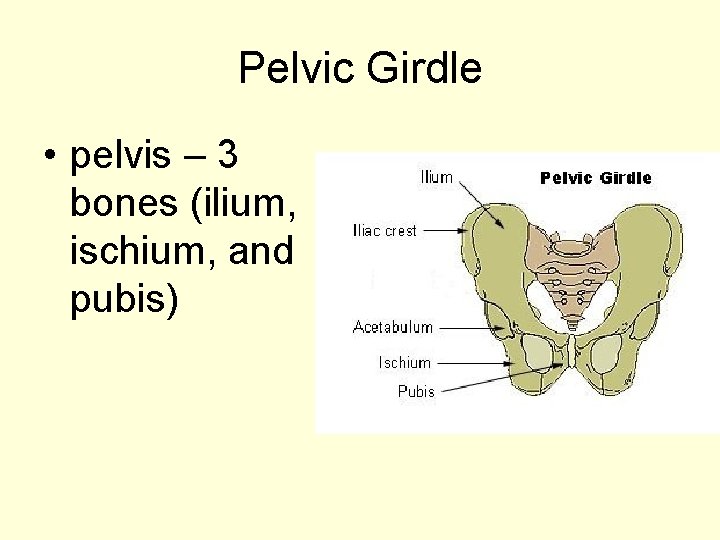
Pelvic Girdle • pelvis – 3 bones (ilium, ischium, and pubis)
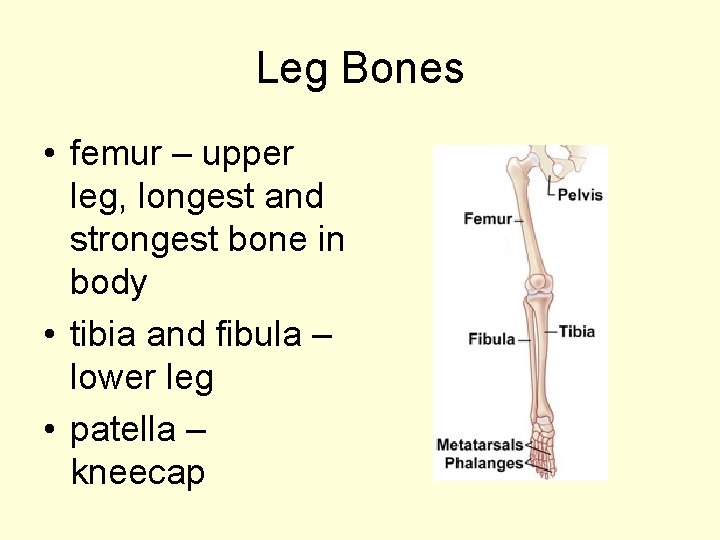
Leg Bones • femur – upper leg, longest and strongest bone in body • tibia and fibula – lower leg • patella – kneecap
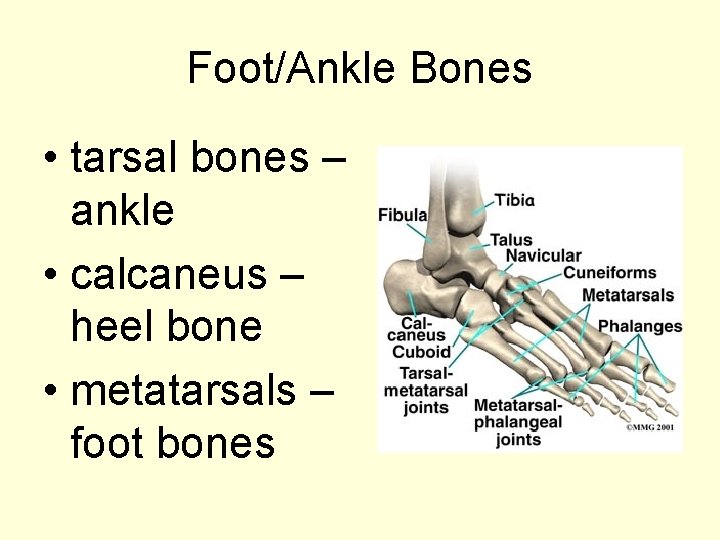
Foot/Ankle Bones • tarsal bones – ankle • calcaneus – heel bone • metatarsals – foot bones
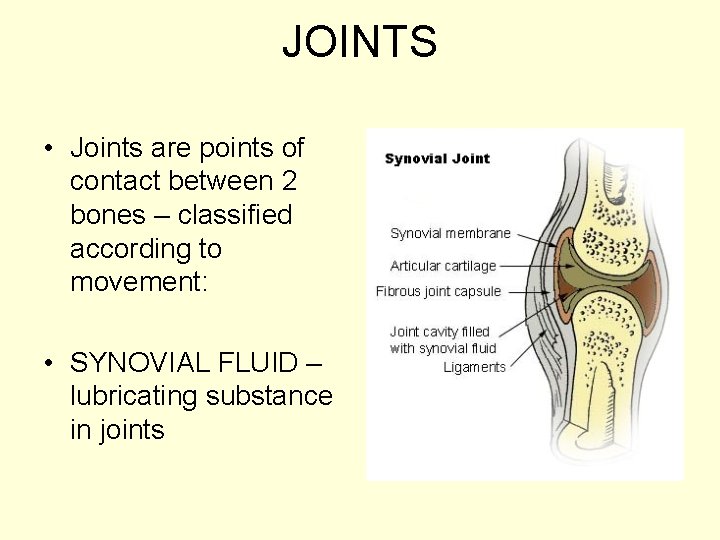
JOINTS • Joints are points of contact between 2 bones – classified according to movement: • SYNOVIAL FLUID – lubricating substance in joints
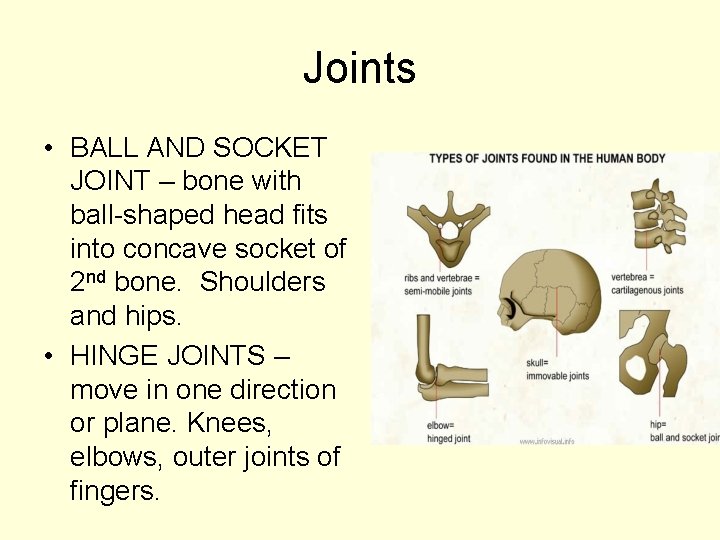
Joints • BALL AND SOCKET JOINT – bone with ball-shaped head fits into concave socket of 2 nd bone. Shoulders and hips. • HINGE JOINTS – move in one direction or plane. Knees, elbows, outer joints of fingers.
Joints • PIVOT JOINT – those with an extension rotate on a 2 nd, arch shaped bone. Radius and ulna, atlas and axis. • GLIDING JOINTS – flat surfaces glide across each other. Vertebrae of spine. • SUTURE – immovable joint
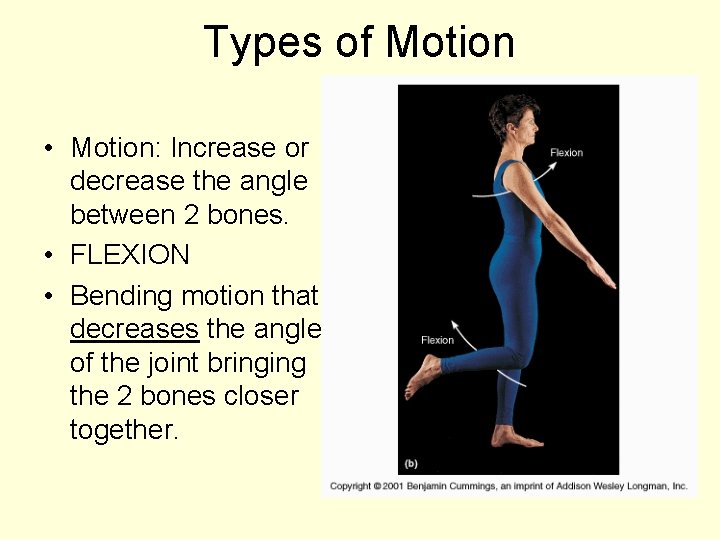
Types of Motion • Motion: Increase or decrease the angle between 2 bones. • FLEXION • Bending motion that decreases the angle of the joint bringing the 2 bones closer together.
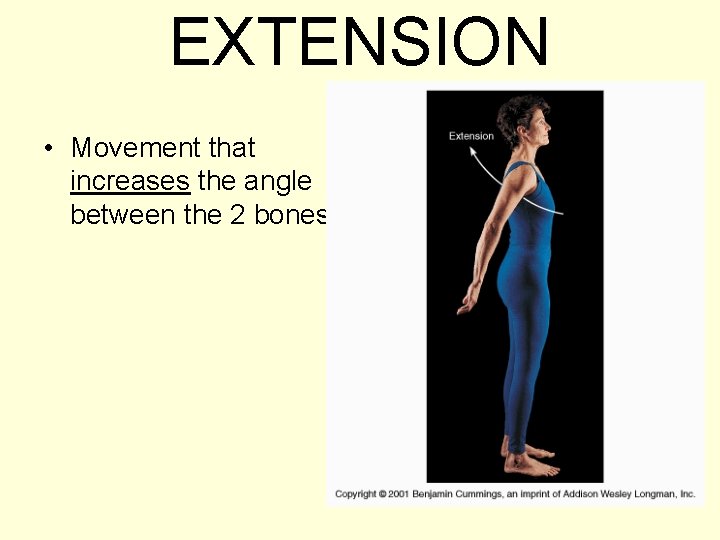
EXTENSION • Movement that increases the angle between the 2 bones.
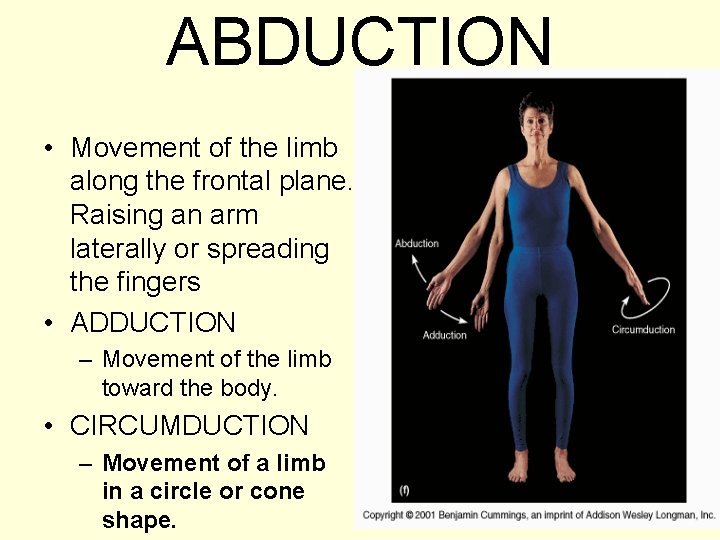
ABDUCTION • Movement of the limb along the frontal plane. Raising an arm laterally or spreading the fingers • ADDUCTION – Movement of the limb toward the body. • CIRCUMDUCTION – Movement of a limb in a circle or cone shape.
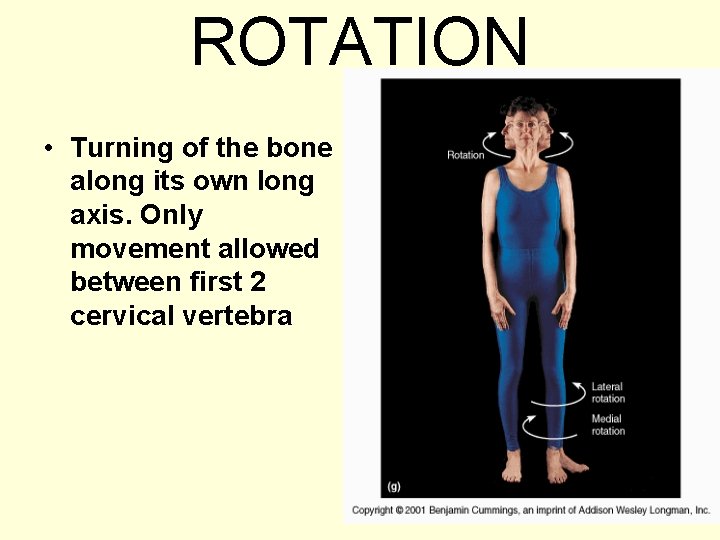
ROTATION • Turning of the bone along its own long axis. Only movement allowed between first 2 cervical vertebra
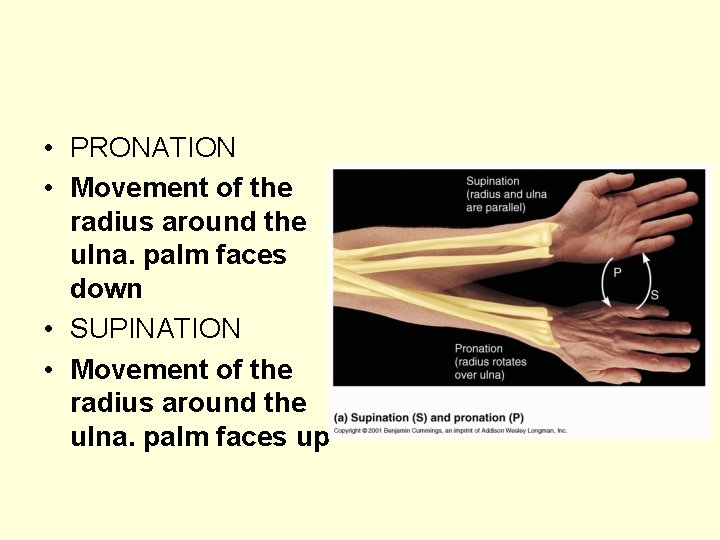
• PRONATION • Movement of the radius around the ulna. palm faces down • SUPINATION • Movement of the radius around the ulna. palm faces up
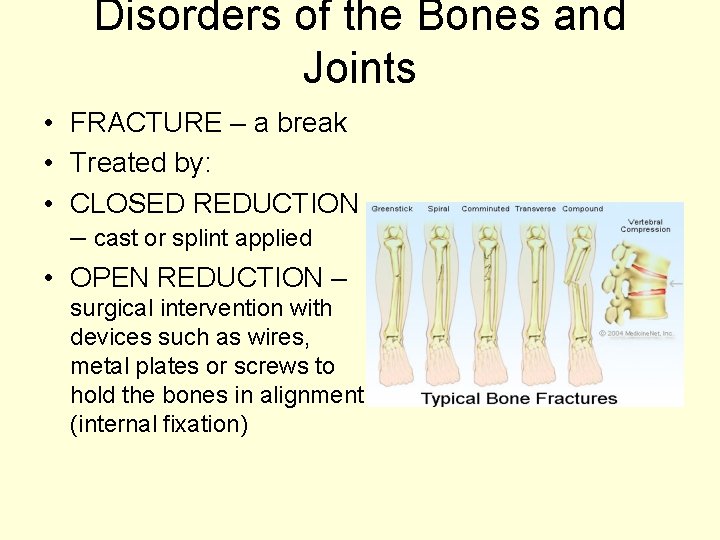
Disorders of the Bones and Joints • FRACTURE – a break • Treated by: • CLOSED REDUCTION – cast or splint applied • OPEN REDUCTION – surgical intervention with devices such as wires, metal plates or screws to hold the bones in alignment (internal fixation)
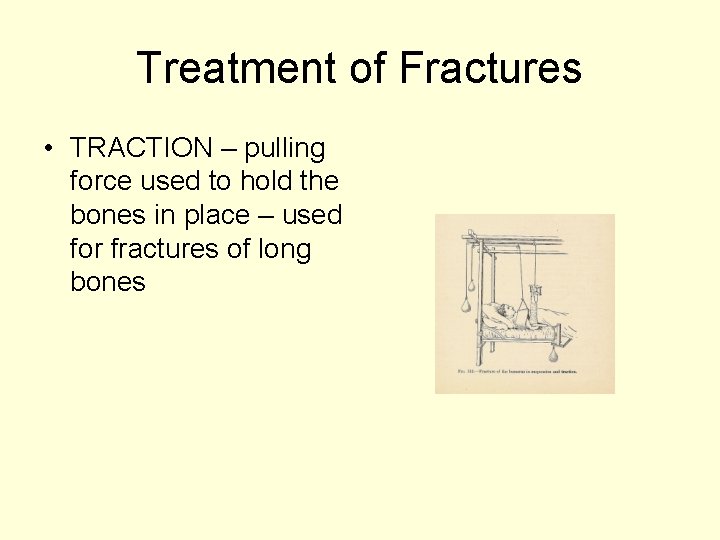
Treatment of Fractures • TRACTION – pulling force used to hold the bones in place – used for fractures of long bones
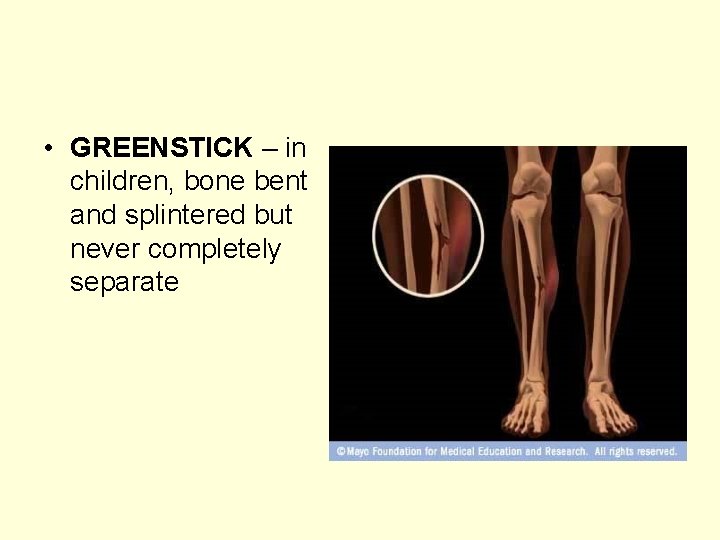
• GREENSTICK – in children, bone bent and splintered but never completely separate
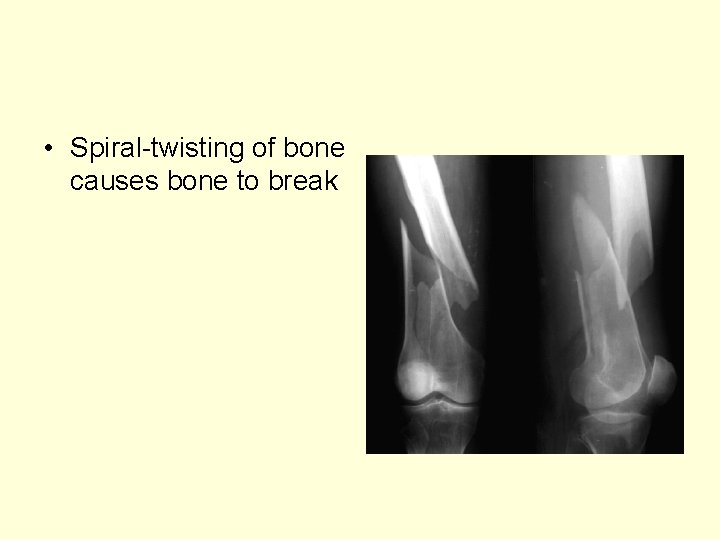
• Spiral-twisting of bone causes bone to break
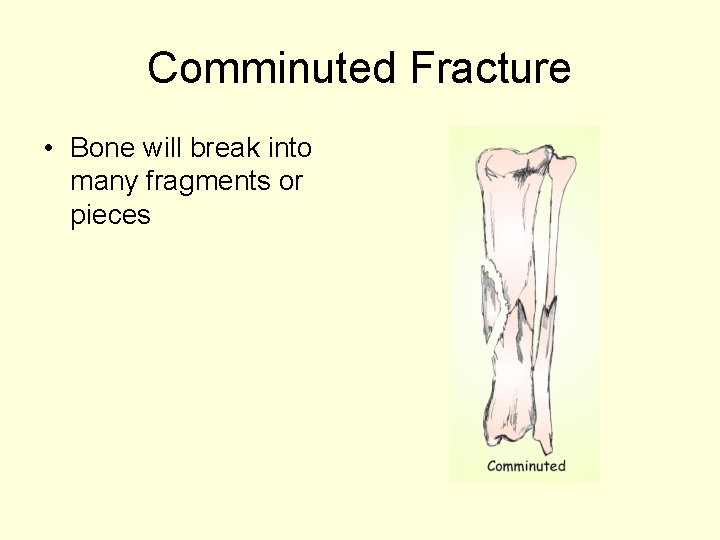
Comminuted Fracture • Bone will break into many fragments or pieces
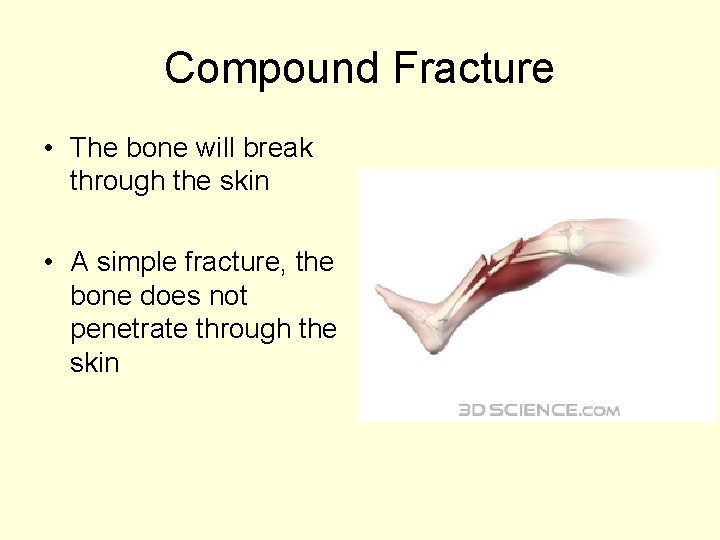
Compound Fracture • The bone will break through the skin • A simple fracture, the bone does not penetrate through the skin
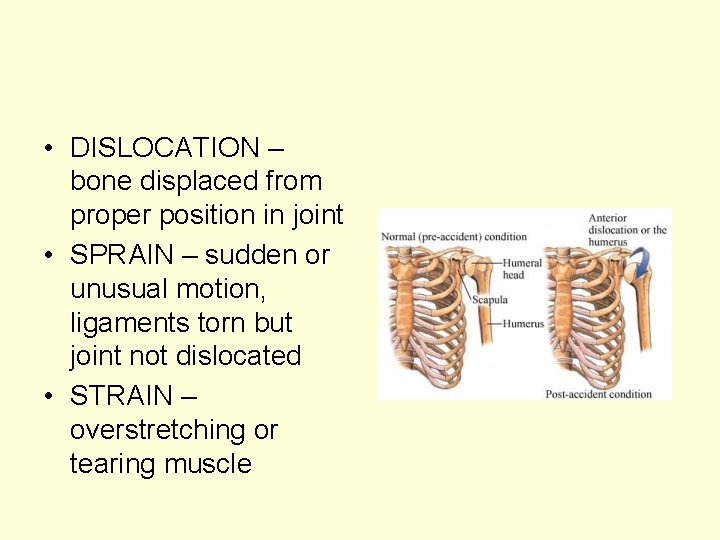
• DISLOCATION – bone displaced from proper position in joint • SPRAIN – sudden or unusual motion, ligaments torn but joint not dislocated • STRAIN – overstretching or tearing muscle
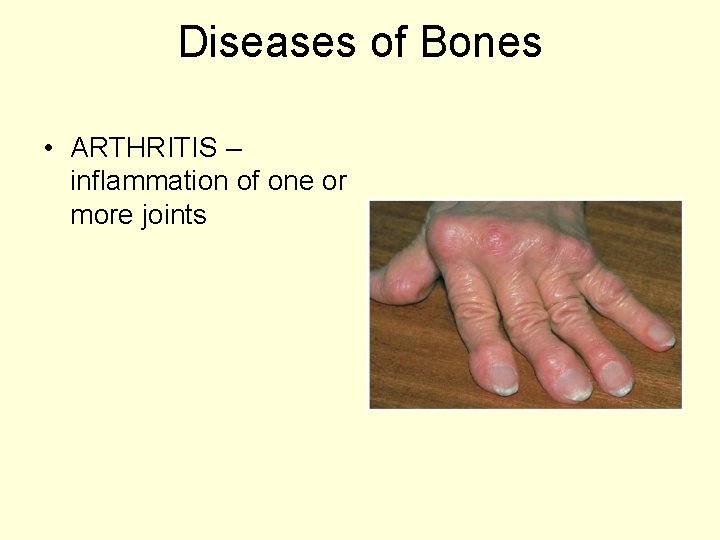
Diseases of Bones • ARTHRITIS – inflammation of one or more joints
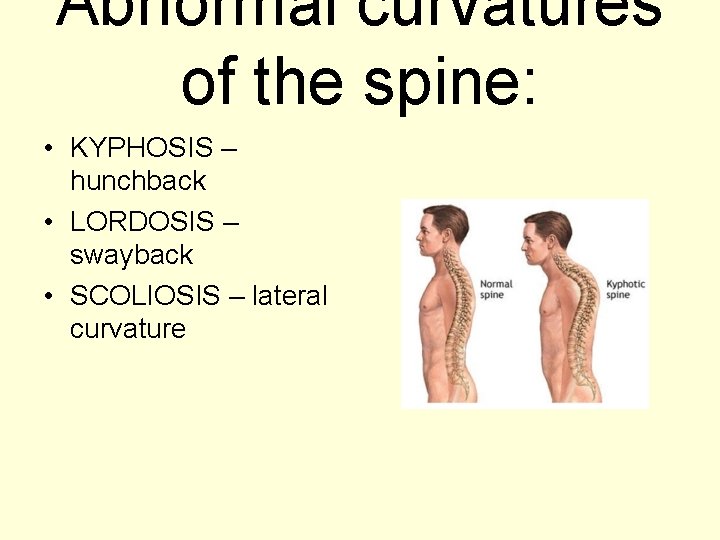
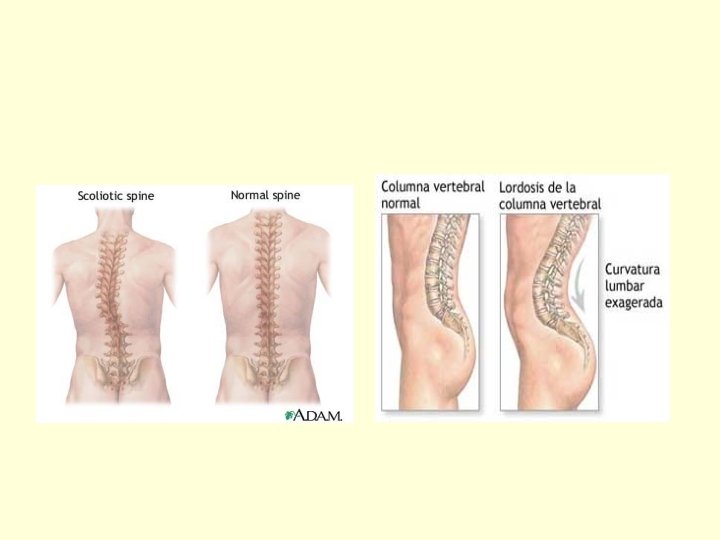
Abnormal curvatures of the spine: • KYPHOSIS – hunchback • LORDOSIS – swayback • SCOLIOSIS – lateral curvature
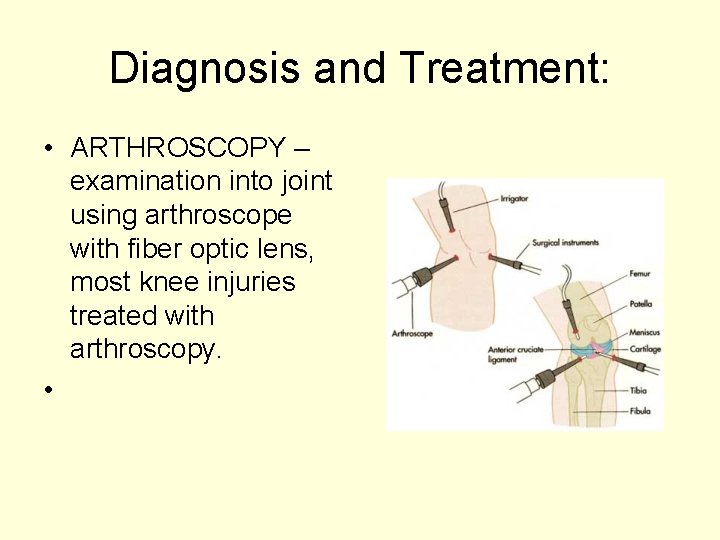
Diagnosis and Treatment: • ARTHROSCOPY – examination into joint using arthroscope with fiber optic lens, most knee injuries treated with arthroscopy. •
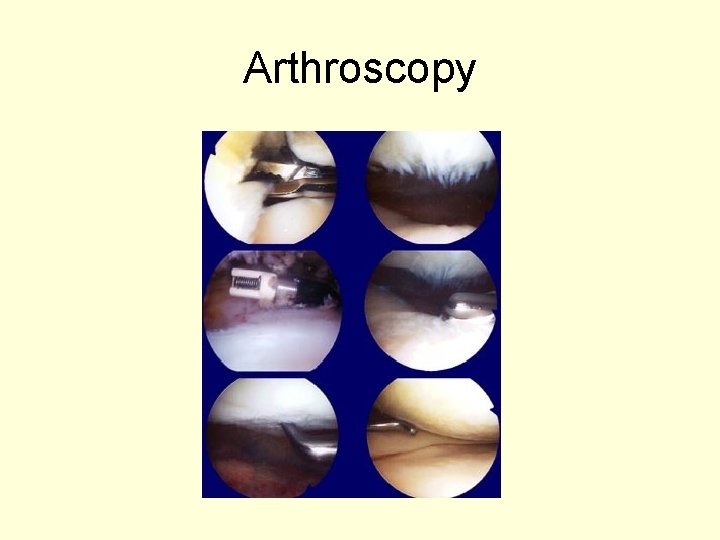
Arthroscopy
- Slides: 38