
SKELETAL SYSTEM 206 bones FUNCTIONS Bones of lower
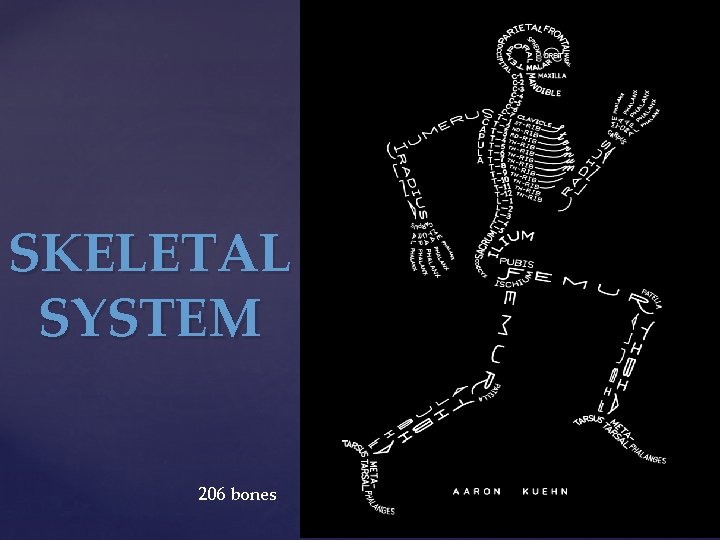
SKELETAL SYSTEM 206 bones
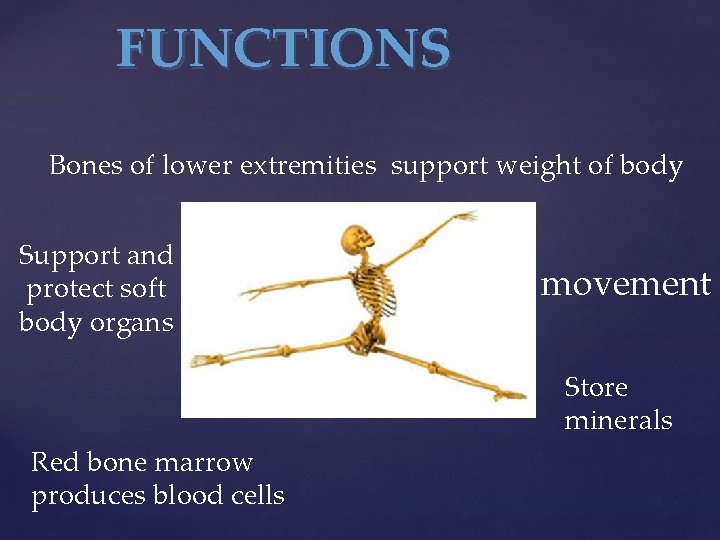
FUNCTIONS Bones of lower extremities support weight of body Support and protect soft body organs movement Store minerals Red bone marrow produces blood cells
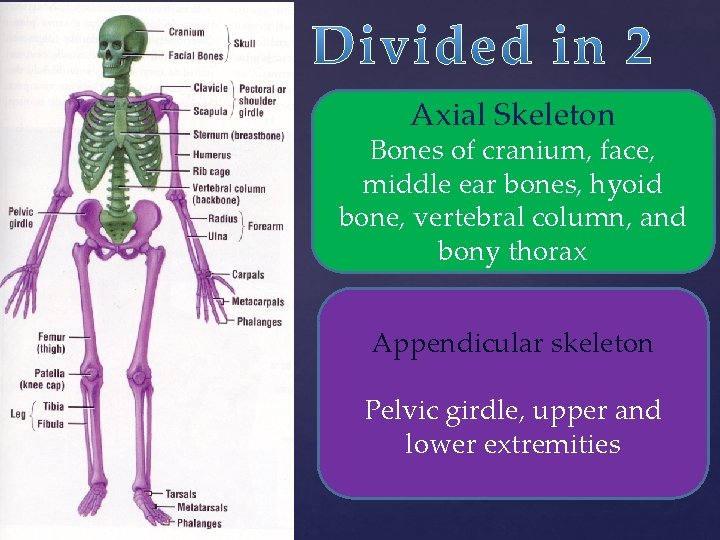
Axial Skeleton Bones of cranium, face, middle ear bones, hyoid bone, vertebral column, and bony thorax Appendicular skeleton Pelvic girdle, upper and lower extremities
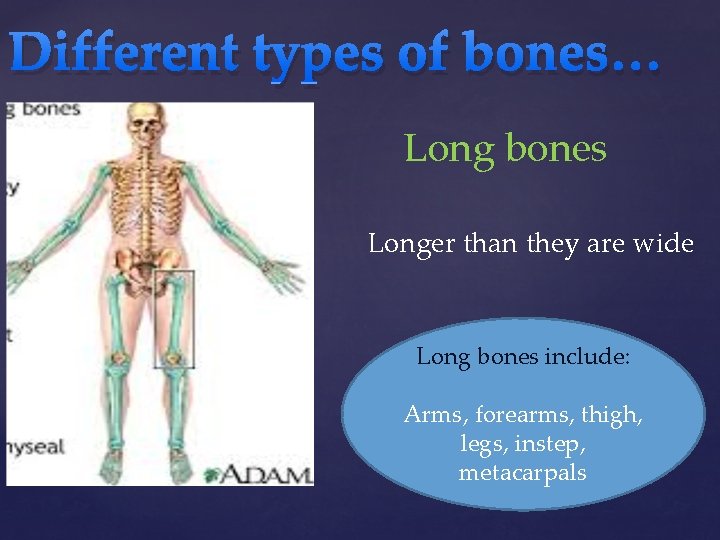
Different types of bones… Long bones Longer than they are wide Long bones include: Arms, forearms, thigh, legs, instep, metacarpals
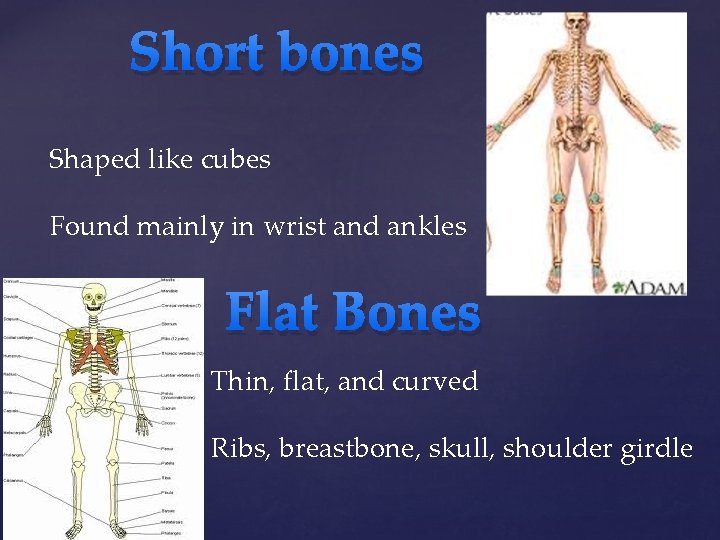
Short bones Shaped like cubes Found mainly in wrist and ankles Flat Bones Thin, flat, and curved Ribs, breastbone, skull, shoulder girdle
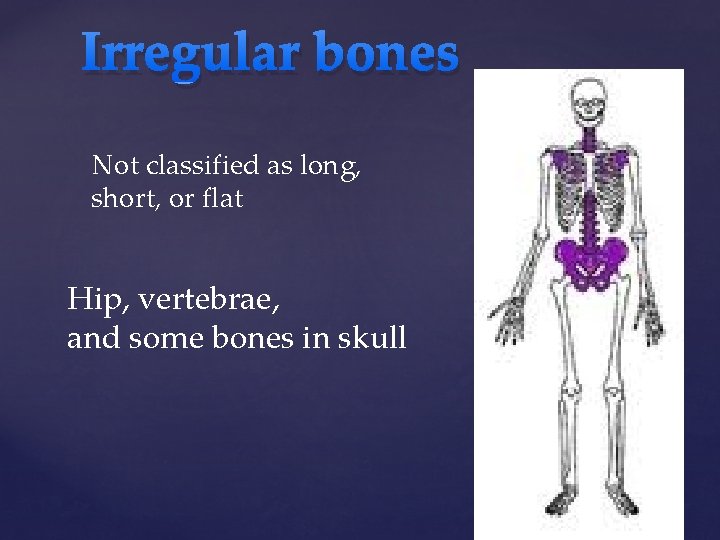
Irregular bones Not classified as long, short, or flat Hip, vertebrae, and some bones in skull
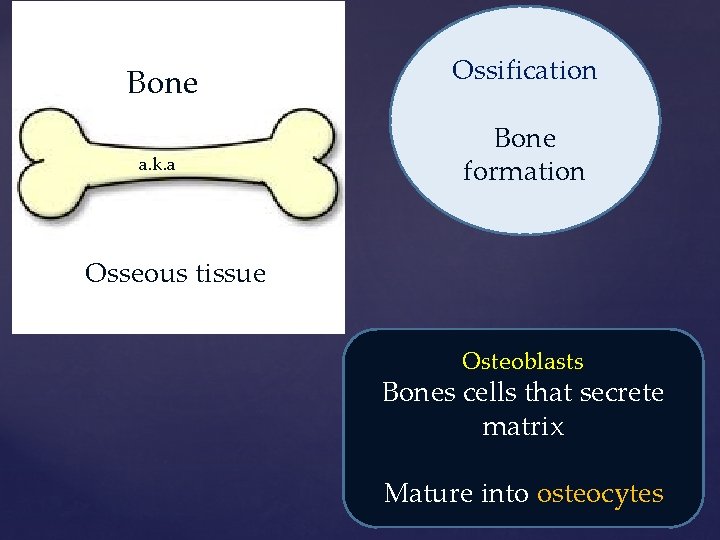
Bone a. k. a. Ossification Bone formation Osseous tissue Osteoblasts Bones cells that secrete matrix Mature into osteocytes
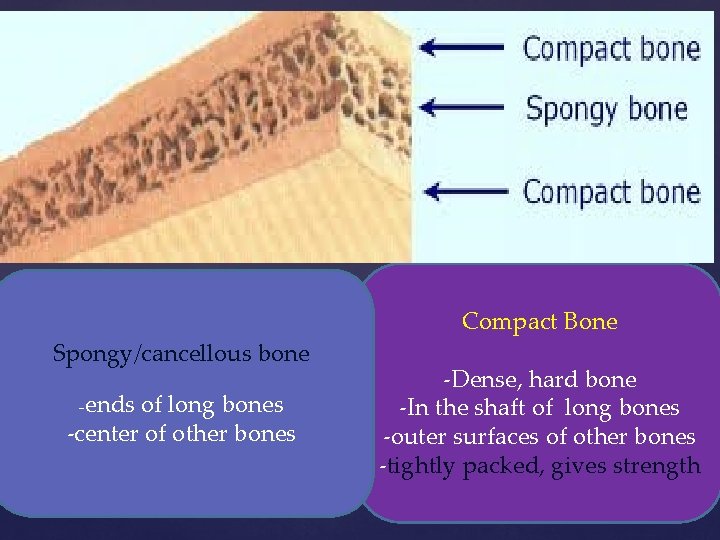
Compact Bone Spongy/cancellous bone -ends of long bones -center of other bones -Dense, hard bone -In the shaft of long bones -outer surfaces of other bones -tightly packed, gives strength
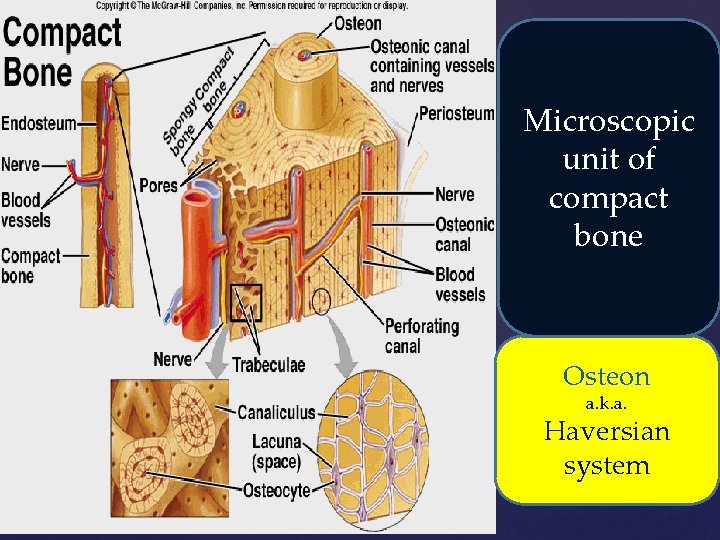
Microscopic unit of compact bone Osteon a. k. a. Haversian system
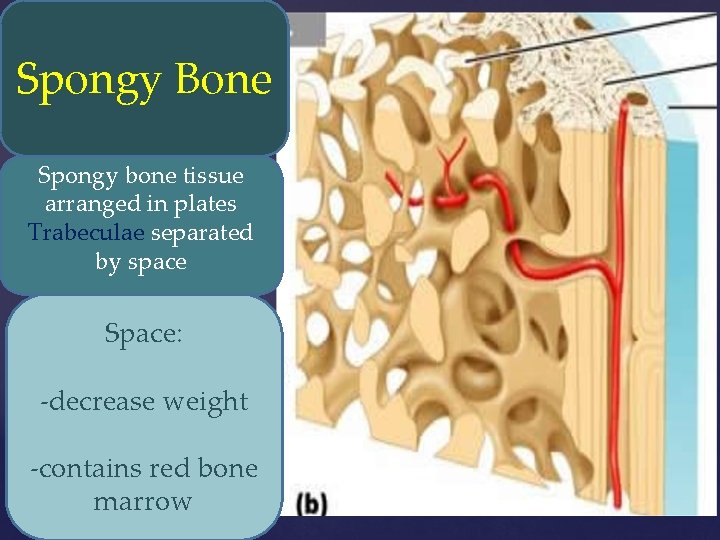
Spongy Bone Spongy bone tissue arranged in plates Trabeculae separated by space Space: -decrease weight -contains red bone marrow
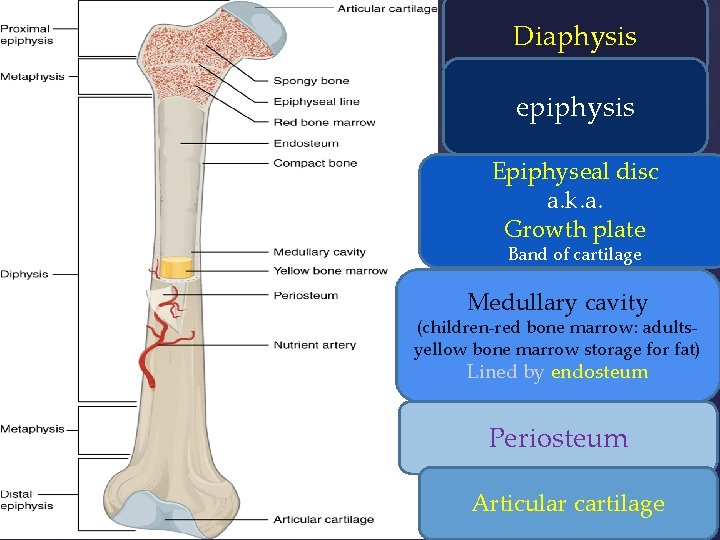
Diaphysis epiphysis Epiphyseal disc a. k. a. Growth plate Band of cartilage Medullary cavity (children-red bone marrow: adultsyellow bone marrow storage for fat) Lined by endosteum Periosteum Articular cartilage



- Slides: 14