
Skeletal Muscular and Immune Systems Review The process

- Slides: 33
Skeletal, Muscular and Immune Systems Review
The process in which provides the movement of the body or body parts from 1 place to another is know as Locomotion _________.
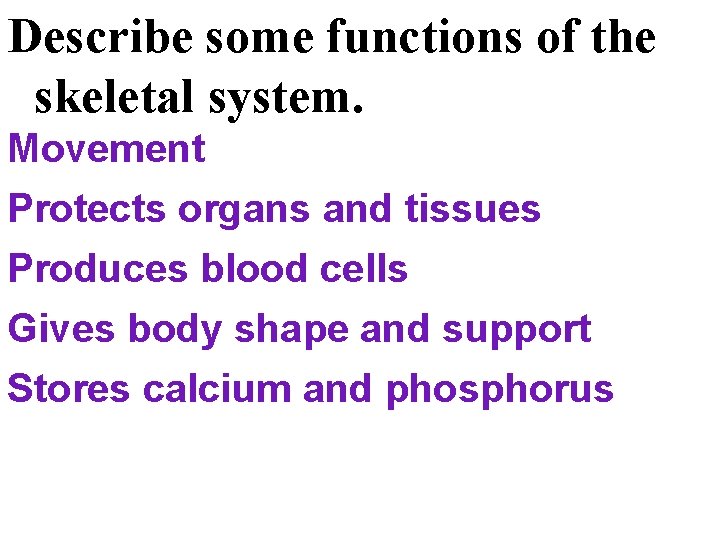
Describe some functions of the skeletal system. Movement Protects organs and tissues Produces blood cells Gives body shape and support Stores calcium and phosphorus
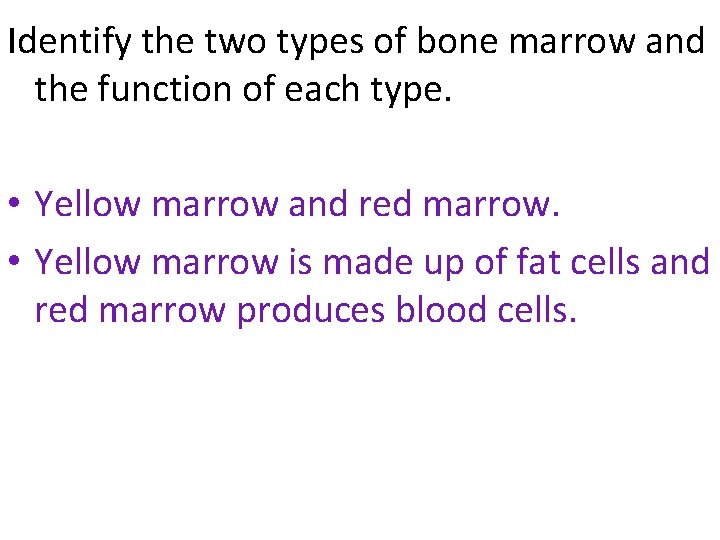
Identify the two types of bone marrow and the function of each type. • Yellow marrow and red marrow. • Yellow marrow is made up of fat cells and red marrow produces blood cells.
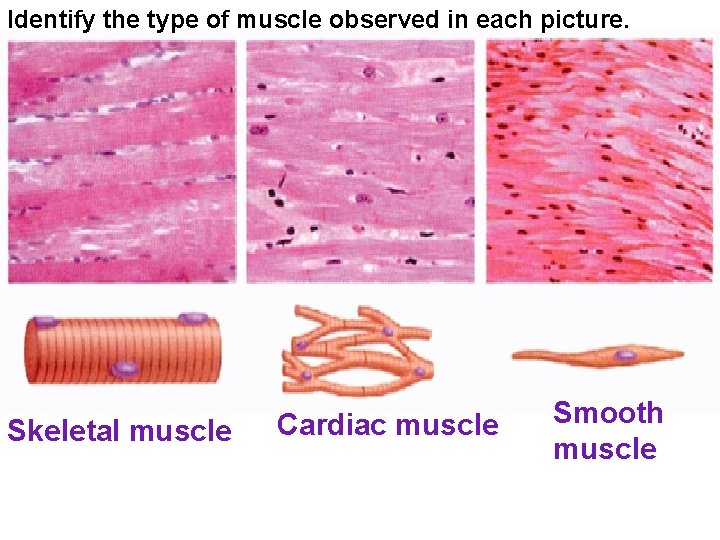
Identify the type of muscle observed in each picture. Skeletal muscle Cardiac muscle Smooth muscle
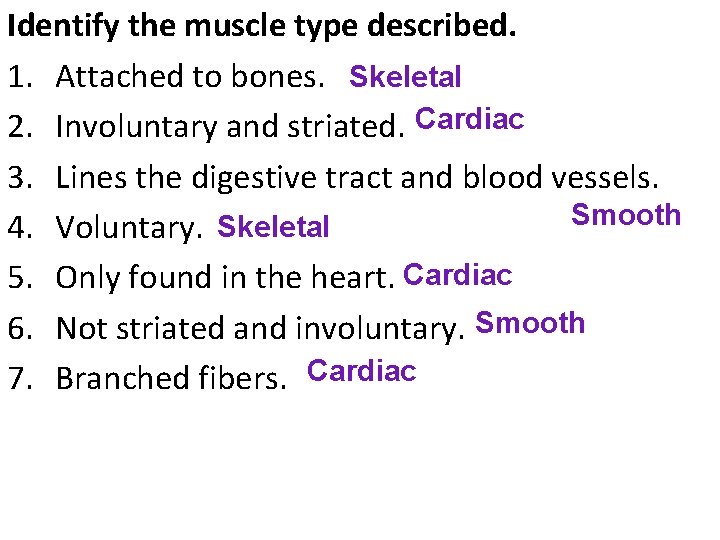
Identify the muscle type described. 1. Attached to bones. Skeletal 2. Involuntary and striated. Cardiac 3. Lines the digestive tract and blood vessels. Smooth 4. Voluntary. Skeletal 5. Only found in the heart. Cardiac 6. Not striated and involuntary. Smooth 7. Branched fibers. Cardiac
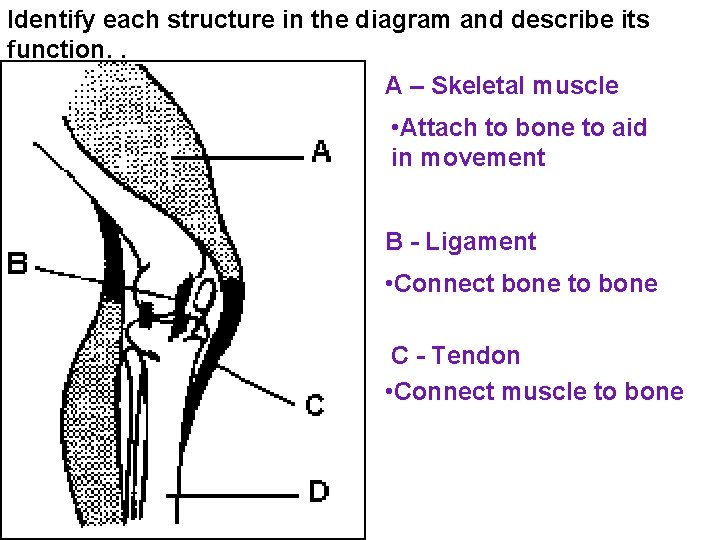
Identify each structure in the diagram and describe its function. . A – Skeletal muscle • Attach to bone to aid in movement B - Ligament • Connect bone to bone C - Tendon • Connect muscle to bone
The tissue that cushions the vertebrae and provides flexibility to joints is known as cartilage _______.
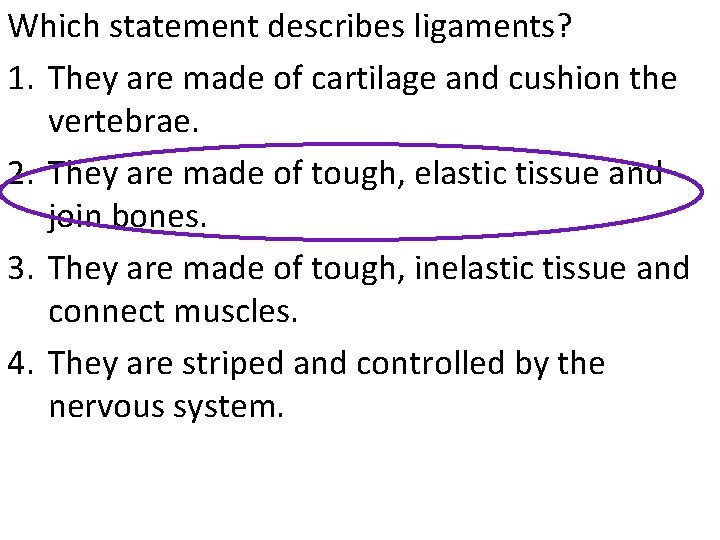
Which statement describes ligaments? 1. They are made of cartilage and cushion the vertebrae. 2. They are made of tough, elastic tissue and join bones. 3. They are made of tough, inelastic tissue and connect muscles. 4. They are striped and controlled by the nervous system.
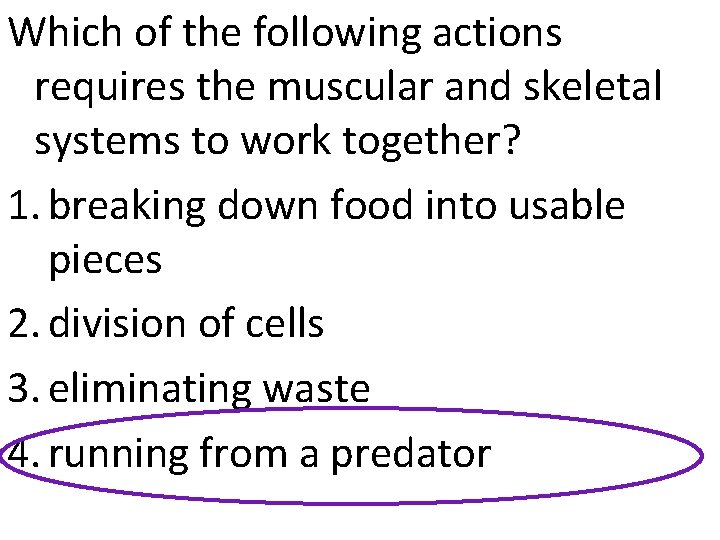
Which of the following actions requires the muscular and skeletal systems to work together? 1. breaking down food into usable pieces 2. division of cells 3. eliminating waste 4. running from a predator
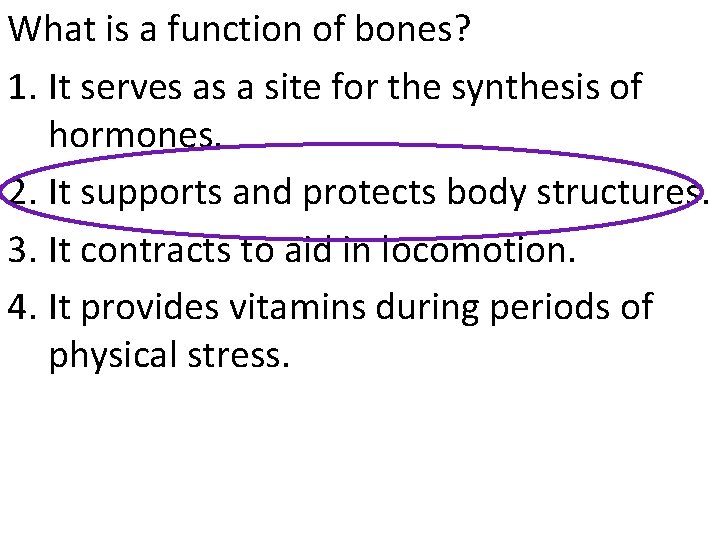
What is a function of bones? 1. It serves as a site for the synthesis of hormones. 2. It supports and protects body structures. 3. It contracts to aid in locomotion. 4. It provides vitamins during periods of physical stress.
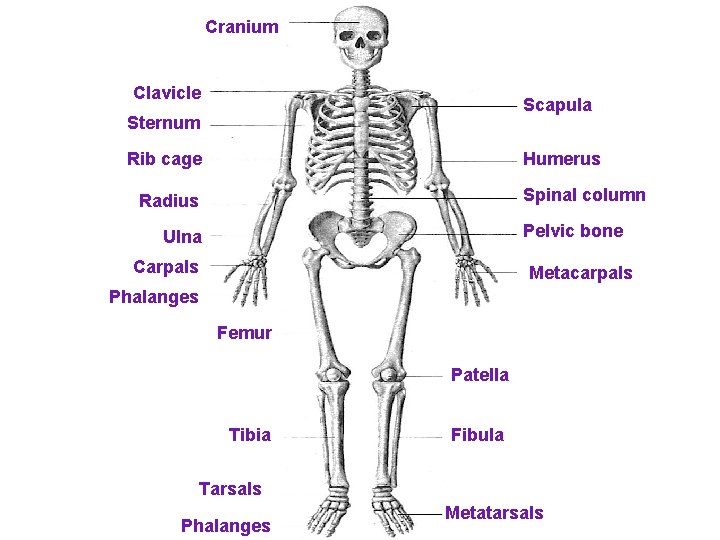
Cranium Clavicle Scapula Sternum Rib cage Humerus Spinal column Radius Pelvic bone Ulna Carpals Metacarpals Phalanges Femur Patella Tibia Fibula Tarsals Phalanges Metatarsals
Explain how wbc’s can protect the body against disease. Wbc’s produce antibodies and memory cells when a pathogen (antigen) enter the body.
Give an example of a process that brings about active immunity. Person can come into contact with the pathogen (get sick). A person can get a vaccine.
What substances are formed by the human body in response to foreign proteins entering the body? Antibodies
An individual who has had chicken pox rarely gets this disease again. What type of immunity is represented? Active Immunity
Explain the contents of a vaccine. Dead or weak PATHOGEN
How does a measles vaccine protect a child entering school against the measles? Vaccine is injected. The body produces antibodies and memory cells. Antibodies attach to antigens on the pathogen to help kill the pathogen. Memory cells remain in your blood to “remember” the pathogen.
Which type of immunity is when your body makes the antibodies after recovering from a disease or getting a vaccination? Passive Immunity
The immune system of humans may respond to chemicals on the surface of an invading organism. What are these chemicals on the surface called? Explain what will happen once these chemicals enter the body. Antigens The body will produce anibodies and memory cells.
Which substances may form in the human body due to invaders entering the blood? Anibodies and memory cells.
1. What is an allergy? An oversensitivity to a HARMLESS substance. Ex: pollen, dust, peanuts, animal dander 2. What occurs when someone experiences an allergic reaction? The body produces chemicals called HISTAMINES.
1. What pathogen causes AIDS? HIV (which is a virus) 2. What is the effect of AIDS on the body? It weakens the immune system so the body cannot fight pathogens well.
Describe cancer. Uncontrolled cell growth A tumor may form.
Which statement best describes what happens when someone receives a vaccination? 1. The ability to fight disease will increase due to antibodies received from the pathogen. 2. The ability to fight disease caused by the pathogen will increase due to antibody production. 3. The ability to produce antibodies will decrease after the vaccination. 4. The ability to resist most types of diseases will increase.
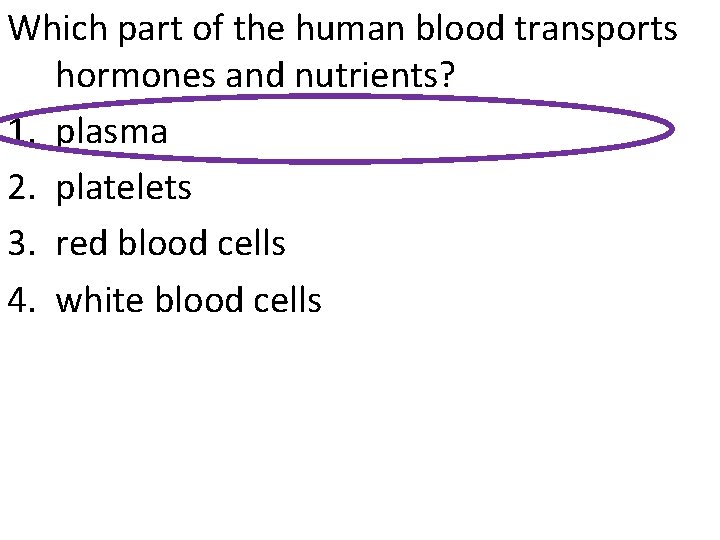
Which part of the human blood transports hormones and nutrients? 1. plasma 2. platelets 3. red blood cells 4. white blood cells
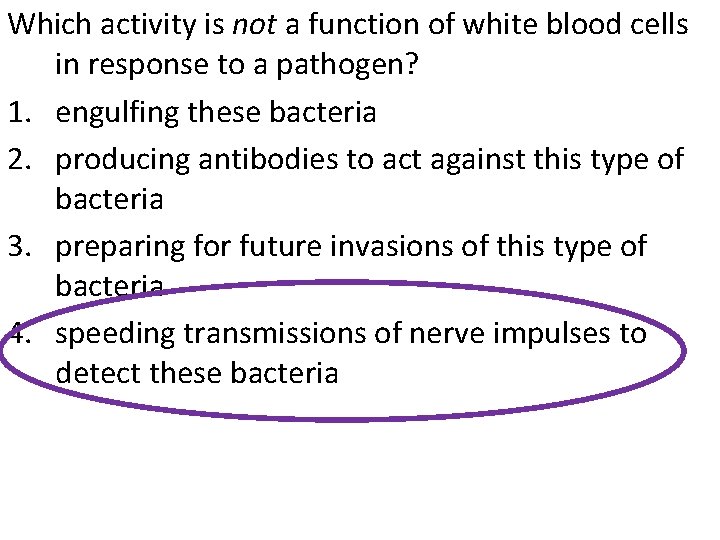
Which activity is not a function of white blood cells in response to a pathogen? 1. engulfing these bacteria 2. producing antibodies to act against this type of bacteria 3. preparing for future invasions of this type of bacteria 4. speeding transmissions of nerve impulses to detect these bacteria
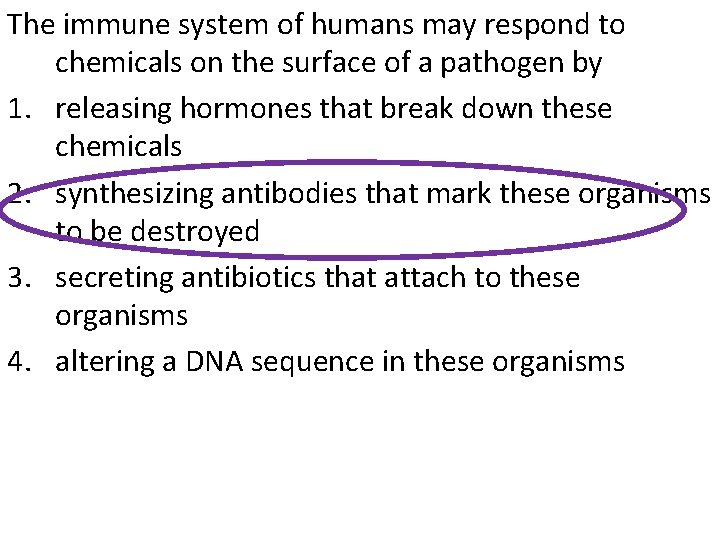
The immune system of humans may respond to chemicals on the surface of a pathogen by 1. releasing hormones that break down these chemicals 2. synthesizing antibodies that mark these organisms to be destroyed 3. secreting antibiotics that attach to these organisms 4. altering a DNA sequence in these organisms
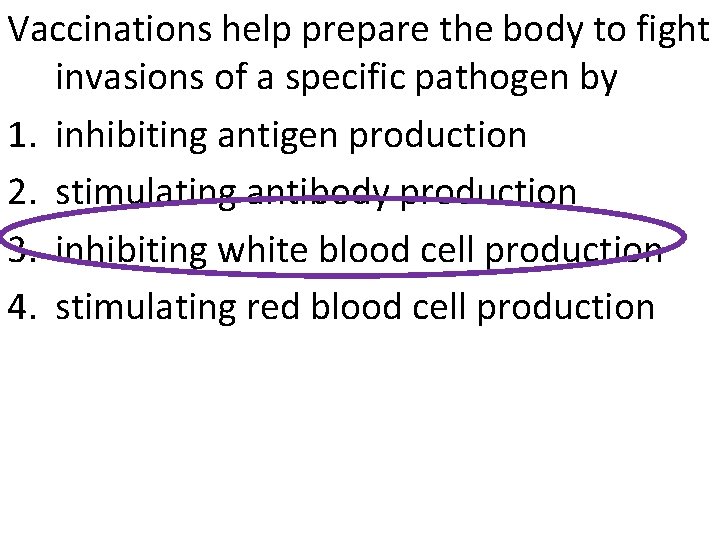
Vaccinations help prepare the body to fight invasions of a specific pathogen by 1. inhibiting antigen production 2. stimulating antibody production 3. inhibiting white blood cell production 4. stimulating red blood cell production
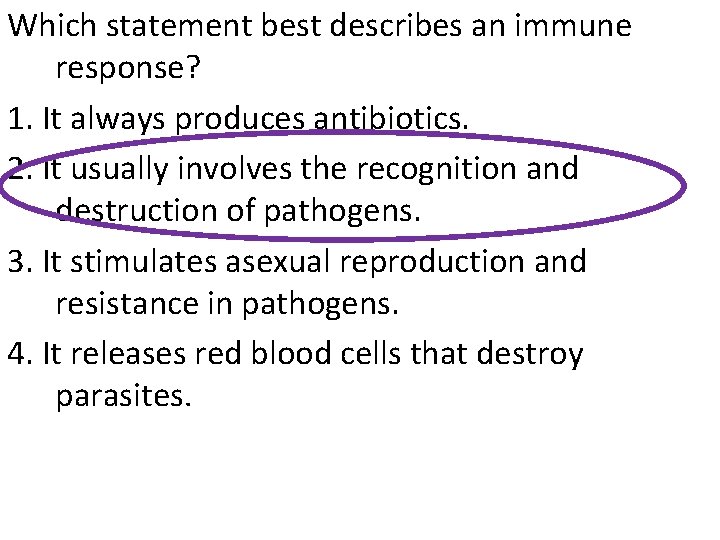
Which statement best describes an immune response? 1. It always produces antibiotics. 2. It usually involves the recognition and destruction of pathogens. 3. It stimulates asexual reproduction and resistance in pathogens. 4. It releases red blood cells that destroy parasites.
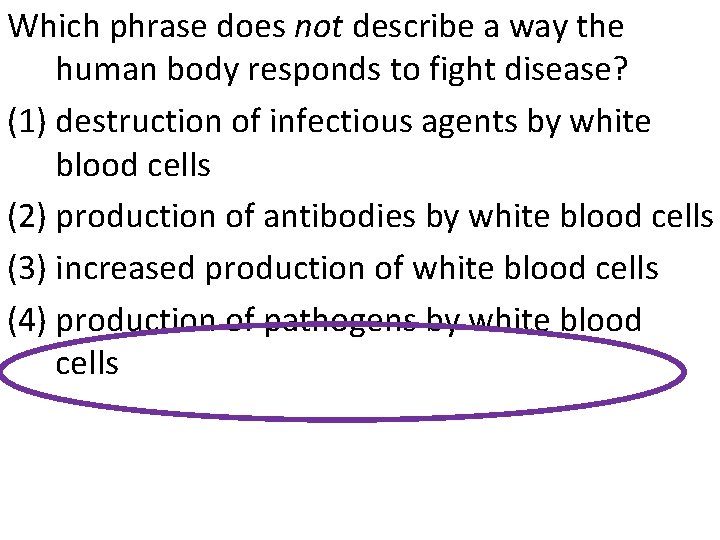
Which phrase does not describe a way the human body responds to fight disease? (1) destruction of infectious agents by white blood cells (2) production of antibodies by white blood cells (3) increased production of white blood cells (4) production of pathogens by white blood cells
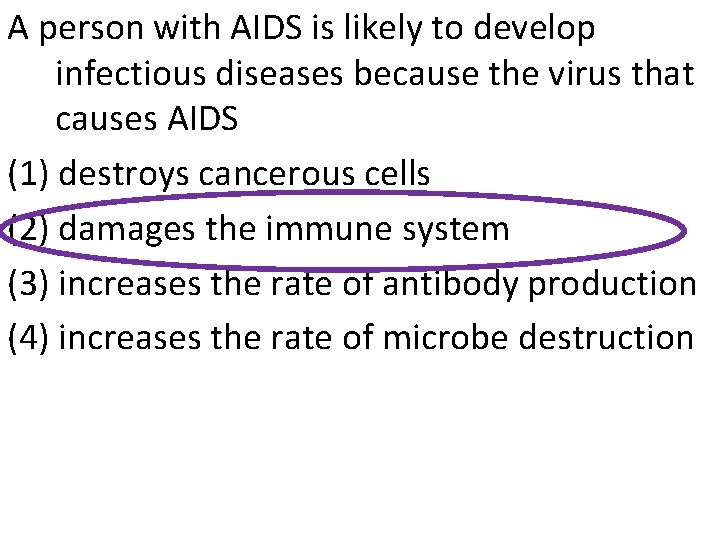
A person with AIDS is likely to develop infectious diseases because the virus that causes AIDS (1) destroys cancerous cells (2) damages the immune system (3) increases the rate of antibody production (4) increases the rate of microbe destruction
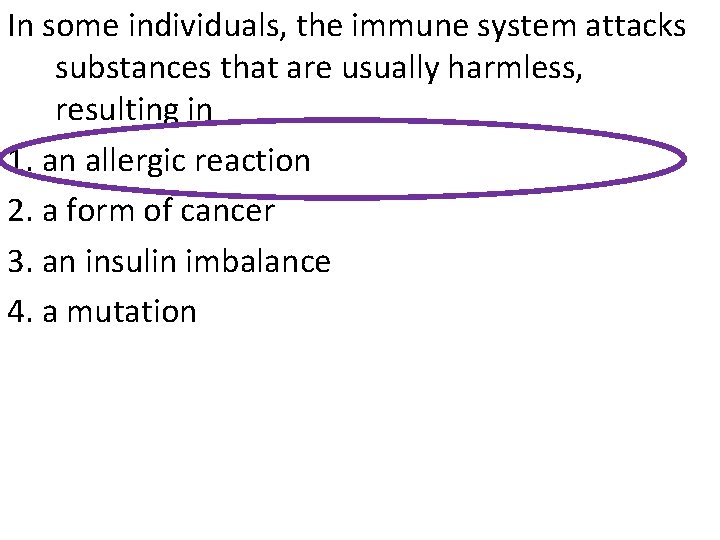
In some individuals, the immune system attacks substances that are usually harmless, resulting in 1. an allergic reaction 2. a form of cancer 3. an insulin imbalance 4. a mutation