
Skeletal Muscles Contraction Prof K Sivapalan Actin Filament

- Slides: 21
Skeletal Muscles- Contraction Prof. K. Sivapalan
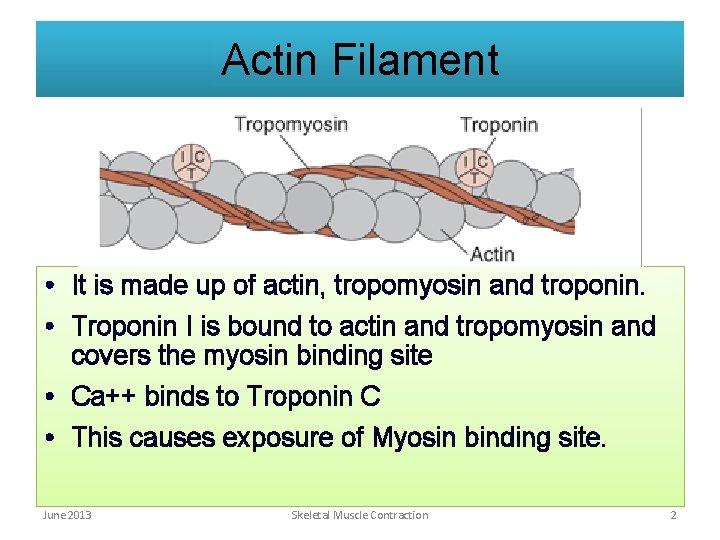
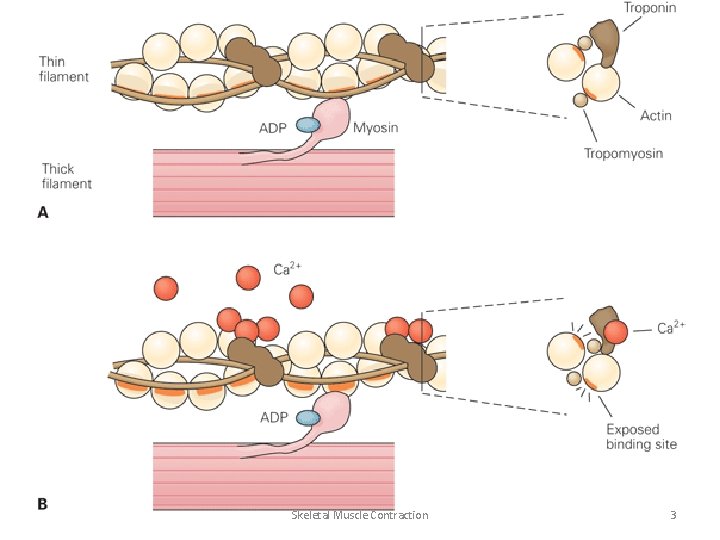
Actin Filament • It is made up of actin, tropomyosin and troponin. • Troponin I is bound to actin and tropomyosin and covers the myosin binding site • Ca++ binds to Troponin C • This causes exposure of Myosin binding site. June 2013 Skeletal Muscle Contraction 2
June 2013 Skeletal Muscle Contraction 3
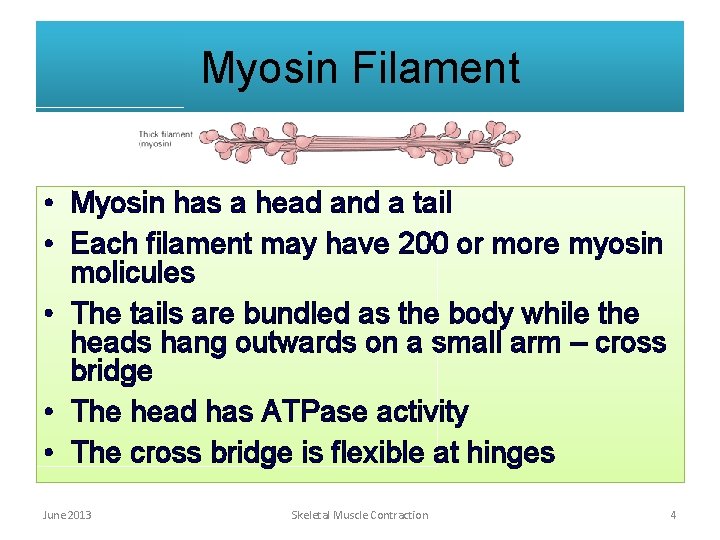
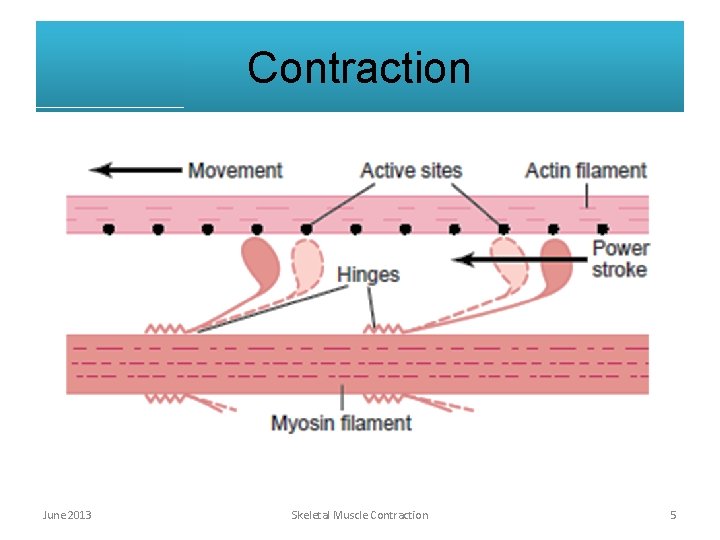
Myosin Filament • Myosin has a head and a tail • Each filament may have 200 or more myosin molicules • The tails are bundled as the body while the heads hang outwards on a small arm – cross bridge • The head has ATPase activity • The cross bridge is flexible at hinges June 2013 Skeletal Muscle Contraction 4
Contraction June 2013 Skeletal Muscle Contraction 5
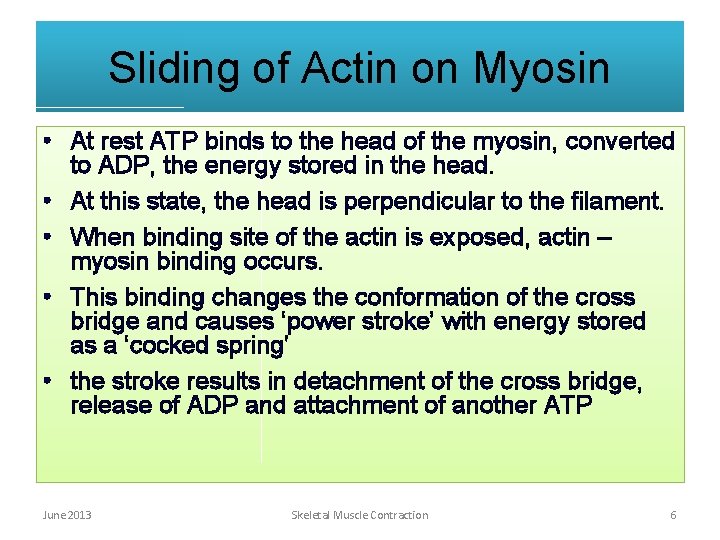
Sliding of Actin on Myosin • At rest ATP binds to the head of the myosin, converted to ADP, the energy stored in the head. • At this state, the head is perpendicular to the filament. • When binding site of the actin is exposed, actin – myosin binding occurs. • This binding changes the conformation of the cross bridge and causes ‘power stroke’ with energy stored as a ‘cocked spring’ • the stroke results in detachment of the cross bridge, release of ADP and attachment of another ATP June 2013 Skeletal Muscle Contraction 6
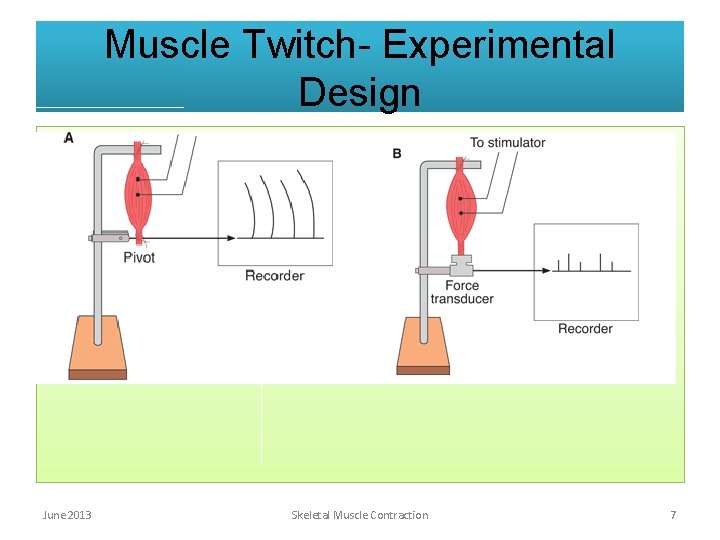
Muscle Twitch- Experimental Design June 2013 Skeletal Muscle Contraction 7
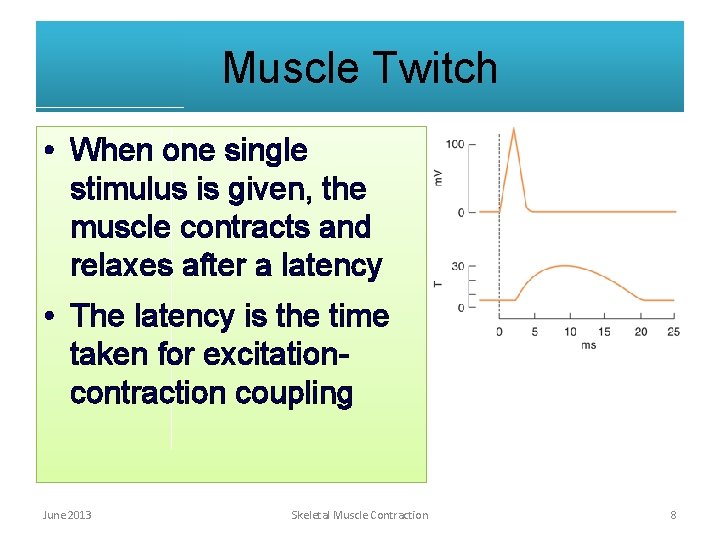
Muscle Twitch • When one single stimulus is given, the muscle contracts and relaxes after a latency • The latency is the time taken for excitationcontraction coupling June 2013 Skeletal Muscle Contraction 8
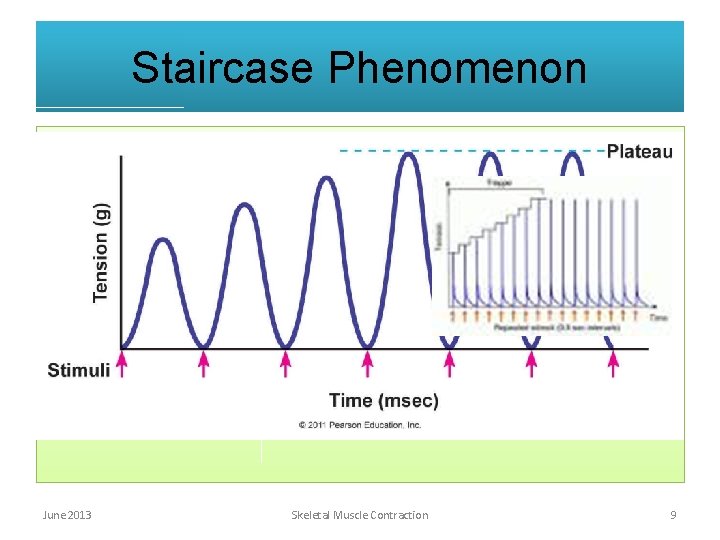
Staircase Phenomenon June 2013 Skeletal Muscle Contraction 9
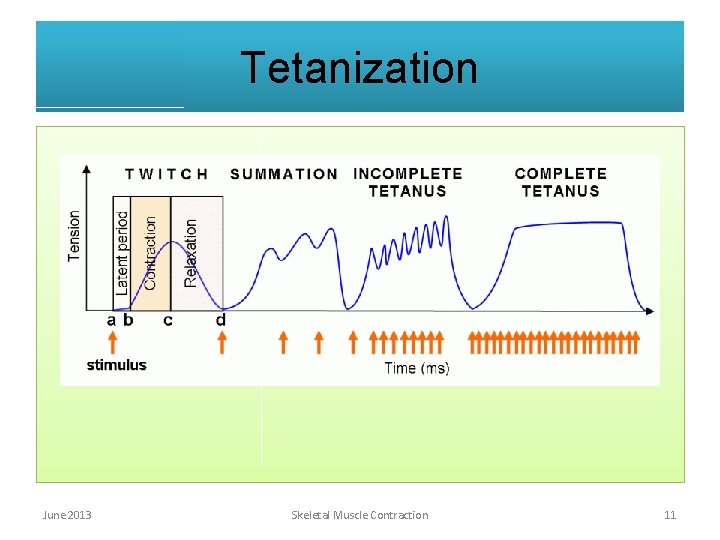
Summation June 2013 Skeletal Muscle Contraction 10
Tetanization June 2013 Skeletal Muscle Contraction 11
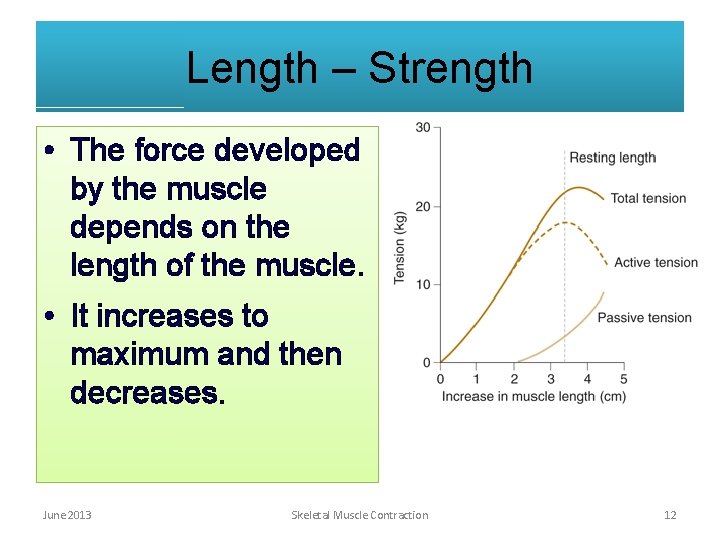
Length – Strength • The force developed by the muscle depends on the length of the muscle. • It increases to maximum and then decreases. June 2013 Skeletal Muscle Contraction 12
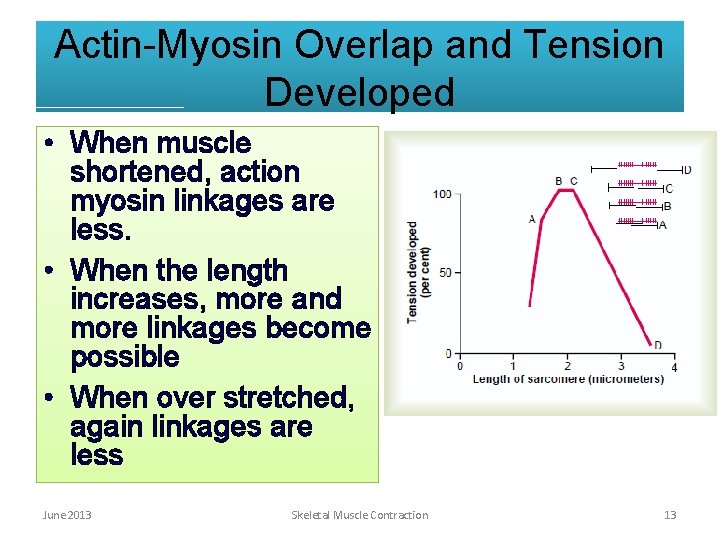
Actin-Myosin Overlap and Tension Developed • When muscle shortened, action myosin linkages are less. • When the length increases, more and more linkages become possible • When over stretched, again linkages are less June 2013 Skeletal Muscle Contraction 13
Motor Units and Strength • Muscle fibers innervated by one axon constitute one motor unit. • The size of the motor unit is the number of muscle fibers in it. • The tension developed will depend on the number of myofibriles in each fiber and the size of the motor unit. June 2013 Skeletal Muscle Contraction 14
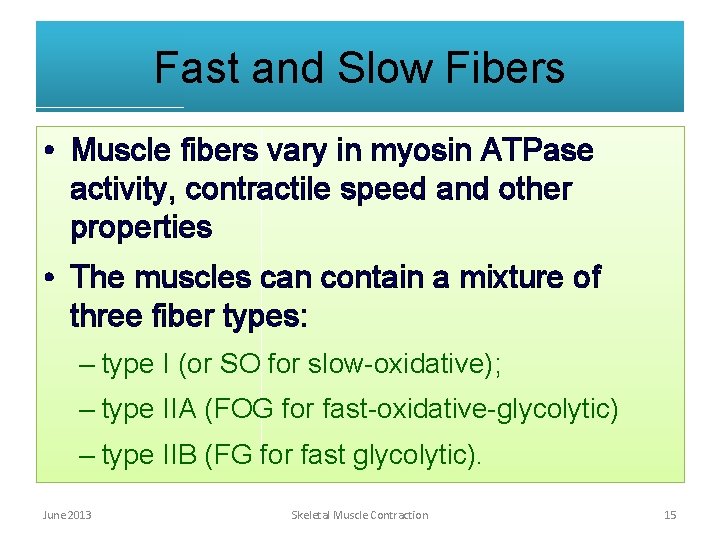
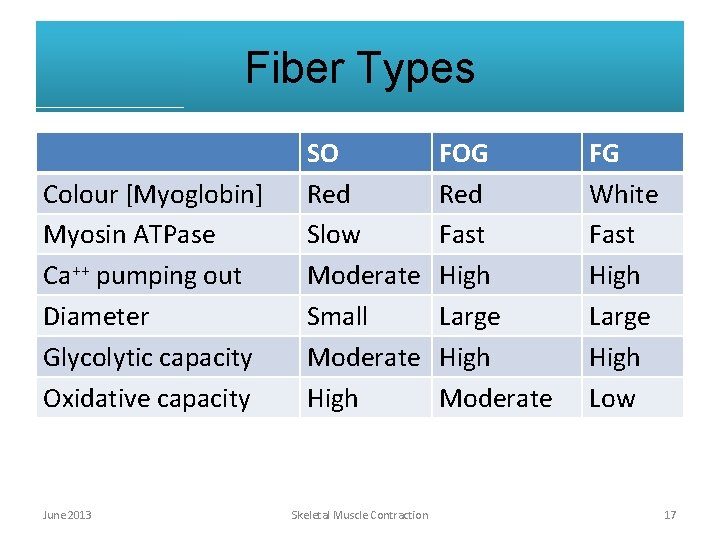
Fast and Slow Fibers • Muscle fibers vary in myosin ATPase activity, contractile speed and other properties • The muscles can contain a mixture of three fiber types: – type I (or SO for slow-oxidative); – type IIA (FOG for fast-oxidative-glycolytic) – type IIB (FG for fast glycolytic). June 2013 Skeletal Muscle Contraction 15
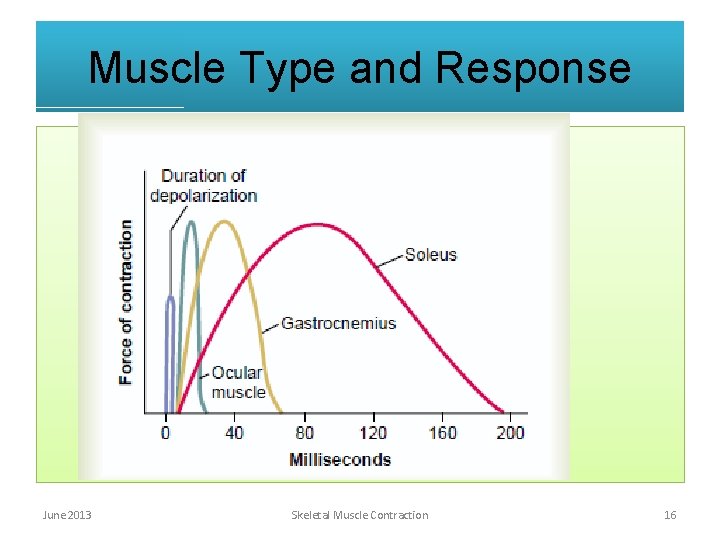
Muscle Type and Response June 2013 Skeletal Muscle Contraction 16
Fiber Types Colour [Myoglobin] Myosin ATPase Ca++ pumping out Diameter Glycolytic capacity Oxidative capacity June 2013 SO Red Slow Moderate Small Moderate High Skeletal Muscle Contraction FOG Red Fast High Large High Moderate FG White Fast High Large High Low 17
Metabolism in Muscle • Glucose and free fatty acids • Oxygen debt mechanism • Importance of glycogen and myoglobin • Depends on the muscle type • Genetic suitability to type of sports • Alcohol and muscle performance June 2013 Skeletal Muscle Contraction 18
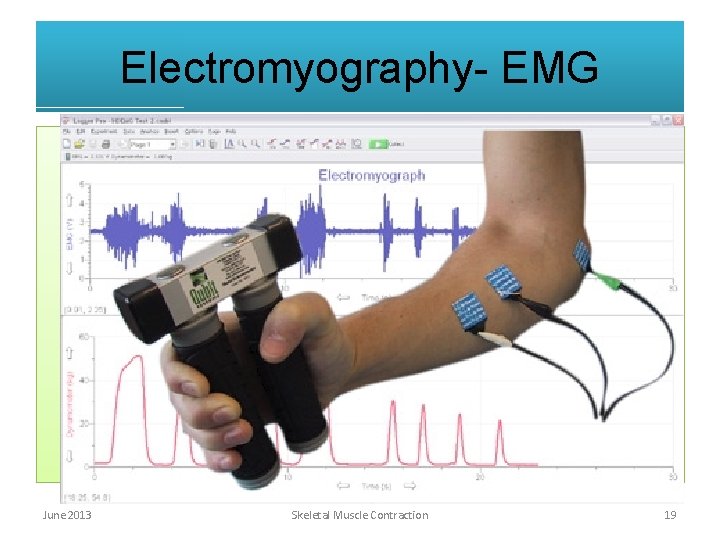
Electromyography- EMG June 2013 Skeletal Muscle Contraction 19
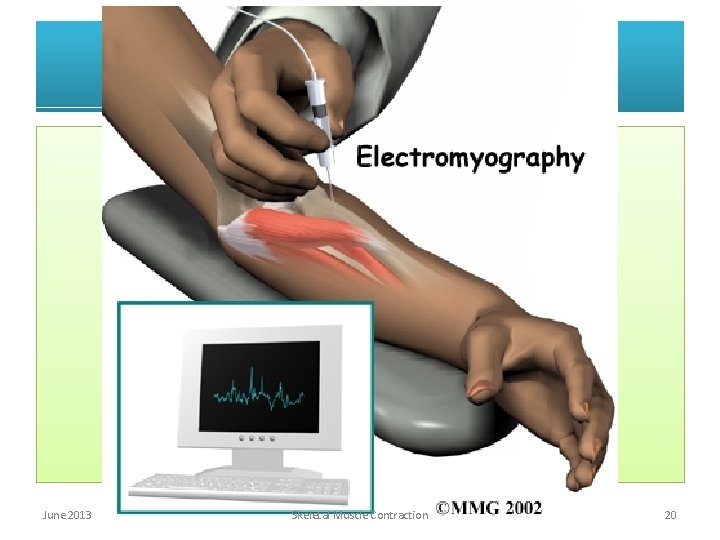
June 2013 Skeletal Muscle Contraction 20
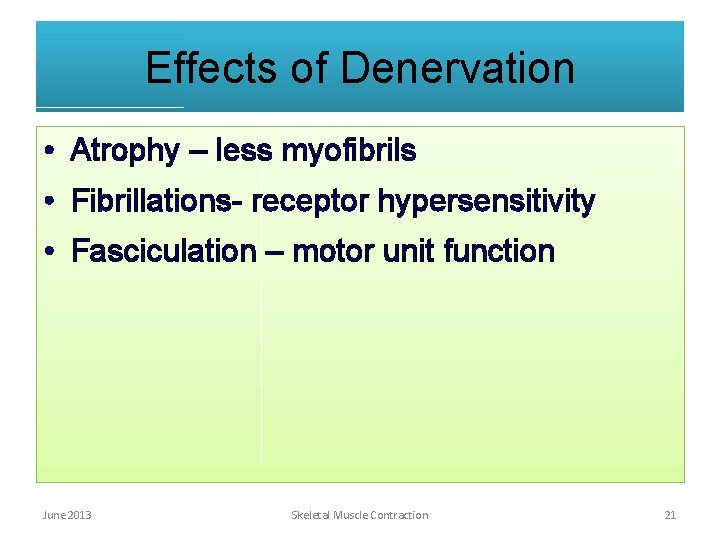
Effects of Denervation • Atrophy – less myofibrils • Fibrillations- receptor hypersensitivity • Fasciculation – motor unit function June 2013 Skeletal Muscle Contraction 21