
Skeletal muscle relaxants Objectives Identify classification of skeletal
Skeletal muscle relaxants Objectives: Ø Identify classification of skeletal muscle relaxants. Ø Describe the pharmacokinetics and dynamics of neuromuscular relaxants. Ø Recognize the clinical application for neuromuscular blockers Ø Know the different types of spasmolytic. Ø Describe the pharmacokinetics and dynamics of spasmolytic drugs. Ø Recognize the clinical application for spasmolytic drugs. • We recommend you to study NEUROMUSCLAR JUNCTION Lecture in physiology. . ﺇﺟﻌﻠﻮﺍ ﺃﺤﻼﻣﻜﻢ ﻛﺤﻤﺎﻡ ﺍﻟﺤﺮﻡ ﻣﺤﺮﻡ’’ ﻗﺘﻠﻬﺎ Titles Very important Extra information Terms 1
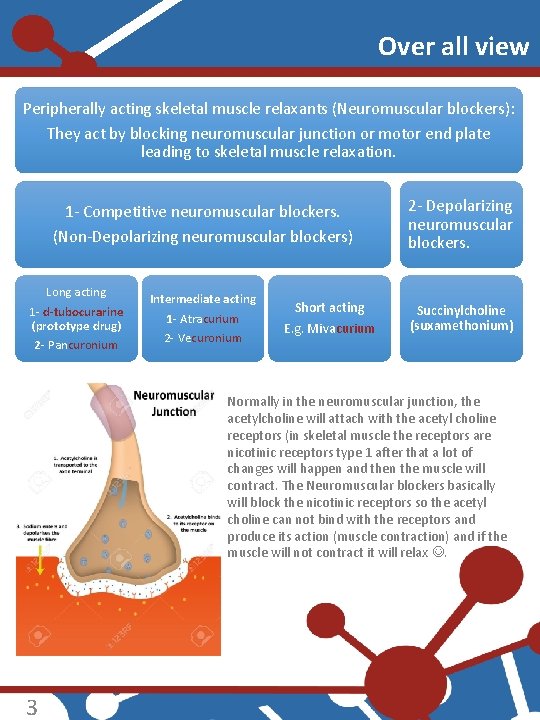
Over all view Peripherally acting skeletal muscle relaxants (Neuromuscular blockers): They act by blocking neuromuscular junction or motor end plate leading to skeletal muscle relaxation. 1 - Competitive neuromuscular blockers. (Non-Depolarizing neuromuscular blockers) Long acting 1 - d-tubocurarine (prototype drug) 2 - Pancuronium Intermediate acting 1 - Atracurium 2 - Vecuronium Short acting E. g. Mivacurium 2 - Depolarizing neuromuscular blockers. Succinylcholine (suxamethonium) Normally in the neuromuscular junction, the acetylcholine will attach with the acetyl choline receptors (in skeletal muscle the receptors are nicotinic receptors type 1 after that a lot of changes will happen and then the muscle will contract. The Neuromuscular blockers basically will block the nicotinic receptors so the acetyl choline can not bind with the receptors and produce its action (muscle contraction) and if the muscle will not contract it will relax . 3
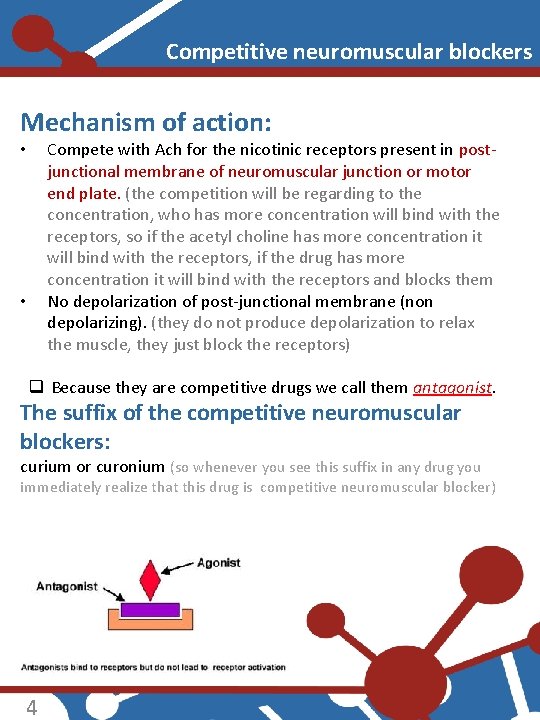
Competitive neuromuscular blockers Mechanism of action: Compete with Ach for the nicotinic receptors present in postjunctional membrane of neuromuscular junction or motor end plate. (the competition will be regarding to the concentration, who has more concentration will bind with the receptors, so if the acetyl choline has more concentration it will bind with the receptors, if the drug has more concentration it will bind with the receptors and blocks them No depolarization of post-junctional membrane (non depolarizing). (they do not produce depolarization to relax the muscle, they just block the receptors) • • q Because they are competitive drugs we call them antagonist. The suffix of the competitive neuromuscular blockers: curium or curonium (so whenever you see this suffix in any drug you immediately realize that this drug is competitive neuromuscular blocker) 4
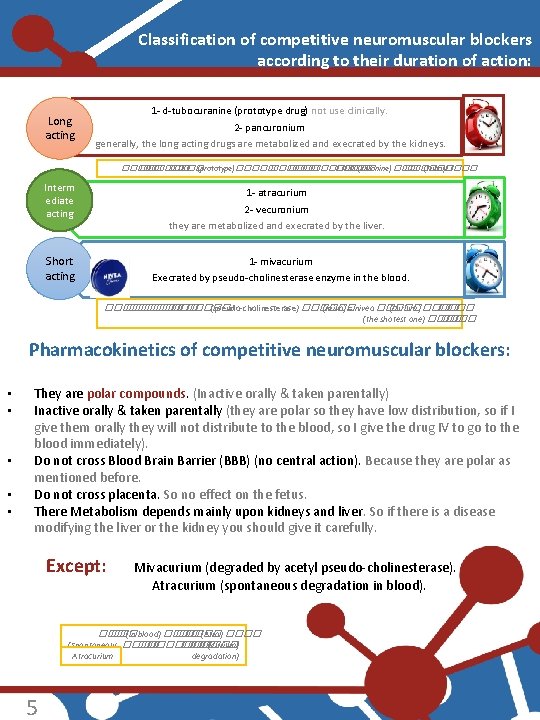
Classification of competitive neuromuscular blockers according to their duration of action: Long acting 1 - d-tubocuranine (prototype drug) not use clinically. 2 - pancuronium generally, the long acting drugs are metabolized and execrated by the kidneys. ����� (prototype)���� �� ������ ��� (curanine) ������ (Tubo)���� Interm ediate acting 1 - atracurium 2 - vecuronium they are metabolized and execrated by the liver. Short acting 1 - mivacurium Execrated by pseudo-cholinesterase enzyme in the blood. ������ �� ���� (pseudo-cholinesterase) ������ (miva) = nivea ����� (curium) ���� (the shotest one) ���� Pharmacokinetics of competitive neuromuscular blockers: • • • They are polar compounds. (Inactive orally & taken parentally) Inactive orally & taken parentally (they are polar so they have low distribution, so if I give them orally they will not distribute to the blood, so I give the drug IV to go to the blood immediately). Do not cross Blood Brain Barrier (BBB) (no central action). Because they are polar as mentioned before. Do not cross placenta. So no effect on the fetus. There Metabolism depends mainly upon kidneys and liver. So if there is a disease modifying the liver or the kidney you should give it carefully. Except: Mivacurium (degraded by acetyl pseudo-cholinesterase). Atracurium (spontaneous degradation in blood). ��� (in blood) ���� �� ���� (Atra) ���� (Spontaneous ���� �� ����� (curium) degradation) Atracurium 5
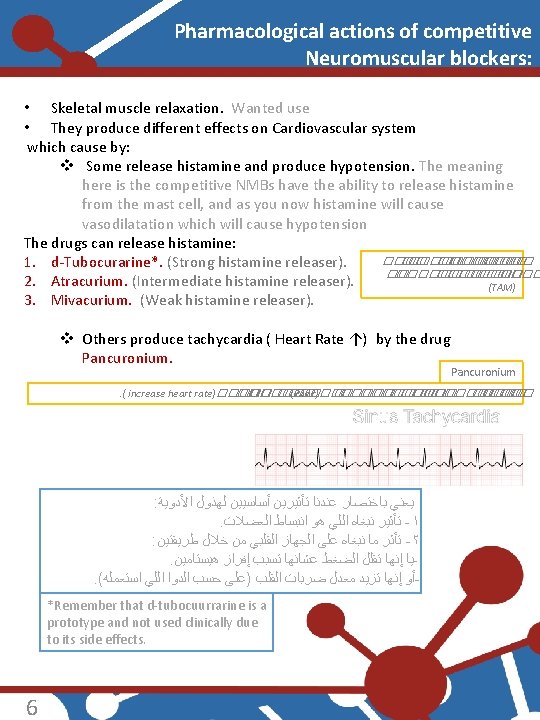
Pharmacological actions of competitive Neuromuscular blockers: • Skeletal muscle relaxation. Wanted use • They produce different effects on Cardiovascular system which cause by: v Some release histamine and produce hypotension. The meaning here is the competitive NMBs have the ability to release histamine from the mast cell, and as you now histamine will cause vasodilatation which will cause hypotension The drugs can release histamine: ��������� ��� 1. d-Tubocurarine*. (Strong histamine releaser). �� ���� ���� 2. Atracurium. (Intermediate histamine releaser). (TAM) 3. Mivacurium. (Weak histamine releaser). v Others produce tachycardia ( Heart Rate ↑) by the drug Pancuronium . ( increase heart rate)����� �� ���� (Panc)��� ����� �� ���� ��� : ﻳﻌﻨﻲ ﺑﺎﺧﺘﺼﺎﺭ ﻋﻨﺪﻧﺎ ﺗﺄﺜﻴﺮﻳﻦ ﺃﺴﺎﺳﻴﻴﻦ ﻟﻬﺬﻭﻝ ﺍﻷﺪﻭﻳﺔ . ﺗﺄﺜﻴﺮ ﻧﺒﻐﺎﻩ ﺍﻟﻠﻲ ﻫﻮ ﺍﻧﺒﺴﺎﻁ ﺍﻟﻌﻀﻼﺕ -١ : ﺗﺄﺜﺮ ﻣﺎ ﻧﺒﻐﺎﻩ ﻋﻠﻰ ﺍﻟﺠﻬﺎﺯ ﺍﻟﻘﻠﺒﻲ ﻣﻦ ﺧﻼﻝ ﻃﺮﻳﻘﺘﻴﻦ -٢. ﻳﺎ ﺇﻧﻬﺎ ﺗﻘﻠﻞ ﺍﻟﻀﻐﻂ ﻋﺸﺎﻧﻬﺎ ﺗﺴﺒﺐ ﺇﻓﺮﺍﺯ ﻫﻴﺴﺘﺎﻣﻴﻦ. ( ﺃﻮ ﺇﻧﻬﺎ ﺗﺰﻳﺪ ﻣﻌﺪﻝ ﺿﺮﺑﺎﺕ ﺍﻟﻘﻠﺐ )ﻋﻠﻰ ﺣﺴﺐ ﺍﻟﺪﻭﺍ ﺍﻟﻠﻲ ﺍﺳﺘﻌﻤﻠﻪ *Remember that d-tubocuurrarine is a prototype and not used clinically due to its side effects. 6
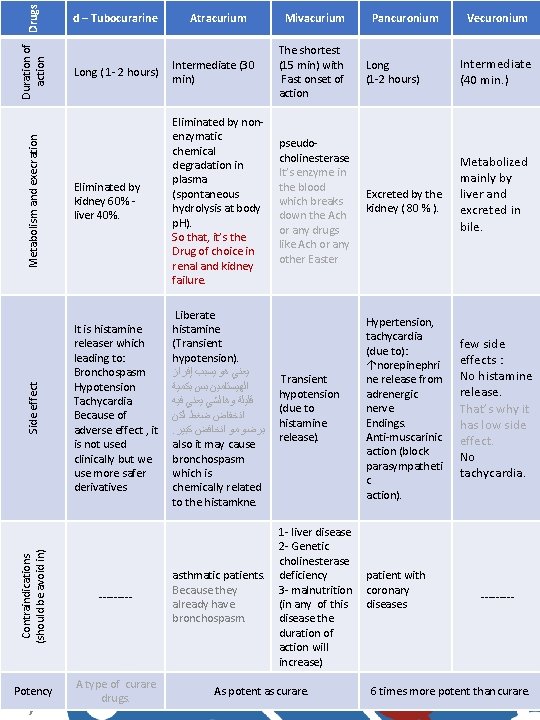
Duration of Drugs action Metabolism and execration Mivacurium Pancuronium Long ( 1 - 2 hours) Intermediate (30 min) Eliminated by kidney 60% liver 40%. Eliminated by nonenzymatic chemical degradation in plasma (spontaneous hydrolysis at body p. H). So that, it’s the Drug of choice in renal and kidney failure. pseudocholinesterase It’s enzyme in the blood which breaks down the Ach or any drugs like Ach or any other Easter Excreted by the kidney ( 80 % ). It is histamine releaser which leading to: Bronchospasm Hypotension Tachycardia Because of adverse effect , it is not used clinically but we use more safer derivatives Liberate histamine (Transient hypotension). ﻳﻌﻨﻲ ﻫﻮ ﻳﺴﺒﺐ ﺇﻓﺮﺍﺯ ﺍﻟﻬﻴﺴﺘﺎﻣﻴﻦ ﺑﺲ ﺑﻜﻤﻴﺔ ﻗﻠﻴﻠﺔ ﻭﻫﺎﻟﺸﻲ ﻳﻌﻨﻲ ﻓﻴﻪ ﺍﻧﺨﻔﺎﺽ ﺿﻐﻂ ﻟﻜﻦ . ﺑﺮﺿﻮ ﻣﻮ ﺍﻧﺨﺎﻓﺾ ﻛﺒﻴﺮ also it may cause bronchospasm which is chemically related to the histamkne. Transient hypotension (due to histamine release). Hypertension, tachycardia (due to): ↑norepinephri ne release from adrenergic nerve Endings. Anti-muscarinic action (block parasympatheti c action). asthmatic patients. Because they already have bronchospasm. 1 - liver disease 2 - Genetic cholinesterase deficiency 3 - malnutrition (in any of this disease the duration of action will increase) ----- Potency A type of curare drugs. 7 Atracurium The shortest (15 min) with Fast onset of action Contraindications (should be avoid in) Side effect d – Tubocurarine As potent as curare. Long (1 -2 hours) patient with coronary diseases Vecuronium Intermediate (40 min. ) Metabolized mainly by liver and excreted in bile. few side effects : No histamine release. That’s why it has low side effect. No tachycardia. ----- 6 times more potent than curare.
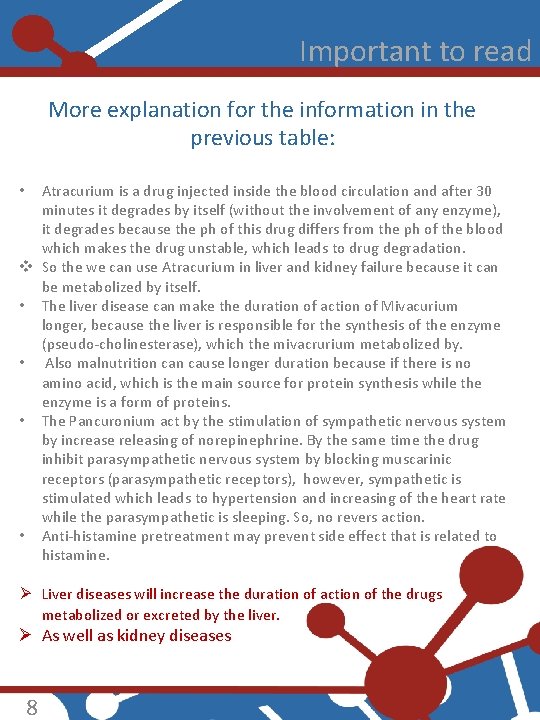
Important to read More explanation for the information in the previous table: Atracurium is a drug injected inside the blood circulation and after 30 minutes it degrades by itself (without the involvement of any enzyme), it degrades because the ph of this drug differs from the ph of the blood which makes the drug unstable, which leads to drug degradation. v So the we can use Atracurium in liver and kidney failure because it can be metabolized by itself. • The liver disease can make the duration of action of Mivacurium longer, because the liver is responsible for the synthesis of the enzyme (pseudo-cholinesterase), which the mivacrurium metabolized by. • Also malnutrition cause longer duration because if there is no amino acid, which is the main source for protein synthesis while the enzyme is a form of proteins. • The Pancuronium act by the stimulation of sympathetic nervous system by increase releasing of norepinephrine. By the same time the drug inhibit parasympathetic nervous system by blocking muscarinic receptors (parasympathetic receptors), however, sympathetic is stimulated which leads to hypertension and increasing of the heart rate while the parasympathetic is sleeping. So, no revers action. • Anti-histamine pretreatment may prevent side effect that is related to histamine. • Ø Liver diseases will increase the duration of action of the drugs metabolized or excreted by the liver. Ø As well as kidney diseases 8
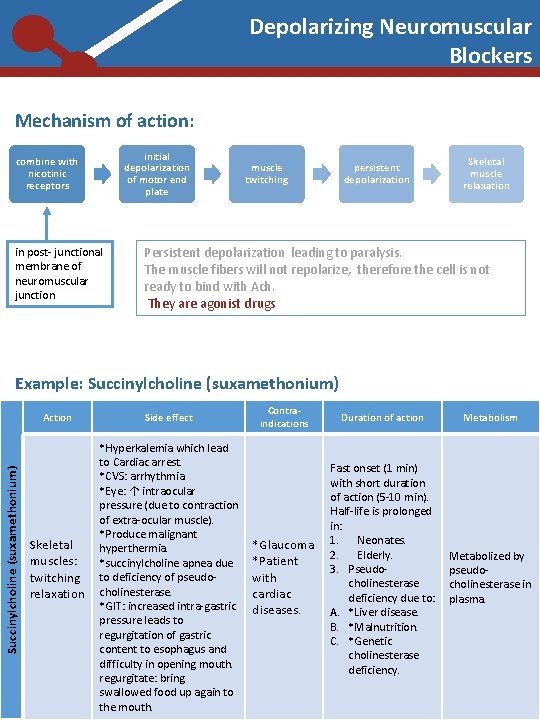
Depolarizing Neuromuscular Blockers Mechanism of action: initial depolarization of motor end plate combine with nicotinic receptors in post- junctional membrane of neuromuscular junction muscle twitching persistent depolarization Skeletal muscle relaxation Persistent depolarization leading to paralysis. The muscle fibers will not repolarize, therefore the cell is not ready to bind with Ach. They are agonist drugs Example: Succinylcholine (suxamethonium) Action Skeletal muscles: twitching relaxation 9 Side effect *Hyperkalemia which lead to Cardiac arrest. *CVS: arrhythmia. *Eye: ↑ intraocular pressure (due to contraction of extra-ocular muscle). *Produce malignant hyperthermia. *succinylcholine apnea due to deficiency of pseudocholinesterase. *GIT: increased intra-gastric pressure leads to regurgitation of gastric content to esophagus and difficulty in opening mouth. regurgitate: bring swallowed food up again to the mouth. Contraindications *Glaucoma *Patient with cardiac diseases. Duration of action Fast onset (1 min) with short duration of action (5 -10 min). Half-life is prolonged in: 1. Neonates. 2. Elderly. 3. Pseudocholinesterase deficiency due to: A. *Liver disease. B. *Malnutrition. C. *Genetic cholinesterase deficiency. Metabolism Metabolized by pseudocholinesterase in plasma.
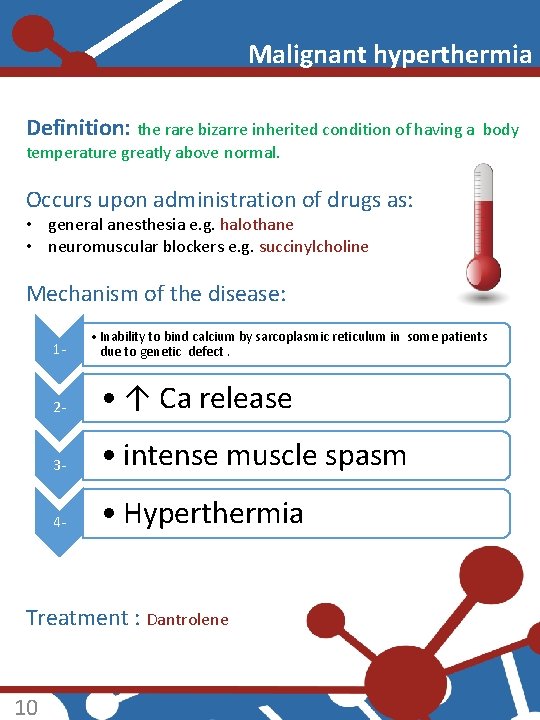
Malignant hyperthermia Definition: the rare bizarre inherited condition of having a body temperature greatly above normal. Occurs upon administration of drugs as: • general anesthesia e. g. halothane • neuromuscular blockers e. g. succinylcholine Mechanism of the disease: 1 - • Inability to bind calcium by sarcoplasmic reticulum in some patients due to genetic defect. 2 - • ↑ Ca release 3 - • intense muscle spasm 4 - • Hyperthermia Treatment : Dantrolene 10
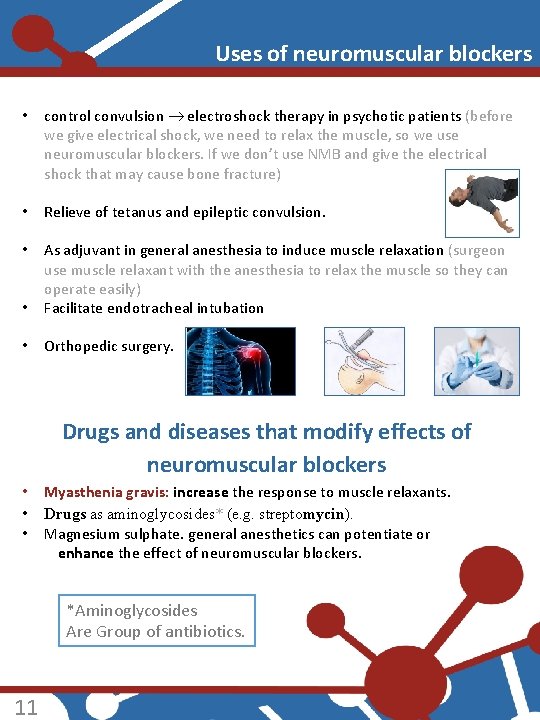
Uses of neuromuscular blockers • control convulsion electroshock therapy in psychotic patients (before we give electrical shock, we need to relax the muscle, so we use neuromuscular blockers. If we don’t use NMB and give the electrical shock that may cause bone fracture) • Relieve of tetanus and epileptic convulsion. • • As adjuvant in general anesthesia to induce muscle relaxation (surgeon use muscle relaxant with the anesthesia to relax the muscle so they can operate easily) Facilitate endotracheal intubation • Orthopedic surgery. Drugs and diseases that modify effects of neuromuscular blockers • • • Myasthenia gravis: increase the response to muscle relaxants. Drugs as aminoglycosides* (e. g. streptomycin). Magnesium sulphate. general anesthetics can potentiate or enhance the effect of neuromuscular blockers. *Aminoglycosides Are Group of antibiotics. 11
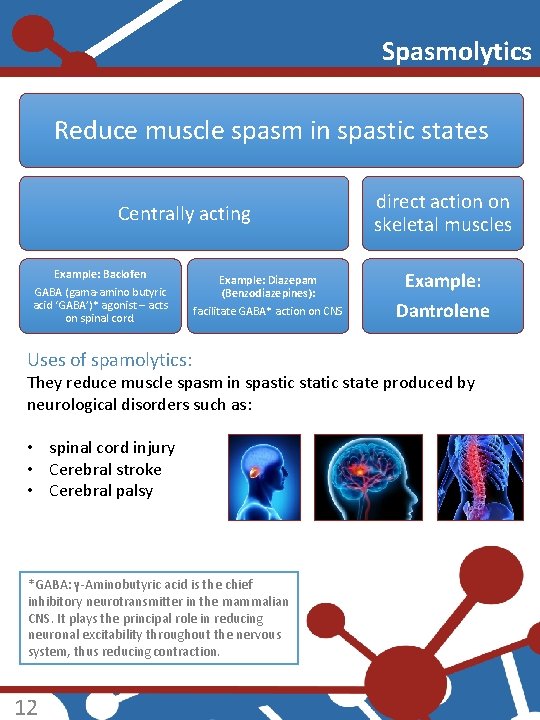
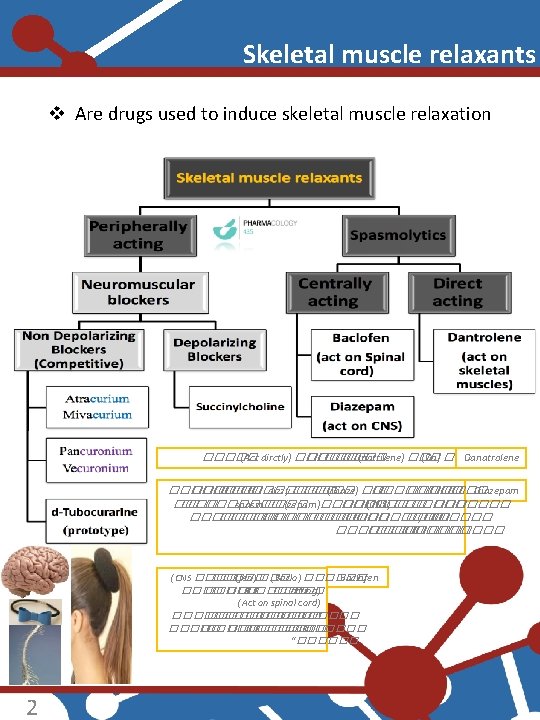
Spasmolytics Reduce muscle spasm in spastic states Centrally acting Example: Baclofen GABA (gama-amino butyric acid ‘GABA’)* agonist – acts on spinal cord. Example: Diazepam (Benzodiazepines): facilitate GABA* action on CNS Uses of spamolytics: direct action on skeletal muscles Example: Dantrolene They reduce muscle spasm in spastic state produced by neurological disorders such as: • spinal cord injury • Cerebral stroke • Cerebral palsy *GABA: γ-Aminobutyric acid is the chief inhibitory neurotransmitter in the mammalian CNS. It plays the principal role in reducing neuronal excitability throughout the nervous system, thus reducing contraction. 12
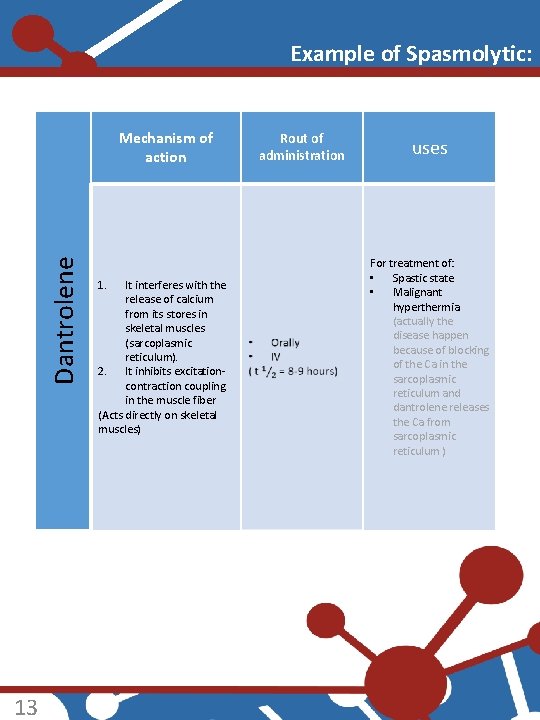
Example of Spasmolytic: Dantrolene Mechanism of action 13 1. It interferes with the release of calcium from its stores in skeletal muscles (sarcoplasmic reticulum). 2. It inhibits excitationcontraction coupling in the muscle fiber (Acts directly on skeletal muscles) Rout of administration uses For treatment of: • Spastic state • Malignant hyperthermia (actually the disease happen because of blocking of the Ca in the sarcoplasmic reticulum and dantrolene releases the Ca from sarcoplasmic reticulum )
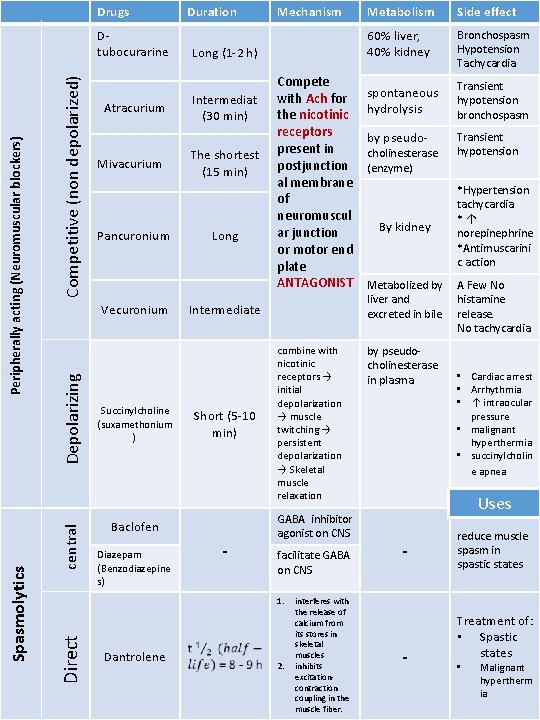
Drugs 14 Competitive (non depolarized) Atracurium Mivacurium Pancuronium central Depolarizing Vecuronium Succinylcholine (suxamethonium ) Long (1 -2 h) Intermediat (30 min) The shortest (15 min) Long Compete with Ach for the nicotinic receptors present in postjunction al membrane of neuromuscul ar junction or motor end plate ANTAGONIST Intermediate Short (5 -10 min) Baclofen Diazepam (Benzodiazepine s) Mechanism - combine with nicotinic receptors → initial depolarization → muscle twitching → persistent depolarization → Skeletal muscle relaxation GABA inhibitor agonist on CNS facilitate GABA on CNS 1. Direct Spasmolytics Peripherally acting (Neuromuscular blockers) Dtubocurarine Duration Dantrolene 2. interferes with the release of calcium from its stores in skeletal muscles inhibits excitationcontraction coupling in the muscle fiber. Metabolism Side effect 60% liver, 40% kidney Bronchospasm Hypotension Tachycardia spontaneous hydrolysis Transient hypotension bronchospasm by pseudo- Transient hypotension cholinesterase (enzyme) By kidney Metabolized by liver and excreted in bile by pseudocholinesterase in plasma *Hypertension tachycardia *↑ norepinephrine *Antimuscarini c action A Few No histamine release. No tachycardia. • Cardiac arrest • Arrhythmia • ↑ intraocular pressure • malignant hyperthermia • succinylcholin e apnea Uses - - reduce muscle spasm in spastic states Treatment of: • Spastic states • Malignant hypertherm ia
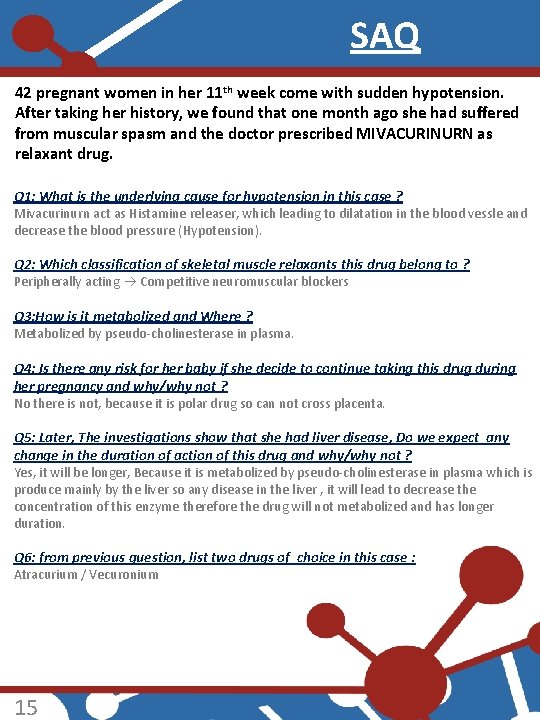
SAQ 42 pregnant women in her 11 th week come with sudden hypotension. After taking her history, we found that one month ago she had suffered from muscular spasm and the doctor prescribed MIVACURINURN as relaxant drug. Q 1: What is the underlying cause for hypotension in this case ? Mivacurinurn act as Histamine releaser, which leading to dilatation in the blood vessle and decrease the blood pressure (Hypotension). Q 2: Which classification of skeletal muscle relaxants this drug belong to ? Peripherally acting Competitive neuromuscular blockers Q 3: How is it metabolized and Where ? Metabolized by pseudo-cholinesterase in plasma. Q 4: Is there any risk for her baby if she decide to continue taking this drug during her pregnancy and why/why not ? No there is not, because it is polar drug so can not cross placenta. Q 5: Later, The investigations show that she had liver disease, Do we expect any change in the duration of action of this drug and why/why not ? Yes, it will be longer, Because it is metabolized by pseudo-cholinesterase in plasma which is produce mainly by the liver so any disease in the liver , it will lead to decrease the concentration of this enzyme therefore the drug will not metabolized and has longer duration. Q 6: from previous question, list two drugs of choice in this case : Atracurium / Vecuronium 15
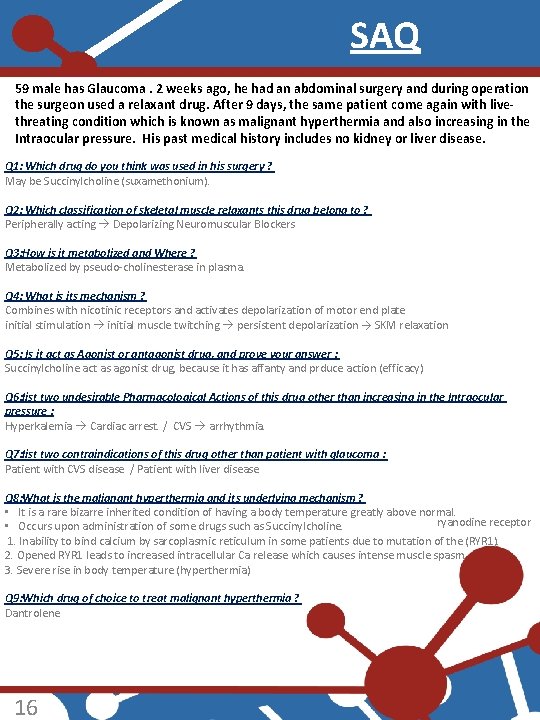
SAQ 59 male has Glaucoma. 2 weeks ago, he had an abdominal surgery and during operation the surgeon used a relaxant drug. After 9 days, the same patient come again with livethreating condition which is known as malignant hyperthermia and also increasing in the Intraocular pressure. His past medical history includes no kidney or liver disease. Q 1: Which drug do you think was used in his surgery ? May be Succinylcholine (suxamethonium). Q 2: Which classification of skeletal muscle relaxants this drug belong to ? Peripherally acting Depolarizing Neuromuscular Blockers Q 3: How is it metabolized and Where ? Metabolized by pseudo-cholinesterase in plasma. Q 4: What is its mechanism ? Combines with nicotinic receptors and activates depolarization of motor end plate initial stimulation initial muscle twitching persistent depolarization → SKM relaxation Q 5: Is it act as Agonist or antagonist drug, and prove your answer : Succinylcholine act as agonist drug, because it has affanty and prduce action (efficacy) Q 6: list two undesirable Pharmacological Actions of this drug other than increasing in the Intraocular pressure : Hyperkalemia Cardiac arrest. / CVS arrhythmia. Q 7: list two contraindications of this drug other than patient with glaucoma : Patient with CVS disease / Patient with liver disease Q 8: What is the malignant hyperthermia and its underlying mechanism ? • It is a rare bizarre inherited condition of having a body temperature greatly above normal. ryanodine receptor • Occurs upon administration of some drugs such as Succinylcholine. 1. Inability to bind calcium by sarcoplasmic reticulum in some patients due to mutation of the (RYR 1). 2. Opened RYR 1 leads to increased intracellular Ca release which causes intense muscle spasm. 3. Severe rise in body temperature (hyperthermia) Q 9: Which drug of choice to treat malignant hyperthermia ? Dantrolene 16
SAQ Q 1: simply explain the mechanism of action of Dantrolene: Acts directly on skeletal muscles, as it interferes with the release of calcium from its stores in skeletal muscles. Q 2: mention a route to give the Dantrolene : Orally IV Q 3: Dantrolene could be used in the treatment of ? Spastic states Malignant hyperthermia Q 4: simply explain the mechanism of action of Spasmolytic: They reduce muscle spasm in spastic states Q 5: spasmolytics could be used in reducing muscle spasm in spastic states produced by neurological disorders such as: Spinal cord injury Cerebral stroke Cerebral palsy 17
- Slides: 18