
Skeletal Muscle Contraction Muse Epimysium Bone Epimysium Perimysium
Skeletal Muscle Contraction Muse
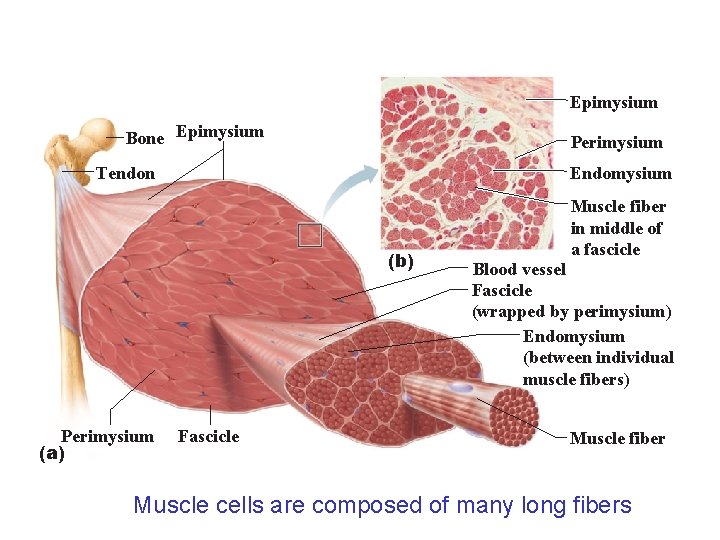
Epimysium Bone Epimysium Perimysium Endomysium Tendon (b) Perimysium (a) Fascicle Muscle fiber in middle of a fascicle Blood vessel Fascicle (wrapped by perimysium) Endomysium (between individual muscle fibers) Muscle fiber Muscle cells are composed of many long fibers
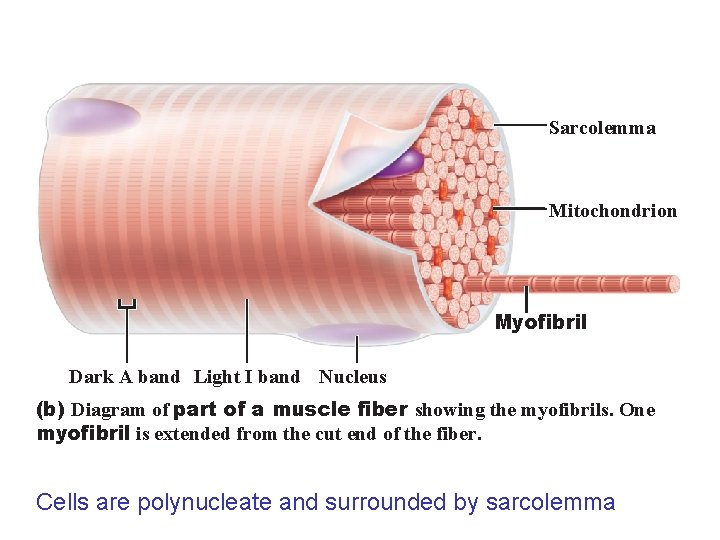
Sarcolemma Mitochondrion Myofibril Dark A band Light I band Nucleus (b) Diagram of part of a muscle fiber showing the myofibrils. One myofibril is extended from the cut end of the fiber. Cells are polynucleate and surrounded by sarcolemma
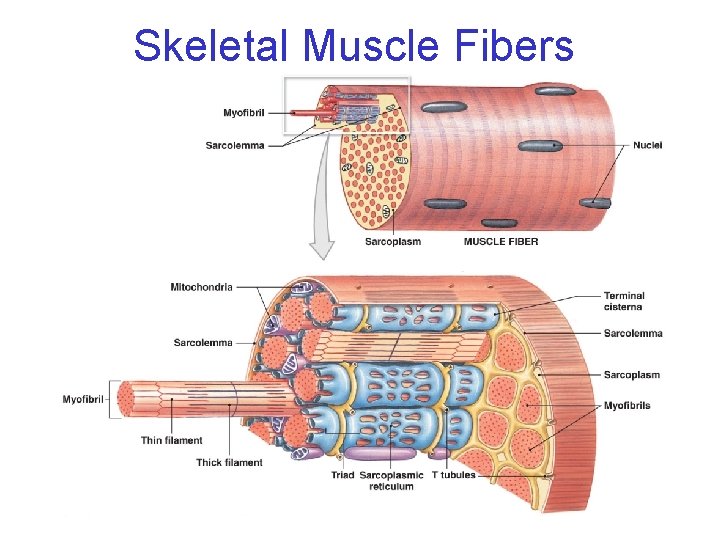
Skeletal Muscle Fibers
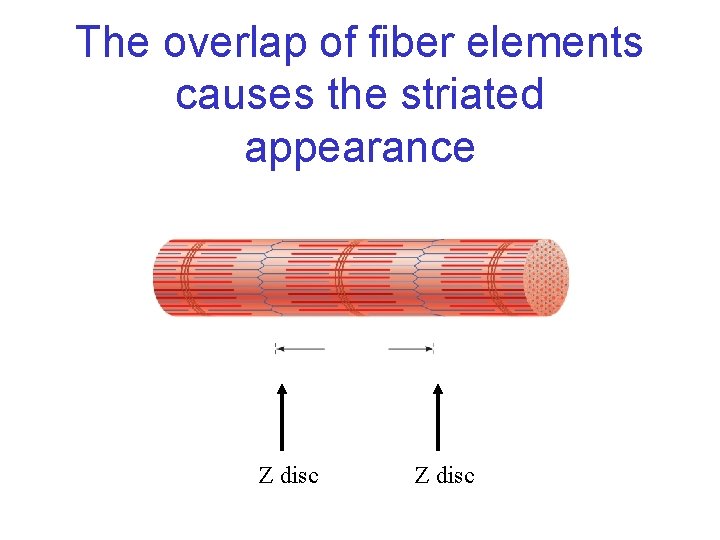
The overlap of fiber elements causes the striated appearance Z disc
The Sarcomere • Smallest contractile unit (functional unit) of a muscle fiber • The region of a myofibril between two successive Z discs • Composed of thick and thin myofilaments made of contractile proteins
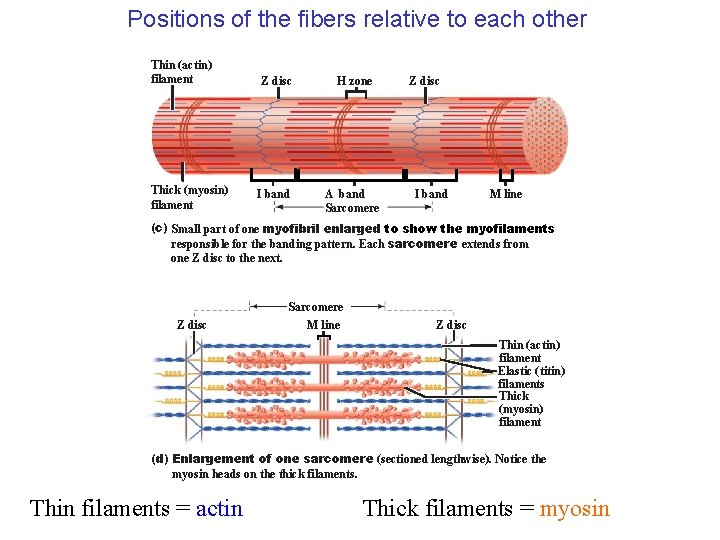
Positions of the fibers relative to each other Thin (actin) filament Thick (myosin) filament Z disc H zone I band A band Sarcomere Z disc I band M line (c) Small part of one myofibril enlarged to show the myofilaments responsible for the banding pattern. Each sarcomere extends from one Z disc to the next. Sarcomere Z disc M line Z disc Thin (actin) filament Elastic (titin) filaments Thick (myosin) filament (d) Enlargement of one sarcomere (sectioned lengthwise). Notice the myosin heads on the thick filaments. Thin filaments = actin Thick filaments = myosin
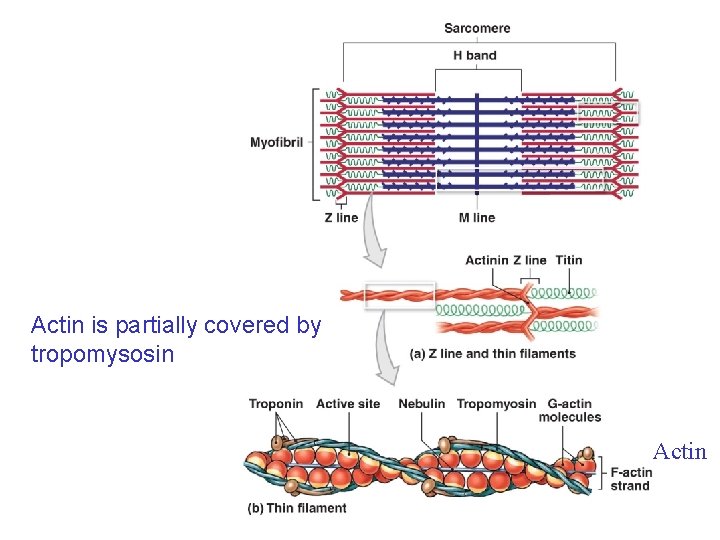
Actin is partially covered by tropomysosin Actin
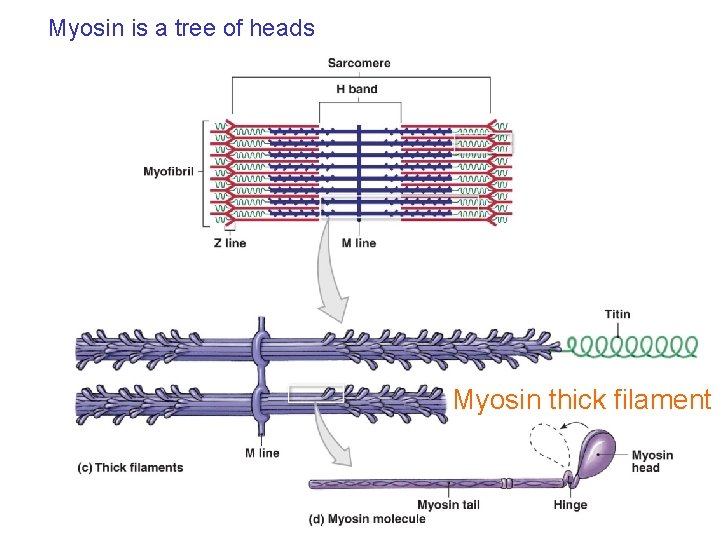
Myosin is a tree of heads Myosin thick filament
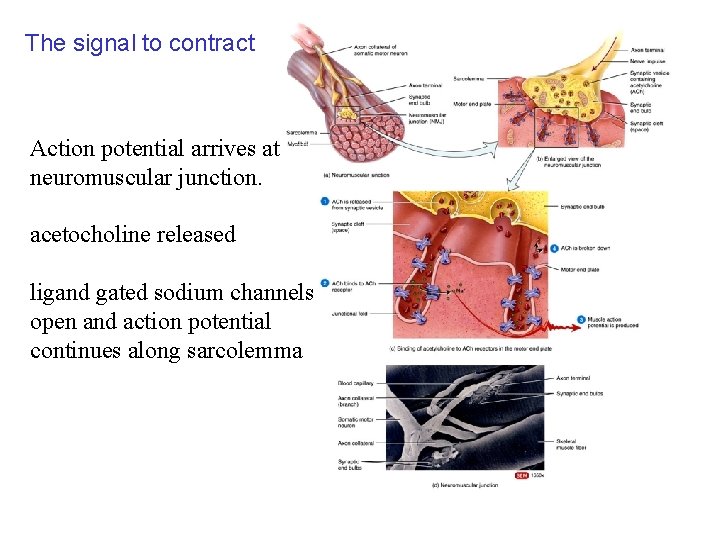
The signal to contract 10_10 Action potential arrives at neuromuscular junction. acetocholine released ligand gated sodium channels open and action potential continues along sarcolemma
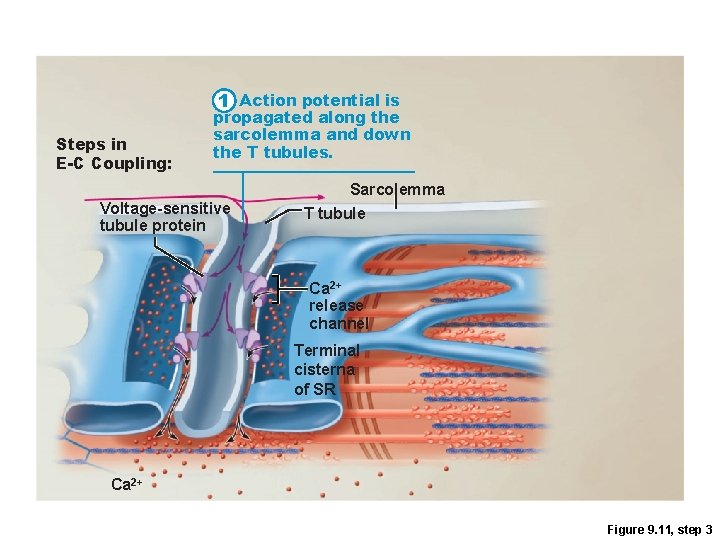
1 Action potential is Steps in E-C Coupling: propagated along the sarcolemma and down the T tubules. Voltage-sensitive tubule protein Sarcolemma T tubule Ca 2+ release channel Terminal cisterna of SR Ca 2+ Figure 9. 11, step 3
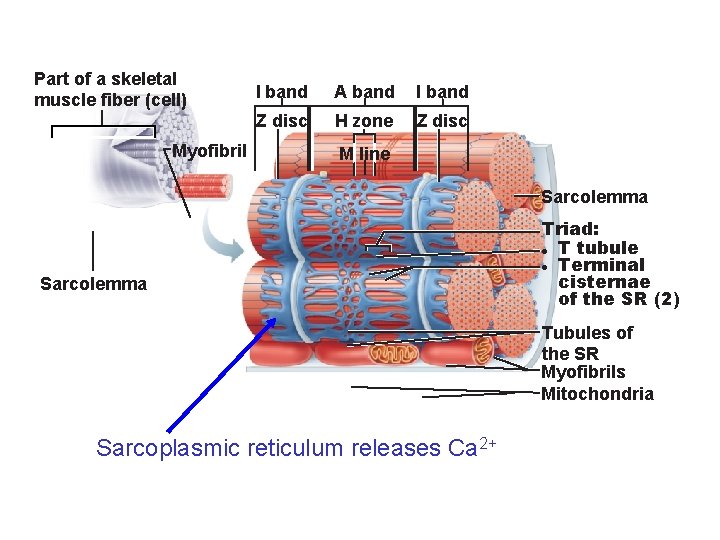
Part of a skeletal muscle fiber (cell) Myofibril I band A band I band Z disc H zone Z disc M line Sarcolemma Triad: • T tubule • Terminal cisternae of the SR (2) Tubules of the SR Myofibrils Mitochondria Sarcoplasmic reticulum releases Ca 2+
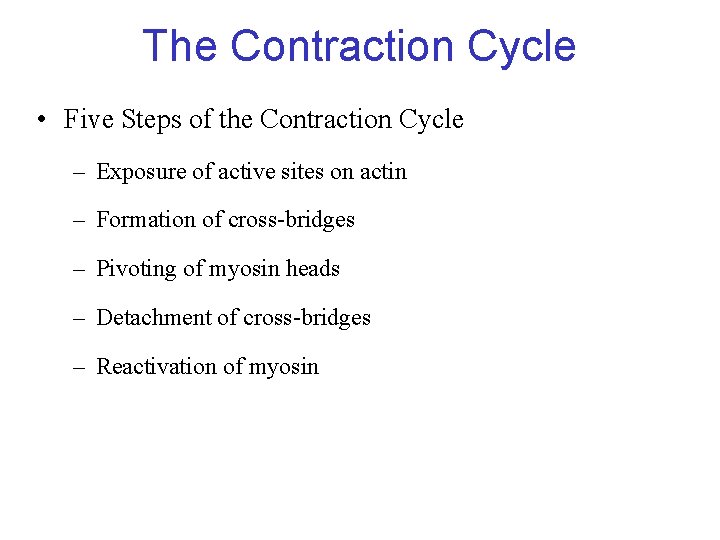
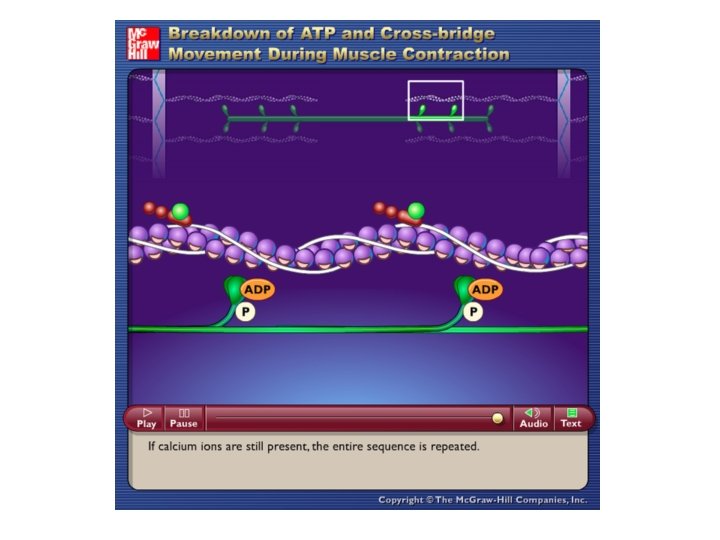
The Contraction Cycle • Five Steps of the Contraction Cycle – Exposure of active sites on actin – Formation of cross-bridges – Pivoting of myosin heads – Detachment of cross-bridges – Reactivation of myosin
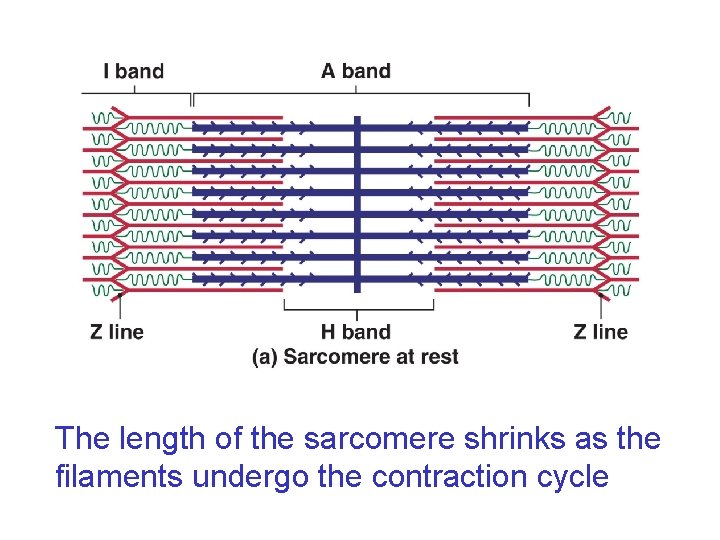
The length of the sarcomere shrinks as the filaments undergo the contraction cycle
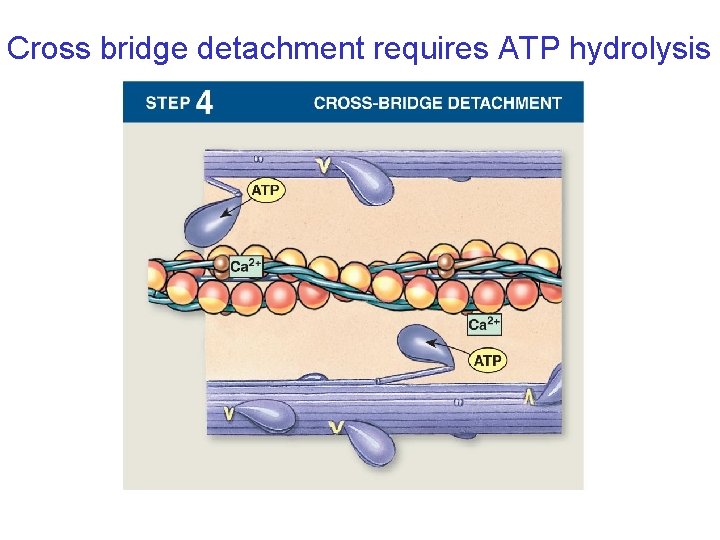
Cross bridge detachment requires ATP hydrolysis
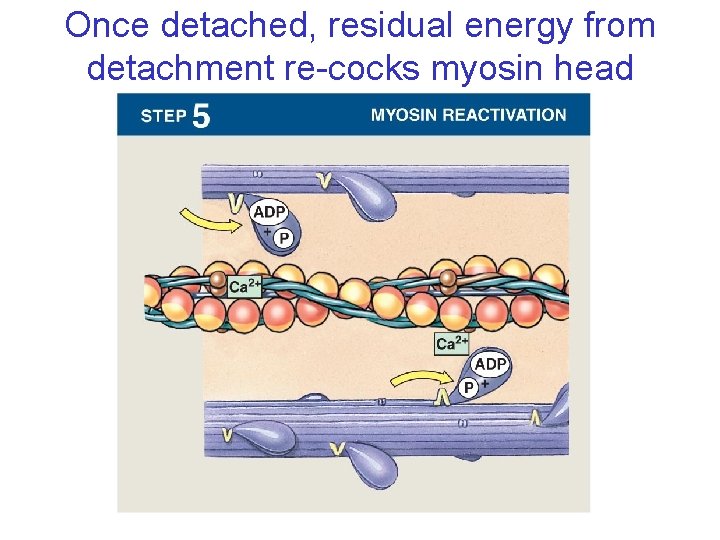
Once detached, residual energy from detachment re-cocks myosin head
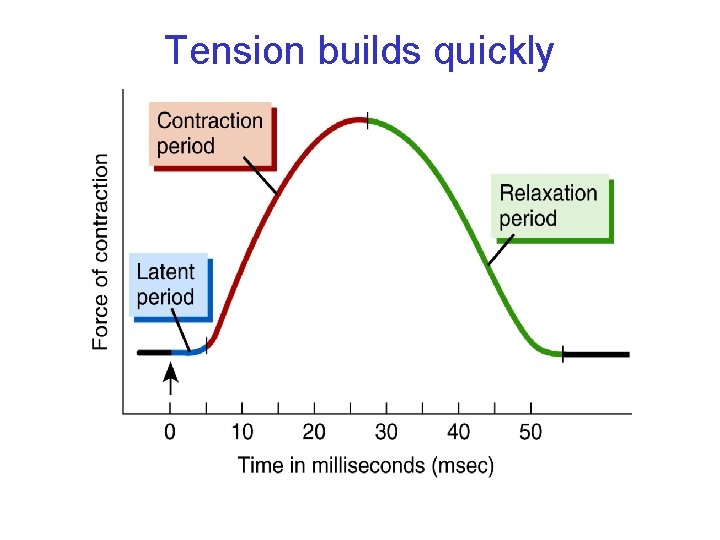
Tension builds quickly
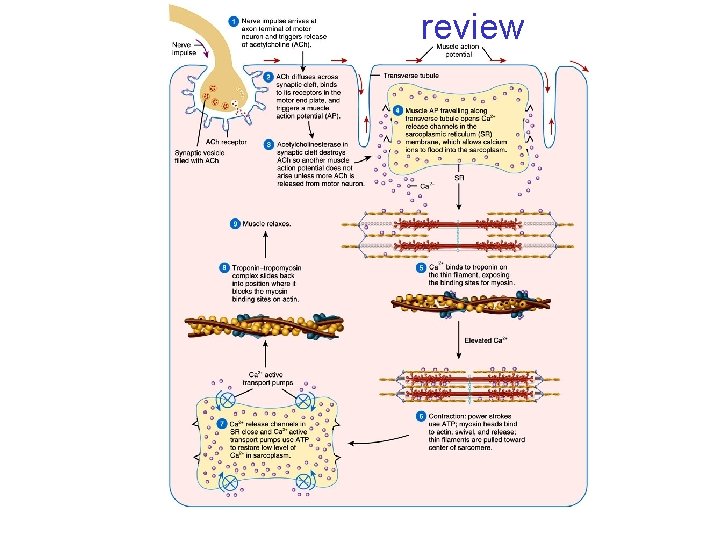
review 10_11
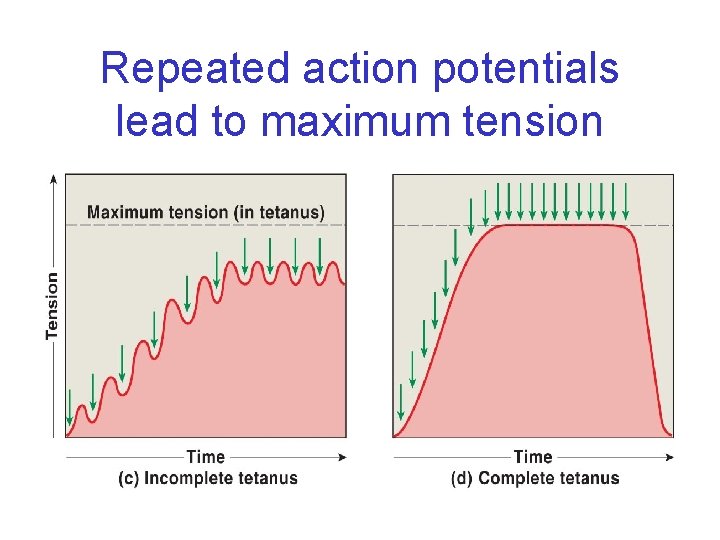
Repeated action potentials lead to maximum tension
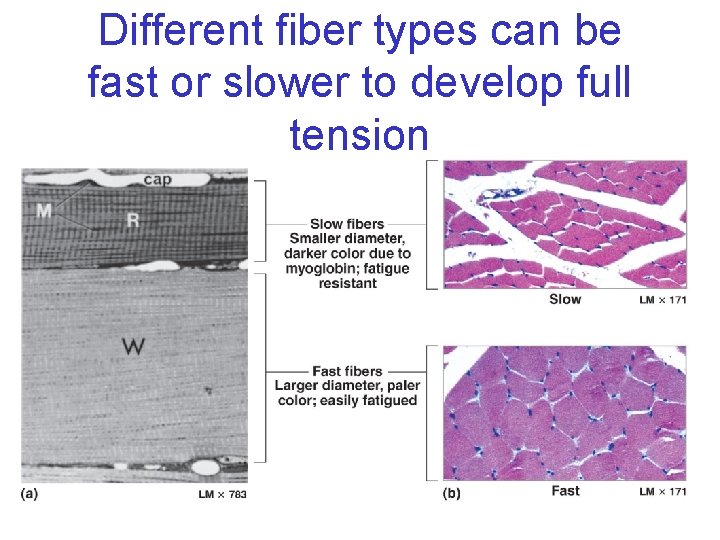
Different fiber types can be fast or slower to develop full tension .
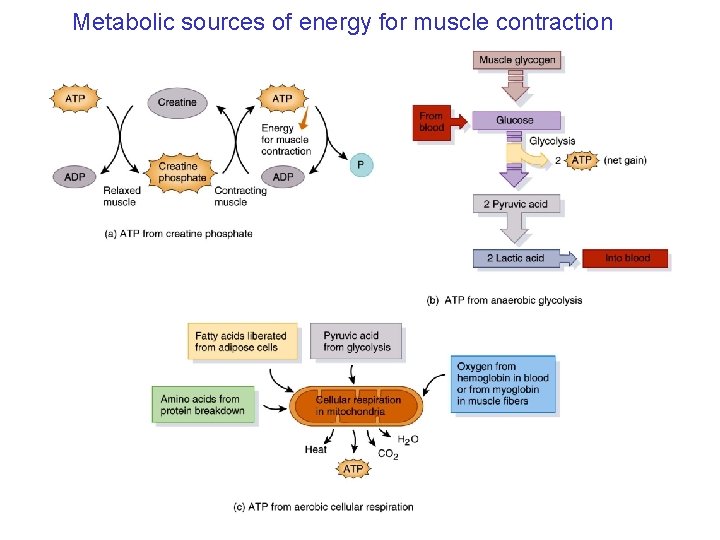
Metabolic sources of energy for muscle contraction 10_12
- Slides: 22