
Skeletal muscle 5 Golden Rules 1 With a
- Slides: 8
Skeletal muscle
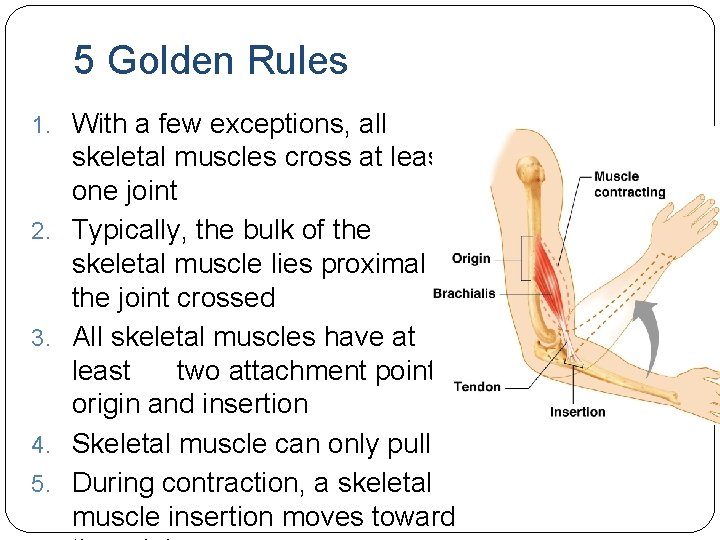
5 Golden Rules 1. With a few exceptions, all 2. 3. 4. 5. skeletal muscles cross at least one joint Typically, the bulk of the skeletal muscle lies proximal to the joint crossed All skeletal muscles have at least two attachment points, origin and insertion Skeletal muscle can only pull During contraction, a skeletal muscle insertion moves toward
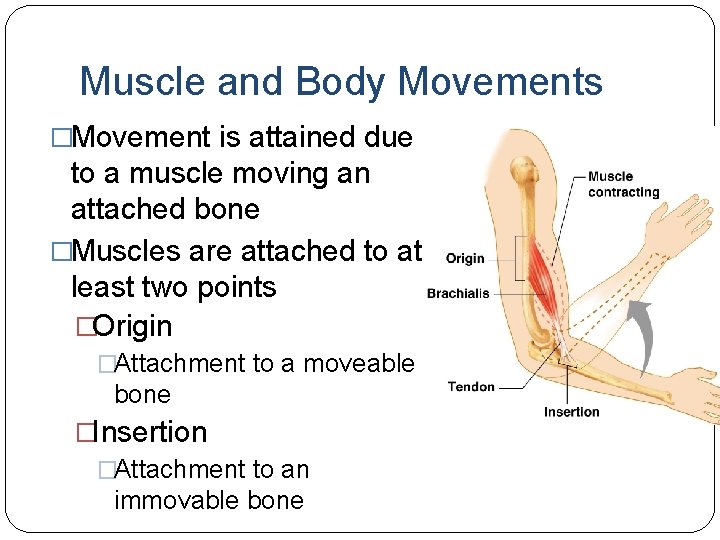
Muscle and Body Movements �Movement is attained due to a muscle moving an attached bone �Muscles are attached to at least two points �Origin �Attachment to a moveable bone �Insertion �Attachment to an immovable bone
Types of Muscles �Prime mover—muscle with the major responsibility for a certain movement �Antagonist—muscle that opposes or reverses a prime mover �Synergist—muscle that aids a prime mover in a movement and helps prevent rotation �Fixator—stabilizes the origin of a prime mover
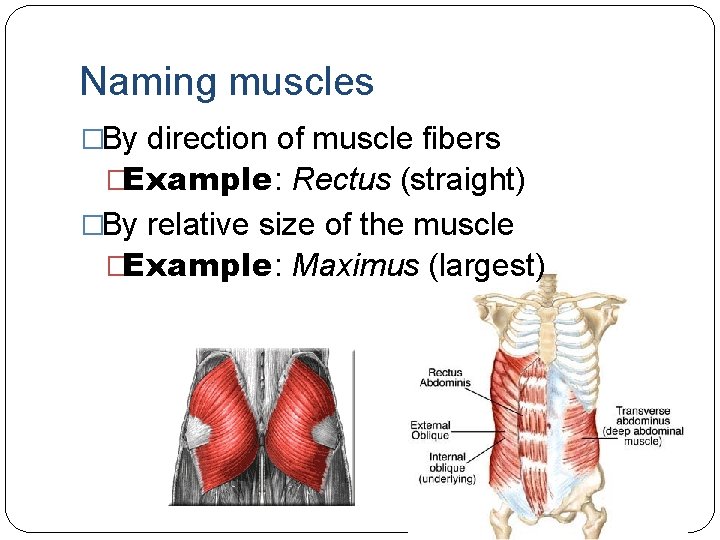
Naming muscles �By direction of muscle fibers �Example: Rectus (straight) �By relative size of the muscle �Example: Maximus (largest)
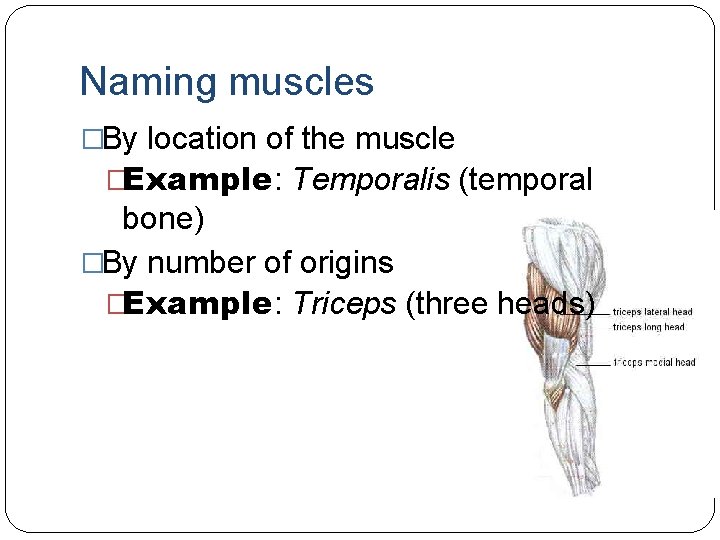
Naming muscles �By location of the muscle �Example: Temporalis (temporal bone) �By number of origins �Example: Triceps (three heads)
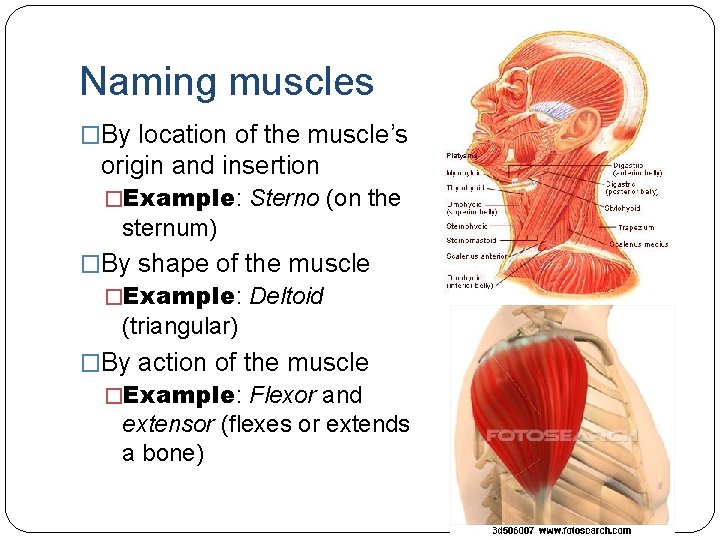
Naming muscles �By location of the muscle’s origin and insertion �Example: Sterno (on the sternum) �By shape of the muscle �Example: Deltoid (triangular) �By action of the muscle �Example: Flexor and extensor (flexes or extends a bone)