
Skeletal Injuries Skeletal InjuriesFracture Fractures fx break in
Skeletal Injuries
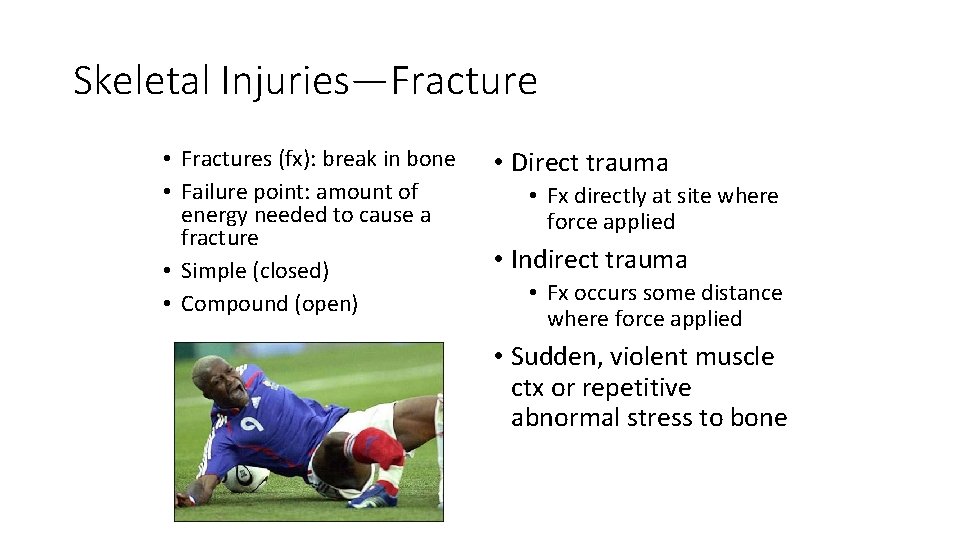
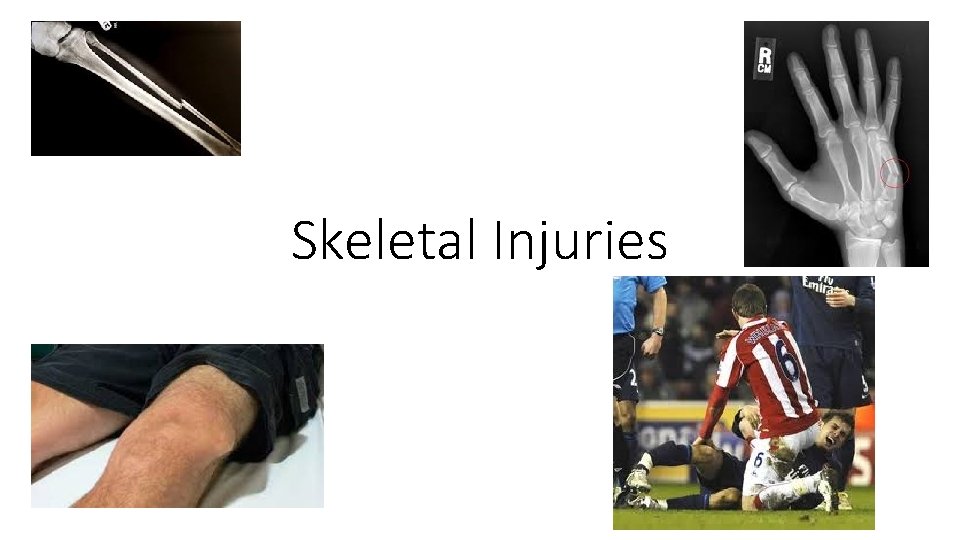
Skeletal Injuries—Fracture • Fractures (fx): break in bone • Failure point: amount of energy needed to cause a fracture • Simple (closed) • Compound (open) • Direct trauma • Fx directly at site where force applied • Indirect trauma • Fx occurs some distance where force applied • Sudden, violent muscle ctx or repetitive abnormal stress to bone
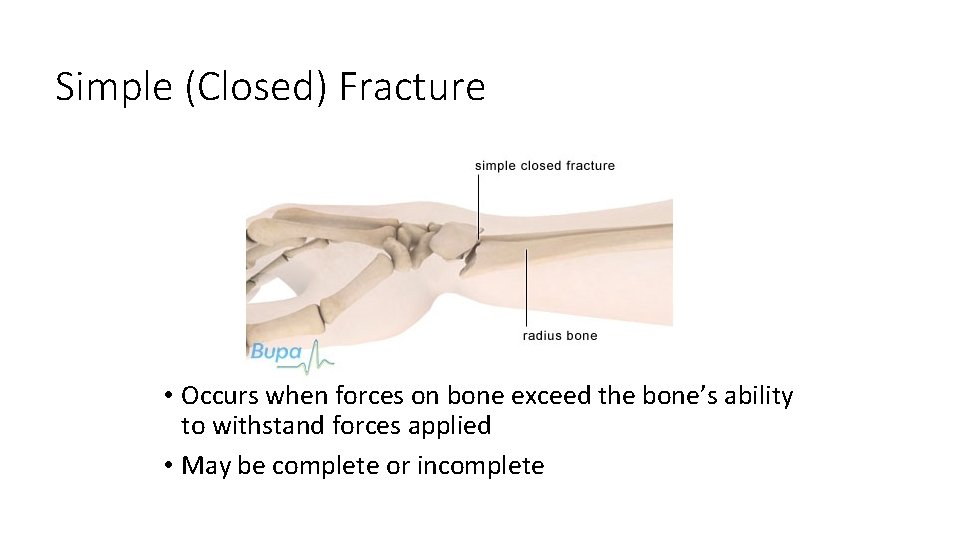
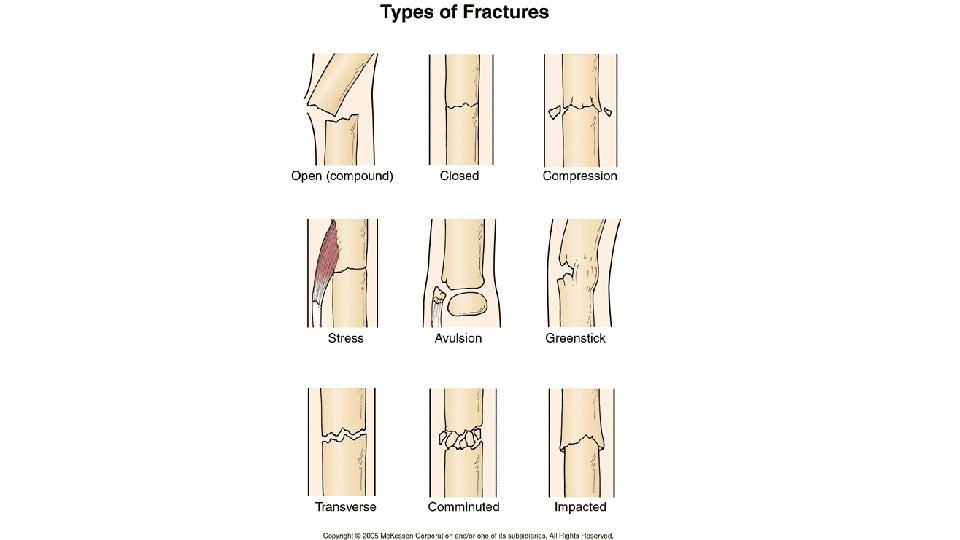
Simple (Closed) Fracture • Occurs when forces on bone exceed the bone’s ability to withstand forces applied • May be complete or incomplete
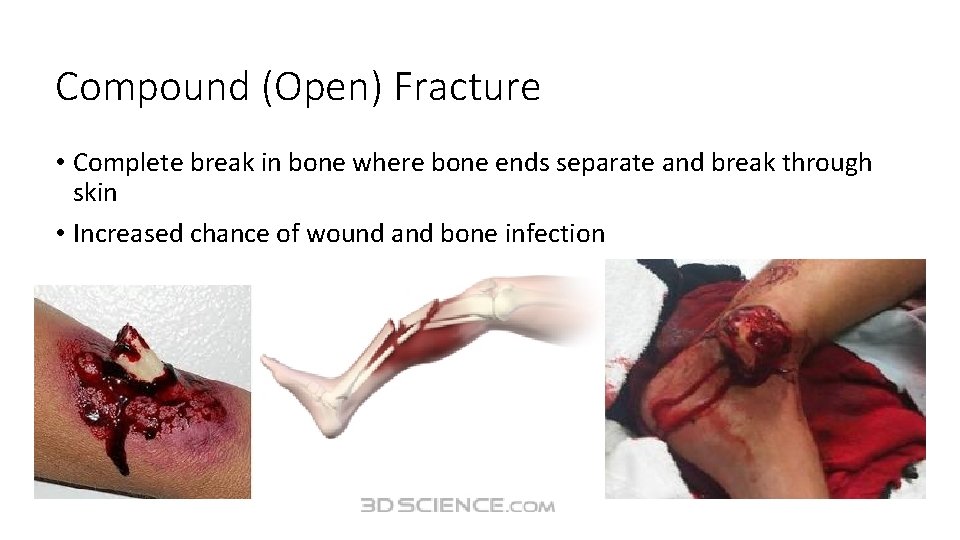
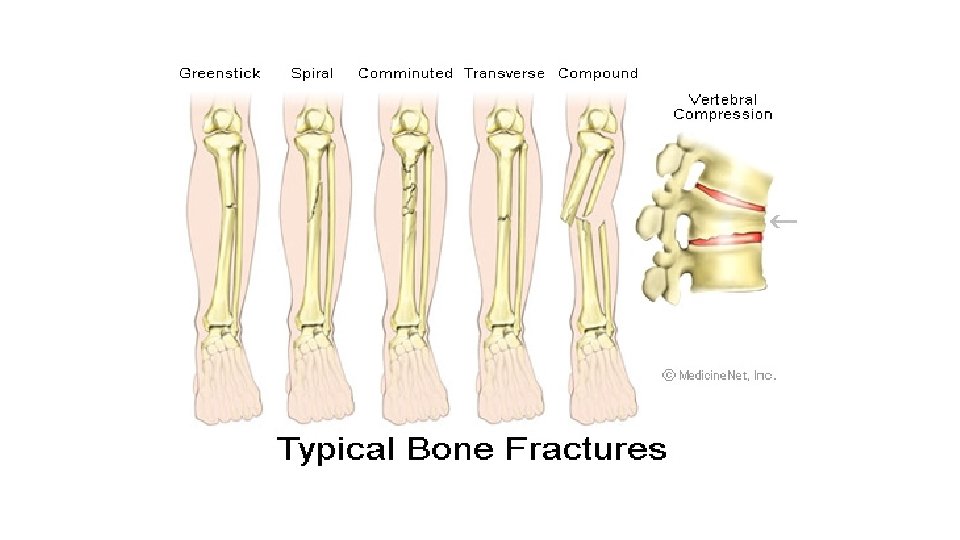
Compound (Open) Fracture • Complete break in bone where bone ends separate and break through skin • Increased chance of wound and bone infection
Acute Bone Fractures • Depressed • Greenstick • Impacted • Longitudinal • Spiral • Oblique • Serrated • Transverse • Comminuted • Contrecoup • Blowout • Avulsion
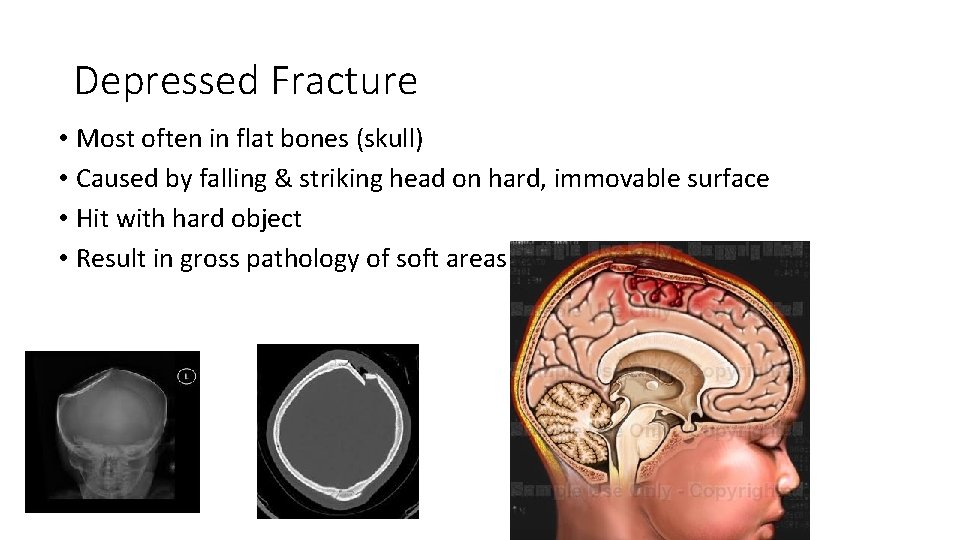
Depressed Fracture • Most often in flat bones (skull) • Caused by falling & striking head on hard, immovable surface • Hit with hard object • Result in gross pathology of soft areas
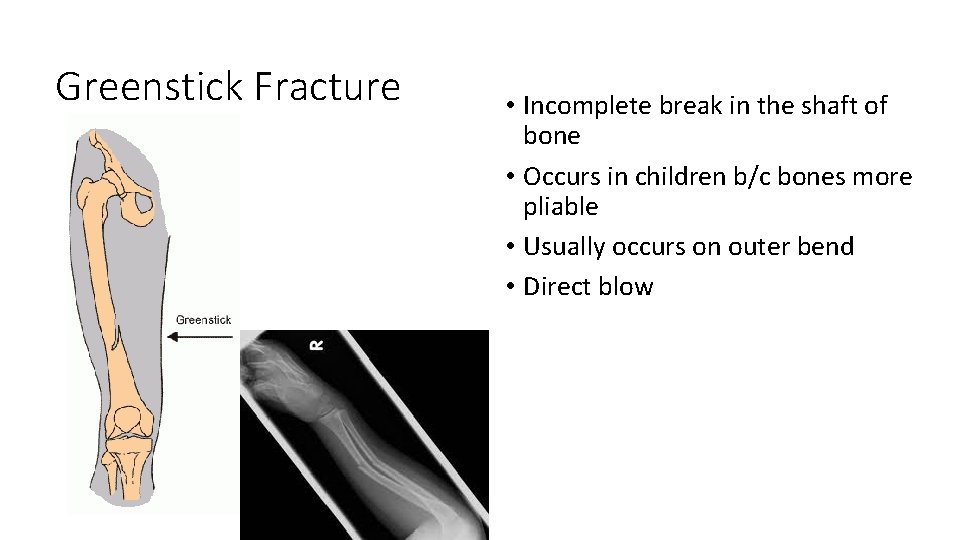
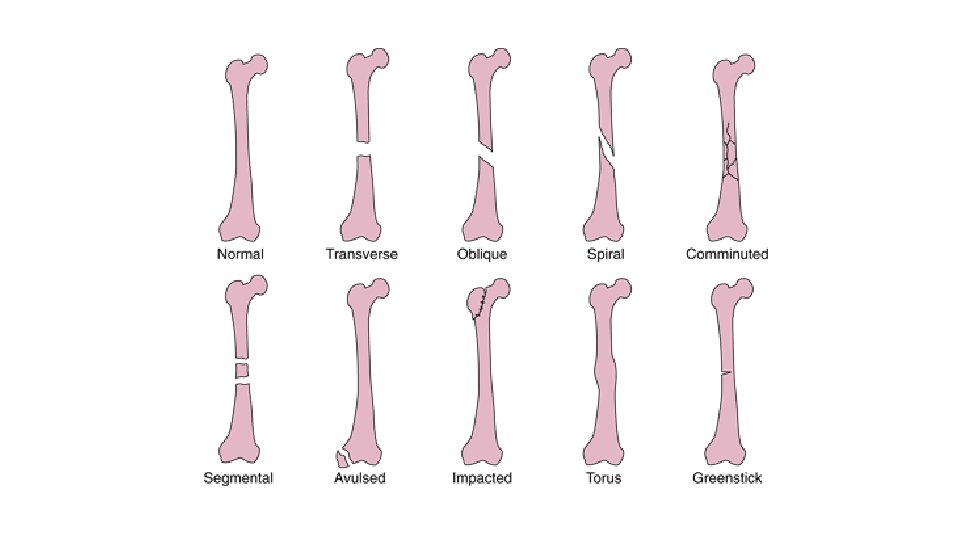
Greenstick Fracture • Incomplete break in the shaft of bone • Occurs in children b/c bones more pliable • Usually occurs on outer bend • Direct blow
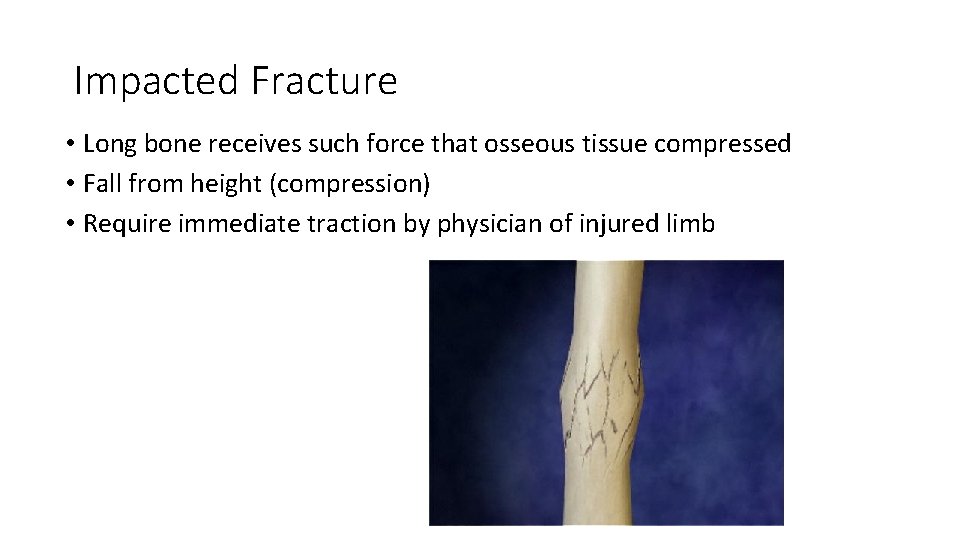
Impacted Fracture • Long bone receives such force that osseous tissue compressed • Fall from height (compression) • Require immediate traction by physician of injured limb
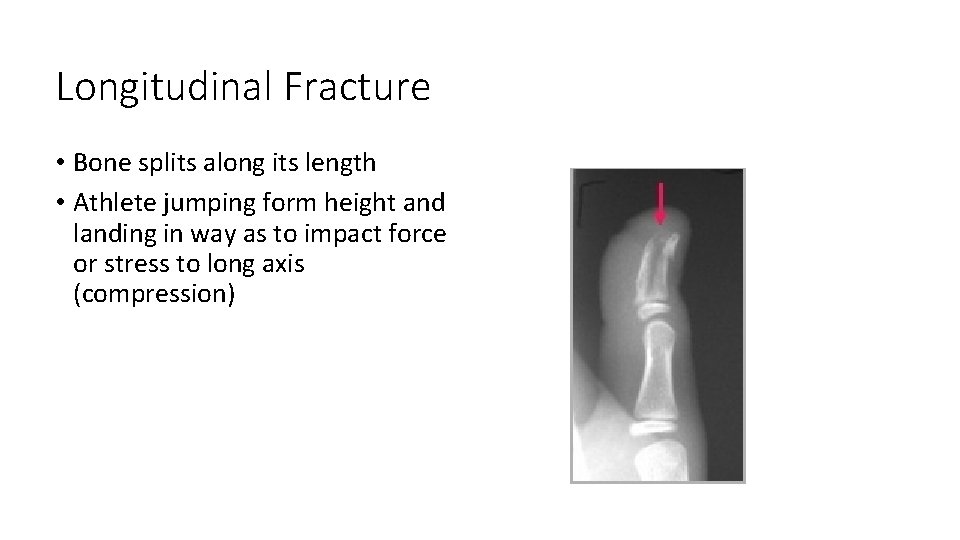
Longitudinal Fracture • Bone splits along its length • Athlete jumping form height and landing in way as to impact force or stress to long axis (compression)
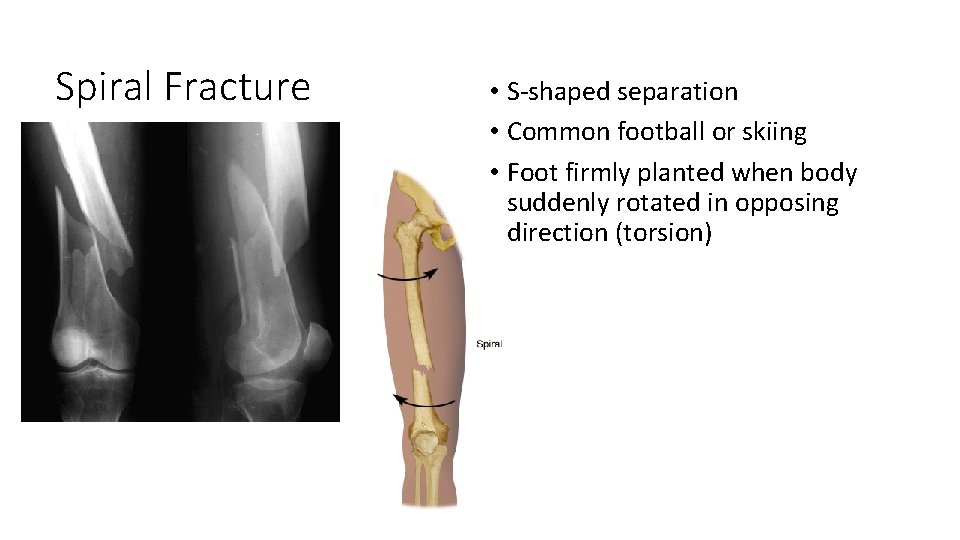
Spiral Fracture • S-shaped separation • Common football or skiing • Foot firmly planted when body suddenly rotated in opposing direction (torsion)
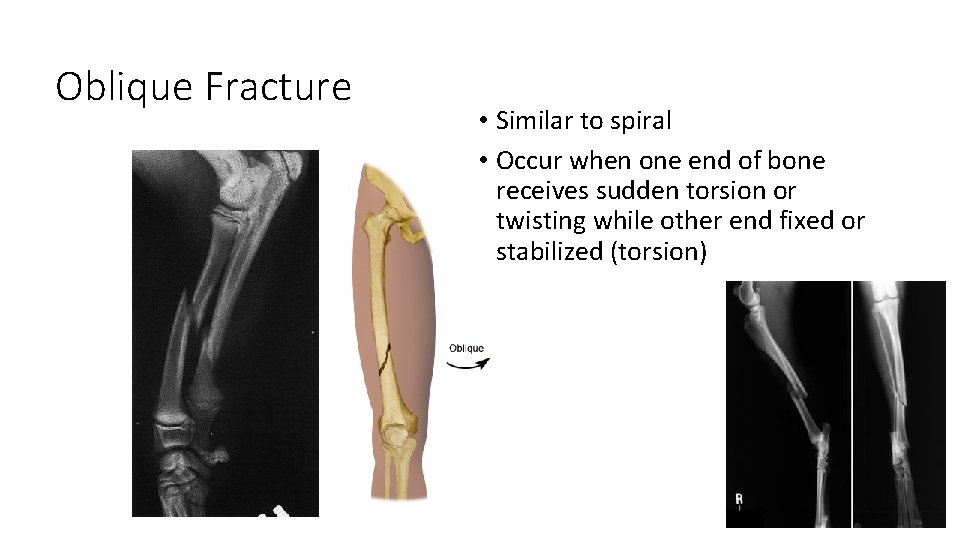
Oblique Fracture • Similar to spiral • Occur when one end of bone receives sudden torsion or twisting while other end fixed or stabilized (torsion)

Serrated Fracture • Two bony fragments have a sawtooth, sharp-edged fx line • Usually caused by direct blow • Can cause extensive internal damage • Severance of vital blood vessels and nerves

Transverse Fracture • Occur in straight line, more or less at right angles to bone shaft • Direct outside blow
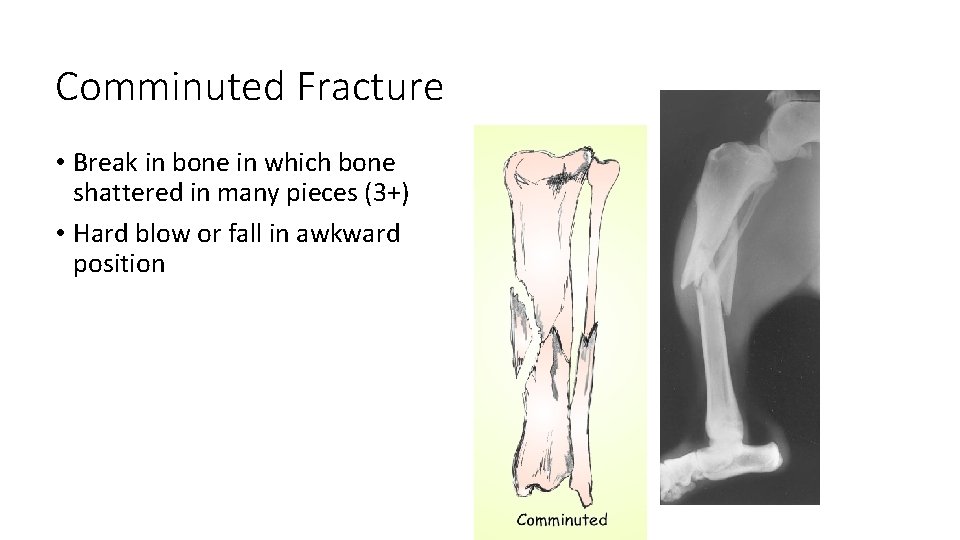
Comminuted Fracture • Break in bone in which bone shattered in many pieces (3+) • Hard blow or fall in awkward position
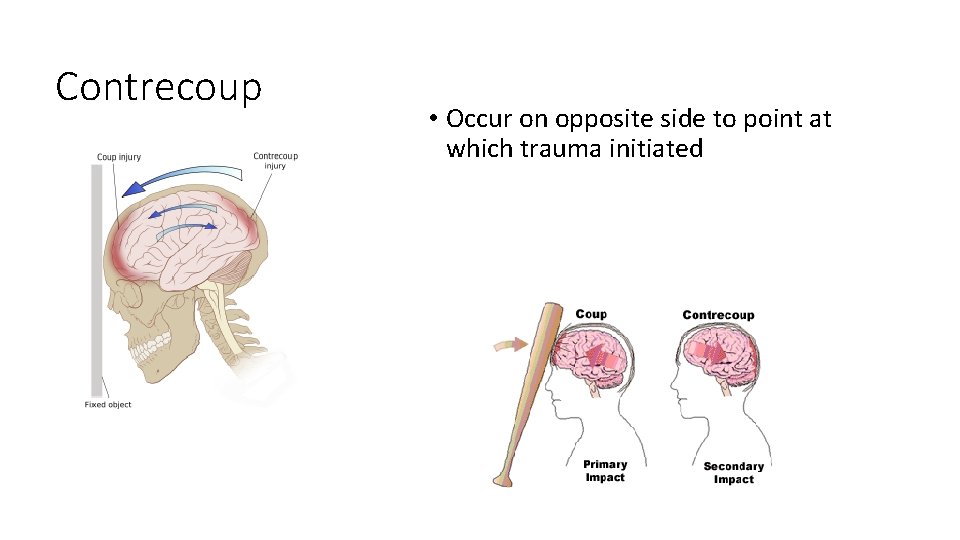
Contrecoup • Occur on opposite side to point at which trauma initiated
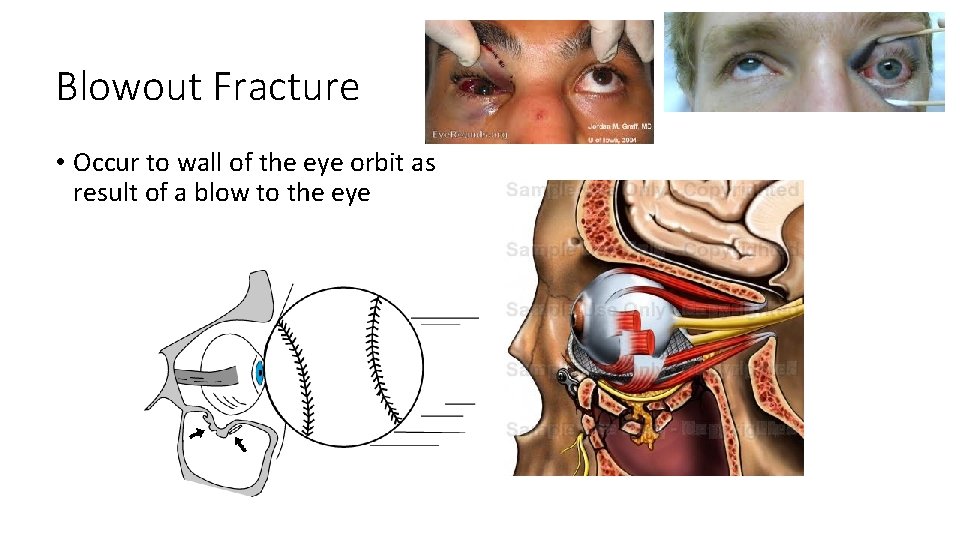
Blowout Fracture • Occur to wall of the eye orbit as result of a blow to the eye
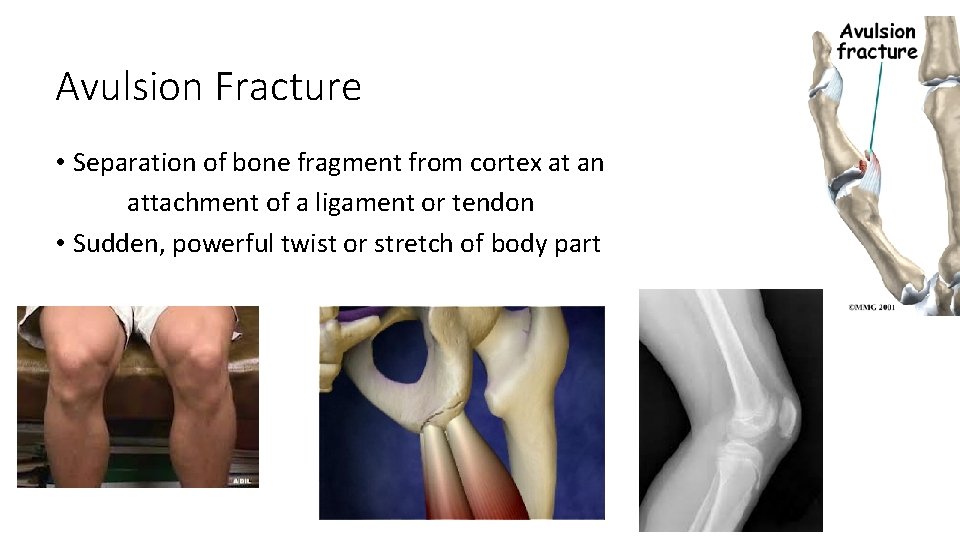
Avulsion Fracture • Separation of bone fragment from cortex at an attachment of a ligament or tendon • Sudden, powerful twist or stretch of body part
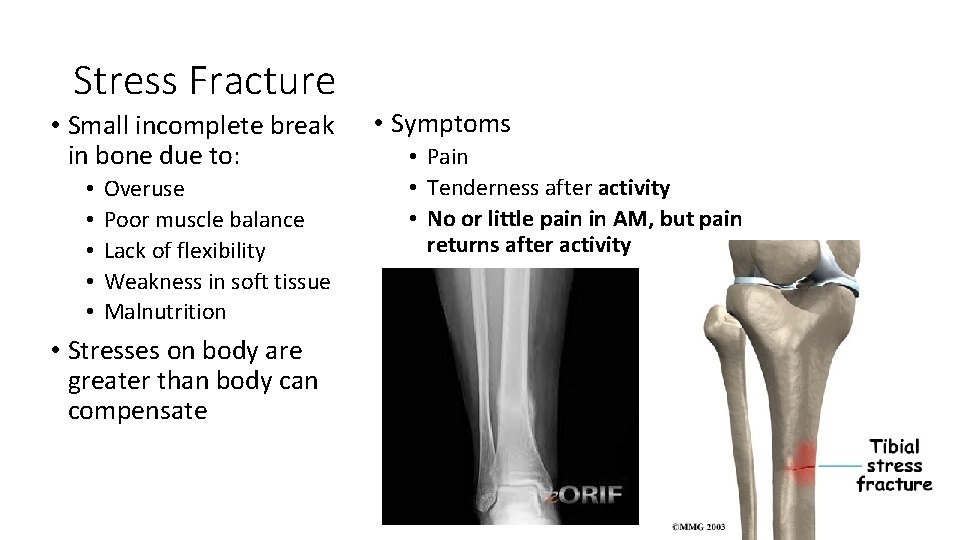
Stress Fracture • Small incomplete break in bone due to: • • • Overuse Poor muscle balance Lack of flexibility Weakness in soft tissue Malnutrition • Stresses on body are greater than body can compensate • Symptoms • Pain • Tenderness after activity • No or little pain in AM, but pain returns after activity
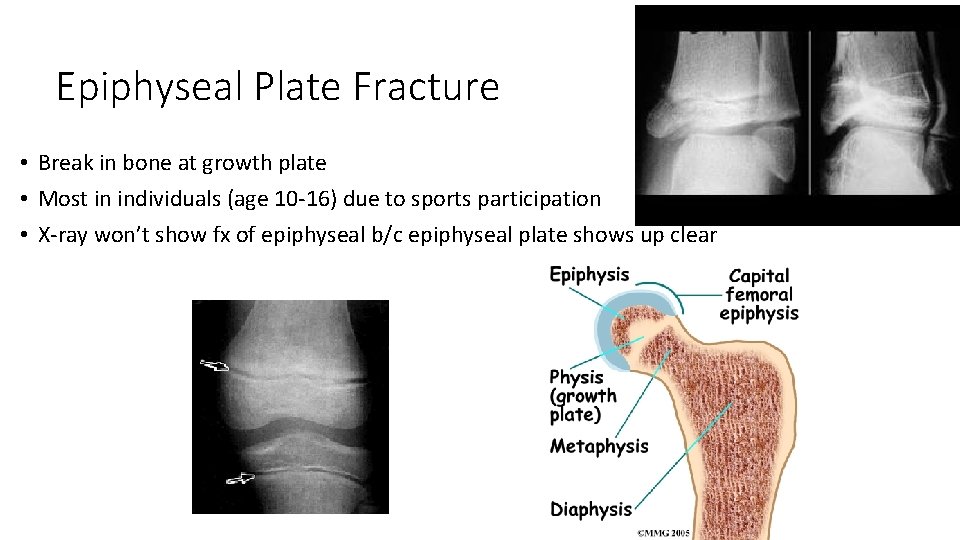
Epiphyseal Plate Fracture • Break in bone at growth plate • Most in individuals (age 10 -16) due to sports participation • X-ray won’t show fx of epiphyseal b/c epiphyseal plate shows up clear
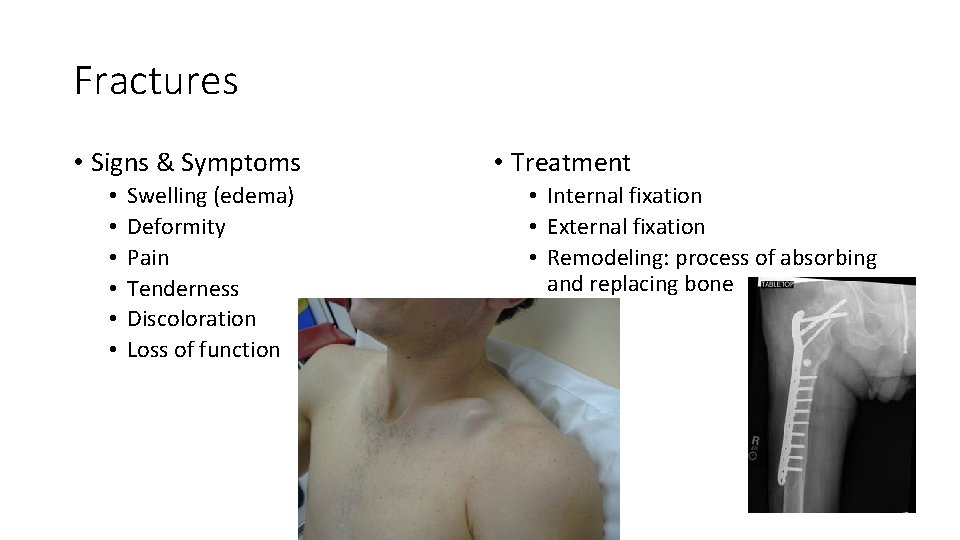
Fractures • Signs & Symptoms • • • Swelling (edema) Deformity Pain Tenderness Discoloration Loss of function • Treatment • Internal fixation • External fixation • Remodeling: process of absorbing and replacing bone
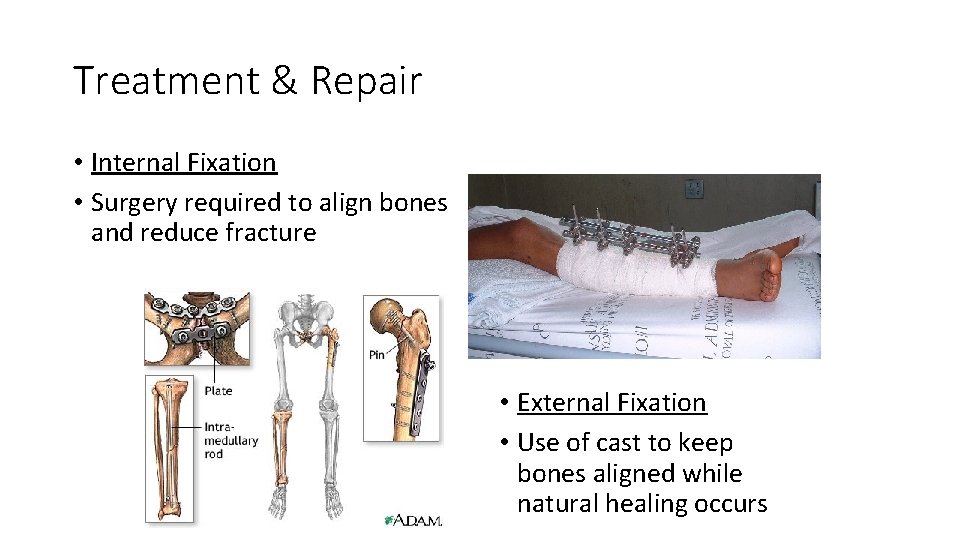
Treatment & Repair • Internal Fixation • Surgery required to align bones and reduce fracture • External Fixation • Use of cast to keep bones aligned while natural healing occurs
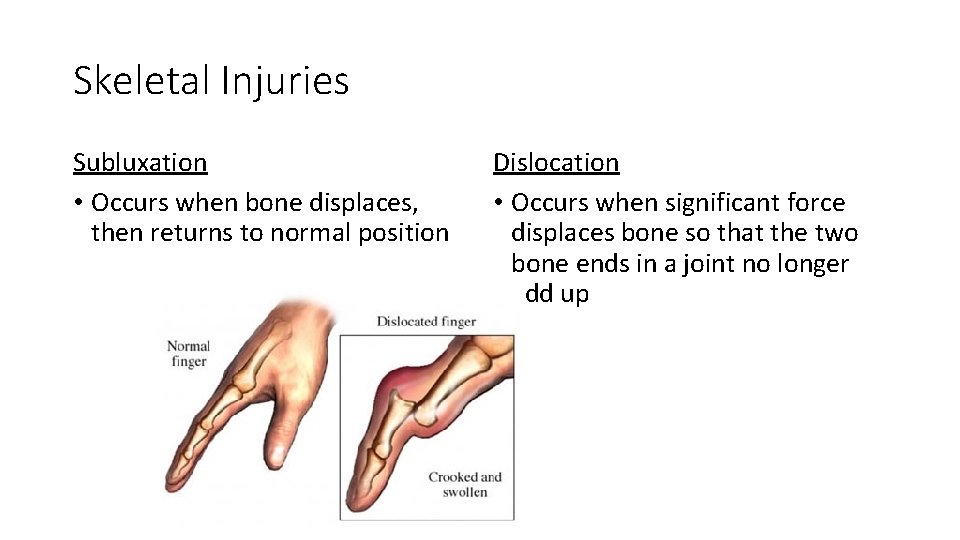
Skeletal Injuries Subluxation • Occurs when bone displaces, then returns to normal position Dislocation • Occurs when significant force displaces bone so that the two bone ends in a joint no longer add up
Synovial Joint Injuries ØAcute • • Sprains Synovitis Subluxations Dislocations ØChronic • • Osteochondrosis Arthritis Bursitis Capsulitis/synovitis
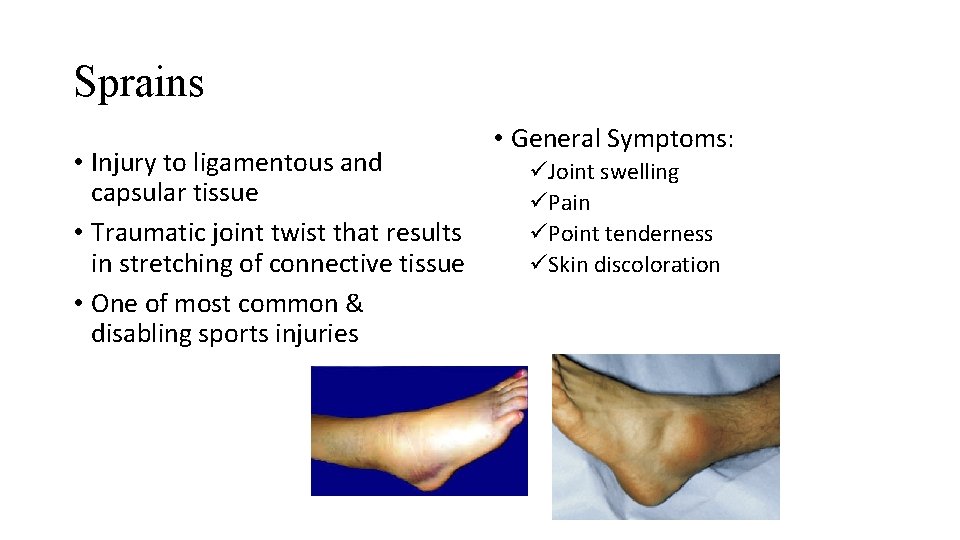
Sprains • Injury to ligamentous and capsular tissue • Traumatic joint twist that results in stretching of connective tissue • One of most common & disabling sports injuries • General Symptoms: üJoint swelling üPain üPoint tenderness üSkin discoloration
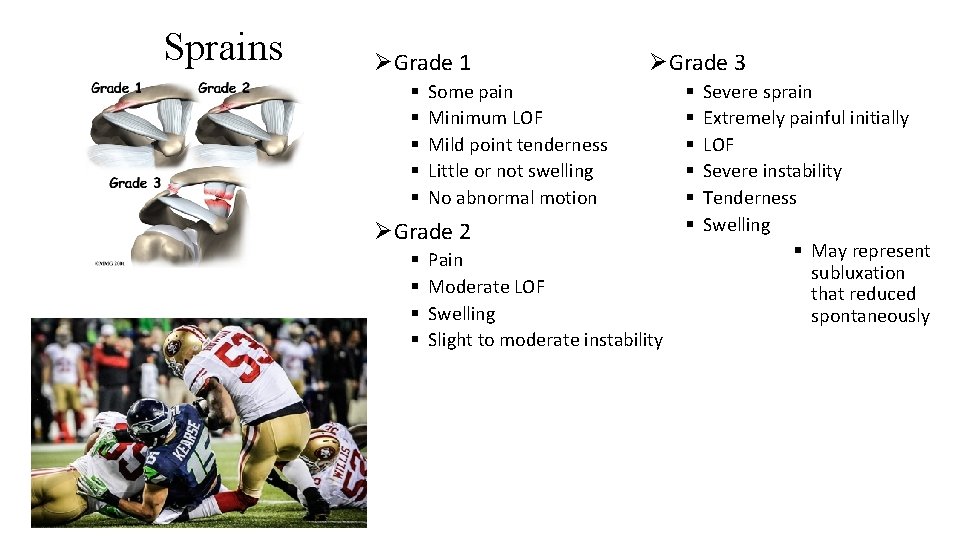
Sprains ØGrade 1 § § § ØGrade 3 Some pain Minimum LOF Mild point tenderness Little or not swelling No abnormal motion ØGrade 2 § § Pain Moderate LOF Swelling Slight to moderate instability § § § Severe sprain Extremely painful initially LOF Severe instability Tenderness Swelling § May represent subluxation that reduced spontaneously
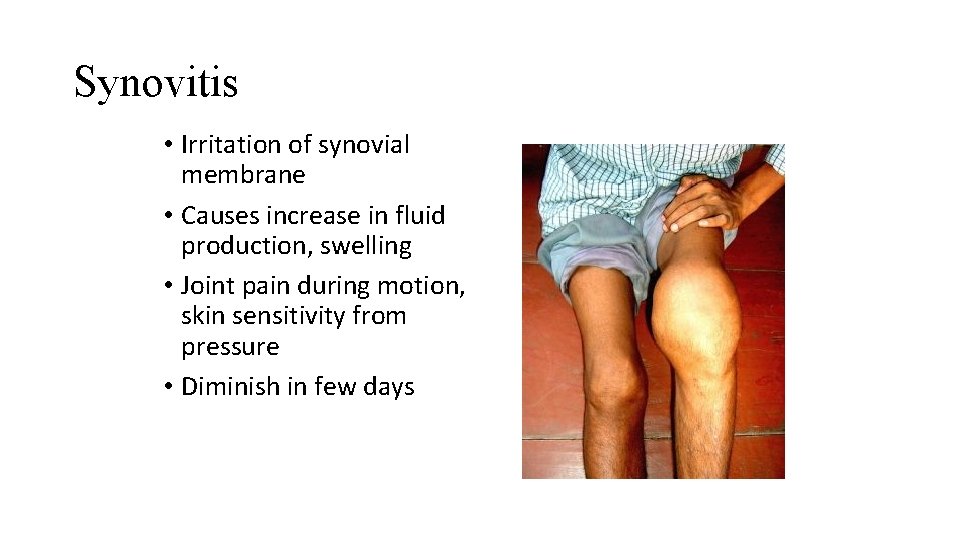
Synovitis • Irritation of synovial membrane • Causes increase in fluid production, swelling • Joint pain during motion, skin sensitivity from pressure • Diminish in few days
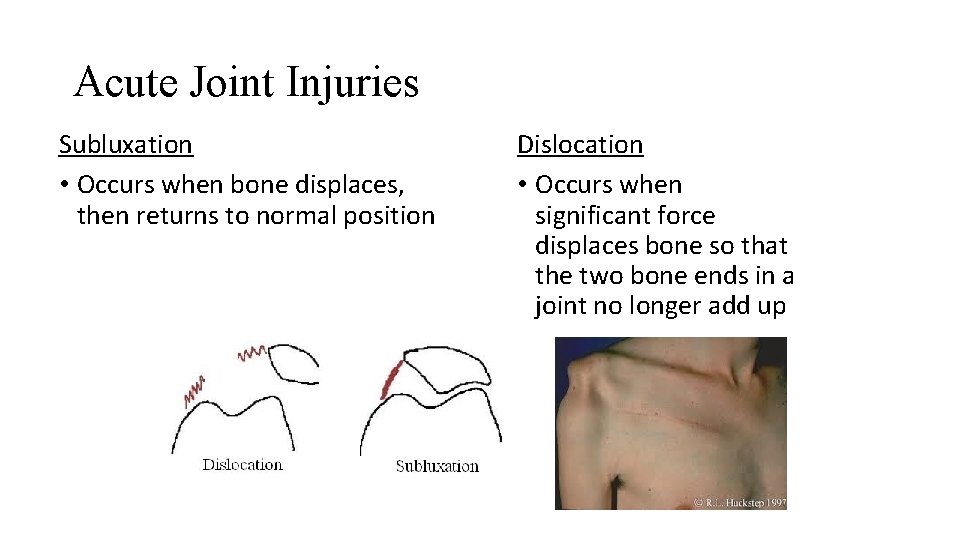
Acute Joint Injuries Subluxation • Occurs when bone displaces, then returns to normal position Dislocation • Occurs when significant force displaces bone so that the two bone ends in a joint no longer add up
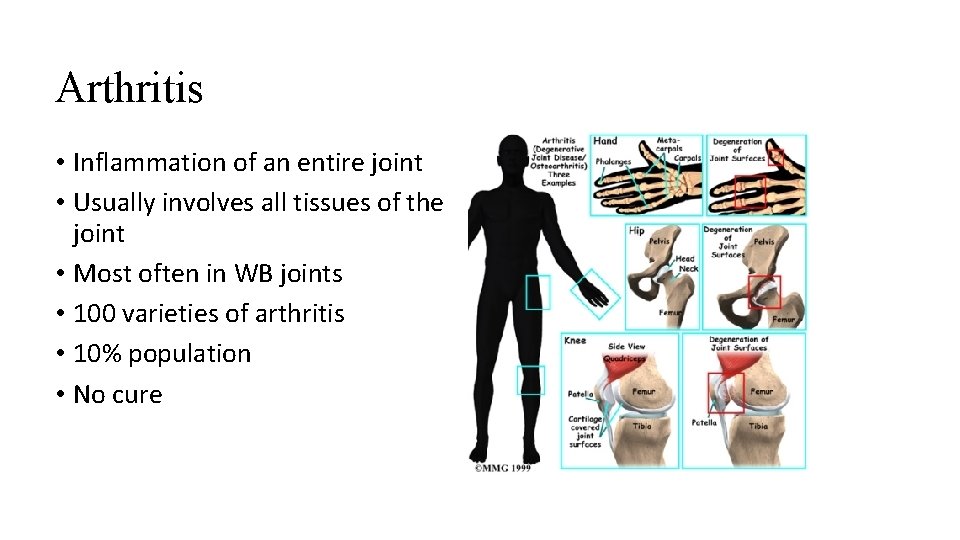
Arthritis • Inflammation of an entire joint • Usually involves all tissues of the joint • Most often in WB joints • 100 varieties of arthritis • 10% population • No cure
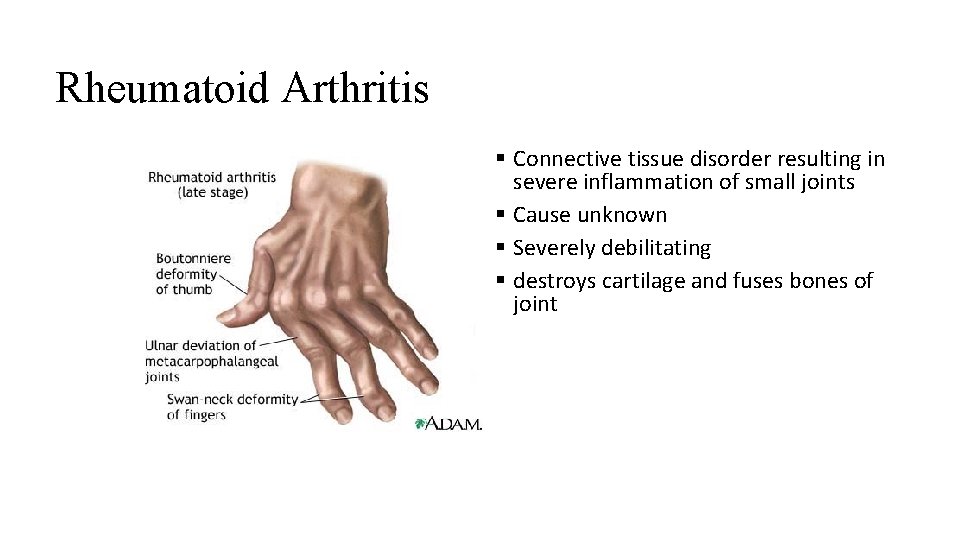
Rheumatoid Arthritis § Connective tissue disorder resulting in severe inflammation of small joints § Cause unknown § Severely debilitating § destroys cartilage and fuses bones of joint
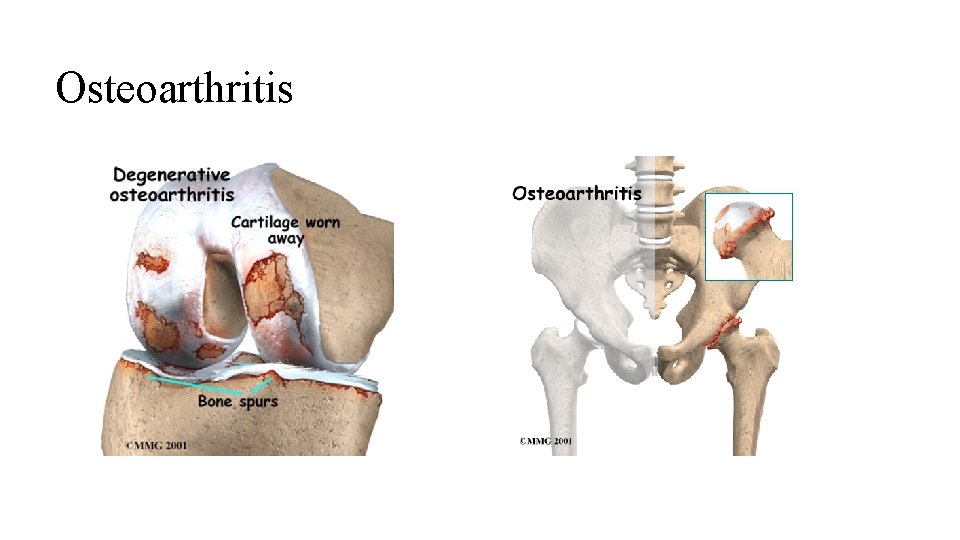
Osteoarthritis
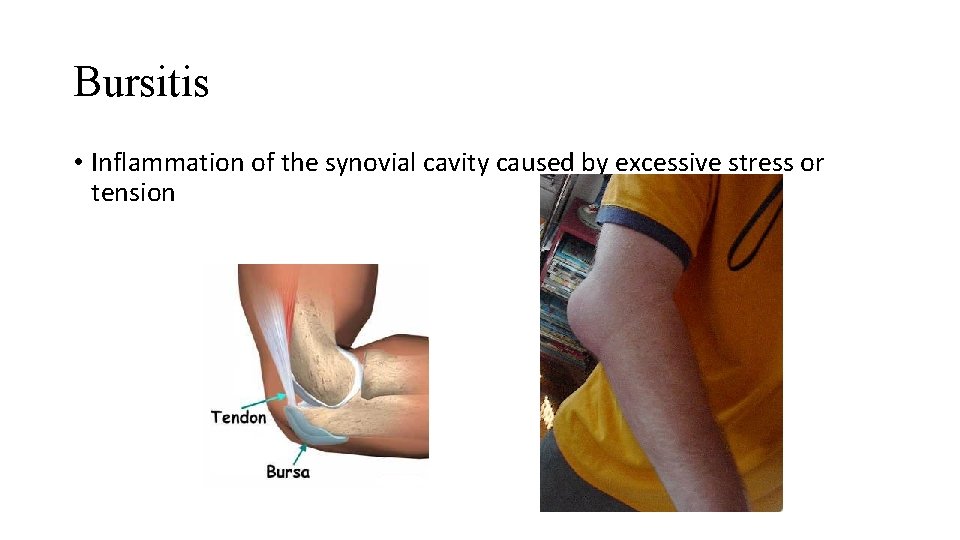
Bursitis • Inflammation of the synovial cavity caused by excessive stress or tension
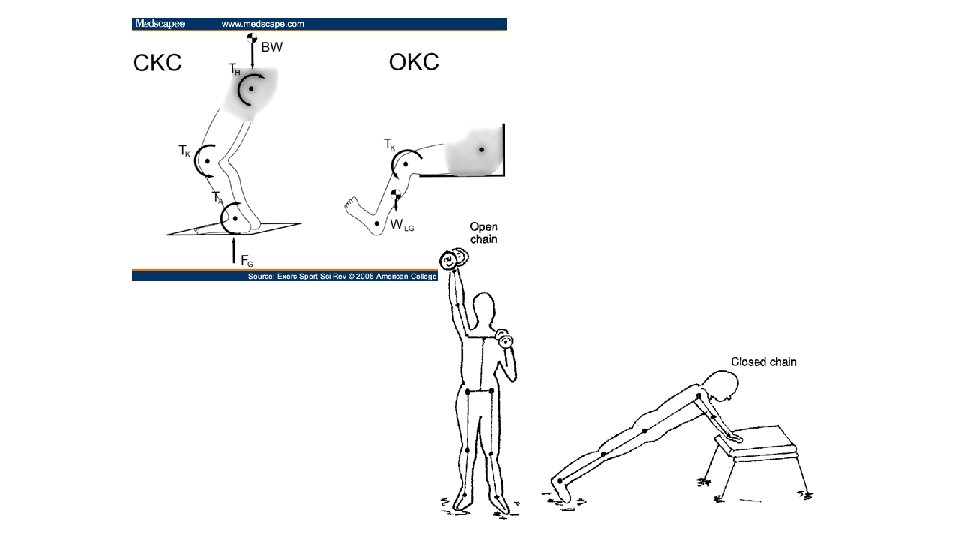
Open & Closed Kinematic Chains • Open Kinematic Chain • Sequence of action in which the body part farthest from the trunk is free during movement • i. e. Seated leg extension • Closed Kinematic Chain • Sequence of action in which the body part farthest from the trunk is fixed during movement • i. e. In a squat, feet are fixed and the rest of leg chain moves
- Slides: 36