
Skeletal Fracture NOTES Fractures of extremities most common


- Slides: 16
Skeletal Fracture NOTES Fractures of extremities most common More common in men up to 45 years of age More common in women over 45 years of age Before 75 years wrist fractures most common After 75 years hip fractures most common Among older adults, falls are the leading cause of both fatal and nonfatal injuries. • In 2010, 2. 3 million nonfatal fall injuries among older adults were treated in emergency departments and more than 662, 000 of these patients were hospitalized. • In 2010, the direct medical costs of falls, adjusted for inflation, was $30 billion. • • •
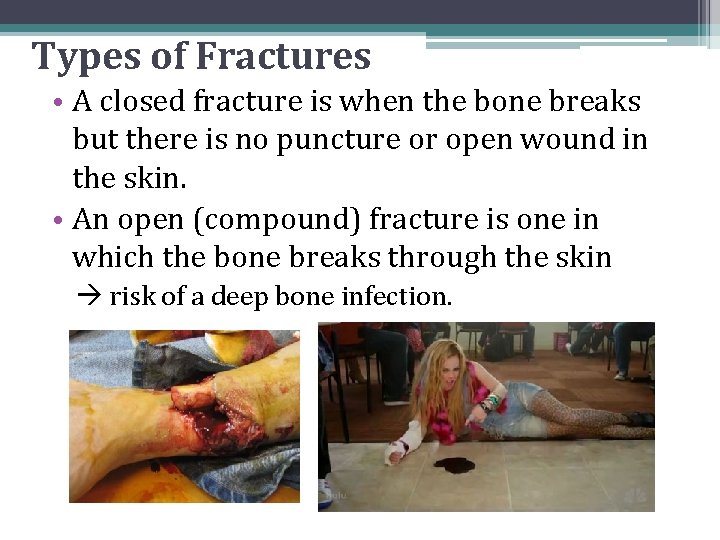
Types of Fractures • A closed fracture is when the bone breaks but there is no puncture or open wound in the skin. • An open (compound) fracture is one in which the bone breaks through the skin risk of a deep bone infection.
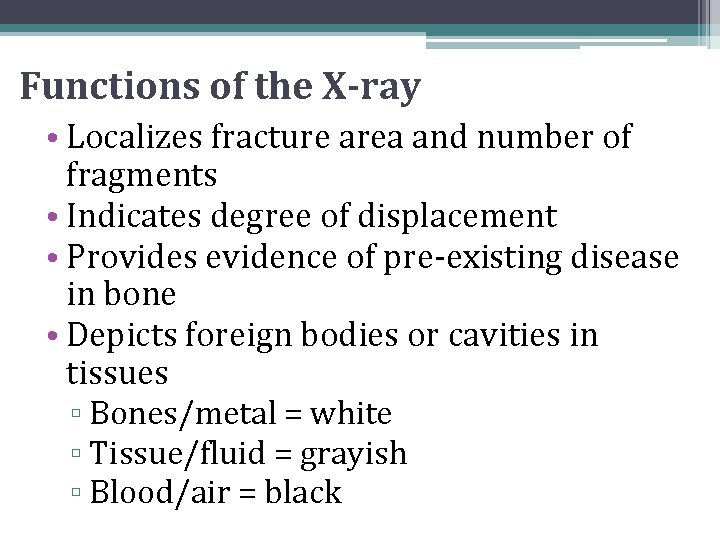
Functions of the X-ray • Localizes fracture area and number of fragments • Indicates degree of displacement • Provides evidence of pre-existing disease in bone • Depicts foreign bodies or cavities in tissues ▫ Bones/metal = white ▫ Tissue/fluid = grayish ▫ Blood/air = black
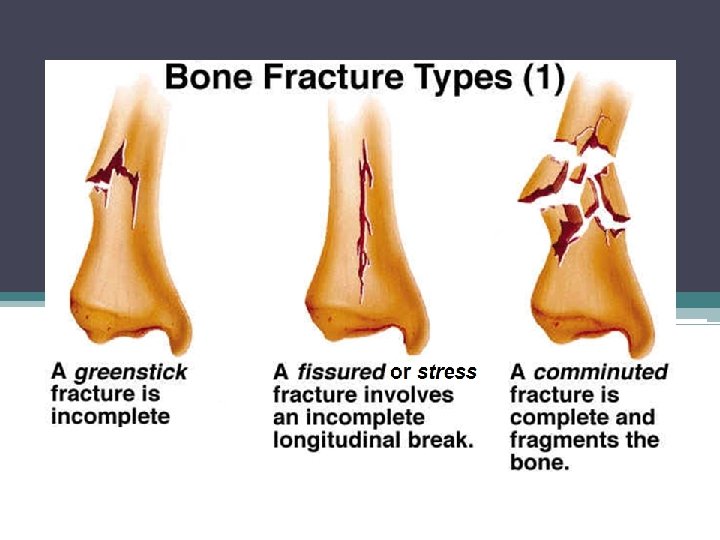
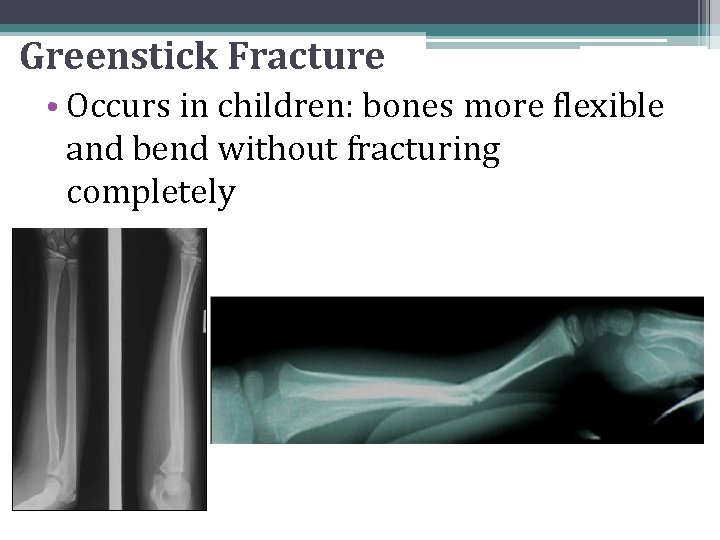
Greenstick Fracture • Occurs in children: bones more flexible and bend without fracturing completely
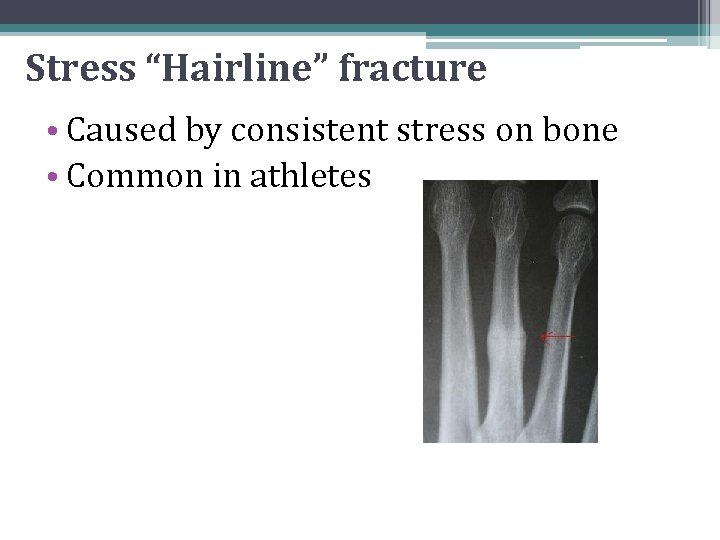
Stress “Hairline” fracture • Caused by consistent stress on bone • Common in athletes
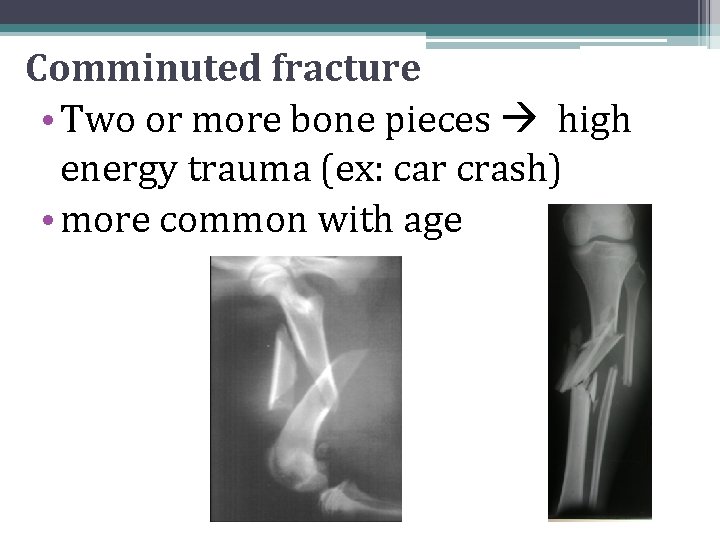
Comminuted fracture • Two or more bone pieces high energy trauma (ex: car crash) • more common with age
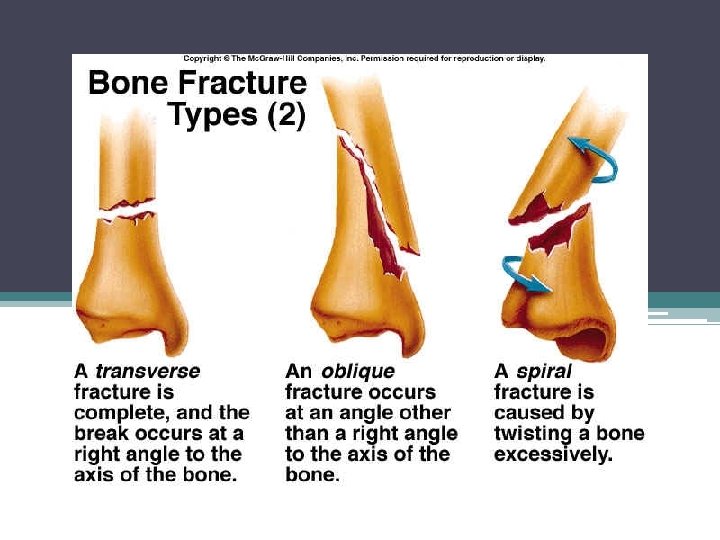
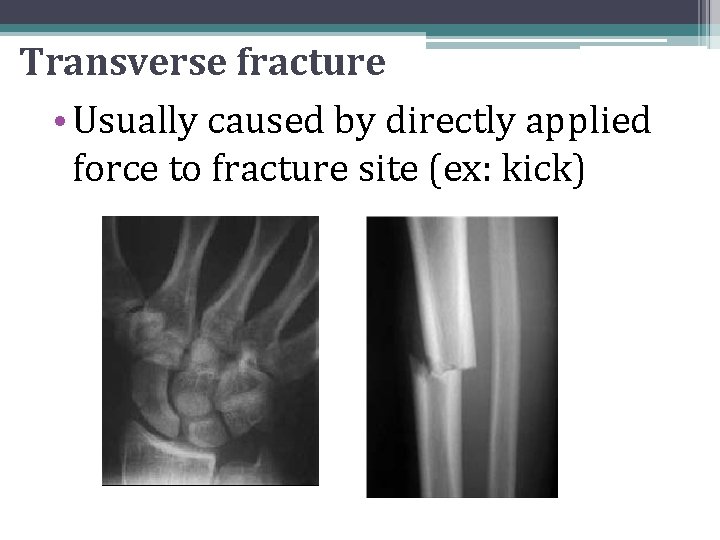
Transverse fracture • Usually caused by directly applied force to fracture site (ex: kick)
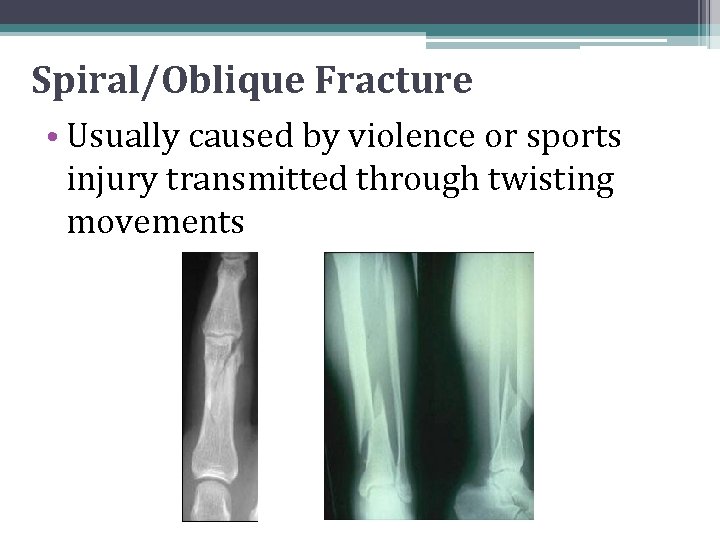
Spiral/Oblique Fracture • Usually caused by violence or sports injury transmitted through twisting movements
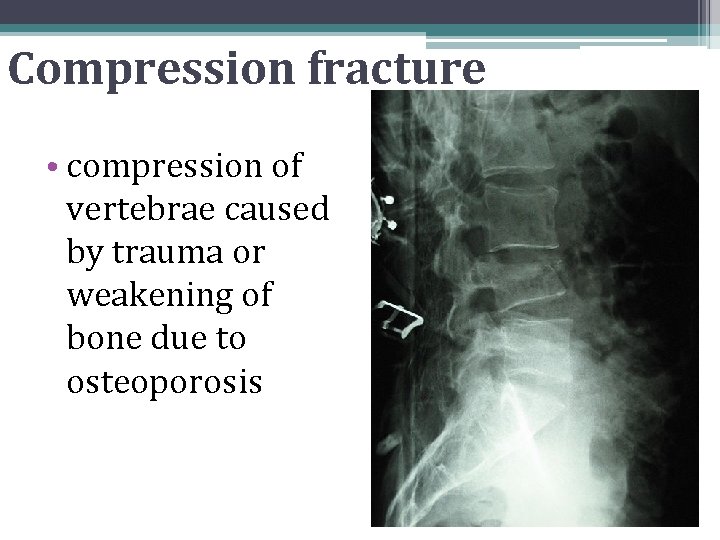
Compression fracture • compression of vertebrae caused by trauma or weakening of bone due to osteoporosis
Dislocation • Abnormal separation of bones at joint, caused by sudden impact (ex: fall) • Can damage surrounding nerves, muscle, ligaments, and tendons
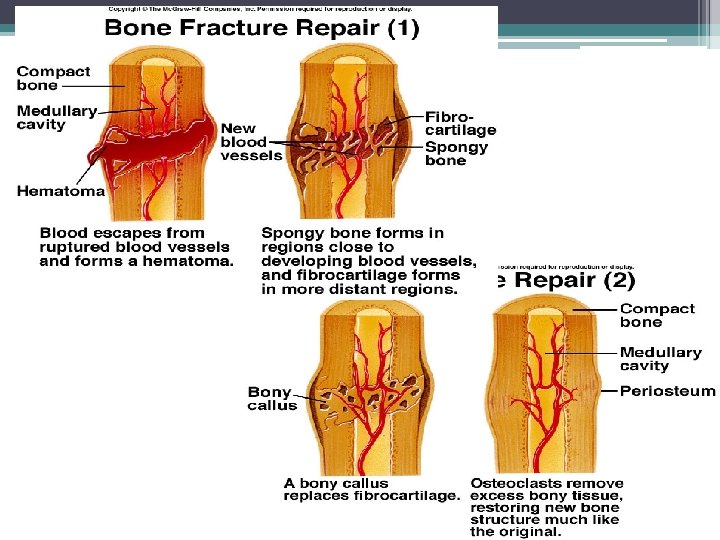
Repair of Bone Fractures 1. Vasoconstriction and hematoma (blood-filled swelling) formation around injury site 2. Break is splinted with hyaline cartilage made by chondroblast cells to form a callus 3. Hyaline cartilage callus replaced by a bony callus made by osteoblasts 4. Bony callus is remodeled by osteoclasts to form a permanent patch of compact bone with roughly same shape (scar visible on X-ray).
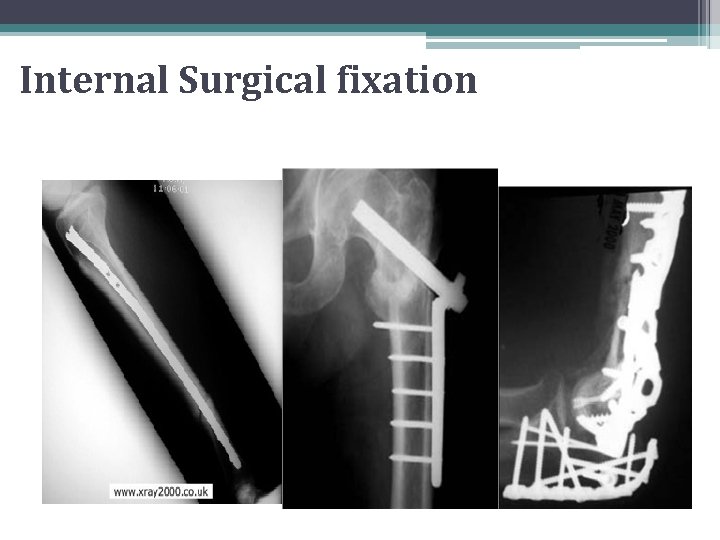
Skeletal Fracture Repair • Most fractures will heal on own • Wearing a cast will allow bone to set in correct position • If fracture is severe, surgical repair with metal splints and screws may be required
Internal Surgical fixation