
SKELETAL COMPLICATIONS FOR CANCER SURVIVORS Dra ANA CASAS


- Slides: 46
SKELETAL COMPLICATIONS FOR CANCER SURVIVORS Dra. ANA CASAS Hospital Universitario Virgen del Rocío Sevilla 28, octubre, 2010
BONE LOSS
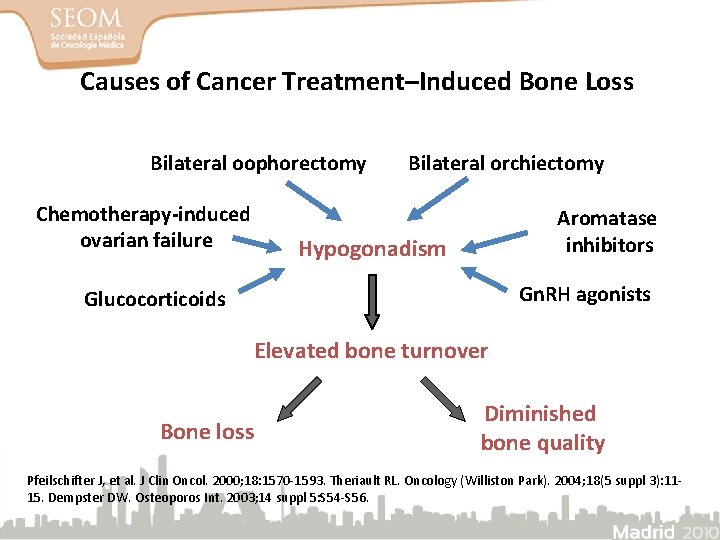
Causes of Cancer Treatment–Induced Bone Loss Bilateral oophorectomy Chemotherapy-induced ovarian failure Bilateral orchiectomy Aromatase inhibitors Hypogonadism Gn. RH agonists Glucocorticoids Elevated bone turnover Bone loss Diminished bone quality Pfeilschifter J, et al. J Clin Oncol. 2000; 18: 1570 -1593. Theriault RL. Oncology (Williston Park). 2004; 18(5 suppl 3): 1115. Dempster DW. Osteoporos Int. 2003; 14 suppl 5: S 54 -S 56.
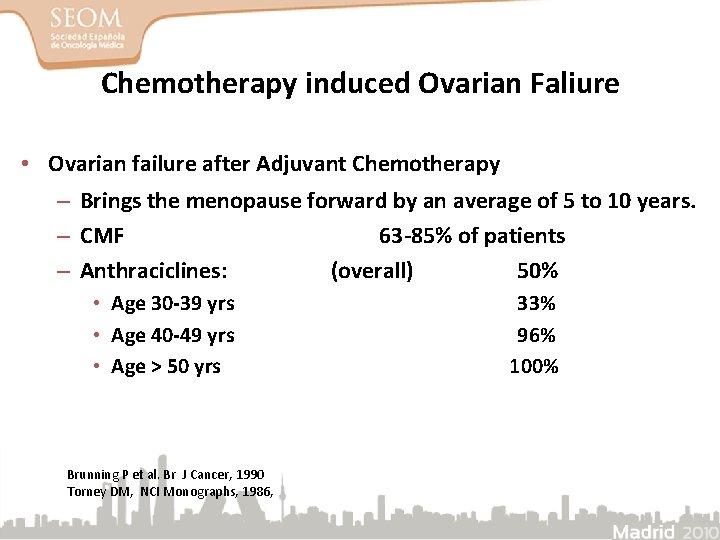
Chemotherapy induced Ovarian Faliure • Ovarian failure after Adjuvant Chemotherapy – Brings the menopause forward by an average of 5 to 10 years. – CMF 63 -85% of patients – Anthraciclines: (overall) 50% • Age 30 -39 yrs • Age 40 -49 yrs • Age > 50 yrs Brunning P et al. Br J Cancer, 1990 Torney DM, NCI Monographs, 1986, 33% 96% 100%
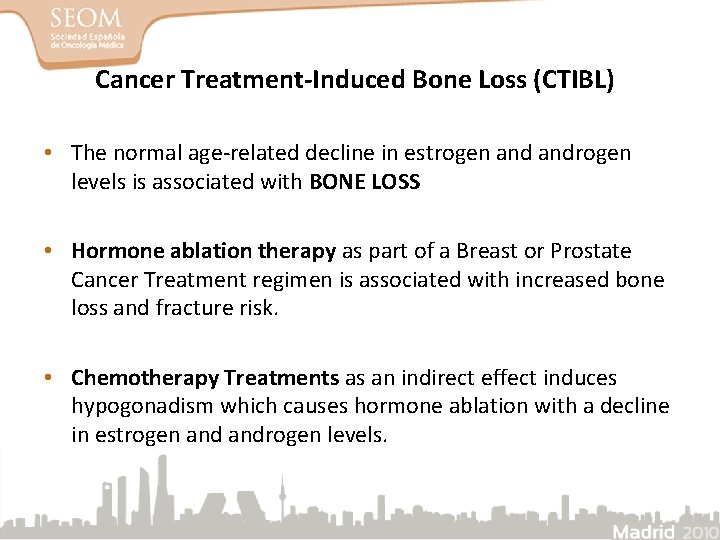
Cancer Treatment-Induced Bone Loss (CTIBL) • The normal age-related decline in estrogen androgen levels is associated with BONE LOSS • Hormone ablation therapy as part of a Breast or Prostate Cancer Treatment regimen is associated with increased bone loss and fracture risk. • Chemotherapy Treatments as an indirect effect induces hypogonadism which causes hormone ablation with a decline in estrogen androgen levels.
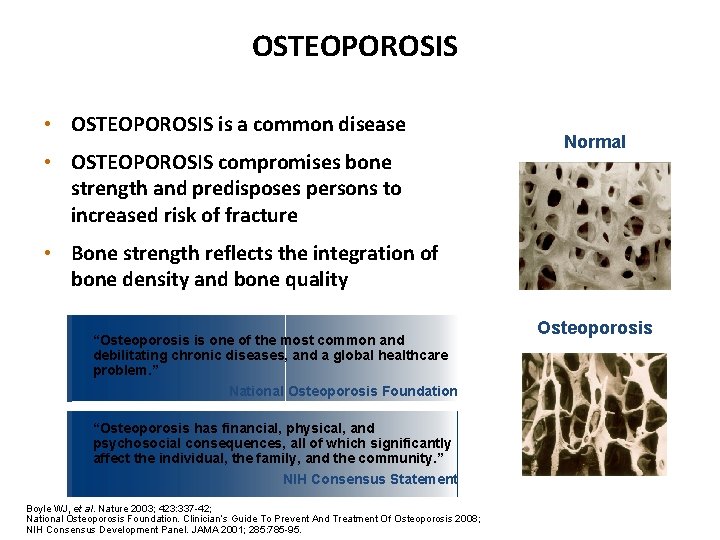
OSTEOPOROSIS • OSTEOPOROSIS is a common disease • OSTEOPOROSIS compromises bone strength and predisposes persons to increased risk of fracture Normal • Bone strength reflects the integration of bone density and bone quality “Osteoporosis is one of the most common and debilitating chronic diseases, and a global healthcare problem. ” National Osteoporosis Foundation “Osteoporosis has financial, physical, and psychosocial consequences, all of which significantly affect the individual, the family, and the community. ” NIH Consensus Statement Boyle WJ, et al. Nature 2003; 423: 337 -42; National Osteoporosis Foundation. Clinician’s Guide To Prevent And Treatment Of Osteoporosis 2008; NIH Consensus Development Panel. JAMA 2001; 285: 785 -95. Osteoporosis
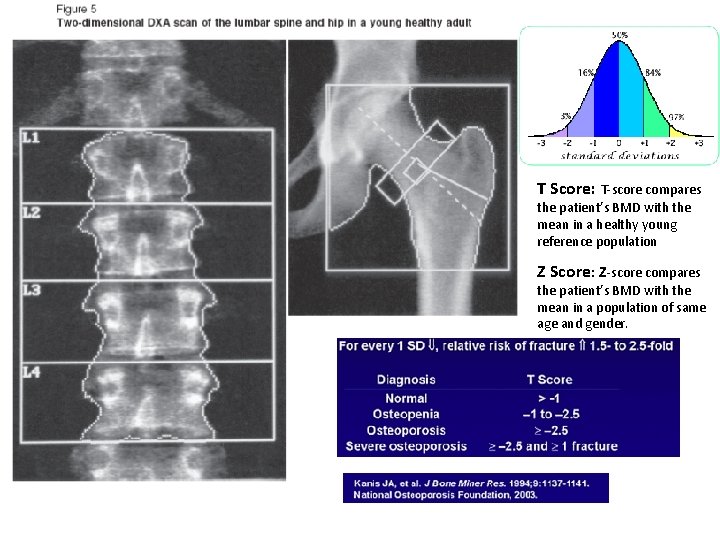
T Score: T-score compares the patient’s BMD with the mean in a healthy young reference population Z Score: Z-score compares the patient’s BMD with the mean in a population of same age and gender.
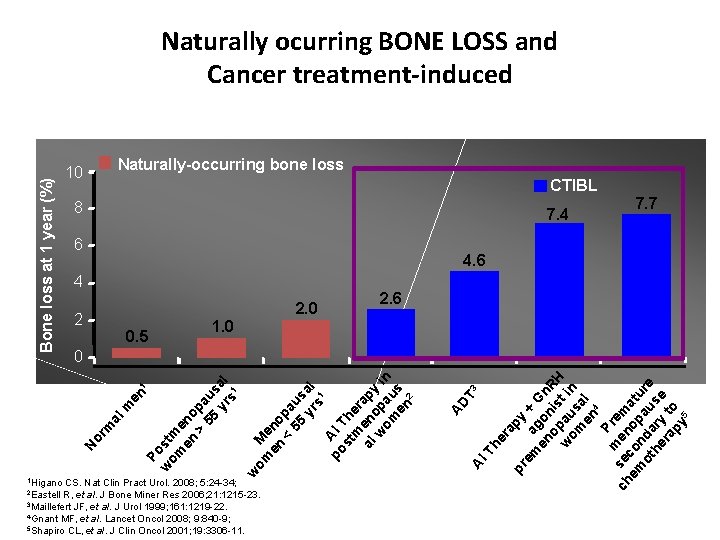
Naturally-occurring bone loss 10 CTIBL 8 7. 4 6 4 2. 0 2 0. 5 1. 0 pr e AI Th er 5 ap y m ag + G en on n op is RH w au t in om s en al 4 P m r ch se en em em co op atu ot nda au re he ry se ra to py AD T 3 om M en eno < pa 55 us yr al s 1 A po I st Th m er al eno apy w p in om au en s 2 w 1 en m al CS. Nat Clin Pract Urol. 2008; 5: 24 -34; R, et al. J Bone Miner Res 2006; 21: 1215 -23. 3 Maillefert JF, et al. J Urol 1999; 161: 1219 -22. 4 Gnant MF, et al. Lancet Oncol 2008; 9: 840 -9; 5 Shapiro CL, et al. J Clin Oncol 2001; 19: 3306 -11. 2 Eastell 2. 6 0 No rm 1 Higano 7. 7 4. 6 P w ost om m en eno > pa 55 us yr al s 1 Bone loss at 1 year (%) Naturally ocurring BONE LOSS and Cancer treatment-induced
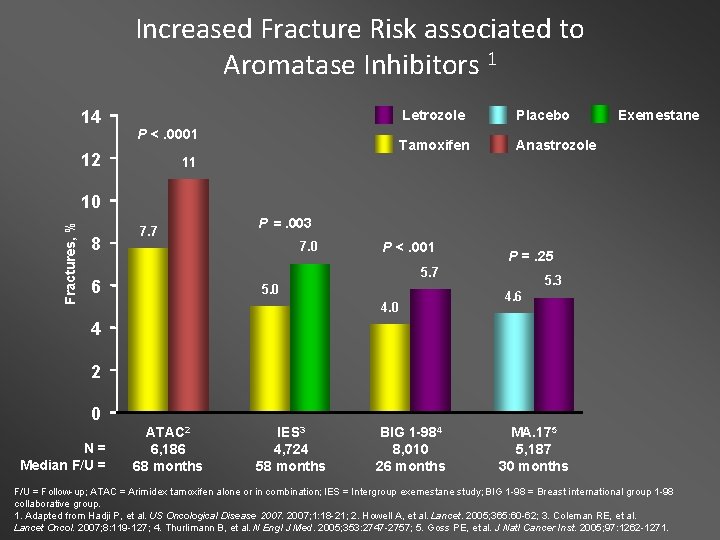
Increased Fracture Risk associated to Aromatase Inhibitors 1 14 P <. 0001 12 Letrozole Placebo Tamoxifen Anastrozole Exemestane 11 Fractures, % 10 8 7. 7 P =. 003 7. 0 P <. 001 P =. 25 5. 7 6 5. 0 4. 0 5. 3 4. 6 4 2 0 N= Median F/U = ATAC 2 6, 186 68 months IES 3 4, 724 58 months BIG 1 -984 8, 010 26 months MA. 175 5, 187 30 months F/U = Follow-up; ATAC = Arimidex tamoxifen alone or in combination; IES = Intergroup exemestane study; BIG 1 -98 = Breast international group 1 -98 collaborative group. 1. Adapted from Hadji P, et al. US Oncological Disease 2007; 1: 18 -21; 2. Howell A, et al. Lancet. 2005; 365: 60 -62; 3. Coleman RE, et al. Lancet Oncol. 2007; 8: 119 -127; 4. Thurlimann B, et al. N Engl J Med. 2005; 353: 2747 -2757; 5. Goss PE, et al. J Natl Cancer Inst. 2005; 97: 1262 -1271.
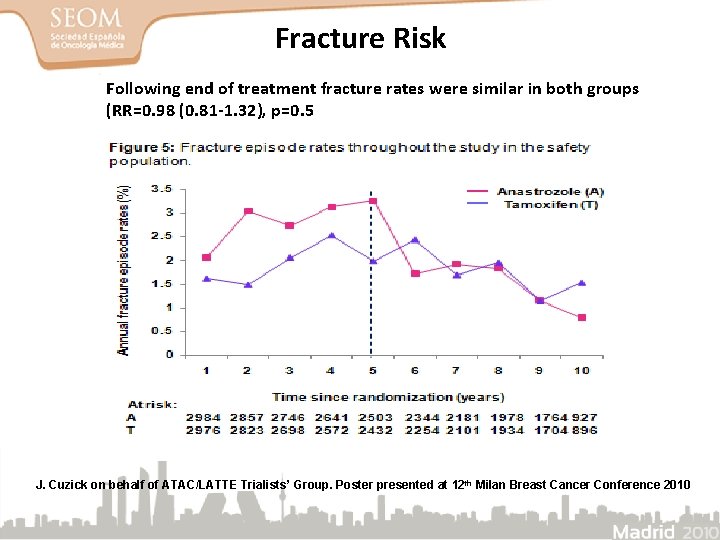
Fracture Risk Following end of treatment fracture rates were similar in both groups (RR=0. 98 (0. 81 -1. 32), p=0. 5 J. Cuzick on behalf of ATAC/LATTE Trialists’ Group. Poster presented at 12 th Milan Breast Cancer Conference 2010
Strategies to Prevent and Manage Bone Compromise in Breast and Prostate Cancer
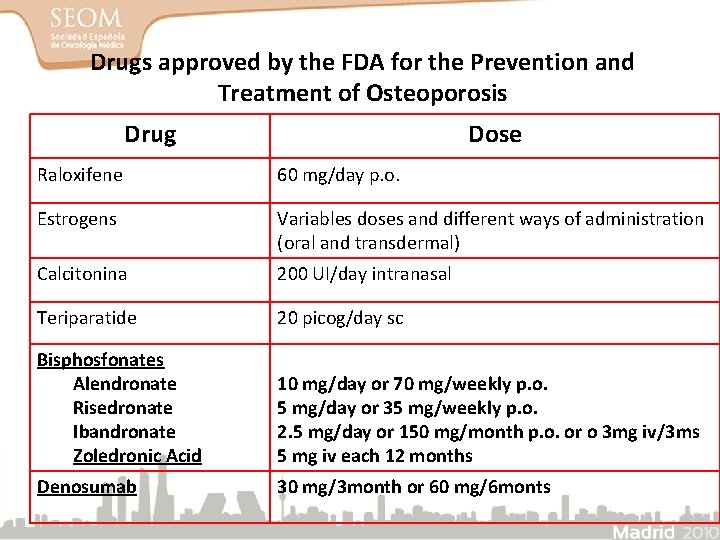
Drugs approved by the FDA for the Prevention and Treatment of Osteoporosis Drug Dose Raloxifene 60 mg/day p. o. Estrogens Variables doses and different ways of administration (oral and transdermal) Calcitonina 200 UI/day intranasal Teriparatide 20 picog/day sc Bisphosfonates Alendronate Risedronate Ibandronate Zoledronic Acid 10 mg/day or 70 mg/weekly p. o. 5 mg/day or 35 mg/weekly p. o. 2. 5 mg/day or 150 mg/month p. o. or o 3 mg iv/3 ms 5 mg iv each 12 months Denosumab 30 mg/3 month or 60 mg/6 monts
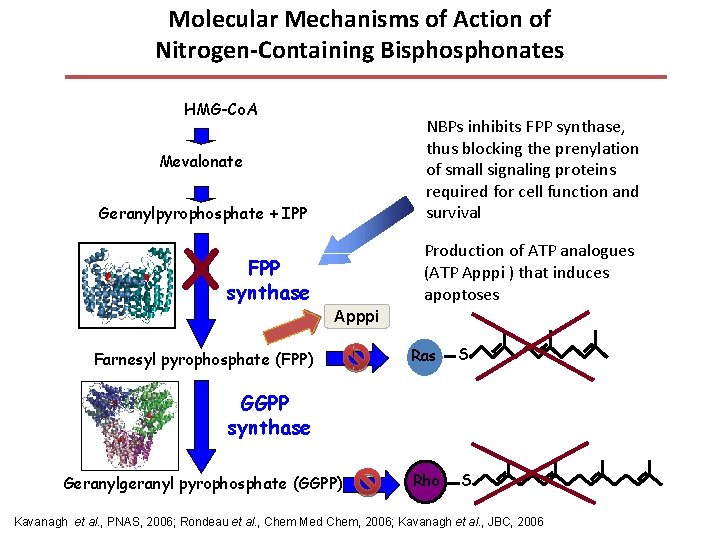
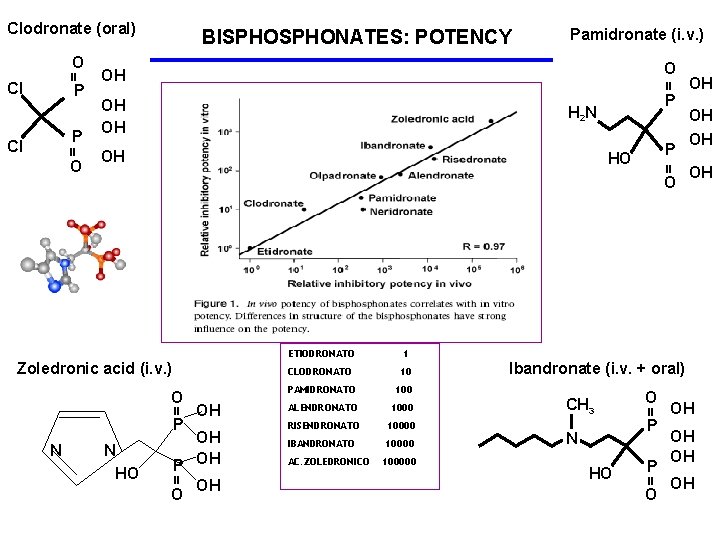
Molecular Mechanisms of Action of Nitrogen-Containing Bisphonates HMG-Co. A Geranylpyrophosphate + IPP NBPs inhibits FPP synthase, thus blocking the prenylation of small signaling proteins required for cell function and survival X Production of ATP analogues (ATP Apppi ) that induces apoptoses Mevalonate FPP synthase Apppi Farnesyl pyrophosphate (FPP) Ras S Rho S GGPP synthase Geranylgeranyl pyrophosphate (GGPP) Kavanagh et al. , PNAS, 2006; Rondeau et al. , Chem Med Chem, 2006; Kavanagh et al. , JBC, 2006
Clodronate (oral) P = CI O = OH OH OH P HO O Zoledronic acid (i. v. ) = O P N HO OH OH P OH OH O = N P H 2 N = P O OH ETIODRONATO 1 CLODRONATO 10 PAMIDRONATO 100 ALENDRONATO 1000 RISENDRONATO 10000 IBANDRONATO 10000 AC. ZOLEDRONICO 100000 OH OH Ibandronate (i. v. + oral) CH 3 O = CI Pamidronate (i. v. ) P N HO P = = O BISPHONATES: POTENCY O OH OH
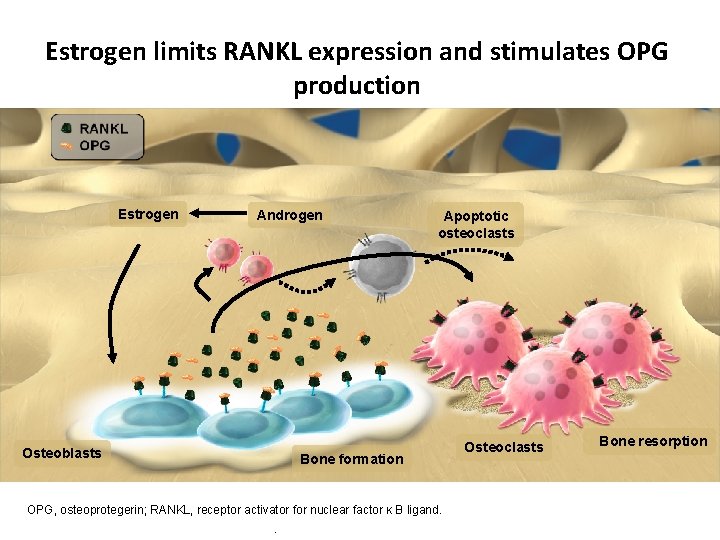
Estrogen limits RANKL expression and stimulates OPG production Estrogen Androgen Osteoblasts Apoptotic osteoclasts Bone formation OPG, osteoprotegerin; RANKL, receptor activator for nuclear factor κ B ligand. Adapted from Boyle WJ, et al. Nature 2003; 423: 337 -42. . Osteoclasts Bone resorption
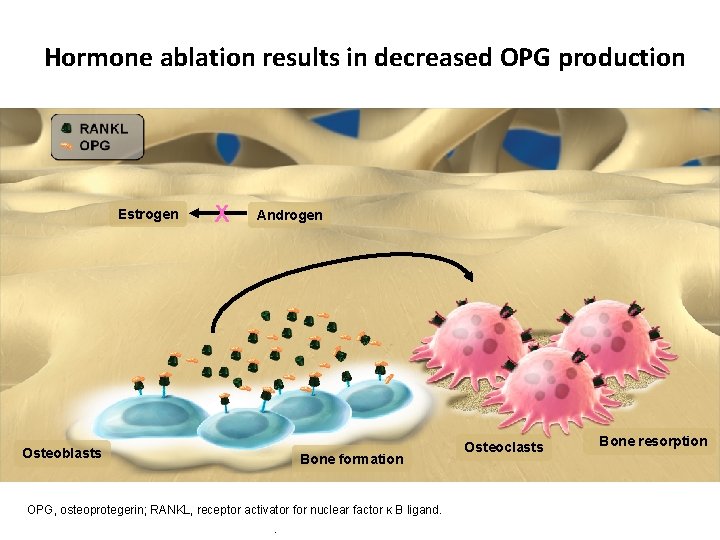
Hormone ablation results in decreased OPG production Estrogen X Androgen Osteoblasts Bone formation OPG, osteoprotegerin; RANKL, receptor activator for nuclear factor κ B ligand. Adapted from Boyle WJ, et al. Nature 2003; 423: 337 -42. . Osteoclasts Bone resorption
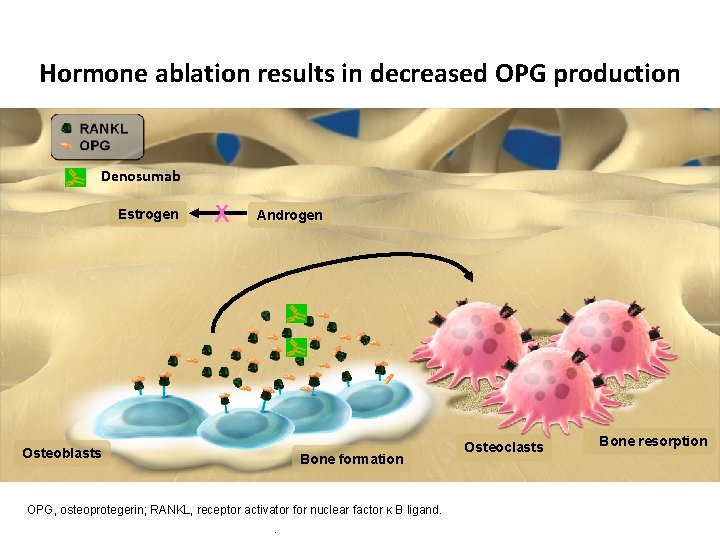
Hormone ablation results in decreased OPG production Denosumab Estrogen X Androgen Osteoblasts Bone formation OPG, osteoprotegerin; RANKL, receptor activator for nuclear factor κ B ligand. Adapted from Boyle WJ, et al. Nature 2003; 423: 337 -42. . Osteoclasts Bone resorption
Strategies to Prevent and Manage Bone Compromise in Breast and Prostate Cancer: BISPHONATES
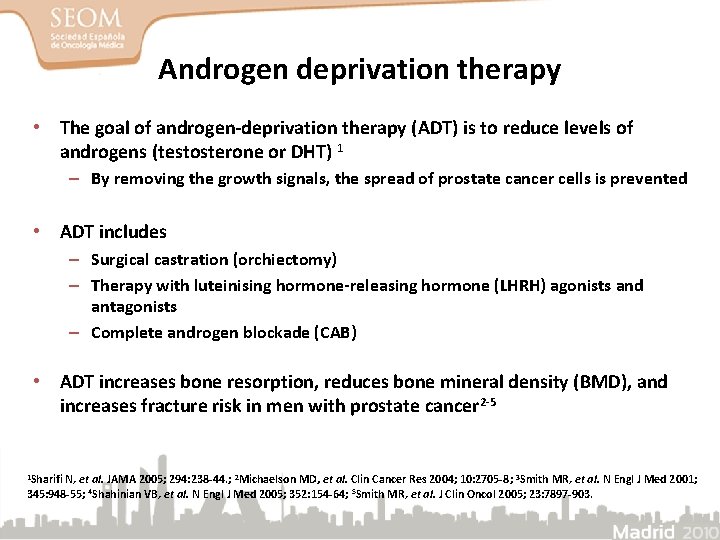
Androgen deprivation therapy • The goal of androgen-deprivation therapy (ADT) is to reduce levels of androgens (testosterone or DHT) 1 – By removing the growth signals, the spread of prostate cancer cells is prevented • ADT includes – Surgical castration (orchiectomy) – Therapy with luteinising hormone-releasing hormone (LHRH) agonists and antagonists – Complete androgen blockade (CAB) • ADT increases bone resorption, reduces bone mineral density (BMD), and increases fracture risk in men with prostate cancer 2 -5 1 Sharifi N, et al. JAMA 2005; 294: 238 -44. ; 2 Michaelson MD, et al. Clin Cancer Res 2004; 10: 2705 -8; 3 Smith MR, et al. N Engl J Med 2001; 345: 948 -55; 4 Shahinian VB, et al. N Engl J Med 2005; 352: 154 -64; 5 Smith MR, et al. J Clin Oncol 2005; 23: 7897 -903.
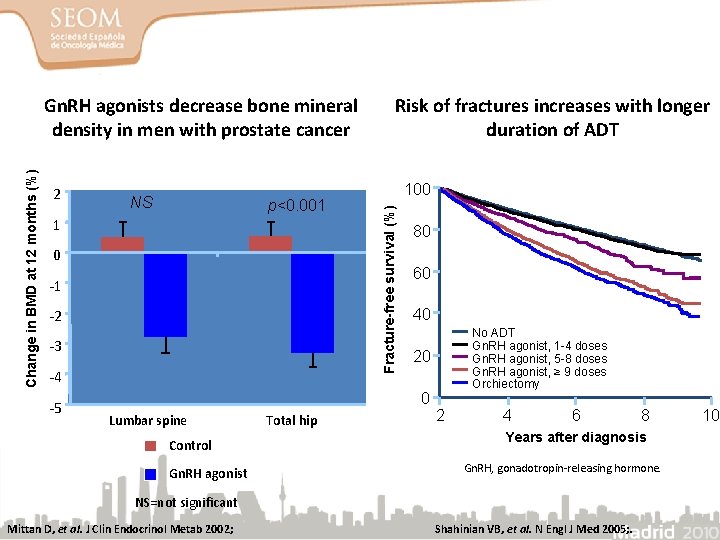
2 NS p<0. 001 1 0 -1 -2 -3 -4 -5 Risk of fractures increases with longer duration of ADT 100 Fracture-free survival (%) Change in BMD at 12 months (%) Gn. RH agonists decrease bone mineral density in men with prostate cancer 80 60 40 20 0 Lumbar spine Control Gn. RH agonist Total hip No ADT Gn. RH agonist, 1 -4 doses Gn. RH agonist, 5 -8 doses Gn. RH agonist, ≥ 9 doses Orchiectomy 2 4 6 Years after diagnosis Gn. RH, gonadotropin-releasing hormone. NS=not significant Mittan D, et al. J Clin Endocrinol Metab 2002; 8 Shahinian VB, et al. N Engl J Med 2005; . 10
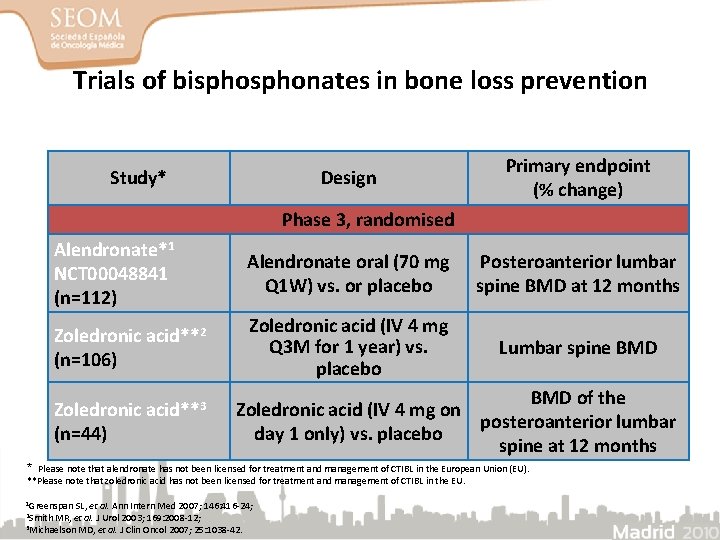
Trials of bisphonates in bone loss prevention Study* Design Primary endpoint (% change) Phase 3, randomised Alendronate*1 NCT 00048841 (n=112) Alendronate oral (70 mg Q 1 W) vs. or placebo Posteroanterior lumbar spine BMD at 12 months Zoledronic acid**2 (n=106) Zoledronic acid (IV 4 mg Q 3 M for 1 year) vs. placebo Lumbar spine BMD Zoledronic acid**3 (n=44) BMD of the Zoledronic acid (IV 4 mg on posteroanterior lumbar day 1 only) vs. placebo spine at 12 months * Please note that alendronate has not been licensed for treatment and management of CTIBL in the European Union (EU). **Please note that zoledronic acid has not been licensed for treatment and management of CTIBL in the EU. 1 Greenspan SL, et al. Ann Intern Med 2007; 146: 416 -24; MR, et al. J Urol 2003; 169: 2008 -12; 3 Michaelson MD, et al. J Clin Oncol 2007; 25: 1038 -42. 2 Smith
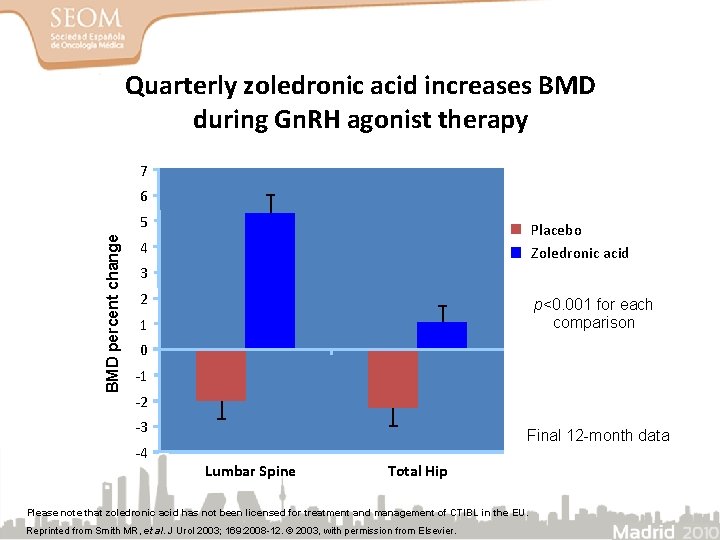
Quarterly zoledronic acid increases BMD during Gn. RH agonist therapy 7 6 BMD percent change 5 Placebo Zoledronic acid 4 3 2 p<0. 001 for each comparison 1 0 -1 -2 -3 -4 Final 12 -month data Lumbar Spine Total Hip Please note that zoledronic acid has not been licensed for treatment and management of CTIBL in the EU. Reprinted from Smith MR, et al. J Urol 2003; 169: 2008 -12. © 2003, with permission from Elsevier.
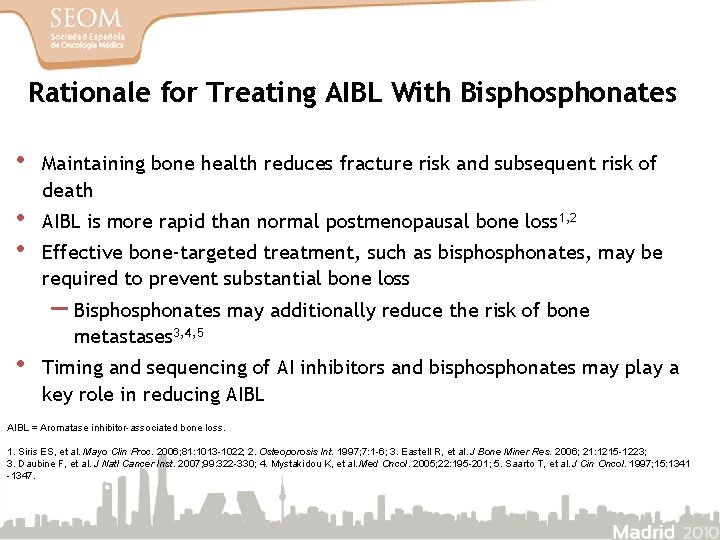
Rationale for Treating AIBL With Bisphonates • • • Maintaining bone health reduces fracture risk and subsequent risk of death AIBL is more rapid than normal postmenopausal bone loss 1, 2 Effective bone-targeted treatment, such as bisphonates, may be required to prevent substantial bone loss – Bisphonates may additionally reduce the risk of bone • metastases 3, 4, 5 Timing and sequencing of AI inhibitors and bisphonates may play a key role in reducing AIBL = Aromatase inhibitor-associated bone loss. 1. Siris ES, et al. Mayo Clin Proc. 2006; 81: 1013 -1022; 2. Osteoporosis Int. 1997; 7: 1 -6; 3. Eastell R, et al. J Bone Miner Res. 2006; 21: 1215 -1223; 3. Daubine F, et al. J Natl Cancer Inst. 2007; 99: 322 -330; 4. Mystakidou K, et al. Med Oncol. 2005; 22: 195 -201; 5. Saarto T, et al. J Cin Oncol. 1997; 15: 1341 -1347.
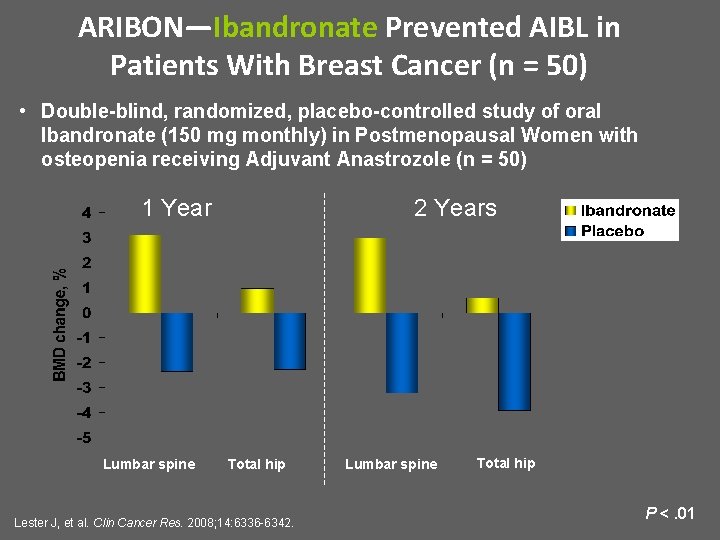
ARIBON—Ibandronate Prevented AIBL in Patients With Breast Cancer (n = 50) • Double-blind, randomized, placebo-controlled study of oral Ibandronate (150 mg monthly) in Postmenopausal Women with osteopenia receiving Adjuvant Anastrozole (n = 50) 1 Year Lumbar spine 2 Years Total hip Lester J, et al. Clin Cancer Res. 2008; 14: 6336 -6342. Lumbar spine Total hip P <. 01
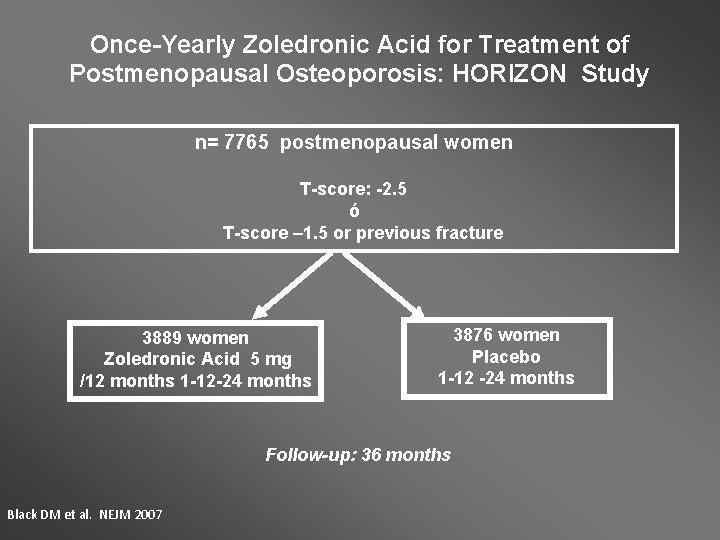
Once-Yearly Zoledronic Acid for Treatment of Postmenopausal Osteoporosis: HORIZON Study n= 7765 postmenopausal women T-score: -2. 5 ó T-score – 1. 5 or previous fracture 3889 women Zoledronic Acid 5 mg /12 months 1 -12 -24 months 3876 women Placebo 1 -12 -24 months Follow-up: 36 months Black DM et al. NEJM 2007
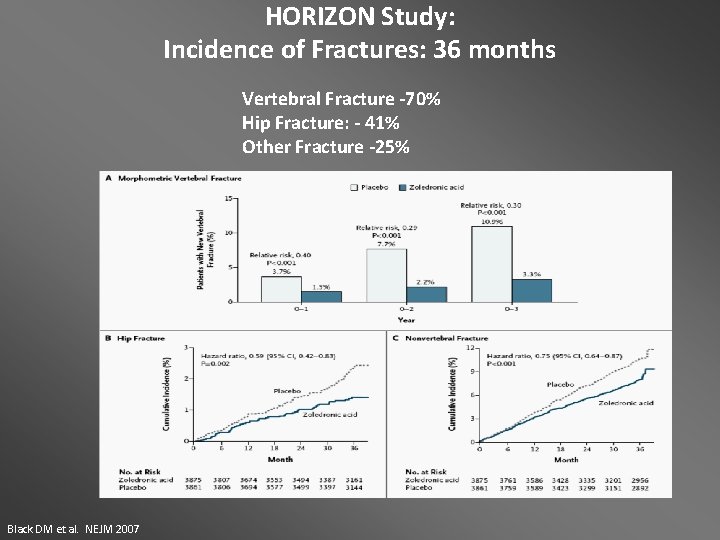
HORIZON Study: Incidence of Fractures: 36 months Vertebral Fracture -70% Hip Fracture: - 41% Other Fracture -25% Black DM et al. NEJM 2007
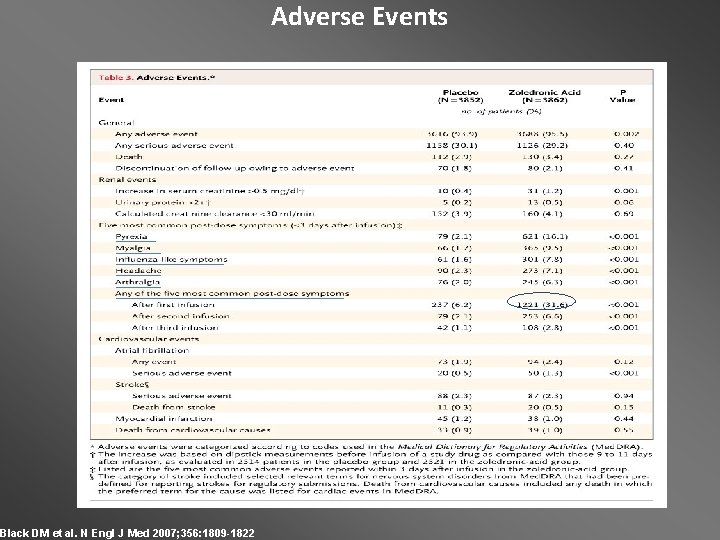
Black DM et al. N Engl J Med 2007; 356: 1809 -1822 Adverse Events
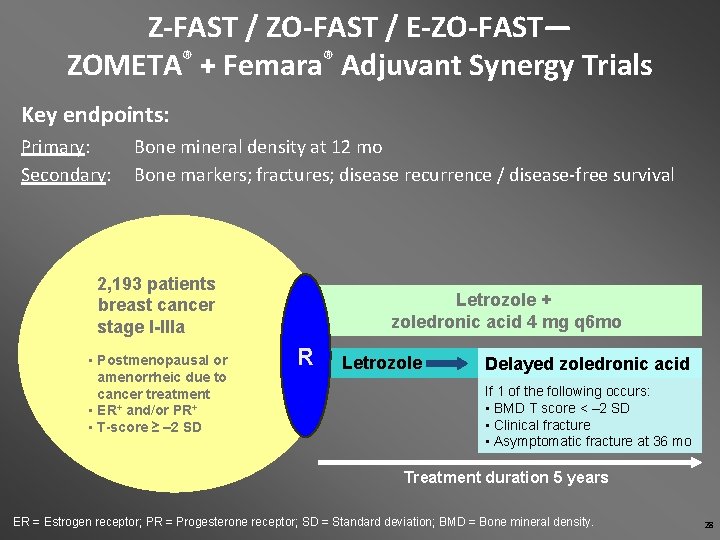
Z-FAST / ZO-FAST / E-ZO-FAST— ZOMETA® + Femara® Adjuvant Synergy Trials Key endpoints: Primary: Secondary: Bone mineral density at 12 mo Bone markers; fractures; disease recurrence / disease-free survival 2, 193 patients breast cancer stage I-IIIa • Postmenopausal or amenorrheic due to cancer treatment • ER+ and/or PR+ • T-score ≥ – 2 SD Letrozole + zoledronic acid 4 mg q 6 mo R Letrozole Delayed zoledronic acid If 1 of the following occurs: • BMD T score < – 2 SD • Clinical fracture • Asymptomatic fracture at 36 mo Treatment duration 5 years ER = Estrogen receptor; PR = Progesterone receptor; SD = Standard deviation; BMD = Bone mineral density. 28
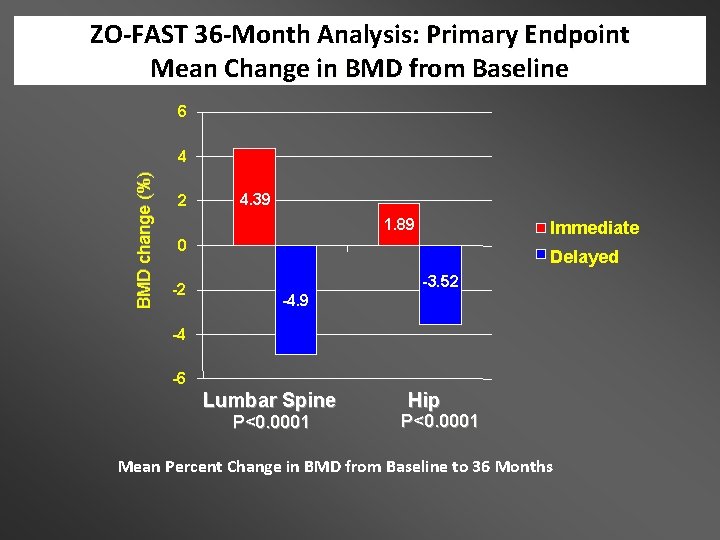
ZO-FAST 36 -Month Analysis: Primary Endpoint Mean Change in BMD from Baseline 6 BMD change (%) 4 2 4. 39 0 4. 39 -2 1. 89 -4. 9 Immediate -3. 52 Delayed -3. 52 -4. 9 -4 -6 Lumbar Spine P<0. 0001 Hip P<0. 0001 Mean Percent Change in BMD from Baseline to 36 Months
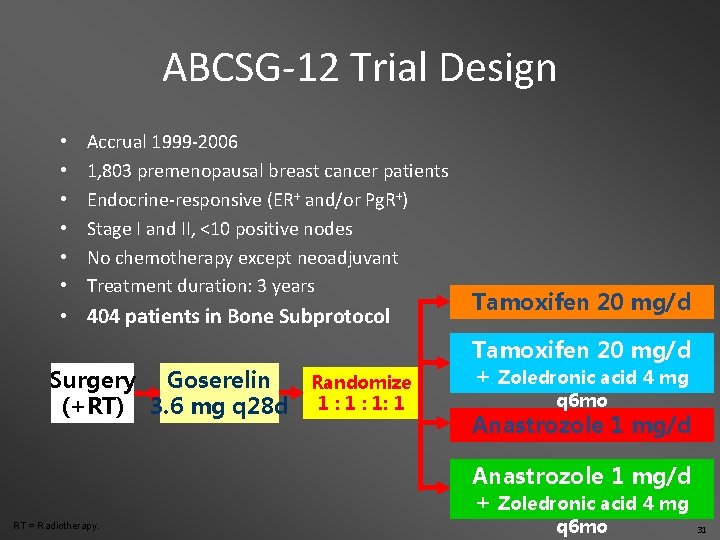
ABCSG-12 Trial Design • • • Accrual 1999 -2006 1, 803 premenopausal breast cancer patients Endocrine-responsive (ER+ and/or Pg. R+) Stage I and II, <10 positive nodes No chemotherapy except neoadjuvant Treatment duration: 3 years • 404 patients in Bone Subprotocol Surgery Goserelin (+RT) 3. 6 mg q 28 d Randomize 1 : 1: 1 Tamoxifen 20 mg/d + Zoledronic acid 4 mg q 6 mo Anastrozole 1 mg/d + Zoledronic acid 4 mg RT = Radiotherapy. q 6 mo 31
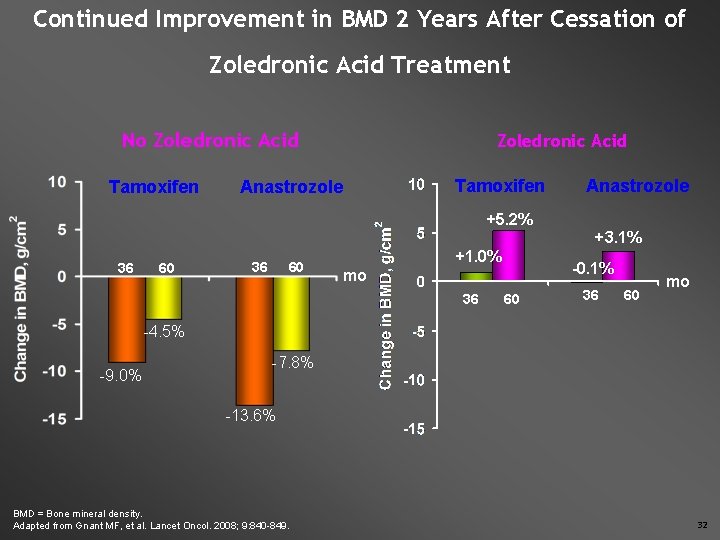
Continued Improvement in BMD 2 Years After Cessation of Zoledronic Acid Treatment No Zoledronic Acid Tamoxifen Zoledronic Acid Anastrozole Tamoxifen Anastrozole +5. 2% +3. 1% 36 60 +1. 0% -0. 1% mo 36 60 mo -4. 5% -9. 0% -7. 8% -13. 6% BMD = Bone mineral density. Adapted from Gnant MF, et al. Lancet Oncol. 2008; 9: 840 -849. 32
Strategies to Prevent and Manage Bone Compromise in Breast and Prostate Cancer: DENOSUMAB Hormone ablation therapy leads to decreased OPG expression which results in increased breakdown of bone
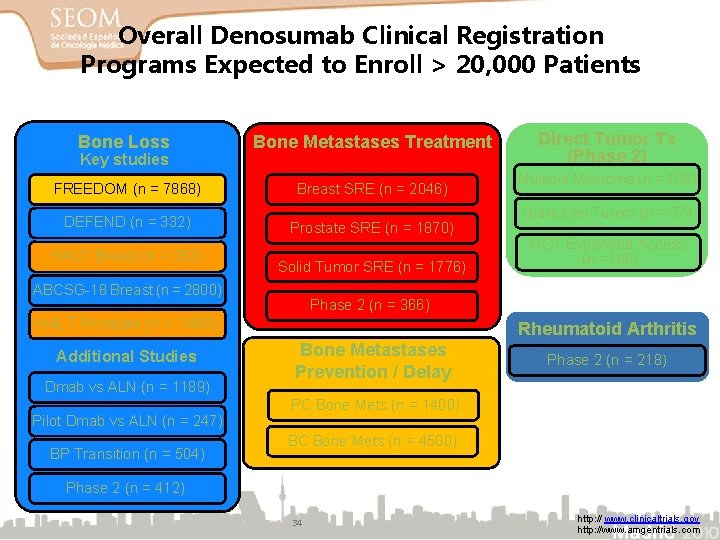
Overall Denosumab Clinical Registration Programs Expected to Enroll > 20, 000 Patients Bone Loss Bone Metastases Treatment FREEDOM (n = 7868) Breast SRE (n = 2046) Key studies DEFEND (n = 332) HALT Breast (n = 252) Prostate SRE (n = 1870) Solid Tumor SRE (n = 1776) ABCSG-18 Breast (n = 2800) Dmab vs ALN (n = 1189) Pilot Dmab vs ALN (n = 247) BP Transition (n = 504) Multiple Myeloma (n = 100) Giant Cell Tumor (n = 37) GCT Expanded Access (n =100) Phase 2 (n = 366) HALT Prostate (n = 1468) Additional Studies Direct Tumor Tx (Phase 2) Rheumatoid Arthritis Bone Metastases Prevention / Delay Phase 2 (n = 218) PC Bone Mets (n = 1400) BC Bone Mets (n = 4500) Phase 2 (n = 412) 34 http: // www. clinicaltrials. gov http: //www. amgentrials. com
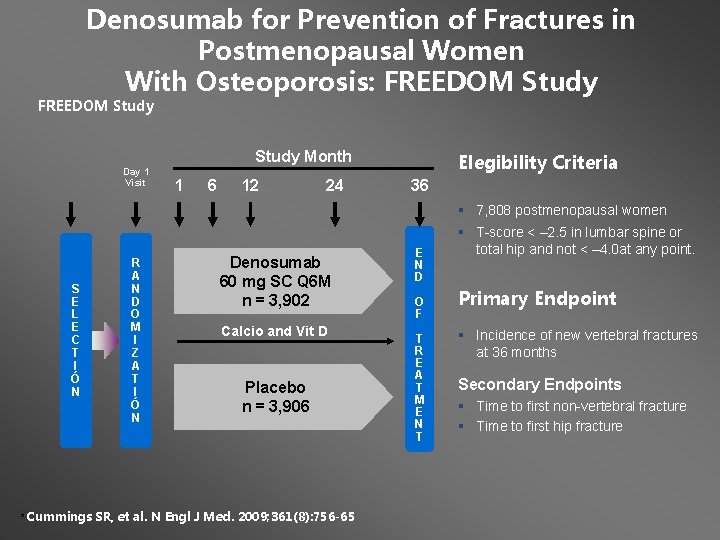
Denosumab for Prevention of Fractures in Postmenopausal Women With Osteoporosis: FREEDOM Study Month Day 1 Visit 1 6 12 24 Elegibility Criteria 36 § 7, 808 postmenopausal women S E L E C T I Ó N * Cummings R A N D O M I Z A T I Ó N Denosumab 60 mg SC Q 6 M n = 3, 902 Calcio and Vit D Placebo n = 3, 906 SR, et al. N Engl J Med. 2009; 361(8): 756 -65 E N D O F T R E A T M E N T § T-score < – 2. 5 in lumbar spine or total hip and not < – 4. 0 at any point. Primary Endpoint § Incidence of new vertebral fractures at 36 months Secondary Endpoints § Time to first non-vertebral fracture § Time to first hip fracture
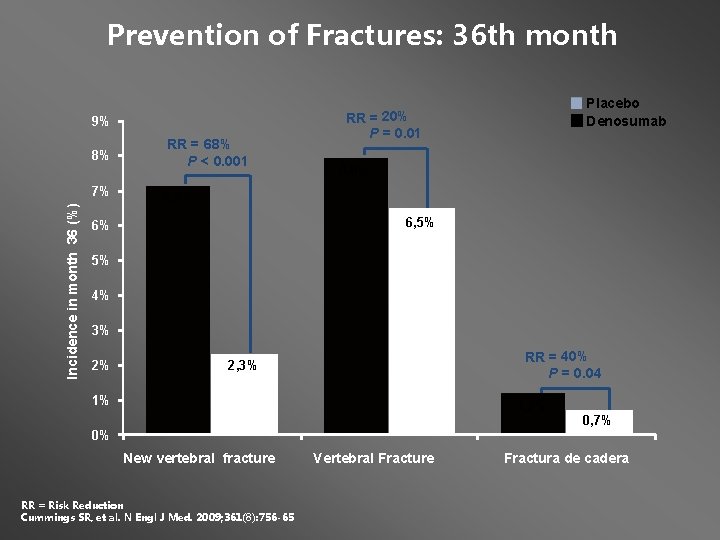
Prevention of Fractures: 36 th month Incidence in month 36 (%) 9% 8% RR = 68% P < 0. 001 7% 7, 2% Placebo Denosumab RR = 20% P = 0. 01 8, 0% 6, 5% 6% 5% 4% 3% 2% RR = 40% P = 0. 04 2, 3% 1% 1, 2% 0% New vertebral fracture RR = Risk Reduction Cummings SR, et al. N Engl J Med. 2009; 361(8): 756 -65 Vertebral Fracture 0, 7% Fractura de cadera
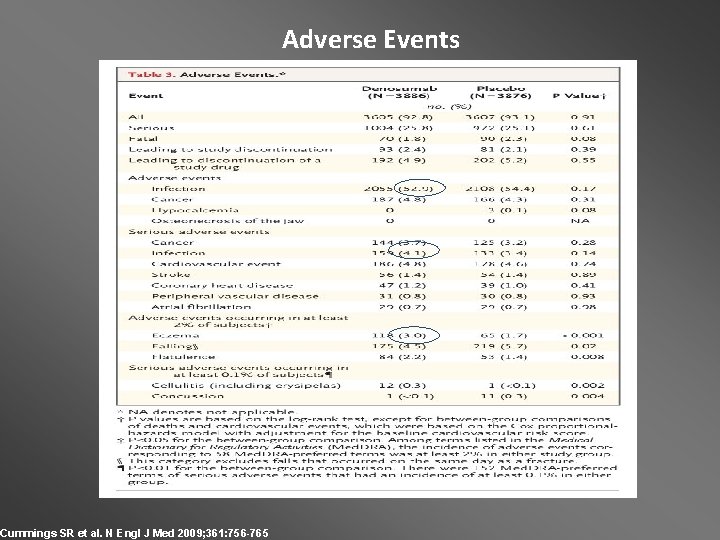
Cummings SR et al. N Engl J Med 2009; 361: 756 -765 Adverse Events
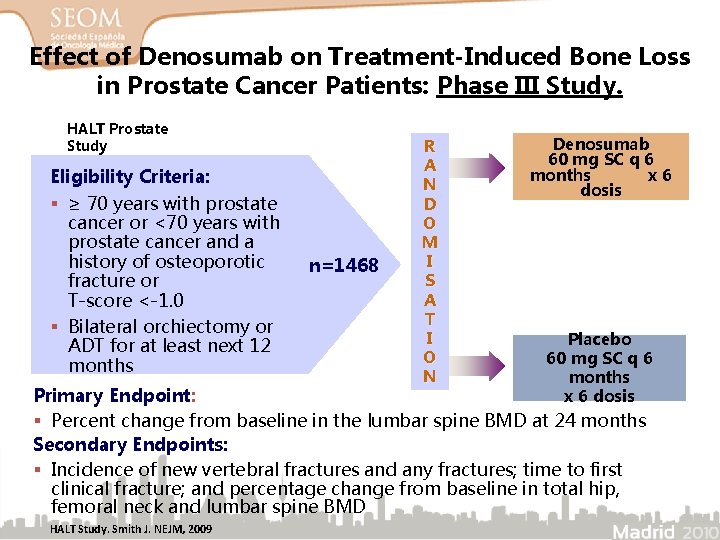
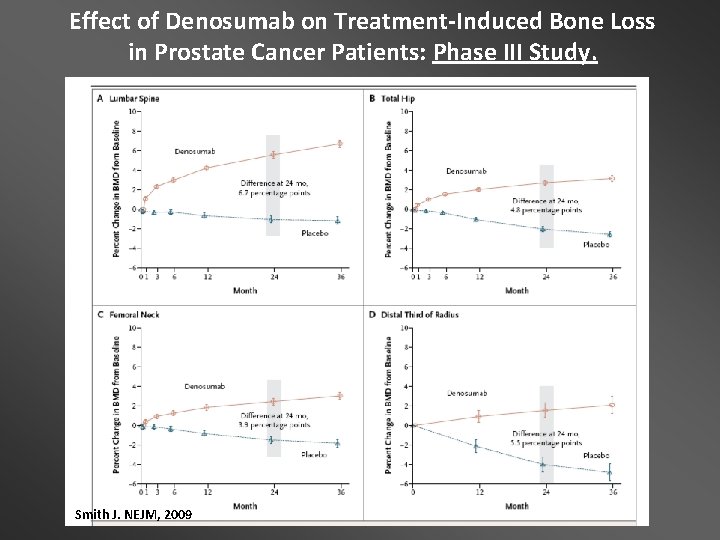
Effect of Denosumab on Treatment-Induced Bone Loss in Prostate Cancer Patients: Phase III Study. HALT Prostate Study Eligibility Criteria: § ≥ 70 years with prostate cancer or <70 years with prostate cancer and a history of osteoporotic fracture or T-score <-1. 0 § Bilateral orchiectomy or ADT for at least next 12 months n=1468 R A N D O M I S A T I O N Denosumab 60 mg SC q 6 months x 6 dosis Placebo 60 mg SC q 6 months x 6 dosis Primary Endpoint: § Percent change from baseline in the lumbar spine BMD at 24 months Secondary Endpoints: § Incidence of new vertebral fractures and any fractures; time to first clinical fracture; and percentage change from baseline in total hip, femoral neck and lumbar spine BMD HALT Study. Smith J. NEJM, 2009
Effect of Denosumab on Treatment-Induced Bone Loss in Prostate Cancer Patients: Phase III Study. Smith J. NEJM, 2009
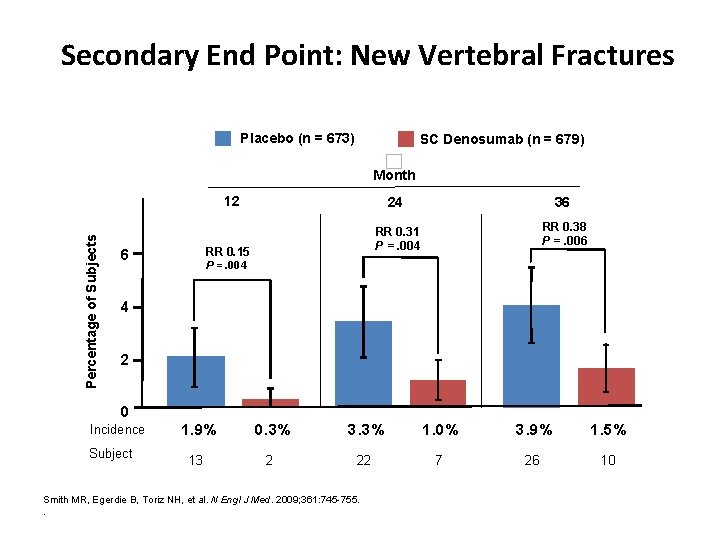
Secondary End Point: New Vertebral Fractures Placebo (n = 673) SC Denosumab (n = 679) Month Percentage of Subjects 12 RR 0. 15 6 24 36 RR 0. 31 P =. 004 RR 0. 38 P =. 006 P =. 004 4 2 0 Incidence Subject 1. 9% 0. 3% 3. 3% 1. 0% 3. 9% 1. 5% 13 2 22 7 26 10 Smith MR, Egerdie B, Toriz NH, et al. N Engl J Med. 2009; 361: 745 -755. .
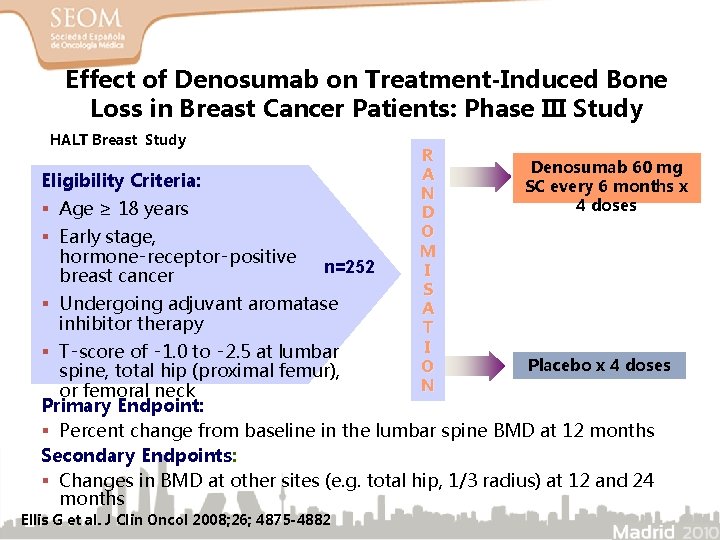
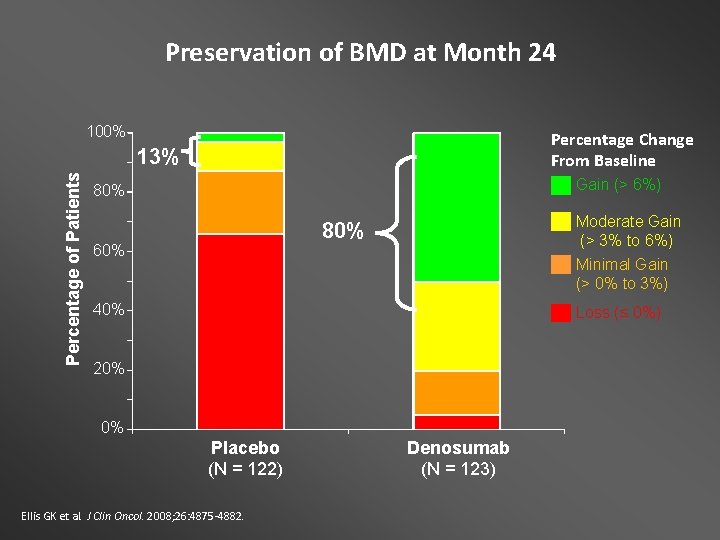
Effect of Denosumab on Treatment-Induced Bone Loss in Breast Cancer Patients: Phase III Study HALT Breast Study Eligibility Criteria: § Age ≥ 18 years § Early stage, hormone‑receptor‑positive breast cancer n=252 § Undergoing adjuvant aromatase inhibitor therapy R A N D O M I S A T I O N Denosumab 60 mg SC every 6 months x 4 doses § T‑score of ‑ 1. 0 to ‑ 2. 5 at lumbar Placebo x 4 doses spine, total hip (proximal femur), or femoral neck Primary Endpoint: § Percent change from baseline in the lumbar spine BMD at 12 months Secondary Endpoints: § Changes in BMD at other sites (e. g. total hip, 1/3 radius) at 12 and 24 months Ellis G et al. J Clin Oncol 2008; 26; 4875 -4882
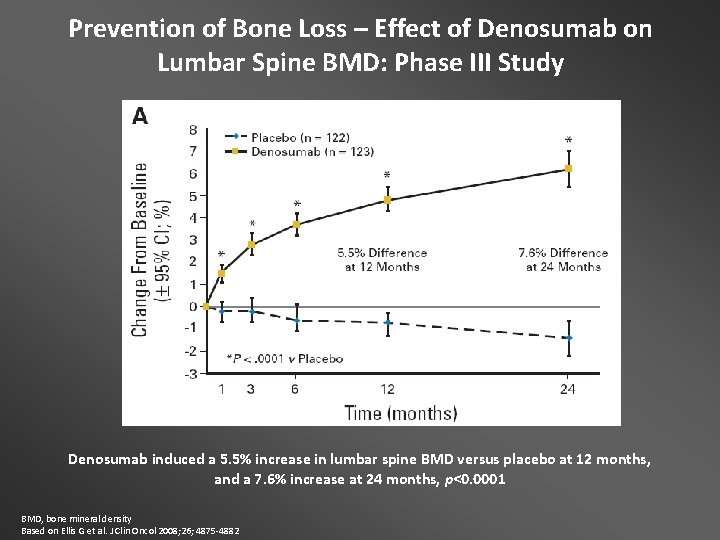
Prevention of Bone Loss – Effect of Denosumab on Lumbar Spine BMD: Phase III Study p<0. 0001 Denosumab induced a 5. 5% increase in lumbar spine BMD versus placebo at 12 months, and a 7. 6% increase at 24 months, p<0. 0001 BMD, bone mineral density Based on Ellis G et al. J Clin Oncol 2008; 26; 4875 -4882
Preservation of BMD at Month 24 100% Percentage Change From Baseline Percentage of Patients 13% Gain (> 6%) 80% Moderate Gain (> 3% to 6%) Minimal Gain (> 0% to 3%) 80% 60% 40% Loss (≤ 0%) 20% 0% Placebo (N = 122) Ellis GK et al. J Clin Oncol. 2008; 26: 4875 -4882. Denosumab (N = 123)
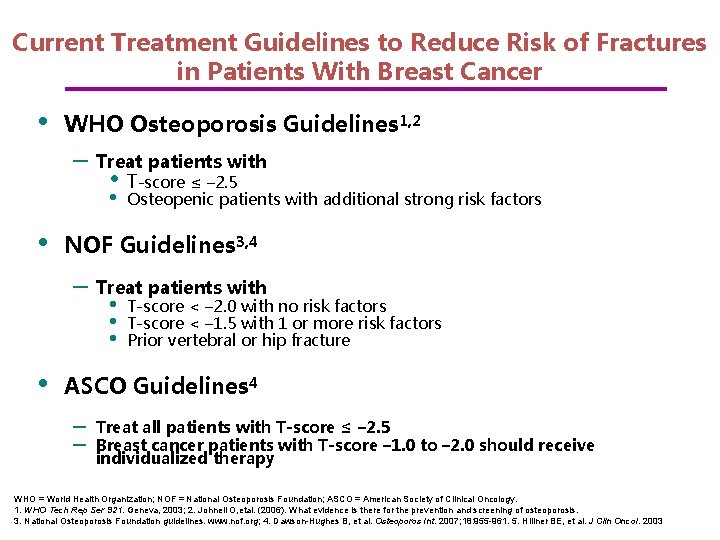
Current Treatment Guidelines to Reduce Risk of Fractures in Patients With Breast Cancer • WHO Osteoporosis Guidelines 1, 2 – Treat patients with • T-score ≤ – 2. 5 • • Osteopenic patients with additional strong risk factors NOF Guidelines 3, 4 – Treat patients with • • T-score < – 2. 0 with no risk factors T-score < – 1. 5 with 1 or more risk factors Prior vertebral or hip fracture ASCO Guidelines 4 – – Treat all patients with T-score ≤ – 2. 5 Breast cancer patients with T-score – 1. 0 to – 2. 0 should receive individualized therapy WHO = World Health Organization; NOF = National Osteoporosis Foundation; ASCO = American Society of Clinical Oncology. 1. WHO Tech Rep Ser 921. Geneva, 2003; 2. Johnell O, etal. (2006). What evidence is there for the prevention and screening of osteoporosis. 3. National Osteoporosis Foundation guidelines. www. nof. org; 4. Dawson-Hughes B, et al. Osteoporos Int. 2007; 18: 955 -961. 5. Hillner BE, et al. J Clin Oncol. 2003
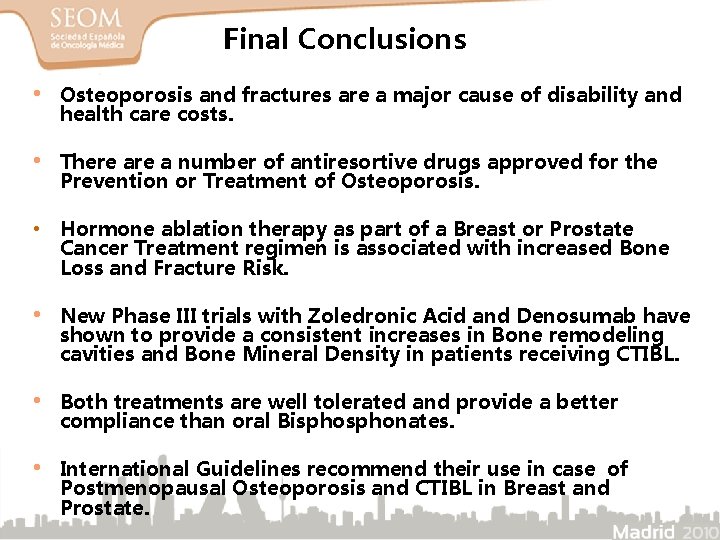
Final Conclusions • Osteoporosis and fractures are a major cause of disability and health care costs. • There a number of antiresortive drugs approved for the Prevention or Treatment of Osteoporosis. • Hormone ablation therapy as part of a Breast or Prostate Cancer Treatment regimen is associated with increased Bone Loss and Fracture Risk. • New Phase III trials with Zoledronic Acid and Denosumab have shown to provide a consistent increases in Bone remodeling cavities and Bone Mineral Density in patients receiving CTIBL. • Both treatments are well tolerated and provide a better compliance than oral Bisphonates. • International Guidelines recommend their use in case of Postmenopausal Osteoporosis and CTIBL in Breast and Prostate.
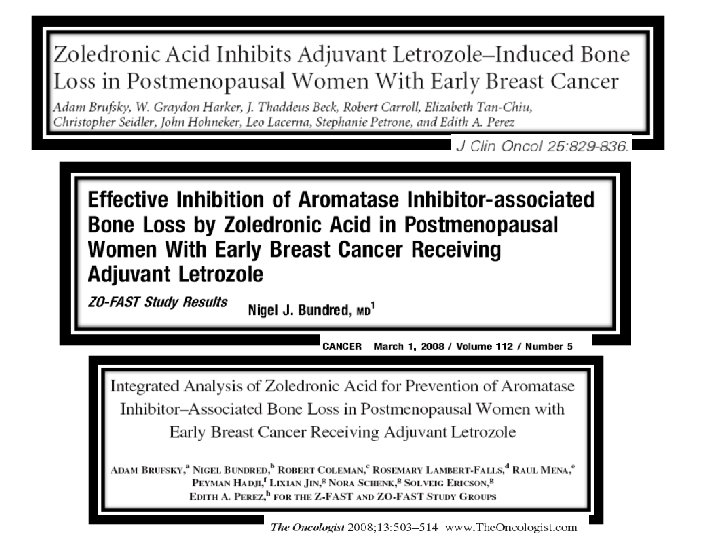
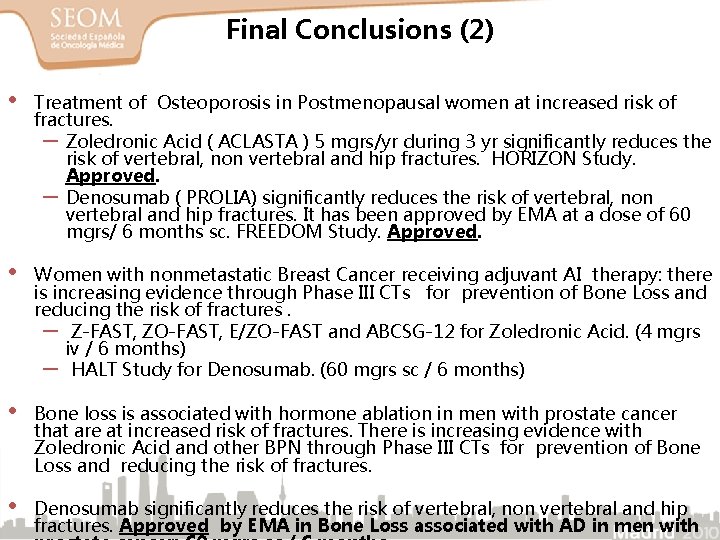
Final Conclusions (2) • Treatment of Osteoporosis in Postmenopausal women at increased risk of fractures. – Zoledronic Acid ( ACLASTA ) 5 mgrs/yr during 3 yr significantly reduces the risk of vertebral, non vertebral and hip fractures. HORIZON Study. Approved. – Denosumab ( PROLIA) significantly reduces the risk of vertebral, non vertebral and hip fractures. It has been approved by EMA at a dose of 60 mgrs/ 6 months sc. FREEDOM Study. Approved. • Women with nonmetastatic Breast Cancer receiving adjuvant AI therapy: there is increasing evidence through Phase III CTs for prevention of Bone Loss and reducing the risk of fractures. – Z-FAST, ZO-FAST, E/ZO-FAST and ABCSG-12 for Zoledronic Acid. (4 mgrs iv / 6 months) – HALT Study for Denosumab. (60 mgrs sc / 6 months) • Bone loss is associated with hormone ablation in men with prostate cancer that are at increased risk of fractures. There is increasing evidence with Zoledronic Acid and other BPN through Phase III CTs for prevention of Bone Loss and reducing the risk of fractures. • Denosumab significantly reduces the risk of vertebral, non vertebral and hip fractures. Approved by EMA in Bone Loss associated with AD in men with