
SIZE OF TEETH Microdontia Macrodontia Microdontia Microdontia is

- Slides: 26
SIZE OF TEETH • Microdontia • Macrodontia
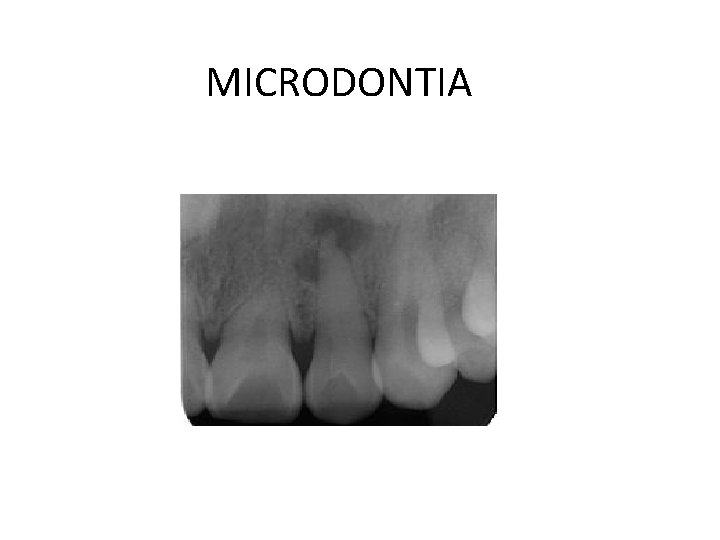
Microdontia • Microdontia is a condition in which teeth appear smaller than normal. In the generalized form, all teeth are involved. In the localized form, only a few teeth are involved. The most common teeth affected are the upper lateral incisors and third molars. The affected teeth may be of normal or abnormal morphology. • There are 3 types of microdontia: • True generalized microdontia • Relative generalized microdontia • Microdontia involving a single tooth
True Generalized Microdontia : • All the teeth are smaller in size, mainly reported in the case of pituitary dwarfism. All the teeth are well formed and small. • Relative Generalized Microdontia • There is an illusion of true microdontia. • Microdontia involving a single tooth • Commonly affects the maxilla, mainly lateral incisors and third molar. the lateral incisors become peg shaped.
MICRODONTIA
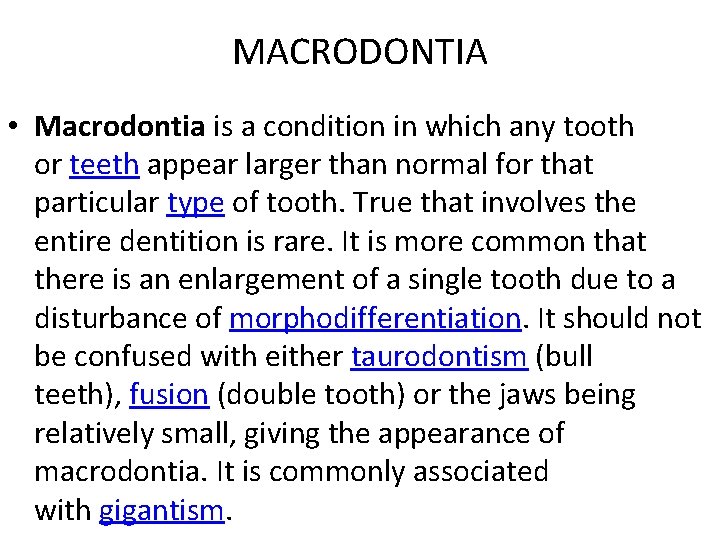
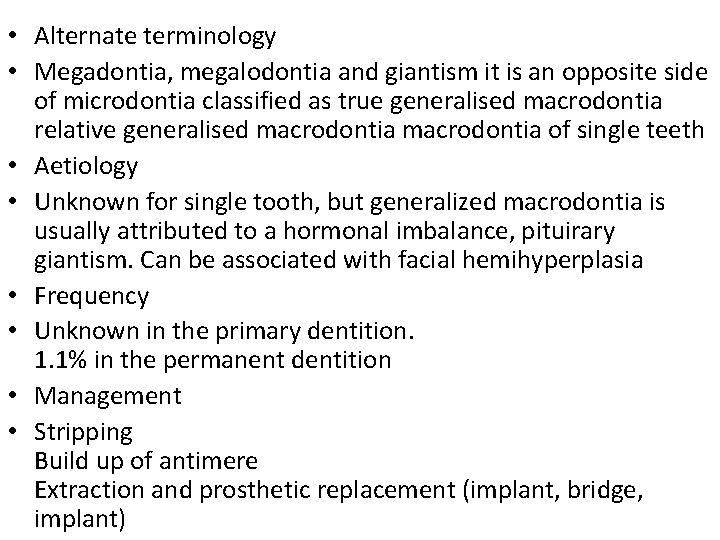
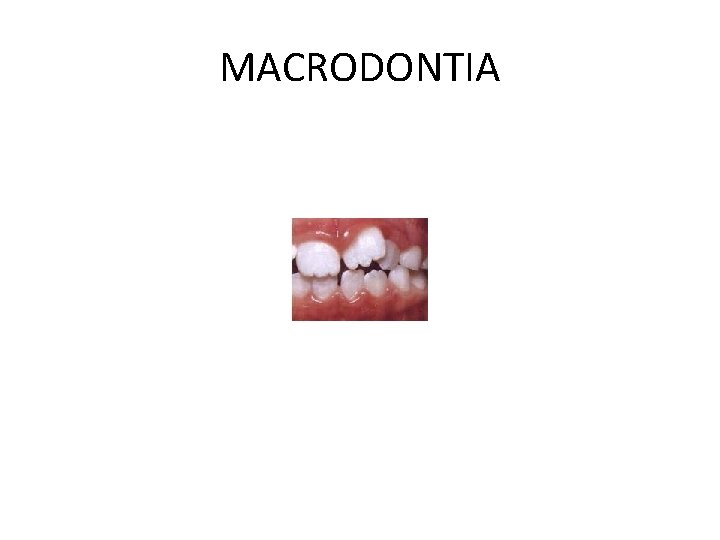
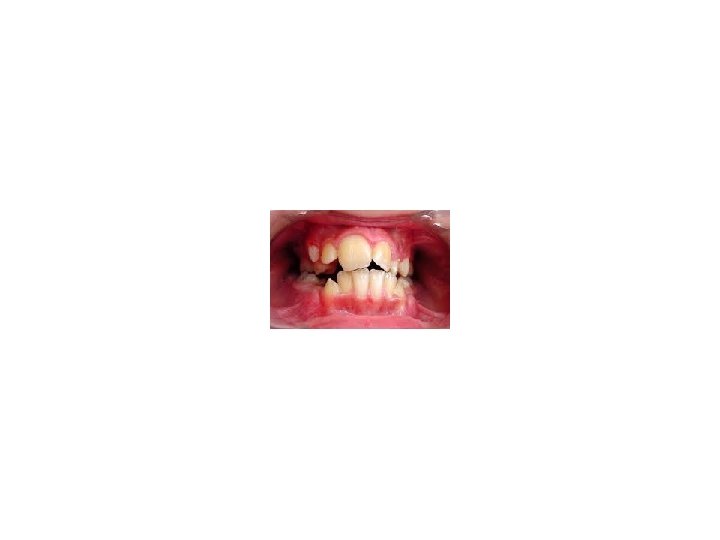
MACRODONTIA • Macrodontia is a condition in which any tooth or teeth appear larger than normal for that particular type of tooth. True that involves the entire dentition is rare. It is more common that there is an enlargement of a single tooth due to a disturbance of morphodifferentiation. It should not be confused with either taurodontism (bull teeth), fusion (double tooth) or the jaws being relatively small, giving the appearance of macrodontia. It is commonly associated with gigantism.
• Alternate terminology • Megadontia, megalodontia and giantism it is an opposite side of microdontia classified as true generalised macrodontia relative generalised macrodontia of single teeth • Aetiology • Unknown for single tooth, but generalized macrodontia is usually attributed to a hormonal imbalance, pituirary giantism. Can be associated with facial hemihyperplasia • Frequency • Unknown in the primary dentition. 1. 1% in the permanent dentition • Management • Stripping Build up of antimere Extraction and prosthetic replacement (implant, bridge, implant)
MACRODONTIA
NUMBER OF TEETH • Anodontia • Supernumerary Teeth • Pre-Decidious Teeth • Post-Permanent Teeth
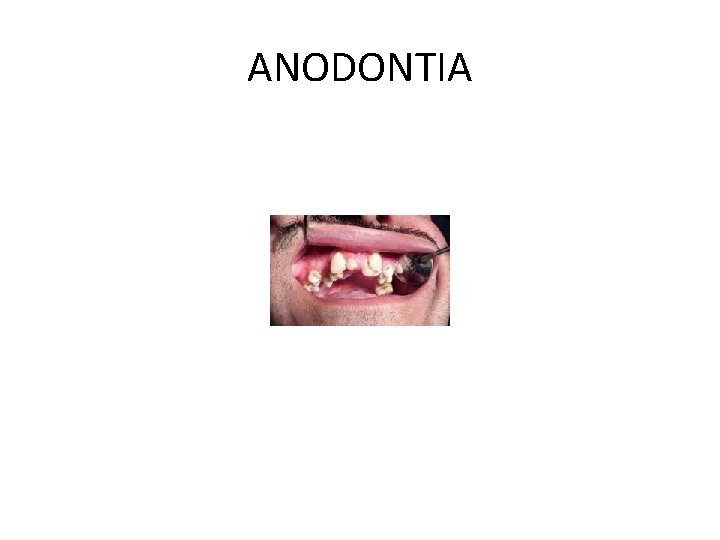
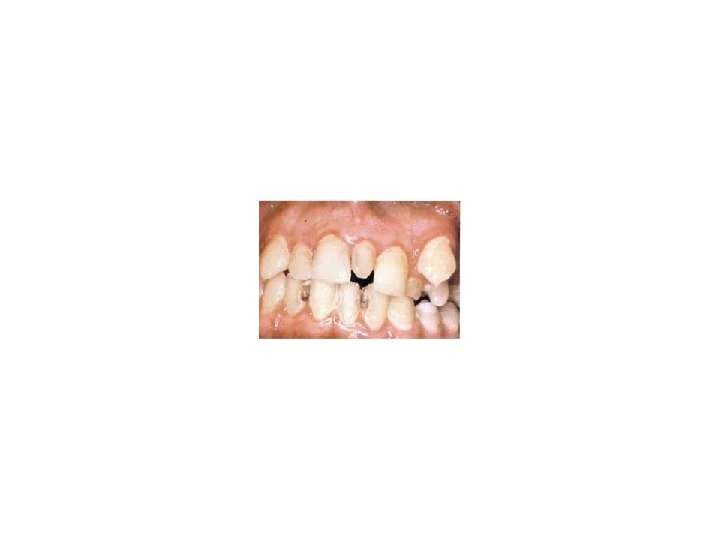
ANODONTIA • In dentistry, anodontia, also called anodontia vera, is a rare genetic disorder characterized by the congenital absence of all primary or permanent teeth. It is associated with the group of skin and nerve syndromes called the ectodermal dysplasias. Anodontia is usually part of a syndrome and seldom occurs as an isolated entity. • Anodontia is the congenital absence of teeth and can occur in some or all teeth (partial anodontia or hypodontia), involve two dentitions or only teeth of the permanent dentition (Dorland's 1998). Many denominations are attributed to this anomaly: partial anodontia, hypodontia, oligodontia, the congenital absence, anodontia, bilateral aplasia. Anodontia being the term used in controlled vocabulary Medical Subject Headings (Me. SH) from MEDLINE which was developed by the United States National Library of Medicine. The Anodontia of at least one permanent tooth is the most common dental anomaly and may contribute to masticator dysfunction, speech impairment, aesthetic problems, and malocclusion (Shapiro and Farrington 1983). Absence of lateral incisors represents a major stereotype. Individuals with this condition are perceived as socially most aggressive compared with people without anodontia (Shaw 1981). [1] • Partial anodontia, known as hypodontia or oligodontia, is the congenital absence of one or more teeth. Congenital absence of all wisdom teeth, or third molars, is relatively common. • Treatment • Prosthetic replacement of missing teeth is possible using dental implant technology or dentures. This treatment can be successful in giving patients with anodontia a more normal appearance
ANODONTIA
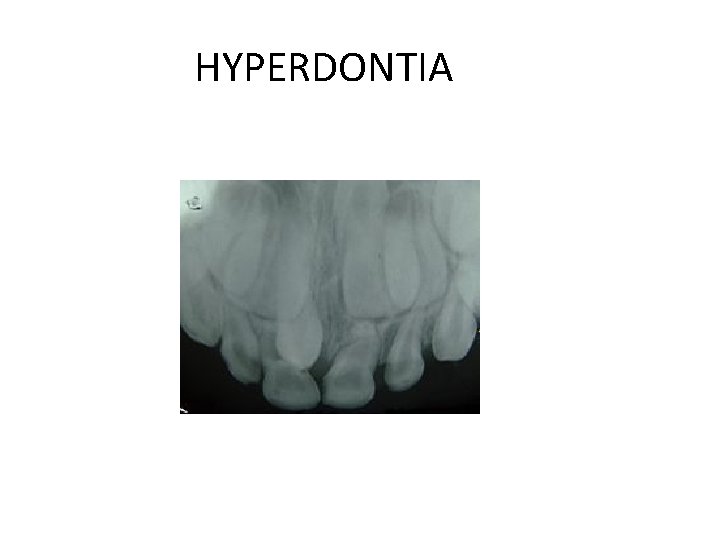
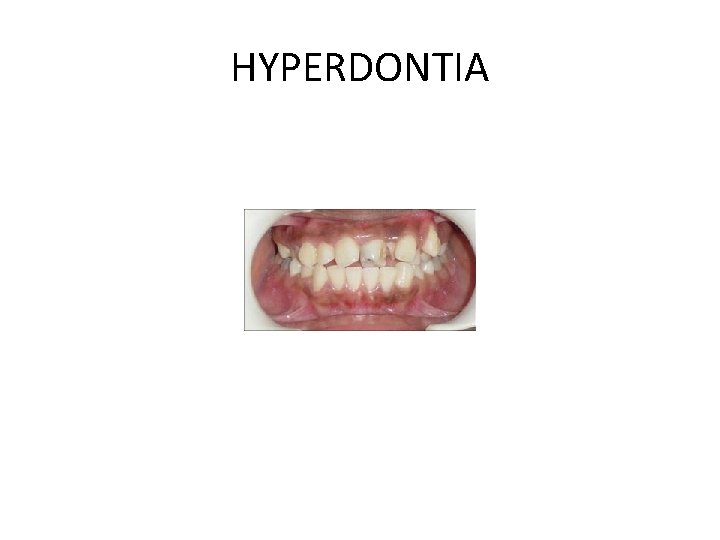
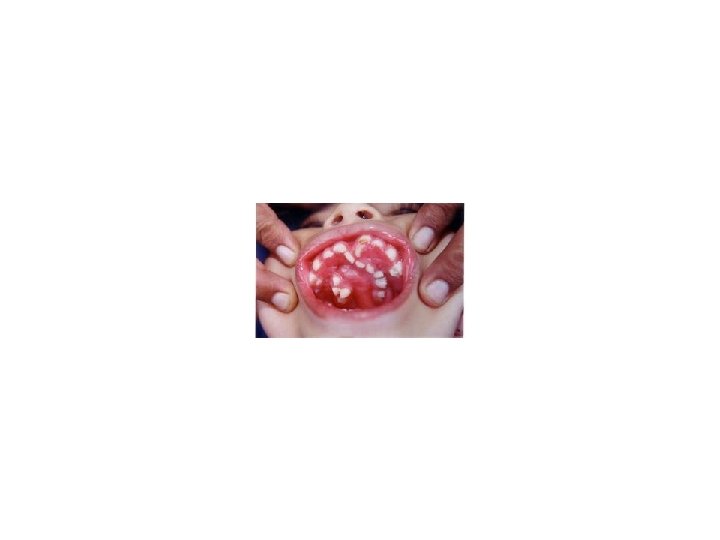
HYPERDONTIA • Hyperdontia is the condition of having supernumerary teeth, or teeth which appear in addition to the regular number of Types • Supernumerary teeth can be classified by shape and by position. The shapes include: • Supplemental (where the tooth has a normal shape for the teeth in that series); • Tuberculate (also called "barrel shaped"); • Conical (also called "peg shaped"); • Compound odontoma (multiple small tooth-like forms); • Complex odontoma (a disorganized mass of dental tissue)[1] • When classified by position, a supernumerary tooth may be referred to as a mesiodens, a paramolar, or a distomolar. • The most common supernumerary tooth is a mesiodens, which is a mal-formed, peg-like tooth that occurs between the maxillary central incisors. • Fourth and fifth molars that form behind the third molars are another kind of supernumerary teeth • teeth
causes: • There is evidence of hereditary factors along with some evidence of environmental factors leading to this condition. Many supernumerary teeth never erupt, but they may delay eruption of nearby teeth or cause other dental or orthodontic problems. Molar-type extra teeth are the rarest form. Dental X-rays are often used to diagnose hyperdontia. • It is suggested that supernumerary teeth develop from a second tooth bud arising from the dental lamina near the regular tooth bud or possibly from splitting the regular tooth bud itself. Supernumerary teeth in deciduous (baby) teeth are less common than in permanent teeth. • Related conditions • A similar condition is hypodontia , in which there are fewer than the usual number of teeth. • Hyperdontia is seen in a number of disorders, including Gardner's syndrome and cleidocranial dysostosis where multiple supernumerary teeth are seen that are usually impacted.
HYPERDONTIA
HYPERDONTIA
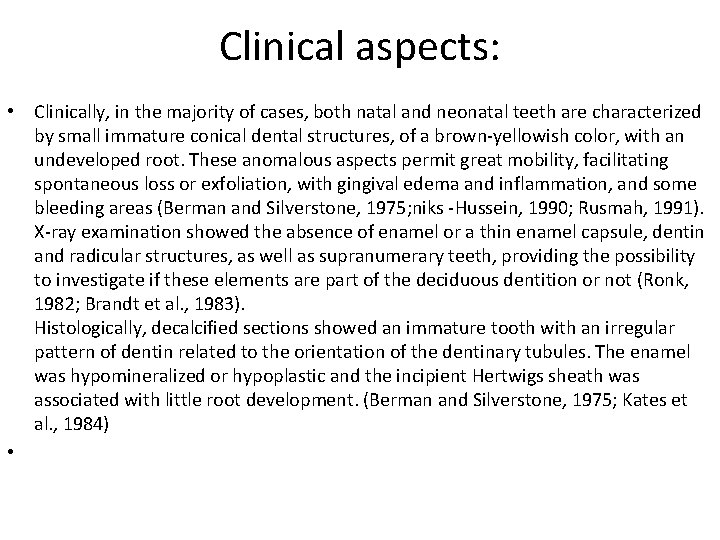
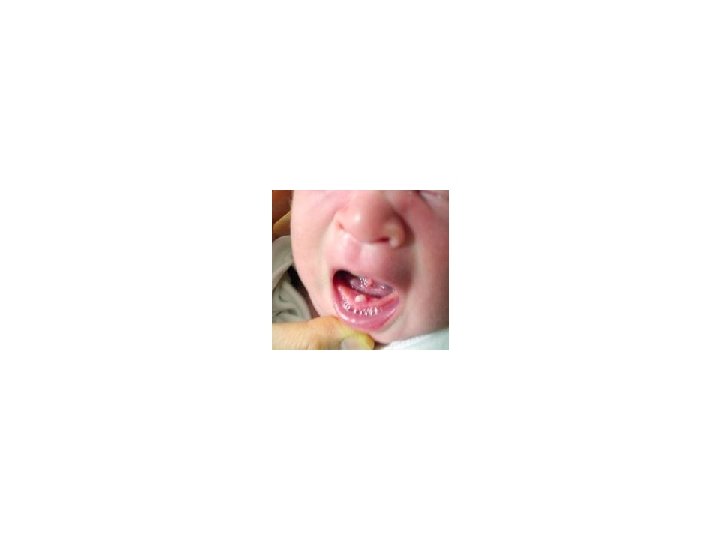
PRE-DECIDOUS TEETH • the teeth which appeared some time after birth (neonatal). The structural aspects, maturity, anatomical and functional conditions of these uncommon teeth were not observed (Spouge and Feasby, 1966). They were considered to belong to a pre-deciduous dentition, since 90% of natal or neonatal teeth are the same elements as future deciduous dentition (Ronk, 1982). Thus, Spouge and Feasby (1966) differentiated natal and neonatal teeth based on the maturity of the structures, suggesting the term "premature teeth". The teeth or group of teeth which are present at birth are denoted as natal dentition, while neonatal teeth are those which erupt during the first month of life (Massler and Savara, 1950).
• The occurrence of either natal or neonatal teeth are associated with some syndromes which are also congenital such as pachyonychia congenita (Jadassohn. Lewandowsky Syndrome) and others also associated to problems such as cleft palate or lip teeth is relatively rare.
• the possible etiology of the premature eruptiassociated to endocrinological disturbances, nutritional deficiency, congenital syphilis, and even fever of the mother during pregnancy. The most acceptable theory has been based upon the result of a superficial localization of the dental follicles, probably related to a hereditary factor on of these teeth
Clinical aspects: • Clinically, in the majority of cases, both natal and neonatal teeth are characterized by small immature conical dental structures, of a brown-yellowish color, with an undeveloped root. These anomalous aspects permit great mobility, facilitating spontaneous loss or exfoliation, with gingival edema and inflammation, and some bleeding areas (Berman and Silverstone, 1975; niks -Hussein, 1990; Rusmah, 1991). X-ray examination showed the absence of enamel or a thin enamel capsule, dentin and radicular structures, as well as supranumerary teeth, providing the possibility to investigate if these elements are part of the deciduous dentition or not (Ronk, 1982; Brandt et al. , 1983). Histologically, decalcified sections showed an immature tooth with an irregular pattern of dentin related to the orientation of the dentinary tubules. The enamel was hypomineralized or hypoplastic and the incipient Hertwigs sheath was associated with little root development. (Berman and Silverstone, 1975; Kates et al. , 1984) •
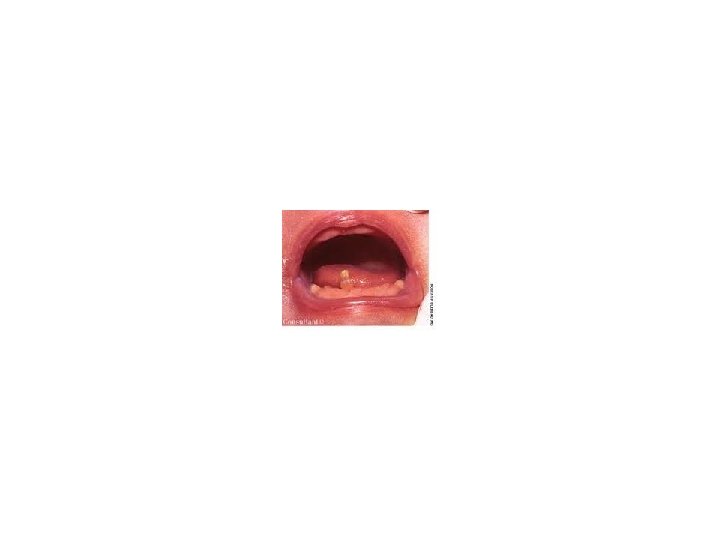
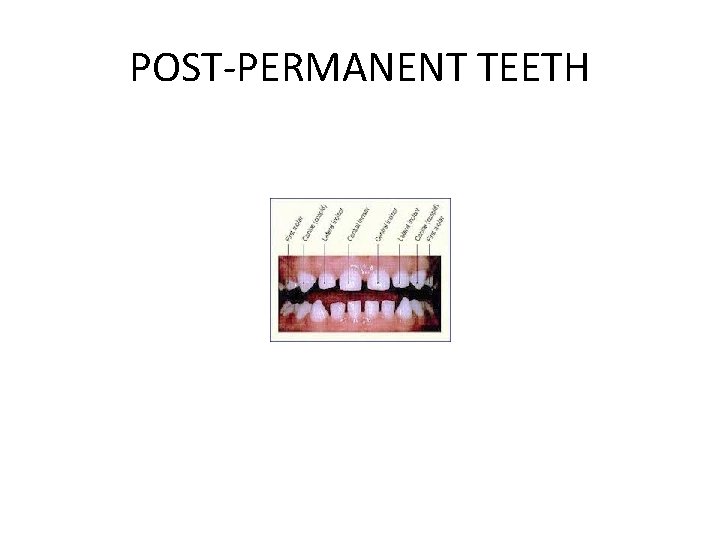
POST-PERMANENT TEETH