
Size and Location Relation with Neighbor India and

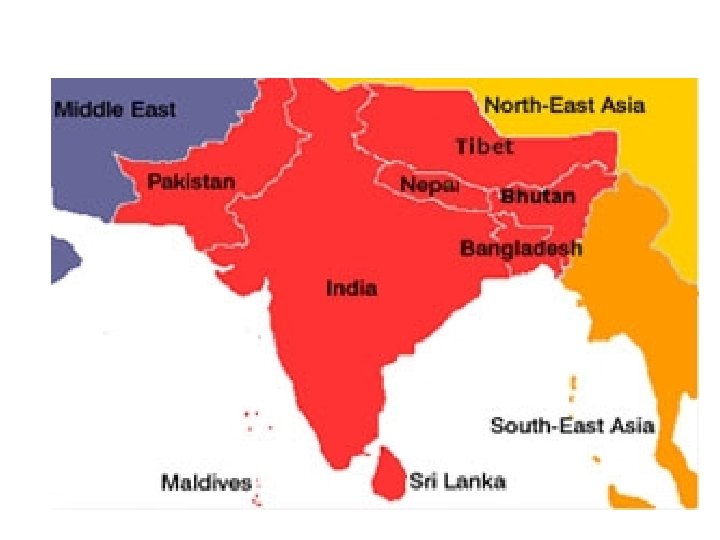
Size and Location
Relation with Neighbor • India and China: • When the Communists came to power in China, India had welcomed the change and was one of the first countries to recognise her. She also advocated China’s admission to the UN. • In 1954, Indian Prime Minister Jawaharlal Nehru and the Chinese Prime Minister, Chou- en-lai, had signed the “Panchsheel” agreement.
• They adopted five principles: • 1. Mutual respect for each other’s territorial integrity and sovereignty. • 2. Mutual non-aggression. • 3. Mutual non-interference in each other’s internal affairs. • 4. Equality and mutual benefit. • 5. Peaceful coexistence.
• In spite of this, in 1962, China attacked India in the North-East and occupied a part of Indian Territory. The war ended soon but relations between India and China remained strained for a long time to come. • The visits of the Indian Prime Ministers Rajiv Gandhi (in 1988) and Narasimha Rao (in 1993) to China have improved the situation to some extent. Several trade agreements have also been signed. But it is not an easy task to restore peace and mutual trust between the two countries.
• India and Nepal: • Being a small landlocked country, Nepal depends on India for economic support and transit facilities. Almost all of her imports pass through Indian ports. India has made a significant contribution to economic and social developments of Nepal. She built the 204 km long Mahendra Raj Marg to link Kathmandu and India. Agreements have been signed for greater cooperation in trade, education, industrial development and cultural exchange programmes. • There are very few travel restrictions between India and Nepalese workers are employed in India and Nepalese students study in Indian universities.
• India and Bhutan: • Bhutan, a small Himalayan kingdom, is one of the poorest countries of the world. India has helped Bhutan in her telecommunication and hydroelectric projects and in the construction of hospitals, roads and bridges.
• India and Myanmar • Myanmar (Burma), which was a part of British India, became independent in 1948. Since India and Myanmar share common boundaries, they have to face problems of smuggling and illegal migration. Rajiv Gandhi visited Myanmar in 1987 and the two countries agreed to solve these problems through greater vigilance. • India supports Aung-San Suu Kyi, the Nobel peace prize winner who is the leader of the democratic movement in Myanmar.
• India and Pakistan: • In 1947, India was partitioned and the country of Pakistan was born. The two countries share the same historical, linguistic and cultural heritage. Yet, ever since independence, relations between the two countries are marked by hostilities.
• The Kashmir Issue: • The Kashmir problem had begun from 1947, the year of our independence. The Mountbatten Plan had given the Indians States the option of joining either India or Pakistan or remaining independent. When the British left India, Pakistan attacked Kashmir and occupied a part of the Kashmir Valley. • The Maharaja of Kashmir decided to join India and signed the instrument of accession. The Indian army moved into Kashmir and pushed back the invaders. After UN intervention, North-West Kashmir was controlled by Pakistan and the rest of the state was placed under Indian control.
• The Indo-Pak War (1965): • In August 1965, Pakistan made another attempt to seize Kashmir. A war started. After UN intervention, a truce was declared an agreement (the Tashkent Agreement) was signed in 1966. But cordiality and friendship were not established.
• The Indo-Pak War (1971): • Hostilities between India and Pakistan again started in 1971 when India helped Bangladesh to become independent. By the Simla Agreement (1972), Prime Minister Indira Gandhi of India and Z. A. Bhutto of Pakistan agreed to settle all problems peacefully. However, relations between India and Pakistan continue to remain strained.
• Kargil War (1999): • War again broke out between the two countries when Pakistan occupied portions of Indian Territory in the Kargil area. India defeated Pakistan. Relations between India and Pakistan further worsened because of Pakistan’s involvement in terrorist activities in various parts of India, especially in the Punjab and Kashmir. This cross- border terrorism instigated by Pakistan is a grave threat to India’s security. Restraint, understanding and cooperation are needed for the establishment of lasting peace in this region.
• India and Bangladesh: • In 1971, a civil war broke out between the people of East Pakistan and West Pakistan. India helped East Pakistan in her war of independence against West Pakistan. In 1971, East Pakistan became independent with India’s support. A new nation, Bangladesh, was born under Mujibur Rehman. • Subsequently, India helped Bangladesh to set her economy on a sound footing by giving her loans and technical assistance. She also sent relief to Bangladesh during natural calamities like flood and drought. Relations with Bangladesh deteriorated over the sharing of the water of the River Ganges and the refugee problem. In 1990 the two countries entered into an arrangement covering various aspects of trade and sharing of water. A 30 -year treaty has been signed between the two countries over the sharing of the water of the Ganges (1996).
• India and Sri Lanka: • India has cultural, historical and religious ties with Sri Lanka is facing a civil war in her northern provinces. A predominantly Tamil Hindu population of northern Sri Lanka started a movement demanding an independent state. This powerful separatist movement is led by the Liberation Tigers of Tamil Eelam (LTTE). • India, on the request of the Government of Sri Lanka sent a peace-keeping force there to restore normalcy. The Indian forces were withdrawn after three years (1990) without restoring peace. • India wants Sri Lanka to find a solution to her conflict with the Tamils who are fighting for independence. Rajiv Gandhi himself became a victim of this unresolved crisis when he was assassinated in 1991. Cordial relations have been restored between the two countries. As member states of the SAARC, both countries are working together on developmental issues.
• India and the Maldives: • The republic of Maldives is a group of islands in the Indian Ocean. India shares a close and cordial relationship with Maldives. Trade and tourism are being developed between the two countries.
- Slides: 16