
Six Steps to Legacy Planning for the Generations



- Slides: 40
Six Steps to Legacy Planning for the Generations Peter Succoso Sherpa Financial Services Sherpa Financial and Woodbury Financial Services Inc. are not affiliated entities. Securities and Investment Advisory Services offered through Woodbury Financial Services Inc. Member FINRA, SIPC and Registered Investment Adviser. .
What wisdom would you try to impart to the world if you knew it was your last chance? 3
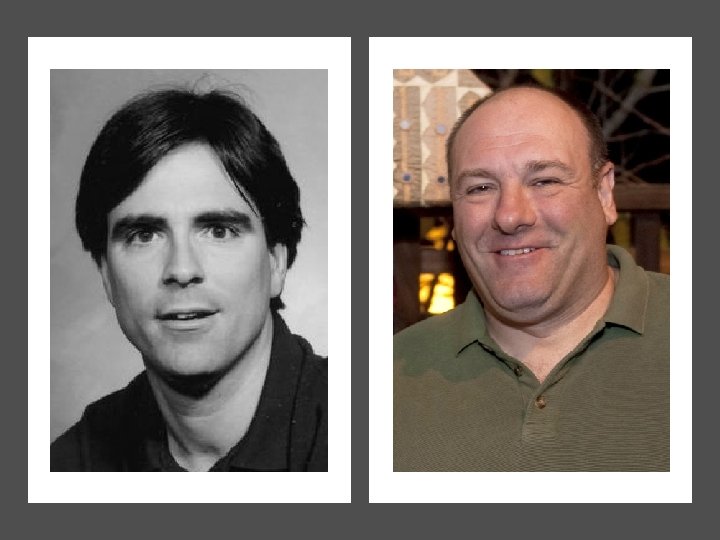
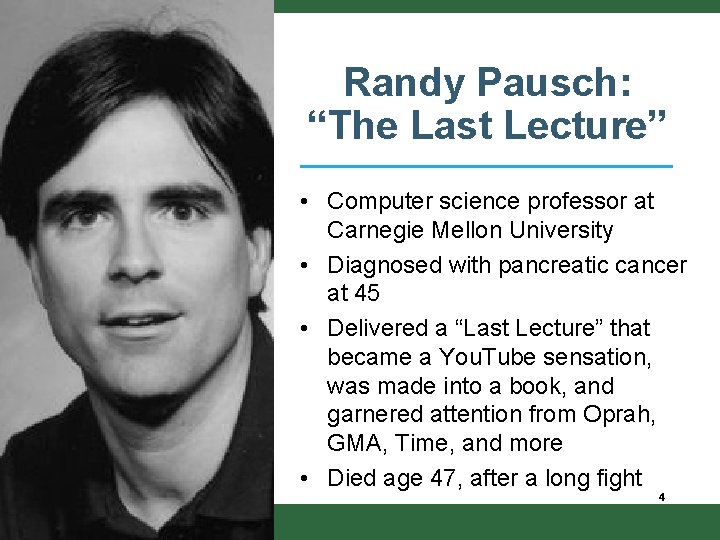
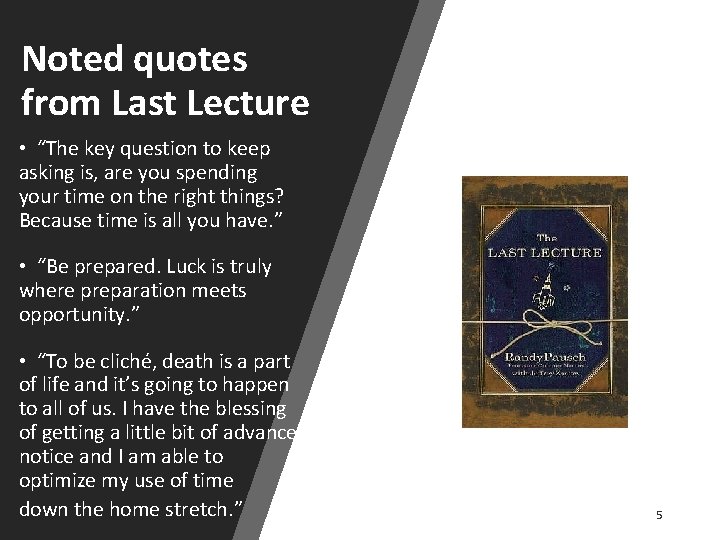
Randy Pausch: “The Last Lecture” • Computer science professor at Carnegie Mellon University • Diagnosed with pancreatic cancer at 45 • Delivered a “Last Lecture” that became a You. Tube sensation, was made into a book, and garnered attention from Oprah, GMA, Time, and more • Died age 47, after a long fight 4
Noted quotes from Last Lecture • “The key question to keep asking is, are you spending your time on the right things? Because time is all you have. ” • “Be prepared. Luck is truly where preparation meets opportunity. ” • “To be cliché, death is a part of life and it’s going to happen to all of us. I have the blessing of getting a little bit of advance notice and I am able to optimize my use of time down the home stretch. ” 5
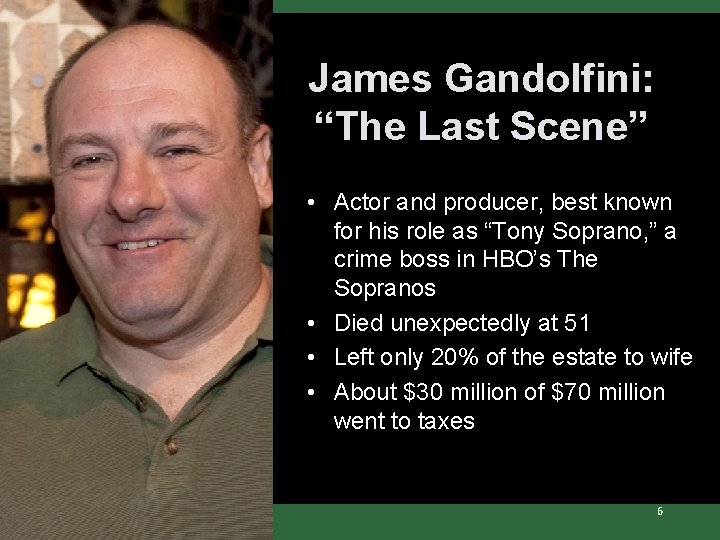
James Gandolfini: “The Last Scene” • Actor and producer, best known for his role as “Tony Soprano, ” a crime boss in HBO’s The Sopranos • Died unexpectedly at 51 • Left only 20% of the estate to wife • About $30 million of $70 million went to taxes 6
7
Gallup poll shows 55% of adults don’t have a will • 44% report having a will • Down from 51% who reported having a will in 2005 • Older Americans are more likely to have a will Source: “Majority in U. S. Do Not Have a Will, ” http: //news. gallup. com/poll/191651/majoritynot. aspx. 8
Death, with no will or trust • No official direction to guide your family • Family members may disagree about your wishes • Estate goes into probate and is divided according to state law • No final message to family members 9
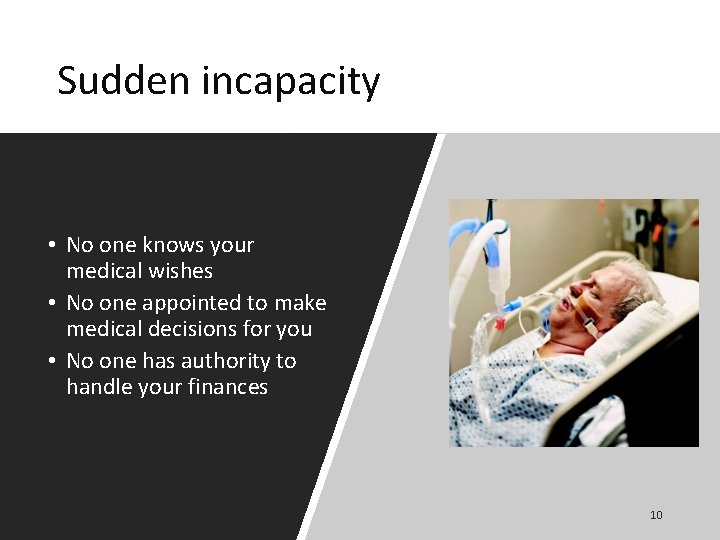
Sudden incapacity • No one knows your medical wishes • No one appointed to make medical decisions for you • No one has authority to handle your finances 10
PROBLEM: Estate planning means thinking of dying “One of the greatest obstacles in estate planning is the perpetuating of death denial. Most people don’t want to plan for post-death lives because death is a scary topic to even think about. ” --Blossom Wealth Management Source: “Emerging Challenges for Effective Estate Planning, ” Blossom Wealth Management Dec. 5, 2015. 11
No estate plan? “Heirs may be subjected to a number of obstacles, such as probate, creditors, lawsuits, judgments and legal fees – all of which can compromise the value of the legacy. ” --Laurence Greenberg, “Wealth Transfer and Generational Planning, ” Advisor Magazine Source: “Wealth Transfer and Generational Planning, ” Advisor Magazine Dec. 9, 2014. 12
• No will or trust or advanced health care directives created • Overlooked provisions such as guardianship for minors • No tax planning Common estate planning problems • Financial strains; Cash shortage for survivors 13
Benefits of estate planning • Spells out health care wishes • Possessions go to heirs you choose without wrangling or dispute • Avoids additional, unplanned legal expenses • Provides for loved ones not otherwise protected 14
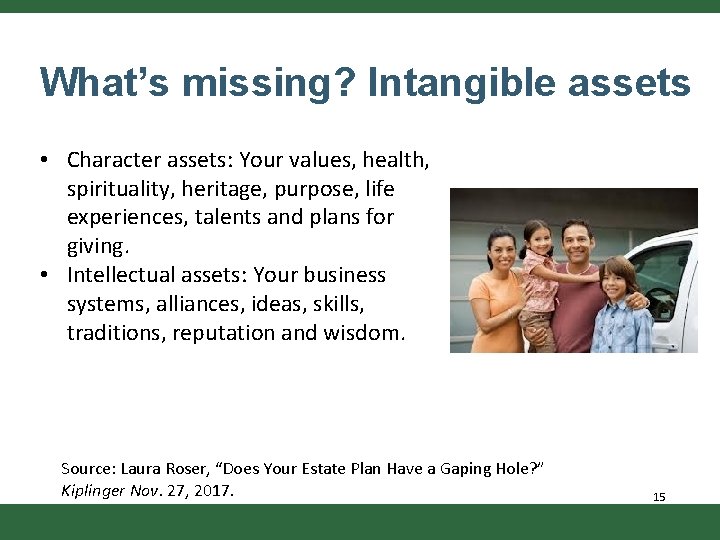
What’s missing? Intangible assets • Character assets: Your values, health, spirituality, heritage, purpose, life experiences, talents and plans for giving. • Intellectual assets: Your business systems, alliances, ideas, skills, traditions, reputation and wisdom. Source: Laura Roser, “Does Your Estate Plan Have a Gaping Hole? ” Kiplinger Nov. 27, 2017. 15
DEFINITION Generational Planning is a modern, intentional two-phase process that expands estate planning’s reach and helps you plan your legacy. 16
Two objectives First objective: Passing on a family’s tangible wealth and assets included in traditional estate planning Second objective: Conveying your family’s values and history —it’s legacy—to the next generation. Both are done for the benefit of the next generation. 17
The successful legacy plan • Spouse – Has enough resources to live comfortably – Is able to carry on managing finances alone • Children – Are prepared for their inheritance – Understand how to save taxes and fees, plan to invest rather than spend • Grandchildren and future generations – Understand how you lived and what you lived for • The world at large – People and organizations you believe in use your contributions to carry on good work 18
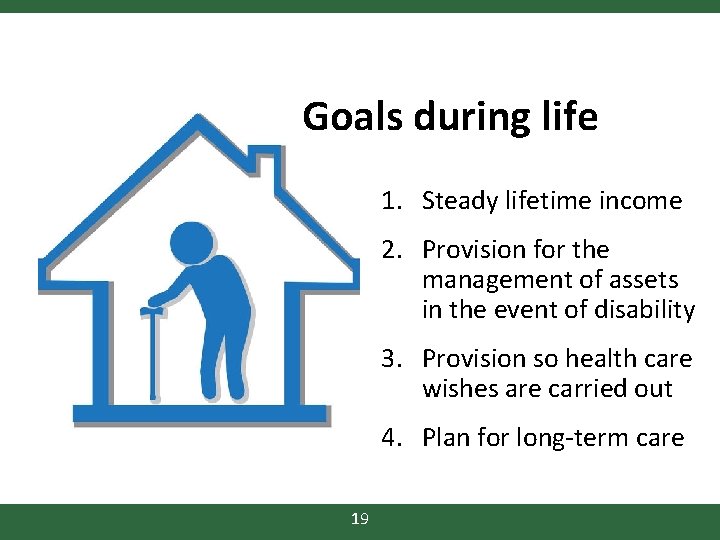
Goals during life 1. Steady lifetime income 2. Provision for the management of assets in the event of disability 3. Provision so health care wishes are carried out 4. Plan for long-term care 19
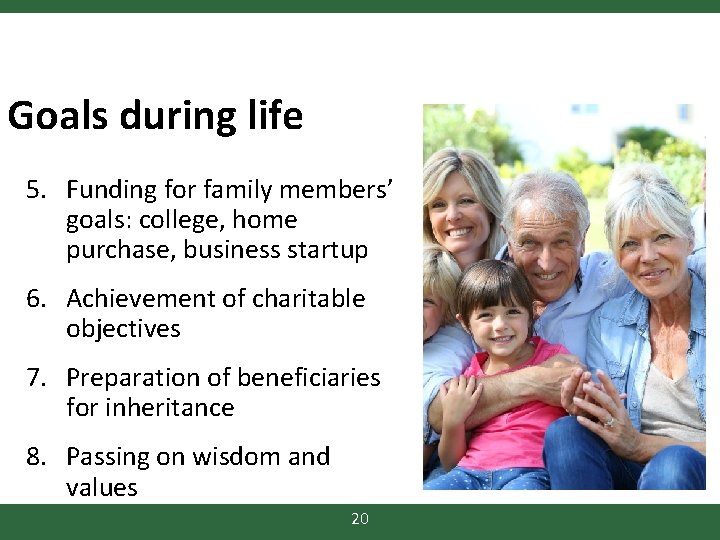
Goals during life 5. Funding for family members’ goals: college, home purchase, business startup 6. Achievement of charitable objectives 7. Preparation of beneficiaries for inheritance 8. Passing on wisdom and values 20
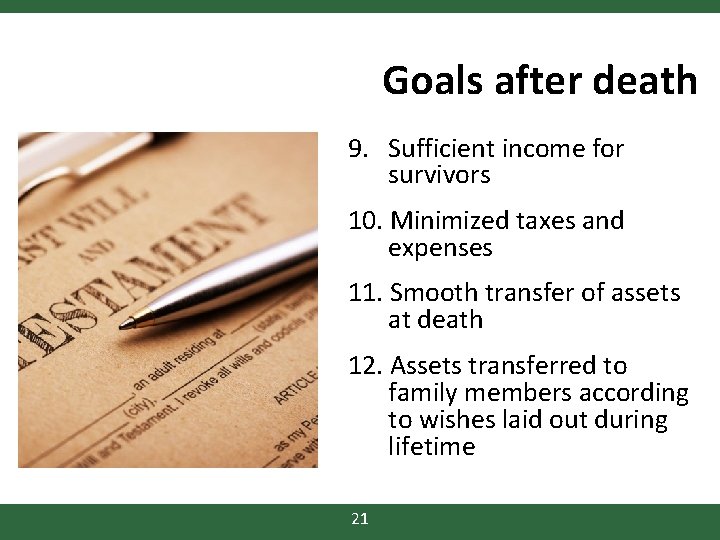
Goals after death 9. Sufficient income for survivors 10. Minimized taxes and expenses 11. Smooth transfer of assets at death 12. Assets transferred to family members according to wishes laid out during lifetime 21
Goals after death 13. Continued management of inherited assets 14. Continued support to favored charities 15. Avoidance of family strife 22
Follow a six-step legacy planning process to start leaving your mark for the next generation
Part 1 Plan for incapacity
Two important documents • Advance directive for health care • Power of attorney for finances 26
Part 2 Get organized
Why get organized? • Prepare for the real business of estate planning – Identify property so you’ll know how to divvy it up among beneficiaries – Determine if your estate will be subject to estate taxes • Make it easy on your spouse or children – Give them access to important papers and passwords – Help them know what to do first (pets, mail, etc. ) – Provide special instructions and explanations for your decisions 28
Part 3 Think about the people you love and the causes you care about
Consider contingencies and special circumstances • What if spouse dies first? • Divided equally among kids, or according to need? • What about grandchildren, or other friends or relatives? • Do you have a child you don’t feel is ready to handle an inheritance? • Do you need to provide for a special-needs child? Prepare your beneficiaries for their inheritance – this is the time to talk to your spouse and kids 30
Part 4 Work with advisors to put your wishes in writing
A will isn’t always the way • Assets can be transferred through titling, beneficiaries, or trusts • All accounts and wishes need to be coordinated • Some estates are simple, some are complicated – it’s best to work with an attorney • Attorneys can make you aware of possibilities and contingencies you didn’t know about 32
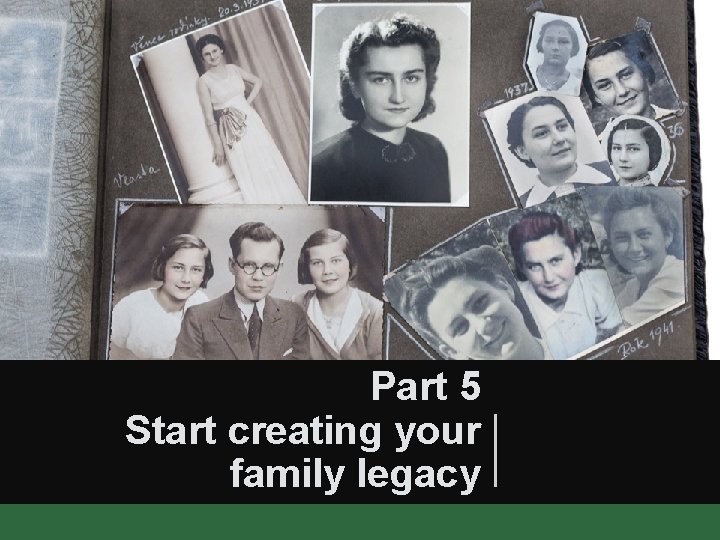
Part 5 Start creating your family legacy
Family Legacy: Leaving behind a piece of yourself and making your life count • Possible ideas: – Writing down memories – Putting together scrapbooks/photo albums – Compile favorite recipes – Teach someone your special skill – gardening, woodworking, etc. 34
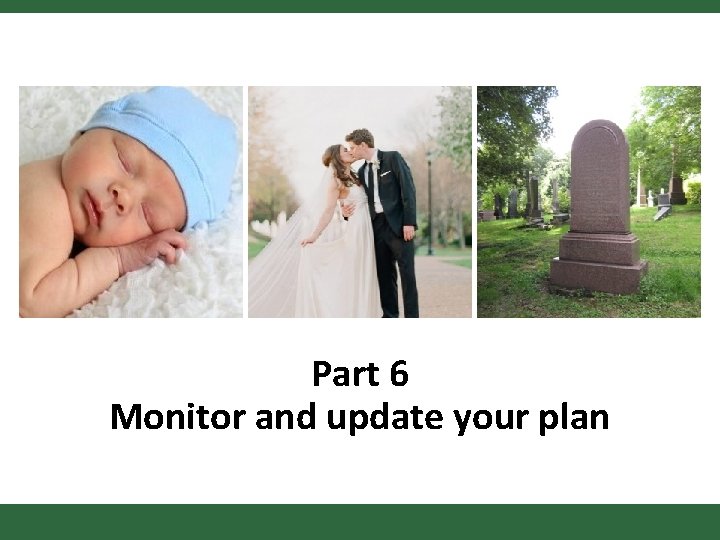
Part 6 Monitor and update your plan
Things change and so will your plan • People get married and divorced, die and are born • You might change your mind about something • Having the wrong people inherit your money 36
Let’s work together
Working together, we can Develop a plan • Establish goals and a timetable for implementing them • Example: – Week 1: Sign health care directive – Week 2: Sign power of attorney for financial decisions – Week 3: Make a list of accounts and passwords – Week 4: Gather important papers –… 38
Imagine how you will feel when…
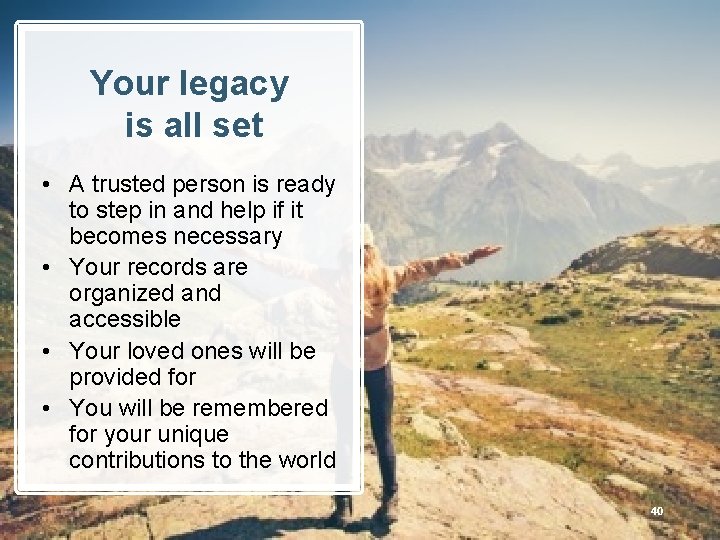
Your legacy is all set • A trusted person is ready to step in and help if it becomes necessary • Your records are organized and accessible • Your loved ones will be provided for • You will be remembered for your unique contributions to the world 40
Legacy planning is not hard… But you just have to get started 41