
Six Simple Machines Inclined Plane Wedge Screw Lever

- Slides: 15
Six Simple Machines • Inclined Plane • Wedge • Screw • Lever • Pulley • Wheel & Axle
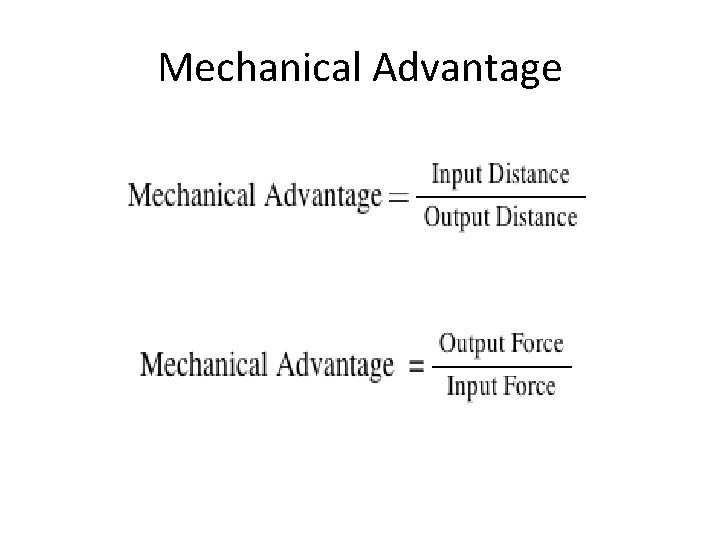
Mechanical Advantage
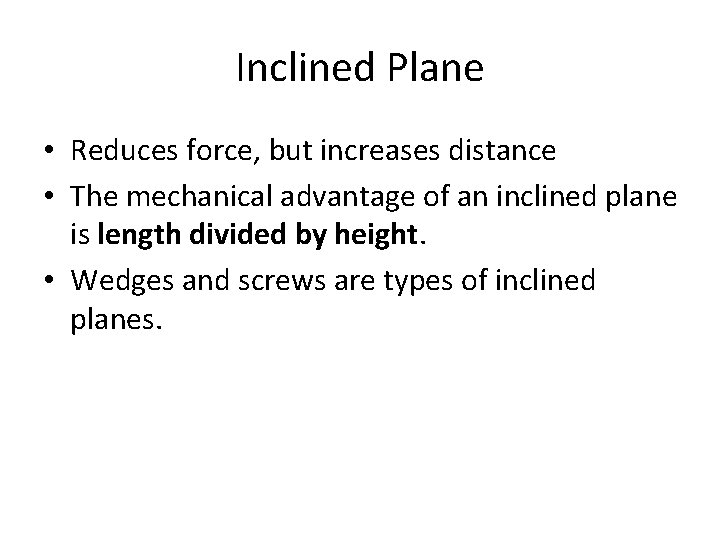
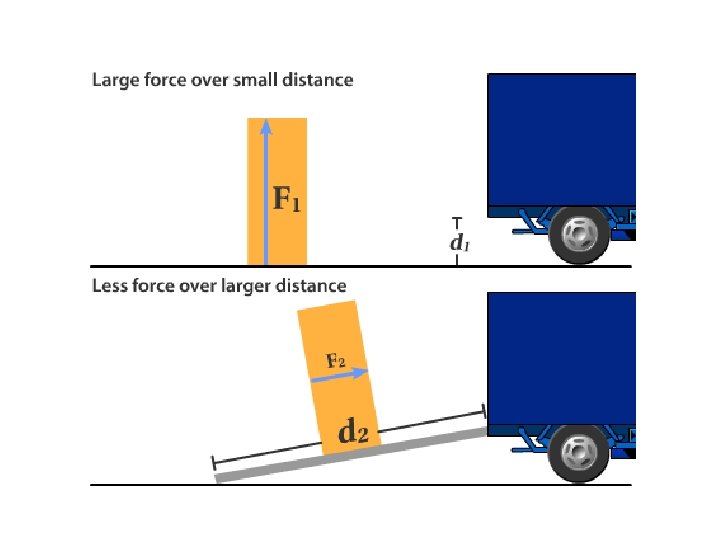
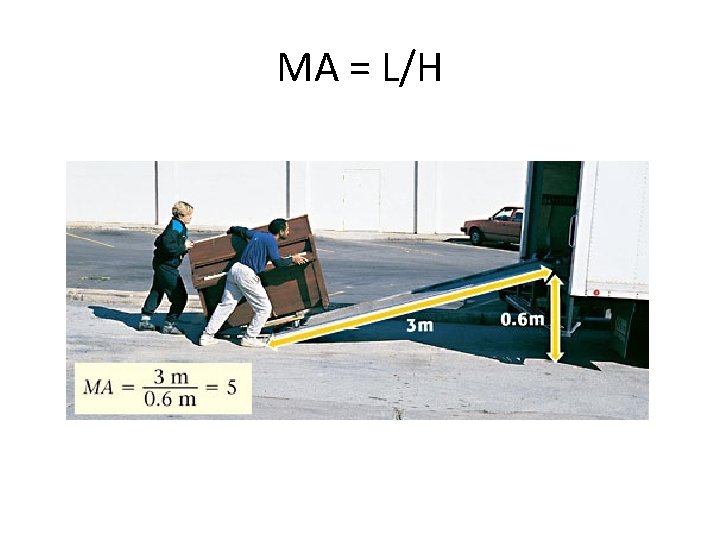
Inclined Plane • Reduces force, but increases distance • The mechanical advantage of an inclined plane is length divided by height. • Wedges and screws are types of inclined planes.
MA = L/H
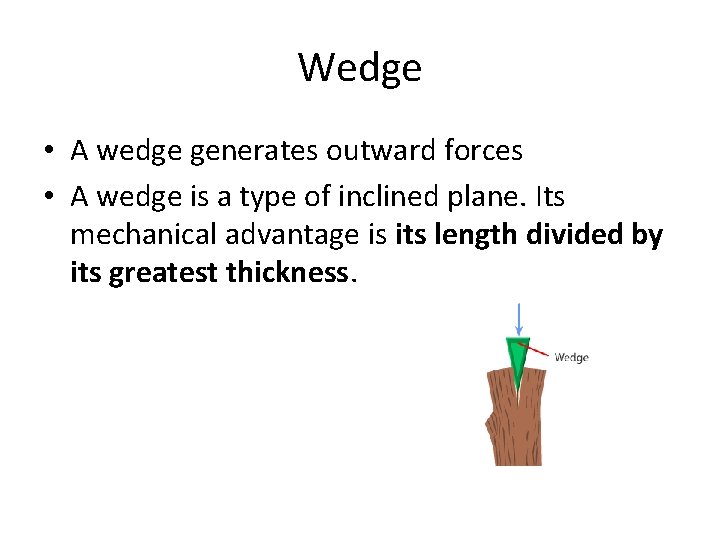
Wedge • A wedge generates outward forces • A wedge is a type of inclined plane. Its mechanical advantage is its length divided by its greatest thickness.
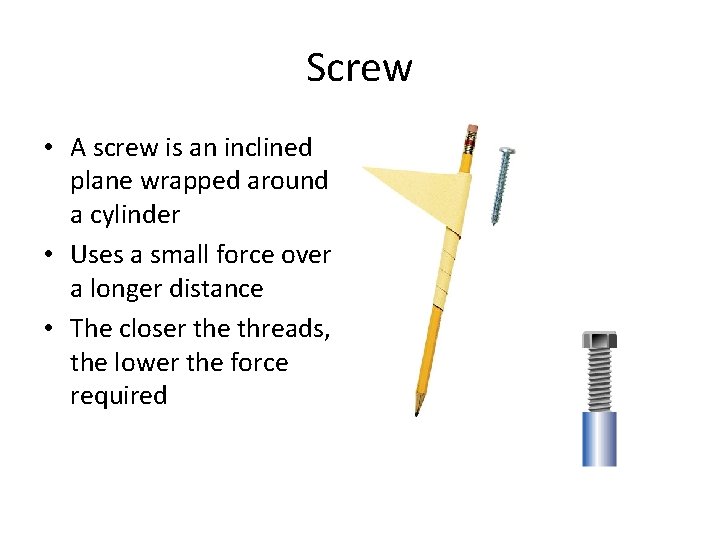
Screw • A screw is an inclined plane wrapped around a cylinder • Uses a small force over a longer distance • The closer the threads, the lower the force required
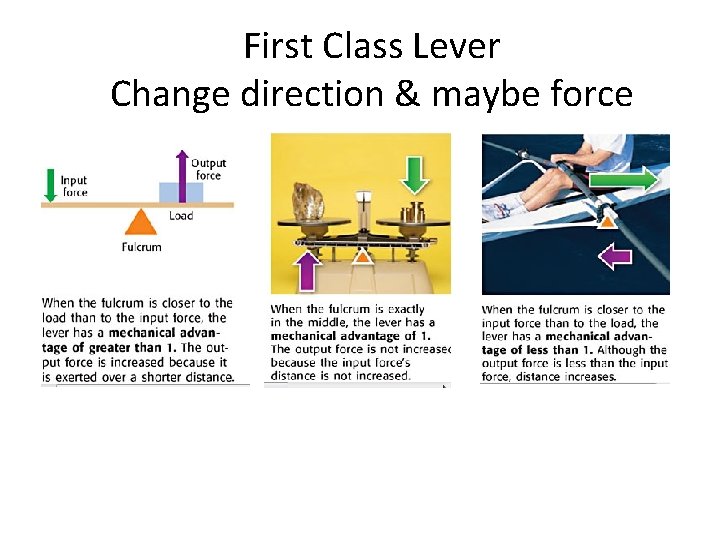
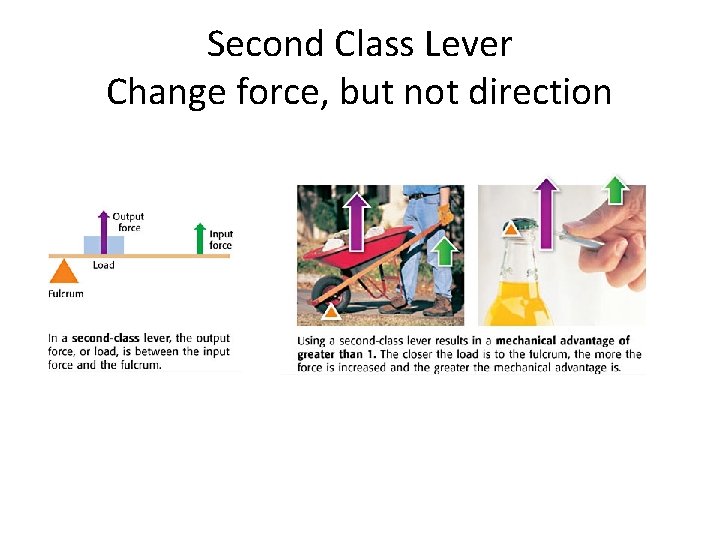
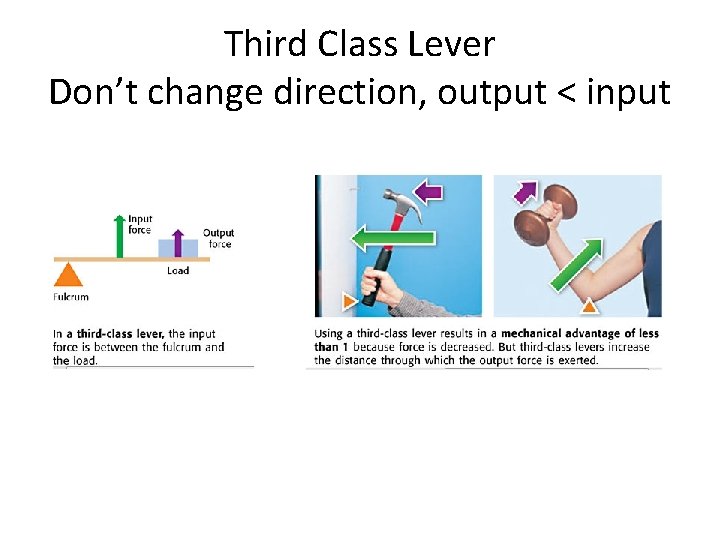
Levers – Three Classes • Can change direction & size of force • In a first-class lever, the fulcrum is between the force and the load. • In a second-class lever, the load is between the force and the fulcrum. • In a third-class lever, the force is between the fulcrum and the load.
First Class Lever Change direction & maybe force
Second Class Lever Change force, but not direction
Third Class Lever Don’t change direction, output < input
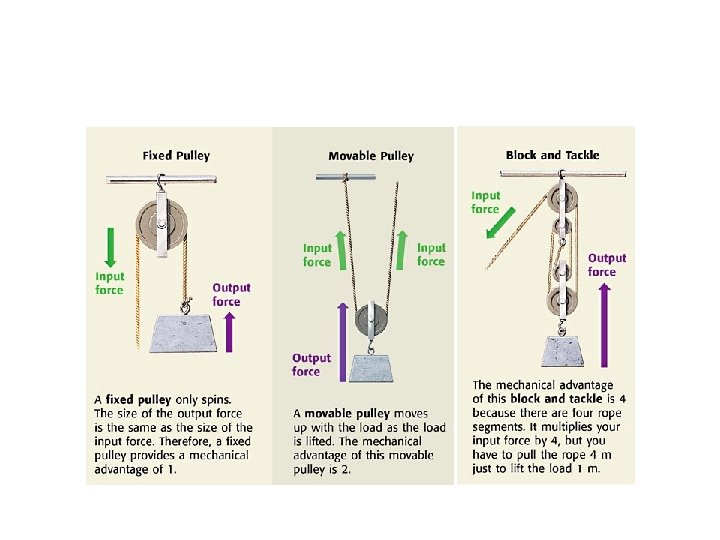
Pulleys • Change direction and may change input force • Types of pulleys include fixed pulleys, movable pulleys, and block and tackles.
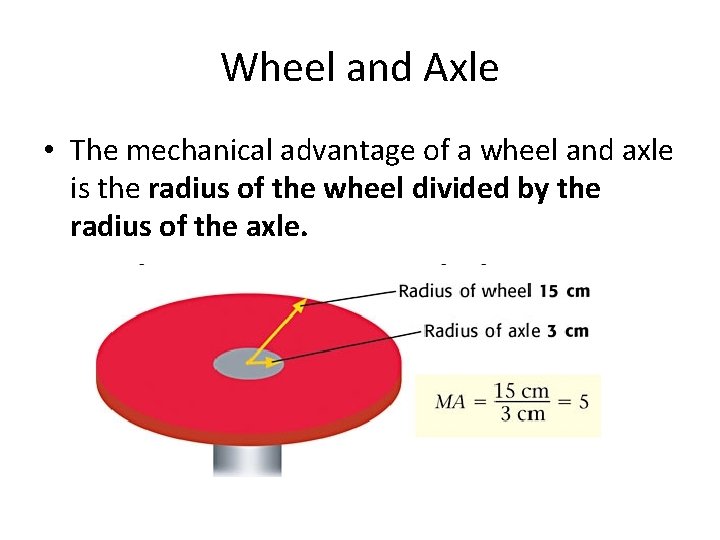
Wheel and Axle • The mechanical advantage of a wheel and axle is the radius of the wheel divided by the radius of the axle.
Compound Machines • Compound machines consist of two or more simple machines. • Compound machines have low mechanical efficiencies because they have more moving parts and therefore more friction to overcome.