
Six Sigma DMAIC Process LEAN SIX SIGMA TRAINING

- Slides: 29
Six Sigma DMAIC Process LEAN SIX SIGMA TRAINING
Overall Course Objectives 2 5 -day course covering the principles, methodology and primary tools and techniques of Lean Six Sigma at the Green Belt level At the end of the course students will be equipped with the knowledge and skills to run an end to end Green Belt project
Introductions 3 My name is… At work I …. . My favorite success story is. . . I am taking LSSGB training because. . .
Six Sigma in the Organization
Lean Six Sigma
Lean Six Sigma Introduction
Agenda � What is Lean Six Sigma? � Lean Sigma Framework � Metrics of Six Sigma � The “Belts” � Project Selection � DMAIC Roadmap
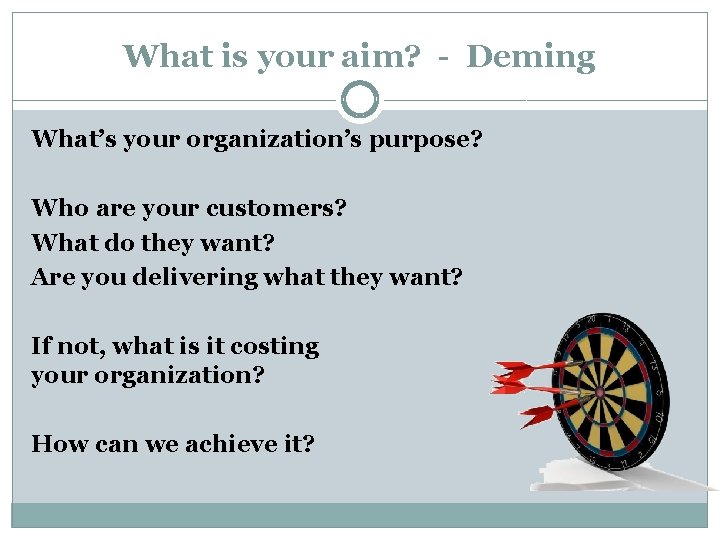
What is your aim? - Deming What’s your organization’s purpose? Who are your customers? What do they want? Are you delivering what they want? If not, what is it costing your organization? How can we achieve it?
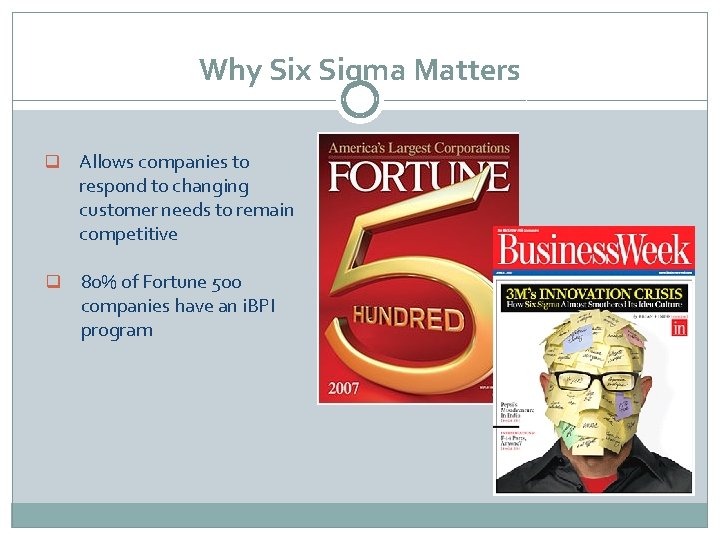
Why Six Sigma Matters q Allows companies to respond to changing customer needs to remain competitive q 80% of Fortune 500 companies have an i. BPI program
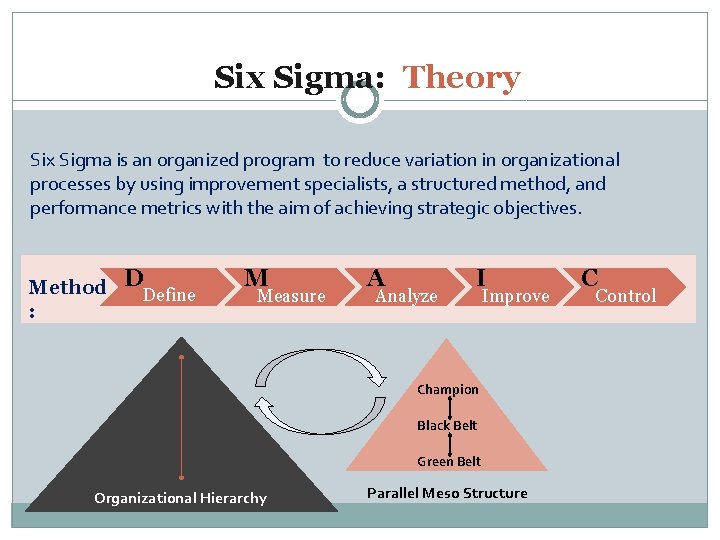
Six Sigma: Theory Six Sigma is an organized program to reduce variation in organizational processes by using improvement specialists, a structured method, and performance metrics with the aim of achieving strategic objectives. Method : D Define M Measure A Analyze I Improve Champion Black Belt Green Belt Organizational Hierarchy Parallel Meso Structure C Control
Six Sigma: Practice Improving Processes Teaching Individuals Teaching Teams
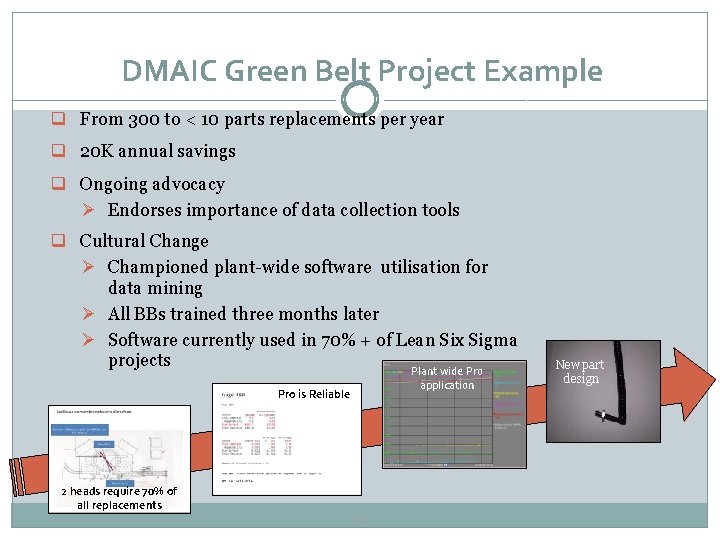
DMAIC Green Belt Project Example q From 300 to < 10 parts replacements per year q 20 K annual savings q Ongoing advocacy Ø Endorses importance of data collection tools q Cultural Change Ø Championed plant-wide software utilisation for data mining Ø All BBs trained three months later Ø Software currently used in 70% + of Lean Six Sigma projects Plant wide Pro application Pro is Reliable 2 heads require 70% of all replacements 13 New part design
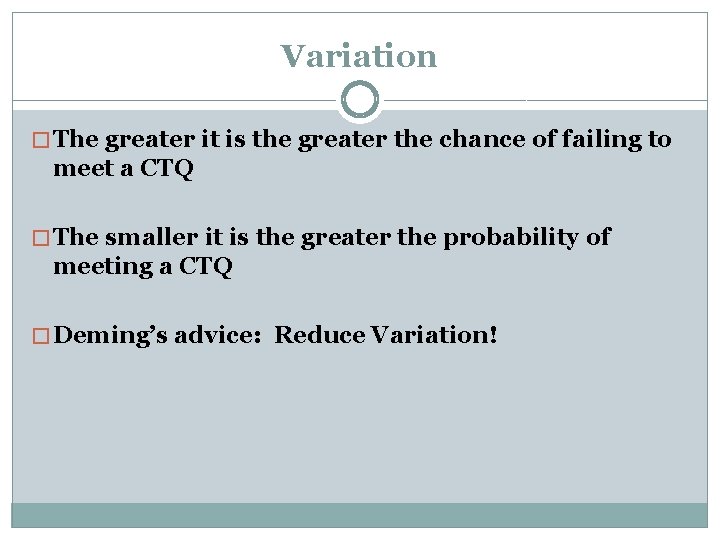
Variation � The greater it is the greater the chance of failing to meet a CTQ � The smaller it is the greater the probability of meeting a CTQ � Deming’s advice: Reduce Variation!
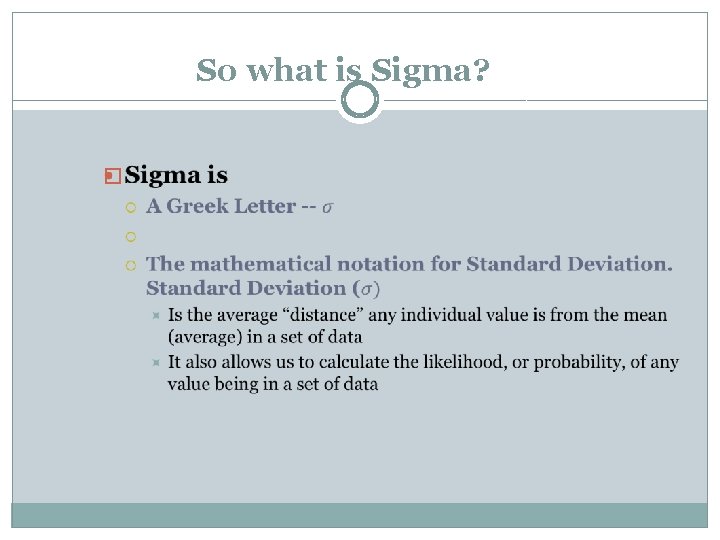
So what is Sigma? �
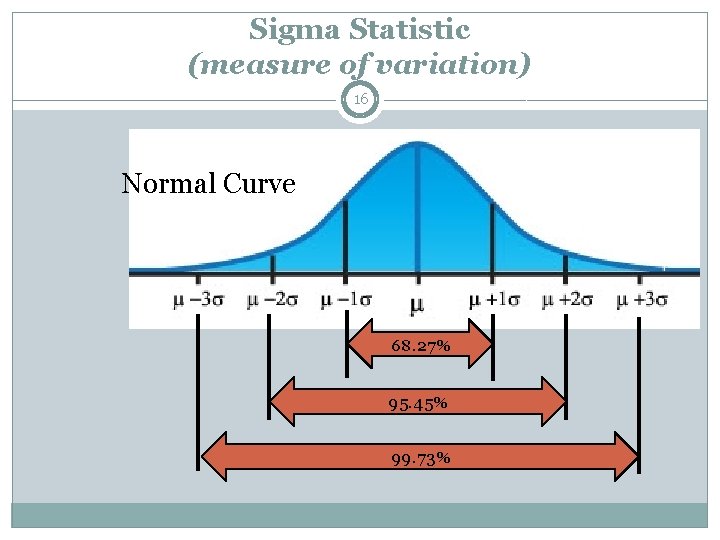
Sigma Statistic (measure of variation) 16 Normal Curve 68. 27% 95. 45% 99. 73%
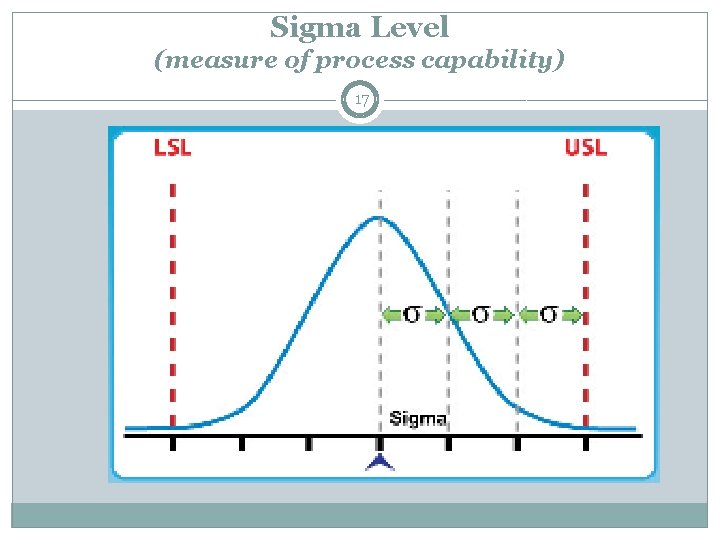
Sigma Level (measure of process capability) 17
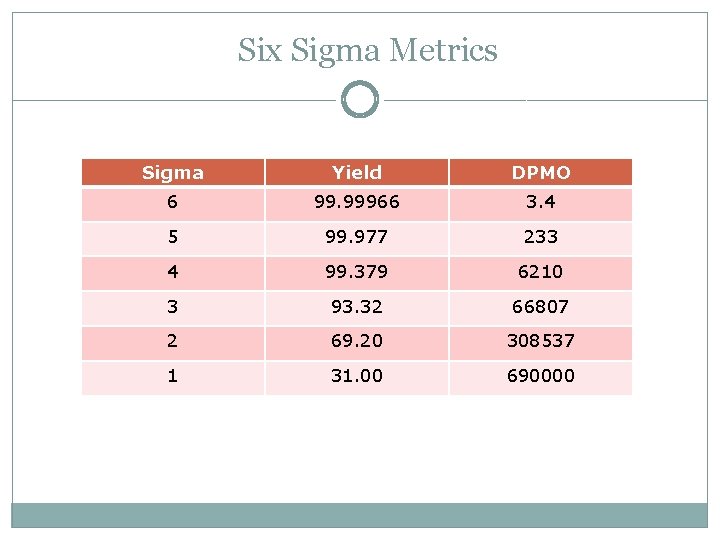
Six Sigma Metrics Sigma Yield DPMO 6 99. 99966 3. 4 5 99. 977 233 4 99. 379 6210 3 93. 32 66807 2 69. 20 308537 1 31. 00 690000
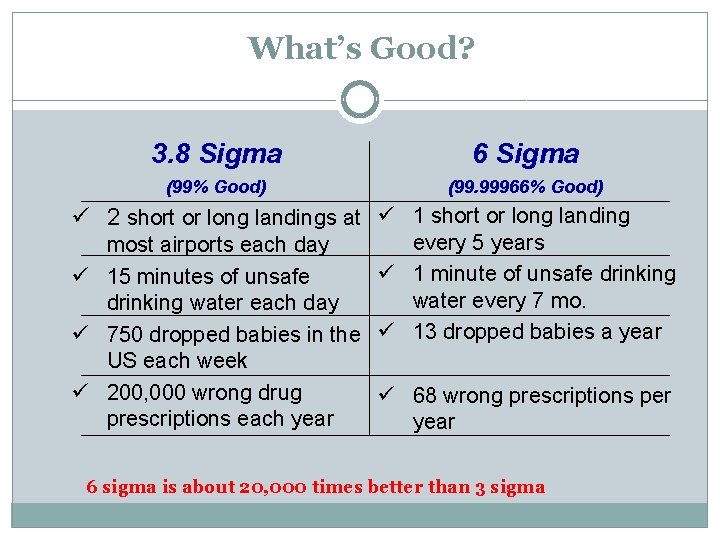
What’s Good? 3. 8 Sigma 6 Sigma (99% Good) (99. 99966% Good) ü 2 short or long landings at ü 1 short or long landing every 5 years most airports each day ü 1 minute of unsafe drinking ü 15 minutes of unsafe water every 7 mo. drinking water each day ü 750 dropped babies in the ü 13 dropped babies a year US each week ü 200, 000 wrong drug ü 68 wrong prescriptions per prescriptions each year 6 sigma is about 20, 000 times better than 3 sigma
Step 1: The Define Phase
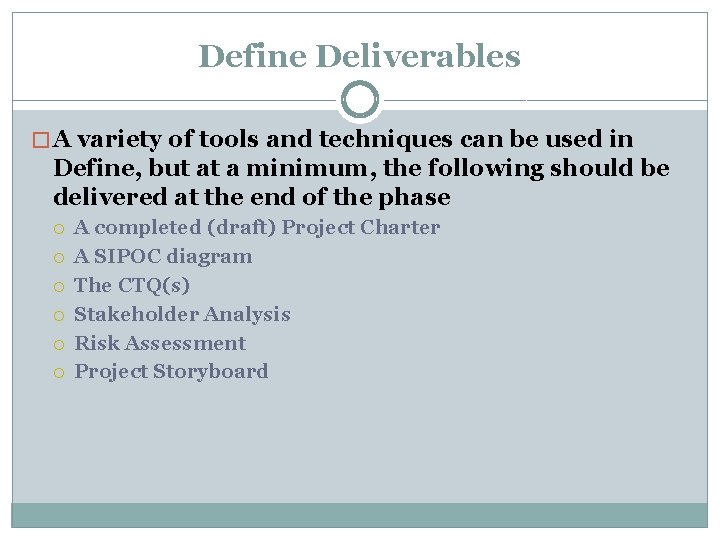
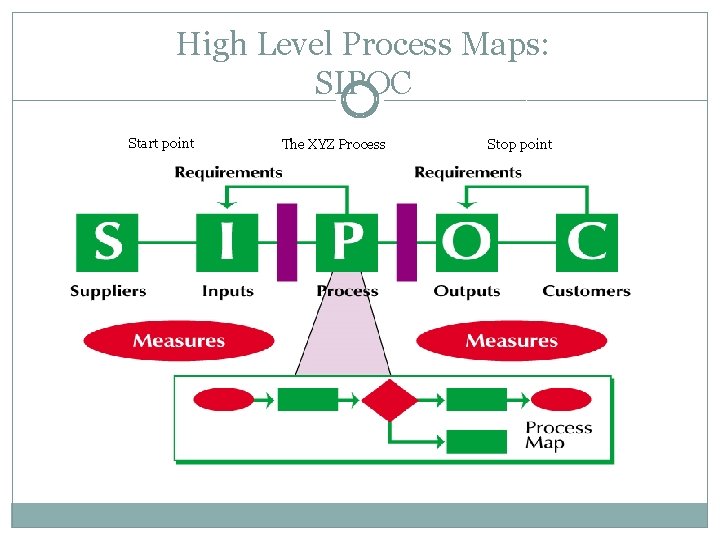
Define Deliverables � A variety of tools and techniques can be used in Define, but at a minimum, the following should be delivered at the end of the phase A completed (draft) Project Charter A SIPOC diagram The CTQ(s) Stakeholder Analysis Risk Assessment Project Storyboard
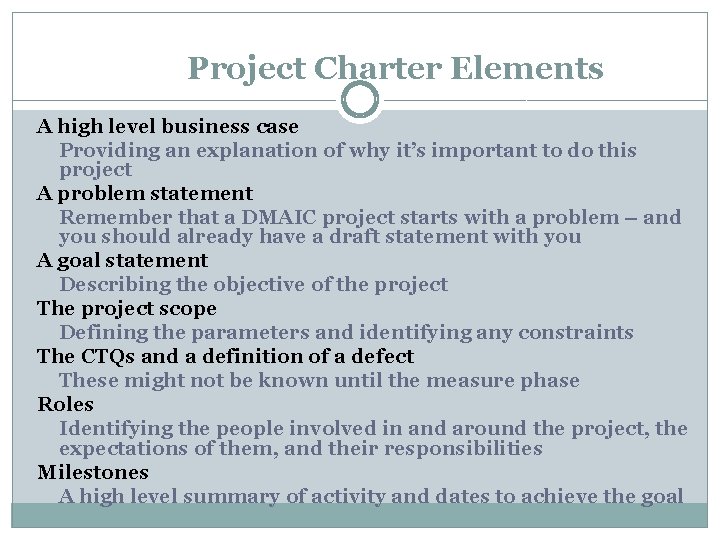
Project Charter Elements A high level business case Providing an explanation of why it’s important to do this project A problem statement Remember that a DMAIC project starts with a problem – and you should already have a draft statement with you A goal statement Describing the objective of the project The project scope Defining the parameters and identifying any constraints The CTQs and a definition of a defect These might not be known until the measure phase Roles Identifying the people involved in and around the project, the expectations of them, and their responsibilities Milestones A high level summary of activity and dates to achieve the goal
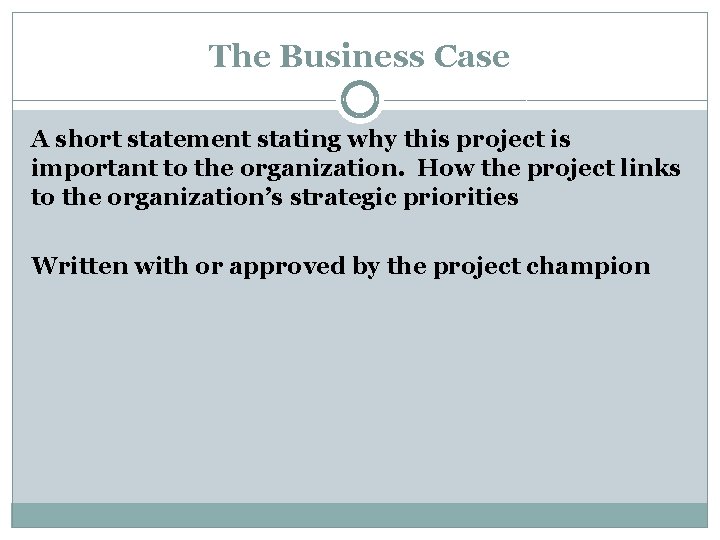
The Business Case A short statement stating why this project is important to the organization. How the project links to the organization’s strategic priorities Written with or approved by the project champion
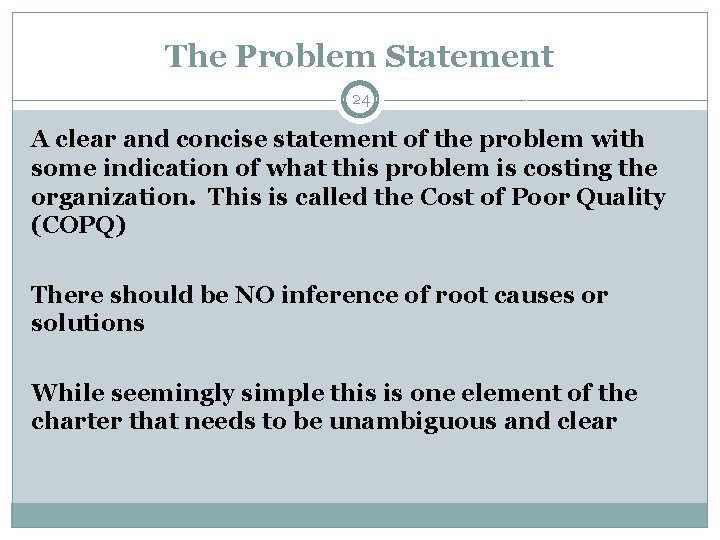
The Problem Statement 24 A clear and concise statement of the problem with some indication of what this problem is costing the organization. This is called the Cost of Poor Quality (COPQ) There should be NO inference of root causes or solutions While seemingly simple this is one element of the charter that needs to be unambiguous and clear
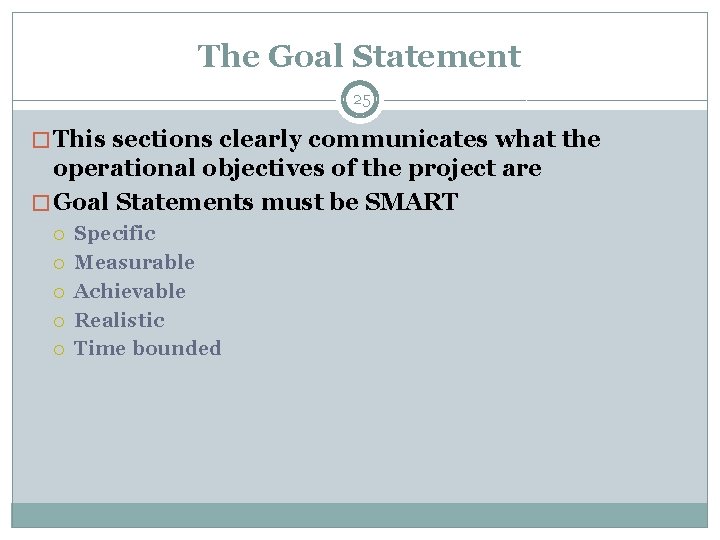
The Goal Statement 25 � This sections clearly communicates what the operational objectives of the project are � Goal Statements must be SMART Specific Measurable Achievable Realistic Time bounded
High Level Process Maps: SIPOC Start point The XYZ Process Stop point
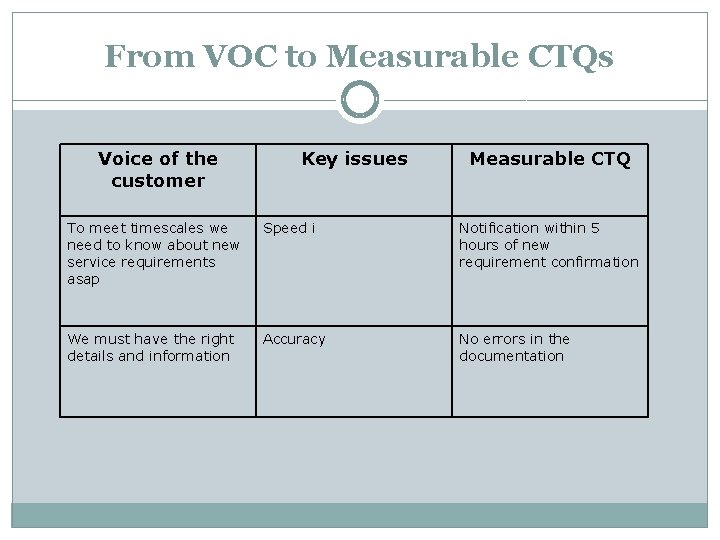
From VOC to Measurable CTQs Voice of the customer Key issues Measurable CTQ To meet timescales we need to know about new service requirements asap Speed i Notification within 5 hours of new requirement confirmation We must have the right details and information Accuracy No errors in the documentation
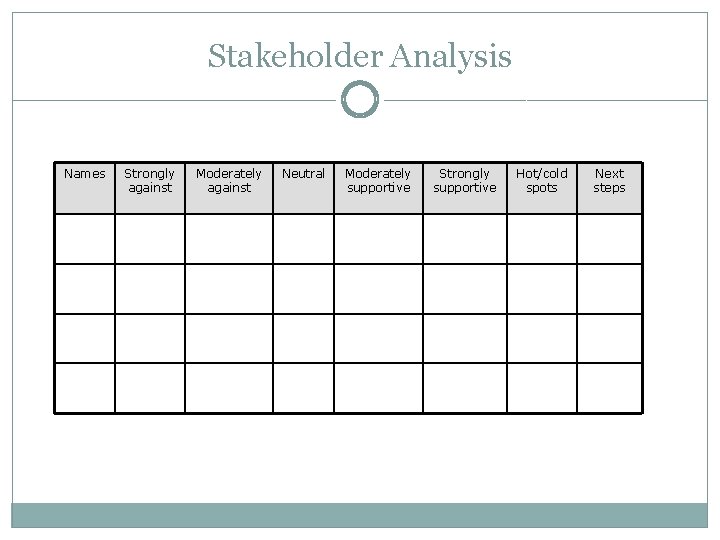
Stakeholder Analysis Names Strongly against Moderately against Neutral Moderately supportive Strongly supportive Hot/cold spots Next steps
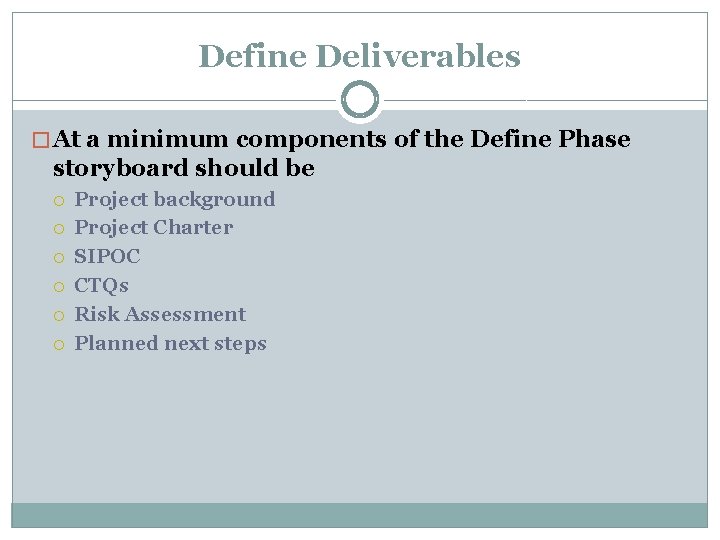
Define Deliverables � At a minimum components of the Define Phase storyboard should be Project background Project Charter SIPOC CTQs Risk Assessment Planned next steps