
SIX DEGREES OF ALIENATION PARENTING FAMILY CONFLICT APROF
- Slides: 35
SIX DEGREES OF ALIENATION: PARENTING & FAMILY CONFLICT A/PROF CAROLYN QUADRIO School of Psychiatry University of NSW SHARED PARENTING ORDERS ADELAIDE, UNIVERSITY OF SA APRIL 2008 1
OVERVIEW OF PRESENTATION § Child trauma and abuse § The spectrum of alienation § Parenting patterns § Case examples § Breastfeeding § Joint parenting considerations 2
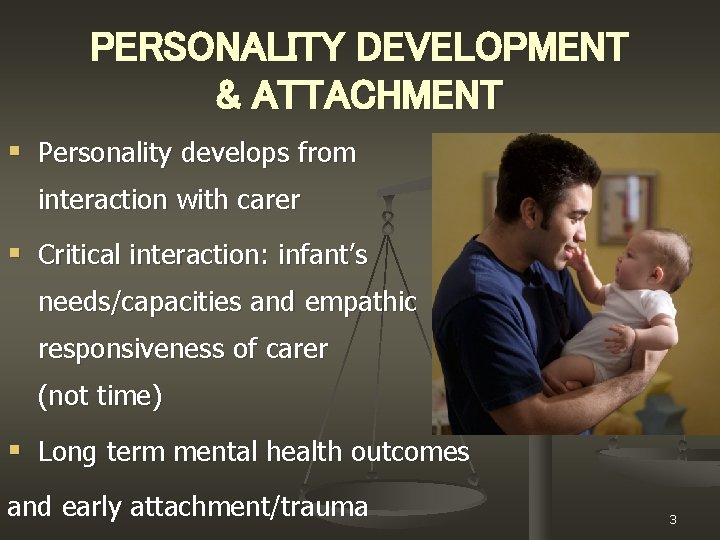
PERSONALITY DEVELOPMENT & ATTACHMENT § Personality develops from infant interaction with carer § Critical interaction: infant’s needs/capacities and empathic responsiveness of carer (not time) § Long term mental health outcomes and early attachment/trauma 3
CHILDHOOD TRAUMA & ABUSE n Is common n Mostly familial/carers n CSA: 15 -30% n Severe CPA: 11% n Witnessing DV: 14% n Psychological trauma? n n Family conflict/violence FLC cases: expect higher rates 4
CSA IS COMMON Epidemiological data worldwide: § § 1 in 3 female: 1 in 4 male children 36% Australian women § (Mazza and Dennerstein, 2001) § Most CSA is unreported (80%) § Probably higher rates in FLC families: more dysfunctional group 5
Child Abuse& Neglect (CAN): Australian data 2004/5 n Reports doubled last 5 years n 700 new reports per day n One new case/2 minutes n Most abuse is intrafamilial n Children in care 70% 10 yrs 6
DV IS COMMON: UN DATA n n n Most widespread and socially tolerated form of HR violation Often prelude to coercive sex Kills + disables as many women as cancer; > MVA’s + malaria Single biggest health risk to Australian women of reproductive age ($6. 3 B pa) 20 -30% of marriages 7
NEW LEGISLATION: PRESUMPTION EQUAL PARENTING n n n Burden of proof on victim? Reality of CAN Prevalence of DV vs False allegations as strategy Breastfeeding as strategy 8
ATTACHMENT & FAMILY PATTERNS children attach to primary care figures n not related to time n children in long day care n children in kibbutzim n ‘traditional’ families n vs children attach in spite of abuse n may even cling (traumatic attachment) n 9
ALIENATION ‘SYNDROME’ SYNDROME vs REALITY § 90% allegations CSA § CSA common/false § PAS: ‘syndrome’ § no scientific validity in FLC are false explains this process § deliberate alienation (usually Mo) allegations not § non-diagnostic § no probative value § dangerous assumption 10
ASSESSING CHILD ABUSE/NEGLECT § Only medical evidence conclusive – but rare § Most symptoms non-specific: § Anxiety, regression, sleep disturbance, nightmares, acting out, depression, hyperactivity, school problems § Equally reflective of disturbance of divorce and/or ongoing post separation conflict 11
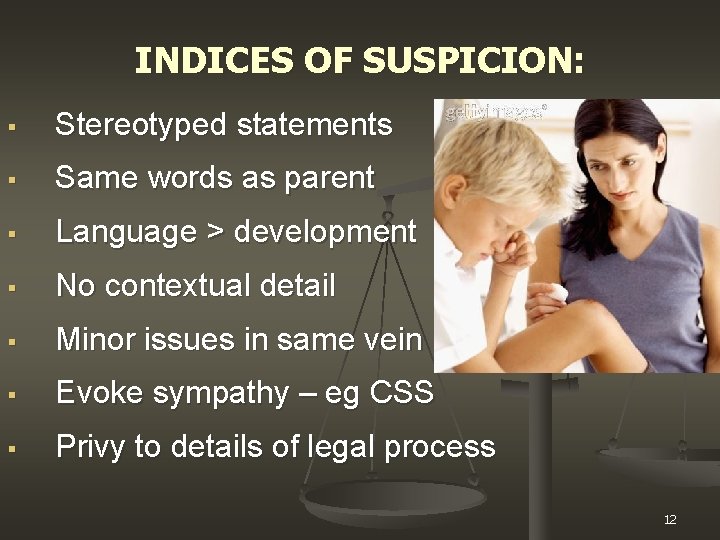
INDICES OF SUSPICION: § Stereotyped statements § Same words as parent § Language > development § No contextual detail § Minor issues in same vein § Evoke sympathy – eg CSS § Privy to details of legal process 12
MENTAL STATUS of ACCUSING PARENT § Mental illness: § Children more exposed to abuse § Personality disorder: § More prone to project BUT: § More likely to be victim of abuse § Less able to protect children from abuse 13
MENTAL STATUS of ACCUSED PARENT § Limited if any assistance determining issue § Normal or no psychological disturbance § No perpetrator profile but some concerns: § Previous violence § D&A issues 14
ALIENATION AS PROCESS § Alienation: dynamic/process NOT syndrome § Common in all divorcing families, esp FLC § No specific association with CSA § Can only be assessed in context of family 15
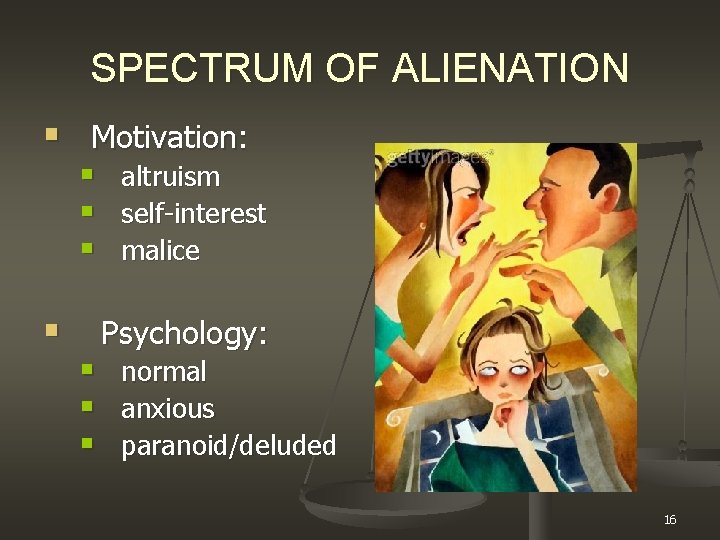
SPECTRUM OF ALIENATION § Motivation: § § § altruism self-interest malice § Psychology: § § § normal anxious paranoid/deluded 16
FIRST DEGREE § Altruism/protection: § CSA is actual and/or sincerely believed § Alienation = solely to protect child 17
SECOND DEGREE § Hurt and/or depressed parent: § cannot conceal feelings § children exquisitely sensitive § alienation unintended 18
THIRD DEGREE § Immature/neurotic (> malicious): § message to children: § “take care of me” = immature/dependent or: § “don’t blame me” = guilt prone depressive or passive aggressive adjustment 19
FOURTH DEGREE § Hurt, depressed, angry parent: § personality disorder: more/less malicious § unable/unwilling adequately to conceal feelings § poor affect regulation (trauma, often CSA) § potential for projection 20
FIVE DEGREES § § Hurt/angry parent: declare feelings to children recruit them as support alienation is intentional to break bond with other parent § vengeful behaviour or $ § welfare of children disregarded § deluded (ie genuine belief) 21
SIX DEGREES § Wilful and intended alienation § every effort to block contact § malicious false allegations to gain advantage in FLC § self-interest/manipulative § sociopathic/malicious 22
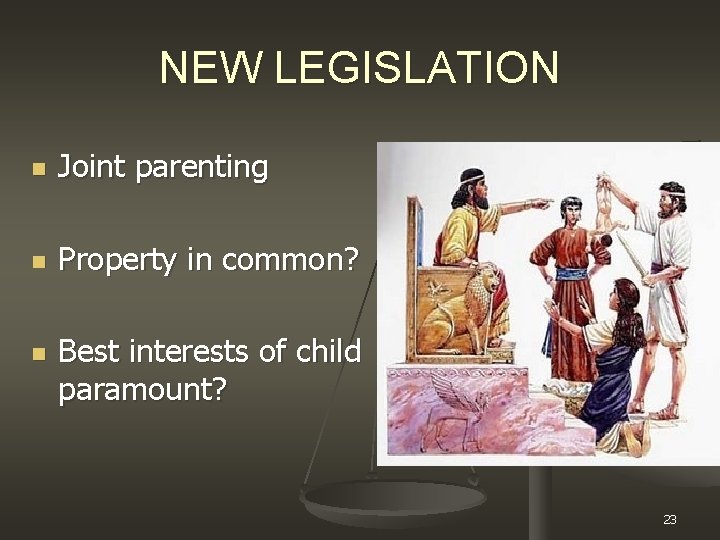
NEW LEGISLATION n Joint parenting n Property in common? n Best interests of child paramount? 23
PARENTING PRACTICES n n Intact families: women do most of the childcare even if employed Rationale for altered pattern post separation? Most divorced families negotiate – those in FLC the most acrimonious = my data Joint parenting requires high degree of cooperation 24
CHANGING PATTERNS § Old style ‘access’: Dad as Santa Claus 25
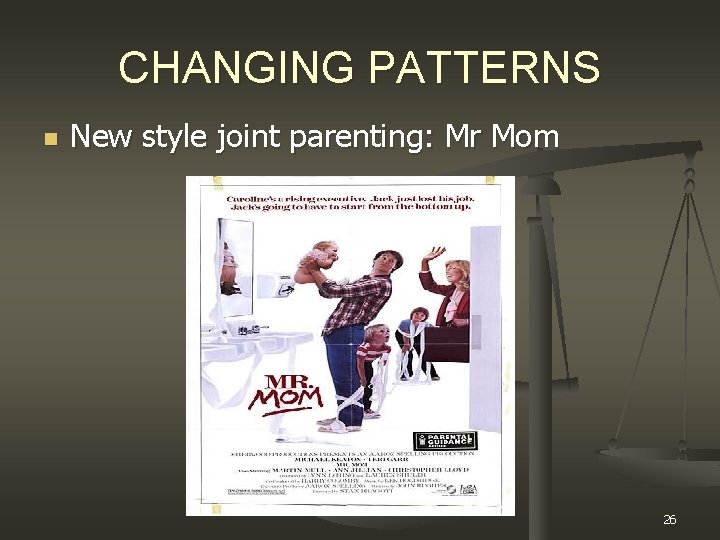
CHANGING PATTERNS n New style joint parenting: Mr Mom 26
CHANGED PATTERN: CASE EXAMPLE n n n n Fa: big business; no psychiatric Dx Financial control & domination Mo: 9 years exclusive childcare; anxious 3 children: 9, 5, 18 mos (breastfed) Attachments: equally strong and secure Fa now home based business Joint parenting? One plan for 3? Is change for the children or parent or $? 27
Breastfeeding & Parenting Orders n n best form of infant nutrition exclusive breastfeeding for first six months and continue first two years: WHO & UNICEF n Australia: Dietary Guidelines; Federal Health; AMA; Dieticians Association; Colleges: Paediatrics & Midwives n 28
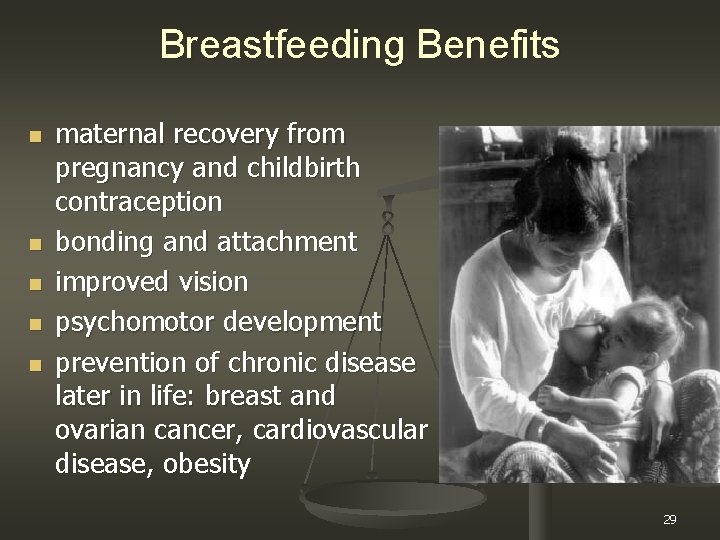
Breastfeeding Benefits n n n maternal recovery from pregnancy and childbirth contraception bonding and attachment improved vision psychomotor development prevention of chronic disease later in life: breast and ovarian cancer, cardiovascular disease, obesity 29
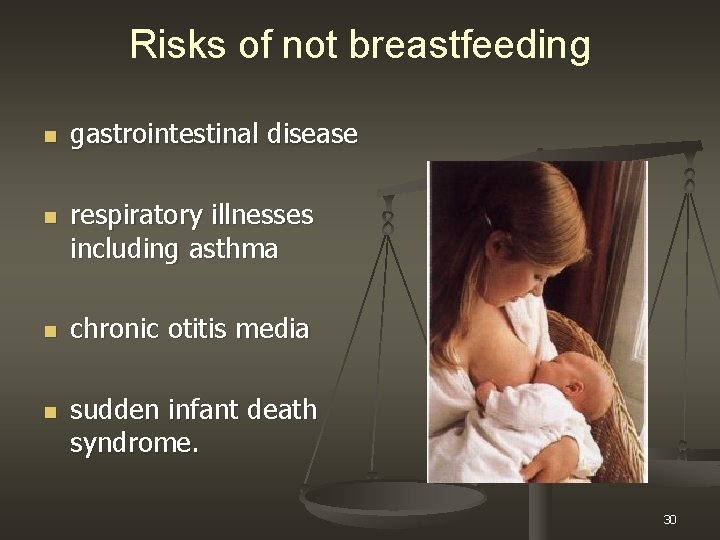
Risks of not breastfeeding n n gastrointestinal disease respiratory illnesses including asthma chronic otitis media sudden infant death syndrome. 30
Shared Parenting Orders & Breastfeeding n separation affects breastfeeding n contested cases unlikely to improve relationships n not common pattern pre separation n paramountcy of best interests of child? n court orders for mothers to wean (Sweet & Power, 2008) 31
CASE EXAMPLE: DELUSION? n n n n Mo: anxious – fears seem exaggerated Overvalued idea? Deluded? Folie a deux? Fa: no psychiatric Dx Mo reports: child has range of symptoms Child’s disclosures to Mo+GMo (no one else) Court ordered supervision Mo continues to report abuse Supervisor alleged to be conspiring 32
Examples: Domestic Violence n n n n NESB Fa: no psychiatric Dx Mo: isolated and abused – depression, PTSD Finally leaves w children Agreed contact; Fa refuses to return Allegations to FLC: Mo depressed, suicidal Orders: limited contact w Mo; 50/50; split 33
QUALITY vs QUANTITY n n Quality of contact more important than time Joint custody negated by parental conflict, esp if children caught in ongoing conflict There is no one size fits all arrangement Risk of exposure to continuing conflict, DV, or abuse: contact needs to be limited 34
50/50 SHARED CARE n n n n Logistically complex, parents need to be: organised, structured, plan ahead cooperative amicable r’ship, keep children out of child focused arrangements commitment by all to make it work family friendly work practices degree of financial independence, especially Mo’s a degree of paternal confidence Geography (B Smyth, 2005) 35