
Situational and Plot Archetypes the common or similar

- Slides: 15
Situational and Plot Archetypes the common or similar motifs or events that occur in mythologies across cultures
Essential Questions • What characteristics are found in different types of myths? • What natural phenomena, supernatural phenomena, and afterlife phenomena do myths explain? • What differences in cultures’ mythic explanations can be attributed to geographical, historic, societal or other factors? • What universal values can be derived from comparing different cultures’ mythologies? • How are concerns related to power, love, and life addressed in a variety of myths?
Situational Archetypes
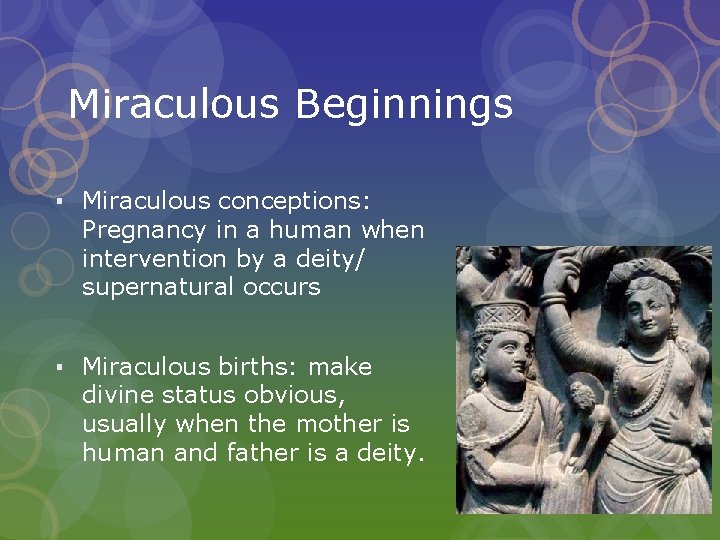
Miraculous Beginnings ▪ Miraculous conceptions: Pregnancy in a human when intervention by a deity/ supernatural occurs ▪ Miraculous births: make divine status obvious, usually when the mother is human and father is a deity.
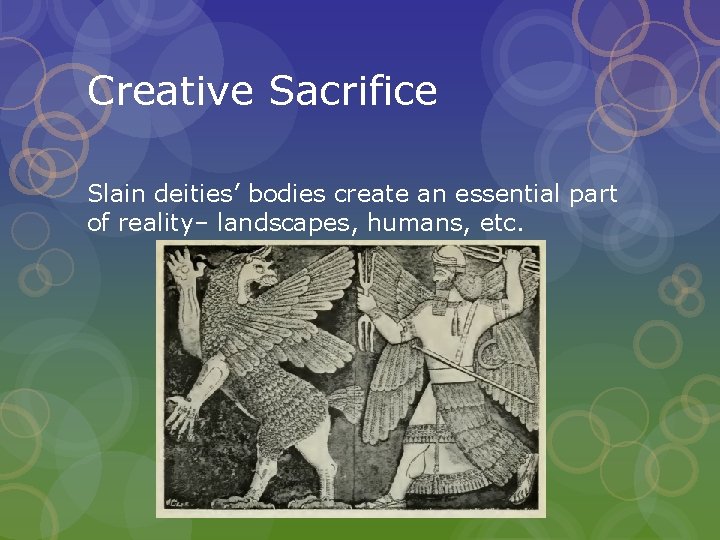
Creative Sacrifice Slain deities’ bodies create an essential part of reality– landscapes, humans, etc.
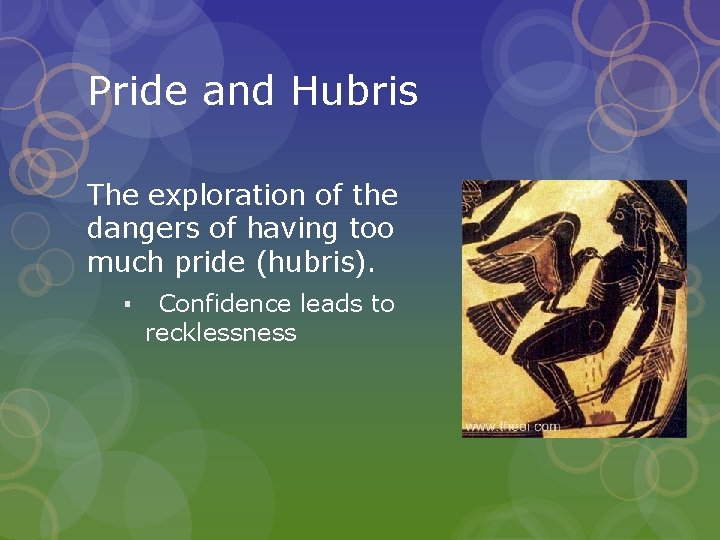
Pride and Hubris The exploration of the dangers of having too much pride (hubris). ▪ Confidence leads to recklessness
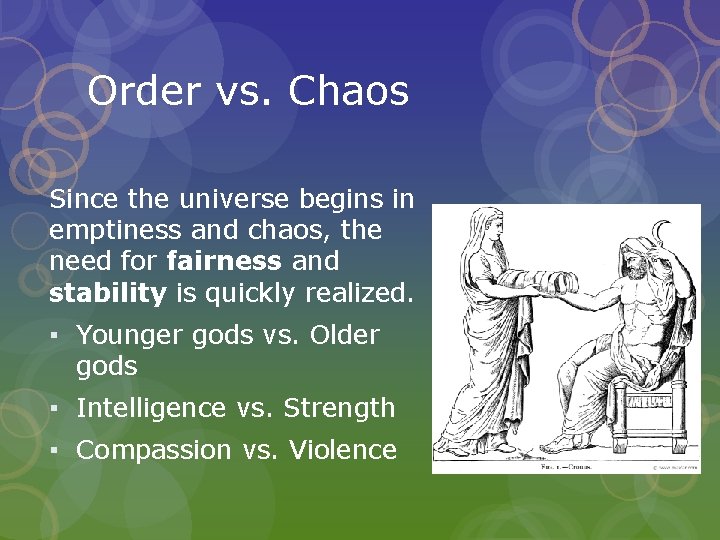
Order vs. Chaos Since the universe begins in emptiness and chaos, the need for fairness and stability is quickly realized. ▪ Younger gods vs. Older gods ▪ Intelligence vs. Strength ▪ Compassion vs. Violence
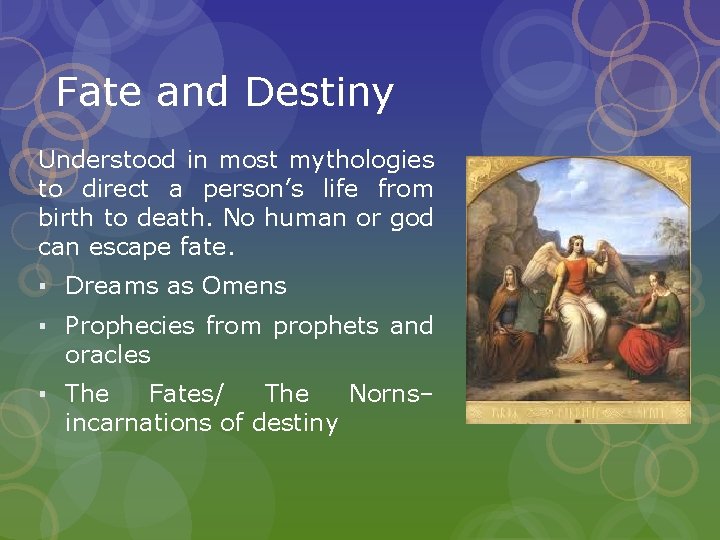
Fate and Destiny Understood in most mythologies to direct a person’s life from birth to death. No human or god can escape fate. ▪ Dreams as Omens ▪ Prophecies from prophets and oracles ▪ The Fates/ The Norns– incarnations of destiny
Plot Archetypes
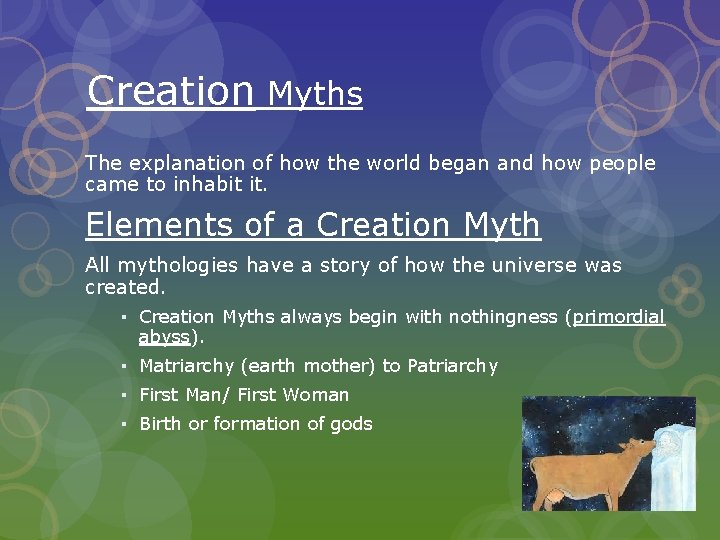
Creation Myths The explanation of how the world began and how people came to inhabit it. Elements of a Creation Myth All mythologies have a story of how the universe was created. ▪ Creation Myths always begin with nothingness (primordial abyss). ▪ Matriarchy (earth mother) to Patriarchy ▪ First Man/ First Woman ▪ Birth or formation of gods
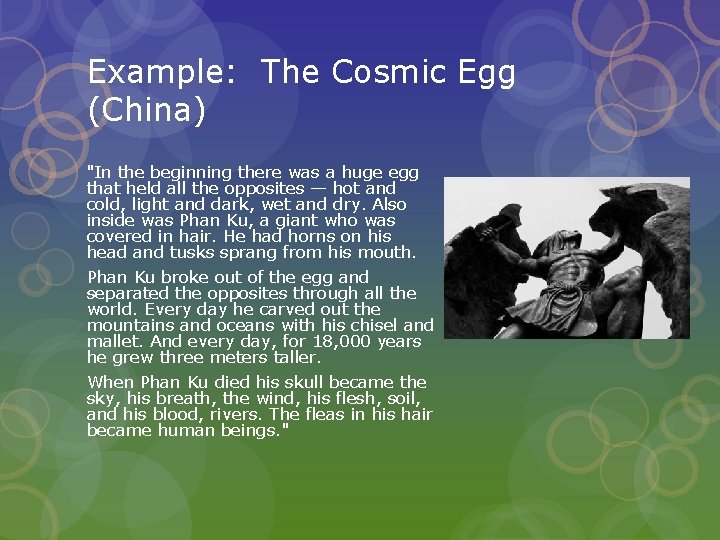
Example: The Cosmic Egg (China) "In the beginning there was a huge egg that held all the opposites — hot and cold, light and dark, wet and dry. Also inside was Phan Ku, a giant who was covered in hair. He had horns on his head and tusks sprang from his mouth. Phan Ku broke out of the egg and separated the opposites through all the world. Every day he carved out the mountains and oceans with his chisel and mallet. And every day, for 18, 000 years he grew three meters taller. When Phan Ku died his skull became the sky, his breath, the wind, his flesh, soil, and his blood, rivers. The fleas in his hair became human beings. "
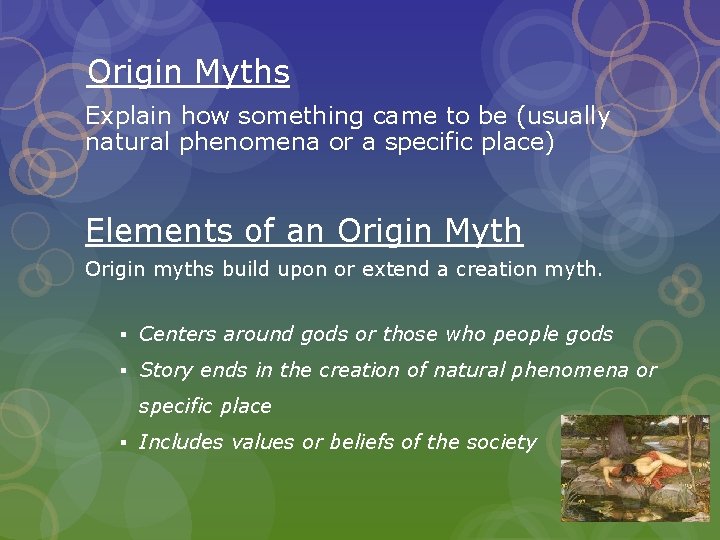
Origin Myths Explain how something came to be (usually natural phenomena or a specific place) Elements of an Origin Myth Origin myths build upon or extend a creation myth. ▪ Centers around gods or those who people gods ▪ Story ends in the creation of natural phenomena or specific place ▪ Includes values or beliefs of the society
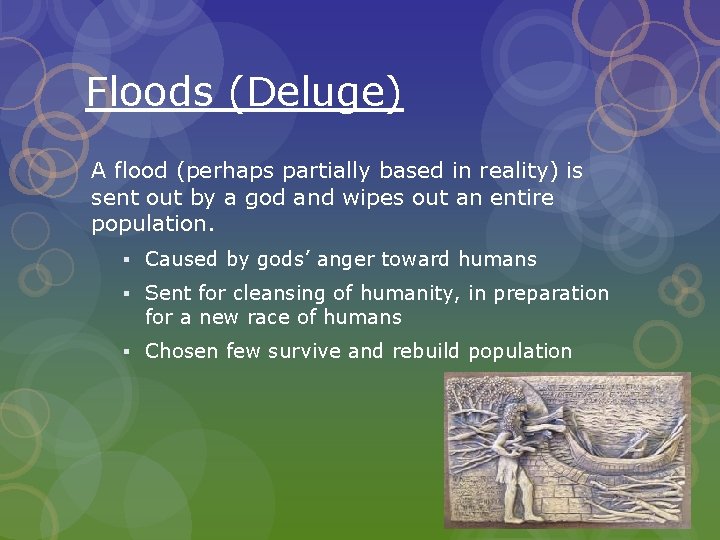
Floods (Deluge) A flood (perhaps partially based in reality) is sent out by a god and wipes out an entire population. ▪ Caused by gods’ anger toward humans ▪ Sent for cleansing of humanity, in preparation for a new race of humans ▪ Chosen few survive and rebuild population
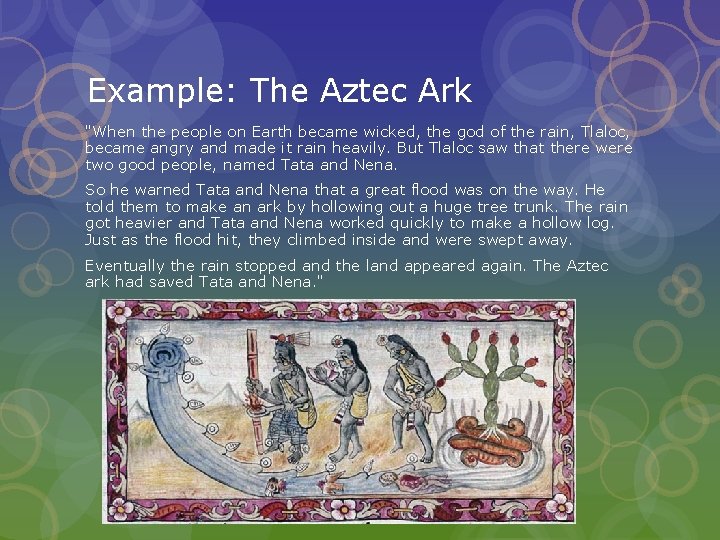
Example: The Aztec Ark "When the people on Earth became wicked, the god of the rain, Tlaloc, became angry and made it rain heavily. But Tlaloc saw that there were two good people, named Tata and Nena. So he warned Tata and Nena that a great flood was on the way. He told them to make an ark by hollowing out a huge tree trunk. The rain got heavier and Tata and Nena worked quickly to make a hollow log. Just as the flood hit, they climbed inside and were swept away. Eventually the rain stopped and the land appeared again. The Aztec ark had saved Tata and Nena. "
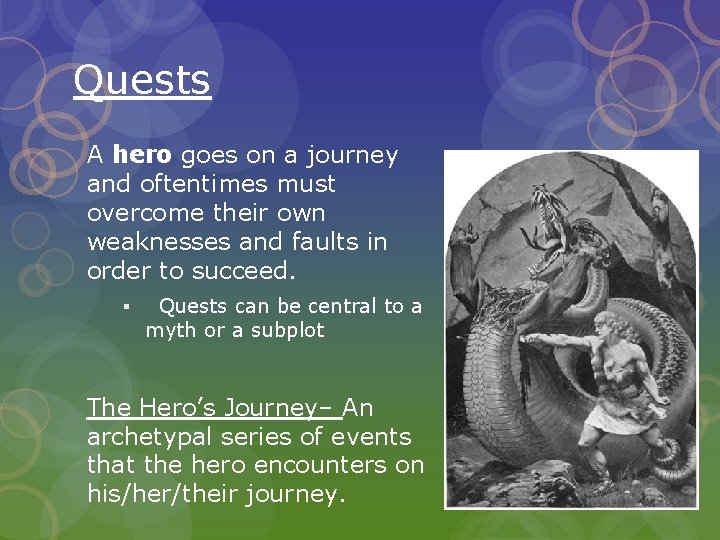
Quests A hero goes on a journey and oftentimes must overcome their own weaknesses and faults in order to succeed. ▪ Quests can be central to a myth or a subplot The Hero’s Journey– An archetypal series of events that the hero encounters on his/her/their journey.