
Situation Monitoring Situation Monitoring Objectives n Discuss how
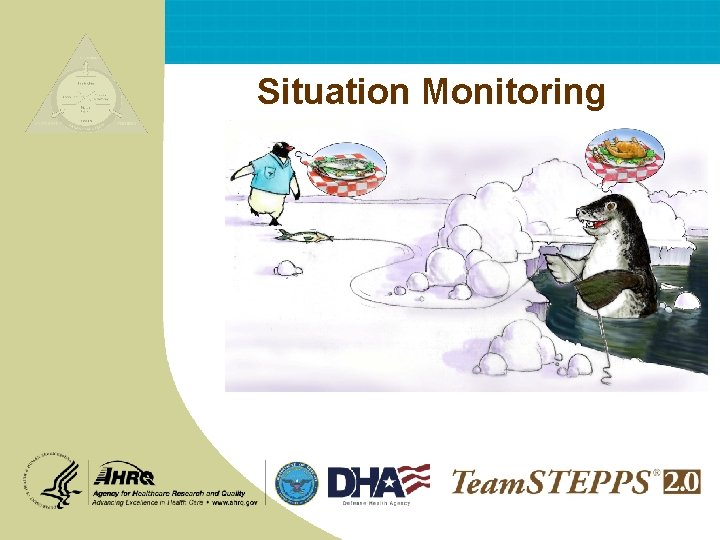
Situation Monitoring

Situation Monitoring Objectives n Discuss how situation monitoring affects team processes and outcomes n List components of the STEP mnemonic n Explain situation awareness and identify undermining conditions n Define a shared mental model and how it is cultivated within a team Mod 5 2. 0 Page 2 TEAMSTEPPS 05. 2 2
Situation Monitoring Endsley and Jones (2012) discussed Situation Awareness as “being aware of what is happening around you and understanding what information means to you now and in the future. ” The key concepts: n State of the environment. n Decision-making ability. n Performance of actions. n Feedback that helps to identify important issues. Mod 5 2. 0 Page 3 TEAMSTEPPS 05. 2 3
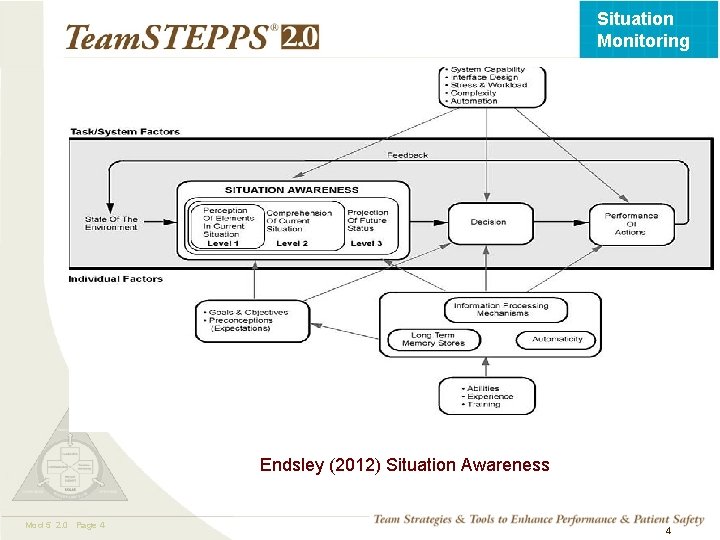
Situation Monitoring Endsley (2012) Situation Awareness Mod 5 2. 0 Page 4 TEAMSTEPPS 05. 2 4
Situation Monitoring Columbia Space Shuttle Disaster Nova documentary Video #1 Mod 5 2. 0 Page 5 TEAMSTEPPS 05. 2
Situation Monitoring Columbia Space Shuttle Disaster Nova documentary Video #2 Mod 5 2. 0 Page 6 TEAMSTEPPS 05. 2
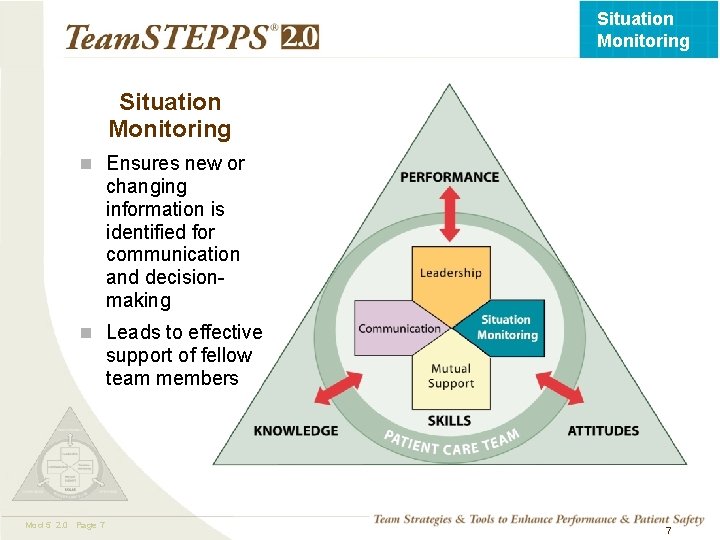
Situation Monitoring n Ensures new or changing information is identified for communication and decisionmaking n Leads to effective support of fellow team members Mod 5 2. 0 Page 7 TEAMSTEPPS 05. 2 7
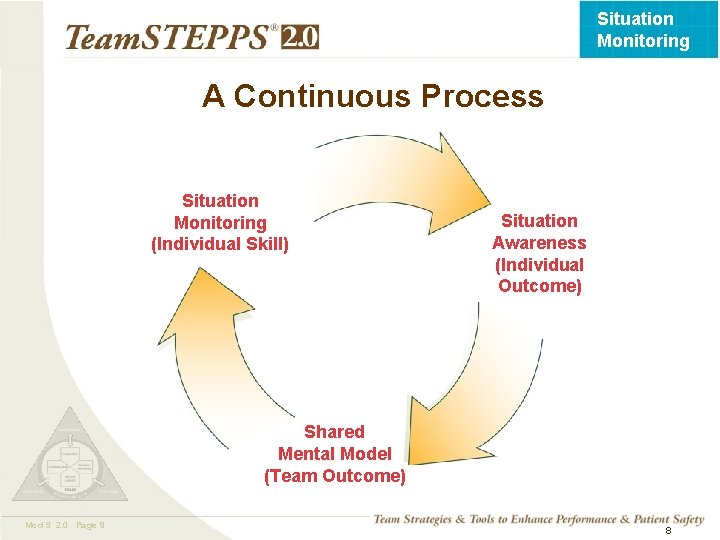
Situation Monitoring A Continuous Process Situation Monitoring (Individual Skill) Situation Awareness (Individual Outcome) Shared Mental Model (Team Outcome) Mod 5 2. 0 Page 8 TEAMSTEPPS 05. 2 8
Situation Monitoring Code Black Mod 5 2. 0 Page 9 TEAMSTEPPS 05. 2 9
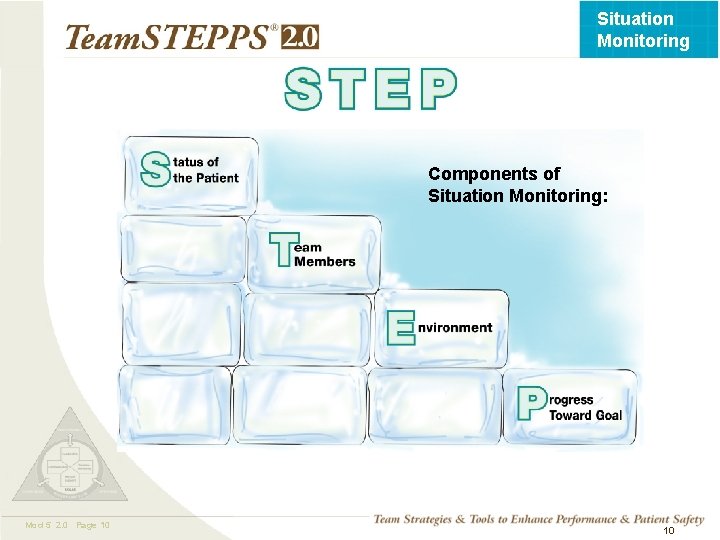
Situation Monitoring Components of Situation Monitoring: Mod 5 2. 0 Page 10 TEAMSTEPPS 05. 2 10
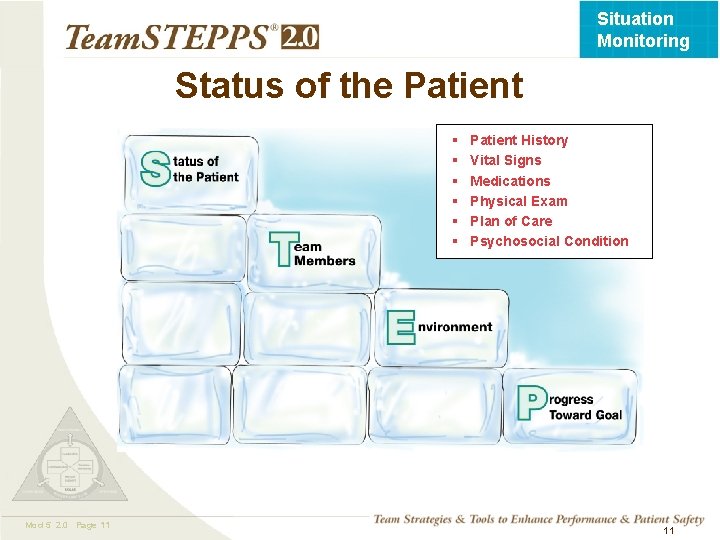
Situation Monitoring Status of the Patient § § § Mod 5 2. 0 Page 11 TEAMSTEPPS 05. 2 Patient History Vital Signs Medications Physical Exam Plan of Care Psychosocial Condition 11
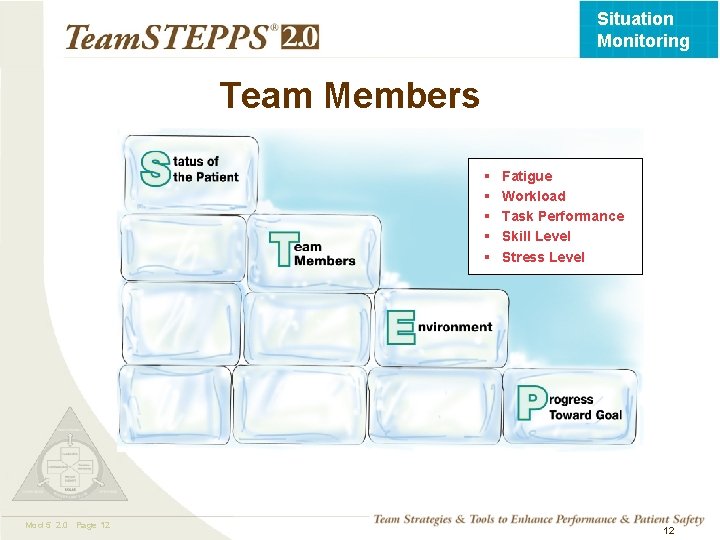
Situation Monitoring Team Members § § § Mod 5 2. 0 Page 12 TEAMSTEPPS 05. 2 Fatigue Workload Task Performance Skill Level Stress Level 12
Situation Monitoring How Did Dallas Nurse Catch Ebola? Mod 5 2. 0 Page 13 TEAMSTEPPS 05. 2 13
Situation Monitoring I’M SAFE Checklist I = Illness M = Medication S = Stress A = Alcohol and Drugs F = Fatigue E = Eating and Elimination Mod 5 2. 0 Page 14 TEAMSTEPPS 05. 2 14
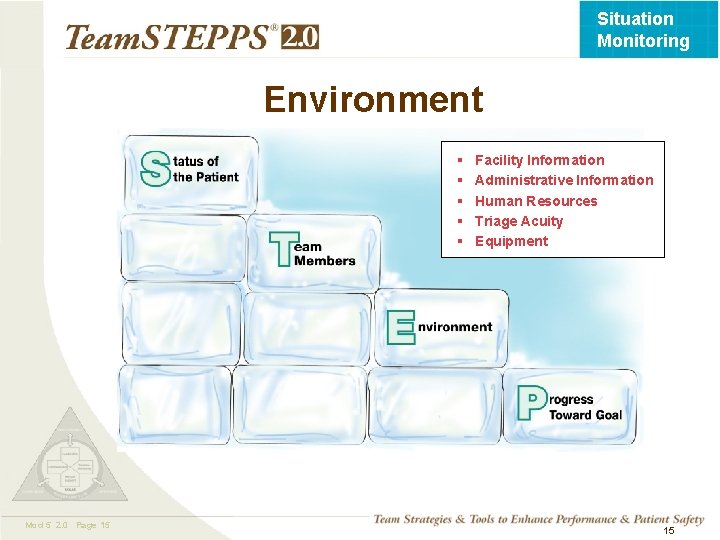
Situation Monitoring Environment § § § Mod 5 2. 0 Page 15 TEAMSTEPPS 05. 2 Facility Information Administrative Information Human Resources Triage Acuity Equipment 15
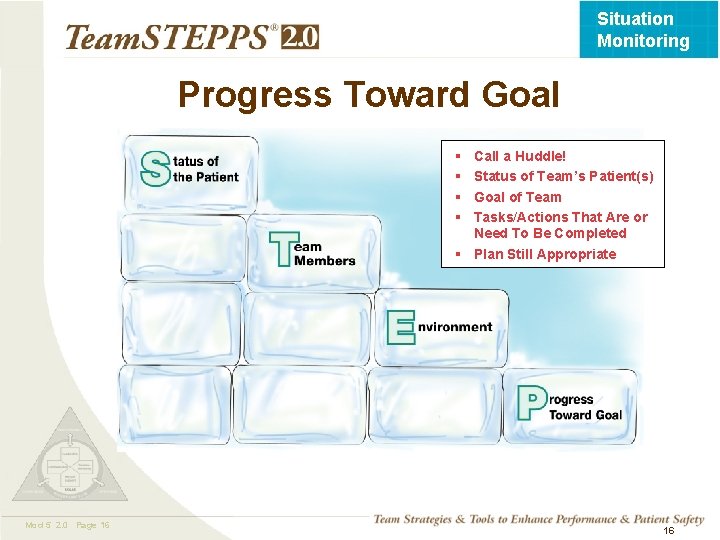
Situation Monitoring Progress Toward Goal § § Call a Huddle! Status of Team’s Patient(s) Goal of Team Tasks/Actions That Are or Need To Be Completed § Plan Still Appropriate Mod 5 2. 0 Page 16 TEAMSTEPPS 05. 2 16
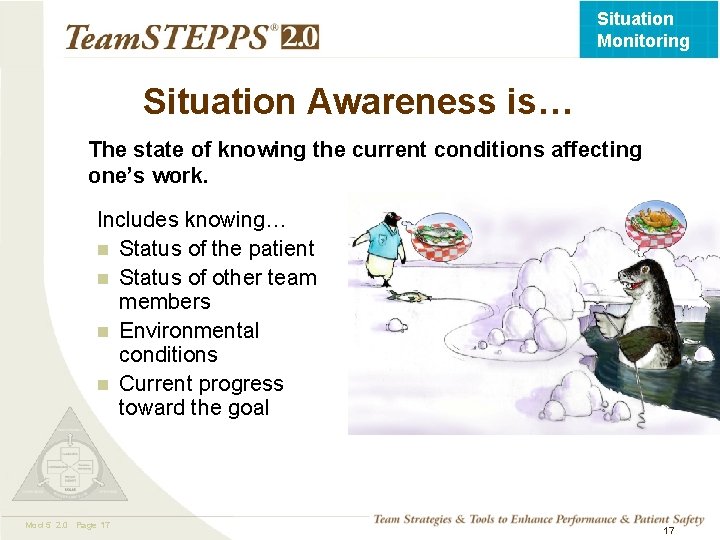
Situation Monitoring Situation Awareness is… The state of knowing the current conditions affecting one’s work. Includes knowing… n Status of the patient n Status of other team members n Environmental conditions n Current progress toward the goal Mod 5 2. 0 Page 17 TEAMSTEPPS 05. 2 17
Situation Monitoring Conditions That Undermine Situation Awareness Failure to n Share information with the team n Request information from others n Direct information to specific team members n Include patient or family in communication n Utilize resources fully (e. g. , status board, automation) n Maintain documentation n Know and understand where to focus attention n Know and understand the plan n Inform team members the plan has changed Mod 5 2. 0 Page 18 TEAMSTEPPS 05. 2 18
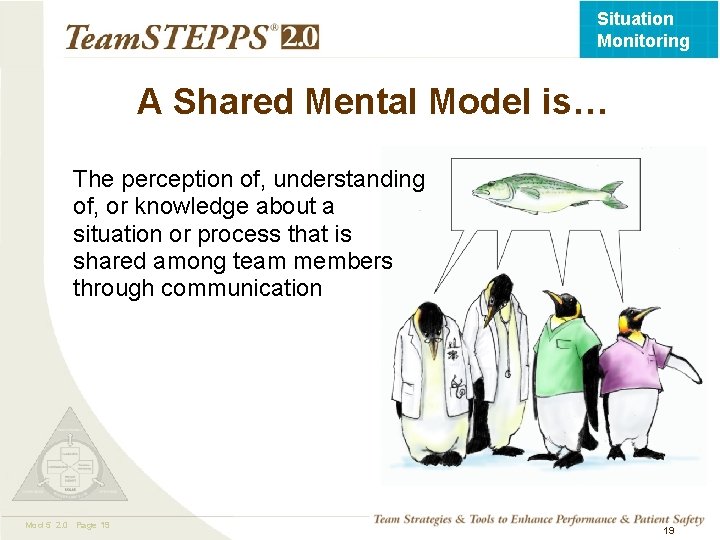
Situation Monitoring A Shared Mental Model is… The perception of, understanding of, or knowledge about a situation or process that is shared among team members through communication Mod 5 2. 0 Page 19 TEAMSTEPPS 05. 2 19
Situation Monitoring How Shared Mental Models Help Teams n Lead to mutual understanding of situation n Lead to more effective communication n Enable back-up behaviors n Help ensure understanding of each other’s roles and how they interplay n Enable better prediction and anticipation of team needs n Create commonality of effort and purpose Mod 5 2. 0 Page 20 TEAMSTEPPS 05. 2 20
Situation Monitoring When and How to Share? When: How: n Briefs n SBAR n Huddles n Call-outs n Debriefs n Check-backs n Transitions in Care Mod 5 2. 0 Page 21 TEAMSTEPPS 05. 2 21
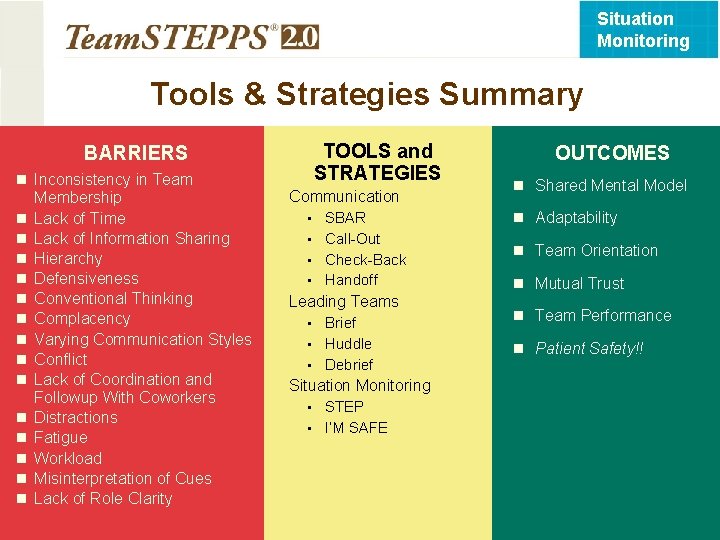
Situation Monitoring Tools & Strategies Summary TOOLS and STRATEGIES BARRIERS n Inconsistency in Team n n n n Membership Lack of Time Lack of Information Sharing Hierarchy Defensiveness Conventional Thinking Complacency Varying Communication Styles Conflict Lack of Coordination and Followup With Coworkers Distractions Fatigue Workload Misinterpretation of Cues Lack of Role Clarity Mod 5 2. 0 Page 22 Communication • • SBAR Call-Out Check-Back Handoff Leading Teams • Brief • Huddle • Debrief OUTCOMES n Shared Mental Model n Adaptability n Team Orientation n Mutual Trust n Team Performance n Patient Safety!! Situation Monitoring • STEP • I’M SAFE TEAMSTEPPS 05. 2 22
Situation Monitoring Mayo Clinic Video #1 Mod 5 2. 0 Page 23 TEAMSTEPPS 05. 2
Situation Monitoring Mayo Clinic Video #2 Mod 5 2. 0 Page 24 TEAMSTEPPS 05. 2
Situation Monitoring Mayo Clinic Video #3 Mod 5 2. 0 Page 25 TEAMSTEPPS 05. 2
- Slides: 25