
SITUATION Hypoglycaemia blood glucose level 4 mmolL A
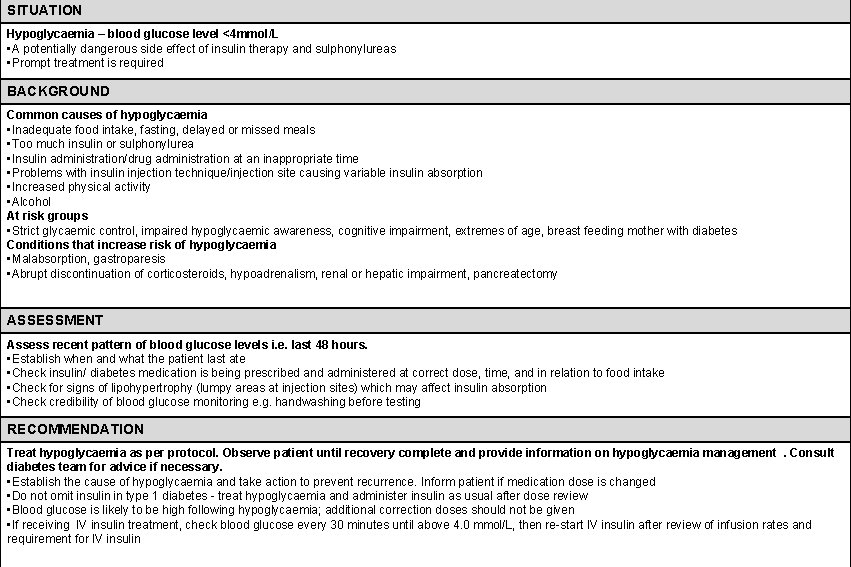
SITUATION Hypoglycaemia – blood glucose level <4 mmol/L • A potentially dangerous side effect of insulin therapy and sulphonylureas • Prompt treatment is required BACKGROUND Common causes of hypoglycaemia • Inadequate food intake, fasting, delayed or missed meals • Too much insulin or sulphonylurea • Insulin administration/drug administration at an inappropriate time • Problems with insulin injection technique/injection site causing variable insulin absorption • Increased physical activity • Alcohol At risk groups • Strict glycaemic control, impaired hypoglycaemic awareness, cognitive impairment, extremes of age, breast feeding mother with diabetes Conditions that increase risk of hypoglycaemia • Malabsorption, gastroparesis • Abrupt discontinuation of corticosteroids, hypoadrenalism, renal or hepatic impairment, pancreatectomy ASSESSMENT Assess recent pattern of blood glucose levels i. e. last 48 hours. • Establish when and what the patient last ate • Check insulin/ diabetes medication is being prescribed and administered at correct dose, time, and in relation to food intake • Check for signs of lipohypertrophy (lumpy areas at injection sites) which may affect insulin absorption • Check credibility of blood glucose monitoring e. g. handwashing before testing RECOMMENDATION Treat hypoglycaemia as per protocol. Observe patient until recovery complete and provide information on hypoglycaemia management. Consult diabetes team for advice if necessary. • Establish the cause of hypoglycaemia and take action to prevent recurrence. Inform patient if medication dose is changed • Do not omit insulin in type 1 diabetes - treat hypoglycaemia and administer insulin as usual after dose review • Blood glucose is likely to be high following hypoglycaemia; additional correction doses should not be given • If receiving IV insulin treatment, check blood glucose every 30 minutes until above 4. 0 mmol/L, then re-start IV insulin after review of infusion rates and requirement for IV insulin

Algorithm for the Treatment and Management of Hypoglycaemia in Adults with Diabetes Mellitus in Hospital Hypoglycaemia is a serious condition and should be treated as an emergency regardless of level of consciousness. Hypoglycaemia is defined as blood glucose of less than 4 mmol/L (if not less than 4 mmol/L but symptomatic give a small carbohydrate snack for symptom relief). For further information the NHS Lothian Intranet > Healthcare > Diabetes > Metabolic Unit Handbook Severe Moderate Mild Patient conscious, orientated and able to swallow Patient conscious and able to swallow, but confused, disorientated or aggressive Give 15 -20 g of quick acting carbohydrate, such as Glucose drink - Glucojuice 90120 mls or 150 -200 mls pure fruit juice** or 4 -5 Glucotabs® If not capable and cooperative but can swallow give 1. 5 -2 tubes of Gluco. Gel® (squeezed into mouth between teeth and gums). If ineffective, use 1 mg Glucagon IM*. Patient unconscious/fitting or very aggressive or nil by mouth (NBM) Check ABC, stop IV insulin, contact doctor immediately Give IV glucose over 10 - 15 minutes as 75 ml glucose 20% Or 150 ml glucose 10% Or 1 mg Glucagon IM * (see below) Test blood glucose level after 10 - 15 minutes and if still less than 4 mmol/L repeat up to 3 times. If still hypoglycaemic, call doctor and consider IV glucose 10% at 100 ml/hr** or 1 mg Glucagon IM*. Recheck glucose after 10 - 15 minutes and if still less than 4 mmol/L, repeat treatment. Blood glucose level should now be above 4 mmol/L. Give 20 g of long acting carbohydrate e. g. 2 biscuits / slice of bread / 200 -300 ml milk/ next meal containing carbohydrate (give 40 g if IM Glucagon has been used e. g. 4 biscuits / 2 slices of bread / 400 -600 ml milk / next meal). Do not repeat glucagon if it is ineffective. Glucagon may take up to 15 minutes to work and may be ineffective in undernourished patients, in severe liver disease and in repeated hypoglycaemia. Do not use in oral hypoglycaemic agent induced hypoglycaemia. For patients with enteral feeding tube - give 50 -70 ml Glucojuice or Fortijuice®. Once glucose > 4. 0 mmol/L restart feed / give bolus feed or start IV glucose 10% at 100 ml/hr**. If NBM, once glucose >4. 0 mmol/L give glucose 10% infusion at 100 ml/hr** until no longer NBM or reviewed by doctor. Do not omit subsequent doses of insulin. Review insulin/oral hypoglycaemic agent doses. Contact the diabetes team if further education on hypoglycaemia is required.
- Slides: 2