
Site Safety Working in and around construction sites


- Slides: 24
Site Safety
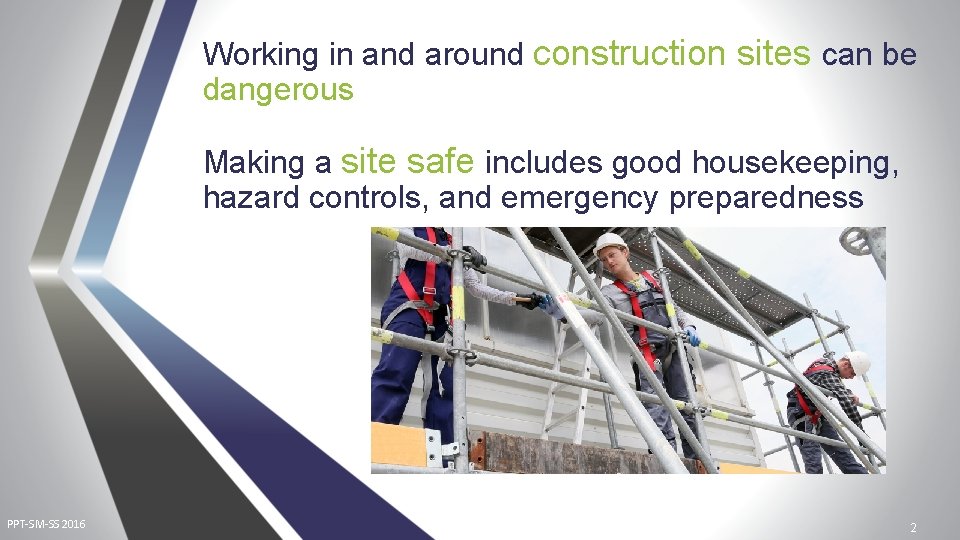
Working in and around construction sites can be dangerous Making a site safe includes good housekeeping, hazard controls, and emergency preparedness PPT-SM-SS 2016 2
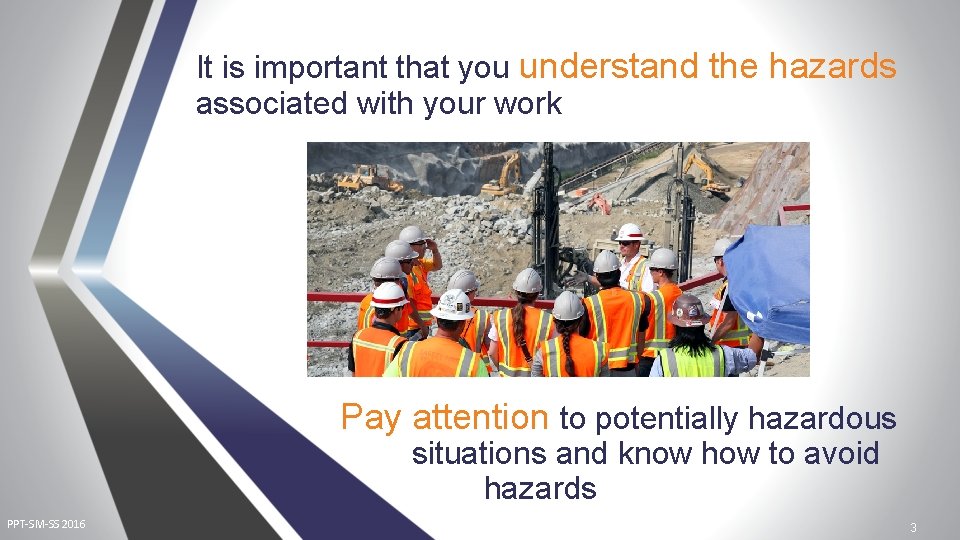
It is important that you understand the hazards associated with your work Pay attention to potentially hazardous situations and know how to avoid hazards PPT-SM-SS 2016 3
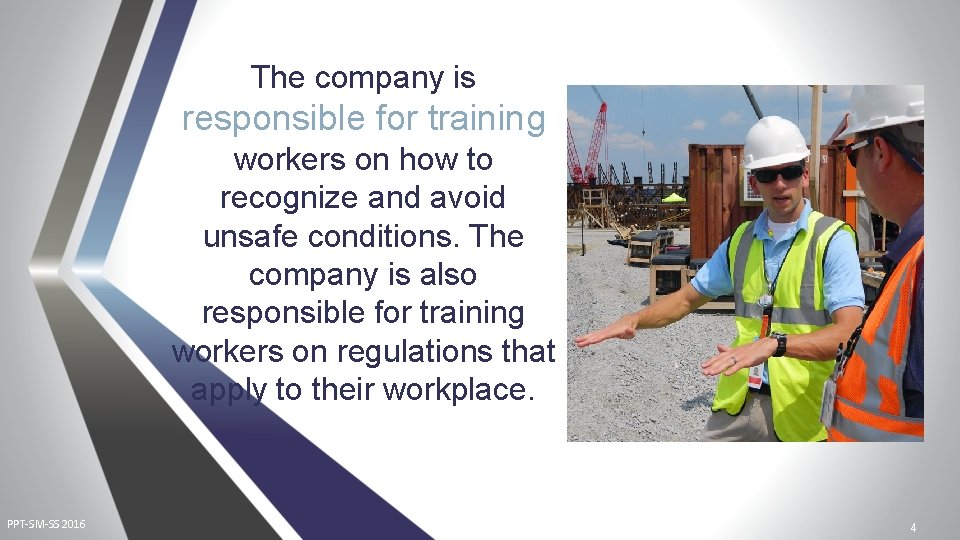
The company is responsible for training workers on how to recognize and avoid unsafe conditions. The company is also responsible for training workers on regulations that apply to their workplace. PPT-SM-SS 2016 4
Good housekeeping helps prevent fires and protects workers from slips, trips, and falls It also allows workers to perform their jobs safely and efficiently. You should always do your part and participate in housekeeping. PPT-SM-SS 2016 5
Good housekeeping includes • Disinfecting areas that come into contact with potentially infectious • Cleaning up broken glass materials • Picking up loose objects • Keeping walkways and floors free of cords, debris, • Emptying, boxes, or any other objects decontaminating, and that could create trip cleaning containers hazards • Cleaning equipment and • Keeping the work area neat work surfaces • Cleaning up spills immediately PPT-SM-SS 2016 6
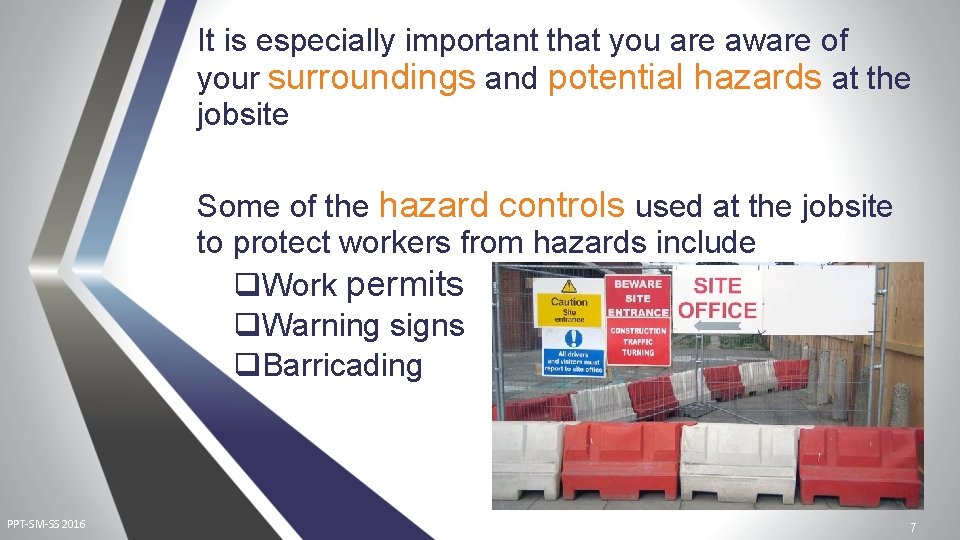
It is especially important that you are aware of your surroundings and potential hazards at the jobsite Some of the hazard controls used at the jobsite to protect workers from hazards include q. Work permits q. Warning signs q. Barricading PPT-SM-SS 2016 7
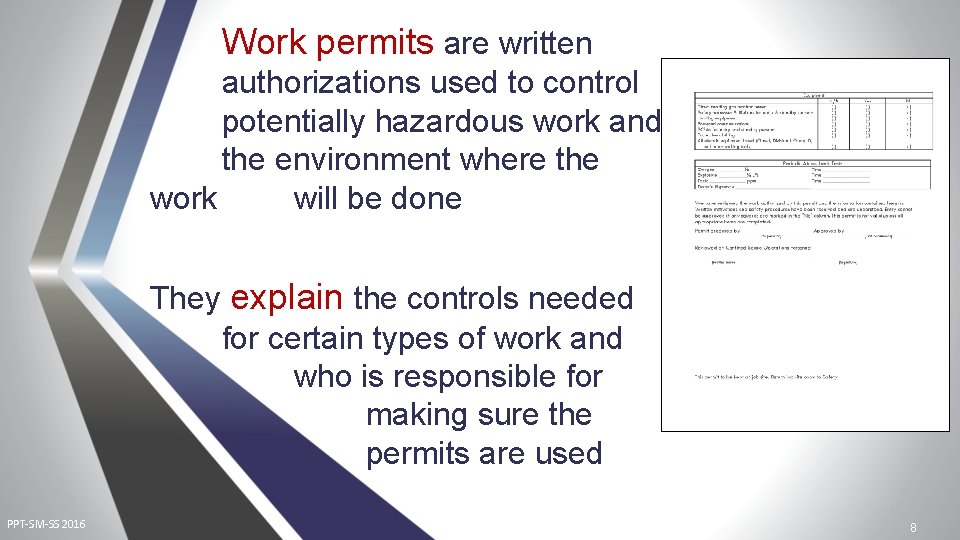
Work permits are written authorizations used to control potentially hazardous work and the environment where the work will be done They explain the controls needed for certain types of work and who is responsible for making sure the permits are used PPT-SM-SS 2016 8
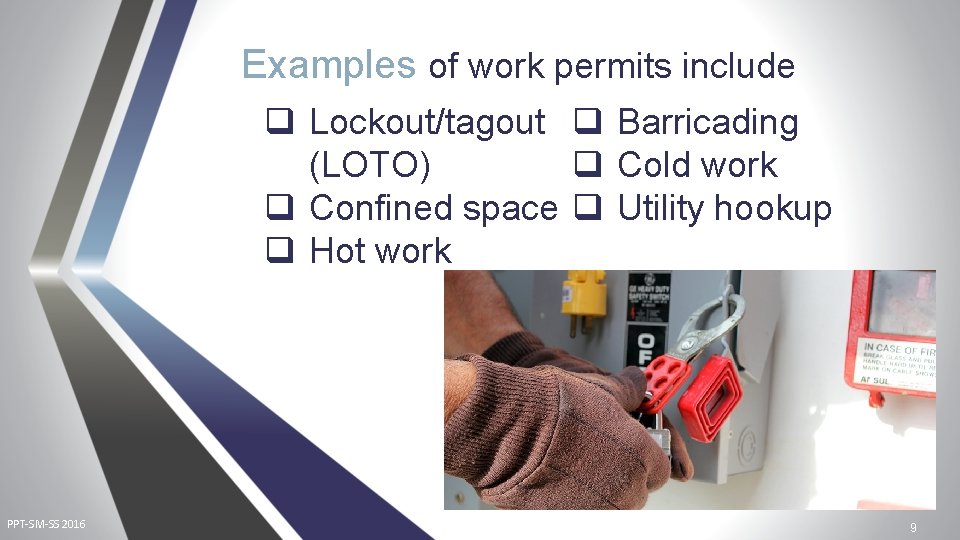
Examples of work permits include q Lockout/tagout q Barricading q Cold work (LOTO) q Confined space q Utility hookup q Hot work PPT-SM-SS 2016 9
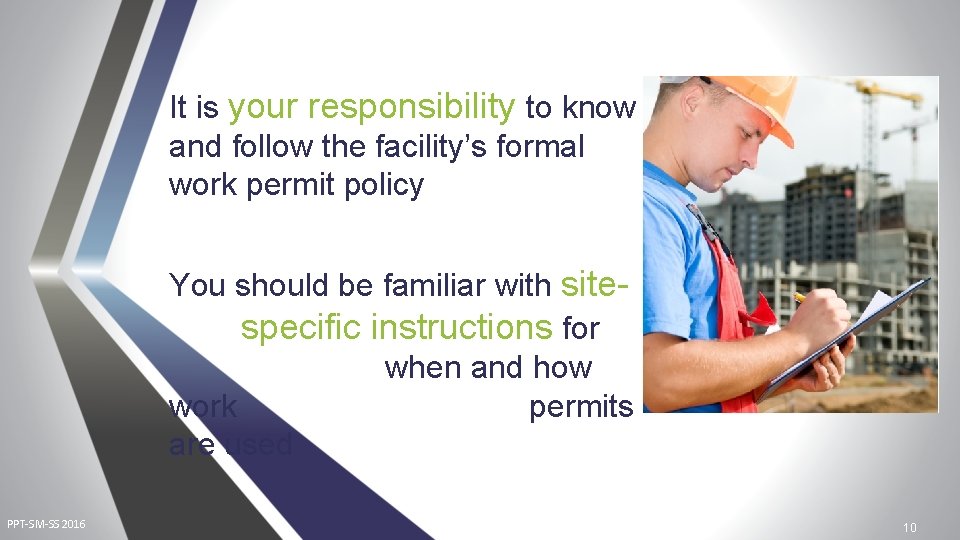
It is your responsibility to know and follow the facility’s formal work permit policy You should be familiar with sitespecific instructions for when and how work permits are used PPT-SM-SS 2016 10
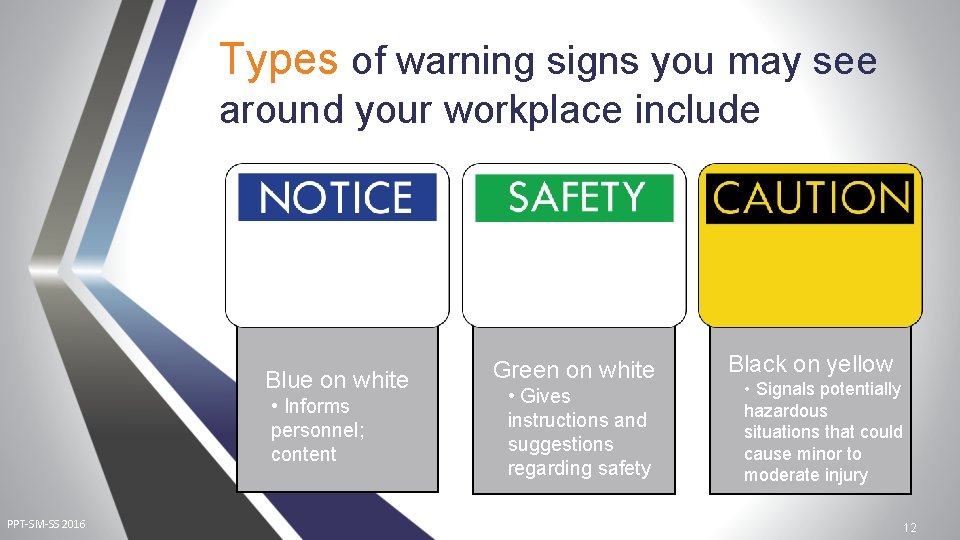
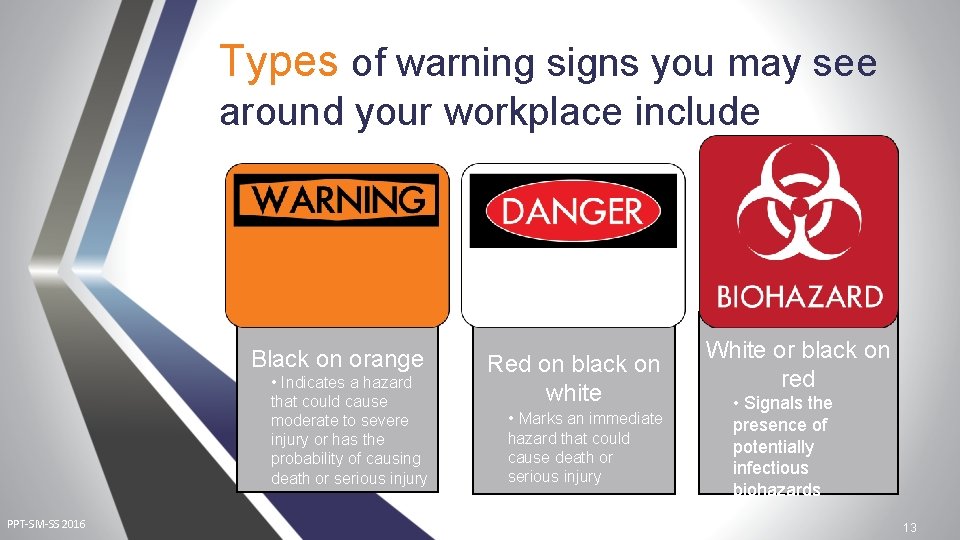
Another way to control hazards at work is by paying attention to warning signs, tags, and tape Certain colors are associated with specific hazard messages. Not only is text important on a warning sign or tag, but color is used to send a message quickly. PPT-SM-SS 2016 11
Types of warning signs you may see around your workplace include Blue on white • Informs personnel; content PPT-SM-SS 2016 Green on white • Gives instructions and suggestions regarding safety Black on yellow • Signals potentially hazardous situations that could cause minor to moderate injury 12
Types of warning signs you may see around your workplace include Black on orange • Indicates a hazard that could cause moderate to severe injury or has the probability of causing death or serious injury PPT-SM-SS 2016 Red on black on white • Marks an immediate hazard that could cause death or serious injury White or black on red • Signals the presence of potentially infectious biohazards 13
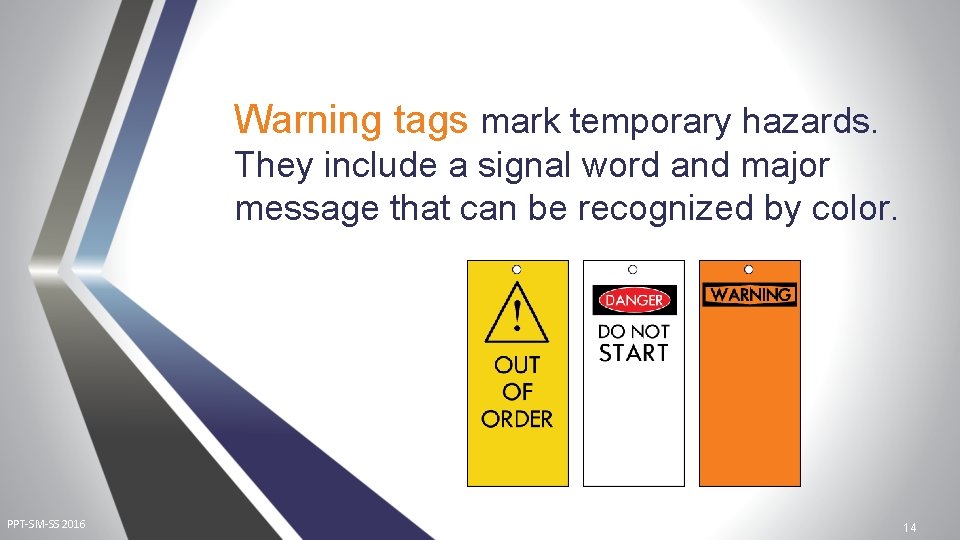
Warning tags mark temporary hazards. They include a signal word and major message that can be recognized by color. PPT-SM-SS 2016 14
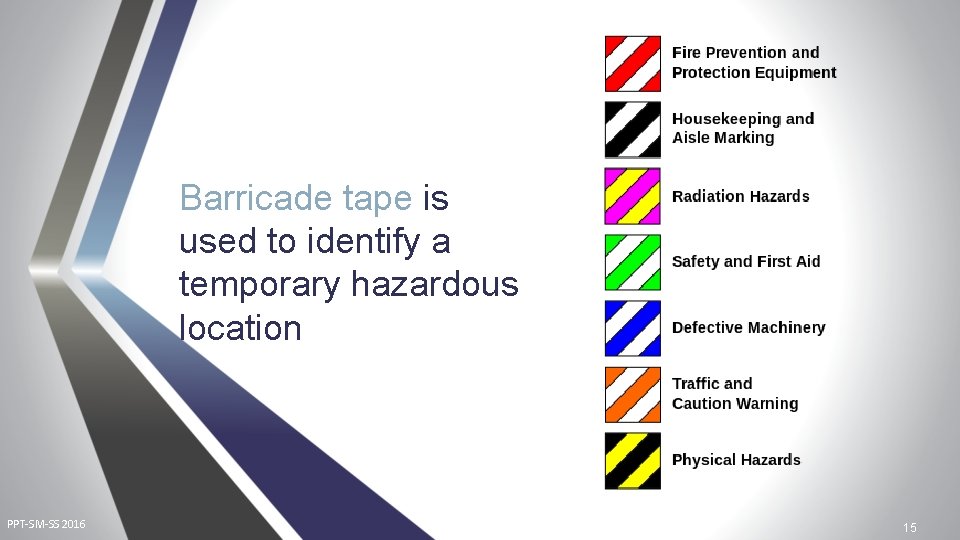
Barricade tape is used to identify a temporary hazardous location PPT-SM-SS 2016 15
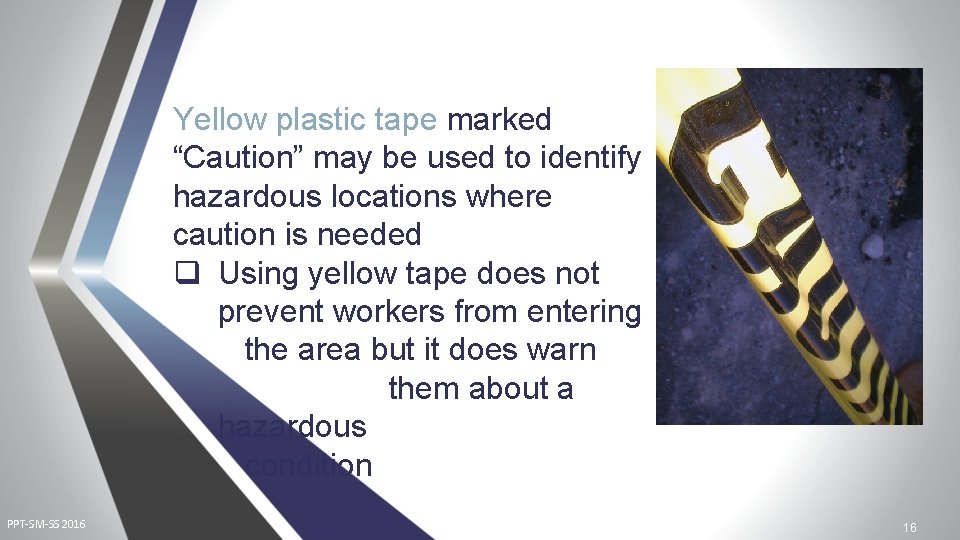
Yellow plastic tape marked “Caution” may be used to identify hazardous locations where caution is needed q Using yellow tape does not prevent workers from entering the area but it does warn them about a hazardous condition PPT-SM-SS 2016 16
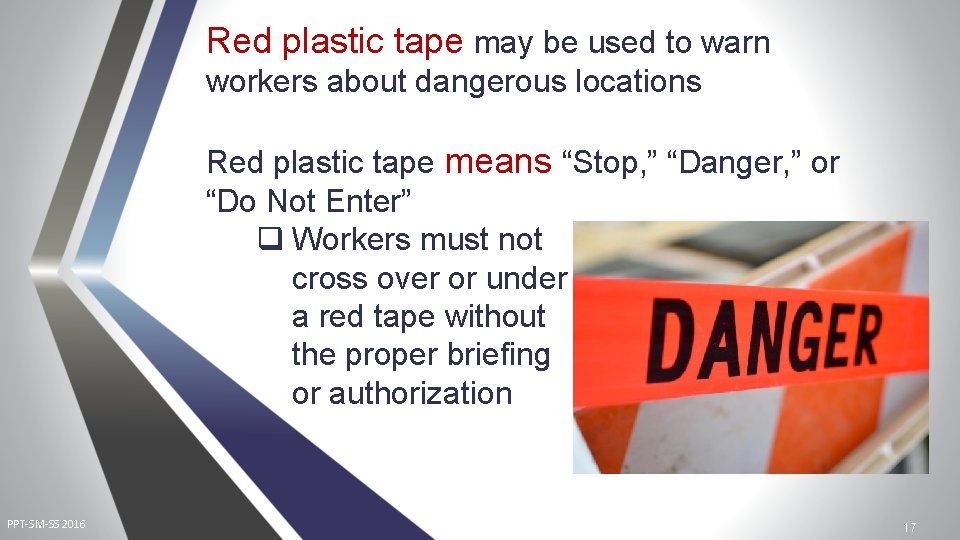
Red plastic tape may be used to warn workers about dangerous locations Red plastic tape means “Stop, ” “Danger, ” or “Do Not Enter” q Workers must not cross over or under a red tape without the proper briefing or authorization PPT-SM-SS 2016 17
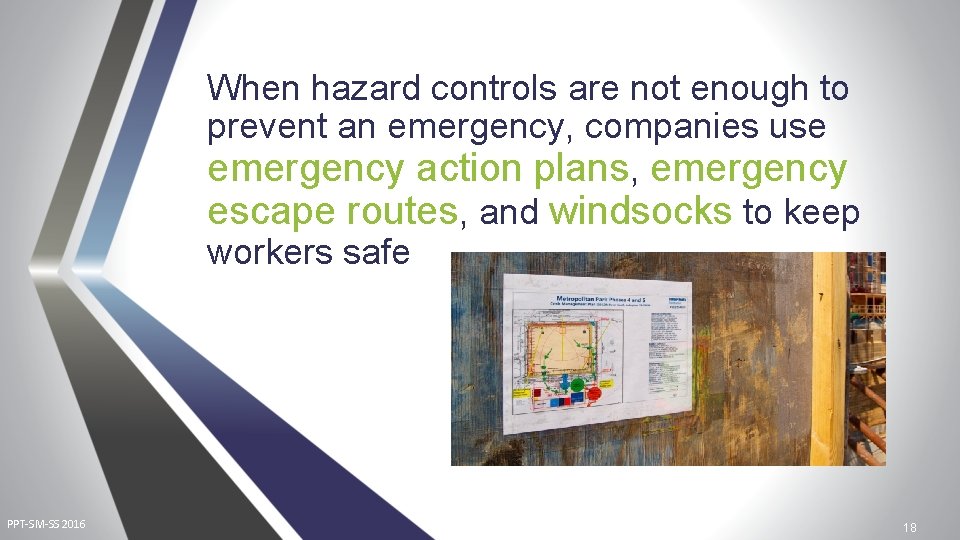
When hazard controls are not enough to prevent an emergency, companies use emergency action plans, emergency escape routes, and windsocks to keep workers safe PPT-SM-SS 2016 18
Emergency action plans identify different emergencies that could happen at your workplace and the correct response actions for each of the potential emergencies These plans must be in writing, kept at the workplace, and be available for workers to review PPT-SM-SS 2016 19
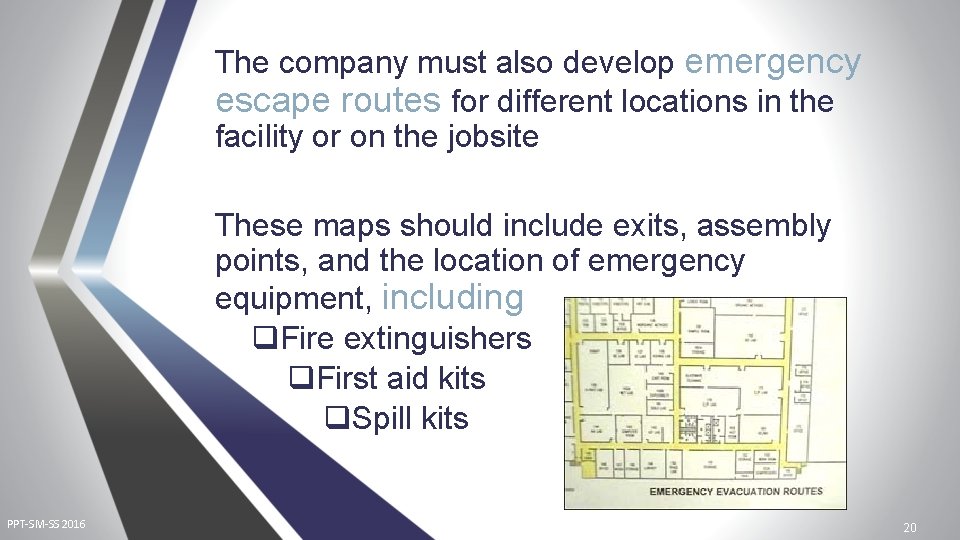
The company must also develop emergency escape routes for different locations in the facility or on the jobsite These maps should include exits, assembly points, and the location of emergency equipment, including q. Fire extinguishers q. First aid kits q. Spill kits PPT-SM-SS 2016 20
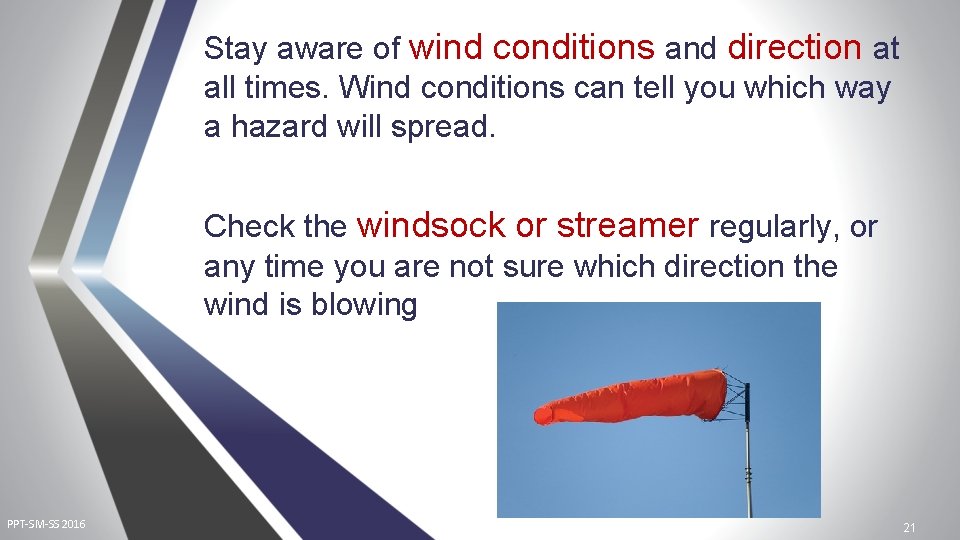
Stay aware of wind conditions and direction at all times. Wind conditions can tell you which way a hazard will spread. Check the windsock or streamer regularly, or any time you are not sure which direction the wind is blowing PPT-SM-SS 2016 21
Have an escape route and know where the exits are in case you have to get out immediately Always participate in the company’s emergency drills so that you will know exactly what to do if there is an emergency PPT-SM-SS 2016 22
There are many hazards associated with construction work. Be aware of your surroundings at all times, and practice good housekeeping. Pay attention to warning signs and barricade tape. Prepare for what to do in an emergency and be able to act immediately. PPT-SM-SS 2016 23
Copyright © 2016 by PEC/Premier Safety Operations, LLC