
Site Design Process What are you doing Goals


- Slides: 28
Site Design Process
What are you doing? � Goals & Objectives ◦ Goal is to set a general framework for the project �develop the expected result or outcome of the project �(e. g. ) The trail design will provide recreational and transportation opportunities that support a sustainable community. ◦ Objectives are specific statements that contribute to the goal �describe tasks or results to be achieved �(e. g. ) To provide adequate and accessible connections between the trail and surrounding land uses.
Site design components 1. 2. 3. Inventory - to record and understand the big picture (context) and details of the site and the user(s) Analysis - to understand user - site relationships Synthesis - to articulate relationships into a functional design (arrangement of parts).
1. Inventory � Understanding the Place ◦ ◦ ◦ ◦ � Regional Context Site Location and Access Surrounding Land Uses History of Community & Site Existing Design Elements Walking Distances Street Character Understanding the Legal Framework ◦ Zoning and Subdivision Regulations ◦ Design Standards (e. g. , ADA requirements)
Inventory � Understanding the user(s) �Who will they be? demographic characteristics �What will they want to experience? interviews, stakeholder meetings, trends analysis �How will they use the site? activities �Where are they located? �When are they likely to use the site?
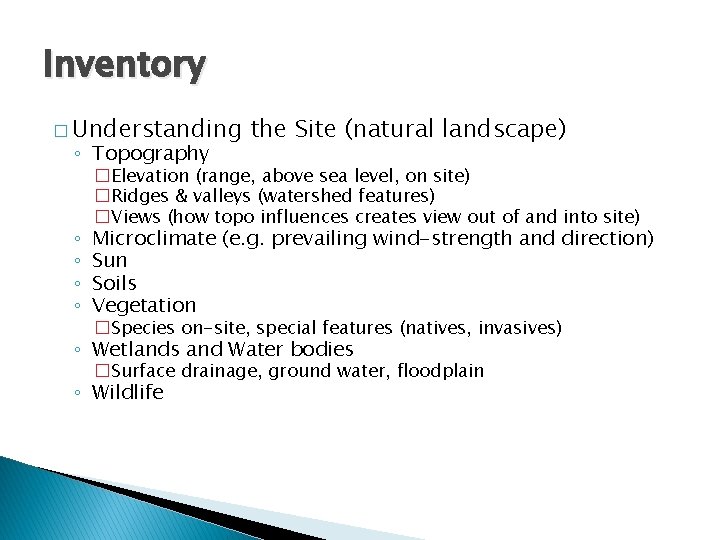
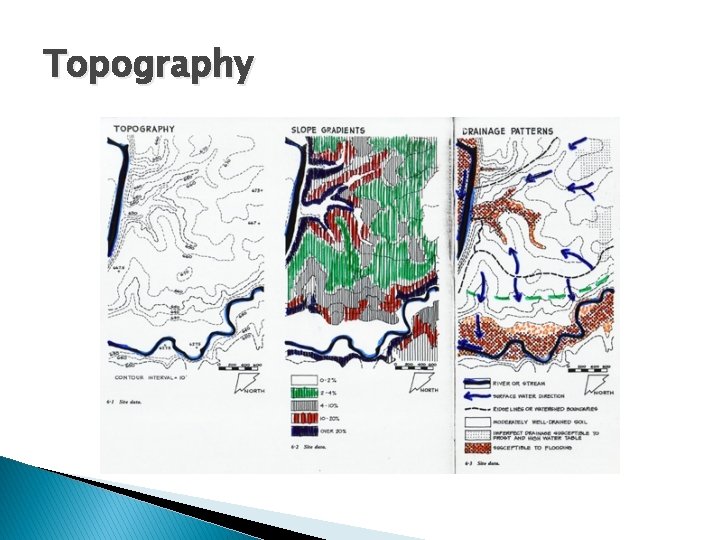
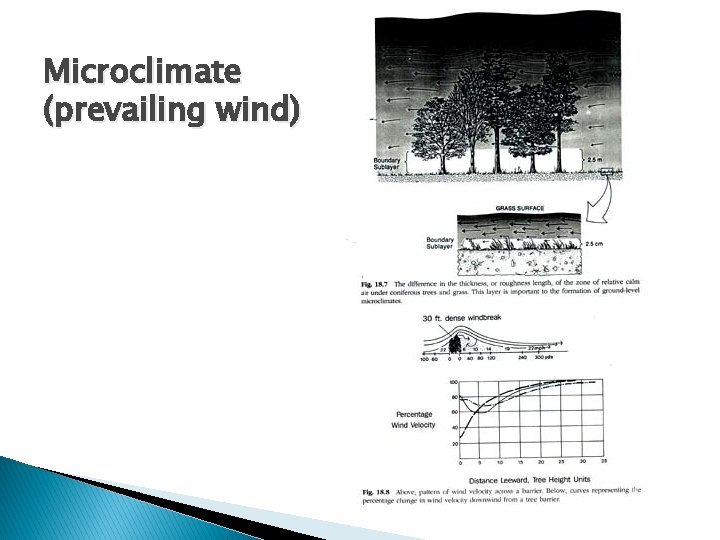
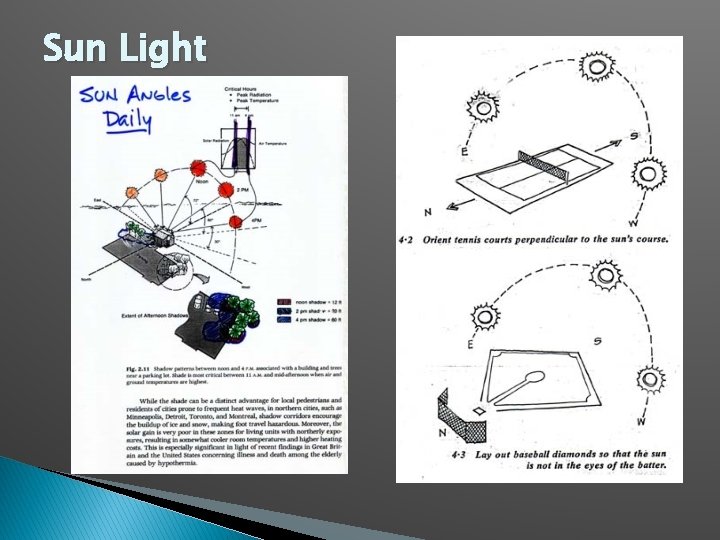
Inventory � Understanding ◦ Topography ◦ ◦ the Site (natural landscape) �Elevation (range, above sea level, on site) �Ridges & valleys (watershed features) �Views (how topo influences creates view out of and into site) Microclimate (e. g. prevailing wind-strength and direction) Sun Soils Vegetation �Species on-site, special features (natives, invasives) ◦ Wetlands and Water bodies �Surface drainage, ground water, floodplain ◦ Wildlife
Topography
Microclimate (prevailing wind)
Sun Light
Inventory (continued) � Understanding environment) the Site (human-made built ◦ Existing on-site structures ◦ Transportation patterns �Existing auto traffic, access points, existing trails & sidewalks ◦ Potential historical or cultural site ◦ Surrounding land uses (e. g. attractive or annoying) ◦ Utilities �Sewer and water, electricity, telephone ◦ Public service/places �Schools �Parks or other public open spaces �Emergency service �Shopping areas & restaurants
2. Analysis � ◦ ◦ ◦ Begin developing concepts Make bubble diagrams of activity relationships Making plan view sketches of the site with “affordances” Exploring ideas at various scales: 1"=100‘ & 1"=400'
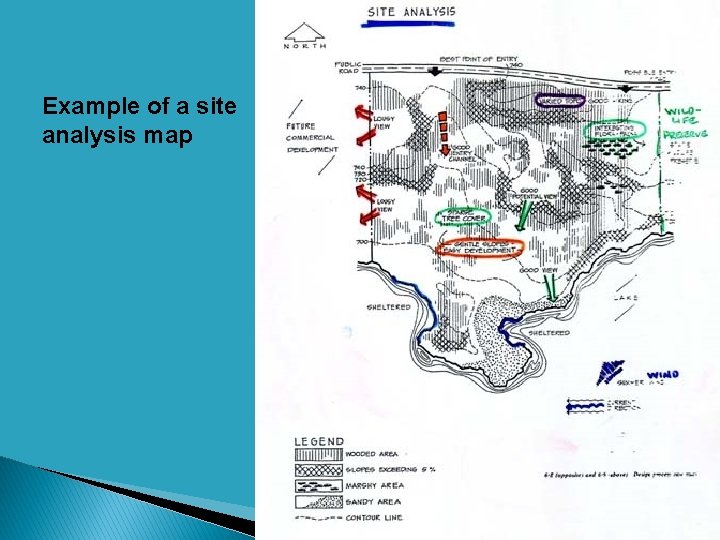
Example of a site analysis map
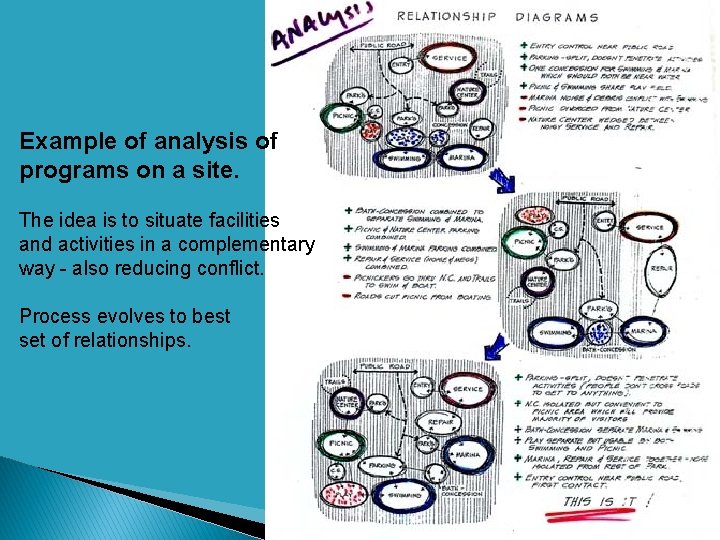
Example of analysis of programs on a site. The idea is to situate facilities and activities in a complementary way - also reducing conflict. Process evolves to best set of relationships.
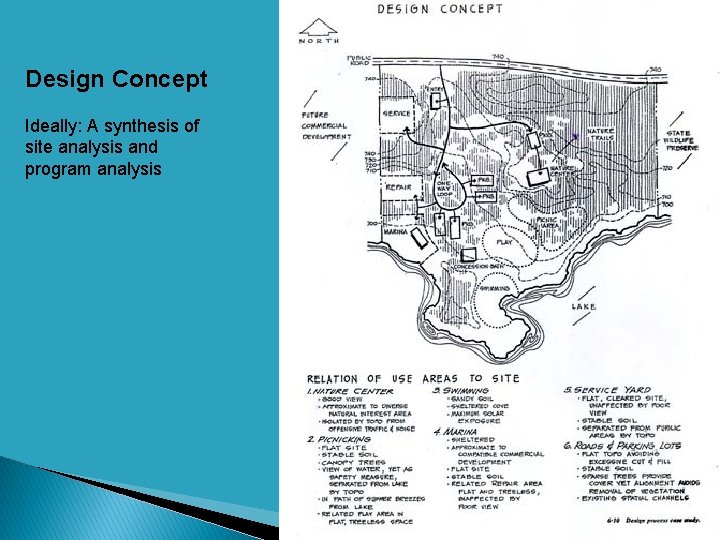
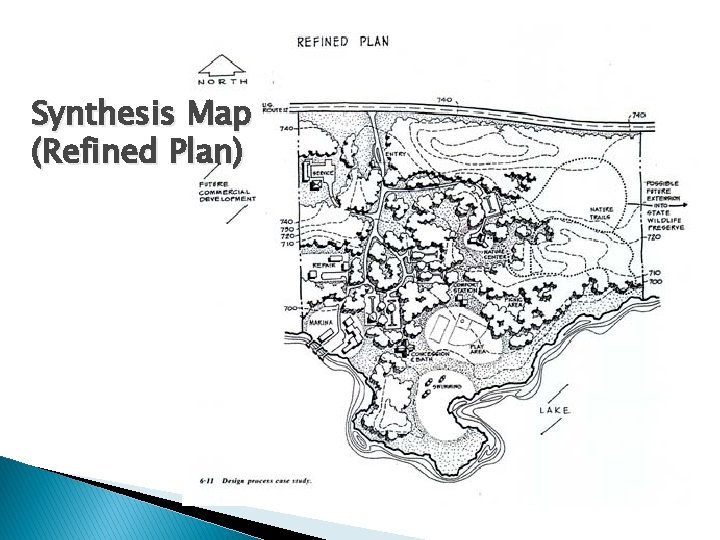
3. Synthesis � Design principles should complement goals & objectives for example: ◦ ◦ ◦ Consider sense of place – existing or creating Ecological responsibility The user experience Community access, opportunity Maintenance
Design Concept Ideally: A synthesis of site analysis and program analysis
Synthesis Map (Refined Plan)
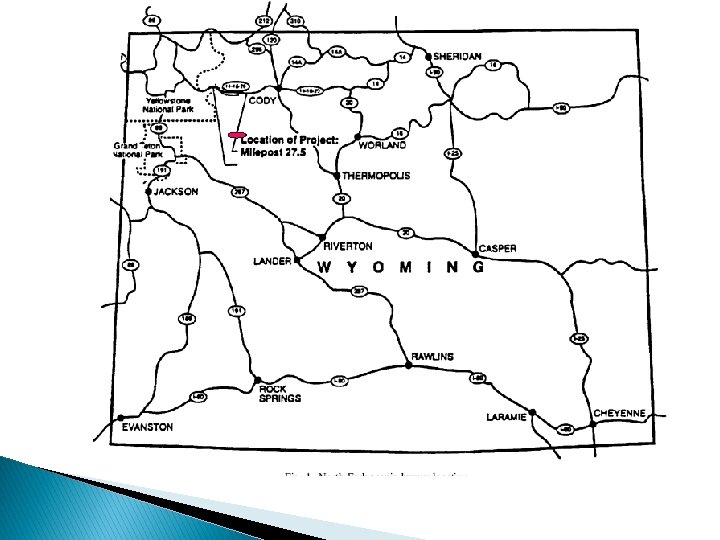
Example of a Site Design Process Three Mile Campground Yellowstone Wyoming
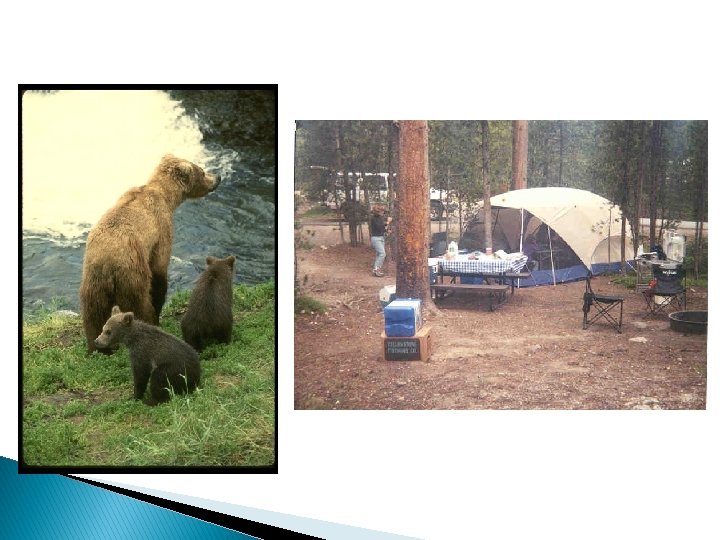
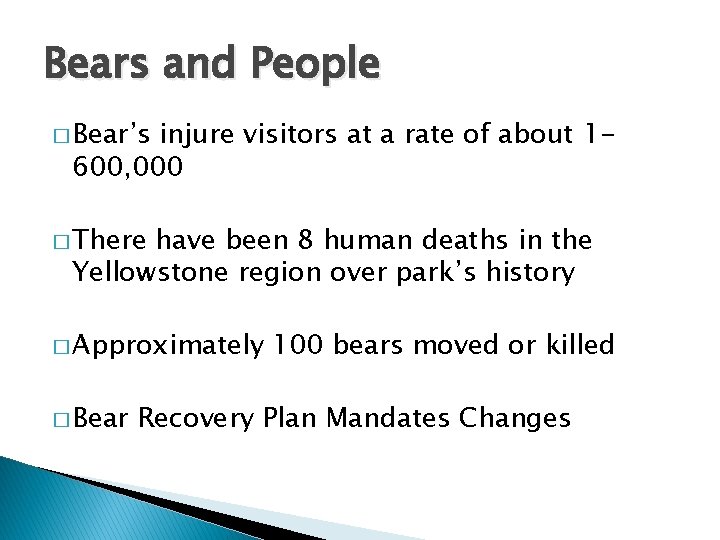
Bears and People � Bear’s injure visitors at a rate of about 1600, 000 � There have been 8 human deaths in the Yellowstone region over park’s history � Approximately � Bear 100 bears moved or killed Recovery Plan Mandates Changes
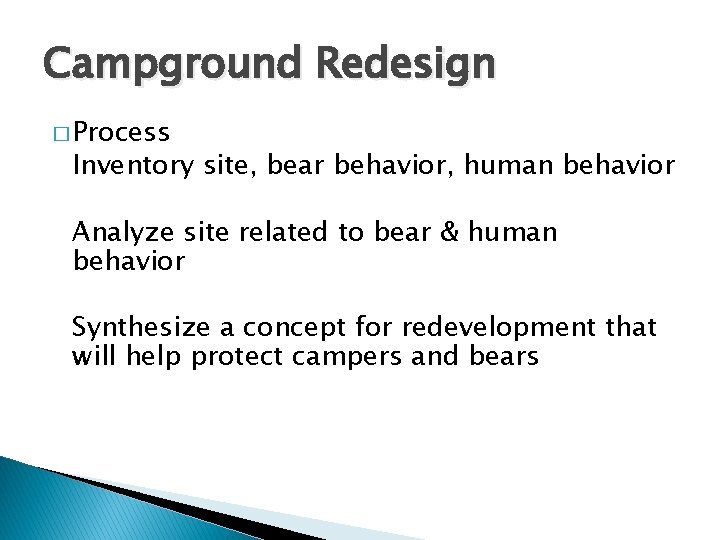
Campground Redesign � Process Inventory site, bear behavior, human behavior Analyze site related to bear & human behavior Synthesize a concept for redevelopment that will help protect campers and bears
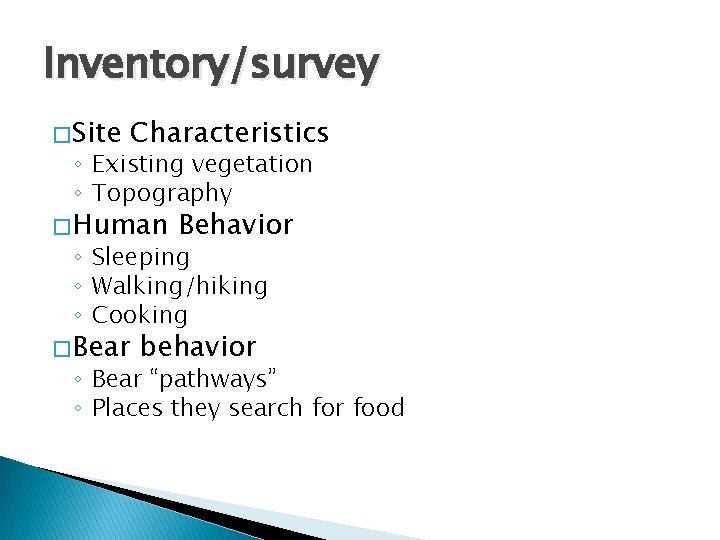
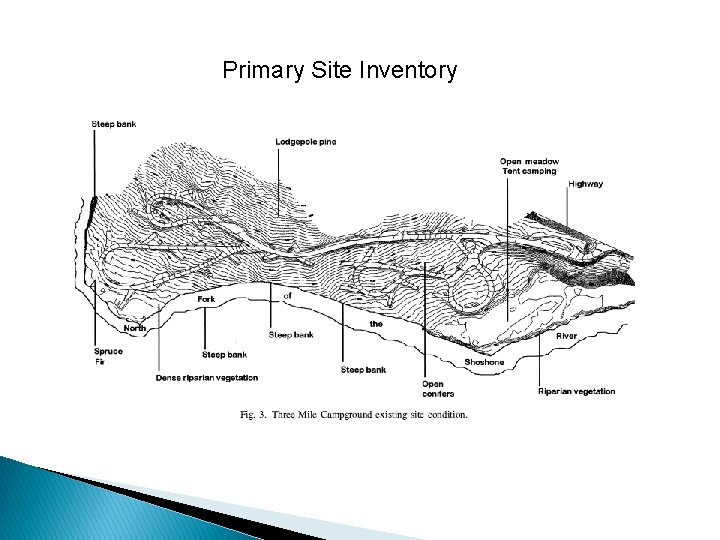
Inventory/survey � Site Characteristics ◦ Existing vegetation ◦ Topography � Human Behavior ◦ Sleeping ◦ Walking/hiking ◦ Cooking � Bear behavior ◦ Bear “pathways” ◦ Places they search for food
Primary Site Inventory
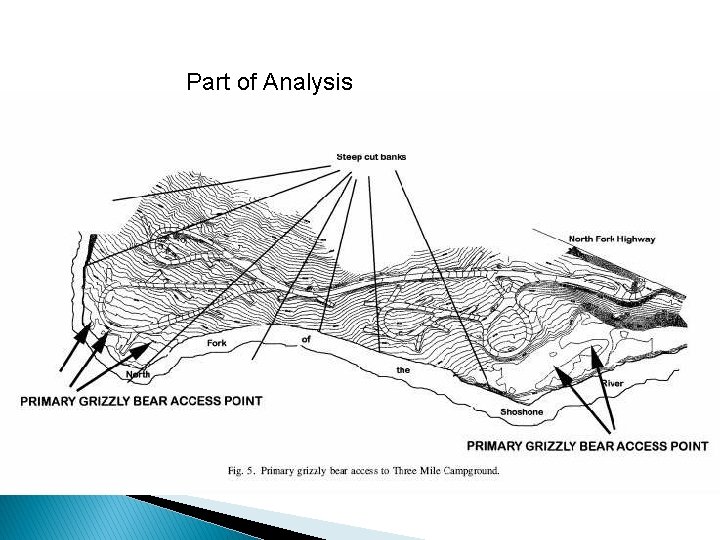
Part of Analysis
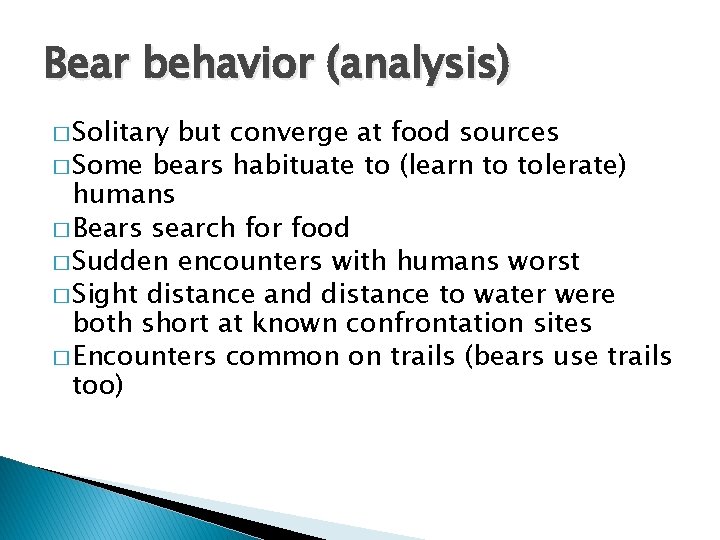
Bear behavior (analysis) � Solitary but converge at food sources � Some bears habituate to (learn to tolerate) humans � Bears search for food � Sudden encounters with humans worst � Sight distance and distance to water were both short at known confrontation sites � Encounters common on trails (bears use trails too)
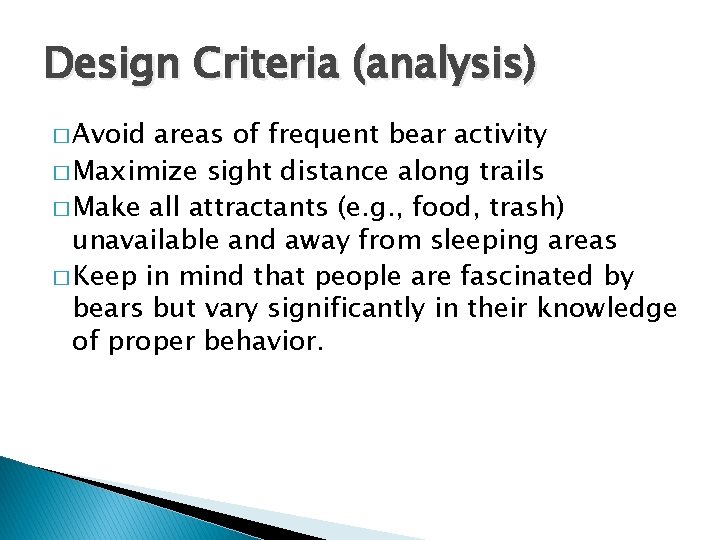
Design Criteria (analysis) � Avoid areas of frequent bear activity � Maximize sight distance along trails � Make all attractants (e. g. , food, trash) unavailable and away from sleeping areas � Keep in mind that people are fascinated by bears but vary significantly in their knowledge of proper behavior.
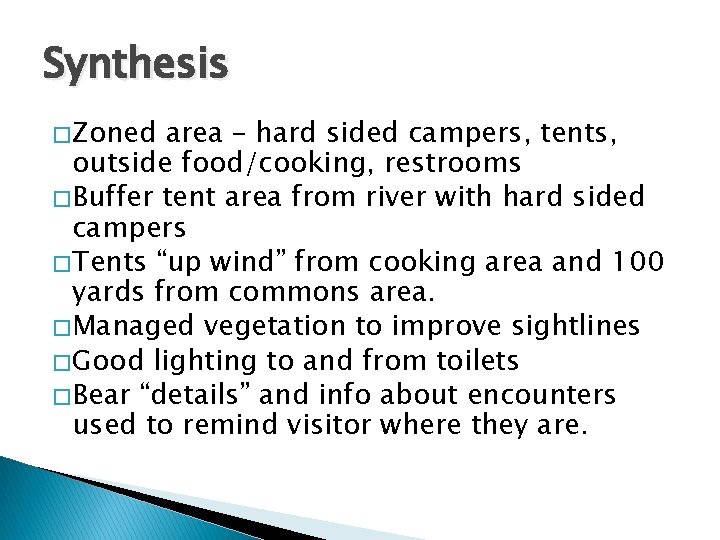
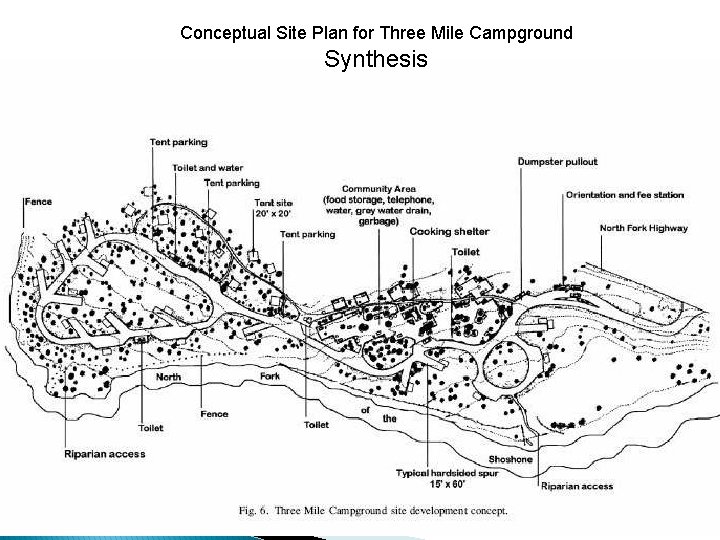
Synthesis � Zoned area – hard sided campers, tents, outside food/cooking, restrooms � Buffer tent area from river with hard sided campers � Tents “up wind” from cooking area and 100 yards from commons area. � Managed vegetation to improve sightlines � Good lighting to and from toilets � Bear “details” and info about encounters used to remind visitor where they are.
Conceptual Site Plan for Three Mile Campground Synthesis