
SIS Laboratory 1 SIS Laboratory Outline General Information
SIS Laboratory 1

SIS Laboratory Outline • • • General Information Create a component-based system Create a component-based SIS system Example of SIS Pet. Care system SIS Social influence analysis SIS Healthcare system 2
General Information The document sisv 3 n 5 readme 2. txt (or sisv 3 n 5 readme. txt) provides general information about the slow intelligence testbed. In the following user manual and/or tutorials if a reference is made to a section and you cannot find that section in the same document, it probably is in sisv 3 n 5 readme 2. txt. In the hands-on lab the sequence of experiments is as follows: • 1. Create a component-based system based upon first part of user manual sisv 3 n 5 creator. doc • 2. An example of component-based system based upon tutorial sisv 3 n 5 health. doc • 3. Create a component-based slow intelligence system based upon second part of user manual siv 3 n 5 creator. doc • 4. An example of serial slow intelligence system based upon tutorial sisv 3 n 5 serial. doc • 5. An example of parallel slow intelligence system based upon tutorial sisv 3 n 5 parallel. doc 3
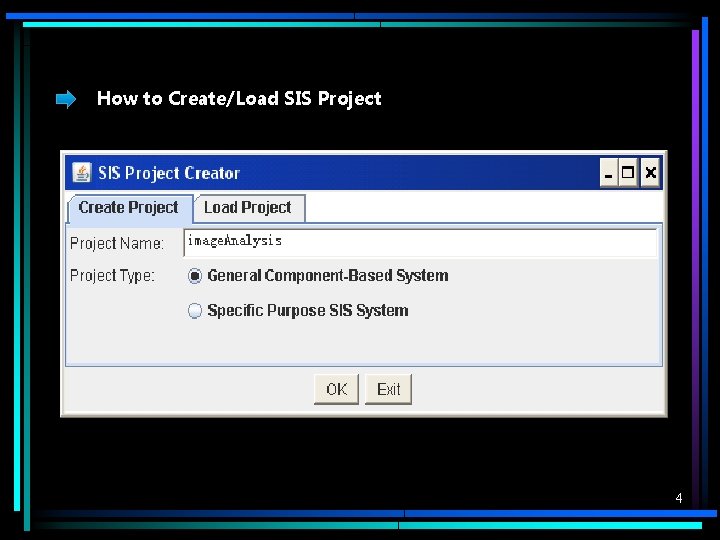
How to Create/Load SIS Project 4
How to specify C-card, I-card and SIS components 1. Define functional dependencies by specifying messages among components (C-card) 2. Define components and their logical relationships (I-card) 3. If a component is an SIS application, it can be specified as a specific SIS component at design time and replaced by an SIS sub-system at run-time 5
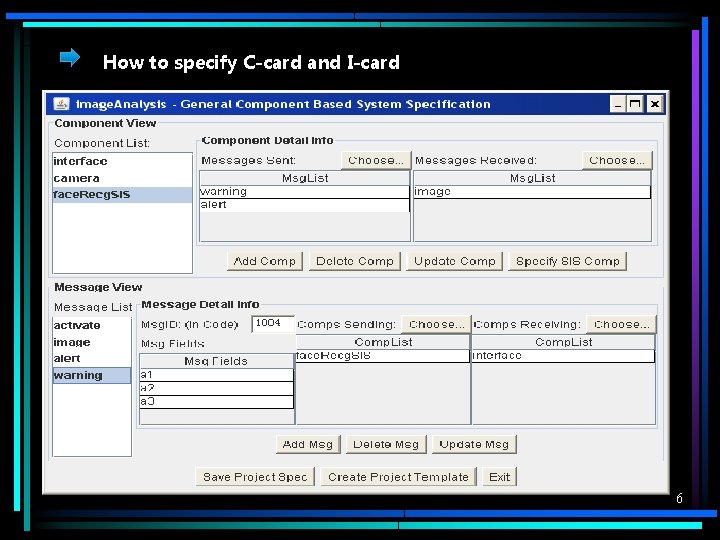
How to specify C-card and I-card 6
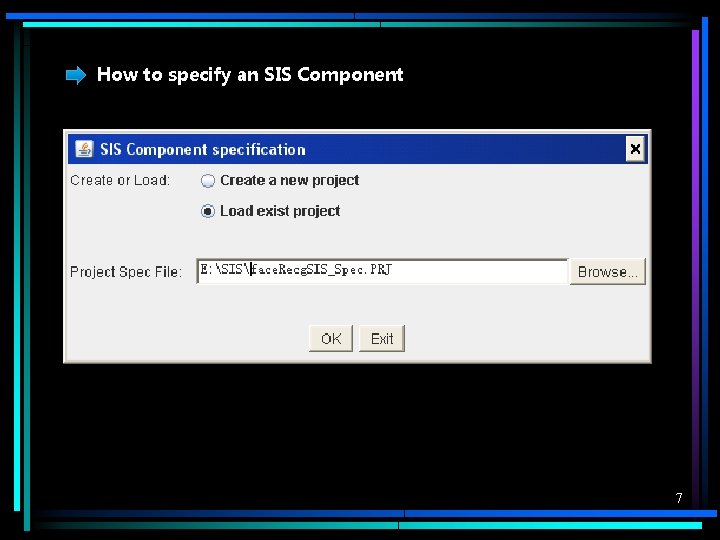
How to specify an SIS Component 7
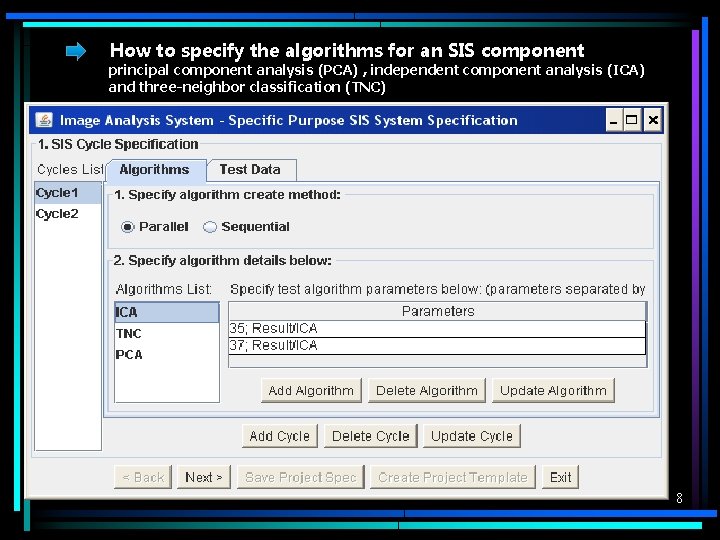
How to specify the algorithms for an SIS component principal component analysis (PCA) , independent component analysis (ICA) and three-neighbor classification (TNC) 8
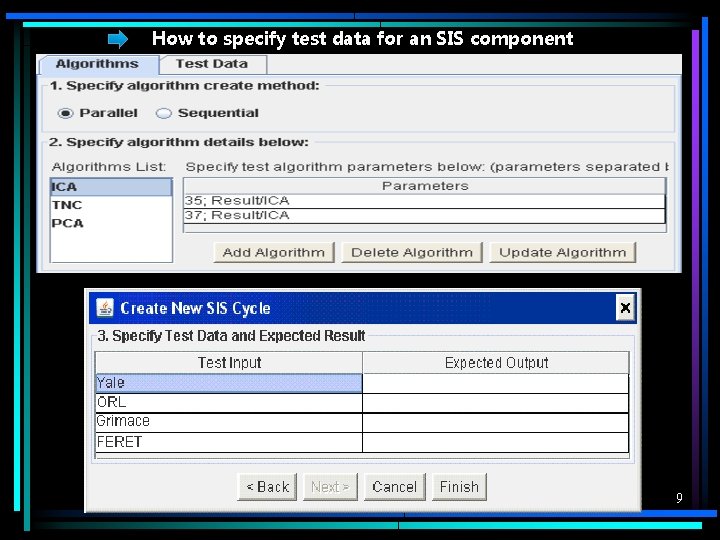
How to specify test data for an SIS component 9
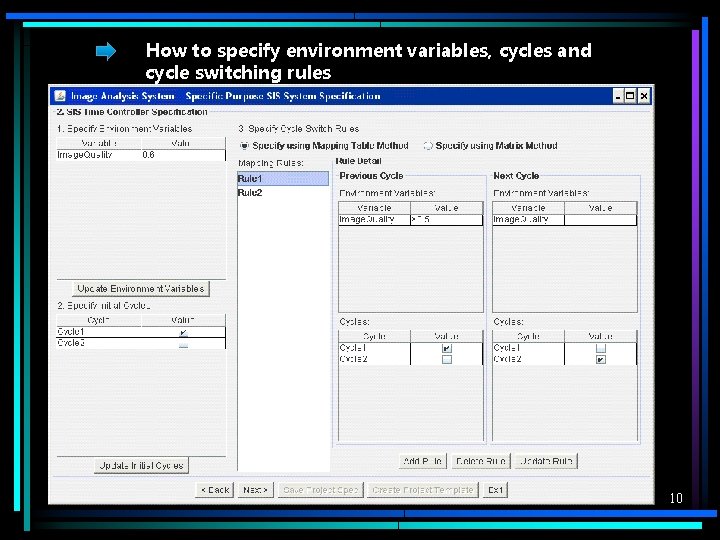
How to specify environment variables, cycles and cycle switching rules 10
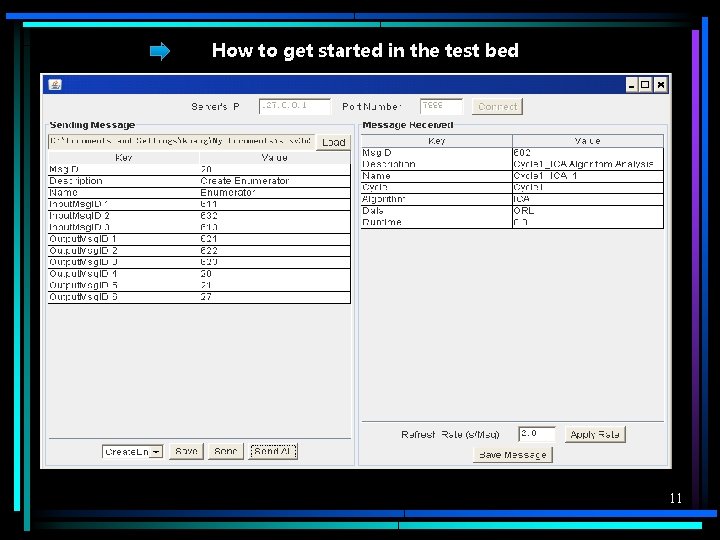
How to get started in the test bed 11
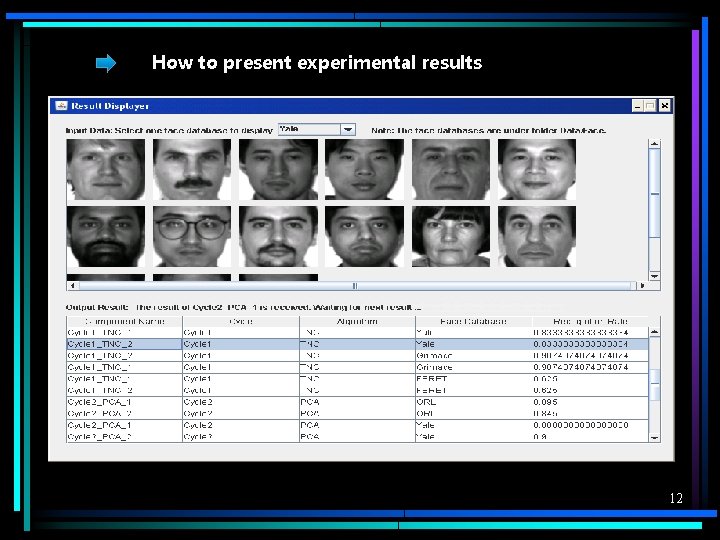
How to present experimental results 12
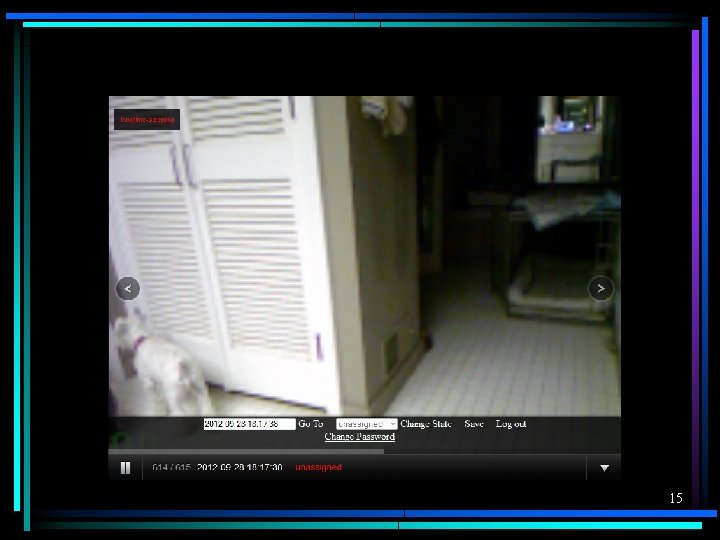
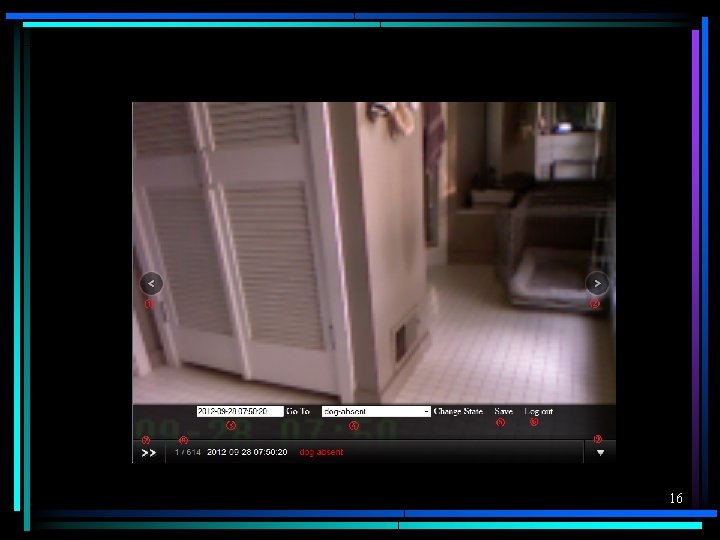
SIS Pet. Care System 13
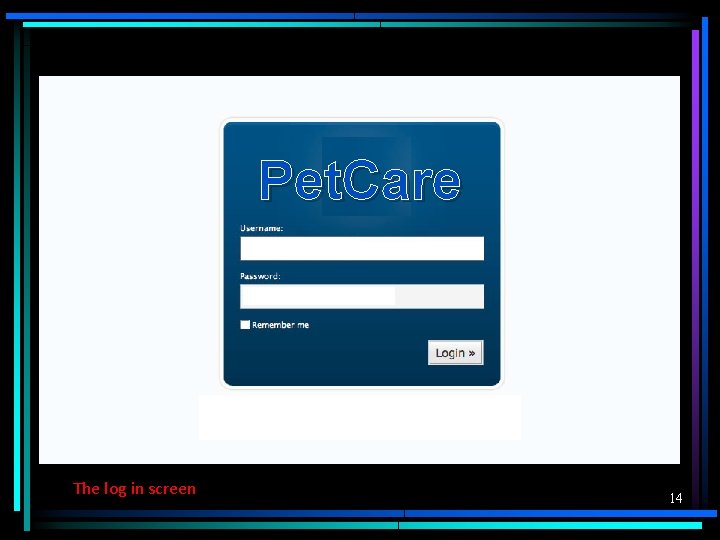
Pet. Care The log in screen 14
15
16

17
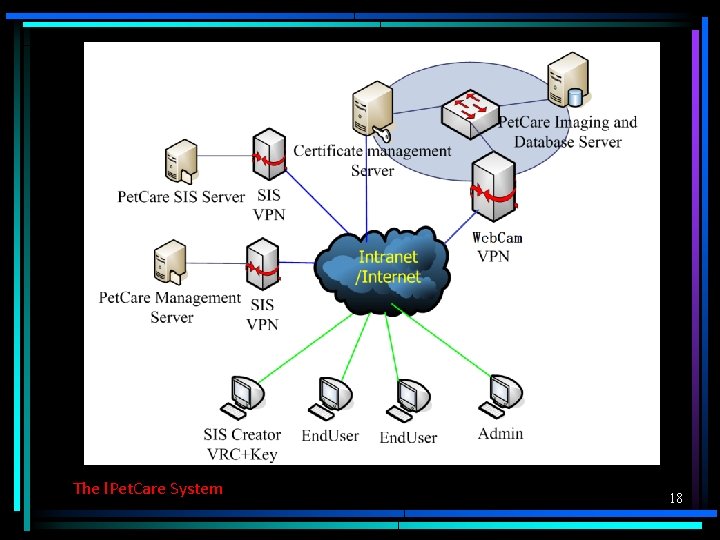
Pet. Care The l. Pet. Care System 18
Social Influence Analysis 19
Application to Social Influence Analysis In large social networks, nodes (users, entities) are influenced by others for many different reasons. How to model the diffusion processes over social network and how to predict which node will influence which other nodes in network have been an active research topic recently. Many researchers proposed various algorithms. How to utilize these algorithms and evolutionarily select the best one with the most appropriate parameters to do social influence analysis is our objective in applying the SIS technology. 20
Application to Social Influence Analysis In large social networks, nodes (users, entities) are influenced by others for many different reasons. How to model the diffusion processes over social network and how to predict which node will influence which other nodes in network have been an active research topic recently. Many researchers proposed various algorithms. How to utilize these algorithms and evolutionarily select the best one with the most appropriate parameters to do social influence analysis is our objective in applying the SIS technology. 21
Application to Social Influence Analysis In large social networks, nodes (users, entities) are influenced by others for many different reasons. How to model the diffusion processes over social network and how to predict which node will influence which other nodes in network have been an active research topic recently. Many researchers proposed various algorithms. How to utilize these algorithms and evolutionarily select the best one with the most appropriate parameters to do social influence analysis is our objective in applying the SIS technology. 22
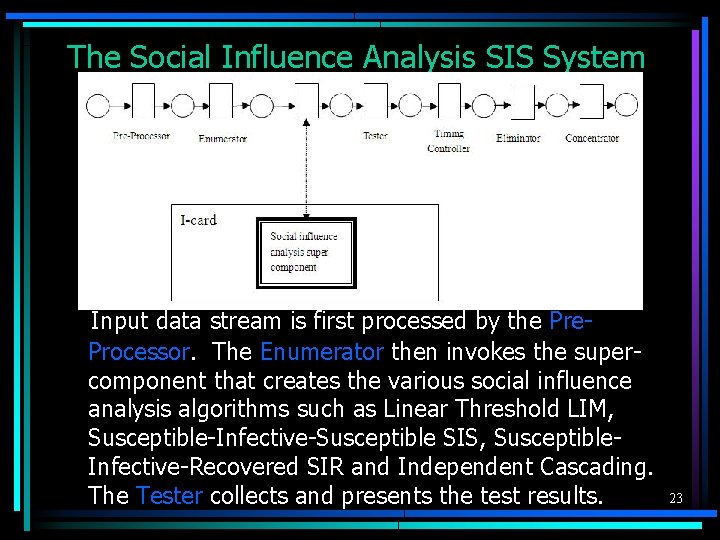
The Social Influence Analysis SIS System Input data stream is first processed by the Pre. Processor. The Enumerator then invokes the supercomponent that creates the various social influence analysis algorithms such as Linear Threshold LIM, Susceptible-Infective-Susceptible SIS, Susceptible. Infective-Recovered SIR and Independent Cascading. The Tester collects and presents the test results. 23
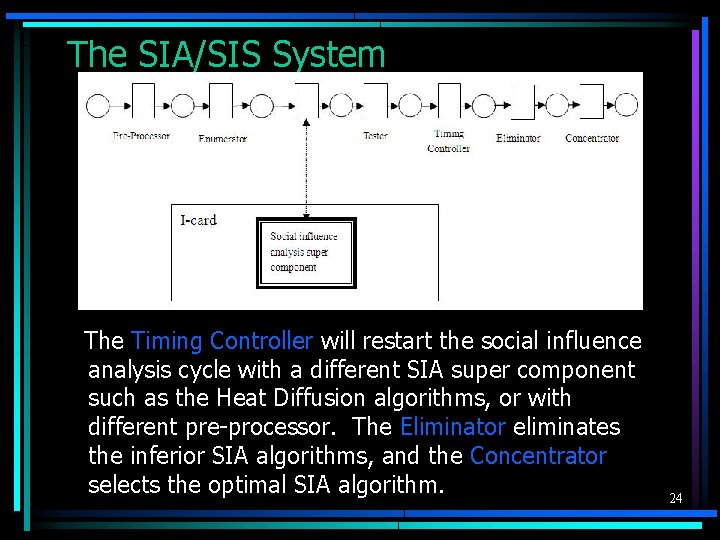
The SIA/SIS System The Timing Controller will restart the social influence analysis cycle with a different SIA super component such as the Heat Diffusion algorithms, or with different pre-processor. The Eliminator eliminates the inferior SIA algorithms, and the Concentrator selects the optimal SIA algorithm. 24
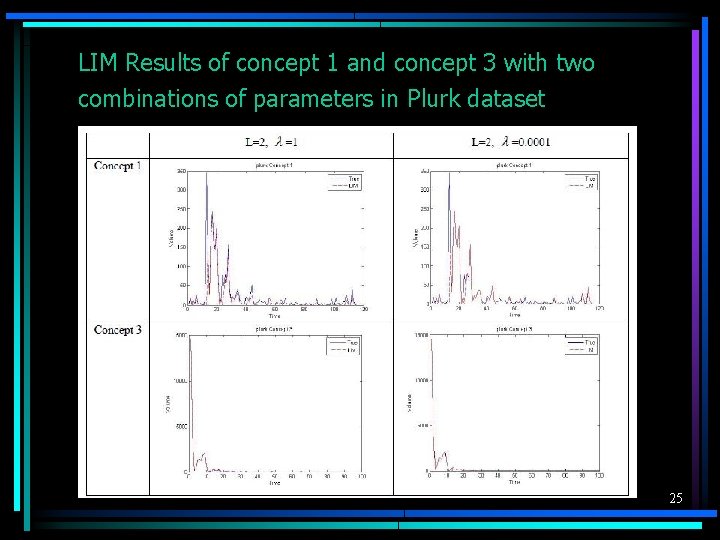
LIM Results of concept 1 and concept 3 with two combinations of parameters in Plurk dataset 25
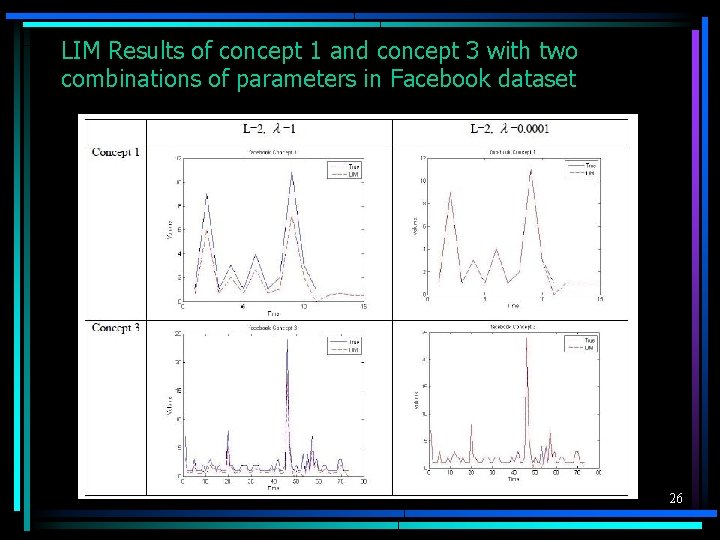
LIM Results of concept 1 and concept 3 with two combinations of parameters in Facebook dataset 26
SISSIA Implementation • Sissia Web Interface to customize a Social Influence Analysis application. • Sissia. Craft to design a Slow Intelligence Systems application. • Web Crawler to provide input data. 27
Interactive Visualization via SIS • We used 200 out of 1000 users with at least 1000 tweets during a three-year period to define active user set • How can we find “optimal” active user set? • Our approach is by interactive visualization via SIS 28

Interactive Visualization via SIS • User selects created time to define active user set 29
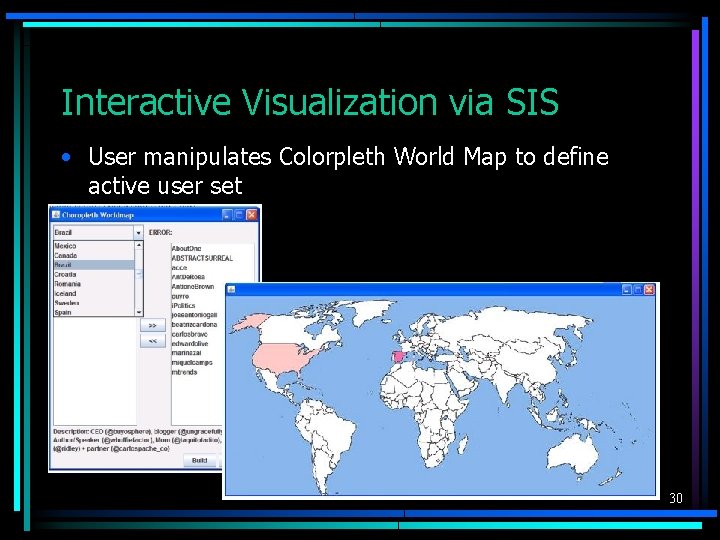
Interactive Visualization via SIS • User manipulates Colorpleth World Map to define active user set 30
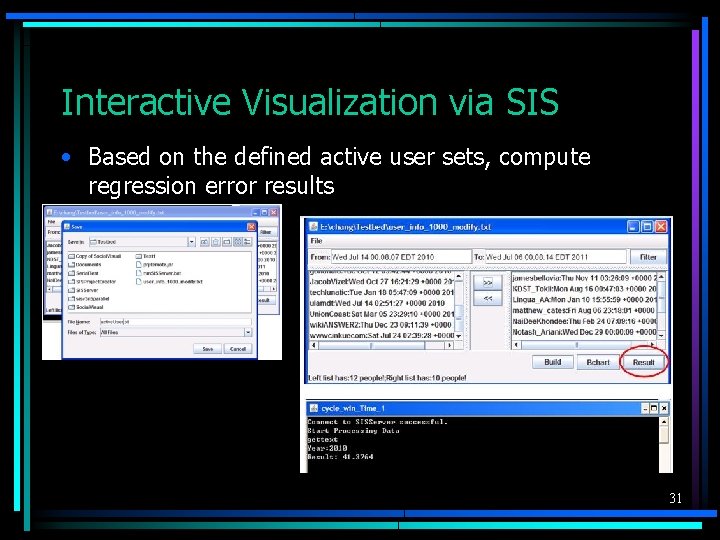
Interactive Visualization via SIS • Based on the defined active user sets, compute regression error results 31
Interactive Visualization via SIS • After interactive visualization, SIS automatically finds the best algorithm to define active user set • User can now use this algorithm to define active user set for incrementally improving the model regression performance 32

Health. Care 33
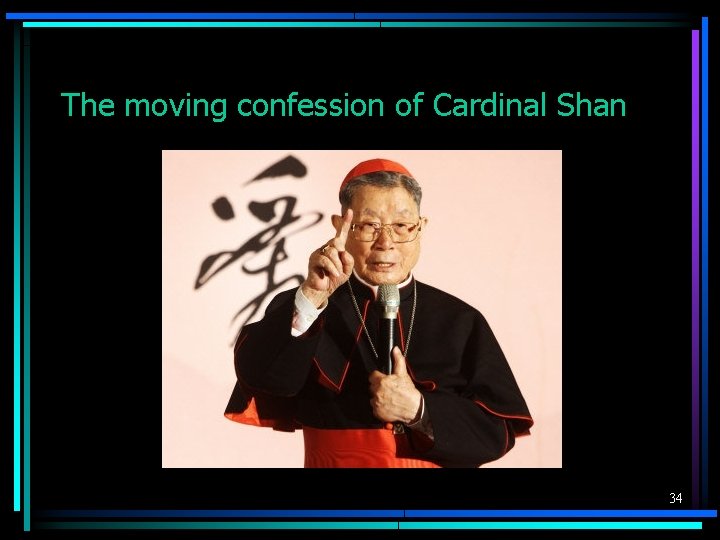
The moving confession of Cardinal Shan 34

Confession of Cardinal Shan • In the last article written by Cardinal Shan, he confessed that although he has been a Jesuit for seventy years, he was always close to Christ but could never completely understand how Christ felt when crucified. • During the last few months of his life he experienced a complete loss of dignity. One time he urinated when performing mass. Another time he could not control himself before reaching the toilet and was harshly scolded by the nurse. Then he realized this was God’s way to teach him to forsake vanity and be humble. 35
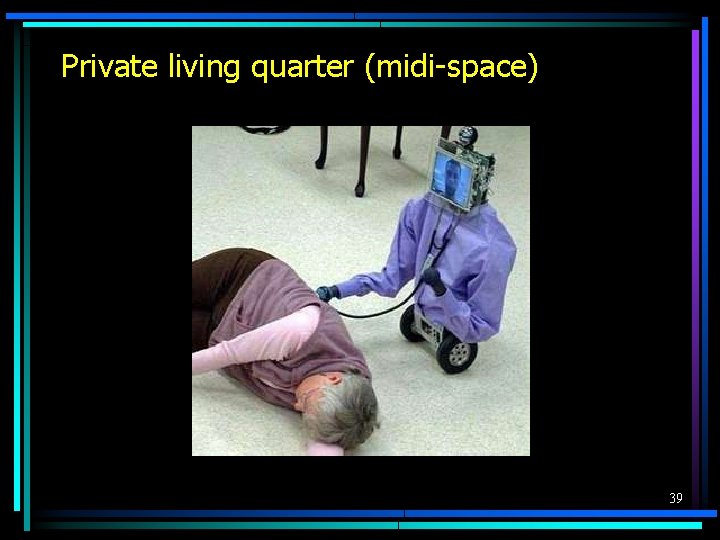
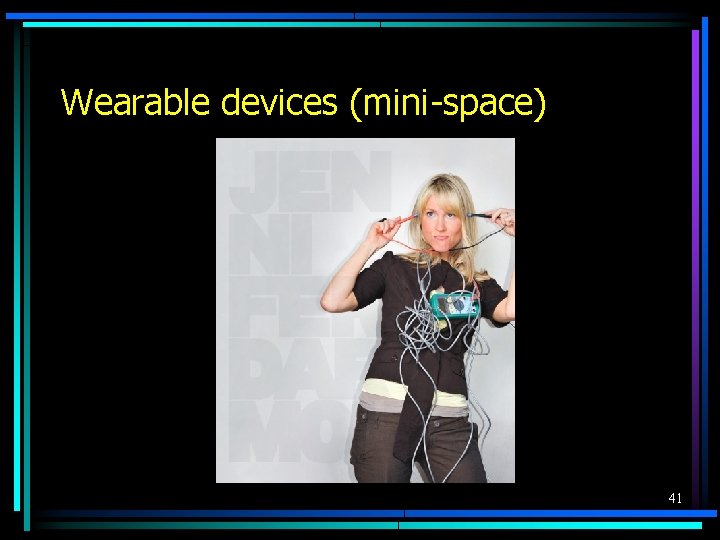
Adaptive Healthcare System Reorganization of Space • Robot nurse (maxi-space) • Private living quarter (midi-space) • Wearable devices (mini-space) 36
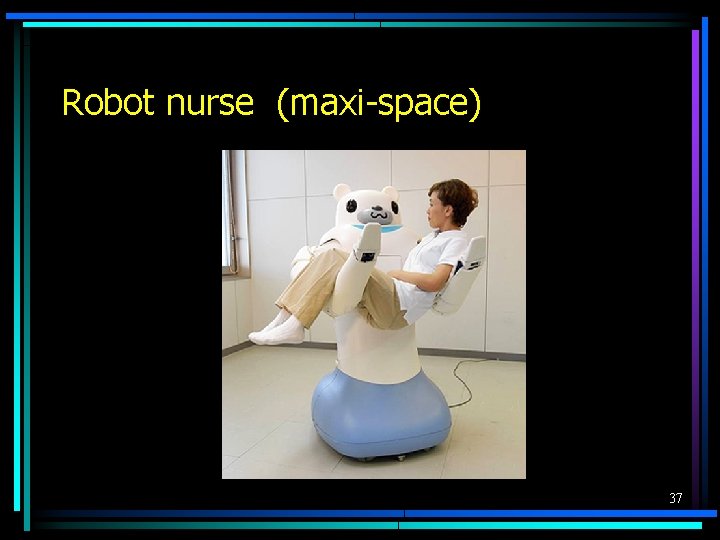
Robot nurse (maxi-space) 37
Adaptive Healthcare System Reorganization of Space • Robot nurse (maxi-space) • Private living quarter (midi-space) • Wearable devices (mini-space) 38
Private living quarter (midi-space) 39
Adaptive Healthcare System Reorganization of Space • Robot nurse (maxi-space) • Private living quarter (midi-space) • Wearable devices (mini-space) 40
Wearable devices (mini-space) 41
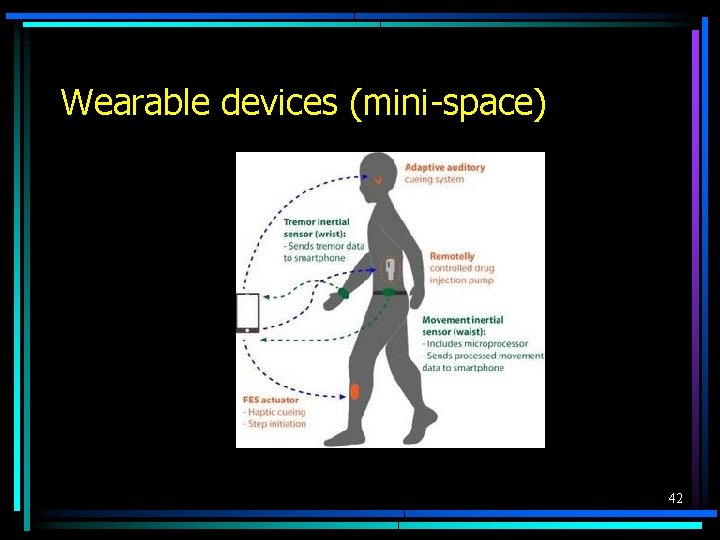
Wearable devices (mini-space) 42
Adaptive Healthcare System Reorganization of Time • Long term care (maxi-time) • Short term care (midi-time) • Emergency care (mini-time) 43
Adaptive Healthcare System Reorganization of Time • Long term care (maxi-time) • Short term care (midi-time) • Emergency care (mini-time) 44
Adaptive Healthcare System Reorganization of Time • Long term care (maxi-time) • Short term care (midi-time) • Emergency care (mini-time) 45
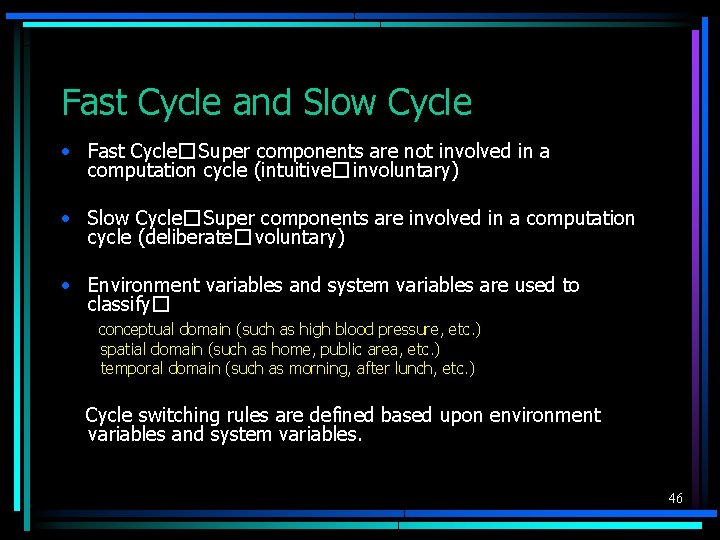
Fast Cycle and Slow Cycle • Fast Cycle� Super components are not involved in a computation cycle (intuitive� involuntary) • Slow Cycle� Super components are involved in a computation cycle (deliberate� voluntary) • Environment variables and system variables are used to classify� conceptual domain (such as high blood pressure, etc. ) spatial domain (such as home, public area, etc. ) temporal domain (such as morning, after lunch, etc. ) Cycle switching rules are defined based upon environment variables and system variables. 46
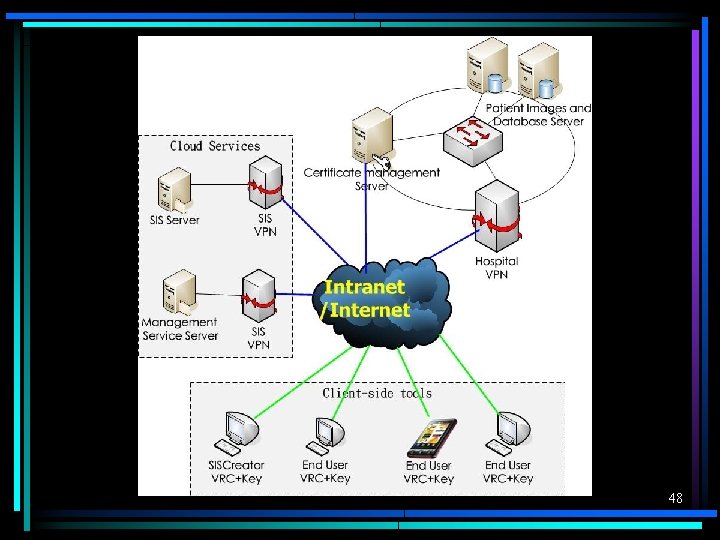
Adaptive Healthcare System • Based upon Slow Intelligence, we can design adaptive healthcare system according to the mobility of a patient (stationary or mobile), the severity of the disease and so on. Healthcare service can be customized by product & service customization (PSC) and ontological matching techniques. 47
48
Papers on Slow Intelligence Systems [1] Shi-Kuo Chang, "A General Framework for Slow Intelligence Systems", International Journal of Software Engineering and Knowledge Engineering, Volume 20, Number 1, February 2010, 1 -16. [2] Shi-Kuo Chang, Yingze Wang and Yao Sun, "Visual Specification of Component-based Slow Intelligence Systems", Proceedings of 2011 International Conference on Software Engineering and Knowledge Engineering, Miami, USA, July 7 -9, 2011, 1 -8. [3] Shi-Kuo Chang, Yao Sun, Yingze Wang, Chia-Chun Shih and Ting-Chun Peng, "Design of Component-based Slow Intelligence Systems and Application to Social Influence Analysis", Proceedings of 2011 International Conference on Software Engineering and Knowledge Engineering, Miami, USA, July 7 -9, 2011, 9 -16. [4] Ji Eun Kim, Yang Hu, Shi-Kuo Chang, Chia-Chun Shih and Ting-Chun Peng, "Design and Modeling of Topic/Trend Detection System By Applying Slow Intelligence System Principles", Proc. of DMS 2011 Conference, Florence, Italy, Aug. 18 -20, 2011, 3 -9. [5] Yingze Wang and Shi-Kuo Chang, "High Dimensional Feature Selection via a Slow Intelligence Approach", Proc. of DMS 2011 Conference, Florence, Italy, Aug. 18 -20, 2011, 10 -15. [6] Shi-Kuo Chang, Li-Qun Kuang, Yao Sun and Yingze Wang, “Design and Implementation of Image Analysis System by Applying Component-based Slow Intelligence System”, Proc. of DMS 2012 Conference, Miami, USA, Aug. 9 -11, 2012. [7] Shi-Kuo Chang, Francesco Colace, Emilio Zegarra, Massimo De Santo, Yong. Jun Qie, "An Approach for Software Component Reusing based on Ontological Mapping", Proc. of SEKE 2012 Conference, San Francisco Bay, California, July 1 -3, 2012. 49
- Slides: 49