
Sir Walter Raleigh Virginia English Colonization The Charter




- Slides: 44
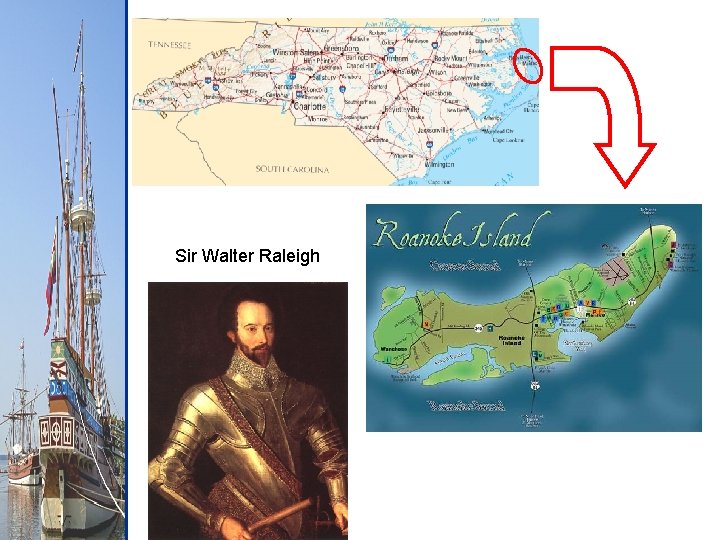
Sir Walter Raleigh
Virginia
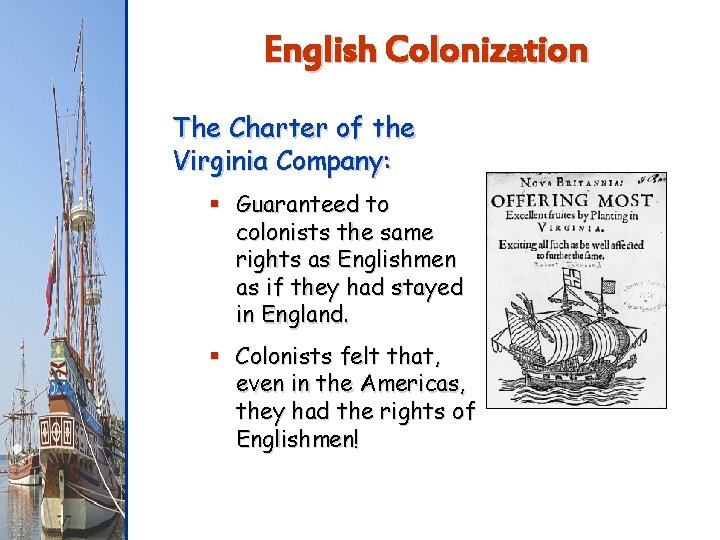
English Colonization The Charter of the Virginia Company: § Guaranteed to colonists the same rights as Englishmen as if they had stayed in England. § Colonists felt that, even in the Americas, they had the rights of Englishmen!
England Plants the Jamestown “Seedling” Late 1606 VA Co. sends out 3 ships Spring 1607 land at mouth of Chesapeake Bay. § Attacked by Indians and move on. May 24, 1607 about 100 colonists [all men] land at Jamestown, along banks of James River § Easily defended peninsula, but swarming with disease-causing mosquitoes.
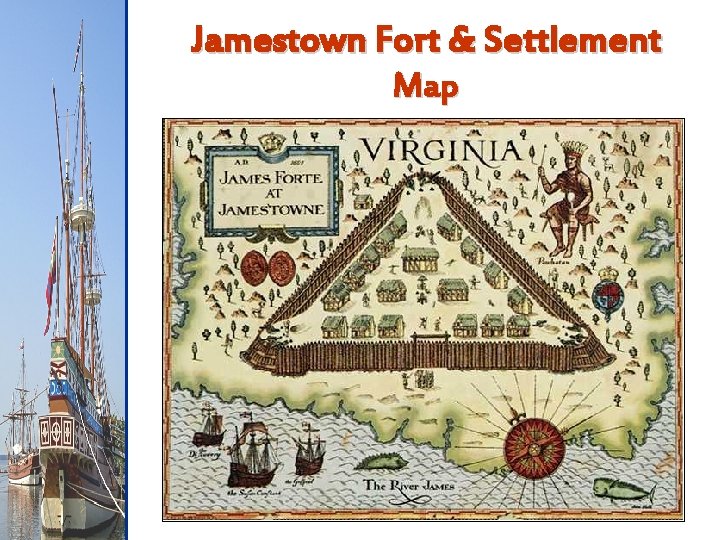
Jamestown Fort & Settlement Map
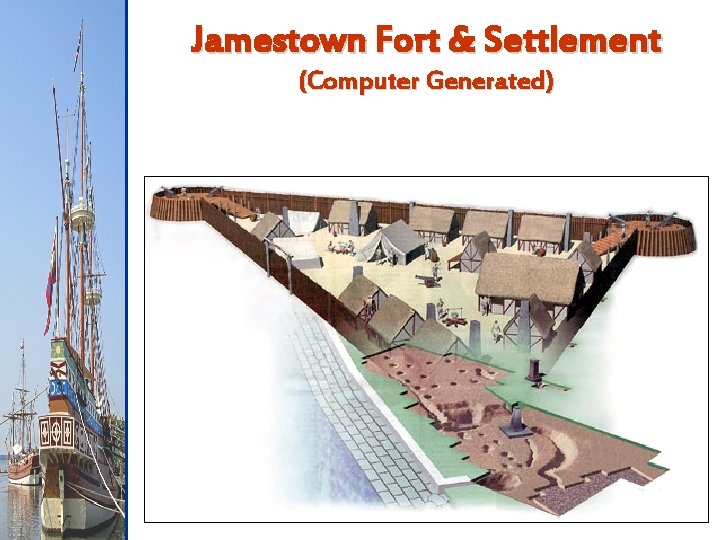
Jamestown Fort & Settlement (Computer Generated)
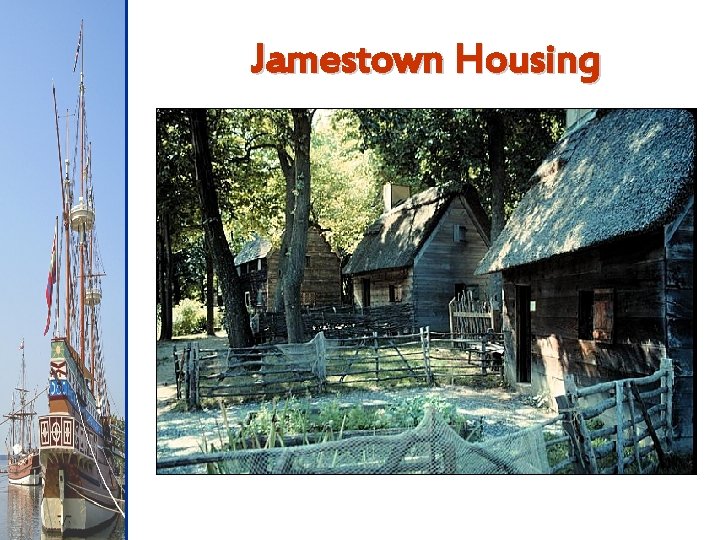
Jamestown Housing
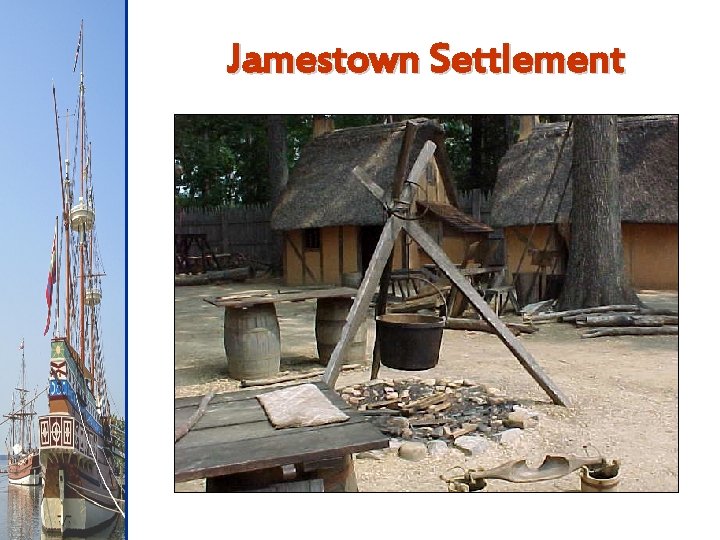
Jamestown Settlement
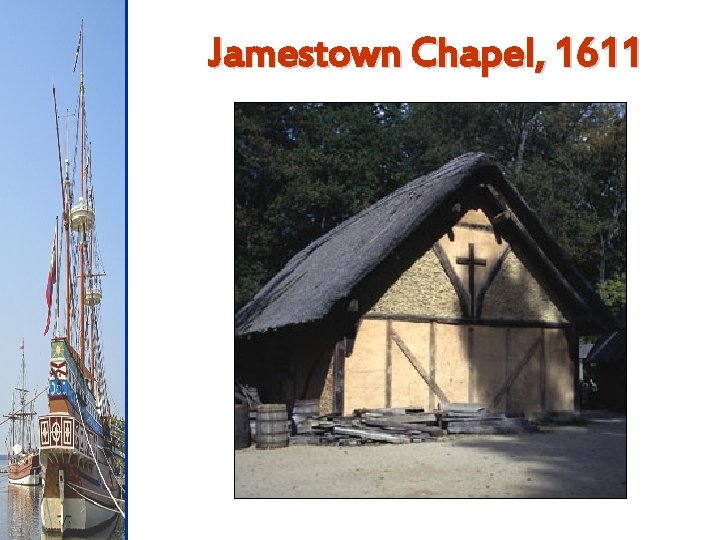
Jamestown Chapel, 1611
The Jamestown Nightmare Settlers died by the dozens because of disease and starvation! “Gentlemen” colonists would not work themselves. § Game in forests & fish in river uncaught. Settlers wasted time looking for gold instead of hunting or farming.
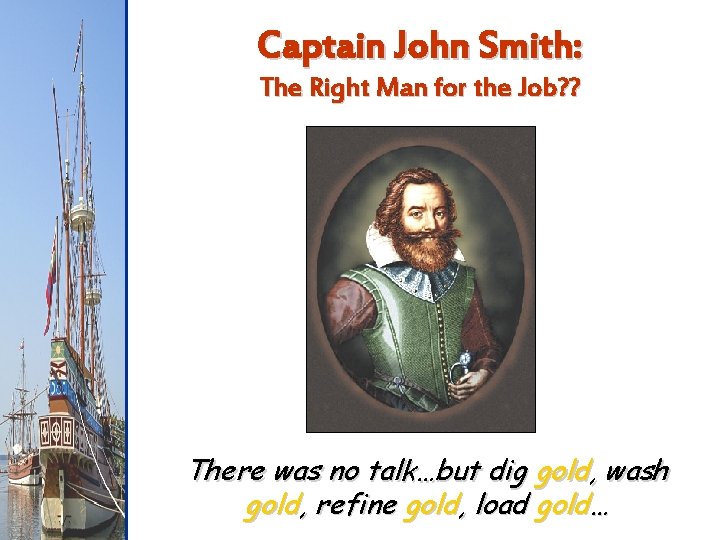
Captain John Smith: The Right Man for the Job? ? There was no talk…but dig gold, wash gold, refine gold, load gold…
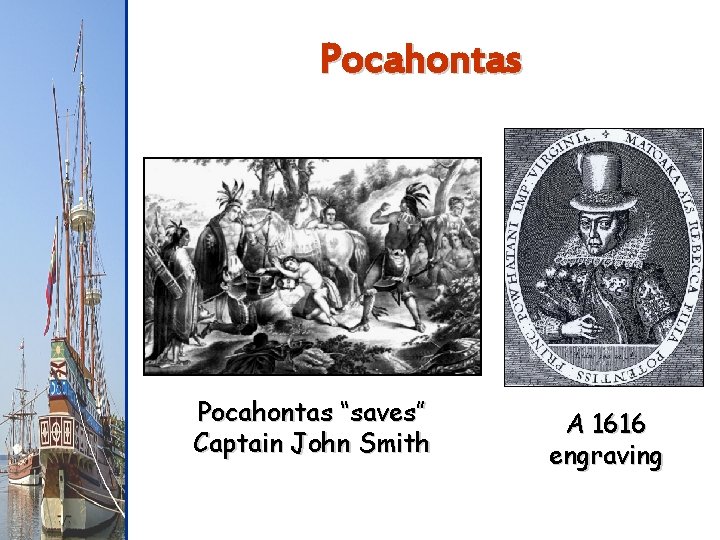
Pocahontas “saves” Captain John Smith A 1616 engraving
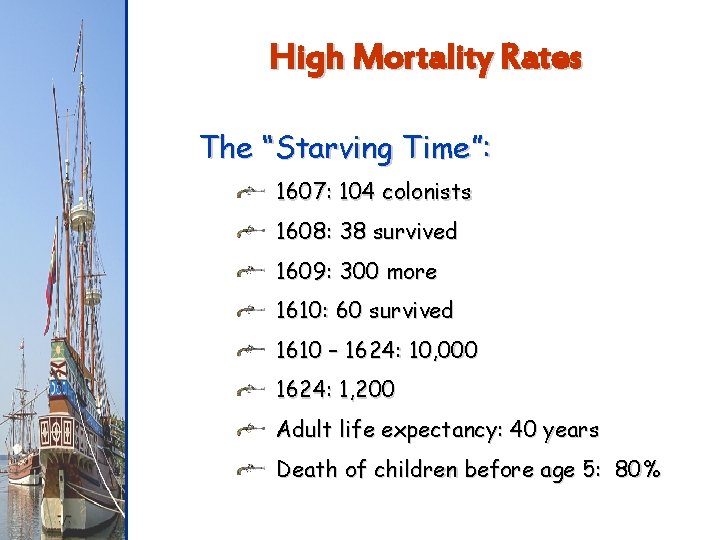
High Mortality Rates The “Starving Time”: 1607: 104 colonists 1608: 38 survived 1609: 300 more 1610: 60 survived 1610 – 1624: 10, 000 1624: 1, 200 Adult life expectancy: 40 years Death of children before age 5: 80%
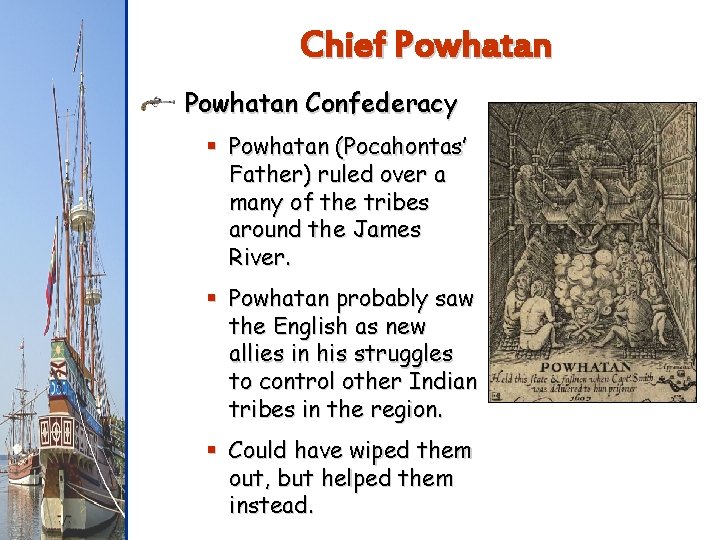
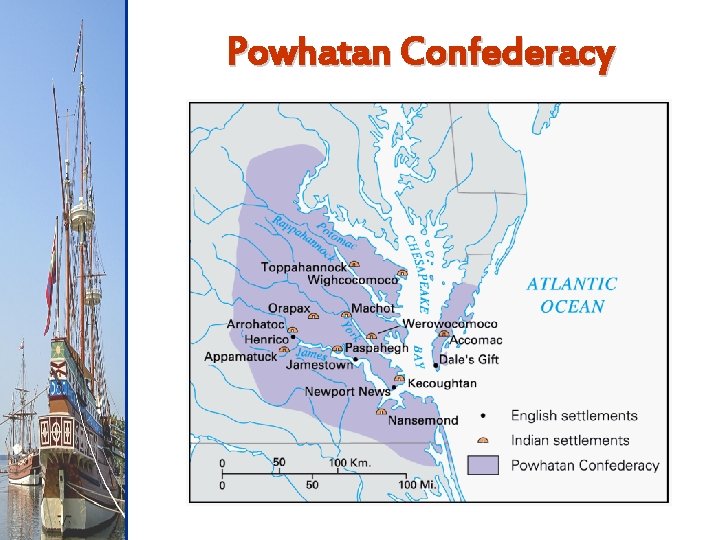
Chief Powhatan Confederacy § Powhatan (Pocahontas’ Father) ruled over a many of the tribes around the James River. § Powhatan probably saw the English as new allies in his struggles to control other Indian tribes in the region. § Could have wiped them out, but helped them instead.
Powhatan Confederacy
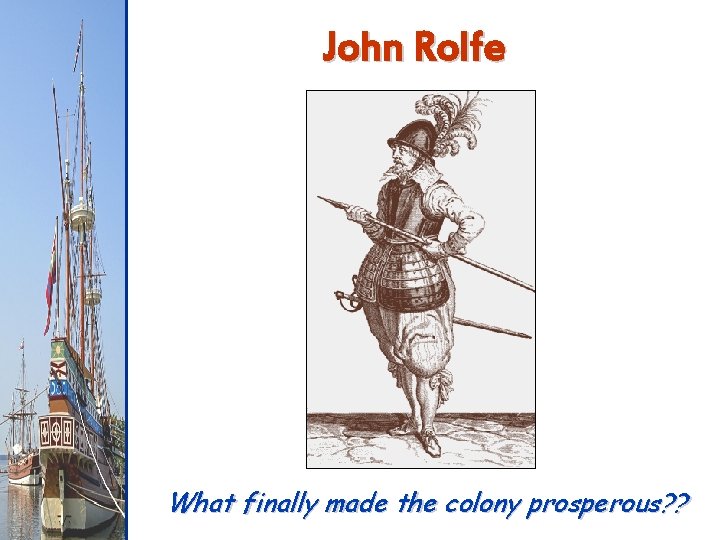
John Rolfe What finally made the colony prosperous? ?
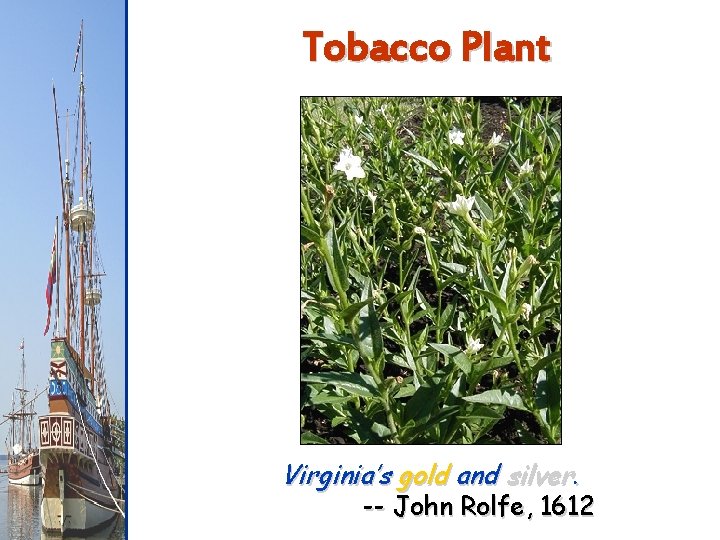
Tobacco Plant Virginia’s gold and silver. -- John Rolfe, 1612
Early Colonial Tobacco 1618 — Virginia produces 20, 000 pounds of tobacco. 1622 — 60, 000 pounds of tobacco. 1627 — 500, 000 pounds of tobacco. 1629 — 1, 500, 000 pounds of tobacco. TOBACCO PROVIDED INCREDIBLE GROWTH AND WEALTH THAT SAVED THE COLONY
Virginia: “Child of Tobacco” Tobacco’s effect on Virginia’s economy: § Vital role in putting VA on a firm economic footing. Tobacco promoted the use of the plantation system. § Need for cheap, abundant labor. § (At first, indentured servants… Later, SLAVES)
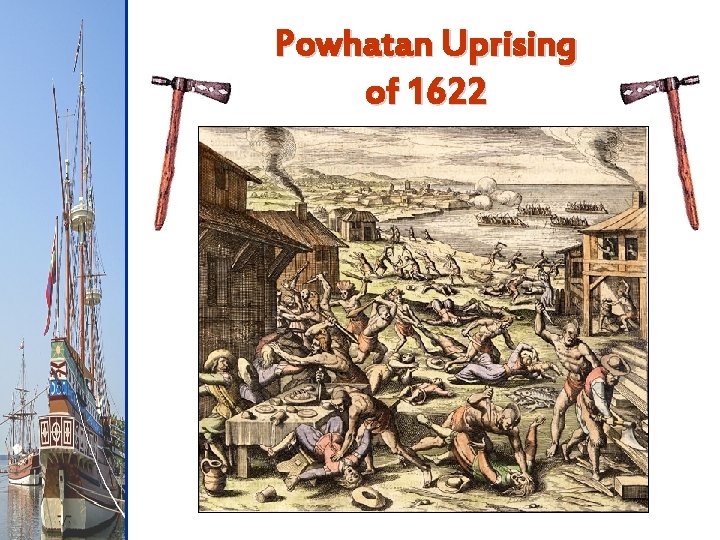
Culture Clash in the Chesapeake 1614 -1622 peace between Powhatans and the English. § 1614 peace sealed by the marriage of Pocahontas to Englishman John Rolfe. § 1622 Indians attacked the English, killing 347 [including John Rolfe]. § Virginia Co. called for a “perpetual war” against the Native Americans. Ø Continual aids reduced native population and drove them further westward.
Powhatan Uprising of 1622
Why was 1619 a pivotal year for the Chesapeake settlement? 2 REASONS
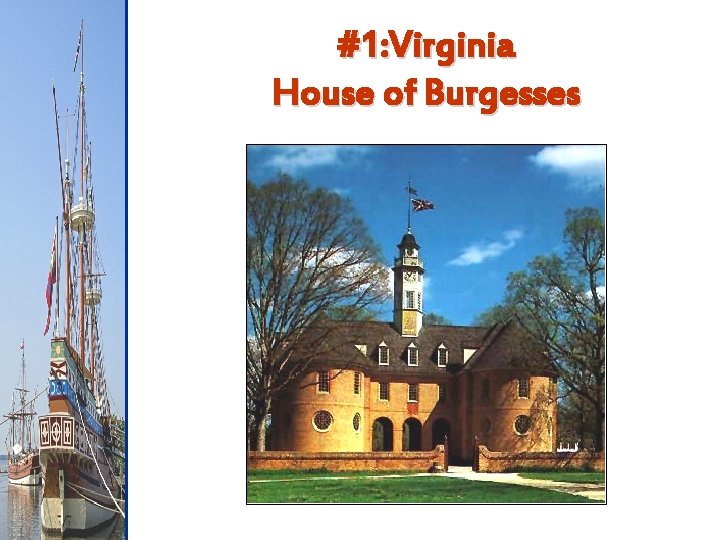
#1: Virginia House of Burgesses
Growing Political Power The House of Burgesses – established in 1619 & began to assume the role of the House of Commons in England § Control over finances, militia, etc. A Council appointed by royal governor § Functions like House of Lords.
Virginia Becomes a Royal Colony James I grew hostile to Virginia § He hated tobacco. § He distrusted and felt threatened by the House of Burgesses. 1624 he revoked the charter of the bankrupt VA Company. § Thus, VA became a royal colony, under the king’s direct control!
#2: First West Africans in N. American Colonies 19 West African Prisoners of War were traded for tobacco by Dutch traders headed to a Dutch settlement further North. Became indentured servants and eventually gained their freedom. § They went on to own their own land servants.
Maryland
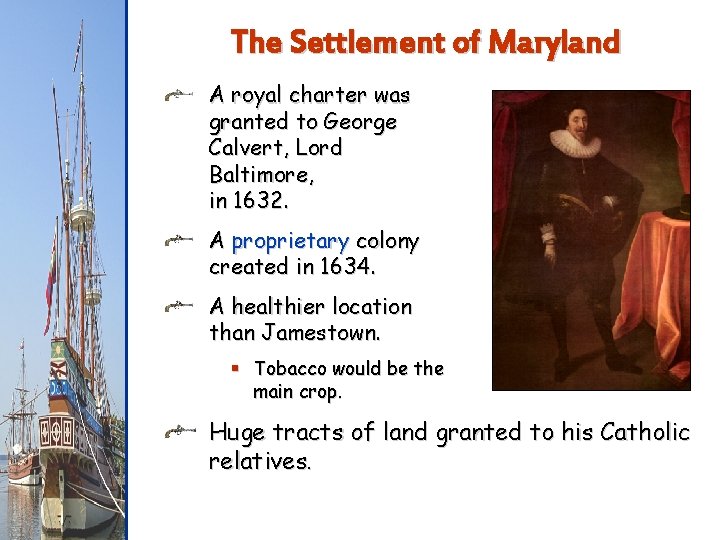
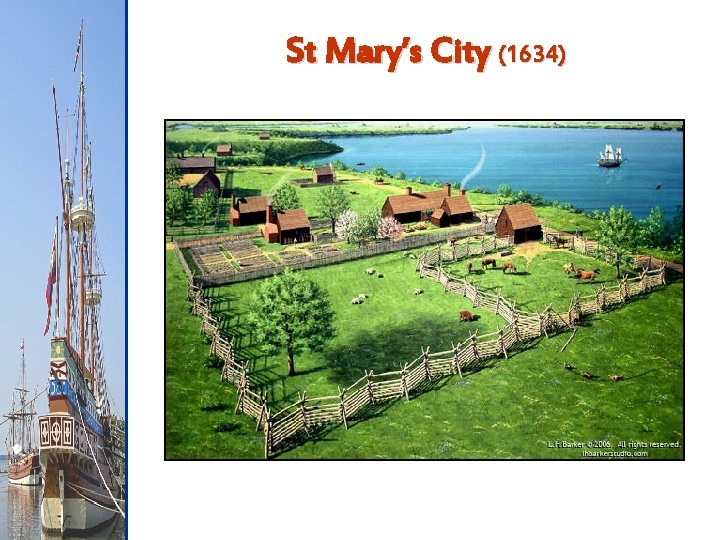
The Settlement of Maryland A royal charter was granted to George Calvert, Lord Baltimore, in 1632. A proprietary colony created in 1634. A healthier location than Jamestown. § Tobacco would be the main crop. Huge tracts of land granted to his Catholic relatives.
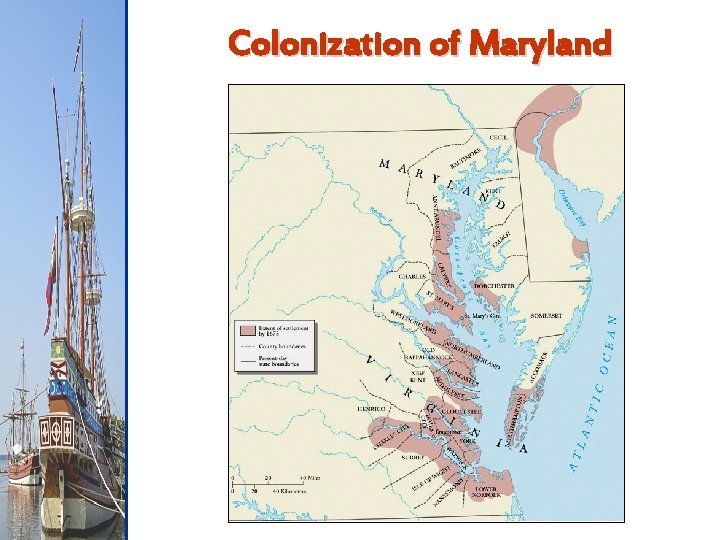
Colonization of Maryland
St Mary’s City (1634)
A Haven for Catholics In the late 1600 s, black slaves began to be imported. Catholic land barons surrounded by mostly Protestant small farmers who did not get along well Religious Toleration to prevent repeat of persecution of Catholics by Protestants.
The Carolinas
The West Indies Way Station to Mainland America The King granted Carolina to 8 supporters [Lord Proprietors]. § They hoped to use Carolina to supply their plantations in Barbados and developed close ties with West Indies.
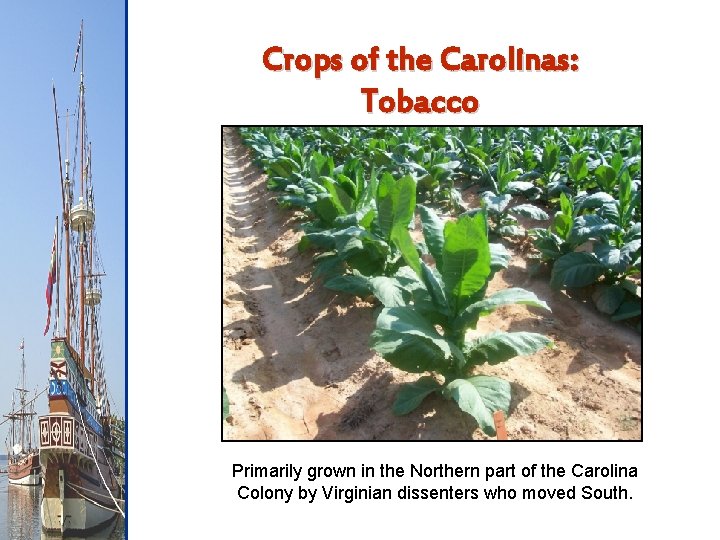
Crops of the Carolinas: Tobacco Primarily grown in the Northern part of the Carolina Colony by Virginian dissenters who moved South.
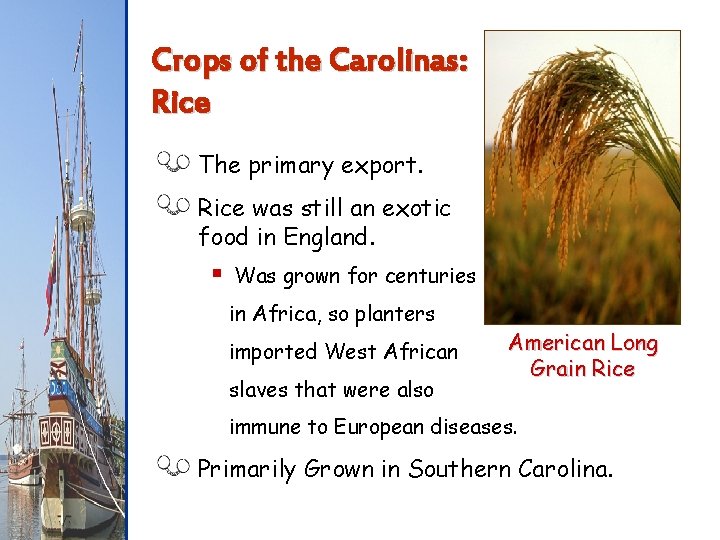
Crops of the Carolinas: Rice The primary export. Rice was still an exotic food in England. § Was grown for centuries in Africa, so planters imported West African slaves that were also American Long Grain Rice immune to European diseases. Primarily Grown in Southern Carolina.
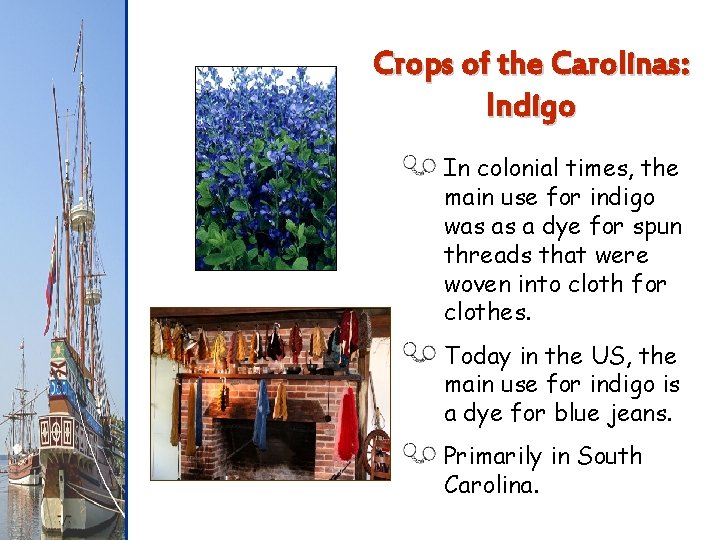
Crops of the Carolinas: Indigo In colonial times, the main use for indigo was as a dye for spun threads that were woven into cloth for clothes. Today in the US, the main use for indigo is a dye for blue jeans. Primarily in South Carolina.
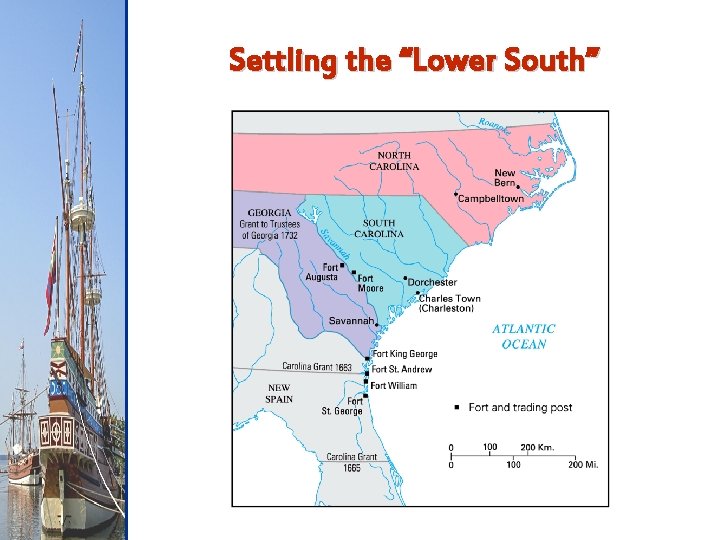
Crown Colony and Split of the Carolina Colony Due to governance issues by the proprietors, the colony was officially made a crown colony in 1719. Because the economies and cultures of North Carolina and South Carolina were so different, they were commonly referred to this way and it stuck. North and South Carolina were officially split off and made into separate colonies in 1729.
Settling the “Lower South”
Conflict with Spanish Florida Catholic Spain hated the mass of Protestants on their borders. Anglo-Spanish Wars § The Spanish conducted border raids on Carolina. § Either inciting local Native Americans to attack or attacking themselves. By 1700 Carolina was too strong to be wiped out by the Spanish!
Georgia
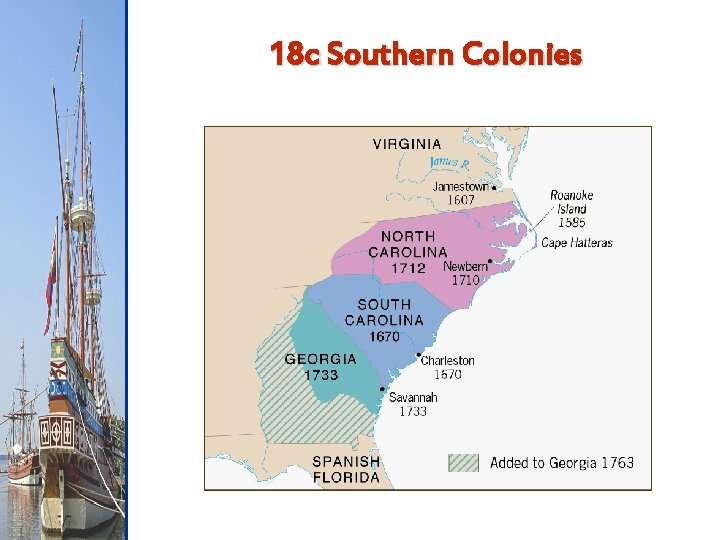
18 c Southern Colonies
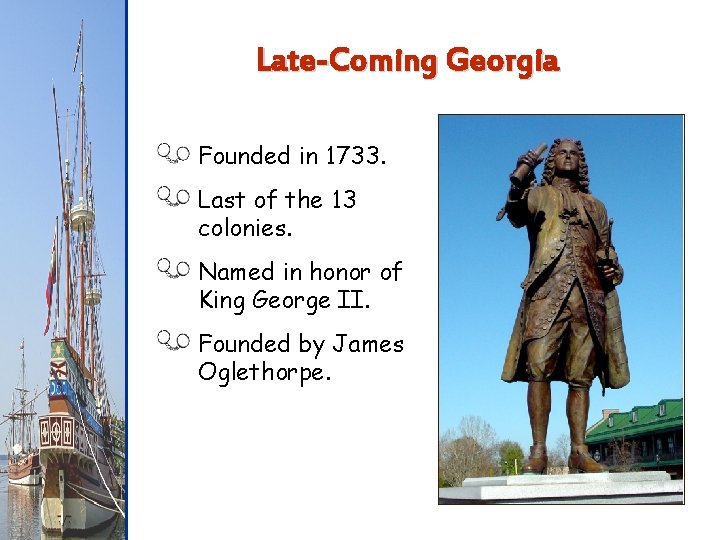
Late-Coming Georgia Founded in 1733. Last of the 13 colonies. Named in honor of King George II. Founded by James Oglethorpe.
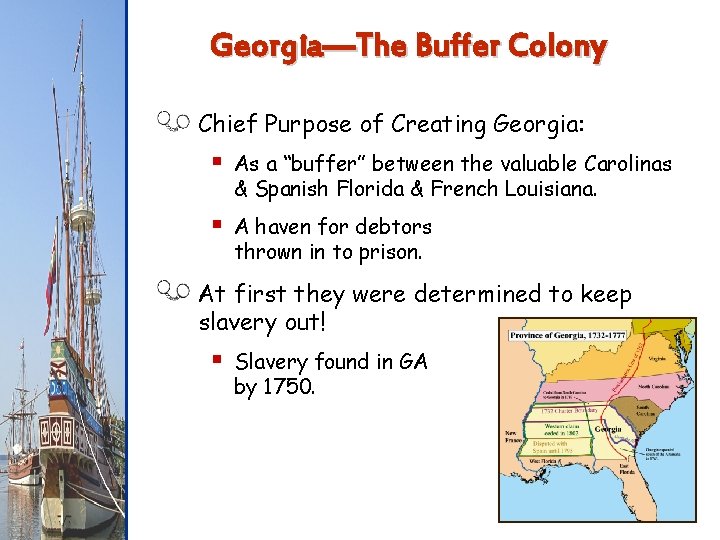
Georgia—The Buffer Colony Chief Purpose of Creating Georgia: § As a “buffer” between the valuable Carolinas & Spanish Florida & French Louisiana. § A haven for debtors thrown in to prison. At first they were determined to keep slavery out! § Slavery found in GA by 1750.