
Sir Padampat Singhania University Consumer Behaviour Market Segmentation
Sir Padampat Singhania University Consumer Behaviour &Market Segmentation Subject: Principles of Marketing Faculty : Dr Disha Mathur 1
Basics of Consumer behaviour

What Is Consumer Behavior? Activities people undertake when obtaining, consuming, and disposing of products and services
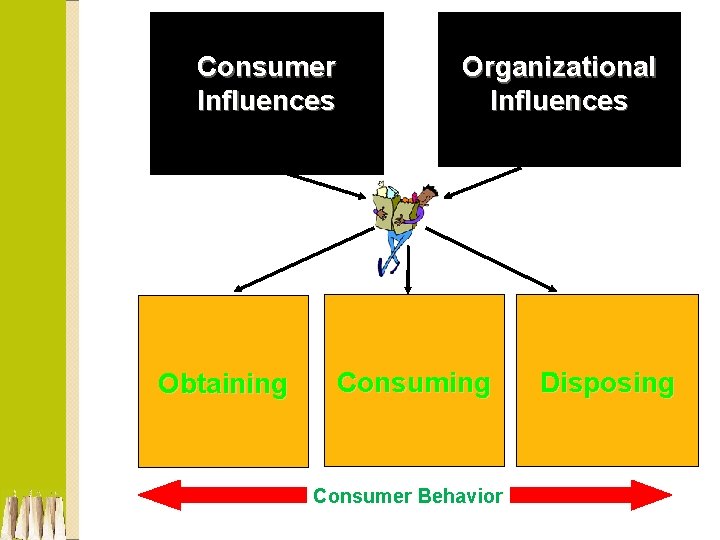
Consumer Influences Obtaining Organizational Influences Consuming Consumer Behavior Disposing
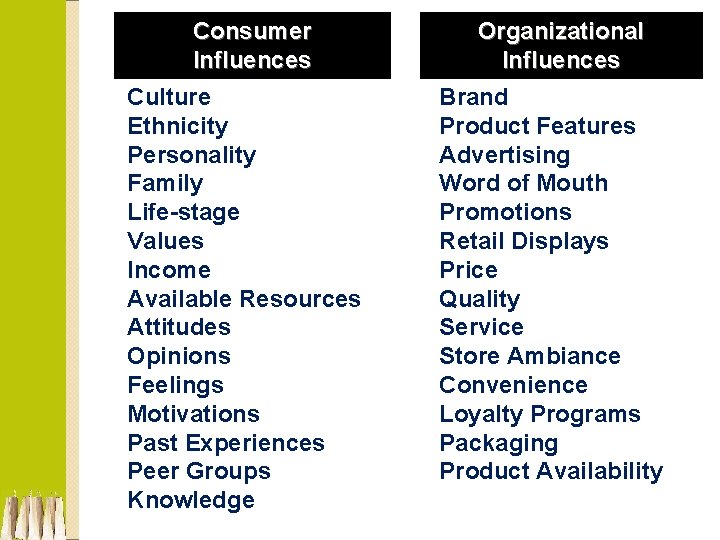
Consumer Influences Culture Ethnicity Personality Family Life-stage Values Income Available Resources Attitudes Opinions Feelings Motivations Past Experiences Peer Groups Knowledge Organizational Influences Brand Product Features Advertising Word of Mouth Promotions Retail Displays Price Quality Service Store Ambiance Convenience Loyalty Programs Packaging Product Availability
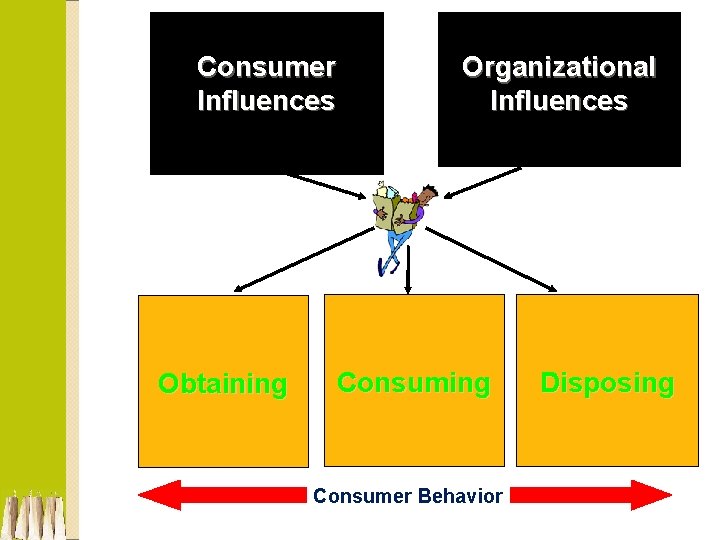
Consumer Influences Obtaining Organizational Influences Consuming Consumer Behavior Disposing
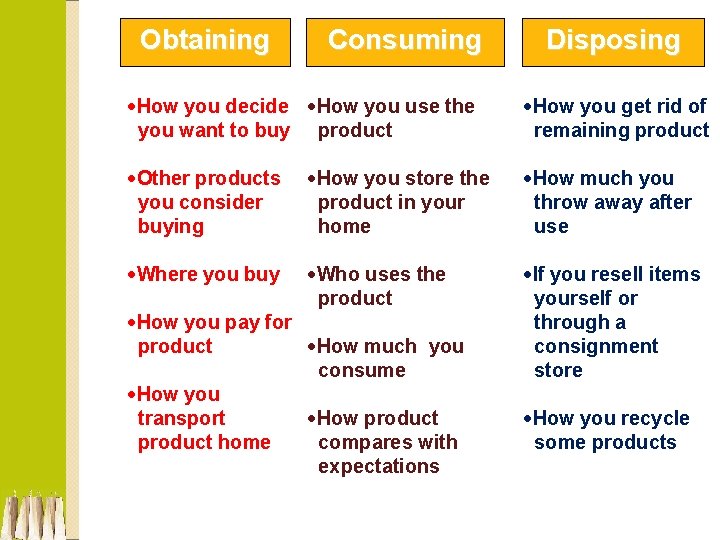
Obtaining Consuming Disposing ·How you decide ·How you use the you want to buy product ·How you get rid of remaining product ·Other products you consider buying ·How you store the product in your home ·How much you throw away after use ·Where you buy ·Who uses the product ·If you resell items yourself or through a consignment store ·How you pay for product ·How much you consume ·How you transport ·How product home compares with expectations ·How you recycle some products
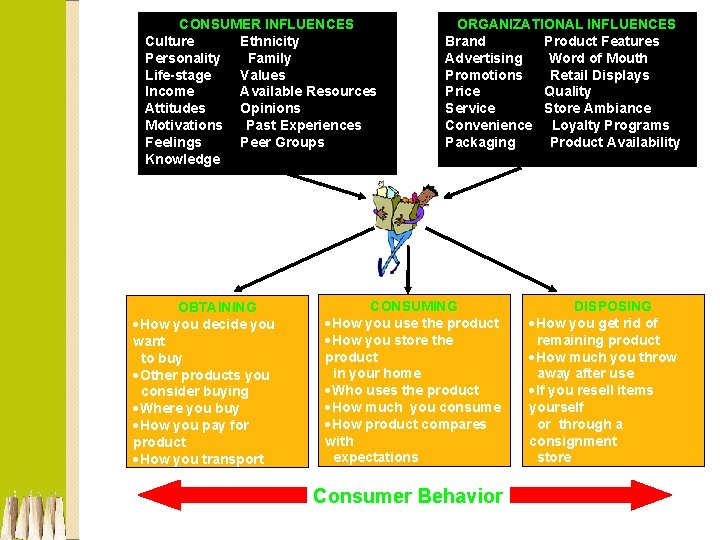
CONSUMER INFLUENCES Culture Ethnicity Personality Family Life-stage Values Income Available Resources Attitudes Opinions Motivations Past Experiences Feelings Peer Groups Knowledge OBTAINING ·How you decide you want to buy ·Other products you consider buying ·Where you buy ·How you pay for product ·How you transport product home ORGANIZATIONAL INFLUENCES Brand Product Features Advertising Word of Mouth Promotions Retail Displays Price Quality Service Store Ambiance Convenience Loyalty Programs Packaging Product Availability CONSUMING ·How you use the product ·How you store the product in your home ·Who uses the product ·How much you consume ·How product compares with expectations Consumer Behavior DISPOSING ·How you get rid of remaining product ·How much you throw away after use ·If you resell items yourself or through a consignment store ·How you recycle some products
What Is Consumer Behavior? Activities people undertake when obtaining, consuming, and disposing of products and services A field of study that focuses on consumer activities
What Is Consumer Behavior? Activities people undertake when obtaining, consuming, and disposing of products and services A field of study that focuses on consumer activities Scope goes beyond just why and how people buy to include consumption analysis
Consumption Analysis Why and how people use products in addition to why and how they buy
Personal Consumer The individual who buys goods and services for his or her own use, for household use, for the use of a family member, or for a friend. Copyright © 2006 Pearson Education Canada Inc. 1 -16
Why Study Consumer Behavior? Marketing applications of consumer behavior: ◦ ◦ ◦ ◦ Market segmentation Target market selection Positioning Product or service decisions Pricing decisions Distribution decisions Promotion decisions
Therefore. . . Better understanding of their consumption behaviour so as to appropriately develop marketing strategy and action plans. Copyright © 2006 Pearson Education Canada Inc. 1 -18
Copyright © 2006 Pearson Education Canada Inc. 1 -19

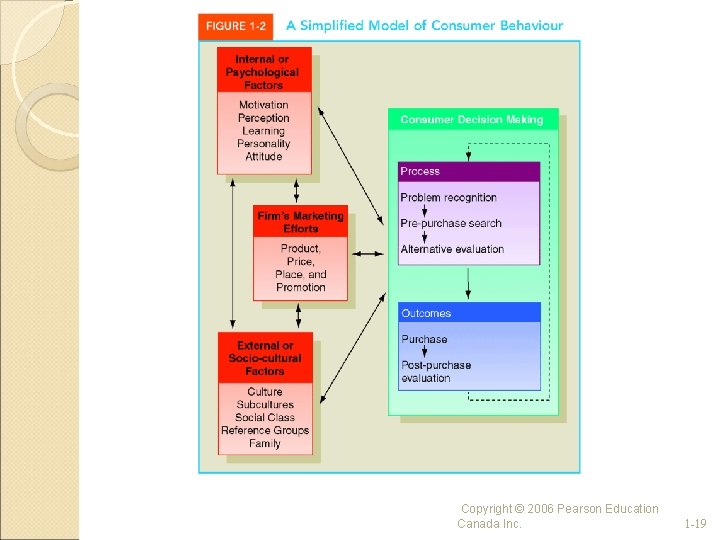
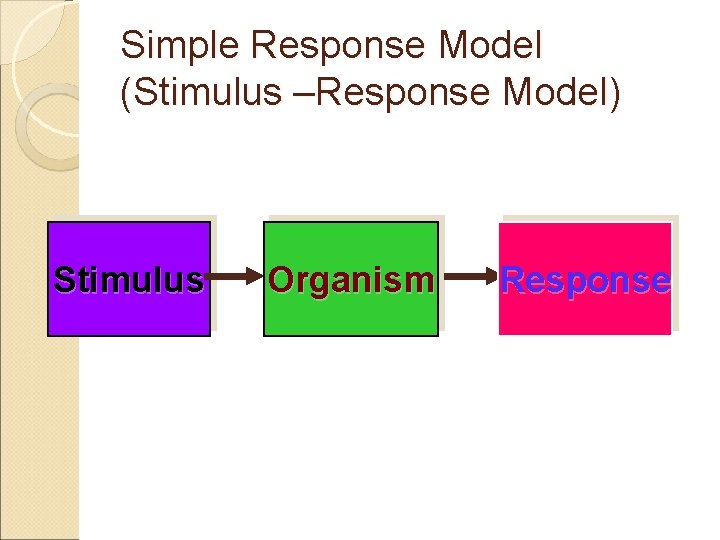
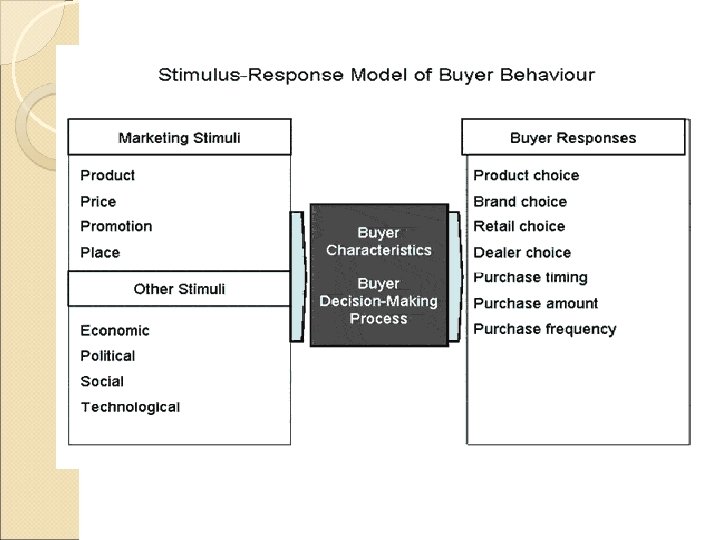
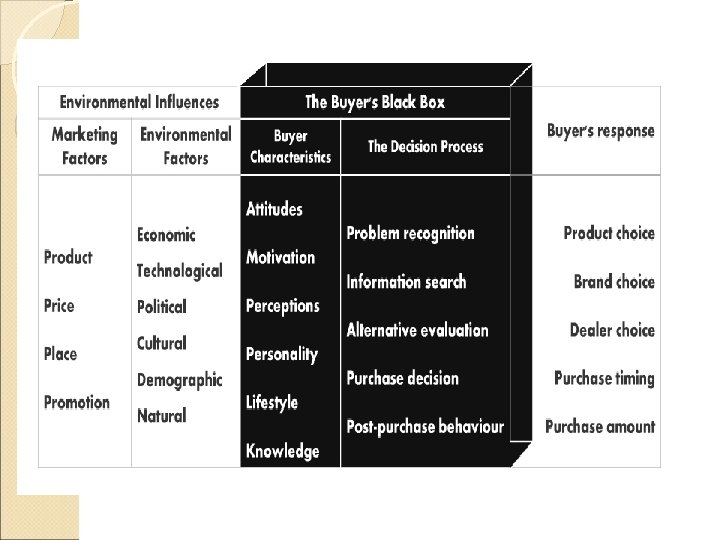
Consumer Behavior 1. Major factors influencing buyer behavior 2. Stimulus Response Model or Black Box Model 3. The stages of the buying decision process 4. Types of Buyer Behaviour 5. Buyer Roles
Simple Response Model (Stimulus –Response Model) Stimulus Organism Response
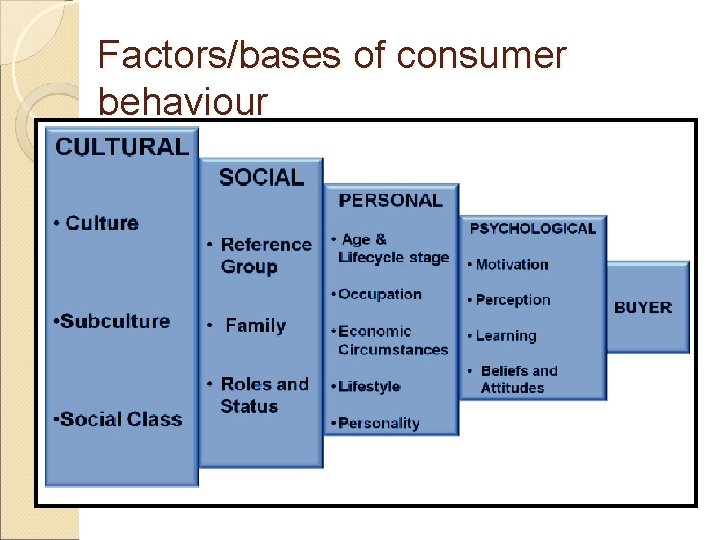
Factors/bases of consumer behaviour
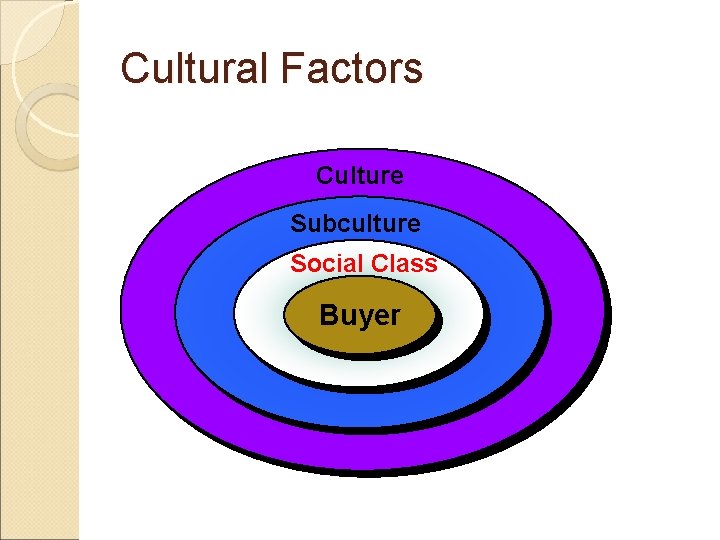
Cultural Factors Culture Subculture Social Class Buyer
Cultural factors Culture Subculture Social class
Social classes are relatively homogeneous and enduring divisions in a society, which are hierarchically ordered and whose members share similar values , interests, and behavior.
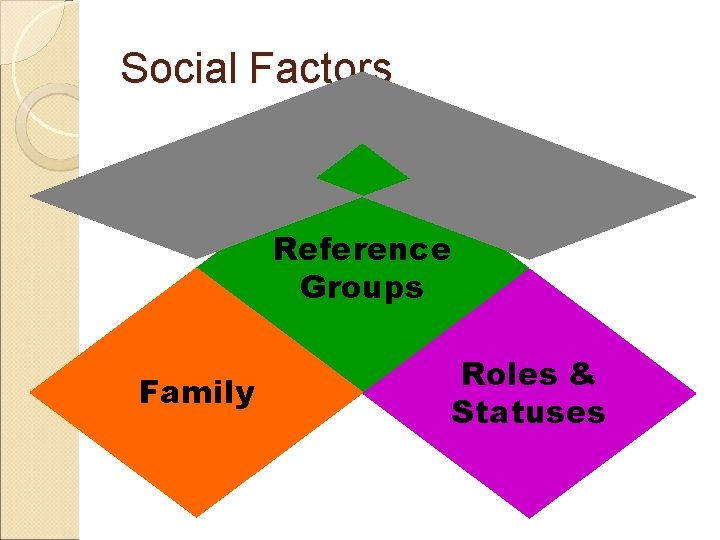
Social Factors Reference Groups Family Roles & Statuses
Reference groups consists of all the groups that have a direct (face-toface) or indirect influence on the person’s attitudes or behavior. Groups having a direct influence on a person are called membership groups. (direct groups) Indirect reference groups
Reference groups Aspirational groups are those the person hopes to join. Dissociative groups are those whose values or behavior an individual rejects. Opinion leader is the person in informal product-related communications who offer advice or information about a specific product or product category.
Family of procreation----one’s spouse and children Family of Orientation – with parents and siblings Types of Family Nuclear v/s Joint
Roles and status A person participates in many groups---family, club, organization. The person’s position in each group can be defined in terms of role and status. A role consists of the activities that a person is expected to perform. Each person carried a status.
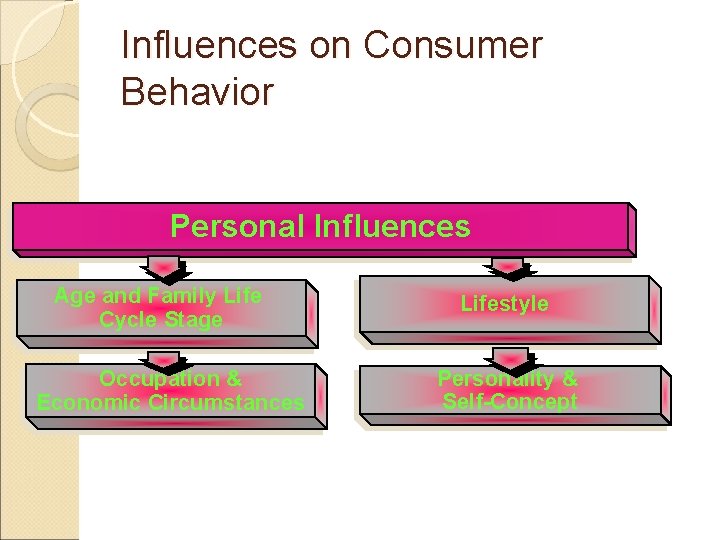
Influences on Consumer Behavior Personal Influences Age and Family Life Cycle Stage Occupation & Economic Circumstances Lifestyle Personality & Self-Concept
Personal factors Age and stage in the life cycle Occupation and economic circumstances Lifestyle Personality and self-concept
Lifestyle A lifestyle is the person’s pattern of living in the world as expressed in activities, interests, and opinion. Lifestyle portrays the “whole person “ interacting with his or her environment. Markerters search for relationships between their products and lifestyle groups.
Personality and self-concept By personality, we mean distinguishing psychological characteristics that lead to relatively consistent and enduring responses to environment.
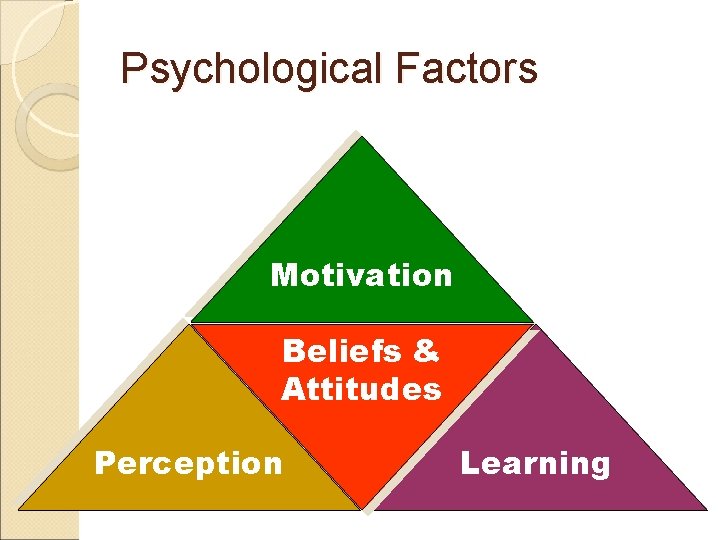
Psychological Factors Motivation Beliefs & Attitudes Perception Learning
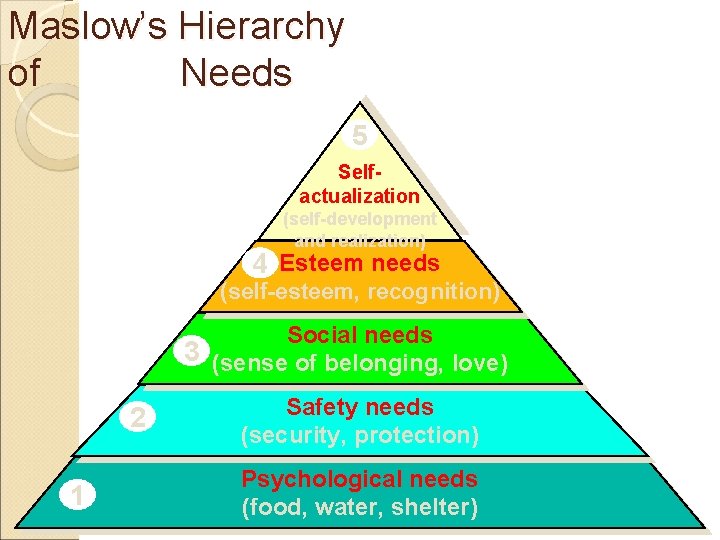
Maslow’s Hierarchy of Needs 5 Selfactualization (self-development and realization) 4 Esteem needs (self-esteem, recognition) Social needs 3 (sense of belonging, love) 2 1 Safety needs (security, protection) Psychological needs (food, water, shelter)
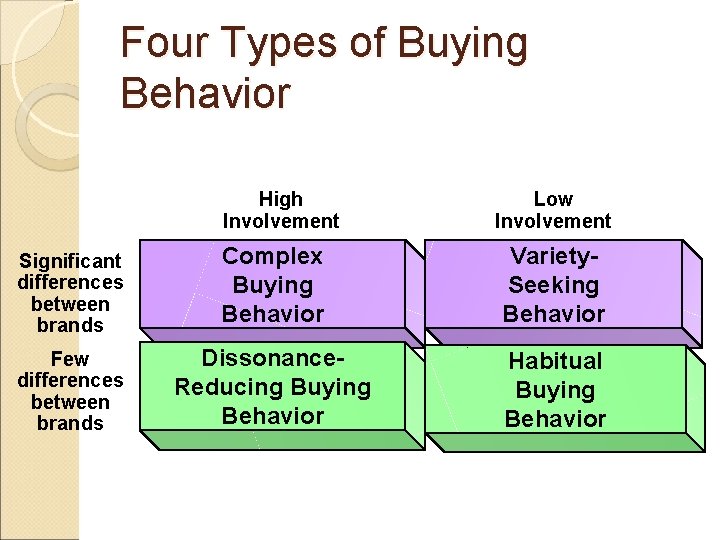
Four Types of Buying Behavior High Involvement Low Involvement Significant differences between brands Complex Buying Behavior Variety. Seeking Behavior Few differences between brands Dissonance. Reducing Buying Behavior Habitual Buying Behavior
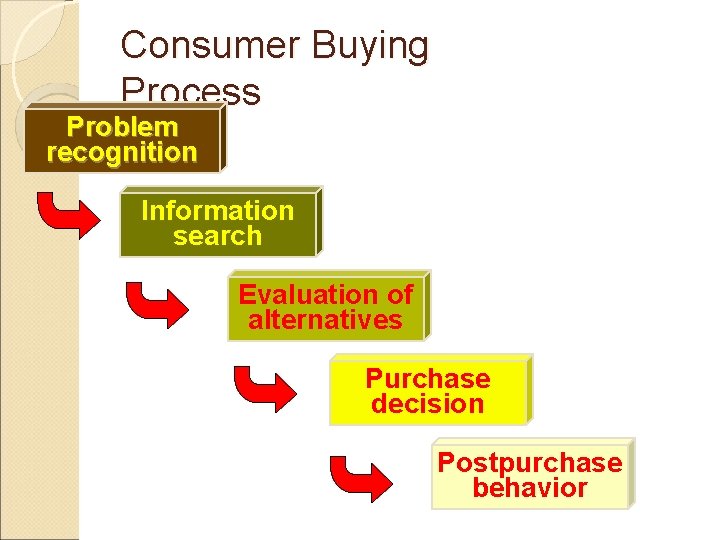
Consumer Buying Process Problem recognition Information search Evaluation of alternatives Purchase decision Postpurchase behavior
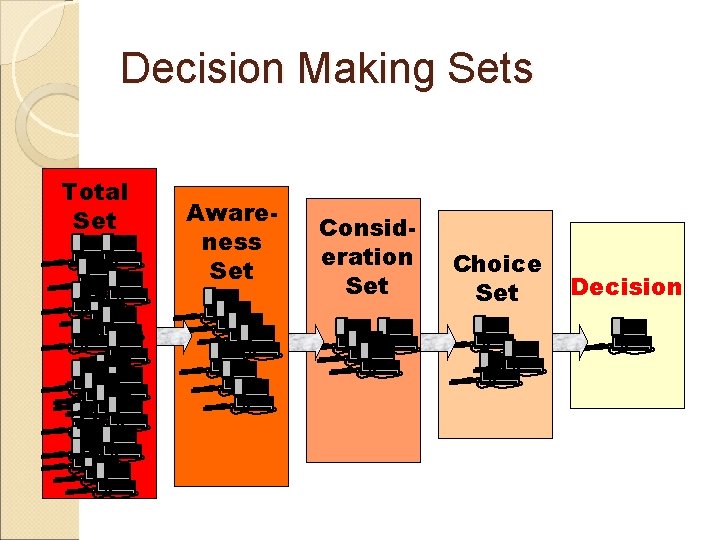
Decision Making Sets Total Set Awareness Set Consideration Set Choice Set Decision
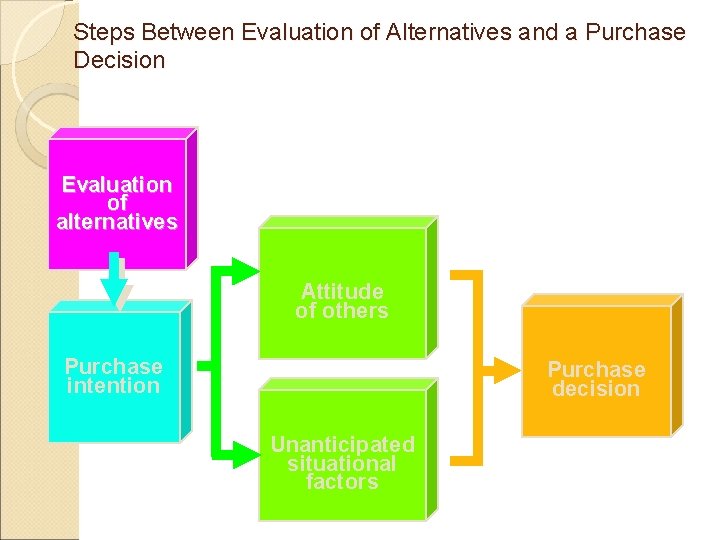
Steps Between Evaluation of Alternatives and a Purchase Decision Evaluation of alternatives Attitude of others Purchase intention Purchase decision Unanticipated situational factors
Roles/Participants in buying process Initiator Influencer Deciders Purchaser User Additional roles Gatekeepers Approvers
Segmentation
Identifying Market Segments and Targets
Market Segmentation is essentially an identification of the subsets of buyers within a market that share a similar needs and demonstrates similar buyer behaviour. Segmentation is made to match different group of buyers with different set of needs & buyer behaviour. Such a group is known as “segment. ” The world is made up of buyers with heterogeneous needs (different), within this group there are some buyers with homogeneous requirements (similar). Segmentation is about pulling these similar ones in a group, called segment
A customer can be classified into a market segment by the customer's individual characteristics. These characteristics vary largely. Examples of characteristics used for segmentation: Gender Price Interests Location Religion Income Size of Household
Objectives of Market Segmentation To understand the needs, wants, desires and buying habits of customers. To formulate marketing programs for each consumer groups according to their nature. To develop new products according to consumer’s changing needs. To expand market & market share. To provide satisfaction to consumers. To make the marketing strategies and policies consumer oriented.
Effective Targeting Requires… Identify and profile distinct groups of buyers who differ in their needs and preferences - Segmentation Select one or more market segments to enter - Targeting Establish and communicate the distinctive benefits of the market offering - Positioning
What is a Market Segment? A market segment consists of a group of customers who share a similar set of needs ad wants.
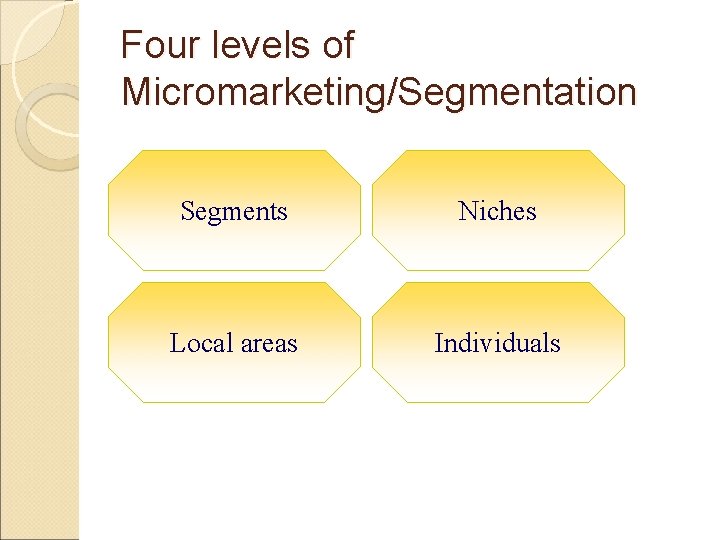
Four levels of Micromarketing/Segmentation Segments Niches Local areas Individuals
Levels Described Segment Marketing: Consists of group of customers who share similar set of needs and wants. can offer better price, design and can fine tune the marketing activities. For eg: Colgate tooth paste. Niche marketing: more narrowly defined customer group seeking a distinctive mix of benefits. For eg: some companies make clothes for oversized customers. (xxx. L/ FS)
Local marketing: Tailored to the needs & wants of local consumers in trading areas, neighborhoods and even individual stores. For eg: matrimonial websites like Bharat matrimony who are further offering other websites for each n every community say Punjabi, Bengali, Muslim, Sikh etc. Individual marketing: Designing the product & service offerings of individual choices. For eg Asian paints, in which you can mix desired colour and quantities of their own choice as per the requirement.
Preference Segments Homogeneous preferences exist when consumers want the same things Diffused preferences exist when consumers want very different things Clustered preferences reveal natural segments from groups with shared preferences
Effective Segmentation Criteria Measurable Substantial Accessible Differentiable Actionable
Segmenting Consumer Markets Geographic Demographic Psychographic Behavioral
Demographic Segmentation Age and Life Cycle Life Stage Gender Income Generation Social Class
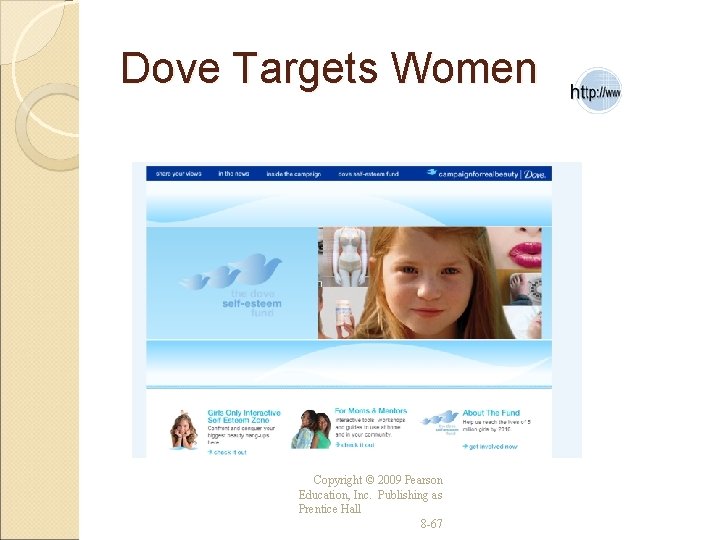
Dove Targets Women Copyright © 2009 Pearson Education, Inc. Publishing as Prentice Hall 8 -67
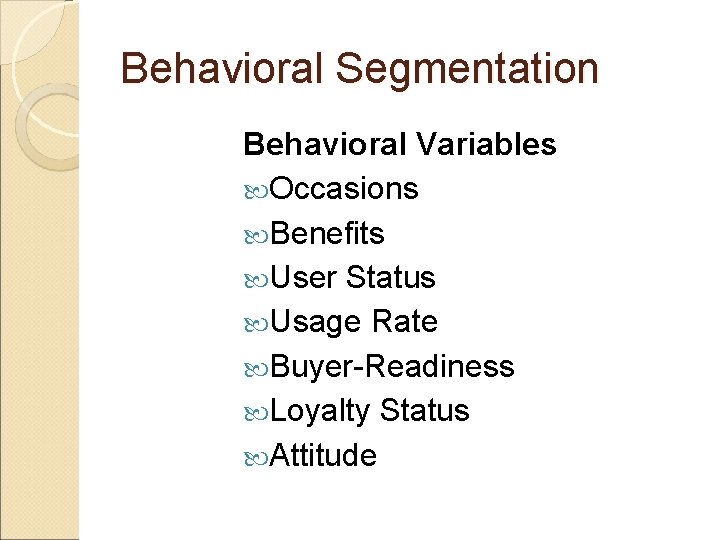
Behavioral Segmentation Behavioral Variables Occasions Benefits User Status Usage Rate Buyer-Readiness Loyalty Status Attitude
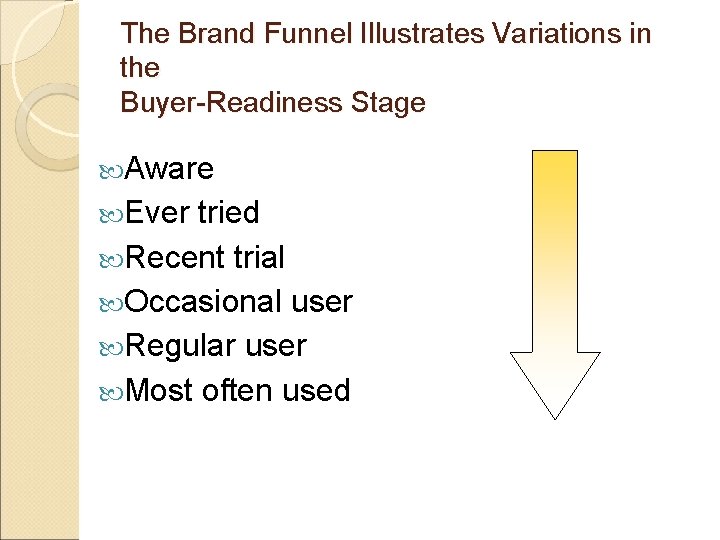
The Brand Funnel Illustrates Variations in the Buyer-Readiness Stage Aware Ever tried Recent trial Occasional user Regular user Most often used
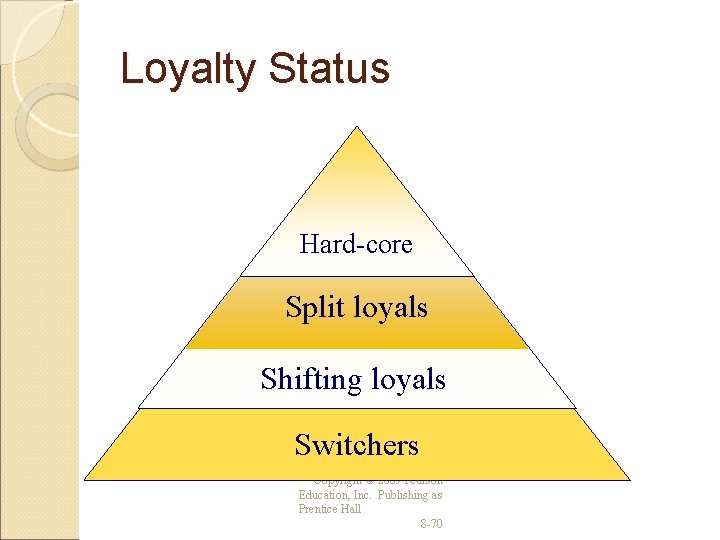
Loyalty Status Hard-core Split loyals Shifting loyals Switchers Copyright © 2009 Pearson Education, Inc. Publishing as Prentice Hall 8 -70
TARGETING
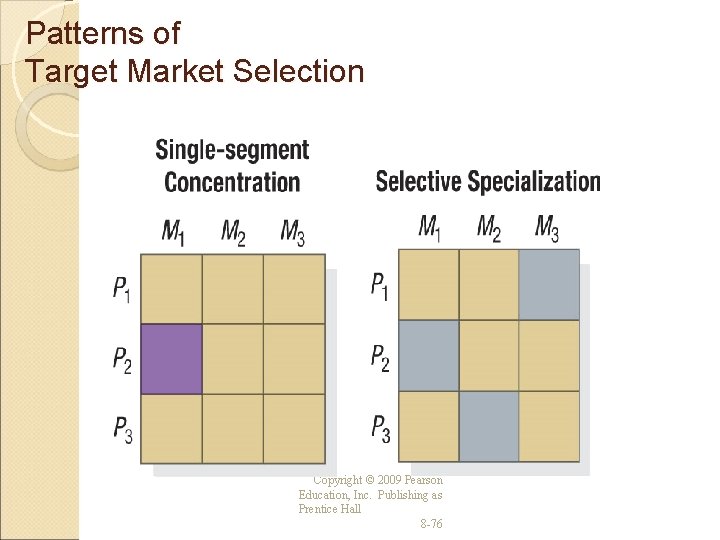
Patterns of Target Market Selection Copyright © 2009 Pearson Education, Inc. Publishing as Prentice Hall 8 -76
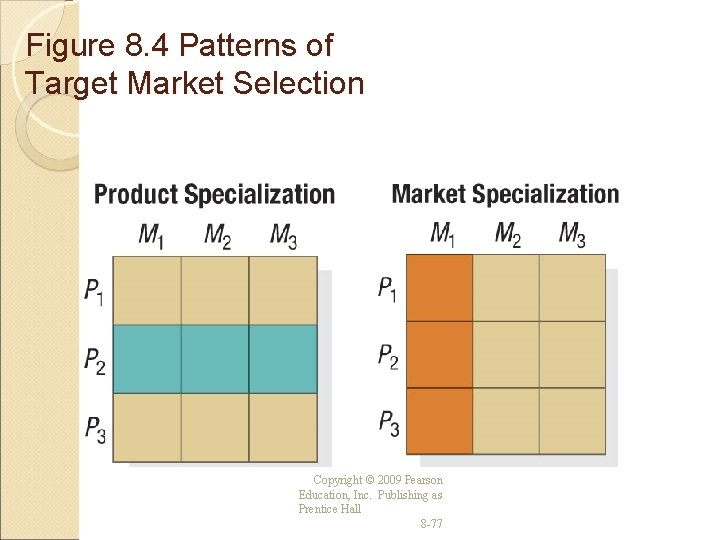
Figure 8. 4 Patterns of Target Market Selection Copyright © 2009 Pearson Education, Inc. Publishing as Prentice Hall 8 -77
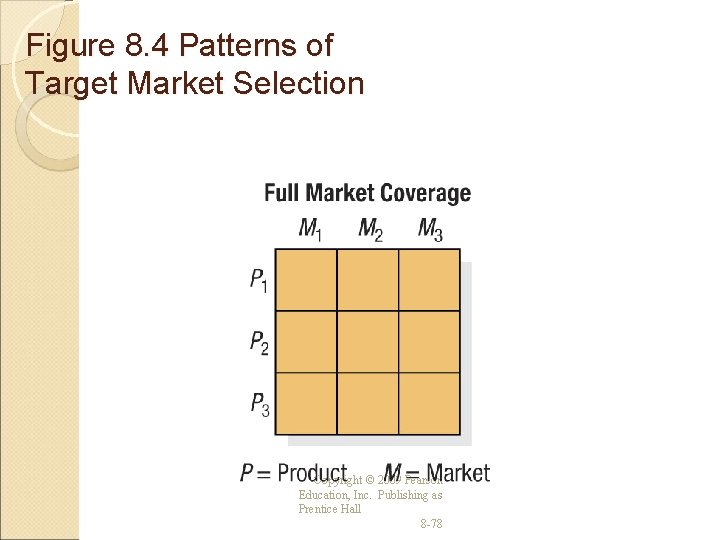
Figure 8. 4 Patterns of Target Market Selection Copyright © 2009 Pearson Education, Inc. Publishing as Prentice Hall 8 -78
- Slides: 61