
Sir Isaac Newton 1642 1727 Sir Isaac Newton
- Slides: 18
Sir Isaac Newton 1642 -1727
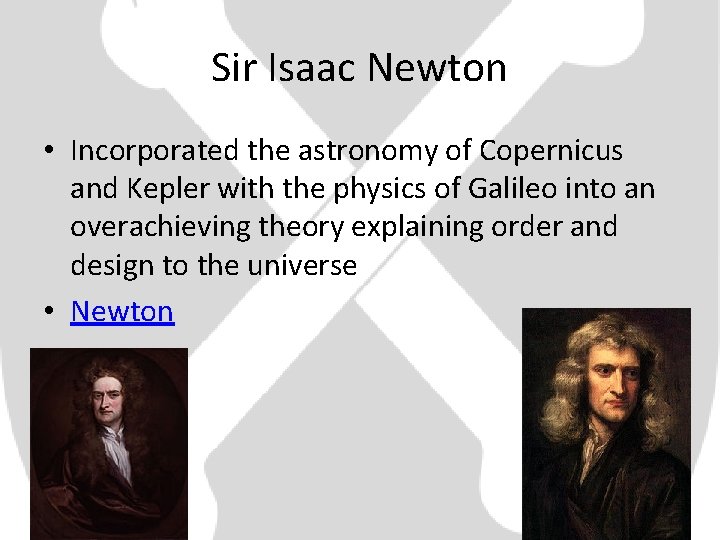
Sir Isaac Newton • Incorporated the astronomy of Copernicus and Kepler with the physics of Galileo into an overachieving theory explaining order and design to the universe • Newton
Principle of Universal Gravitation • Detailed in Mathematical Principles of Natural Philosophy (Principia) • Natural laws of motion – gravitation- are evident in the movement of heavenly bodies and earthly objects • Newton developed a set of mathematical principles to explain motion
Principle of Universal Gravitation • Since these natural laws are unchangeable and predictable, God’s active participation in the natural world is not needed to explain the forces of nature – Challenged Medieval beliefs – Came to be the foundation of the Enlightenment view of God: Deism
Anatomy and Physiology
Anatomy and Physiology • Scientist began challenging Greco-Roman medical views
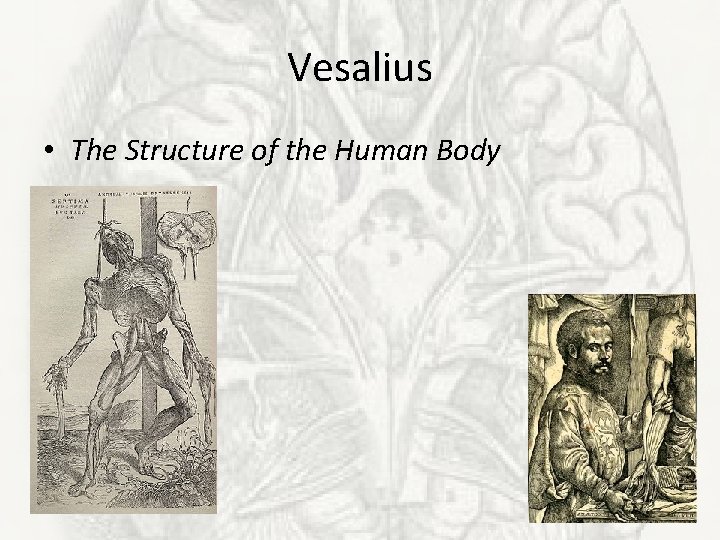
Vesalius • The Structure of the Human Body
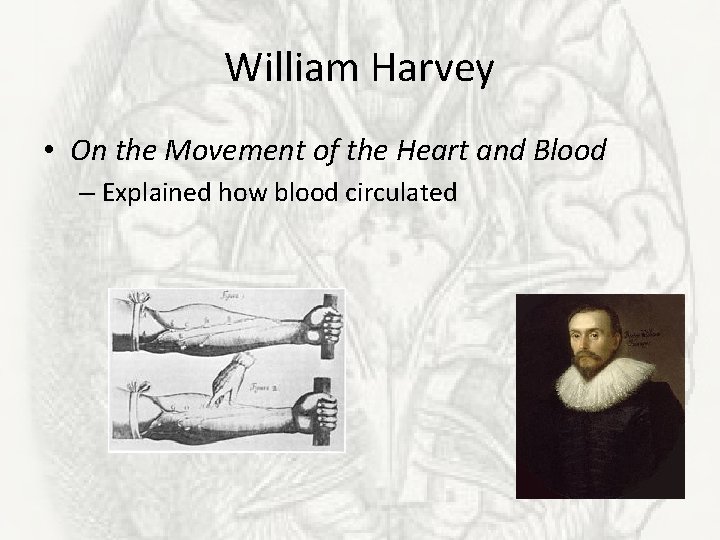
William Harvey • On the Movement of the Heart and Blood – Explained how blood circulated
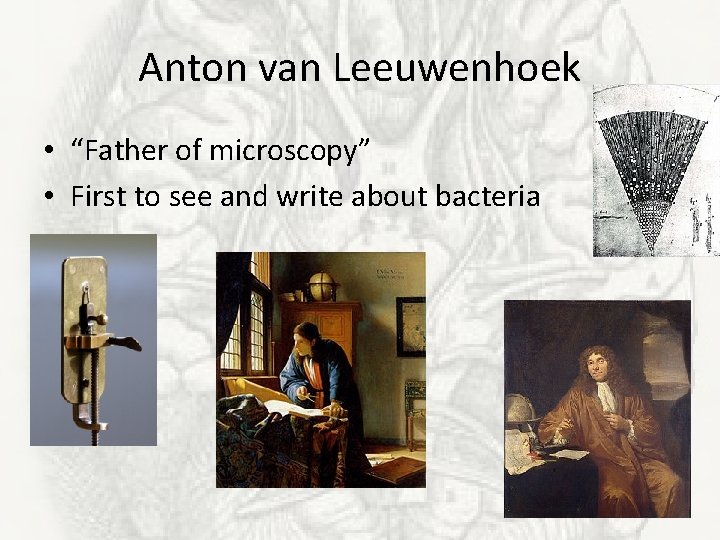
Anton van Leeuwenhoek • “Father of microscopy” • First to see and write about bacteria
Royal Scientific Societies
Governments • Encouraged scientific inquiry as a means to further the prestige of the state and remain at the cutting edge of technology • Scientific societies created a means by which scientists could communicate with each other internationally
Royal Society • England • Perhaps the most successful and prestigious scientific societies • Other royal societies were created in Naples, France, Prussia (by Frederick I) and Russia (by Peter the Great)
Impact of Scientific Revolution
Enlightenment • Scientific Revolution led directly to the Enlightenment of the 18 th century
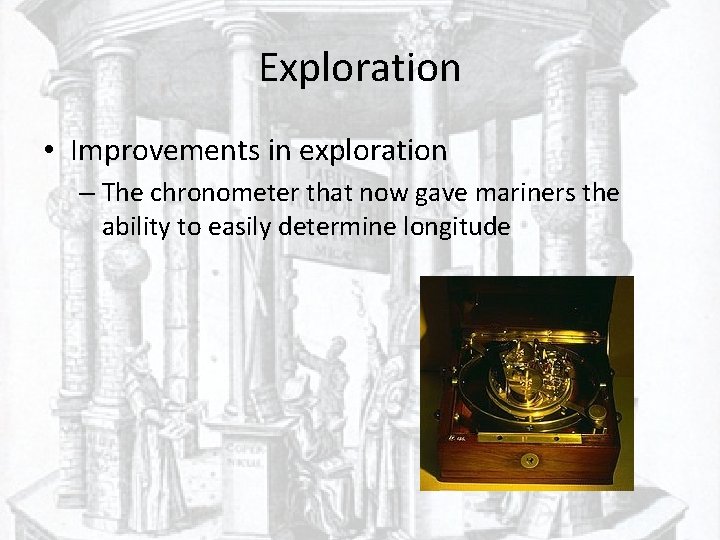
Exploration • Improvements in exploration – The chronometer that now gave mariners the ability to easily determine longitude
Experiments • Spirit of experimentation perhaps helped accelerate the Agricultural Revolution of the 18 th century
Medical • Improvements in medical knowledge helped improve the quality of life after (19 th and 20 th century)
Science vs. Religion • Science and religion were not in acute conflict until the 19 th and 20 th century • No attempt to secularize science in 17 th and 18 th century • Scientists believed they were studying and analyzing God’s creation • After Catholic Counter Reformation, the Church became more hostile to science • Protestant countries became the leaders of the science movement