
SIR GAWAIN AND THE GREEN KNIGHT How do
- Slides: 14
SIR GAWAIN AND THE GREEN KNIGHT
How do the characters in Sir Gawain and the Green Knight uphold chivalric values? ■ Medieval Romance ■ Origins of Chivalry ■ Code of Chivalry ■ Background to the text
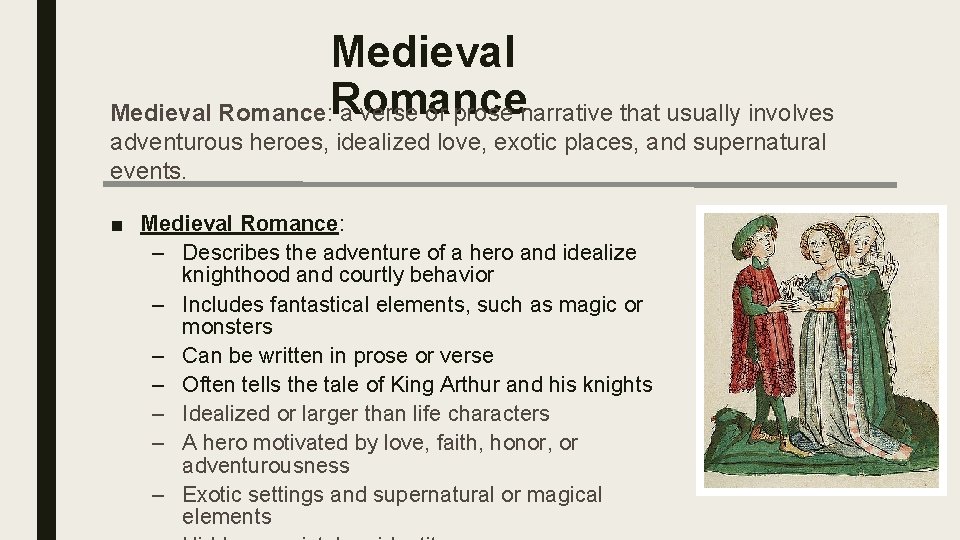
Medieval Romance: a verse or prose narrative that usually involves adventurous heroes, idealized love, exotic places, and supernatural events. ■ Medieval Romance: – Describes the adventure of a hero and idealize knighthood and courtly behavior – Includes fantastical elements, such as magic or monsters – Can be written in prose or verse – Often tells the tale of King Arthur and his knights – Idealized or larger than life characters – A hero motivated by love, faith, honor, or adventurousness – Exotic settings and supernatural or magical elements
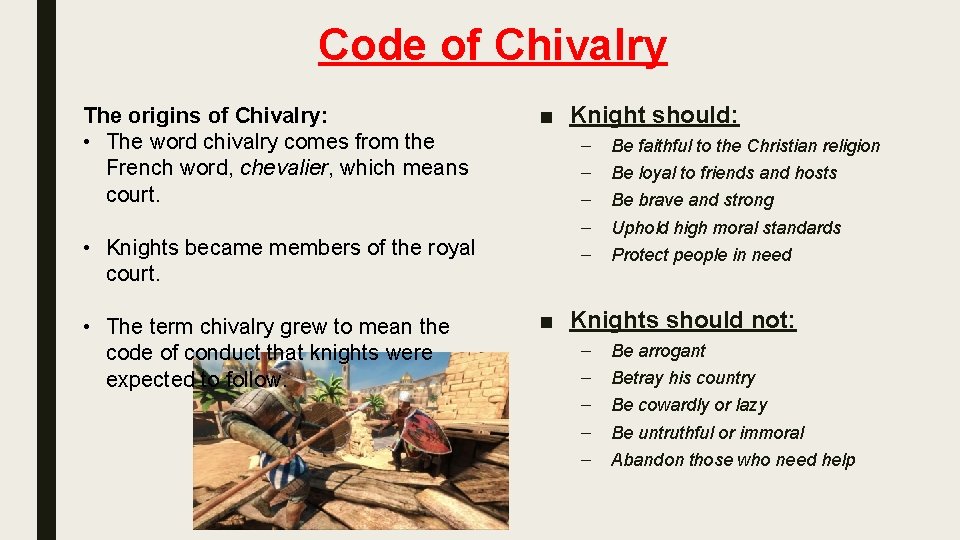
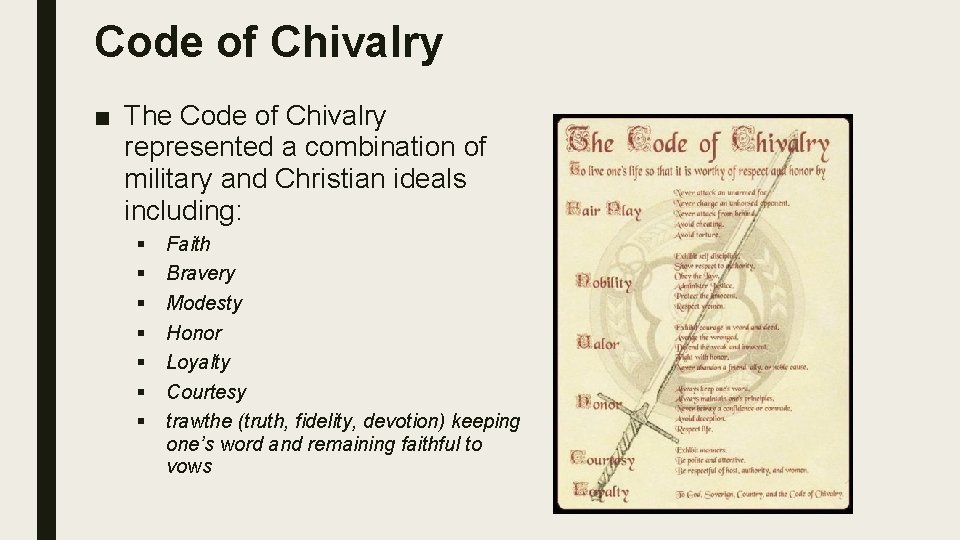
Code of Chivalry The origins of Chivalry: • The word chivalry comes from the French word, chevalier, which means court. • Knights became members of the royal court. • The term chivalry grew to mean the code of conduct that knights were expected to follow. ■ Knight should: – – – Be faithful to the Christian religion Be loyal to friends and hosts Be brave and strong Uphold high moral standards Protect people in need ■ Knights should not: – – – Be arrogant Betray his country Be cowardly or lazy Be untruthful or immoral Abandon those who need help
Code of Chivalry ■ The Code of Chivalry represented a combination of military and Christian ideals including: § § § § Faith Bravery Modesty Honor Loyalty Courtesy trawthe (truth, fidelity, devotion) keeping one’s word and remaining faithful to vows
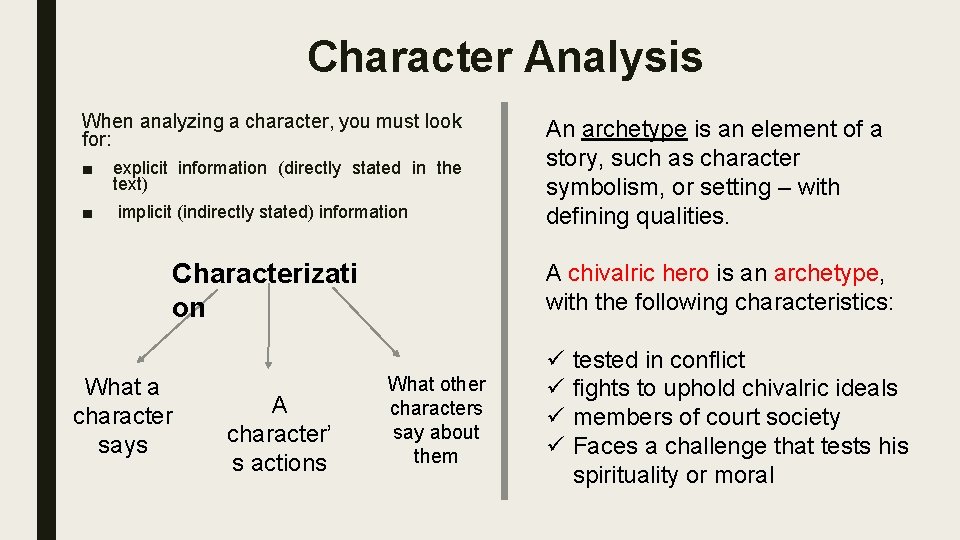
Character Analysis When analyzing a character, you must look for: ■ explicit information (directly stated in the text) ■ implicit (indirectly stated) information An archetype is an element of a story, such as character symbolism, or setting – with defining qualities. Characterizati on A chivalric hero is an archetype, with the following characteristics: What a character says A character’ s actions What other characters say about them ü ü tested in conflict fights to uphold chivalric ideals members of court society Faces a challenge that tests his spirituality or moral
SIR GAWAIN AND THE GREEN KNIGHT Summary
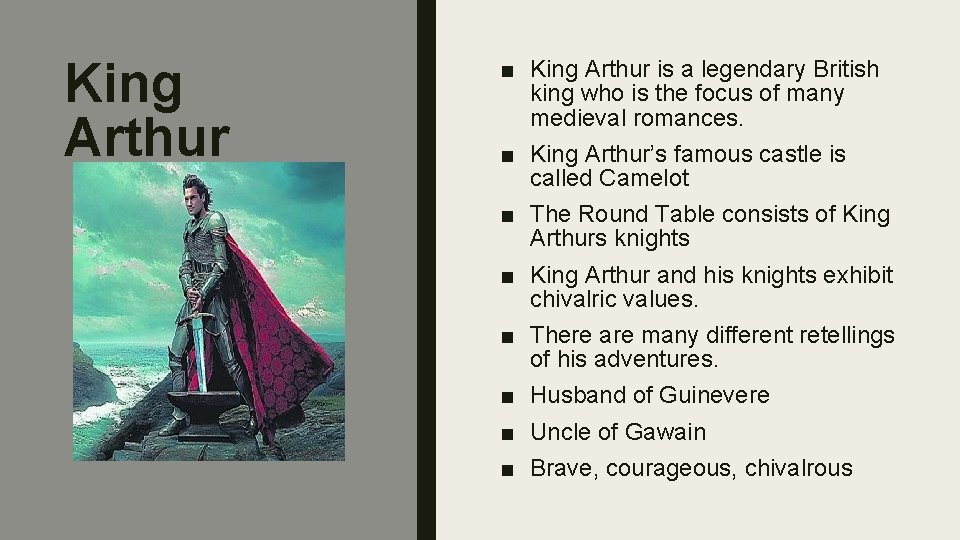
King Arthur ■ King Arthur is a legendary British king who is the focus of many medieval romances. ■ King Arthur’s famous castle is called Camelot ■ The Round Table consists of King Arthurs knights ■ King Arthur and his knights exhibit chivalric values. ■ There are many different retellings of his adventures. ■ Husband of Guinevere ■ Uncle of Gawain ■ Brave, courageous, chivalrous
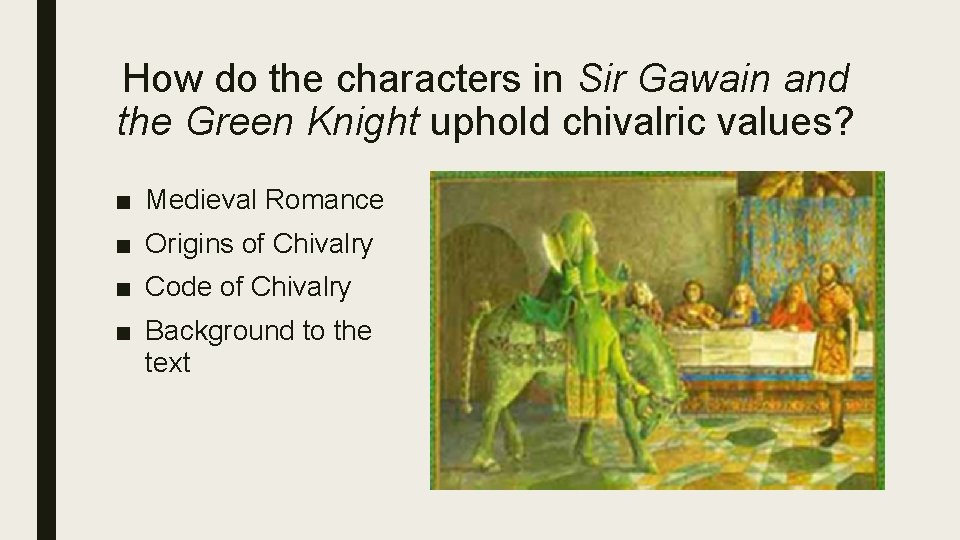
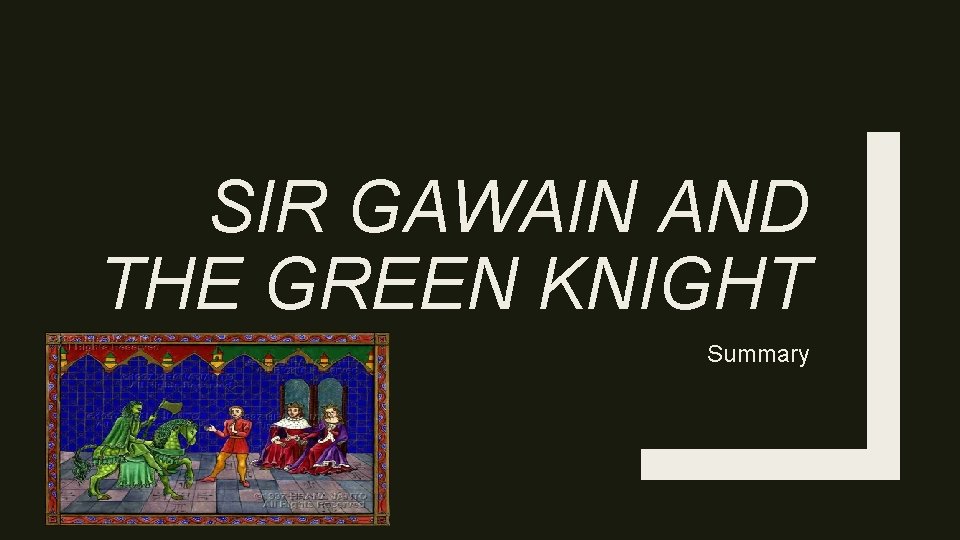
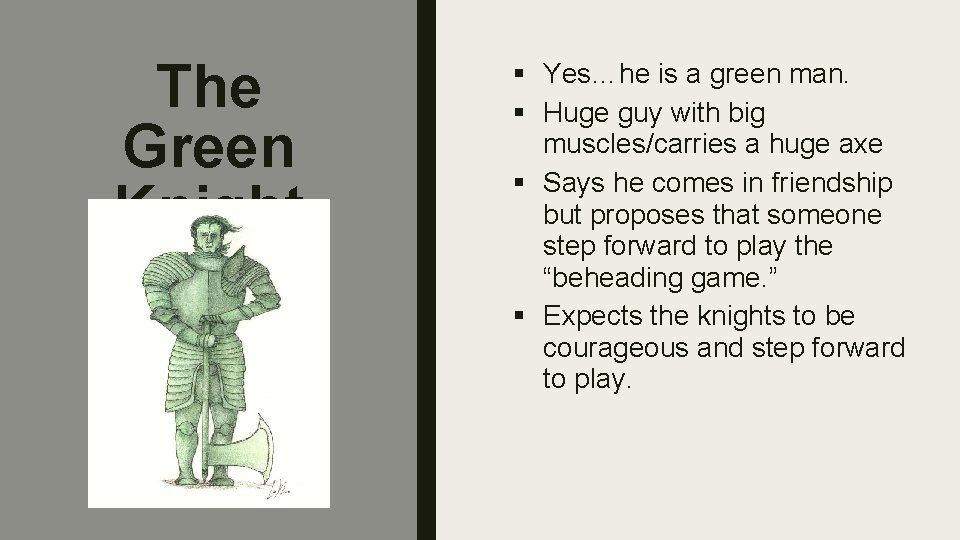
The Green Knight § Yes…he is a green man. § Huge guy with big muscles/carries a huge axe § Says he comes in friendship but proposes that someone step forward to play the “beheading game. ” § Expects the knights to be courageous and step forward to play.
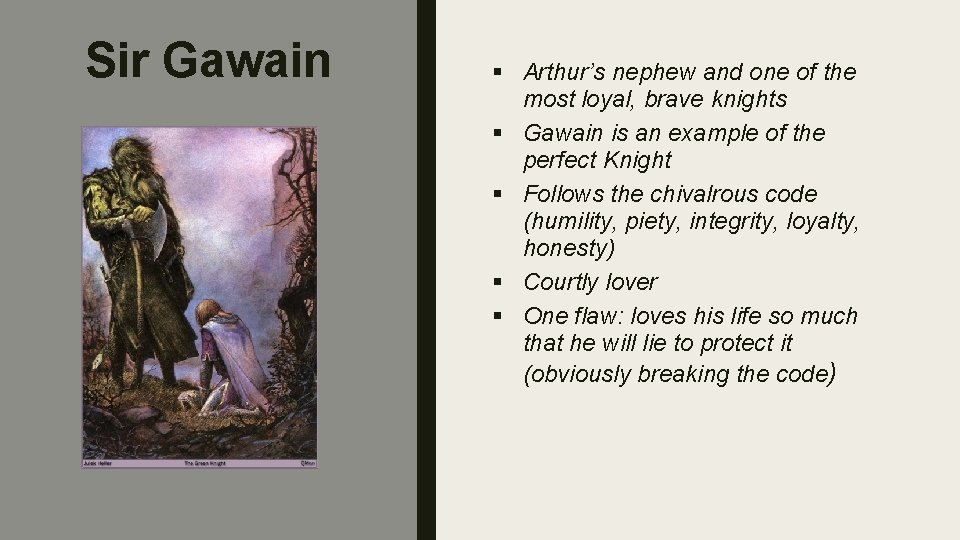
Sir Gawain § Arthur’s nephew and one of the most loyal, brave knights § Gawain is an example of the perfect Knight § Follows the chivalrous code (humility, piety, integrity, loyalty, honesty) § Courtly lover § One flaw: loves his life so much that he will lie to protect it (obviously breaking the code)
Setting up the story… ■ During a New Year's Eve feast at King Arthur's court, a strange figure, referred to only as the Green Knight, pays the court an unexpected visit. ■ He challenges the group's leader or any other brave representative to a game. The Green Knight says that he will allow whomever accepts the challenge to strike him with his own axe, on the condition that the challenger find him in exactly one year to receive a blow in return. ■ Stunned, Arthur hesitates to respond, but when the Green Knight mocks Arthur's silence, the king steps forward to take the challenge. ■ As soon as Arthur grips the Green Knight's axe, Sir Gawain leaps up and asks to take the challenge himself. He takes hold of the axe and, in one deadly blow, cuts off the knight's head. ■ To the amazement of the court, the now-headless Green Knight picks up his severed head. Before riding away, the head reiterates the terms of the pact, reminding the young Gawain to seek him in a year and a day at the Green Chapel. ■ After the Green Knight leaves, the company goes back to its festival, but Gawain is uneasy……. . and away we go from there!
Practice Question #1 Read the excerpt from Sir Gawain and the Green Knight: This King was staying at Camelot at Christmastime With many fair lords and the most beautiful ladies And the whole high brotherhood of the Round Table In happy festivity and the high revels of the season. What element of medieval court culture is evident in the excerpt? A. the people’s reverence for their king B. the material wealth of nobles C. the camaraderie of nobles and knights D. the church’s rites and practices
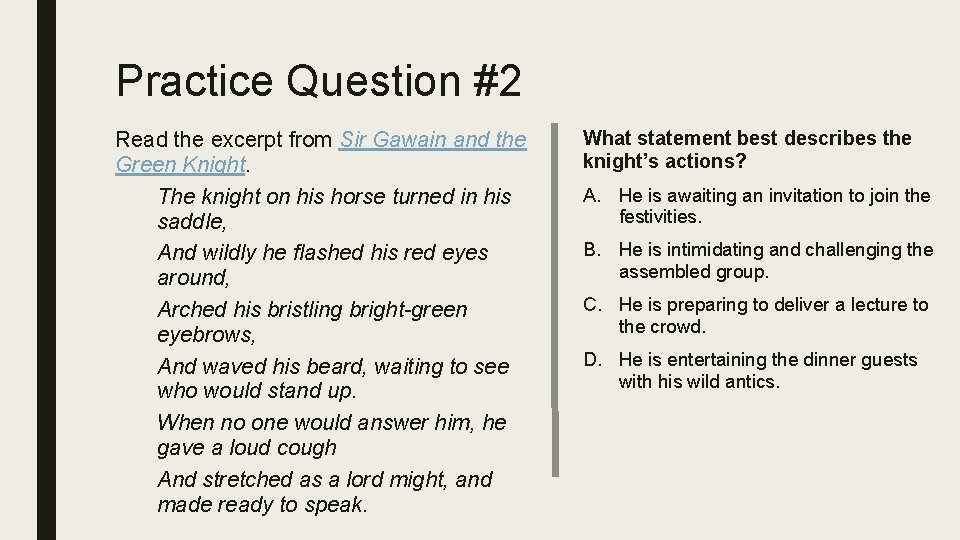
Practice Question #2 Read the excerpt from Sir Gawain and the Green Knight. The knight on his horse turned in his saddle, And wildly he flashed his red eyes around, Arched his bristling bright-green eyebrows, And waved his beard, waiting to see who would stand up. When no one would answer him, he gave a loud cough And stretched as a lord might, and made ready to speak. What statement best describes the knight’s actions? A. He is awaiting an invitation to join the festivities. B. He is intimidating and challenging the assembled group. C. He is preparing to deliver a lecture to the crowd. D. He is entertaining the dinner guests with his wild antics.
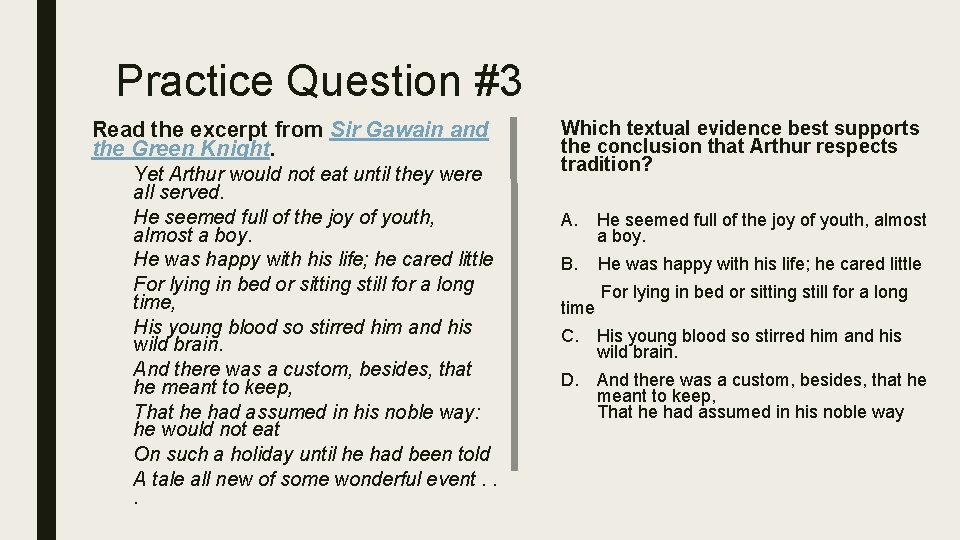
Practice Question #3 Read the excerpt from Sir Gawain and the Green Knight. Yet Arthur would not eat until they were all served. He seemed full of the joy of youth, almost a boy. He was happy with his life; he cared little For lying in bed or sitting still for a long time, His young blood so stirred him and his wild brain. And there was a custom, besides, that he meant to keep, That he had assumed in his noble way: he would not eat On such a holiday until he had been told A tale all new of some wonderful event. . . Which textual evidence best supports the conclusion that Arthur respects tradition? A. He seemed full of the joy of youth, almost a boy. B. He was happy with his life; he cared little For lying in bed or sitting still for a long time C. His young blood so stirred him and his wild brain. D. And there was a custom, besides, that he meant to keep, That he had assumed in his noble way