
Siphonic Roof Drainage Introduction Siphonic Action Gravity vs
- Slides: 65
Siphonic Roof Drainage Introduction Siphonic Action Gravity vs. Siphonic Drainage Siphonic Drains Tailpipes Pipework LEED™ - Green Building Design Applications Why Siphonic? Siphonix® Software
Introduction • Invented and patented 1968 by Olavi Ebeling
Introduction • Invented and patented 1968 by Olavi Ebeling • A fully engineered system based on hydraulic principles
Introduction • Invented and patented 1968 by Olavi Ebeling • A fully engineered system based on hydraulic principles • Highly efficient
Introduction • Invented and patented 1968 by Olavi Ebeling • A fully engineered system based on hydraulic principles • Highly efficient • Use spread from Scandinavia, through Europe, Asia & Oceania
Introduction • Invented and patented 1968 by Olavi Ebeling • A fully engineered system based on hydraulic principles • Highly efficient • Use spread from Scandinavia, through Europe, Asia & Oceania • System design simplified by current generation of software
Introduction • Invented and patented 1968 by Olavi Ebeling • A fully engineered system based on hydraulic principles • Highly efficient • Use spread from Scandinavia, through Europe, Asia & Oceania • System design simplified by current generation of software • Gaining ground in USA
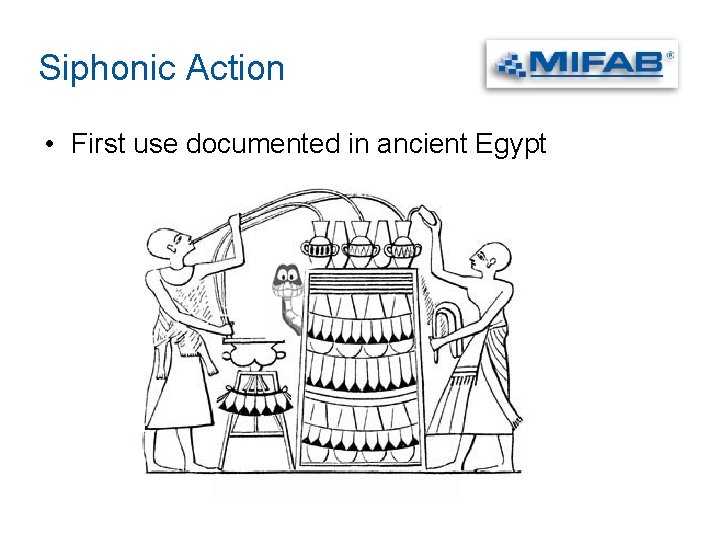
Siphonic Action • First use documented in ancient Egypt
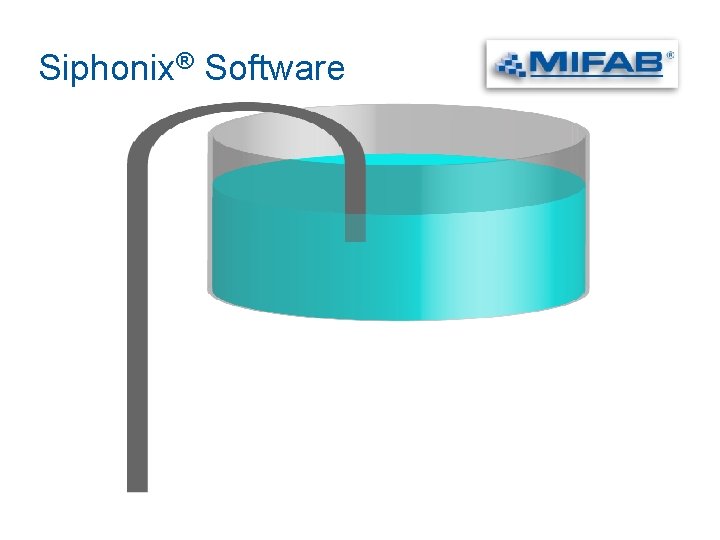
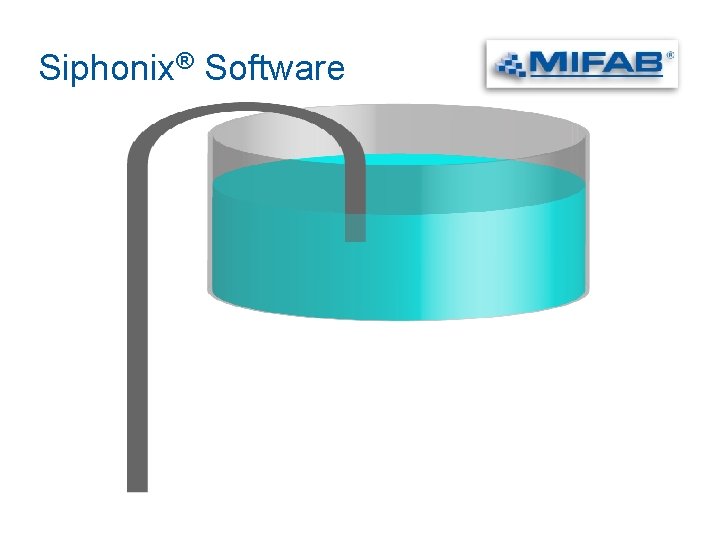
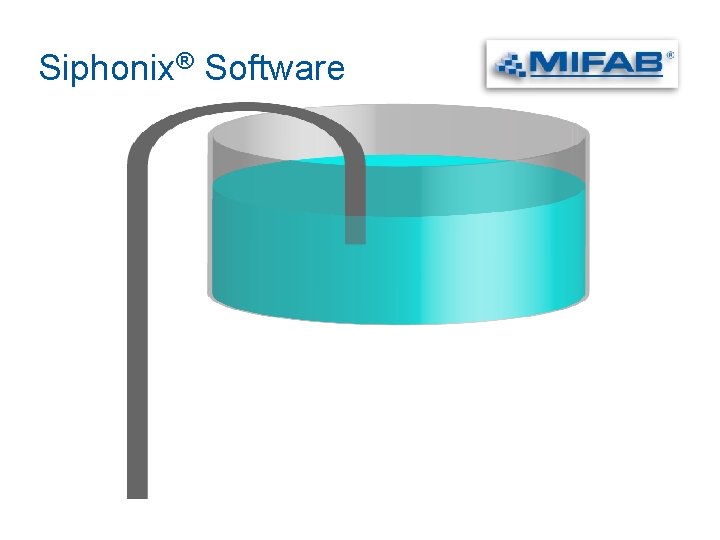
Siphonic Action • Created by a pipe completely filled with fluid with one end lower than the other
Siphonic Action • Created by a pipe completely filled with fluid with one end lower than the other • Gravity will cause the fluid to drain through the lower end
Siphonic Action • Created by a pipe completely filled with fluid with one end lower than the other • Gravity will cause the fluid to drain through the lower end • Cohesive forces between water molecules ensures the pipe remains full
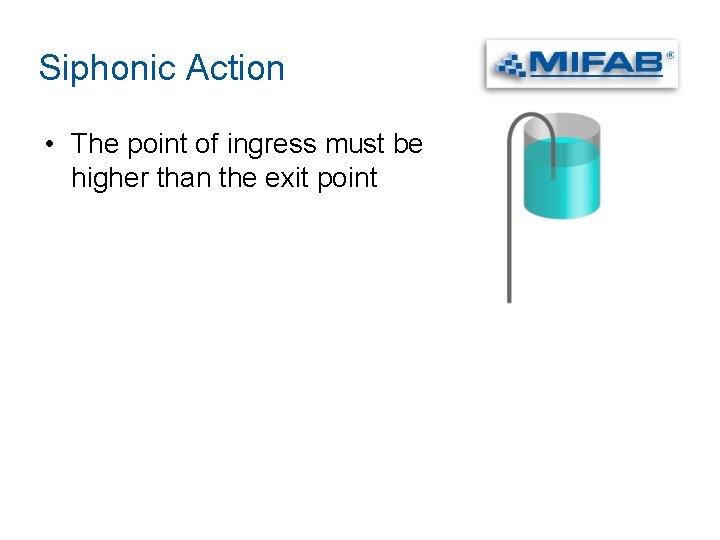
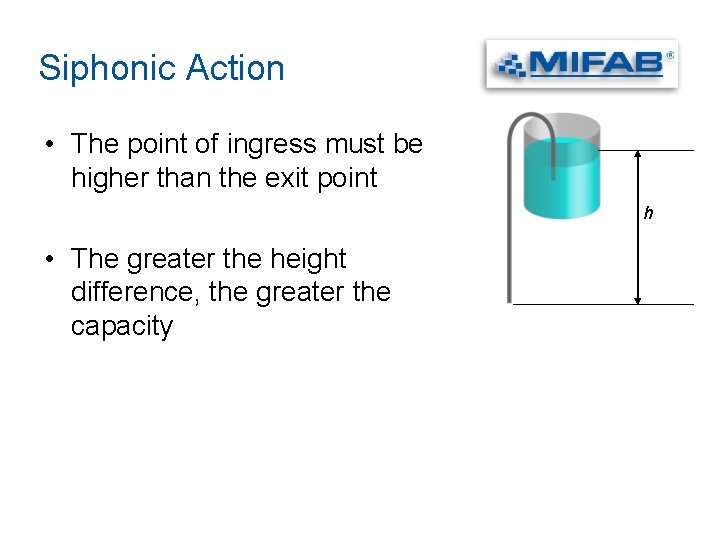
Siphonic Action • The point of ingress must be higher than the exit point
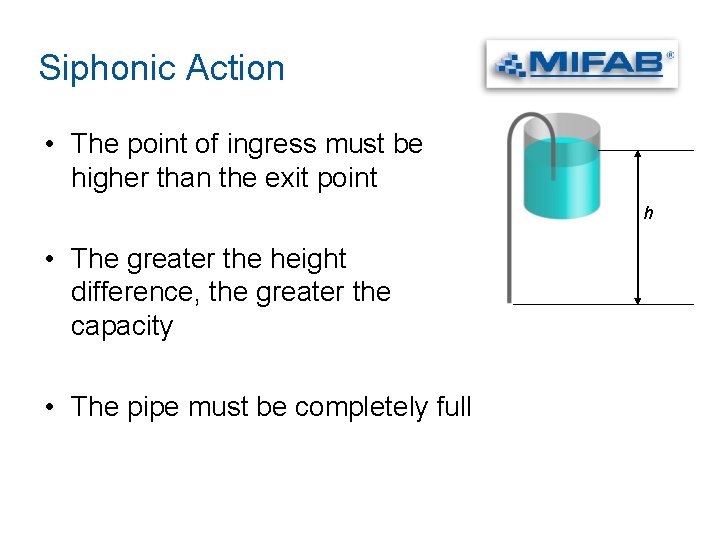
Siphonic Action • The point of ingress must be higher than the exit point h • The greater the height difference, the greater the capacity
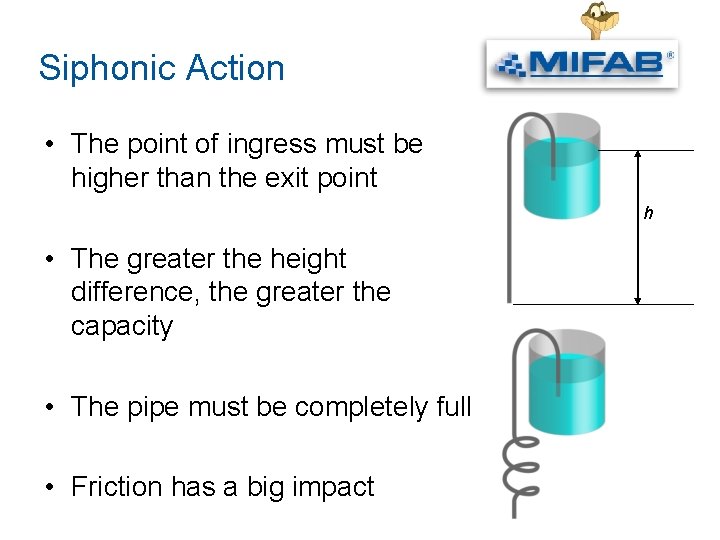
Siphonic Action • The point of ingress must be higher than the exit point h • The greater the height difference, the greater the capacity • The pipe must be completely full
Siphonic Action • The point of ingress must be higher than the exit point h • The greater the height difference, the greater the capacity • The pipe must be completely full • Friction has a big impact
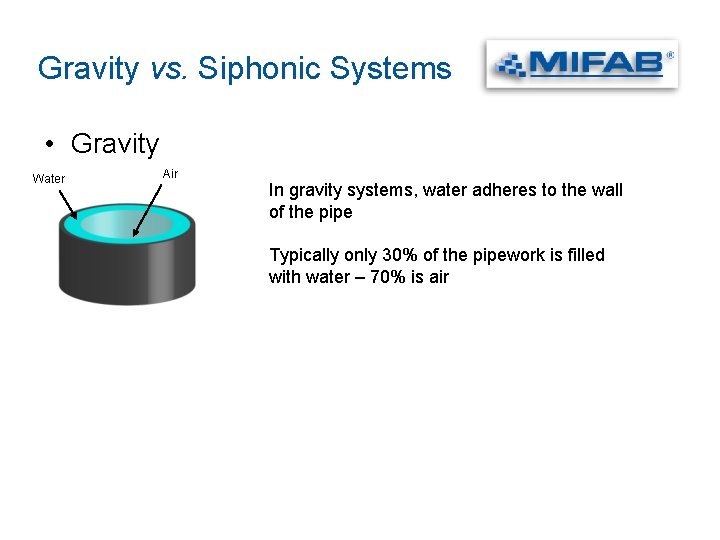
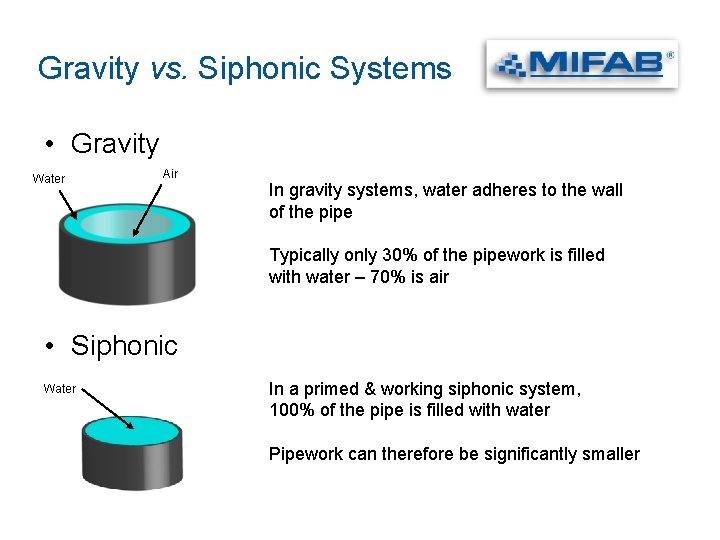
Gravity vs. Siphonic Systems • Gravity Water Air In gravity systems, water adheres to the wall of the pipe Typically only 30% of the pipework is filled with water – 70% is air
Gravity vs. Siphonic Systems • Gravity Water Air In gravity systems, water adheres to the wall of the pipe Typically only 30% of the pipework is filled with water – 70% is air • Siphonic Water In a primed & working siphonic system, 100% of the pipe is filled with water Pipework can therefore be significantly smaller
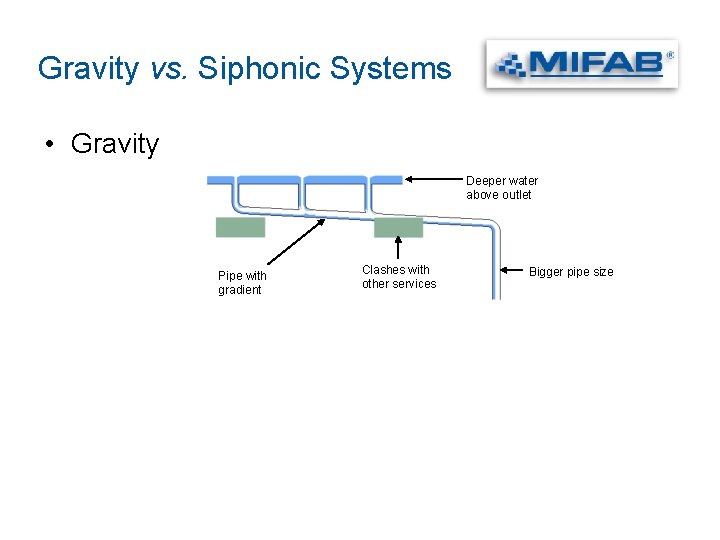
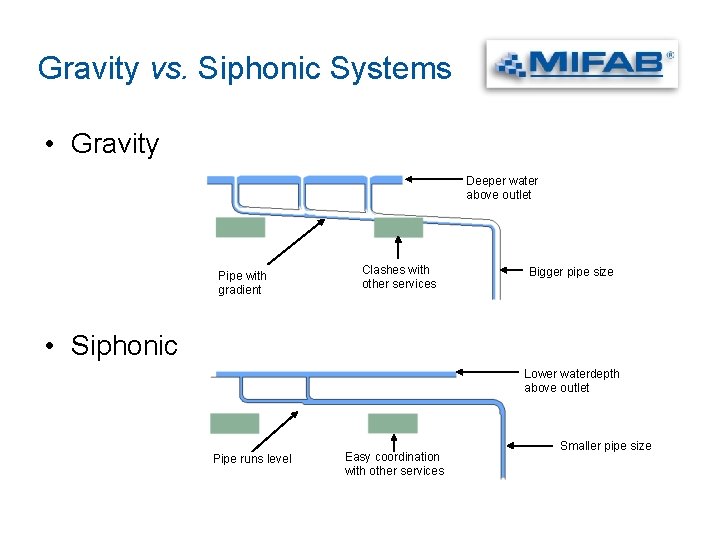
Gravity vs. Siphonic Systems • Gravity Deeper water above outlet Pipe with gradient Clashes with other services Bigger pipe size
Gravity vs. Siphonic Systems • Gravity Deeper water above outlet Pipe with gradient Clashes with other services Bigger pipe size • Siphonic Lower waterdepth above outlet Pipe runs level Easy coordination with other services Smaller pipe size
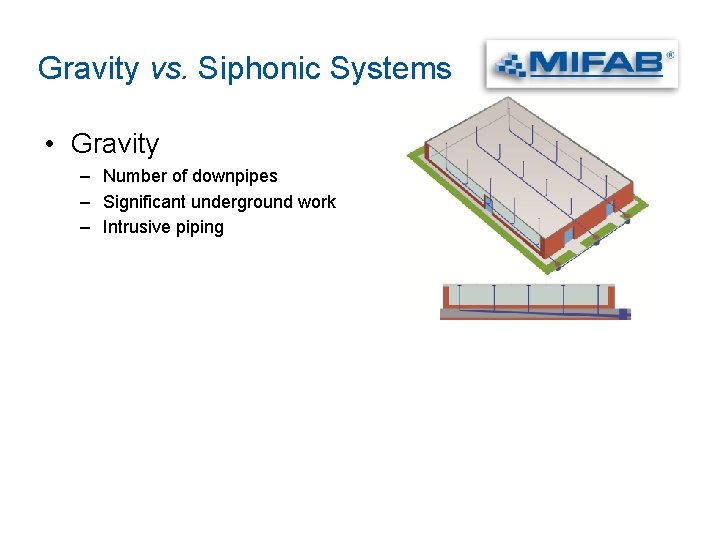
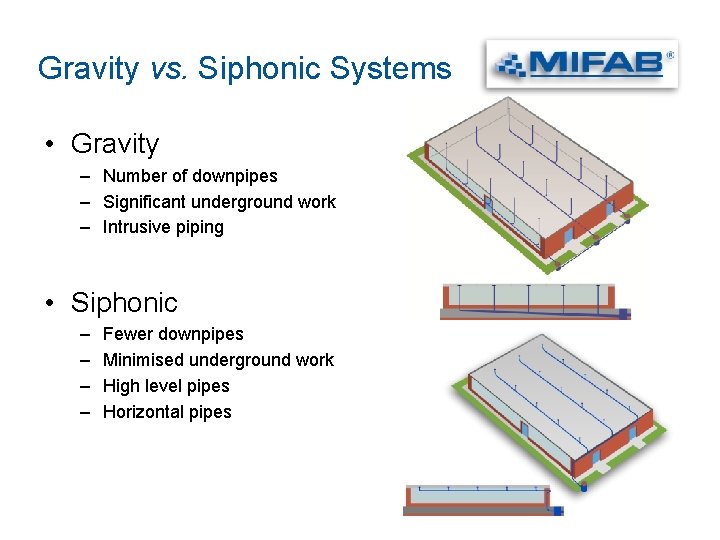
Gravity vs. Siphonic Systems • Gravity – Number of downpipes – Significant underground work – Intrusive piping
Gravity vs. Siphonic Systems • Gravity – Number of downpipes – Significant underground work – Intrusive piping • Siphonic – – Fewer downpipes Minimised underground work High level pipes Horizontal pipes
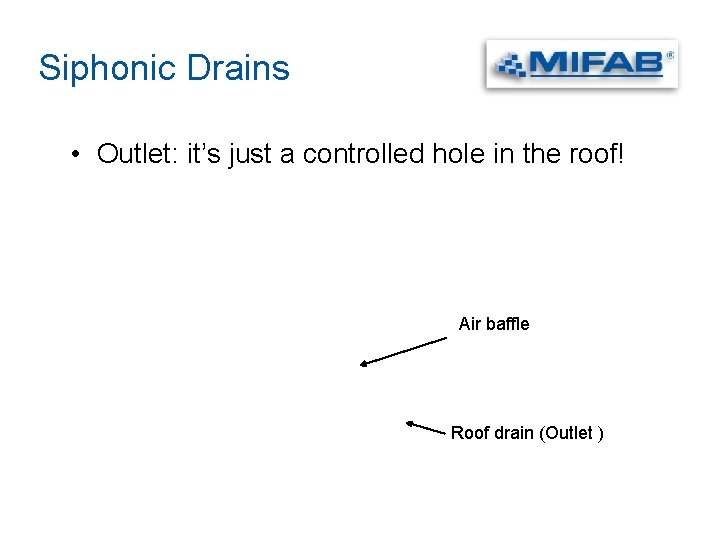
Siphonic Drains • Outlet: it’s just a controlled hole in the roof! Air baffle Roof drain (Outlet )
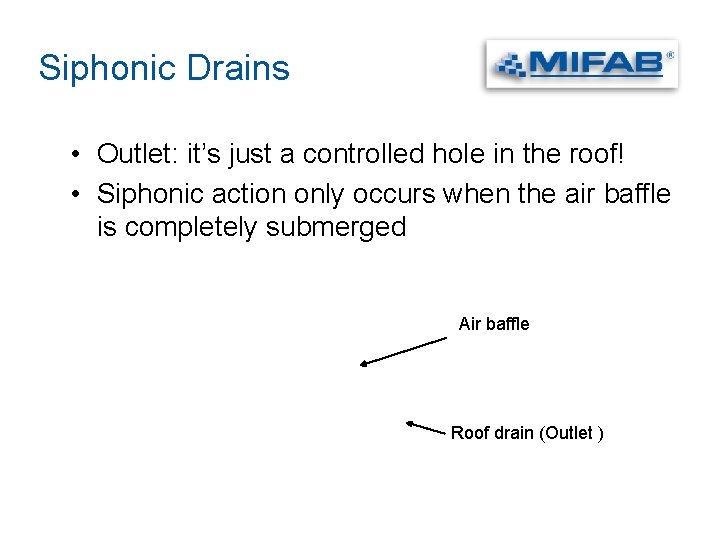
Siphonic Drains • Outlet: it’s just a controlled hole in the roof! • Siphonic action only occurs when the air baffle is completely submerged Air baffle Roof drain (Outlet )
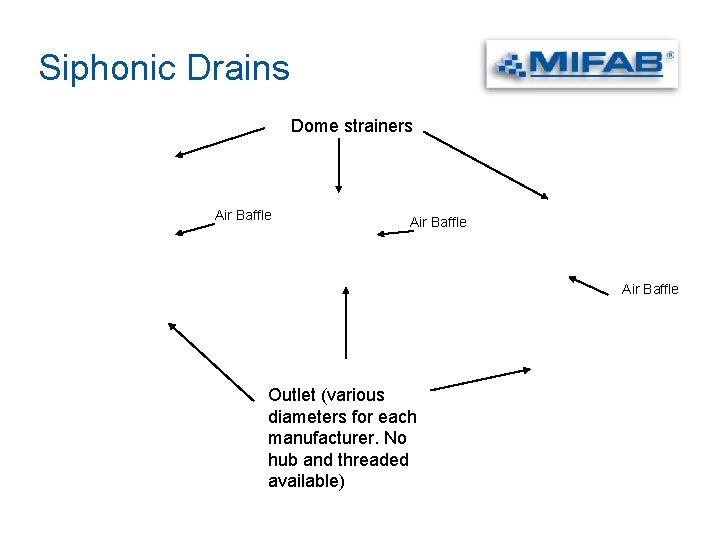
Siphonic Drains Dome strainers Air Baffle Outlet (various diameters for each manufacturer. No hub and threaded available)
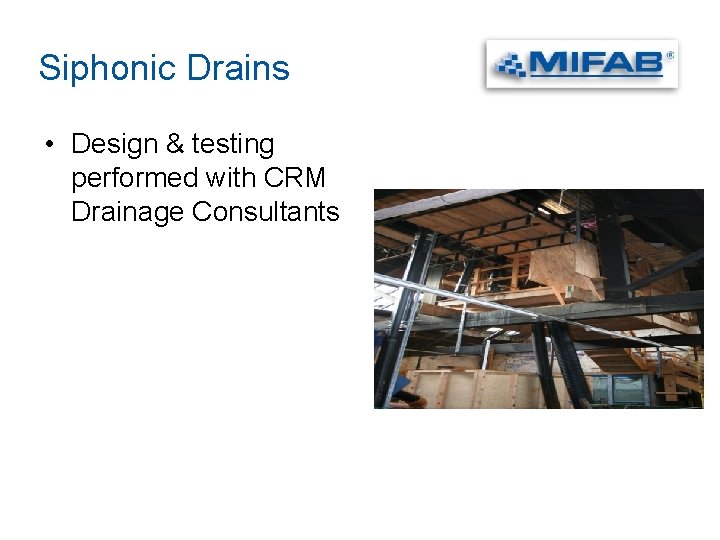
Siphonic Drains • Design & testing performed with CRM Drainage Consultants
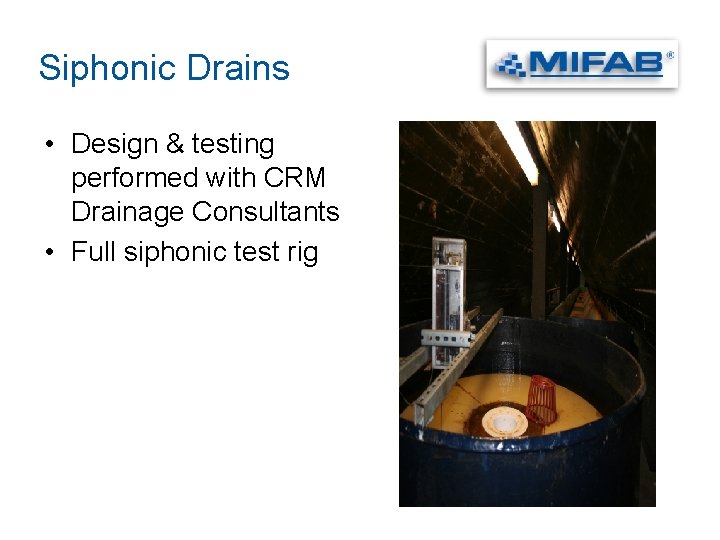
Siphonic Drains • Design & testing performed with CRM Drainage Consultants • Full siphonic test rig
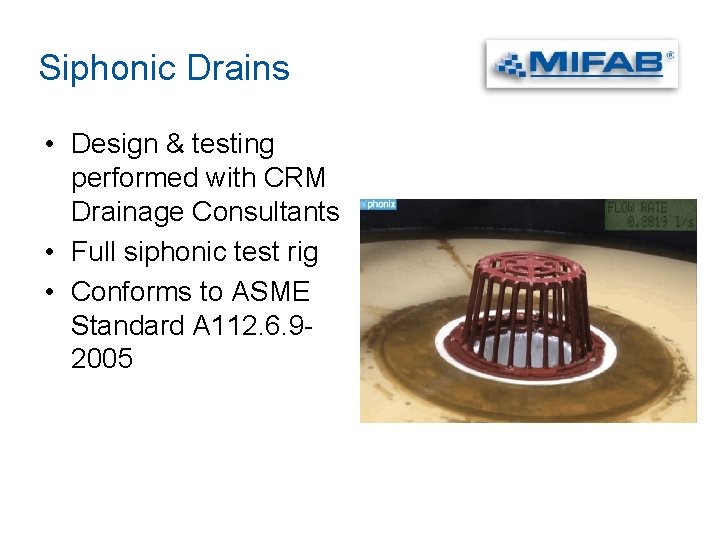
Siphonic Drains • Design & testing performed with CRM Drainage Consultants • Full siphonic test rig • Conforms to ASME Standard A 112. 6. 92005
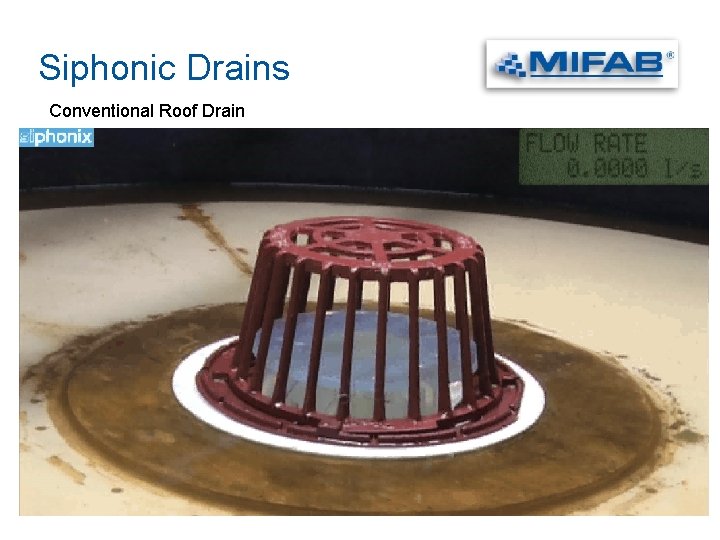
Siphonic Drains Conventional Roof Drain
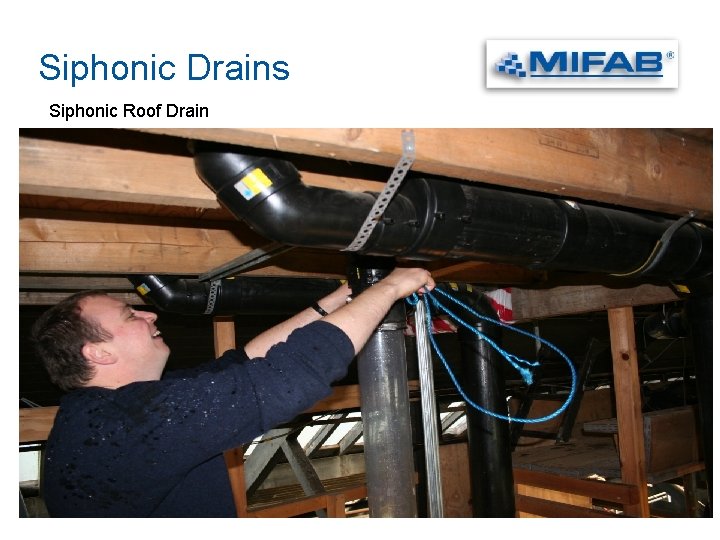
Siphonic Drains Siphonic Roof Drain
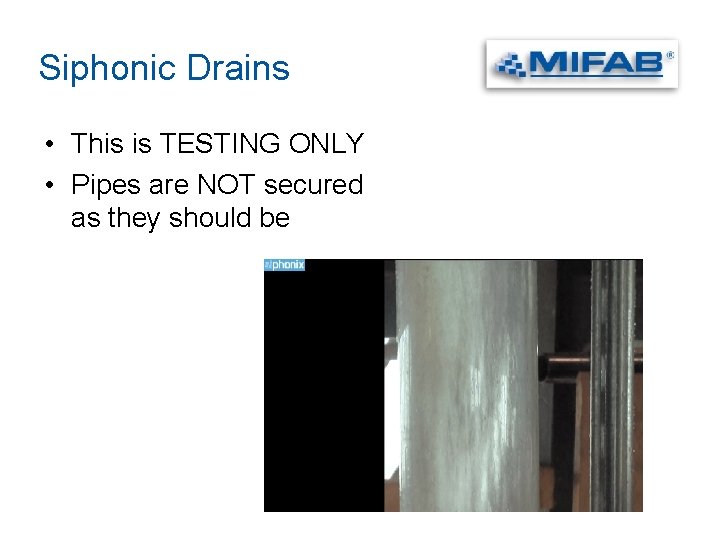
Siphonic Drains • This is TESTING ONLY • Pipes are NOT secured as they should be
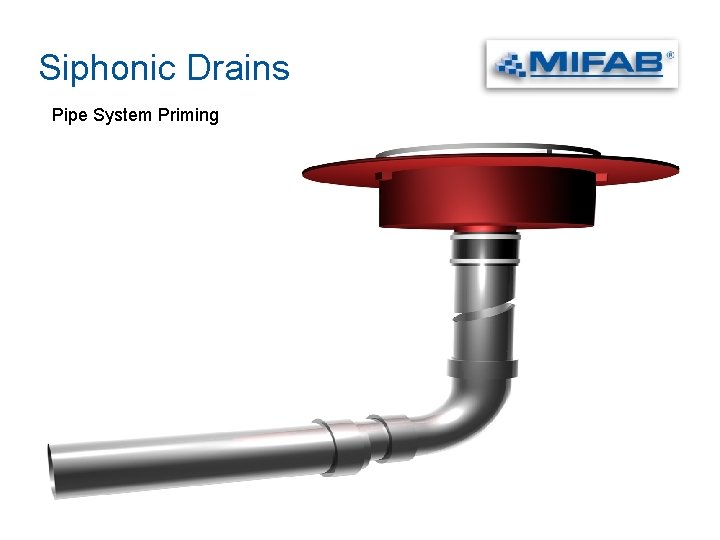
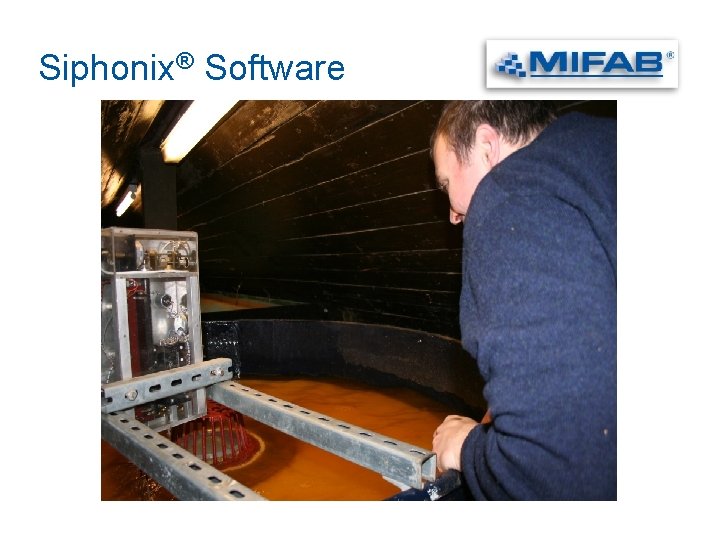
Siphonic Drains Pipe System Priming
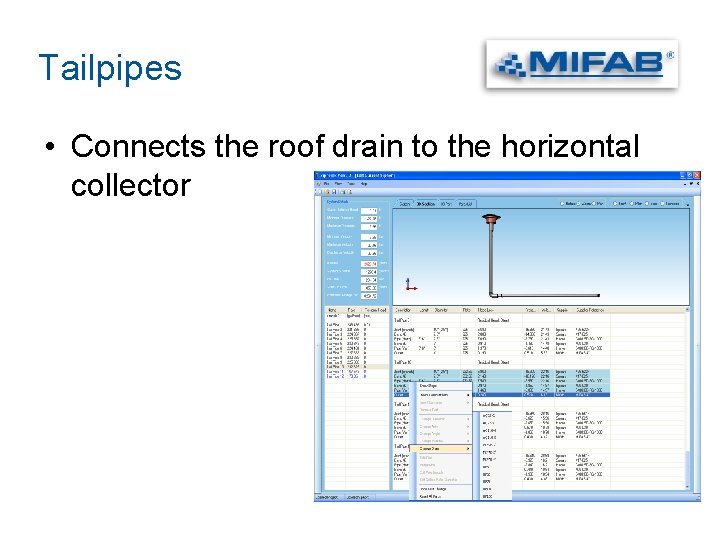
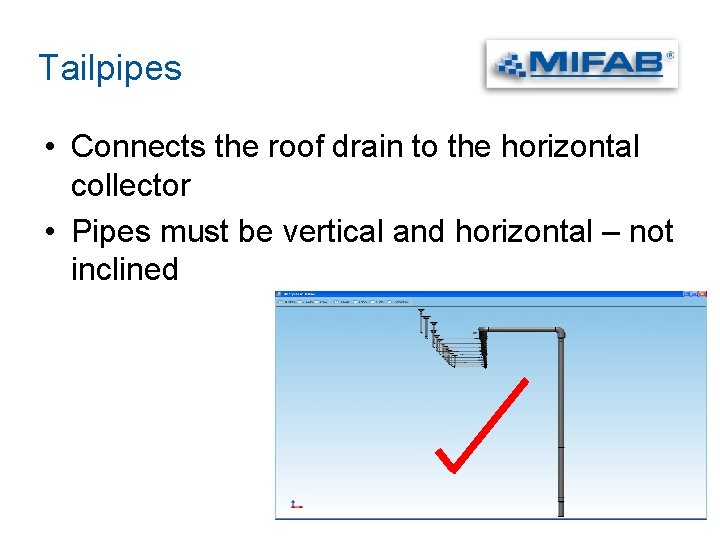
Tailpipes • Connects the roof drain to the horizontal collector
Tailpipes • Connects the roof drain to the horizontal collector • Pipes must be vertical and horizontal – not inclined
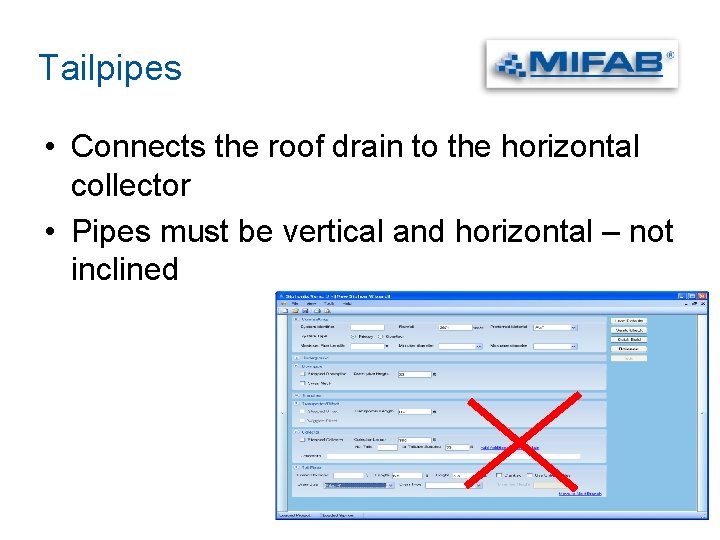
Tailpipes • Connects the roof drain to the horizontal collector • Pipes must be vertical and horizontal – not inclined
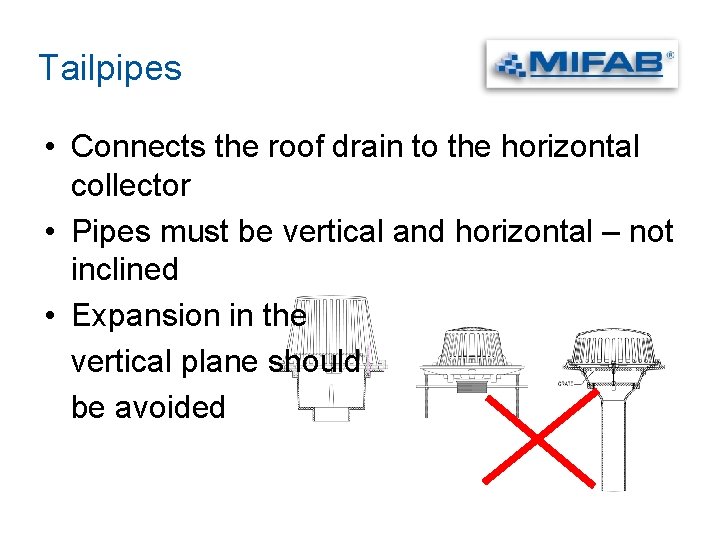
Tailpipes • Connects the roof drain to the horizontal collector • Pipes must be vertical and horizontal – not inclined • Expansion in the vertical plane should be avoided
Pipework • Most materials are suitable – – – – Cast Iron Ductile Iron Stainless Steel Galvanised steel Copper ABS HDPE PVC • Check ASPE Guide for details • Remember pressure is negative!
Pipework • Pipes are installed horizontal & vertical
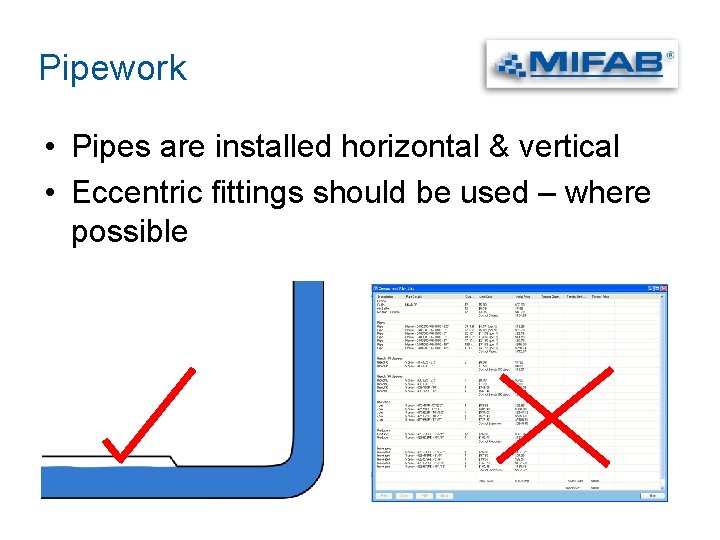
Pipework • Pipes are installed horizontal & vertical • Eccentric fittings should be used – where possible
Pipework • Pipes are installed horizontal & vertical • Eccentric fittings should be used – where possible • Expansion in the downpipe should be avoided
Pipework • Pipes are installed horizontal & vertical • Eccentric fittings should be used – where possible • Expansion in the downpipe should be avoided • Branches are joined in the horizontal plane
Pipework • Pipes are installed horizontal & vertical • Eccentric fittings should be used – where possible • Expansion in the downpipe should be avoided • Branches are joined in the horizontal plane • Underground pipes must be considered
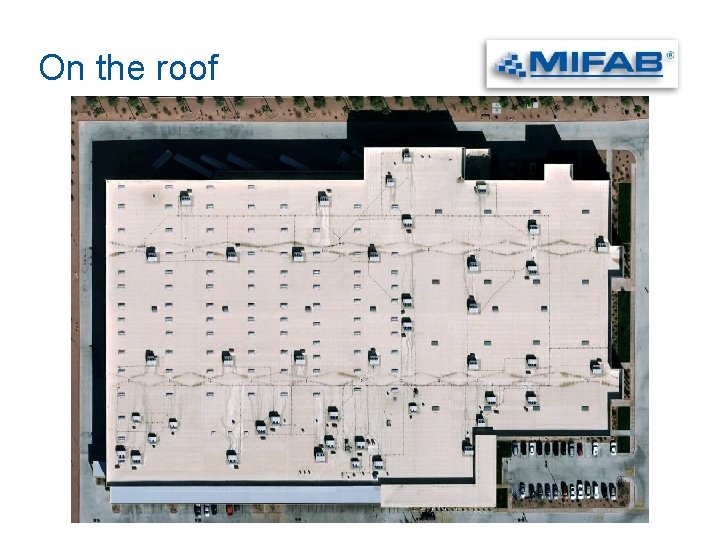
On the roof
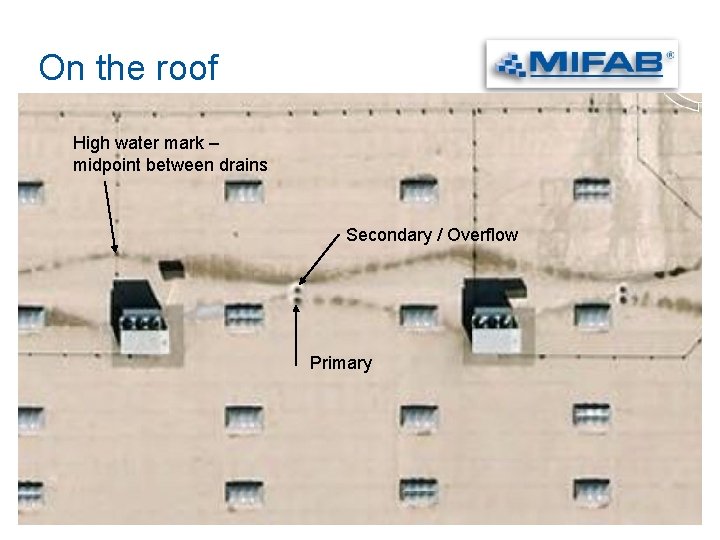
On the roof High water mark – midpoint between drains Secondary / Overflow Primary
LEED™ - Green Building Design • “Encourages and accelerates the adoption of sustainable green building & development practices”
LEED™ - Green Building Design • “Encourages and accelerates the adoption of sustainable green building & development practices” – Conserving water
LEED™ - Green Building Design • “Encourages and accelerates the adoption of sustainable green building & development practices” – Conserving water – Reducing energy consumption
LEED™ - Green Building Design • “Encourages and accelerates the adoption of sustainable green building & development practices” – Conserving water – Reducing energy consumption – Reducing the depletion of natural resources and materials
LEED™ - Green Building Design • “Encourages and accelerates the adoption of sustainable green building & development practices” – Conserving water – Reducing energy consumption – Reducing the depletion of natural resources and materials – Creating a sustainable site
LEED™ - Green Building Design • “Encourages and accelerates the adoption of sustainable green building & development practices” – Conserving water – Reducing energy consumption – Reducing the depletion of natural resources and materials – Creating a sustainable site – Use of innovative design
LEED™ - Green Building Design • “Encourages and accelerates the adoption of sustainable green building & development practices” – Conserving water – Reducing energy consumption – Reducing the depletion of natural resources and materials – Creating a sustainable site – Use of innovative design – Improving indoor environmental quality
LEED™ - Green Building Design • Siphonic Roof Drainage can gain points
LEED™ - Green Building Design • Siphonic Roof Drainage can gain points üReduced site disturbance (SS Credit 5. 1)
LEED™ - Green Building Design • Siphonic Roof Drainage can gain points üReduced site disturbance (SS Credit 5. 1) üControlled flow roof drainage (SS Credit 6. 1)
LEED™ - Green Building Design • Siphonic Roof Drainage can gain points üReduced site disturbance (SS Credit 5. 1) üControlled flow roof drainage (SS Credit 6. 1) üRainwater harvesting (WE Credit 3. 1/3. 2)
LEED™ - Green Building Design • Siphonic Roof Drainage can gain points üReduced site disturbance (SS Credit 5. 1) üControlled flow roof drainage (SS Credit 6. 1) üRainwater harvesting (WE Credit 3. 1/3. 2) üInnovation in design (ID Credit 1. 1)
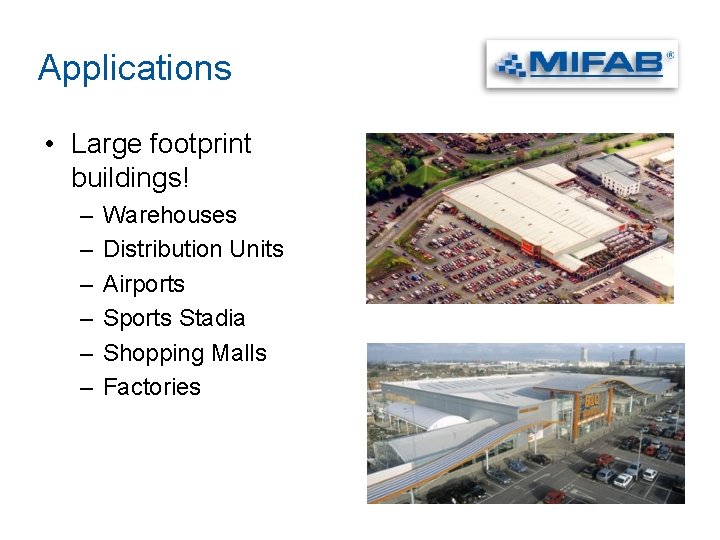
Applications • Large footprint buildings! – – – Warehouses Distribution Units Airports Stadia Shopping Malls Factories
Why Siphonic? • Greater efficiency – Smaller pipes – Fewer outlets – Easier maintenance
Why Siphonic? • Greater efficiency – Smaller pipes – Fewer outlets – Easier maintenance • Lower groundwork costs – Less underground pipework
Why Siphonic? • Greater efficiency – Smaller pipes – Fewer outlets – Easier maintenance • Lower groundwork costs – Less underground pipework • Reduced installation time – Easier to install
Why Siphonic? • Greater efficiency – Smaller pipes – Fewer outlets – Easier maintenance • Lower groundwork costs – Less underground pipework • Reduced installation time – Easier to install • Greater architectural freedom – Fewer downpipes – Level installation of pipework – Smaller pipes
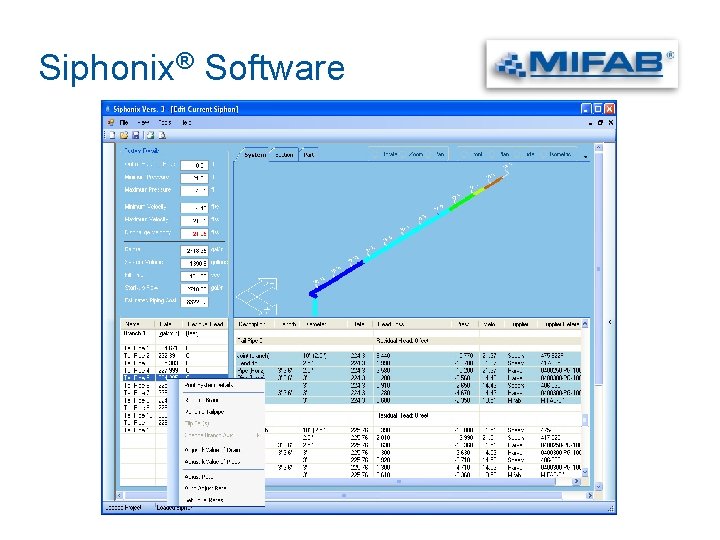
Siphonix® Software
Siphonix® Software
Siphonix® Software
Siphonix® Software
Siphonix® Software