
SIP Security the Future of Vo IP Nate
- Slides: 19
SIP Security & the Future of Vo. IP Nate Klingenstein APAN 26 Queenstown August 5, 2008 http: //people. internet 2. edu/ ~ndk/apan. SIP. pdf
Securing SIP • The threats • The existing protocol’s problems • Attempted solutions • Skype for comparison • Next steps
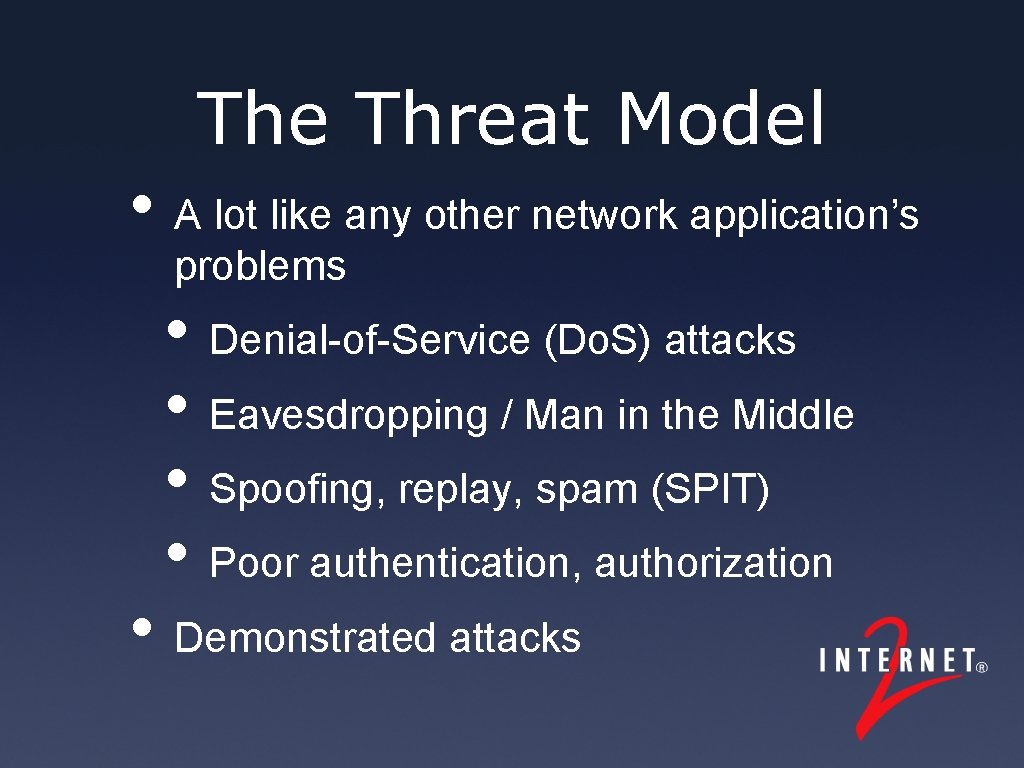
The Threat Model • A lot like any other network application’s problems • Denial-of-Service (Do. S) attacks • Eavesdropping / Man in the Middle • Spoofing, replay, spam (SPIT) • Poor authentication, authorization • Demonstrated attacks
Are these threats hypothetical? • Security must always be pragmatic and proportional • http: //www. loria. fr/~nassar/readme. html • http: //www. voipsa. org/Resources/tools. php • Human faces and voice recognition do provide limited authentication & protection
Enterprise Middleware • Many universities and companies manage information about their members • Directories, databases • Applications use these data for better security, auditing, user services • Large benefits for enterprise webapps
Specific Problems • Authentication: HTTP digest, basic • Realm-specific • Traffic unencrypted • Trust between realms and proxies poor • Disconnected from identity management infrastructure
Possible Solutions • Look a lot like the solutions for other old protocols: • Hack security into an old protocol • Firewall everything • Accept that SIP is too difficult to secure
Security Attempts • Many tries with varying success • New RFC’s, internet-drafts • Integration with RADIUS, TLS authentication • Integration with directories • Improved deployment practices
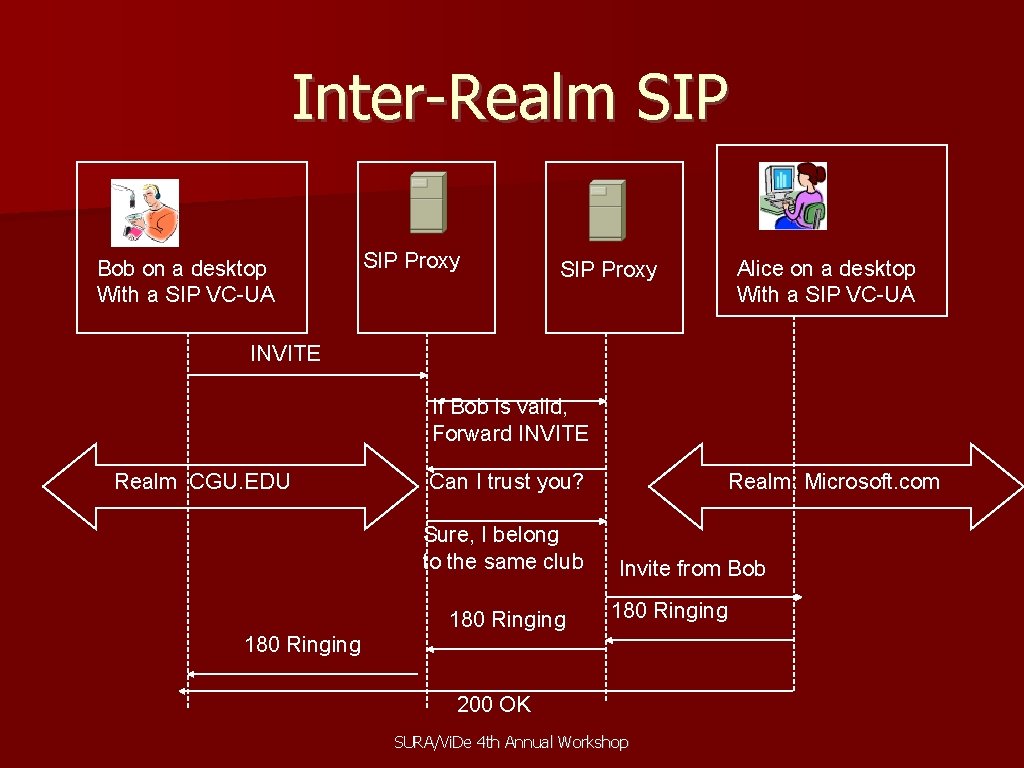
Inter-Realm SIP Bob on a desktop With a SIP VC-UA SIP Proxy Alice on a desktop With a SIP VC-UA INVITE If Bob is valid, Forward INVITE Realm CGU. EDU Can I trust you? Sure, I belong to the same club 180 Ringing Realm: Microsoft. com Invite from Bob 180 Ringing 200 OK SURA/Vi. De 4 th Annual Workshop
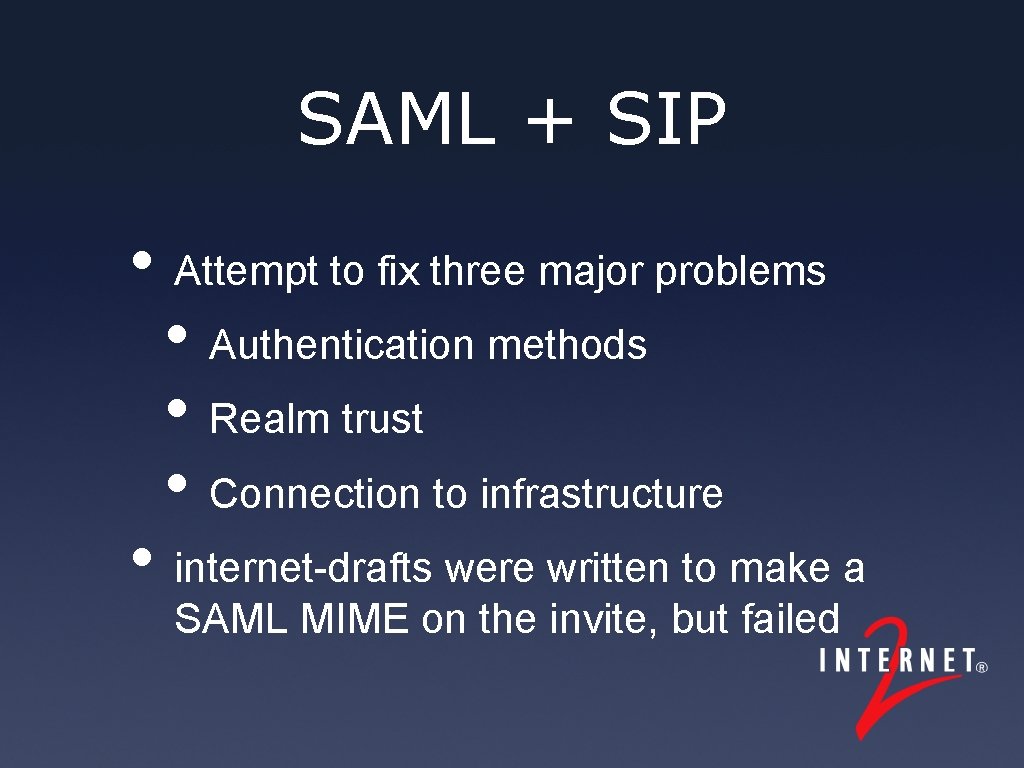
SAML + SIP • Attempt to fix three major problems • Authentication methods • Realm trust • Connection to infrastructure • internet-drafts were written to make a SAML MIME on the invite, but failed
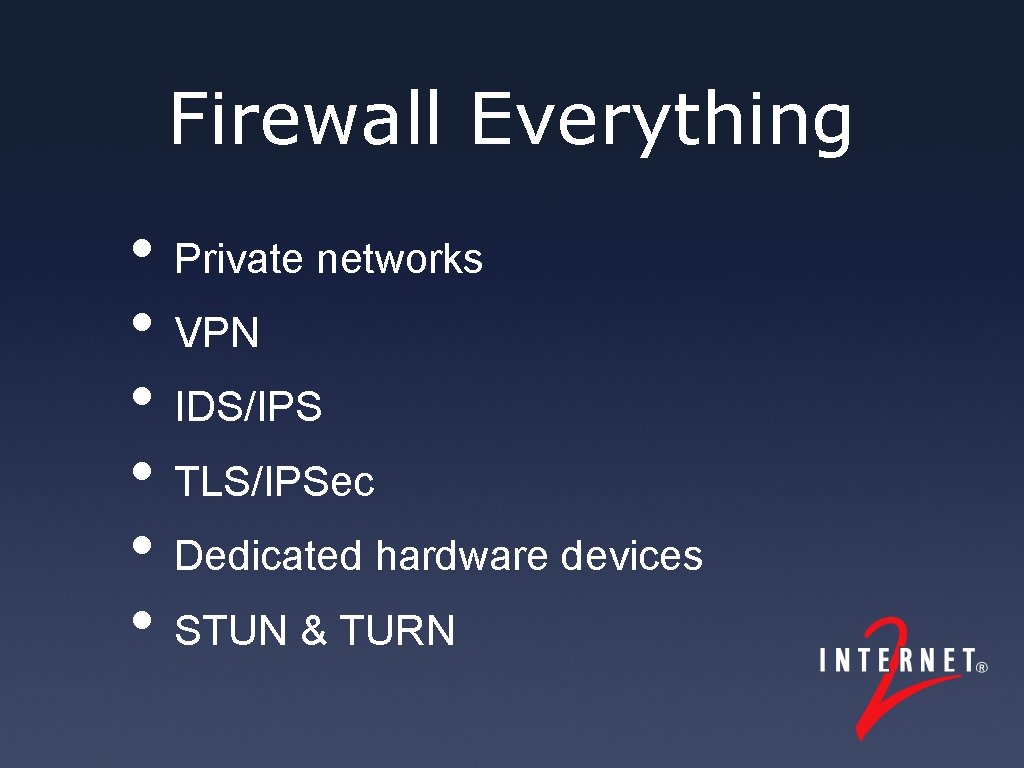
Firewall Everything • Private networks • VPN • IDS/IPS • TLS/IPSec • Dedicated hardware devices • STUN & TURN
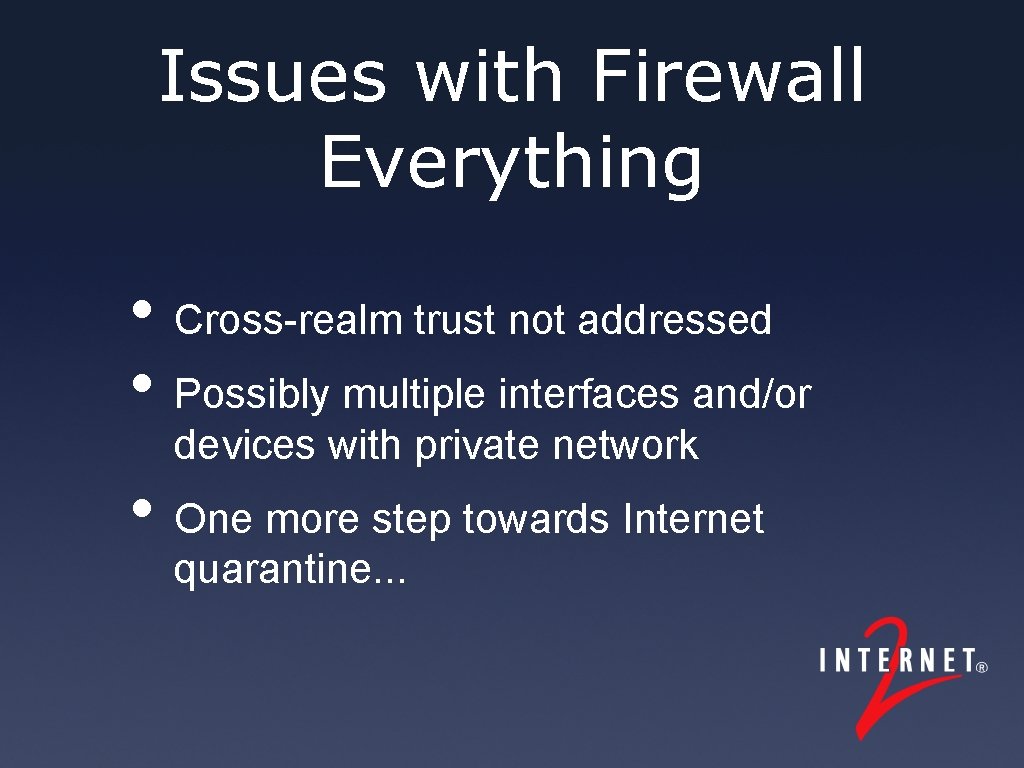
Issues with Firewall Everything • Cross-realm trust not addressed • Possibly multiple interfaces and/or devices with private network • One more step towards Internet quarantine. . .
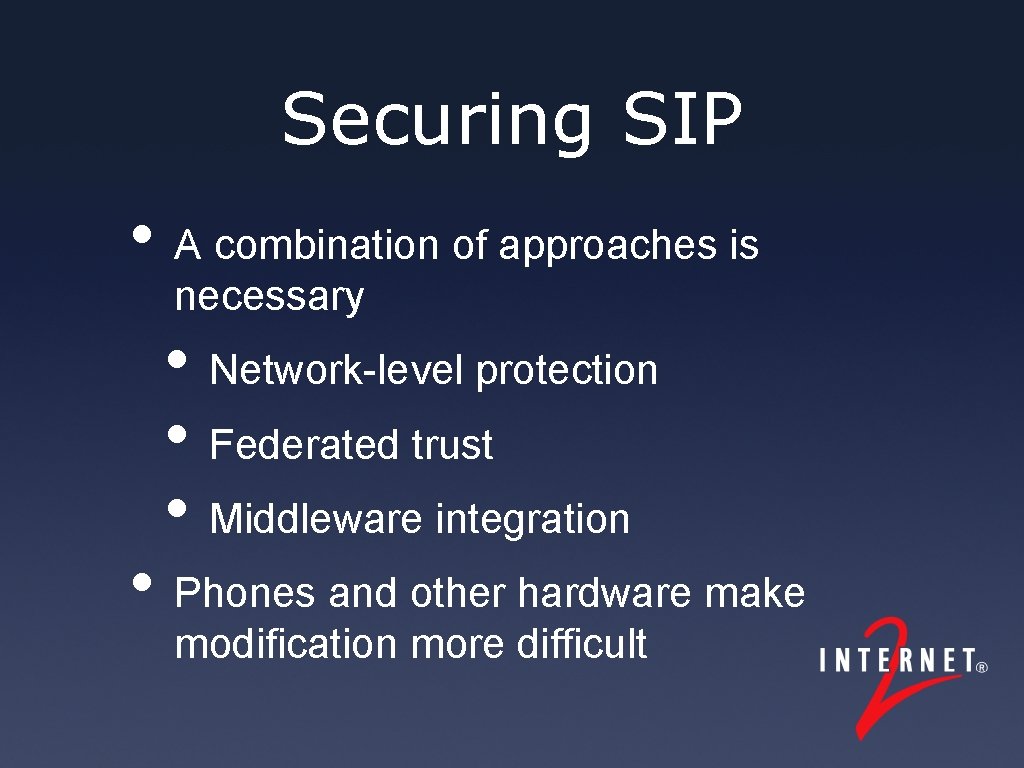
Securing SIP • A combination of approaches is necessary • Network-level protection • Federated trust • Middleware integration • Phones and other hardware make modification more difficult
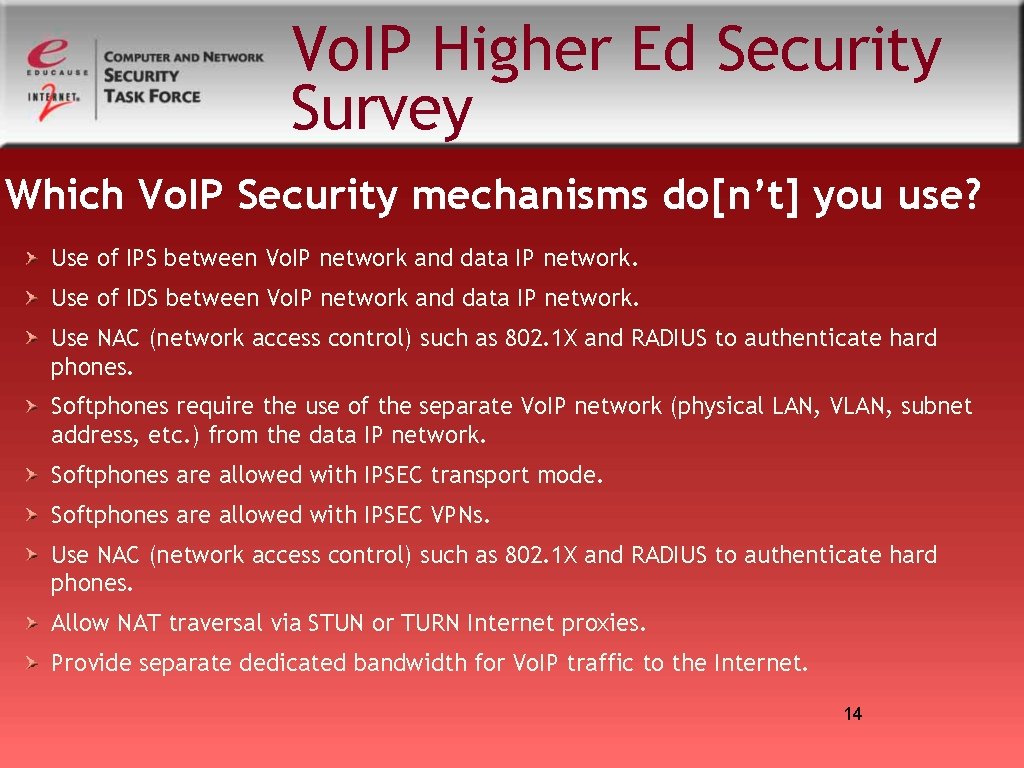
Vo. IP Higher Ed Security Survey Which Vo. IP Security mechanisms do[n’t] you use? Use of IPS between Vo. IP network and data IP network. Use of IDS between Vo. IP network and data IP network. Use NAC (network access control) such as 802. 1 X and RADIUS to authenticate hard phones. Softphones require the use of the separate Vo. IP network (physical LAN, VLAN, subnet address, etc. ) from the data IP network. Softphones are allowed with IPSEC transport mode. Softphones are allowed with IPSEC VPNs. Use NAC (network access control) such as 802. 1 X and RADIUS to authenticate hard phones. Allow NAT traversal via STUN or TURN Internet proxies. Provide separate dedicated bandwidth for Vo. IP traffic to the Internet. 14
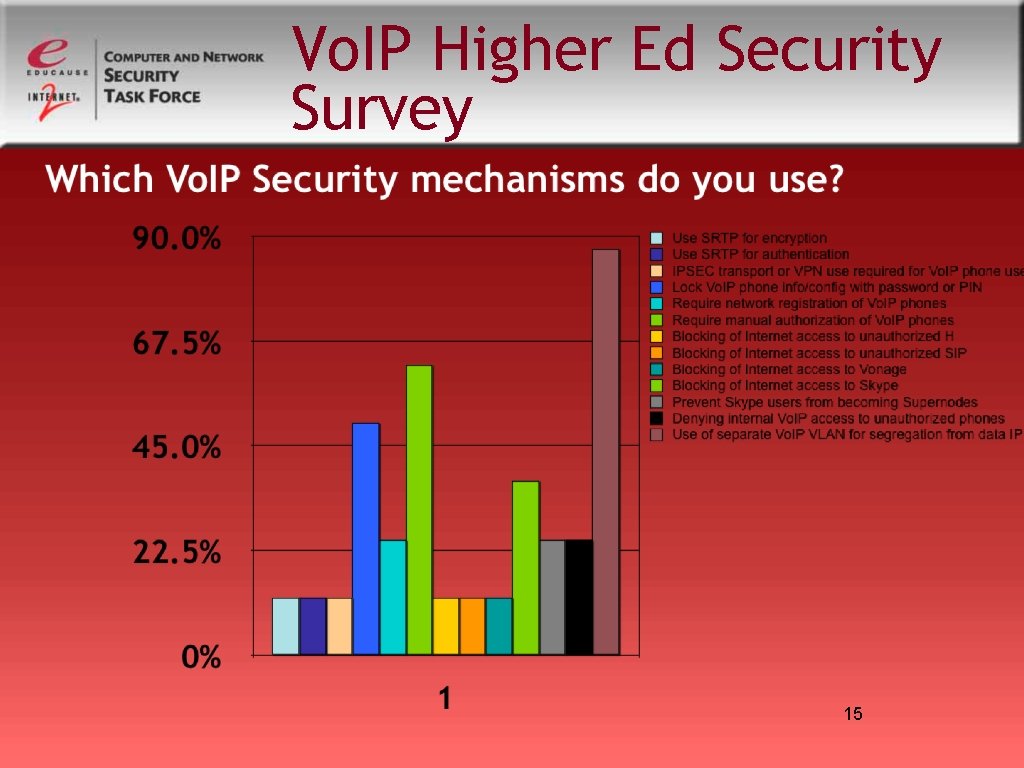
Vo. IP Higher Ed Security Survey 15
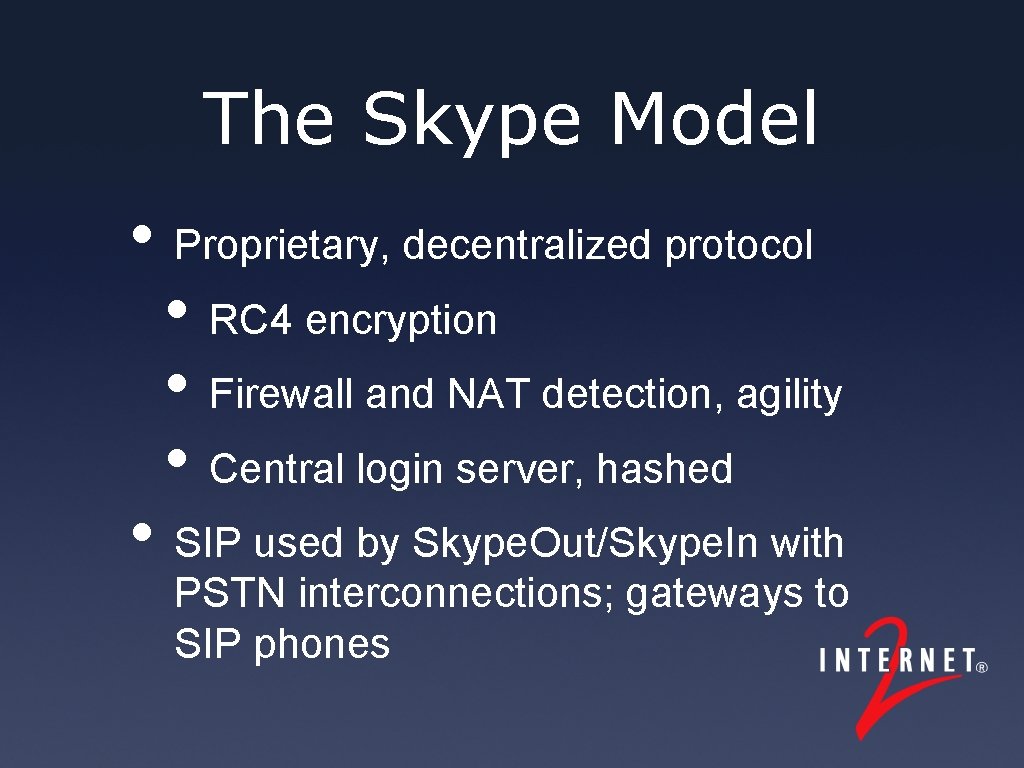
The Skype Model • Proprietary, decentralized protocol • RC 4 encryption • Firewall and NAT detection, agility • Central login server, hashed • SIP used by Skype. Out/Skype. In with PSTN interconnections; gateways to SIP phones
Can SIP Learn from Skype? • TLS/IPSec offer good encryption • Authentication over TLS (digest/PKI/SAML) is good • Bandwidth, centralization not big problems • The world has no central login server • Cross-domain trust not solved
Conclusions • SIP needs a lot of attention to be secure • Existing ideas can address some shortcomings • Some efforts stopped • No central work combining all efforts • Some attacks don’t have costeffective solutions
Questions? • http: //www. internet 2. edu/sip. edu/ • ndk@internet 2. edu