
Sinus Rhythms Dysrhythmia Recognition Management Terry White RN
- Slides: 29
Sinus Rhythms: Dysrhythmia Recognition & Management Terry White, RN, EMT-P
Sinus Rhythms • Possibilities – Normal Sinus Rhythm • (Sinus Rhythm) – Sinus Bradycardia – Sinus Tachycardia – Sinus Arrhythmia – Sinus Arrest
Sinus Rhythms • Expected ECG Rhythm • Most do not result in altered physiology • Sinus rhythm means – Pacemaker site is in the Sinoatrial (SA) node • Characteristics of all sinus rhythms are similar
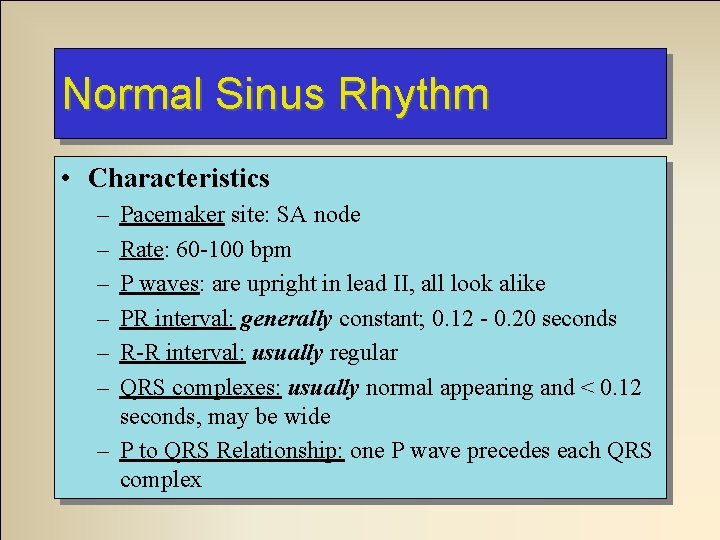
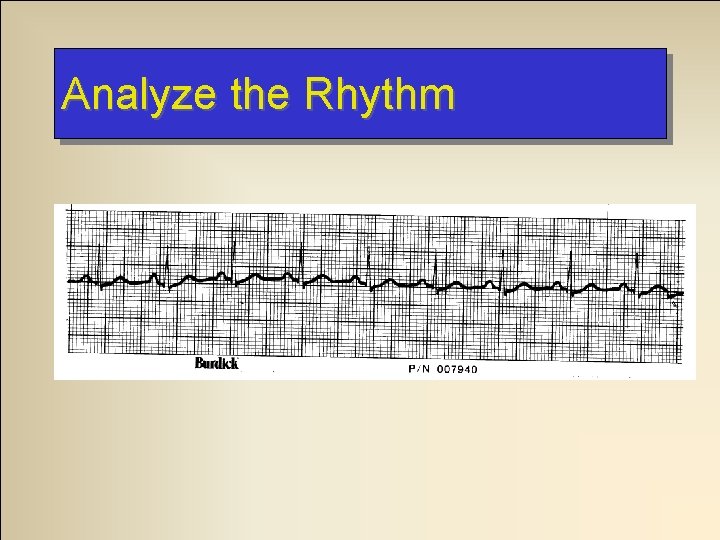
Normal Sinus Rhythm • Characteristics – – – Pacemaker site: SA node Rate: 60 -100 bpm P waves: are upright in lead II, all look alike PR interval: generally constant; 0. 12 - 0. 20 seconds R-R interval: usually regular QRS complexes: usually normal appearing and < 0. 12 seconds, may be wide – P to QRS Relationship: one P wave precedes each QRS complex
Analyze the Rhythm
Normal Sinus Rhythm • Pathophysiology – None specific to the ECG rhythm itself – Normal and expected ECG rhythm • Management – Treat the patient!
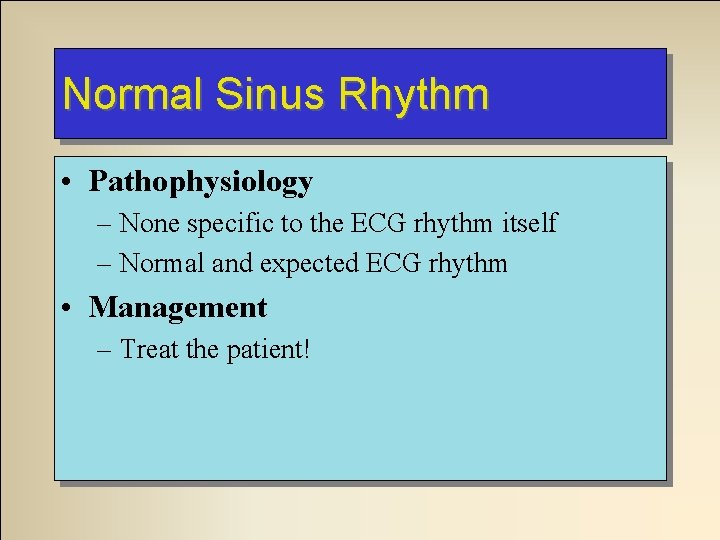
Sinus Bradycardia • Characteristics – Same as NSR with ONE exception – Rate: < 60 bpm
Analyze the Rhythm
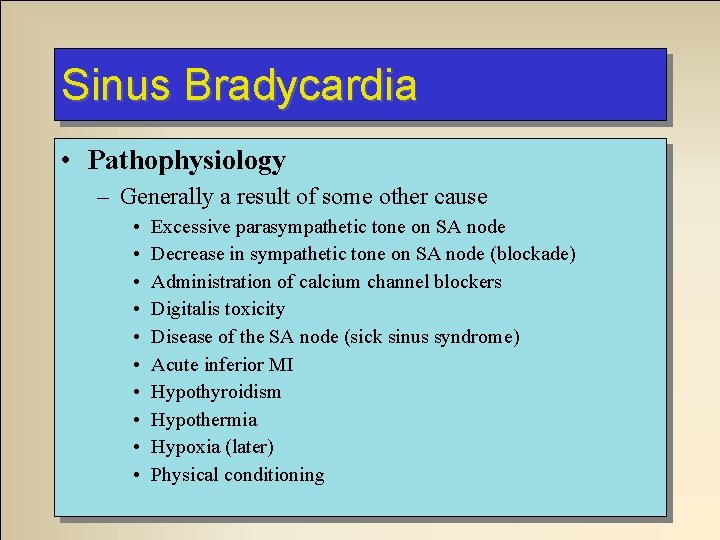
Sinus Bradycardia • Pathophysiology – Generally a result of some other cause • • • Excessive parasympathetic tone on SA node Decrease in sympathetic tone on SA node (blockade) Administration of calcium channel blockers Digitalis toxicity Disease of the SA node (sick sinus syndrome) Acute inferior MI Hypothyroidism Hypothermia Hypoxia (later) Physical conditioning
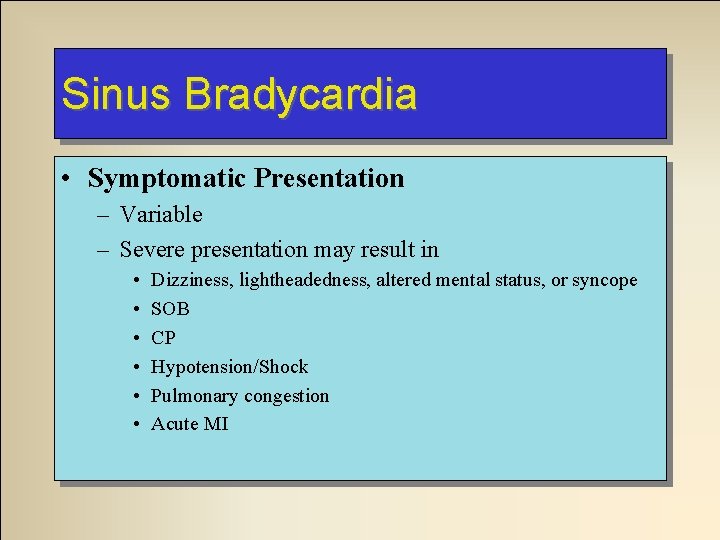
Sinus Bradycardia • Symptomatic Presentation – Variable – Severe presentation may result in • • • Dizziness, lightheadedness, altered mental status, or syncope SOB CP Hypotension/Shock Pulmonary congestion Acute MI
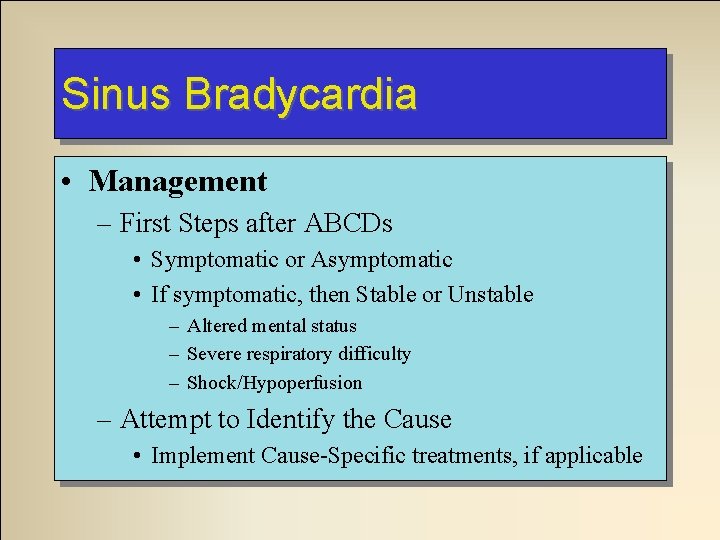
Sinus Bradycardia • Management – First Steps after ABCDs • Symptomatic or Asymptomatic • If symptomatic, then Stable or Unstable – Altered mental status – Severe respiratory difficulty – Shock/Hypoperfusion – Attempt to Identify the Cause • Implement Cause-Specific treatments, if applicable
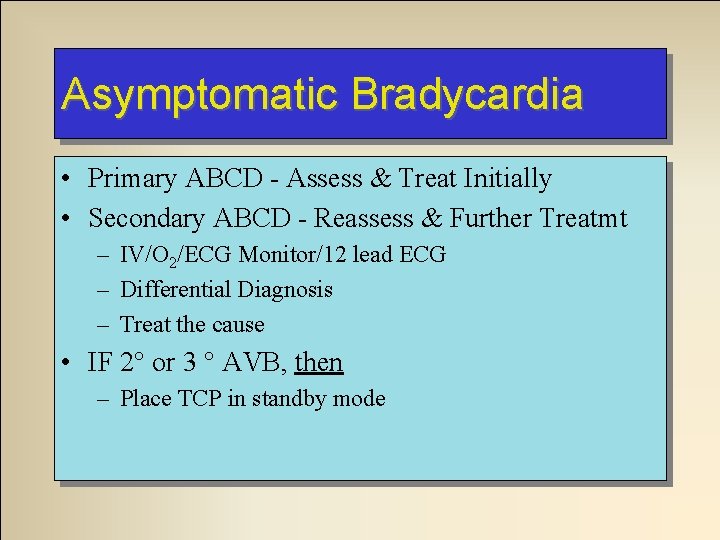
Asymptomatic Bradycardia • Primary ABCD - Assess & Treat Initially • Secondary ABCD - Reassess & Further Treatmt – IV/O 2/ECG Monitor/12 lead ECG – Differential Diagnosis – Treat the cause • IF 2° or 3 ° AVB, then – Place TCP in standby mode
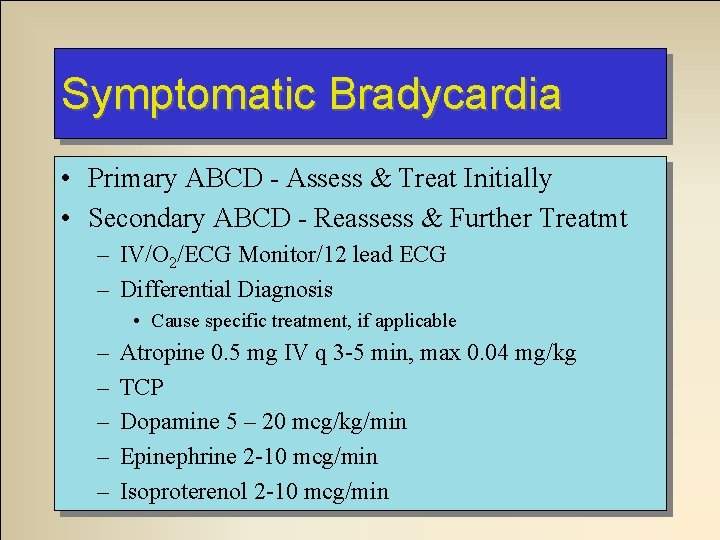
Symptomatic Bradycardia • Primary ABCD - Assess & Treat Initially • Secondary ABCD - Reassess & Further Treatmt – IV/O 2/ECG Monitor/12 lead ECG – Differential Diagnosis • Cause specific treatment, if applicable – – – Atropine 0. 5 mg IV q 3 -5 min, max 0. 04 mg/kg TCP Dopamine 5 – 20 mcg/kg/min Epinephrine 2 -10 mcg/min Isoproterenol 2 -10 mcg/min
Sinus Bradycardia • What cause-specific treatments can you think of when Sinus Brady is caused by: – – – – Excessive parasympathetic tone on SA node? Decrease in sympathetic tone on SA node? Administration of calcium channel blockers? Digitalis toxicity? Disease of the SA node? Acute inferior MI? Hypothyroidism? Hypothermia? Hypoxia?
Bradycardia What is the difference between absolute and relative bradycardia?
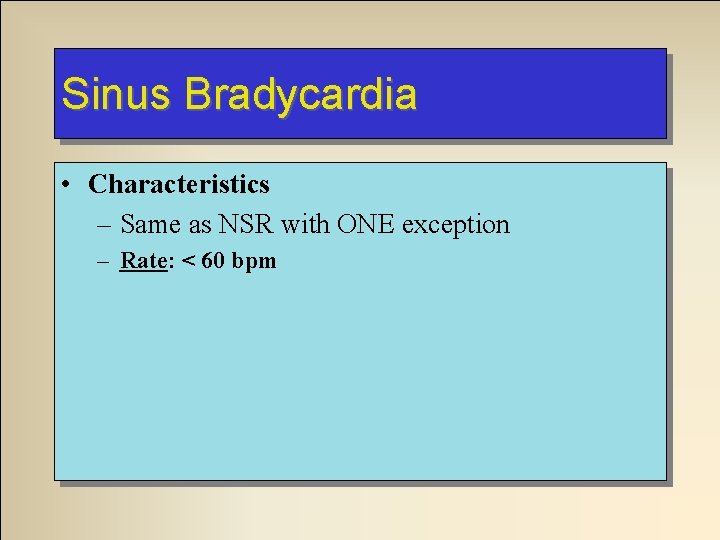
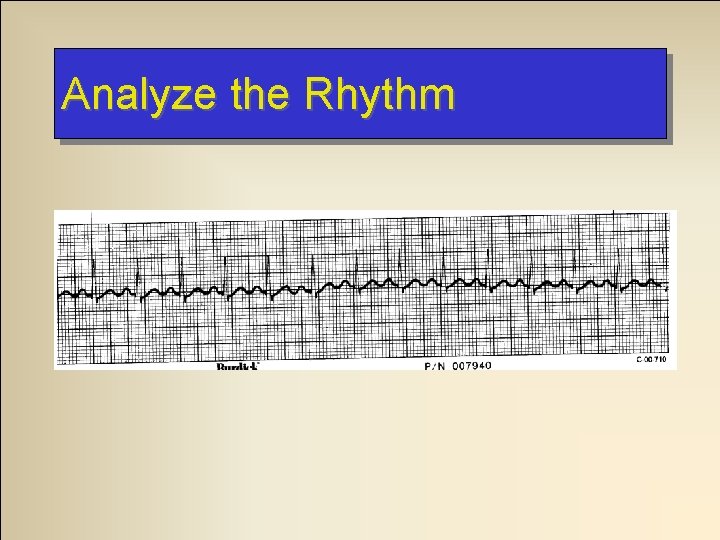
Sinus Tachycardia • Characteristics – Essentially same as for NSR with ONE exception • HR > 100 bpm <150 – At very fast rates, difficult to see P waves – In adults, ST is generally limited to a rate of <150 bpm
Analyze the Rhythm
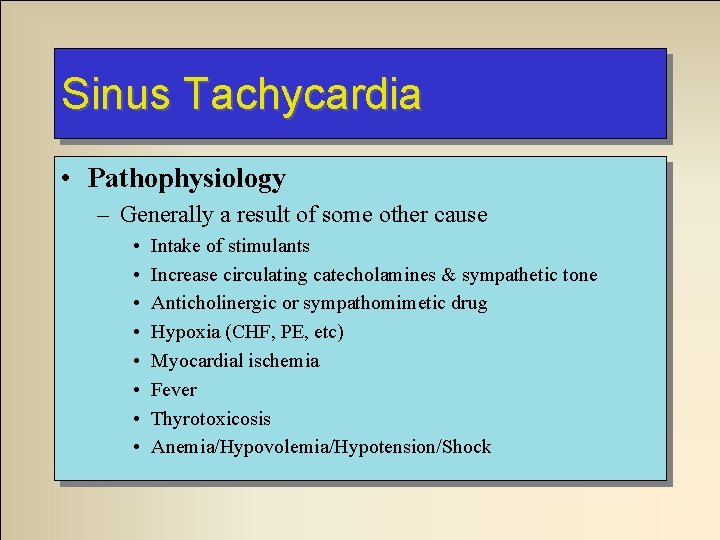
Sinus Tachycardia • Pathophysiology – Generally a result of some other cause • • Intake of stimulants Increase circulating catecholamines & sympathetic tone Anticholinergic or sympathomimetic drug Hypoxia (CHF, PE, etc) Myocardial ischemia Fever Thyrotoxicosis Anemia/Hypovolemia/Hypotension/Shock
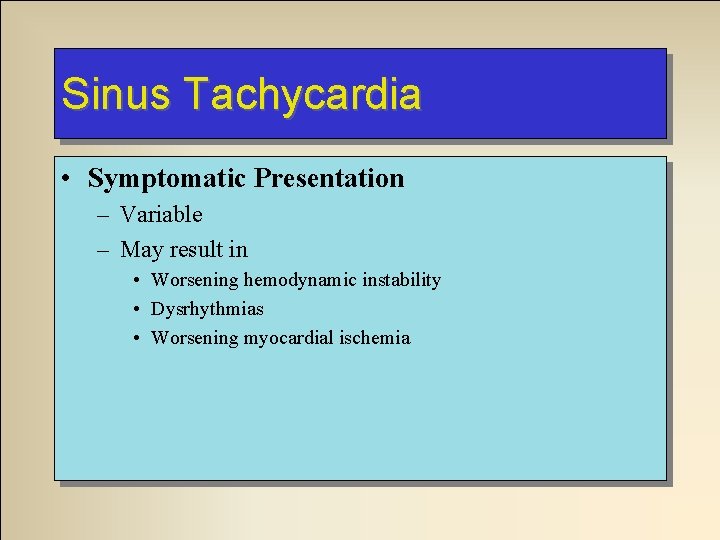
Sinus Tachycardia • Symptomatic Presentation – Variable – May result in • Worsening hemodynamic instability • Dysrhythmias • Worsening myocardial ischemia
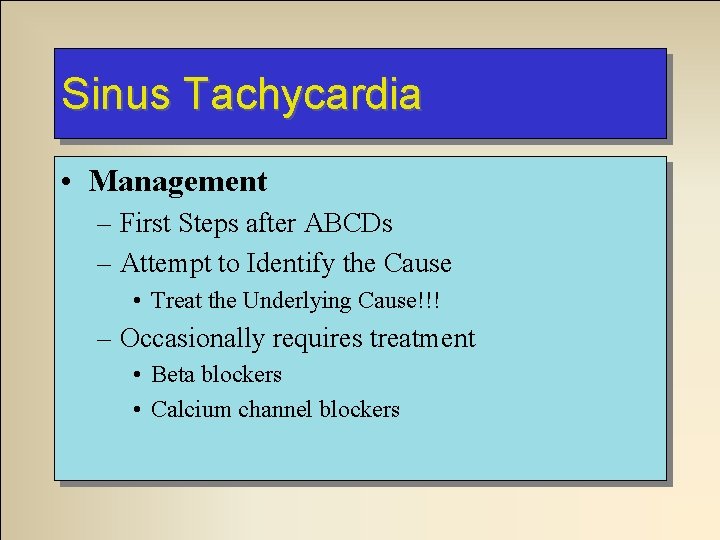
Sinus Tachycardia • Management – First Steps after ABCDs – Attempt to Identify the Cause • Treat the Underlying Cause!!! – Occasionally requires treatment • Beta blockers • Calcium channel blockers
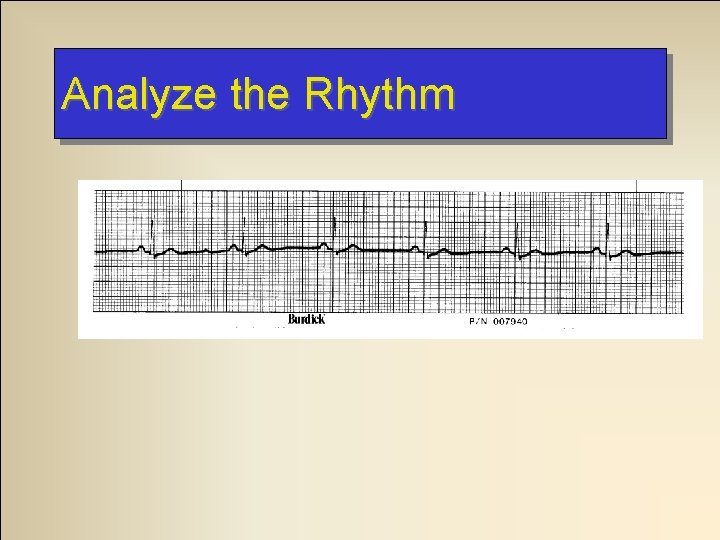
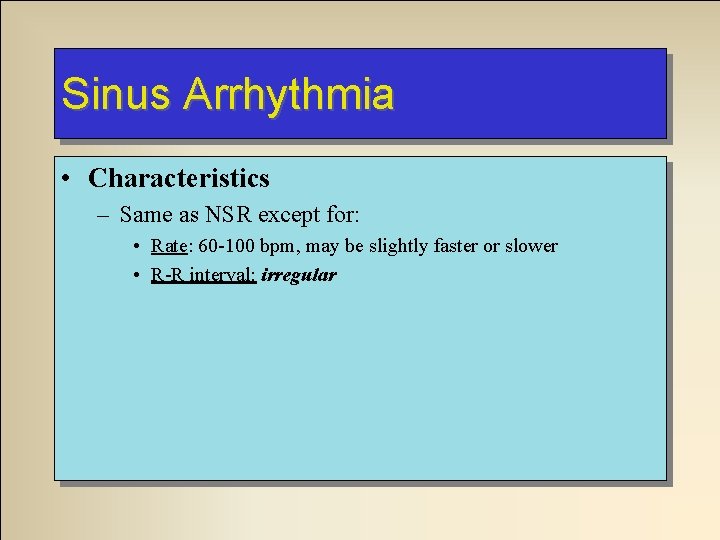
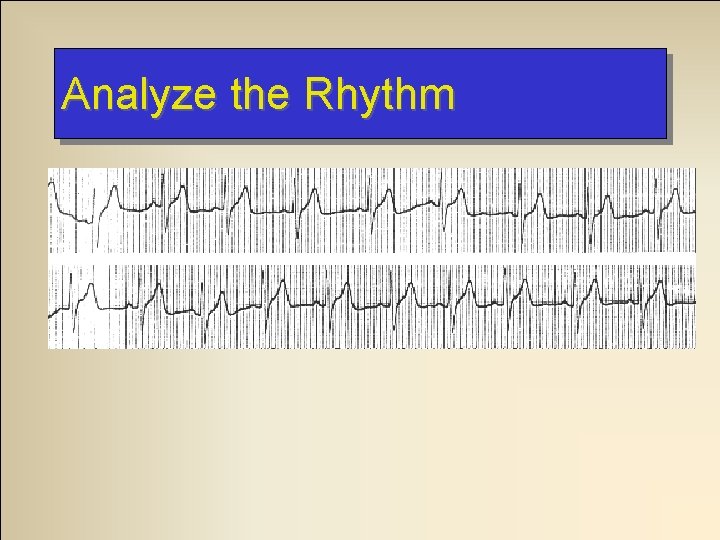
Sinus Arrhythmia • Characteristics – Same as NSR except for: • Rate: 60 -100 bpm, may be slightly faster or slower • R-R interval: irregular
Analyze the Rhythm
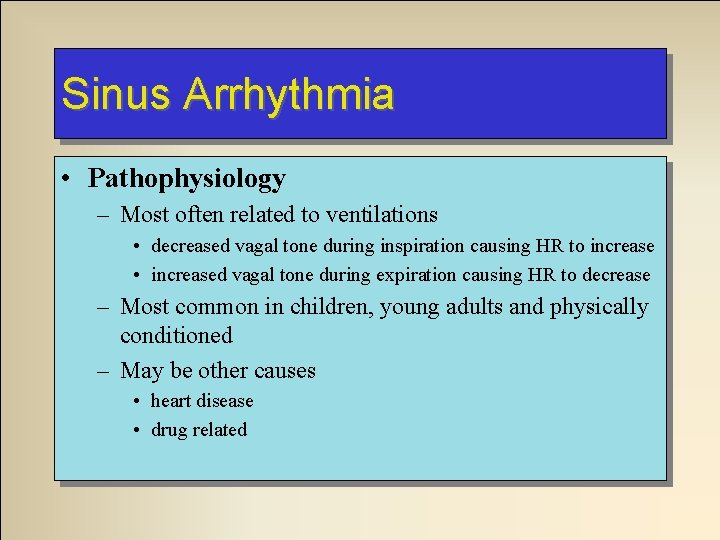
Sinus Arrhythmia • Pathophysiology – Most often related to ventilations • decreased vagal tone during inspiration causing HR to increase • increased vagal tone during expiration causing HR to decrease – Most common in children, young adults and physically conditioned – May be other causes • heart disease • drug related
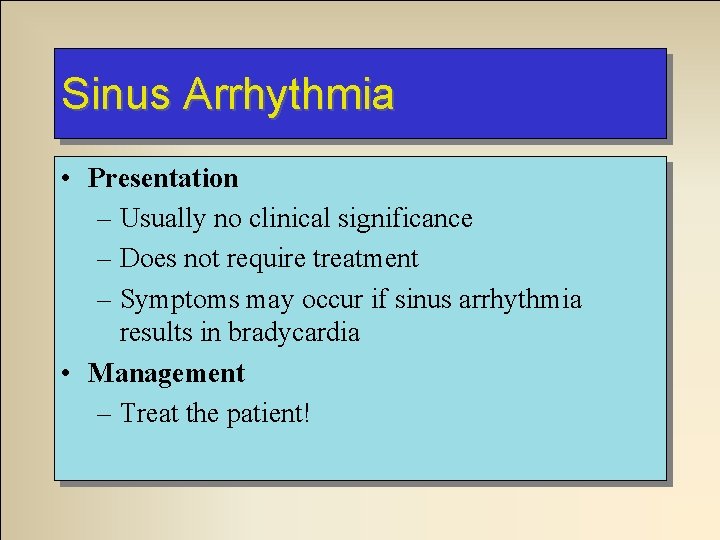
Sinus Arrhythmia • Presentation – Usually no clinical significance – Does not require treatment – Symptoms may occur if sinus arrhythmia results in bradycardia • Management – Treat the patient!
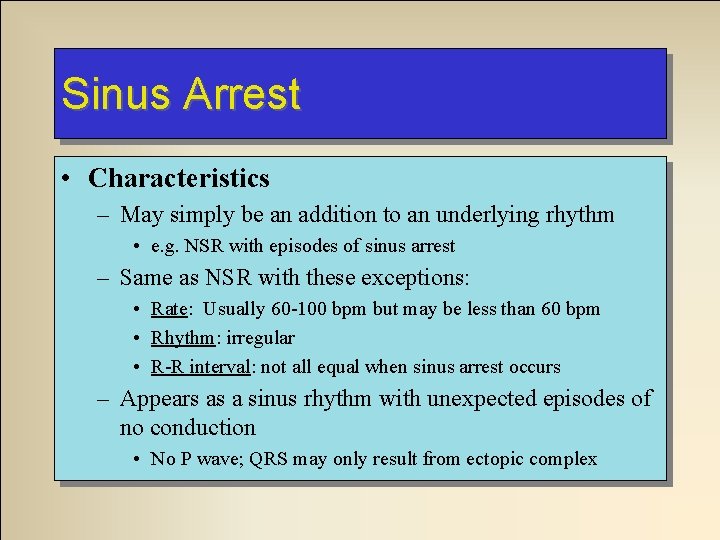
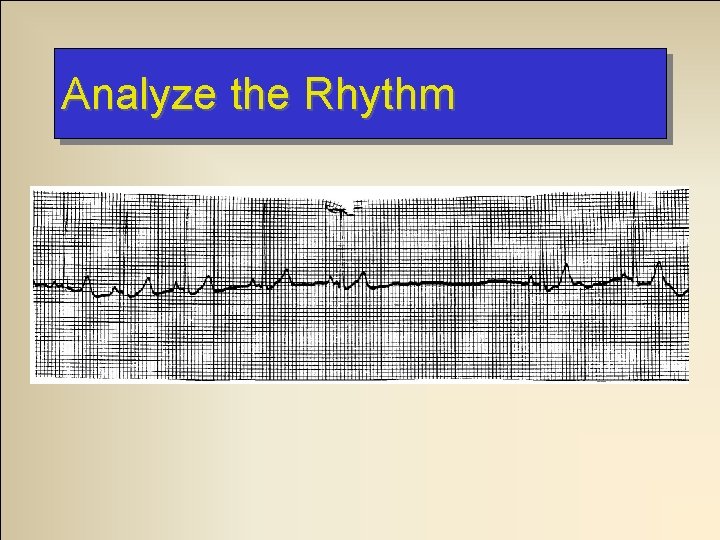
Sinus Arrest • Characteristics – May simply be an addition to an underlying rhythm • e. g. NSR with episodes of sinus arrest – Same as NSR with these exceptions: • Rate: Usually 60 -100 bpm but may be less than 60 bpm • Rhythm: irregular • R-R interval: not all equal when sinus arrest occurs – Appears as a sinus rhythm with unexpected episodes of no conduction • No P wave; QRS may only result from ectopic complex
Analyze the Rhythm
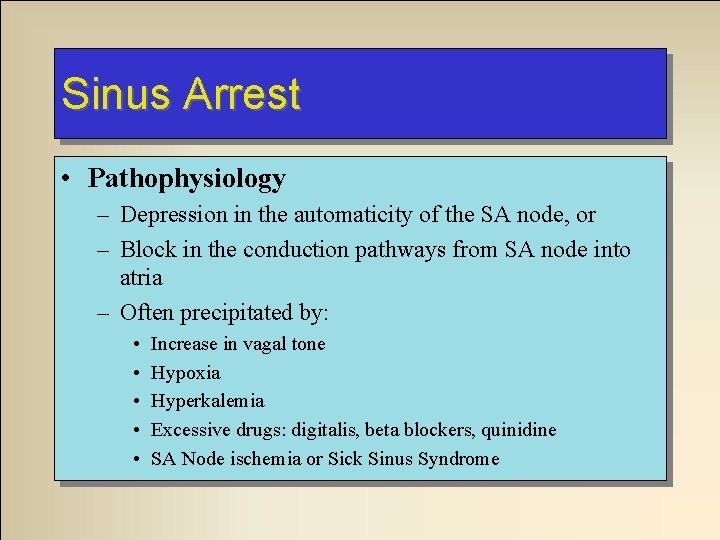
Sinus Arrest • Pathophysiology – Depression in the automaticity of the SA node, or – Block in the conduction pathways from SA node into atria – Often precipitated by: • • • Increase in vagal tone Hypoxia Hyperkalemia Excessive drugs: digitalis, beta blockers, quinidine SA Node ischemia or Sick Sinus Syndrome
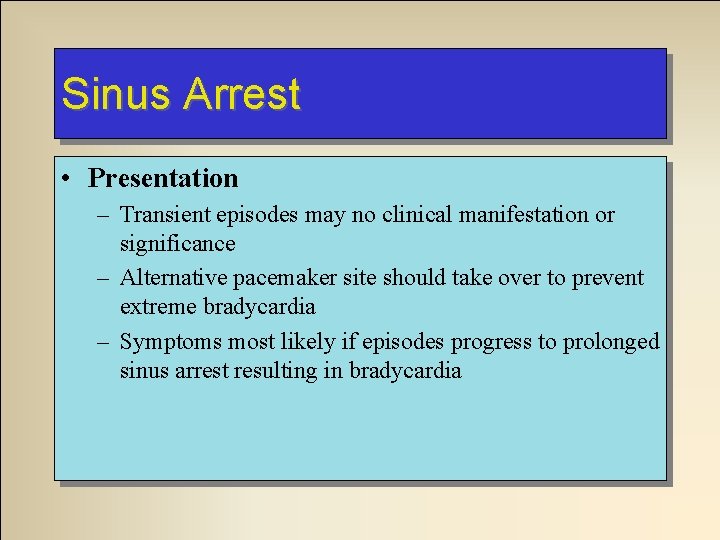
Sinus Arrest • Presentation – Transient episodes may no clinical manifestation or significance – Alternative pacemaker site should take over to prevent extreme bradycardia – Symptoms most likely if episodes progress to prolonged sinus arrest resulting in bradycardia
Sinus Arrest • Management – Treat like Bradycardia