
SINR Diagram with Interference Cancellation Merav Parter Joint


- Slides: 33
SINR Diagram with Interference Cancellation Merav Parter Joint work with Chen Avin, Asaf Cohen, Yoram Haddad, Erez Kantor, Zvi Lotker and David Peleg SODA 2012, Kyoto
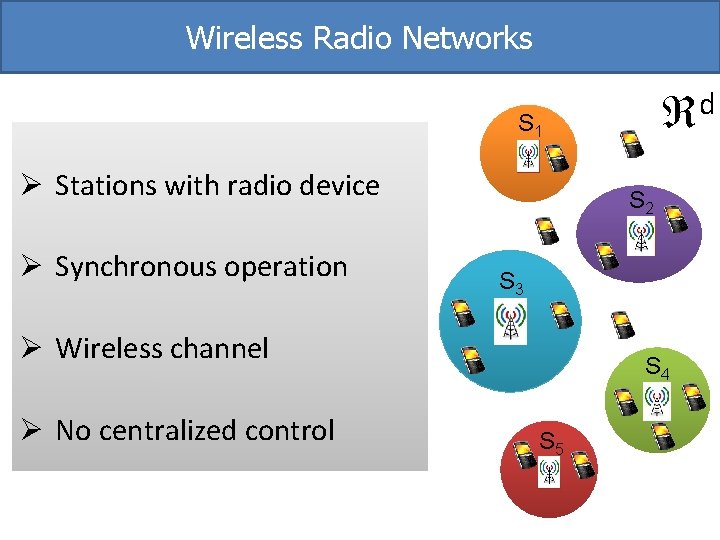
Wireless Radio Networks d S 1 Ø Stations with radio device Ø Synchronous operation S 2 S 3 Ø Wireless channel Ø No centralized control S 4 S 5
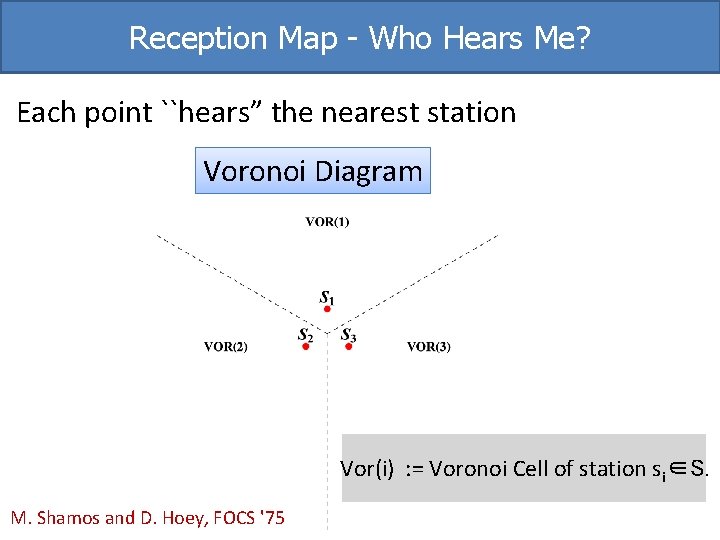
Reception Map - Who Hears Me? Each point ``hears” the nearest station Voronoi Diagram Vor(i) : = Voronoi Cell of station si∈S. M. Shamos and D. Hoey, FOCS '75
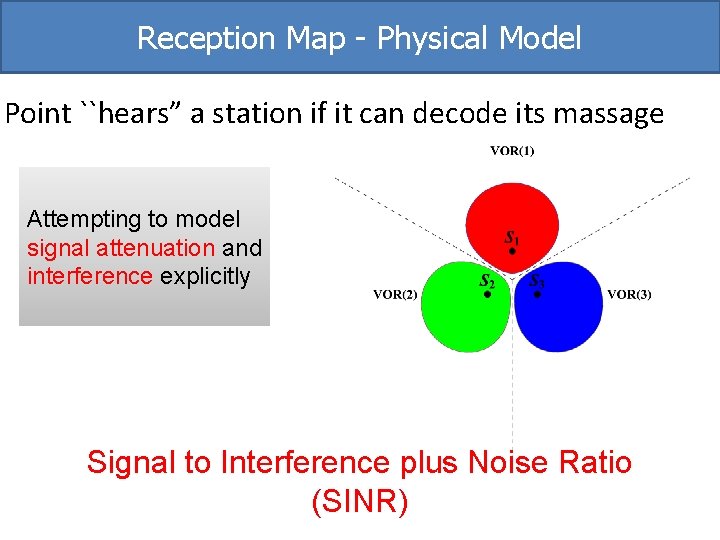
Reception Map - Physical Model Point ``hears” a station if it can decode its massage Attempting to model signal attenuation and interference explicitly Signal to Interference plus Noise Ratio (SINR)
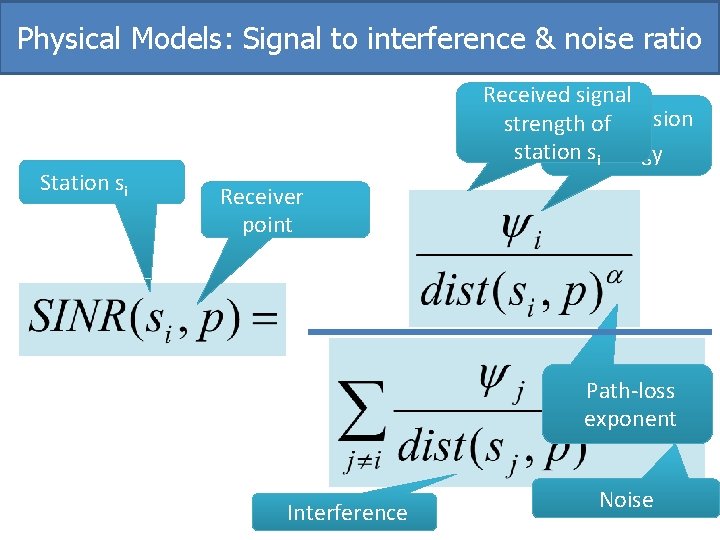
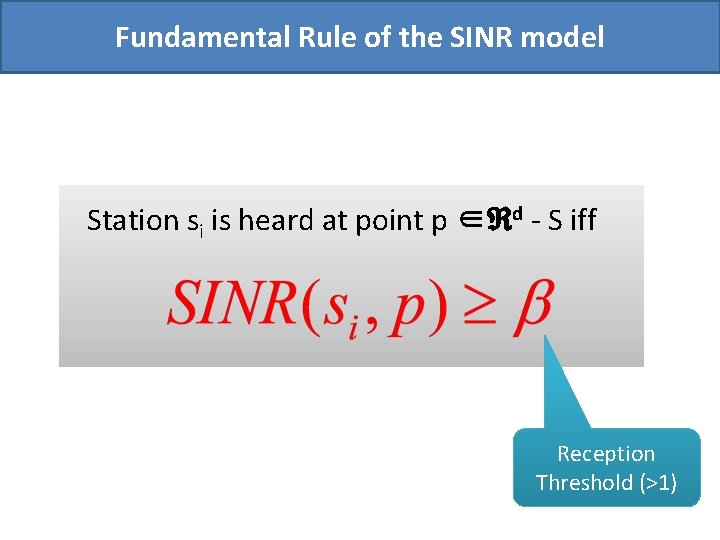
Physical Models: Signal to interference & noise ratio Station si Received signal Transmission strength of station s. Energy i Receiver point Path-loss exponent Interference Noise
Fundamental Rule of the SINR model Station si is heard at point p ∈ d - S iff Reception Threshold (>1)
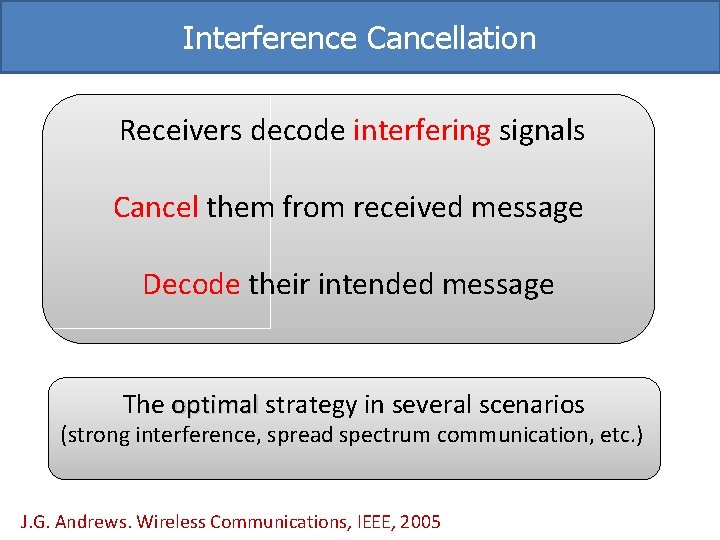
Interference Cancellation Receivers decode interfering signals Cancel them from received message Decode their intended message The optimal strategy in several scenarios optimal (strong interference, spread spectrum communication, etc. ) J. G. Andrews. Wireless Communications, IEEE, 2005
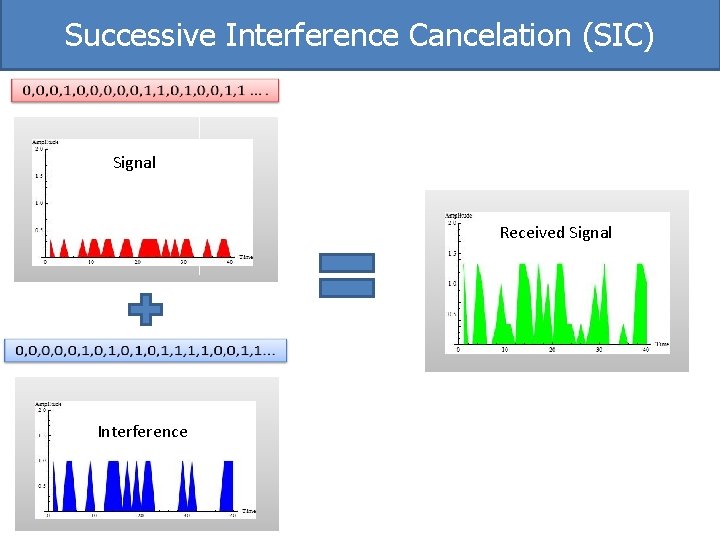
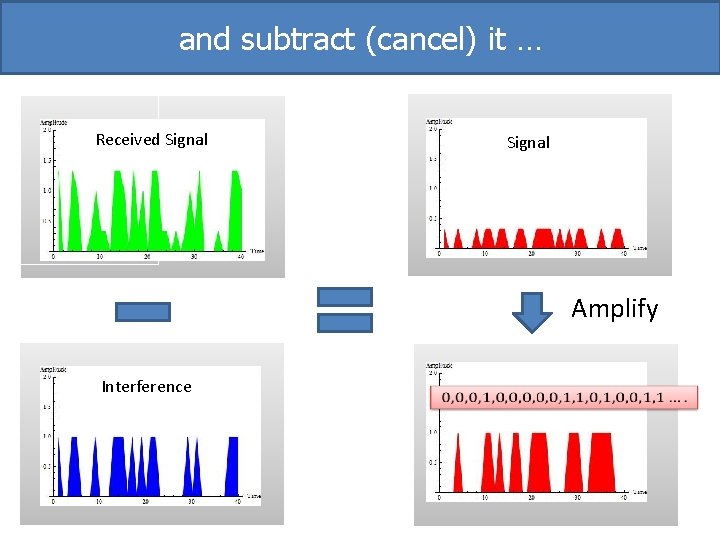
Successive Interference Cancelation (SIC) Signal Received Signal Interference
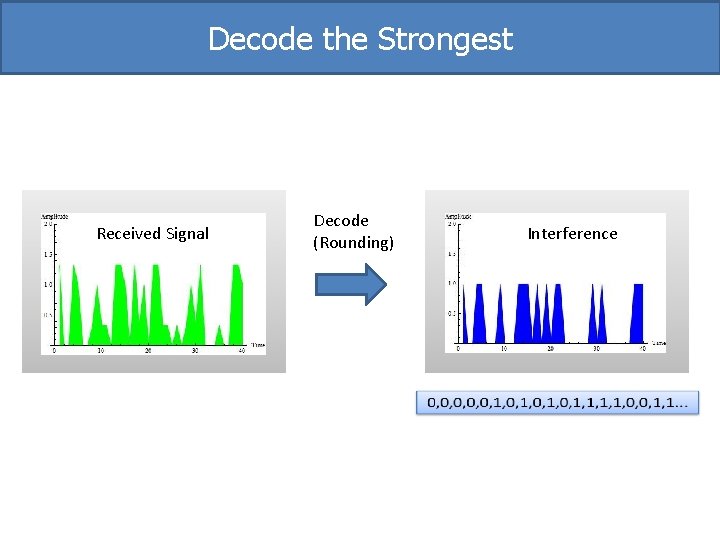
Decode the Strongest Received Signal Decode (Rounding) Interference
and subtract (cancel) it … Received Signal Amplify Interference
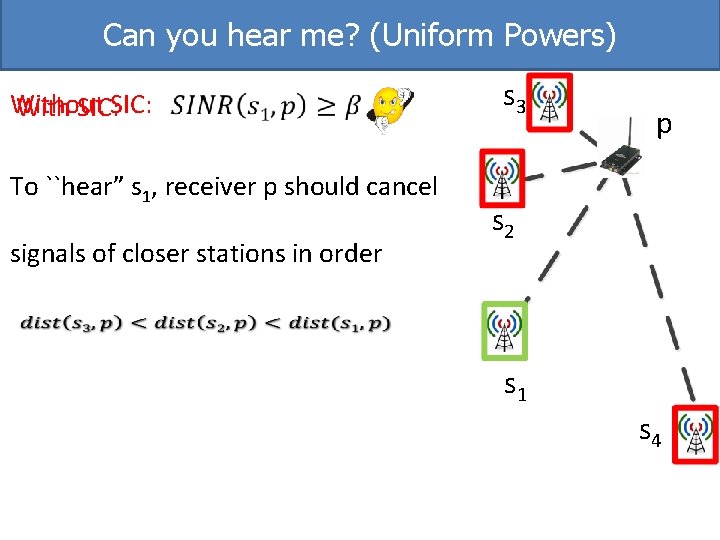
Can you hear me? (Uniform Powers) Without SIC: With SIC: To ``hear” s 1, receiver p should cancel signals of closer stations in order s 3 p s 2 s 1 s 4
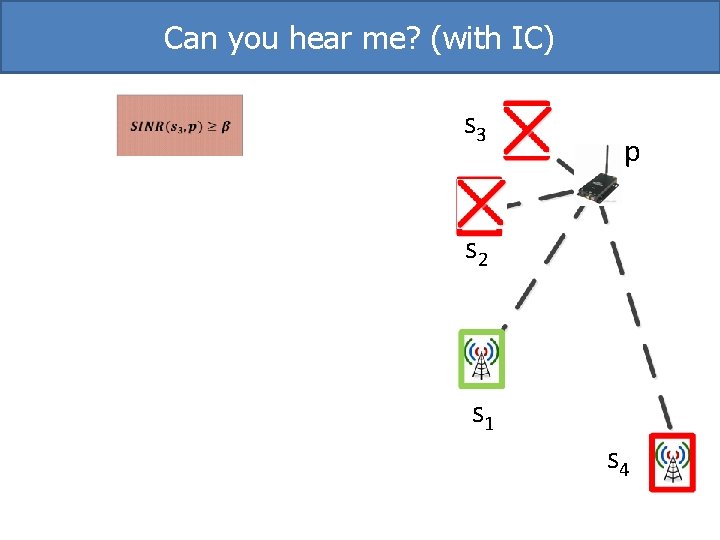
Can you hear me? (with IC) s 3 No Yes p s 2 No Yes s 1 s 4
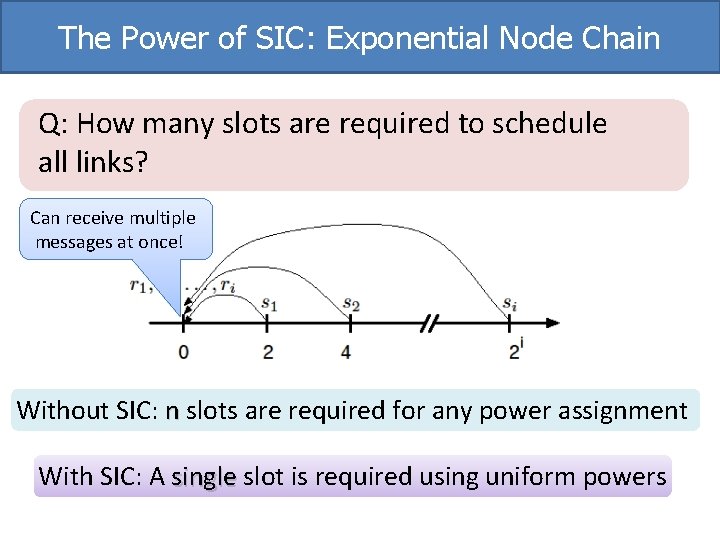
The Power of SIC: Exponential Node Chain Q: How many slots are required to schedule all links? Can receive multiple messages at once! Without SIC: n slots are required for any power assignment With SIC: A single slot is required using uniform powers ingle
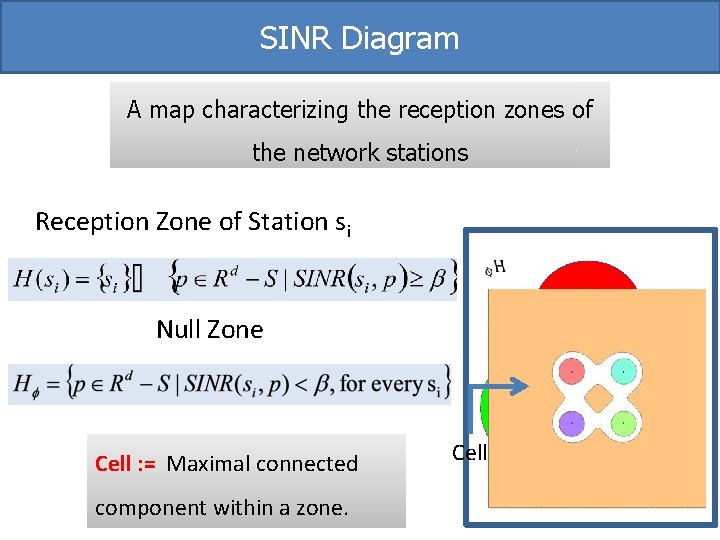
SINR Diagram A map characterizing the reception zones of the network stations Reception Zone of Station si Null Zone Cell : = Maximal connected component within a zone. Cell
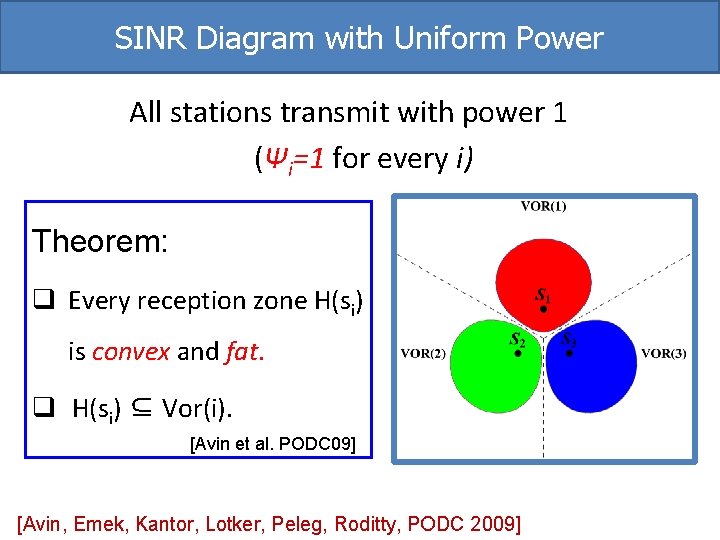
SINR Diagram with Uniform Power All stations transmit with power 1 (Ψi=1 for every i) Theorem: q Every reception zone H(si) is convex and fat. q H(si) ⊆ Vor(i). [Avin et al. PODC 09] [Avin, Emek, Kantor, Lotker, Peleg, Roditty, PODC 2009]
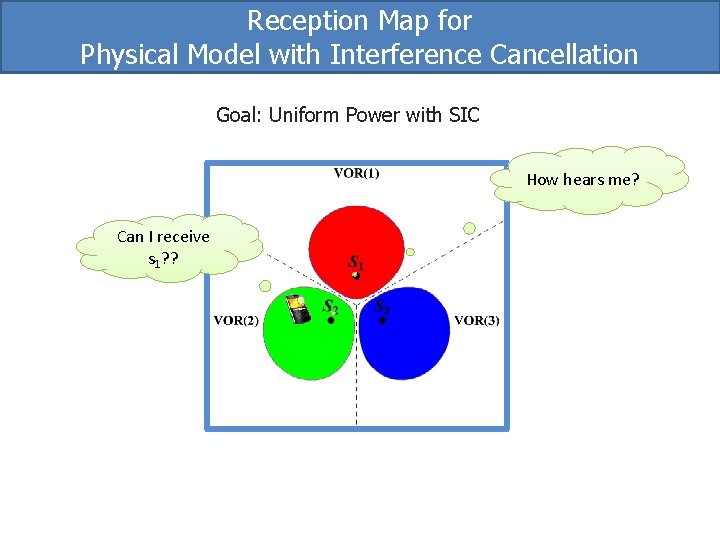
Reception Map for Physical Model with Interference Cancellation Goal: Uniform Power with SIC How hears me? Can I receive s 1? ?
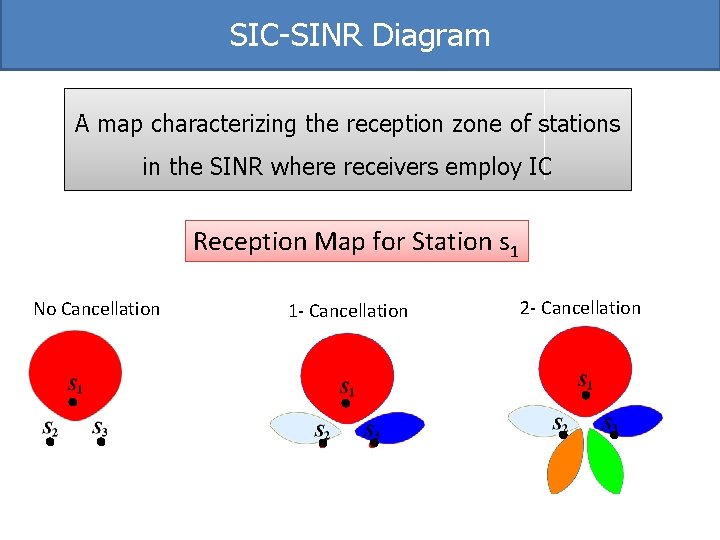
SIC-SINR Diagram A map characterizing the reception zone of stations in the SINR where receivers employ IC Reception Map for Station s 1 No Cancellation 1 - Cancellation 2 - Cancellation
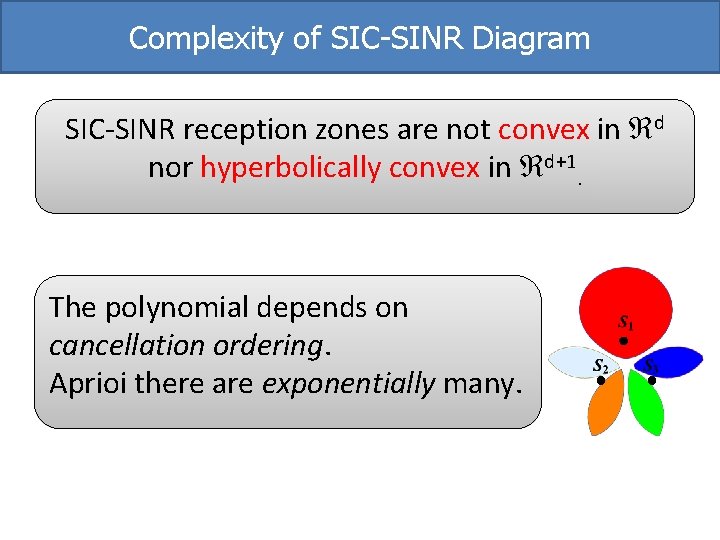
Complexity of SIC-SINR Diagram SIC-SINR reception zones are not convex in d nor hyperbolically convex in d+1. The polynomial depends on cancellation ordering. Aprioi there are exponentially many.
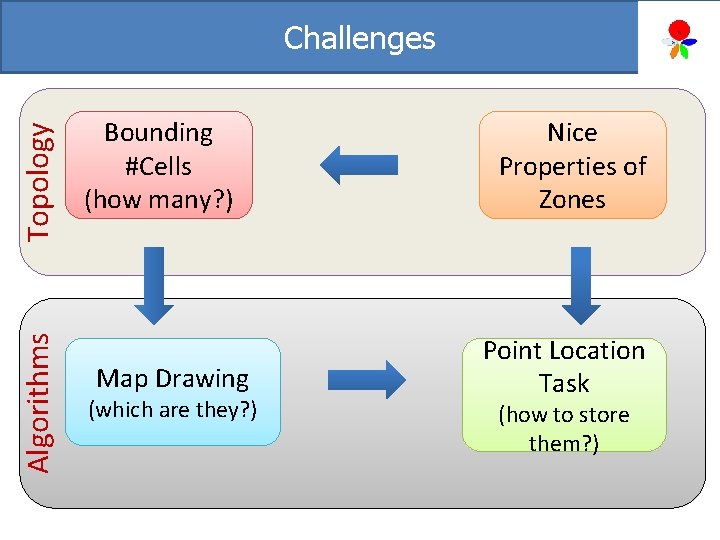
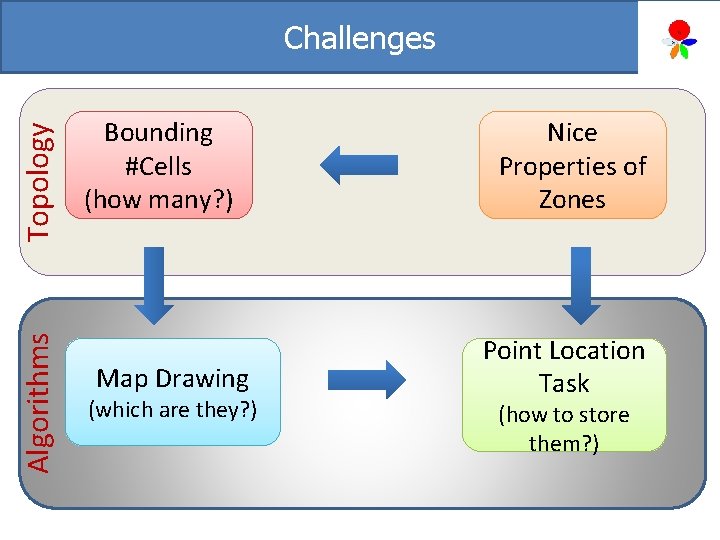
Algorithms Topology Challenges Bounding #Cells (how many? ) Map Drawing (which are they? ) Nice Properties of Zones Point Location Task (how to store them? )
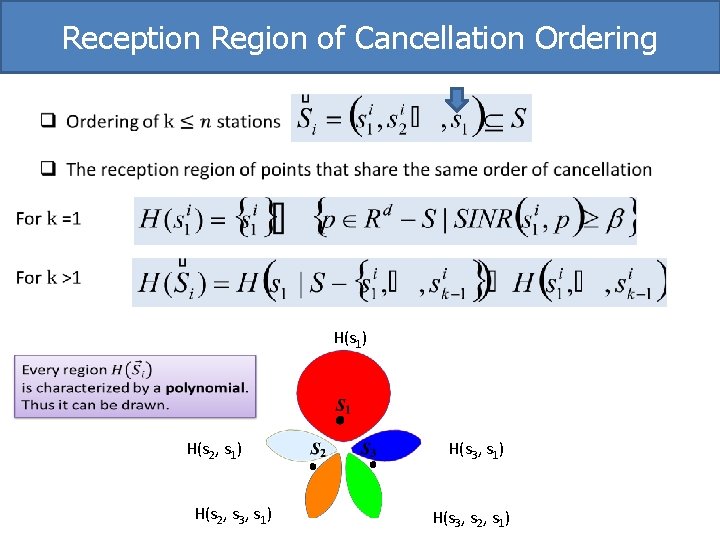
Reception Region of Cancellation Ordering H(s 1) H(s 2, s 1) H(s 2, s 3, s 1) H(s 3, s 2, s 1)
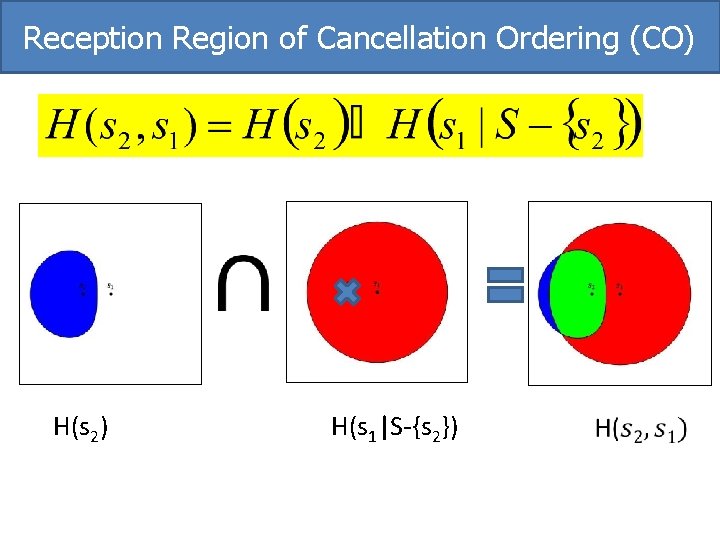
Reception Region of Cancellation Ordering (CO) H(s 2) H(s 1|S-{s 2})
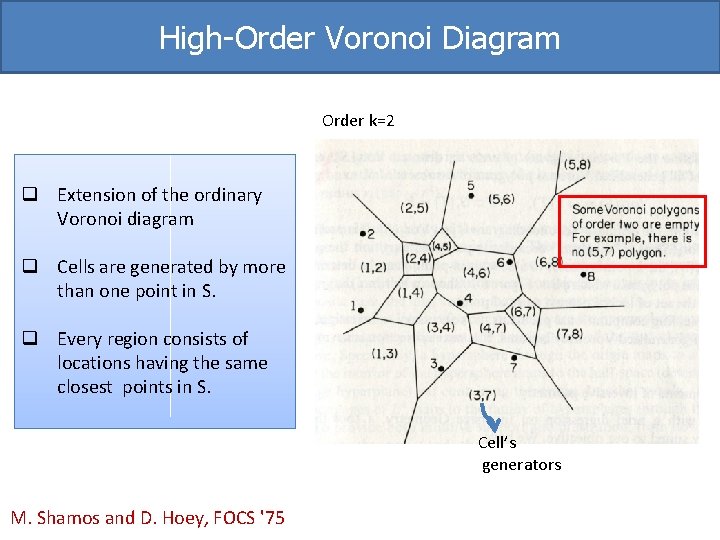
High-Order Voronoi Diagram Order k=2 q Extension of the ordinary Voronoi diagram q Cells are generated by more than one point in S. q Every region consists of locations having the same closest points in S. Cell’s generators M. Shamos and D. Hoey, FOCS '75
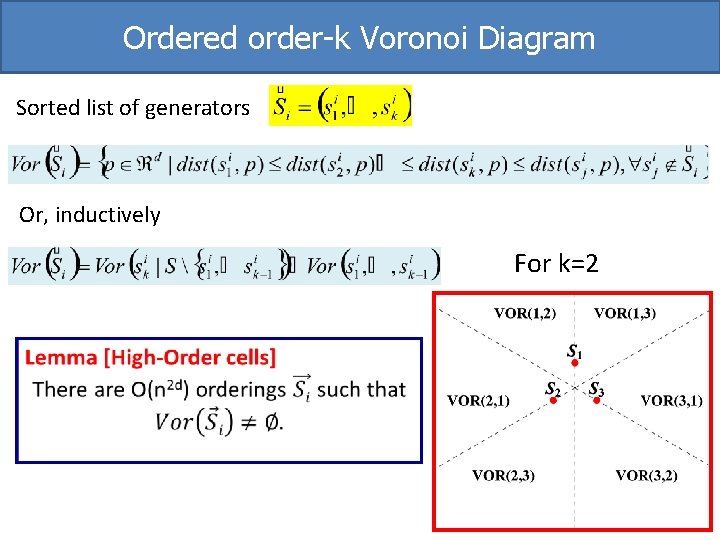
Ordered order-k Voronoi Diagram Sorted list of generators Or, inductively For k=2
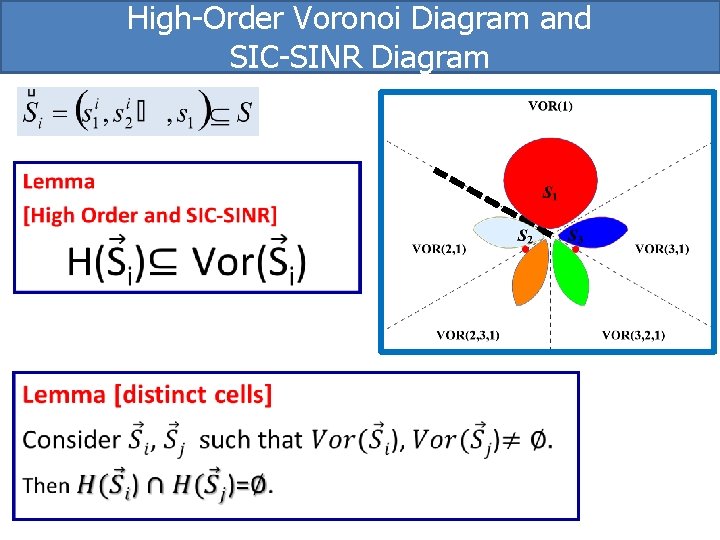
High-Order Voronoi Diagram and SIC-SINR Diagram
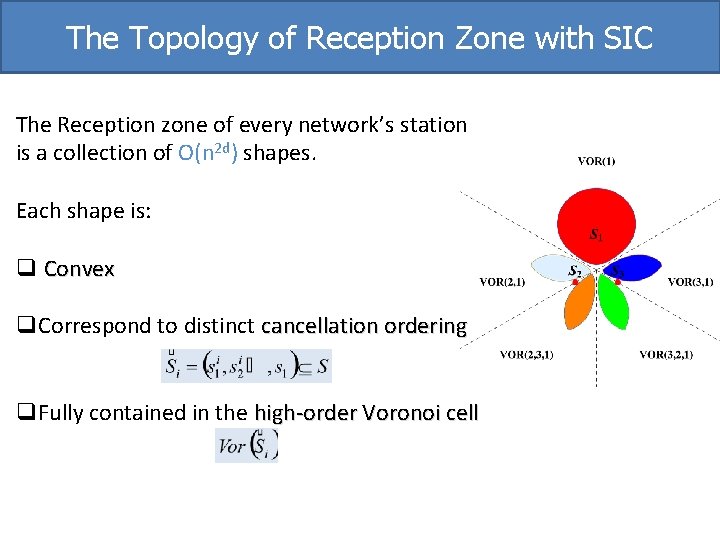
The Topology of Reception Zone with SIC The Reception zone of every network’s station is a collection of O(n 2 d) shapes. Each shape is: q Convex q. Correspond to distinct cancellation ordering q. Fully contained in the high-order Voronoi cell
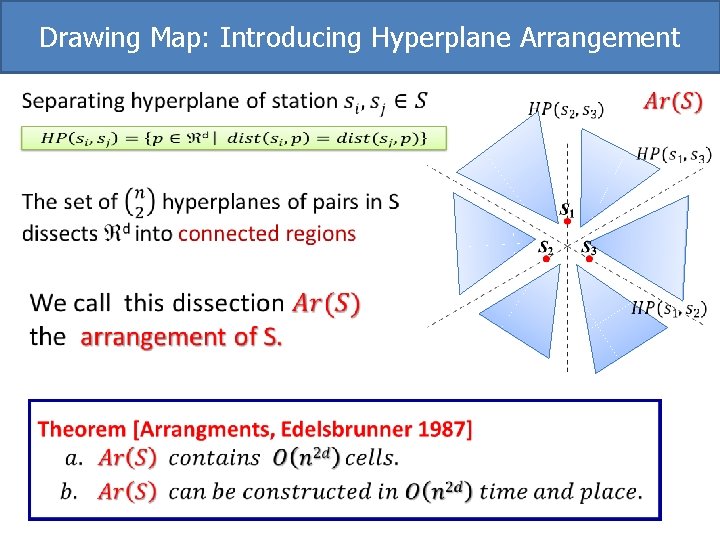
Drawing Map: Introducing Hyperplane Arrangement
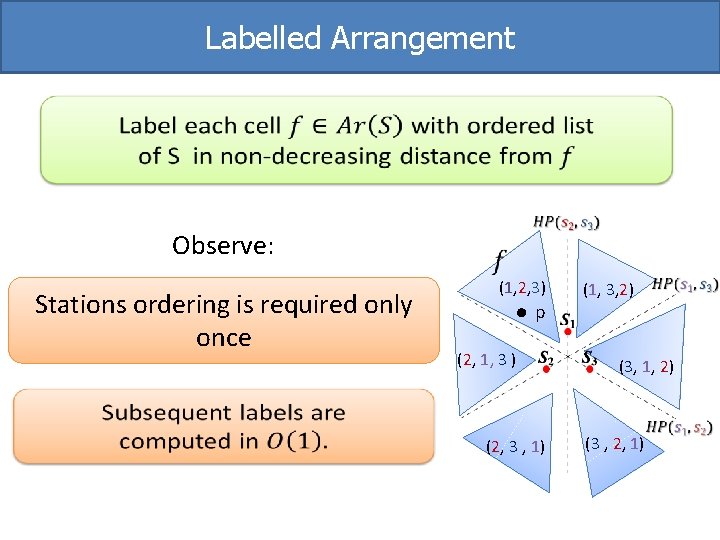
Labelled Arrangement Observe: Stations ordering is required only once (1, 2, 3) p (2, 1, 3 ) (2, 3 , 1) (1, 3, 2) (3, 1, 2) (3 , 2, 1)
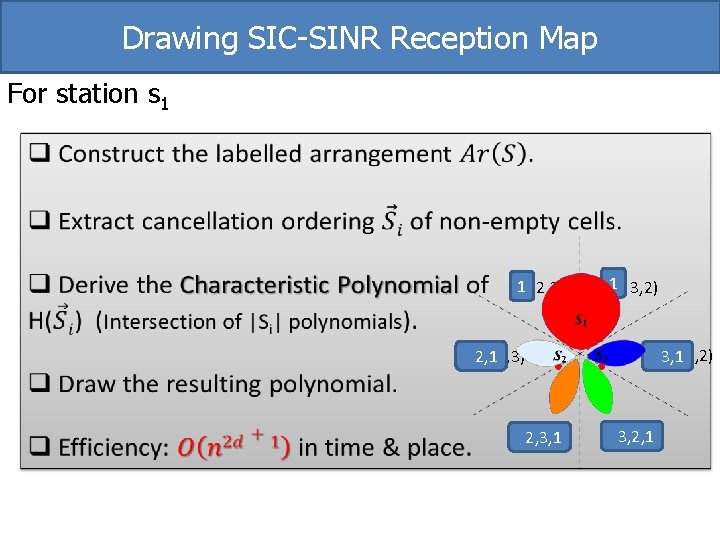
Drawing SIC-SINR Reception Map For station s 1 1 (1, 2, 3) 1 (1, 3, 2) ( 3, 1, 2) 3, 1 ( 2, 1, 3) 2, 1 ( 2, 3, 1) 2, 3, 1 ( 3, 2, 1) 3, 2, 1
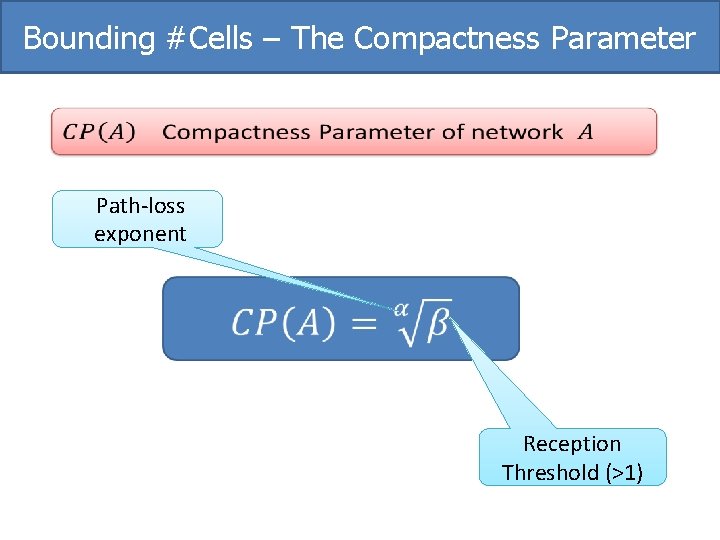
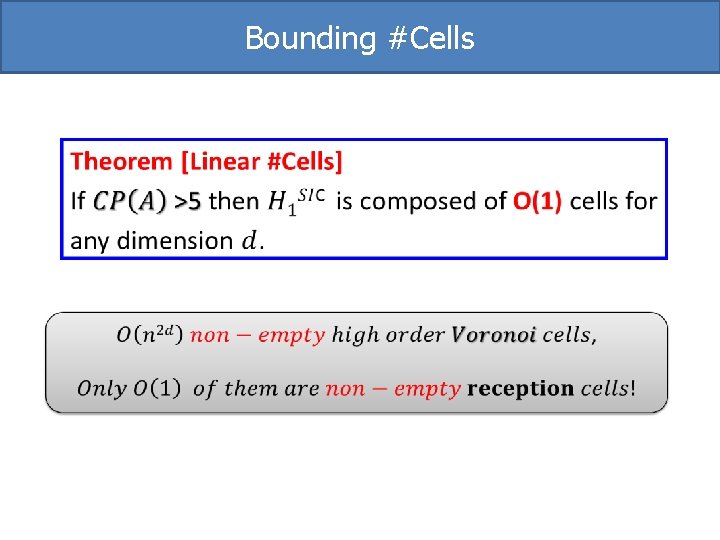
Bounding #Cells – The Compactness Parameter Path-loss exponent Reception Threshold (>1)
Bounding #Cells
Algorithms Topology Challenges Bounding #Cells (how many? ) Map Drawing (which are they? ) Nice Properties of Zones Point Location Task (how to store them? )
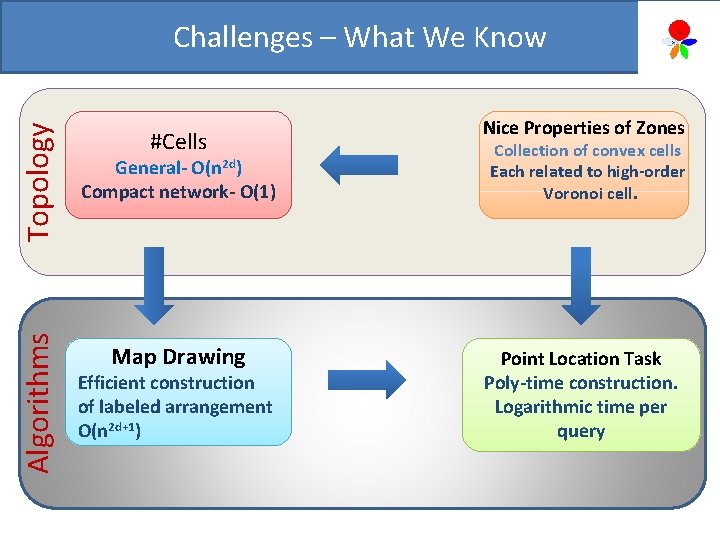
Algorithms Topology Challenges – What We Know #Cells General- O(n 2 d) Compact network- O(1) Map Drawing Efficient construction of labeled arrangement O(n 2 d+1) Nice Properties of Zones Collection of convex cells Each related to high-order Voronoi cell. Point Location Task Poly-time construction. Logarithmic time per query
Questions? Thanks for listening!