
Singleview Metrology and Camera Calibration Computer Vision Derek
Single-view Metrology and Camera Calibration Computer Vision Derek Hoiem, University of Illinois 02/23/12 1
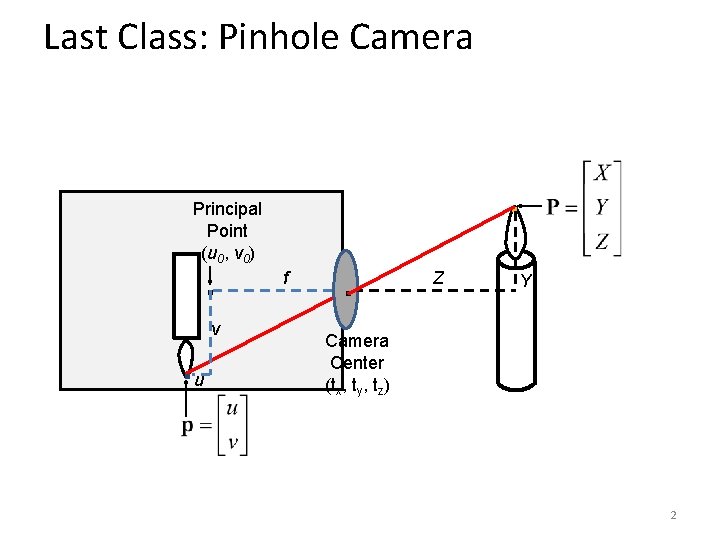
Last Class: Pinhole Camera . Principal Point (u 0, v 0) . . u v f . Z Y Camera Center (tx, ty, tz) 2
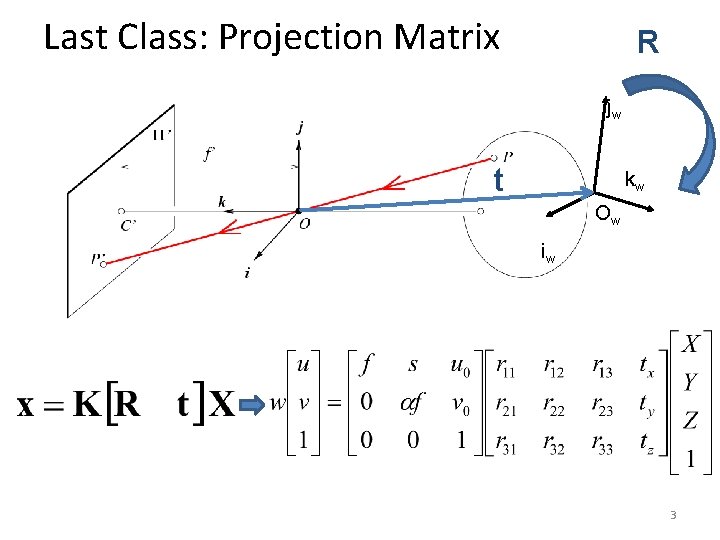
Last Class: Projection Matrix R jw t kw Ow iw 3
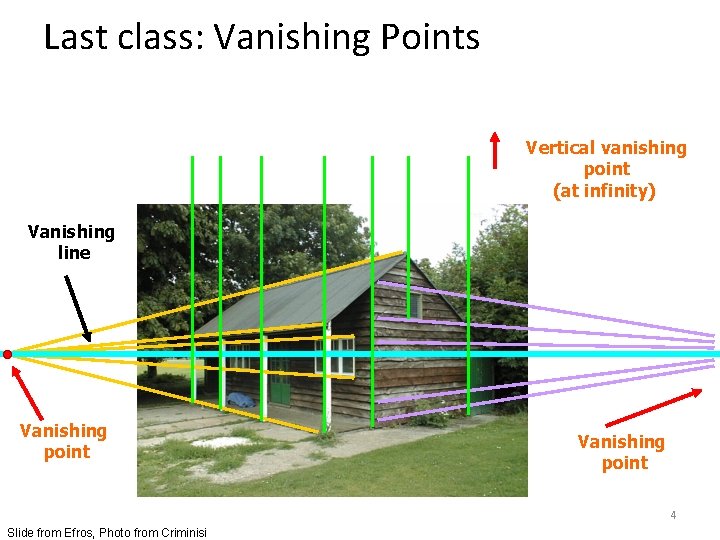
Last class: Vanishing Points Vertical vanishing point (at infinity) Vanishing line Vanishing point 4 Slide from Efros, Photo from Criminisi
This class • How can we calibrate the camera? • How can we measure the size of objects in the world from an image? • What about other camera properties: focal length, field of view, depth of field, aperture, f -number? 5
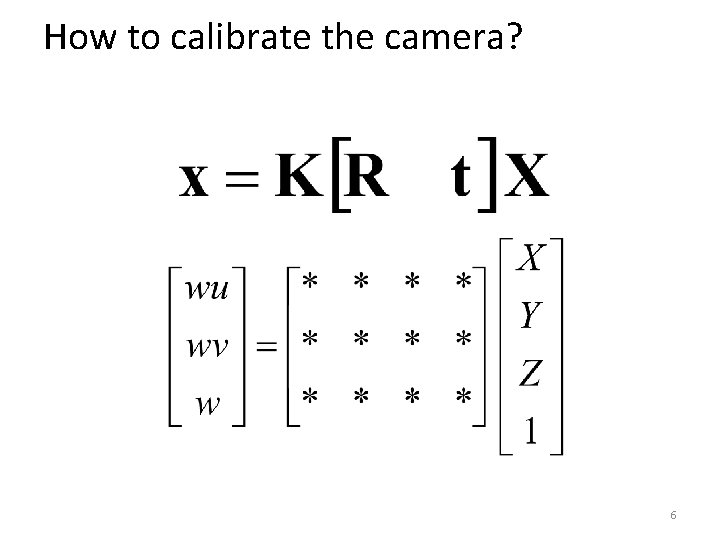
How to calibrate the camera? 6
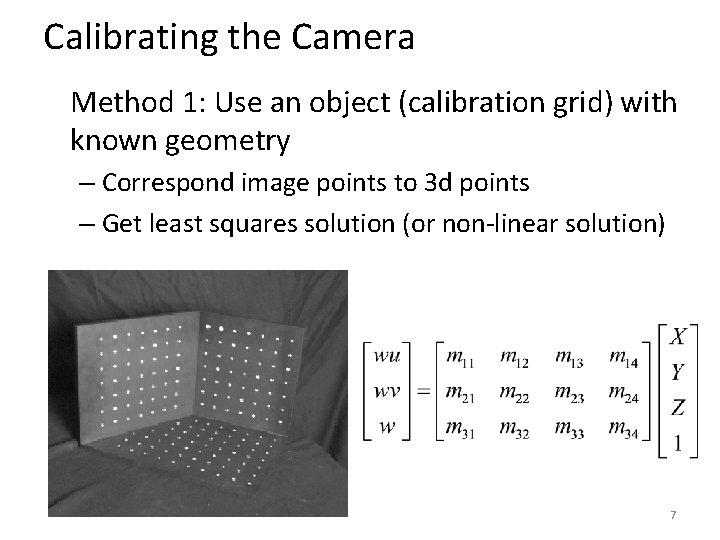
Calibrating the Camera Method 1: Use an object (calibration grid) with known geometry – Correspond image points to 3 d points – Get least squares solution (or non-linear solution) 7
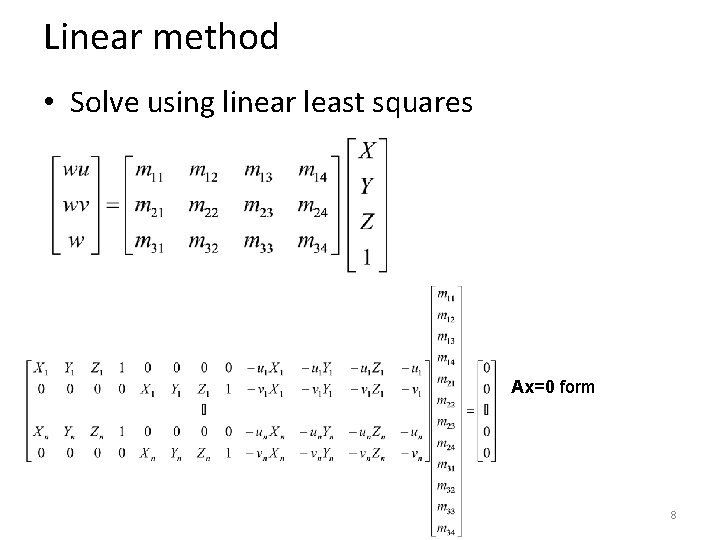
Linear method • Solve using linear least squares Ax=0 form 8
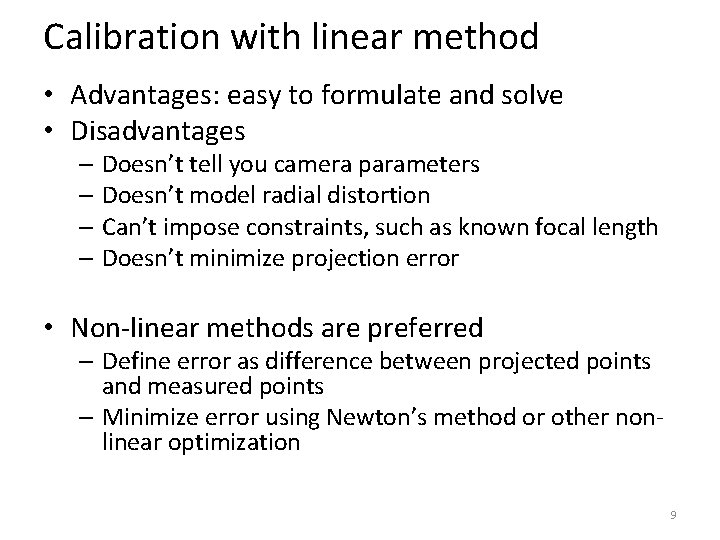
Calibration with linear method • Advantages: easy to formulate and solve • Disadvantages – Doesn’t tell you camera parameters – Doesn’t model radial distortion – Can’t impose constraints, such as known focal length – Doesn’t minimize projection error • Non-linear methods are preferred – Define error as difference between projected points and measured points – Minimize error using Newton’s method or other nonlinear optimization 9
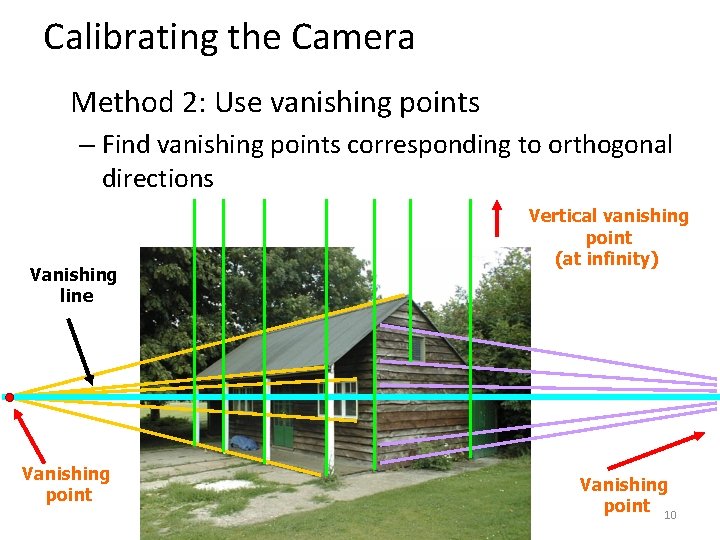
Calibrating the Camera Method 2: Use vanishing points – Find vanishing points corresponding to orthogonal directions Vanishing line Vanishing point Vertical vanishing point (at infinity) Vanishing point 10
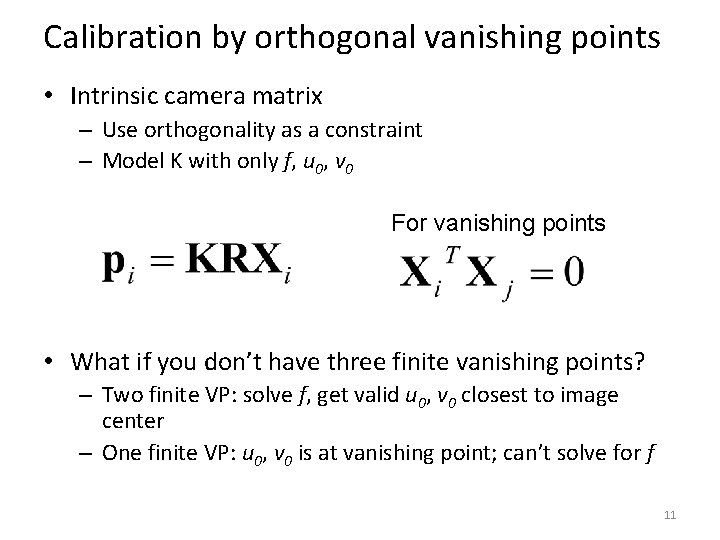
Calibration by orthogonal vanishing points • Intrinsic camera matrix – Use orthogonality as a constraint – Model K with only f, u 0, v 0 For vanishing points • What if you don’t have three finite vanishing points? – Two finite VP: solve f, get valid u 0, v 0 closest to image center – One finite VP: u 0, v 0 is at vanishing point; can’t solve for f 11
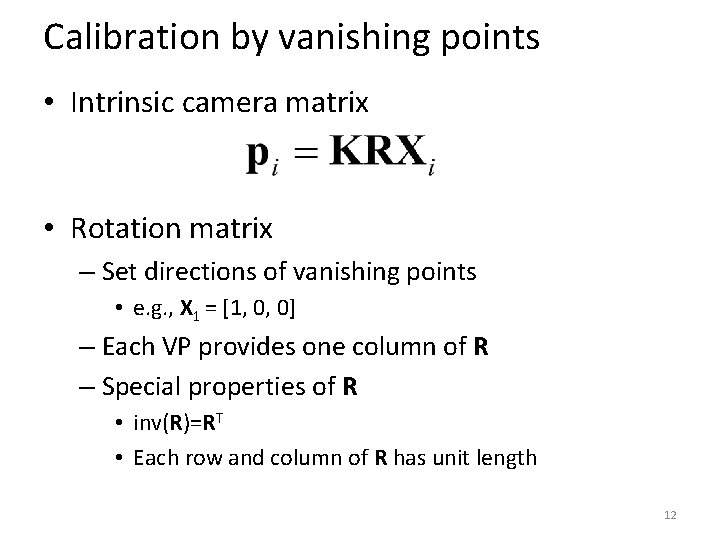
Calibration by vanishing points • Intrinsic camera matrix • Rotation matrix – Set directions of vanishing points • e. g. , X 1 = [1, 0, 0] – Each VP provides one column of R – Special properties of R • inv(R)=RT • Each row and column of R has unit length 12
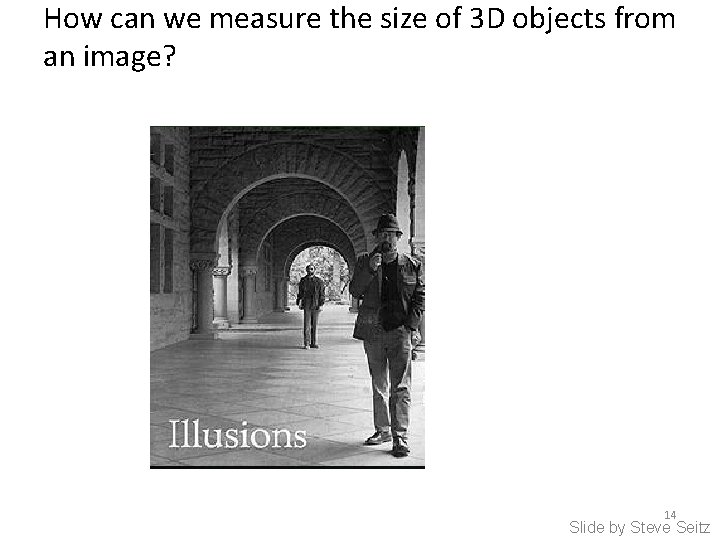
How can we measure the size of 3 D objects from an image? 14 Slide by Steve Seitz
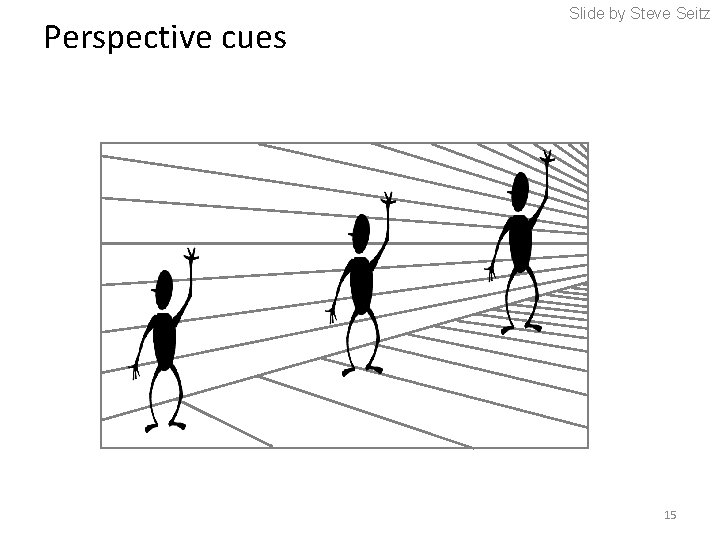
Perspective cues Slide by Steve Seitz 15
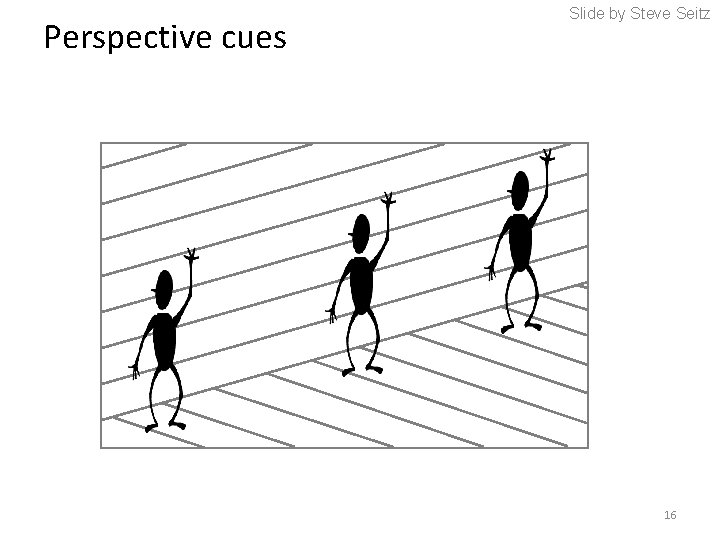
Perspective cues Slide by Steve Seitz 16
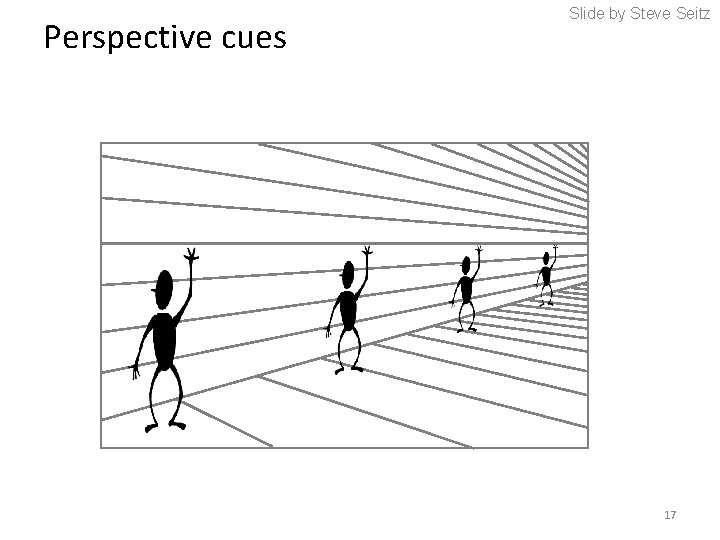
Perspective cues Slide by Steve Seitz 17
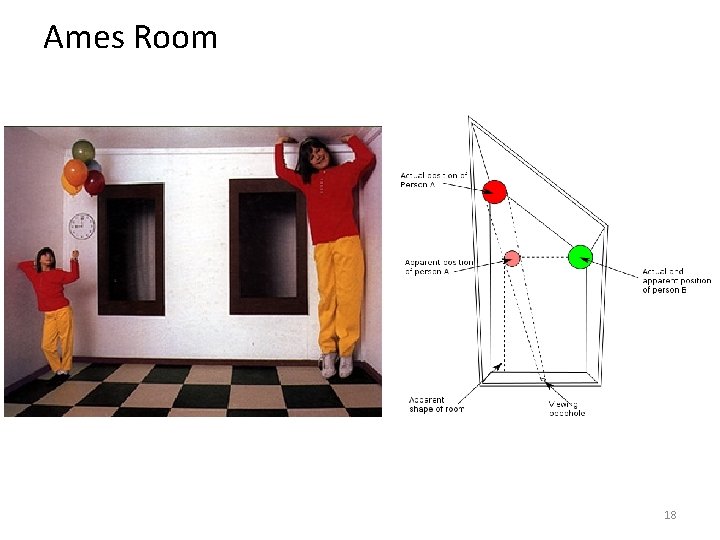
Ames Room 18
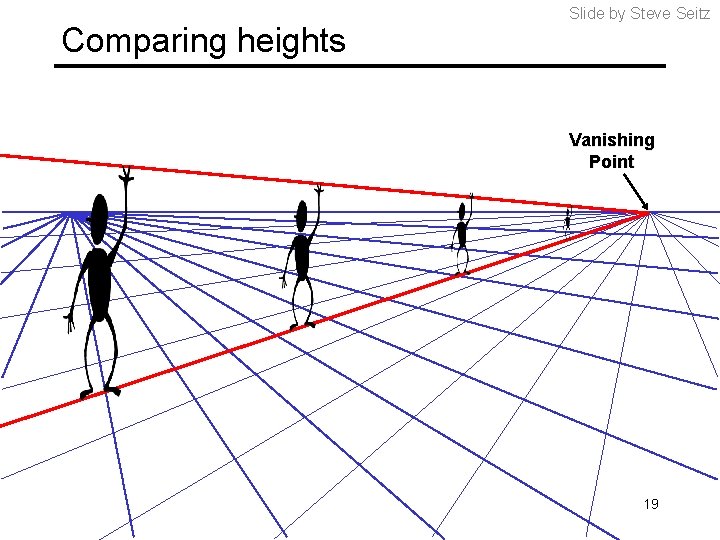
Comparing heights Slide by Steve Seitz Vanishing Point 19
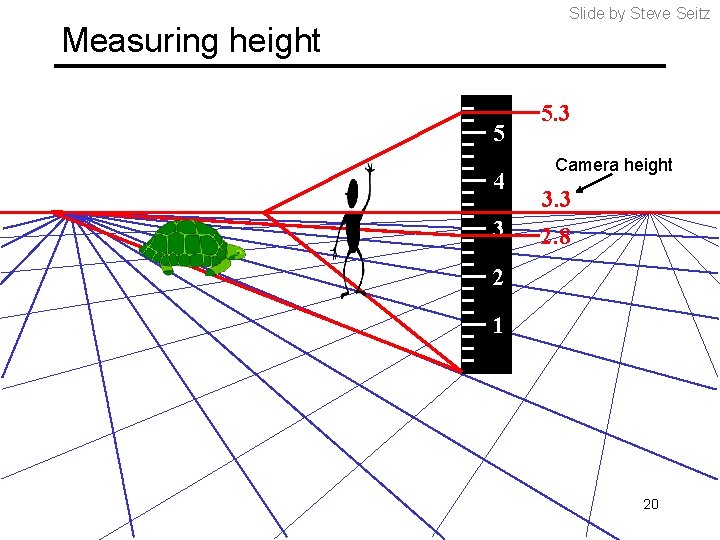
Slide by Steve Seitz Measuring height 5 4 3 5. 3 Camera height 3. 3 2. 8 2 1 20
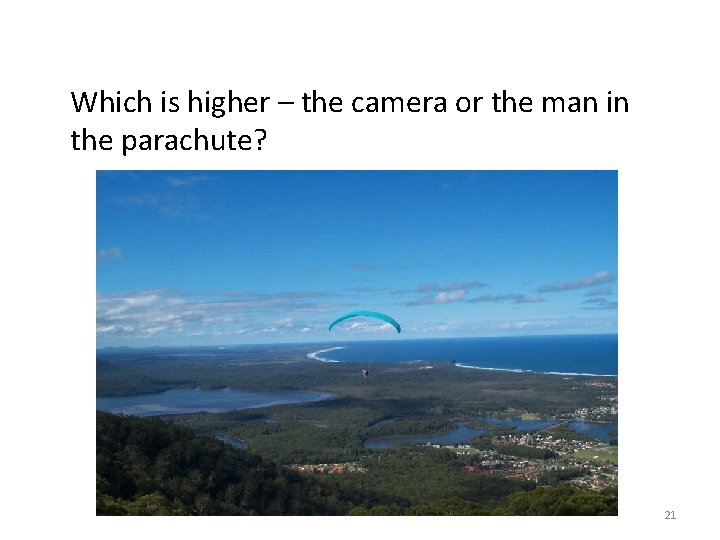
Which is higher – the camera or the man in the parachute? 21
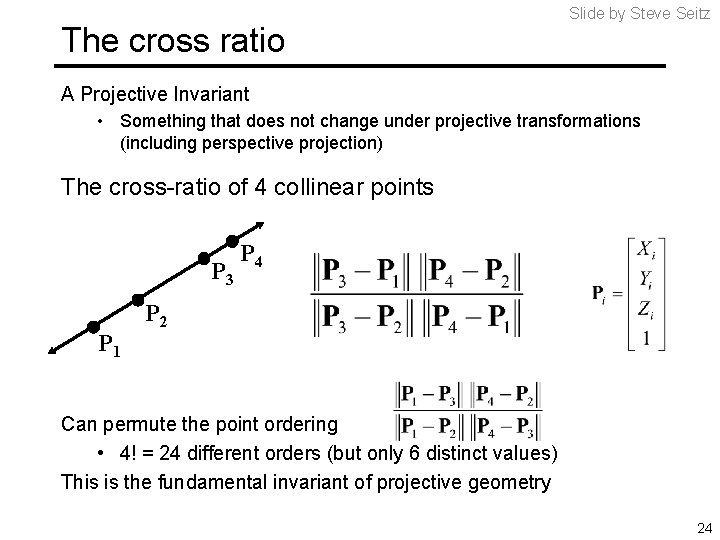
The cross ratio Slide by Steve Seitz A Projective Invariant • Something that does not change under projective transformations (including perspective projection) The cross-ratio of 4 collinear points P 3 P 1 P 4 P 2 Can permute the point ordering • 4! = 24 different orders (but only 6 distinct values) This is the fundamental invariant of projective geometry 24
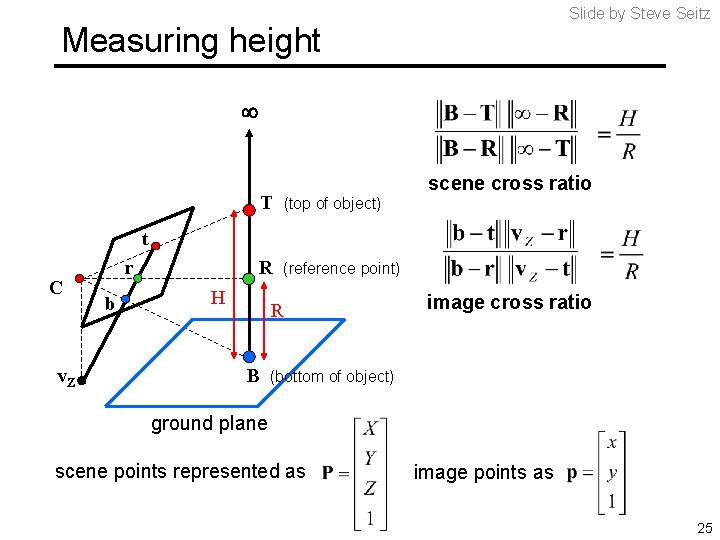
Slide by Steve Seitz Measuring height scene cross ratio T (top of object) R (reference point) t C v. Z r b H R B image cross ratio (bottom of object) ground plane scene points represented as image points as 25
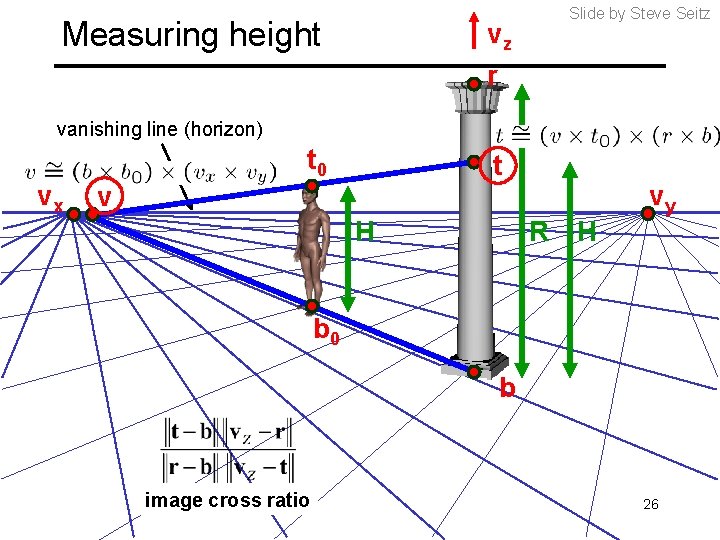
Measuring height vz r Slide by Steve Seitz vanishing line (horizon) vx t 0 t v H R H vy b 0 b image cross ratio 26
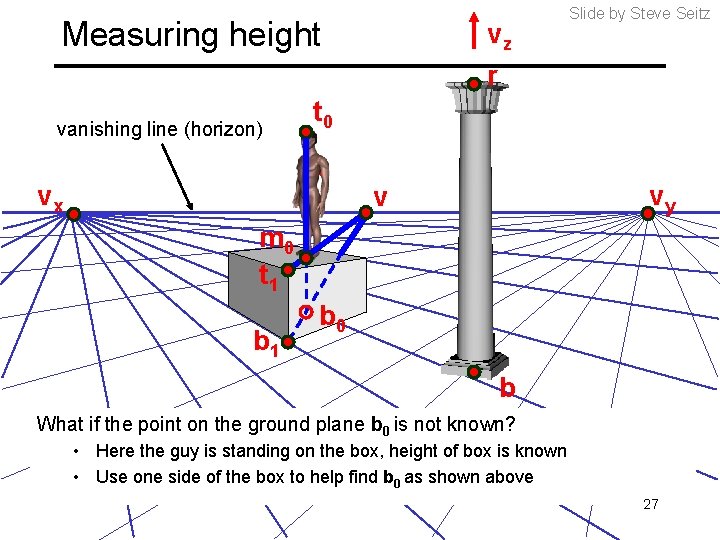
Measuring height vanishing line (horizon) vz r t 0 vx Slide by Steve Seitz vy v m 0 t 1 b 0 b What if the point on the ground plane b 0 is not known? • Here the guy is standing on the box, height of box is known • Use one side of the box to help find b 0 as shown above 27
What about focus, aperture, DOF, FOV, etc?
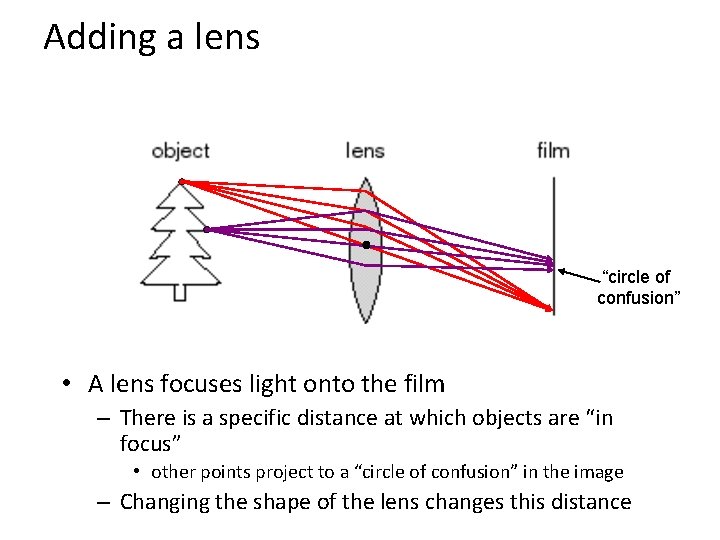
Adding a lens “circle of confusion” • A lens focuses light onto the film – There is a specific distance at which objects are “in focus” • other points project to a “circle of confusion” in the image – Changing the shape of the lens changes this distance
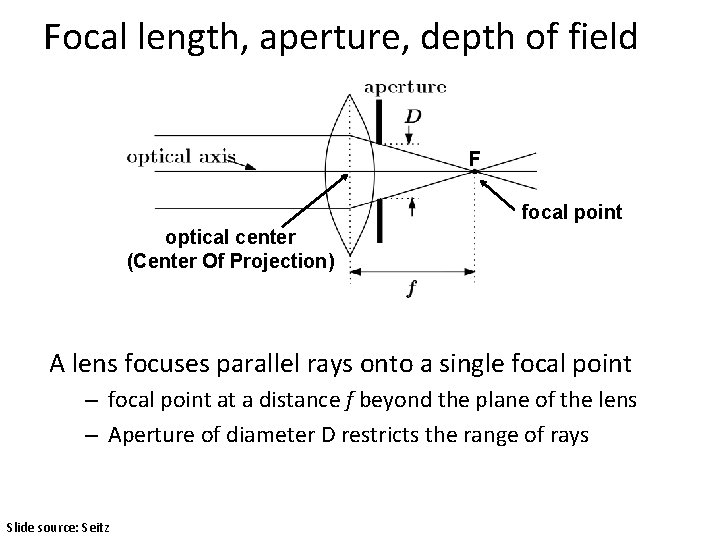
Focal length, aperture, depth of field F focal point optical center (Center Of Projection) A lens focuses parallel rays onto a single focal point – focal point at a distance f beyond the plane of the lens – Aperture of diameter D restricts the range of rays Slide source: Seitz
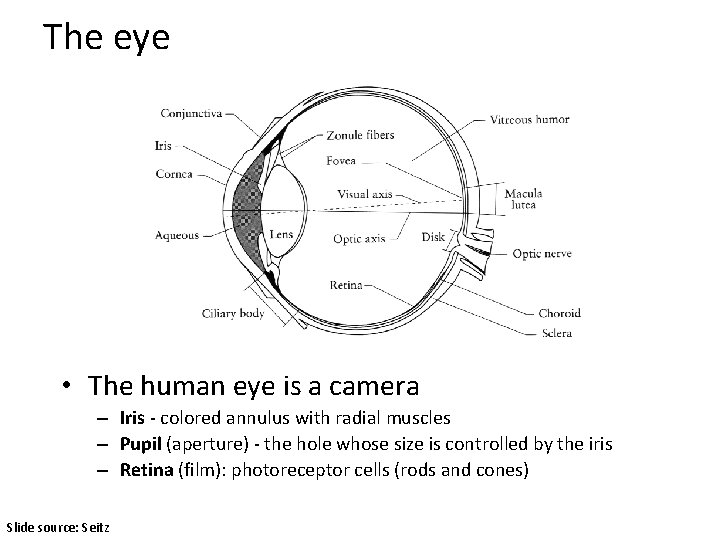
The eye • The human eye is a camera – Iris - colored annulus with radial muscles – Pupil (aperture) - the hole whose size is controlled by the iris – Retina (film): photoreceptor cells (rods and cones) Slide source: Seitz
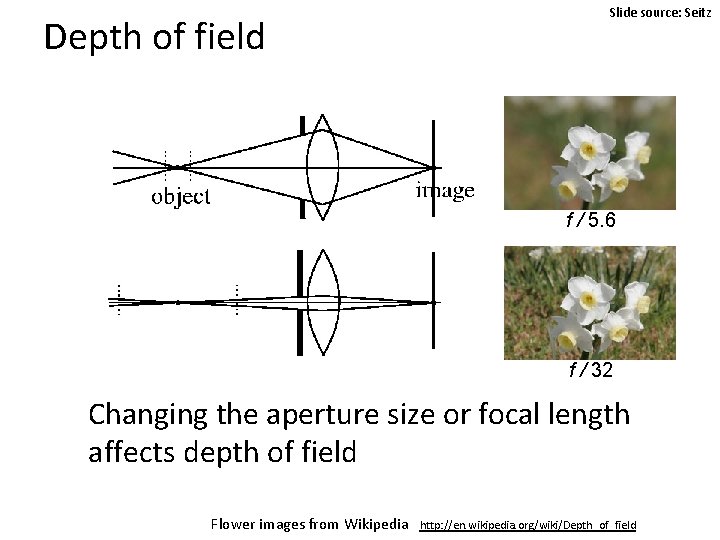
Depth of field Slide source: Seitz f / 5. 6 f / 32 Changing the aperture size or focal length affects depth of field Flower images from Wikipedia http: //en. wikipedia. org/wiki/Depth_of_field
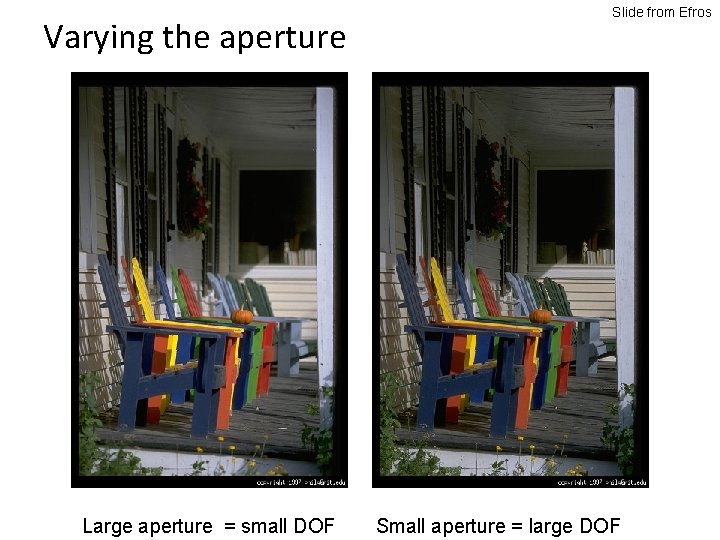
Varying the aperture Large aperture = small DOF Slide from Efros Small aperture = large DOF
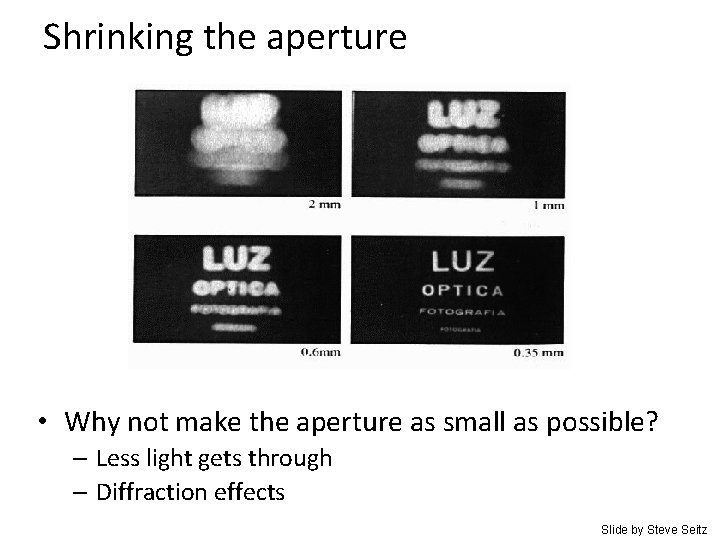
Shrinking the aperture • Why not make the aperture as small as possible? – Less light gets through – Diffraction effects Slide by Steve Seitz
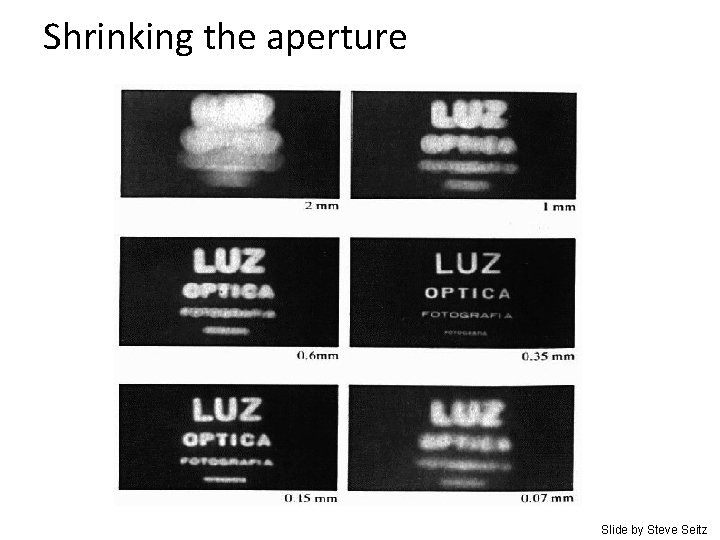
Shrinking the aperture Slide by Steve Seitz
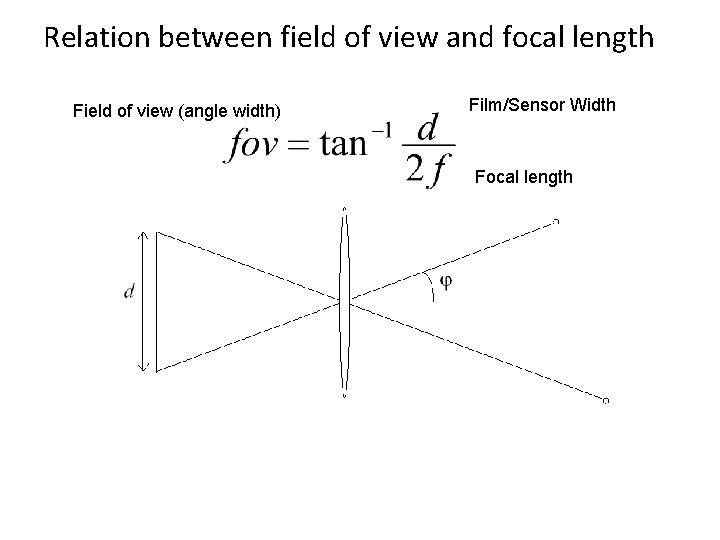
Relation between field of view and focal length Field of view (angle width) Film/Sensor Width Focal length
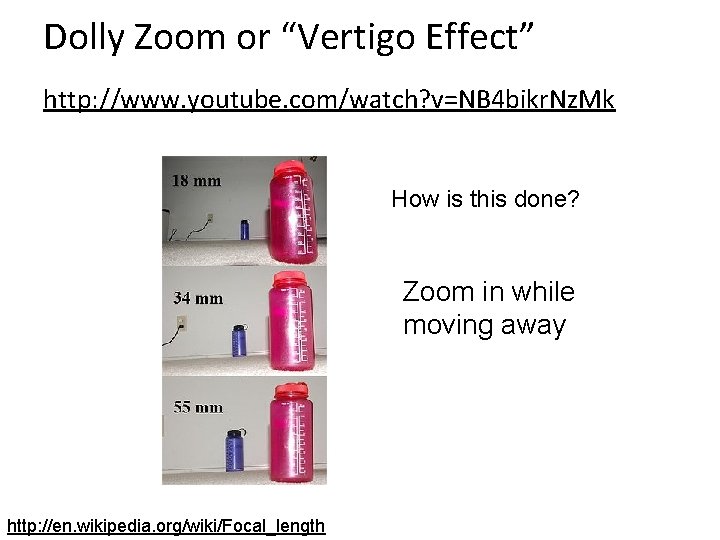
Dolly Zoom or “Vertigo Effect” http: //www. youtube. com/watch? v=NB 4 bikr. Nz. Mk How is this done? Zoom in while moving away http: //en. wikipedia. org/wiki/Focal_length
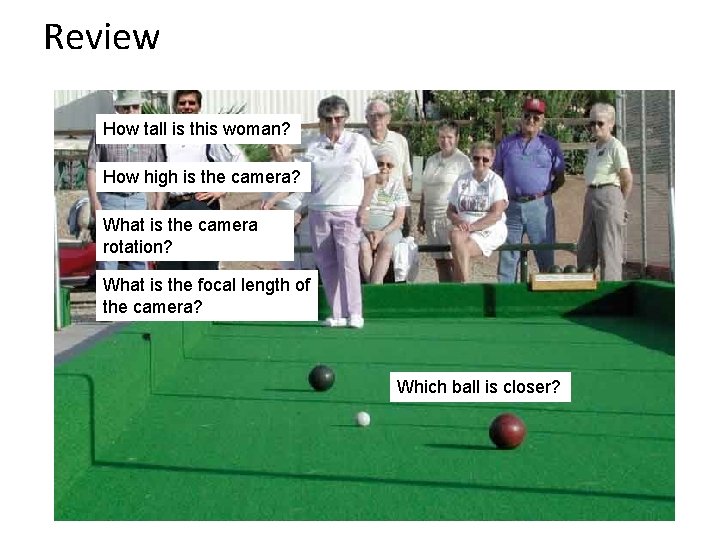
Review How tall is this woman? How high is the camera? What is the camera rotation? What is the focal length of the camera? Which ball is closer?
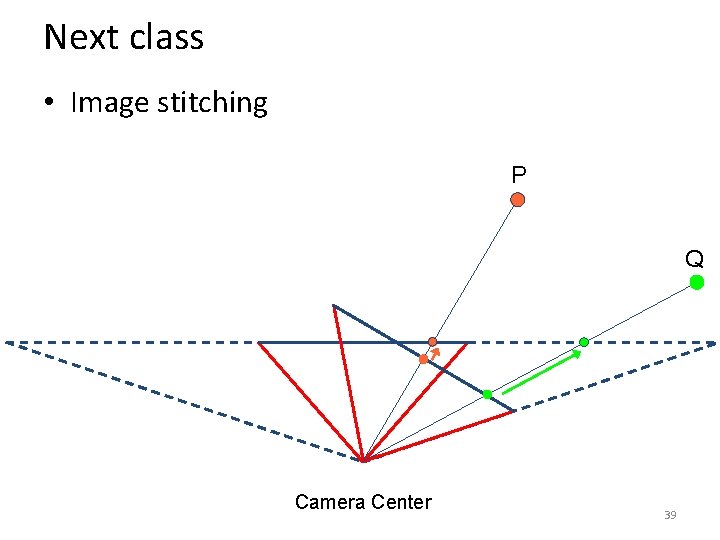
Next class • Image stitching P Q Camera Center 39
- Slides: 36