
SinglePhase HalfWave Rectifier Waveforms SinglePhase HalfWave Rectifier Performance
- Slides: 33
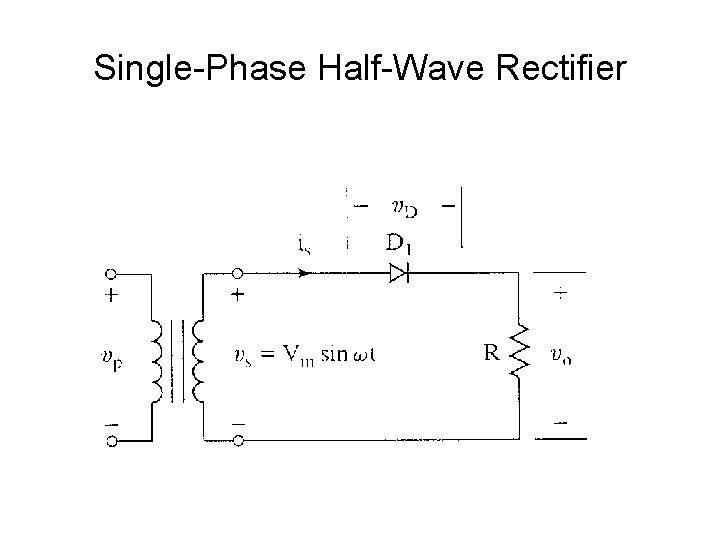
Single-Phase Half-Wave Rectifier
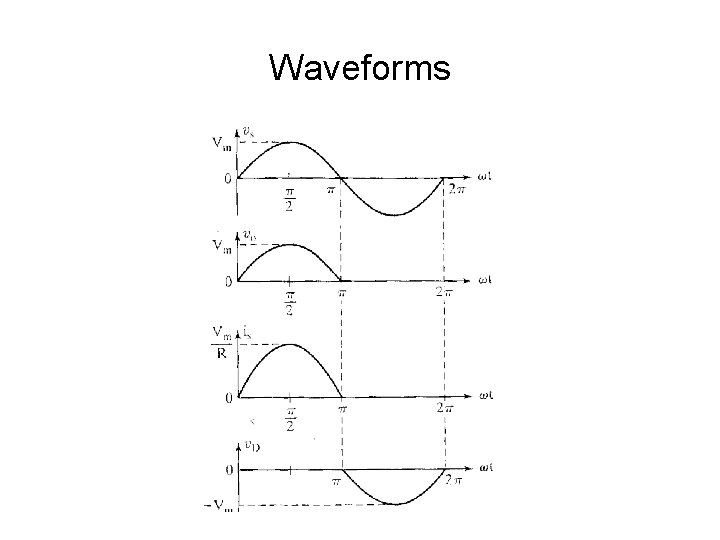
Waveforms
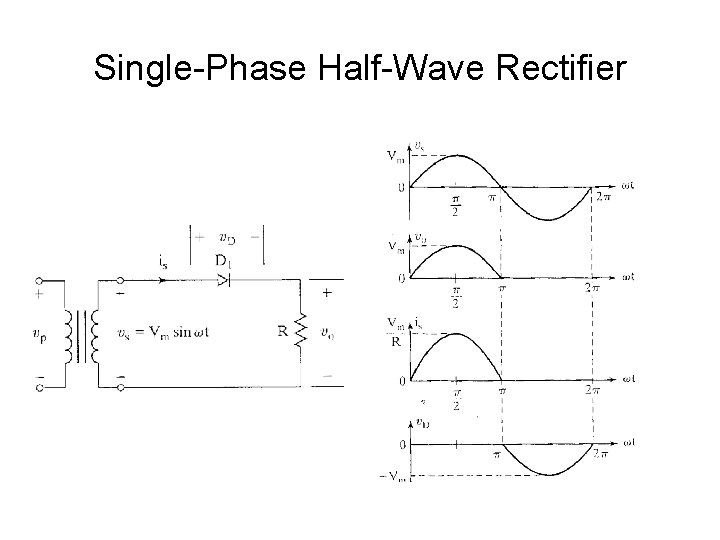
Single-Phase Half-Wave Rectifier
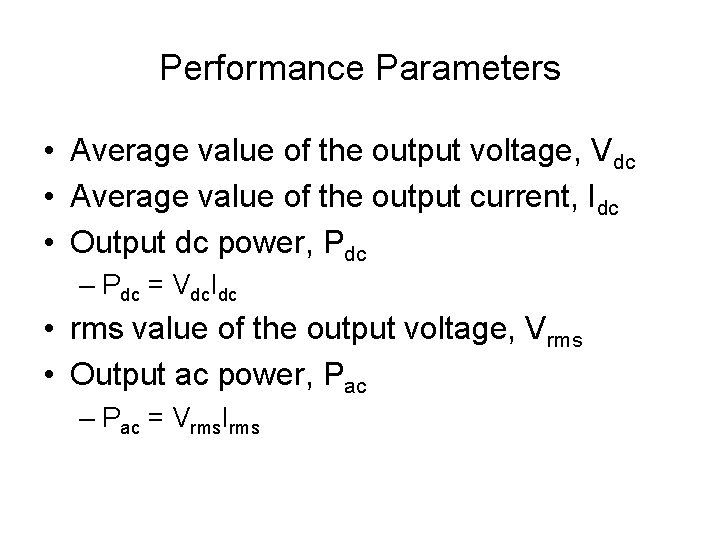
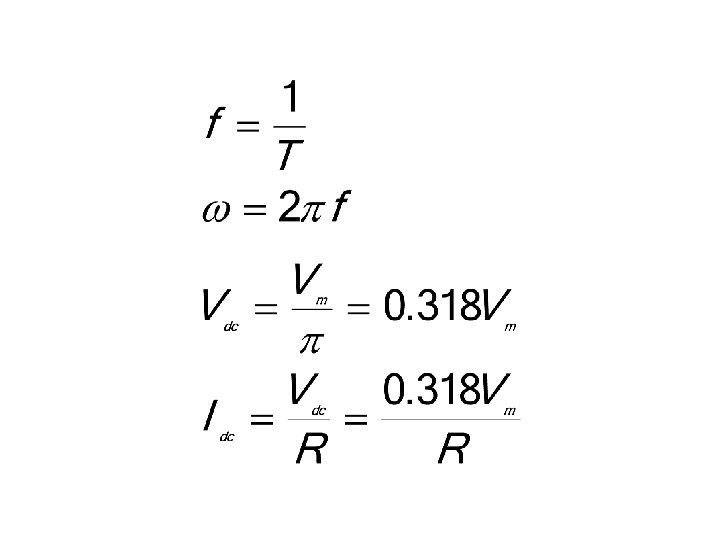
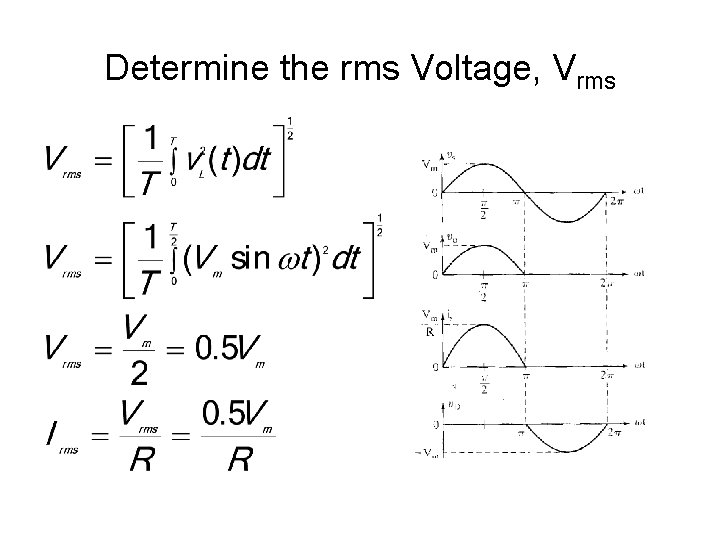
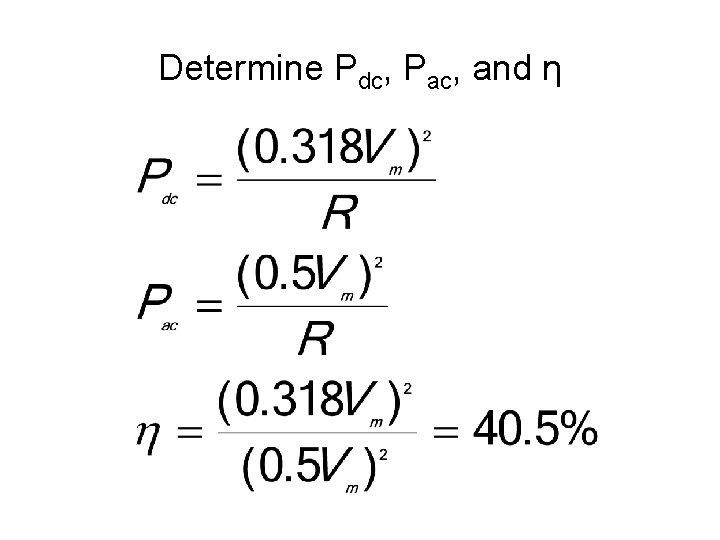
Performance Parameters • Average value of the output voltage, Vdc • Average value of the output current, Idc • Output dc power, Pdc – Pdc = Vdc. Idc • rms value of the output voltage, Vrms • Output ac power, Pac – Pac = Vrms. Irms
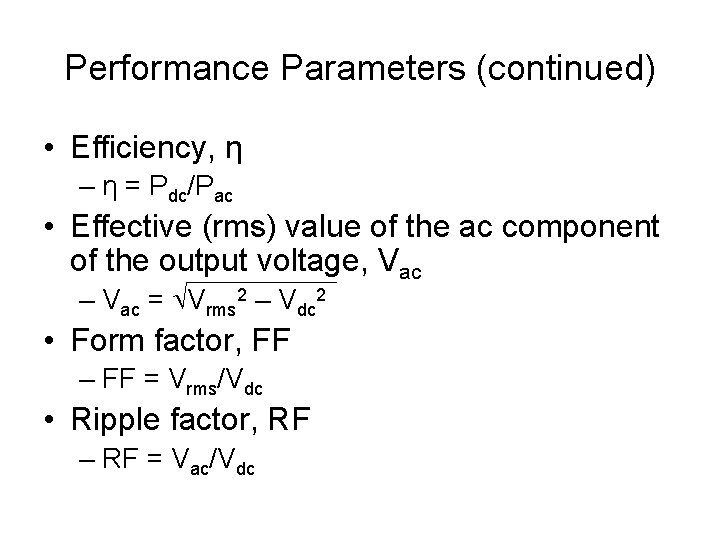
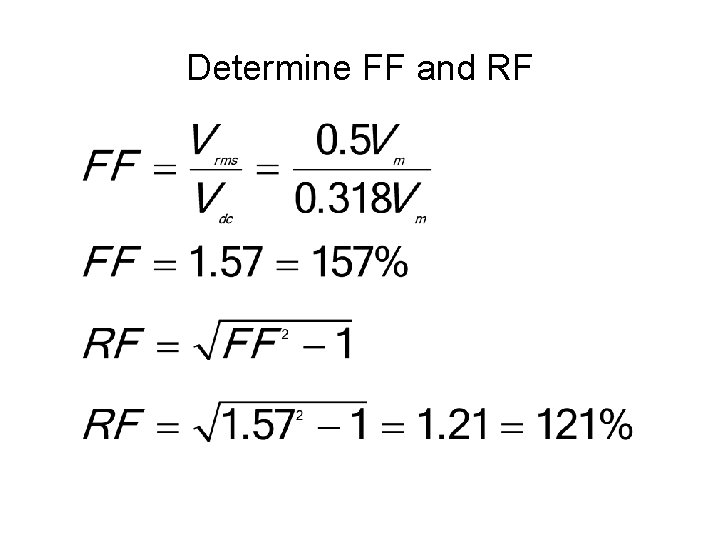
Performance Parameters (continued) • Efficiency, η – η = Pdc/Pac • Effective (rms) value of the ac component of the output voltage, Vac – Vac = Vrms 2 – Vdc 2 • Form factor, FF – FF = Vrms/Vdc • Ripple factor, RF – RF = Vac/Vdc
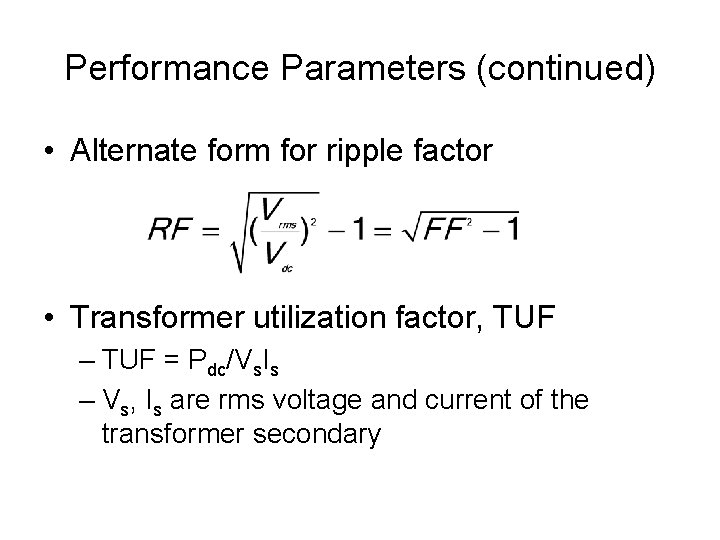
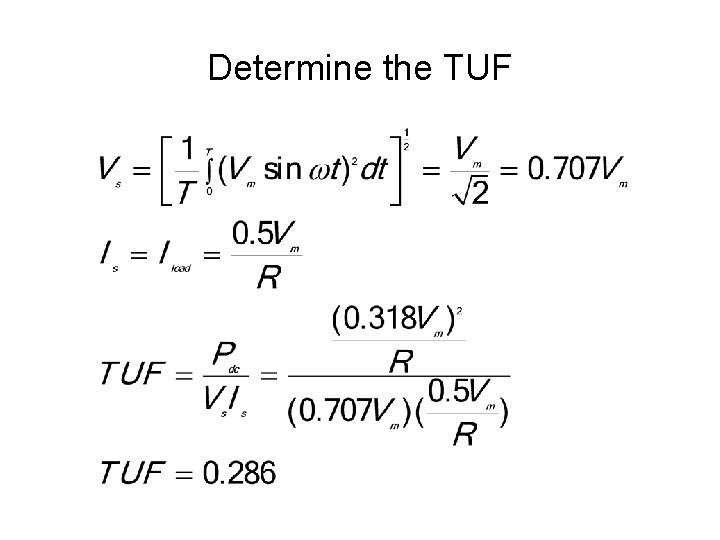
Performance Parameters (continued) • Alternate form for ripple factor • Transformer utilization factor, TUF – TUF = Pdc/Vs. Is – Vs, Is are rms voltage and current of the transformer secondary
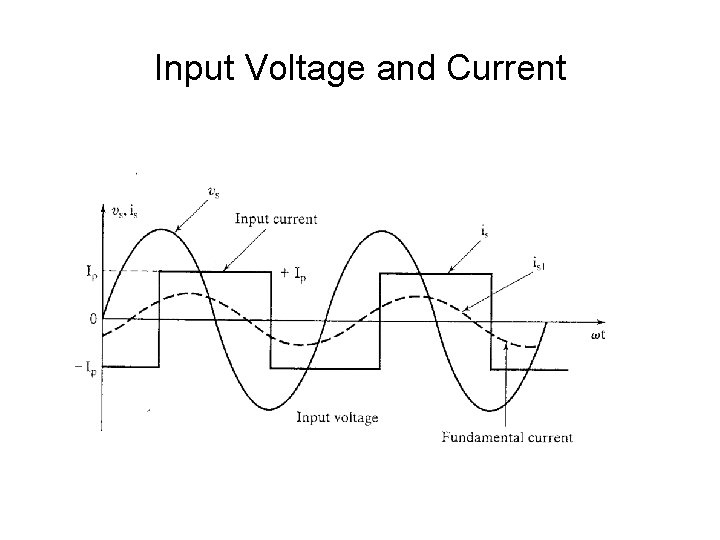
Input Voltage and Current
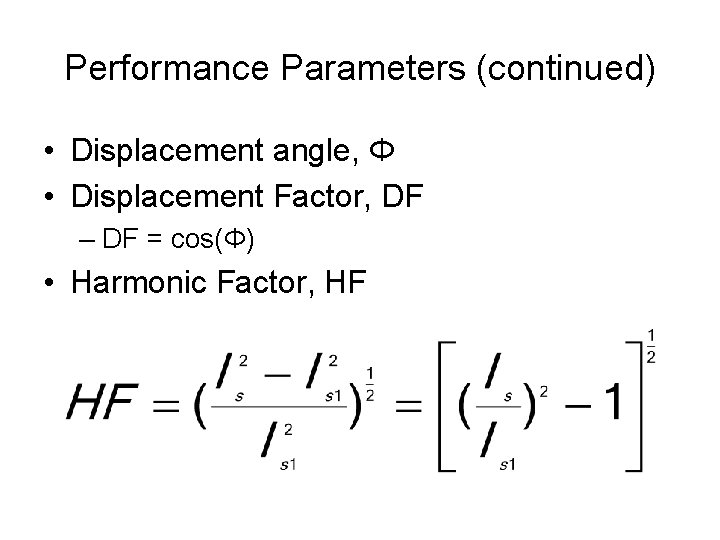
Performance Parameters (continued) • Displacement angle, Φ • Displacement Factor, DF – DF = cos(Φ) • Harmonic Factor, HF
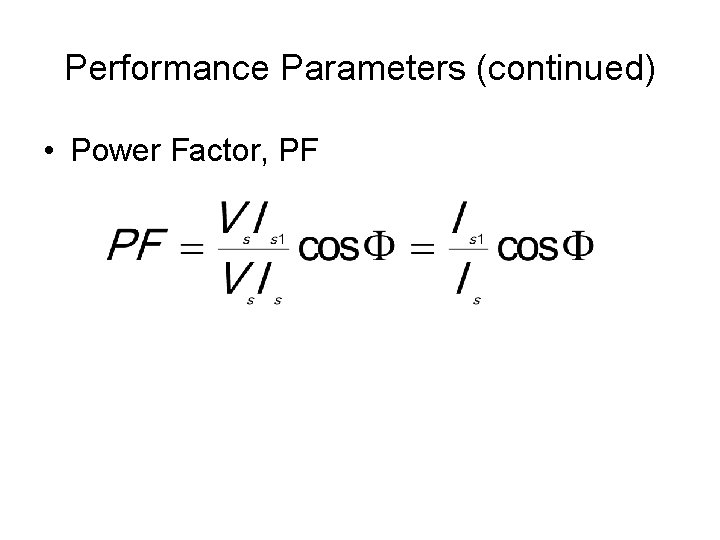
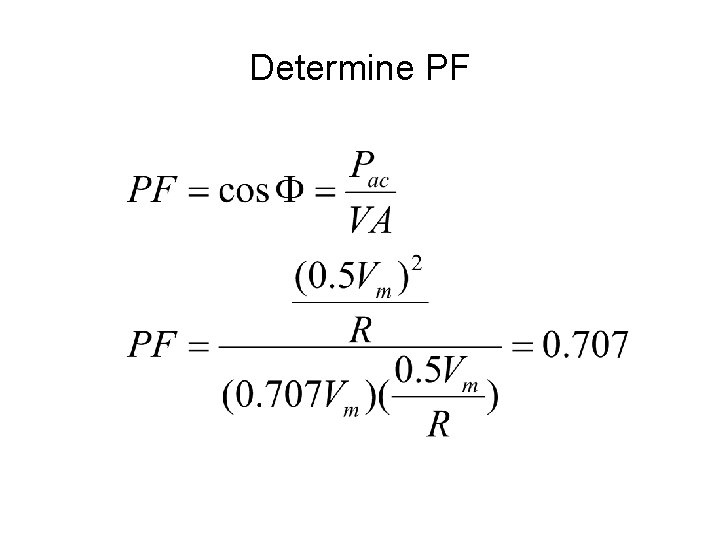
Performance Parameters (continued) • Power Factor, PF
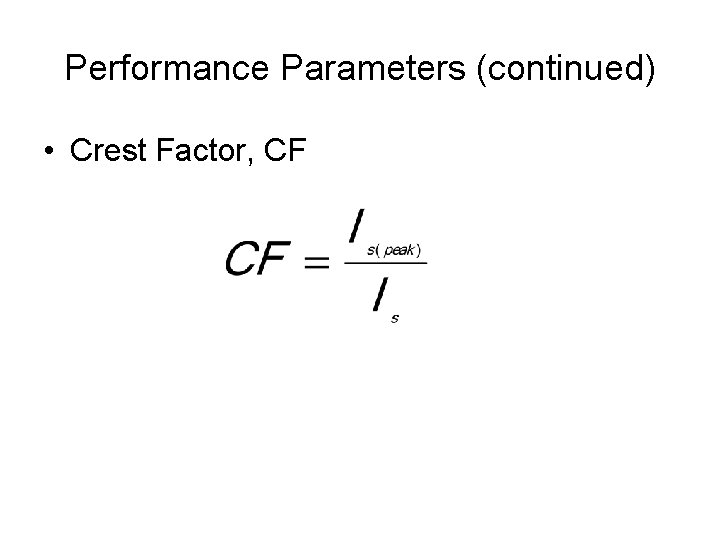
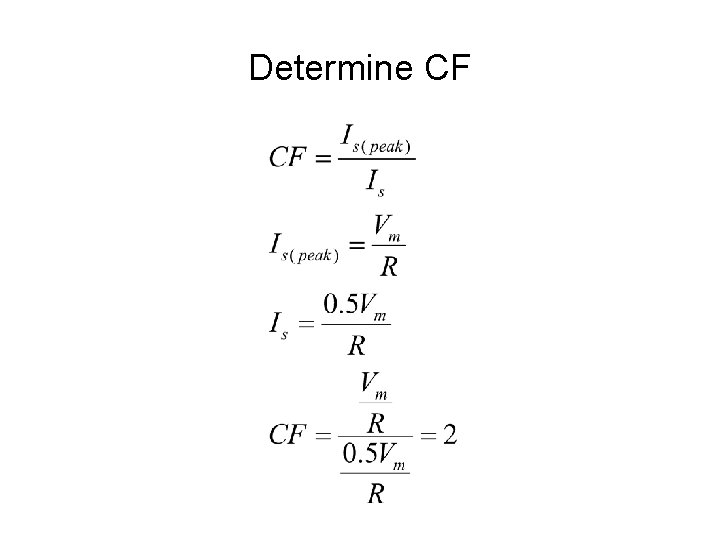
Performance Parameters (continued) • Crest Factor, CF
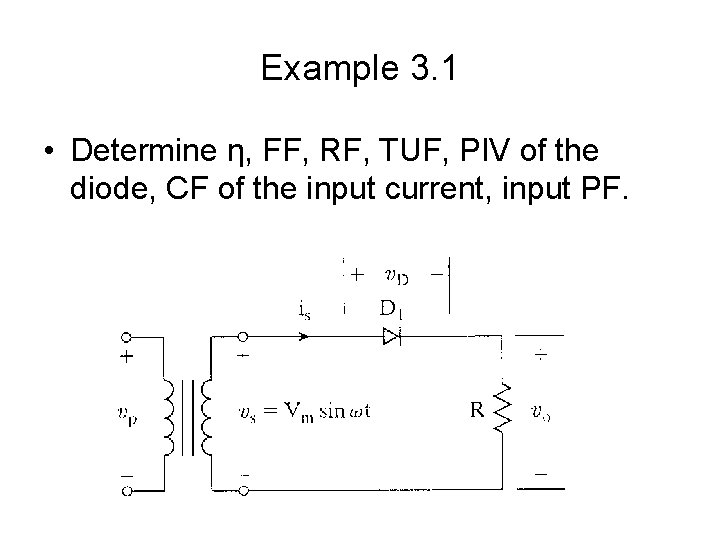
Example 3. 1 • Determine η, FF, RF, TUF, PIV of the diode, CF of the input current, input PF.
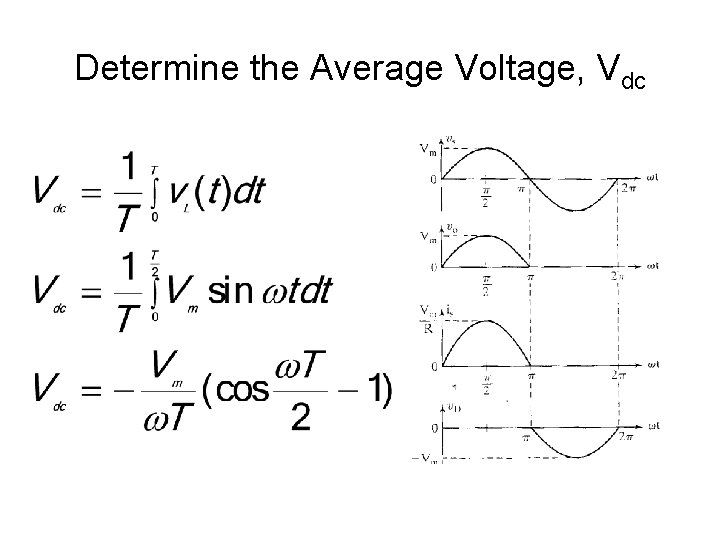
Determine the Average Voltage, Vdc
Determine the rms Voltage, Vrms
Determine Pdc, Pac, and η
Determine FF and RF
Determine the TUF
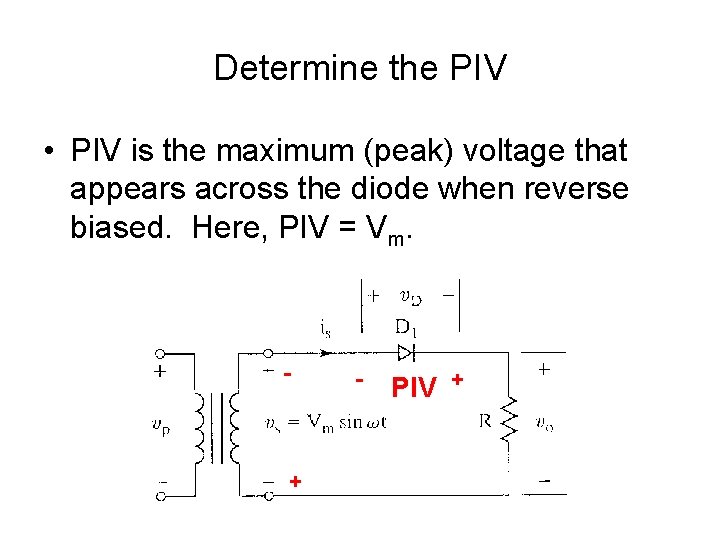
Determine the PIV • PIV is the maximum (peak) voltage that appears across the diode when reverse biased. Here, PIV = Vm. - + - PIV +
Determine CF
Determine PF
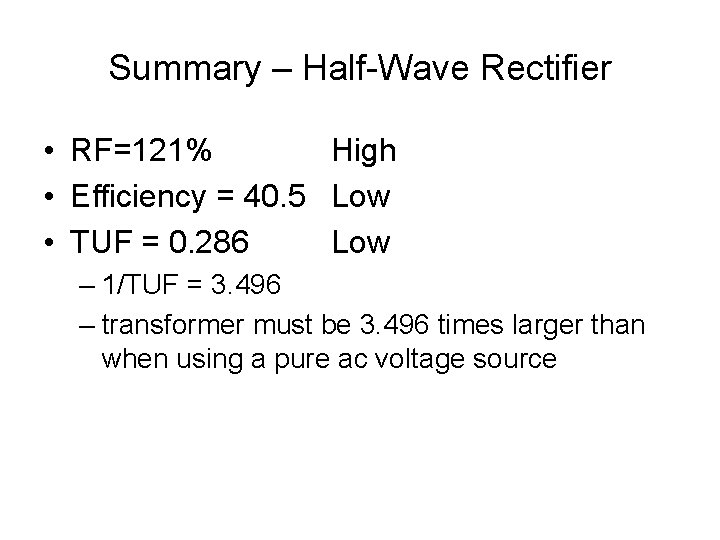
Summary – Half-Wave Rectifier • RF=121% High • Efficiency = 40. 5 Low • TUF = 0. 286 Low – 1/TUF = 3. 496 – transformer must be 3. 496 times larger than when using a pure ac voltage source
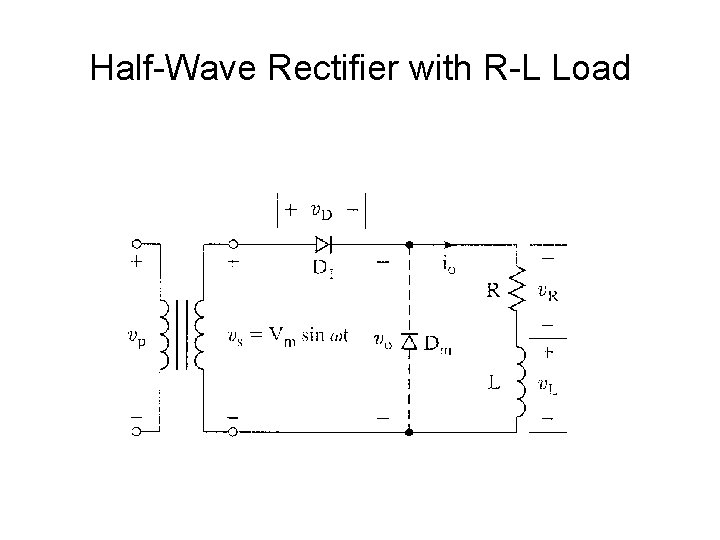
Half-Wave Rectifier with R-L Load
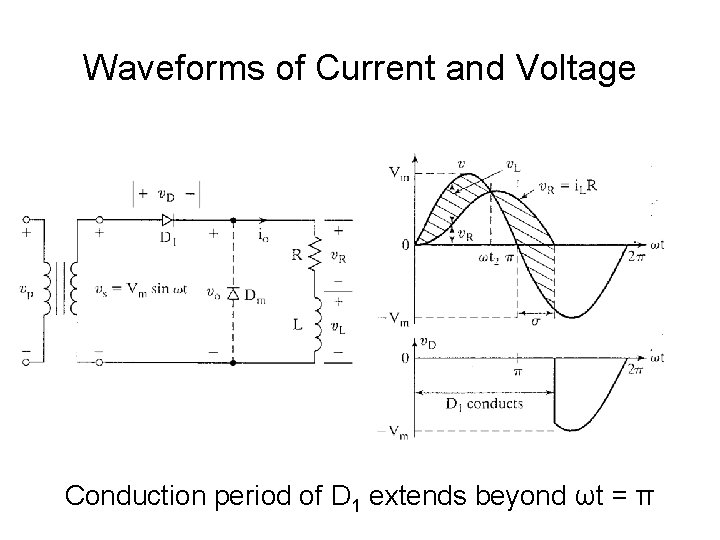
Waveforms of Current and Voltage Conduction period of D 1 extends beyond ωt = π
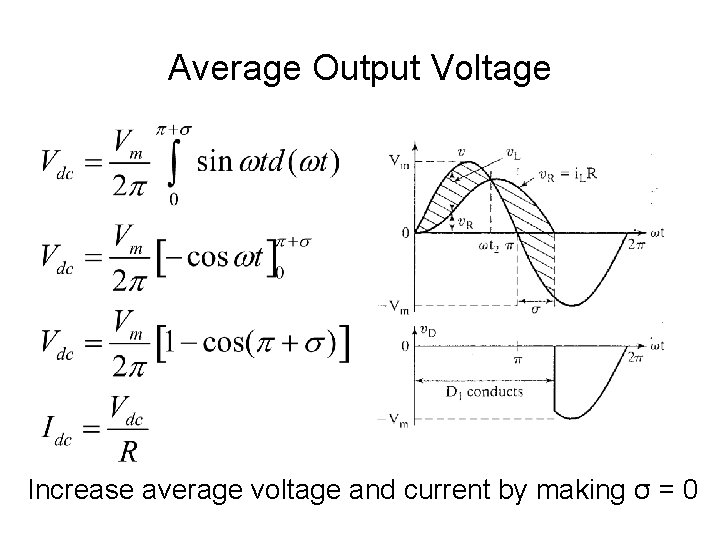
Average Output Voltage Increase average voltage and current by making σ = 0
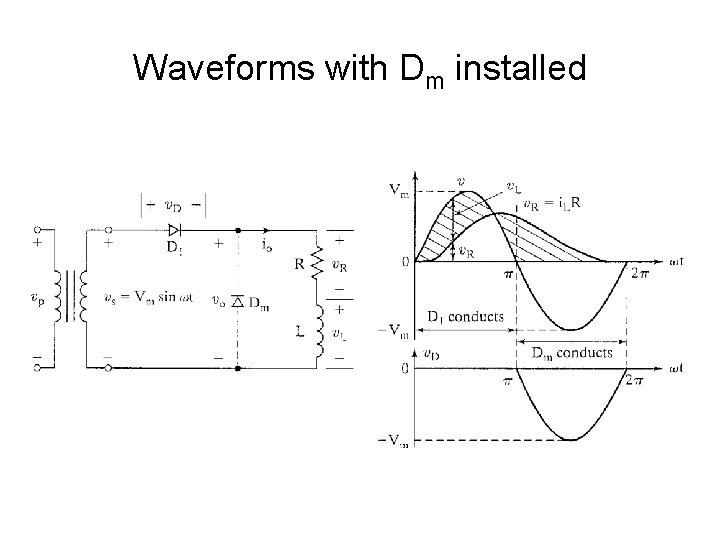
Waveforms with Dm installed
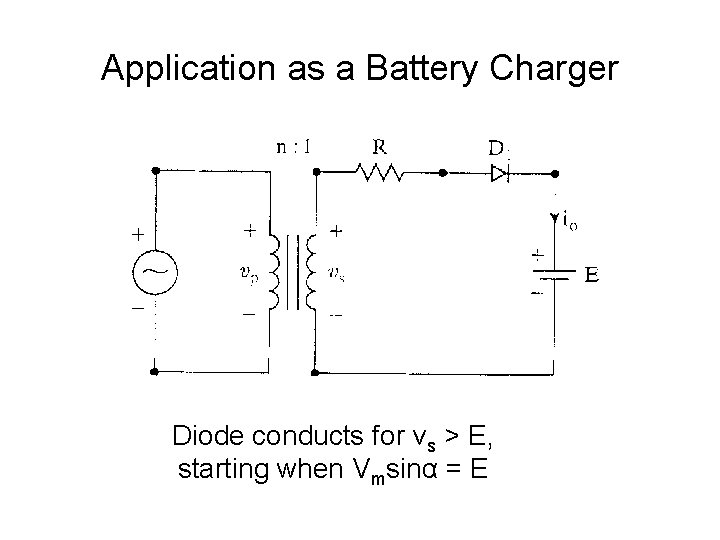
Application as a Battery Charger Diode conducts for vs > E, starting when Vmsinα = E
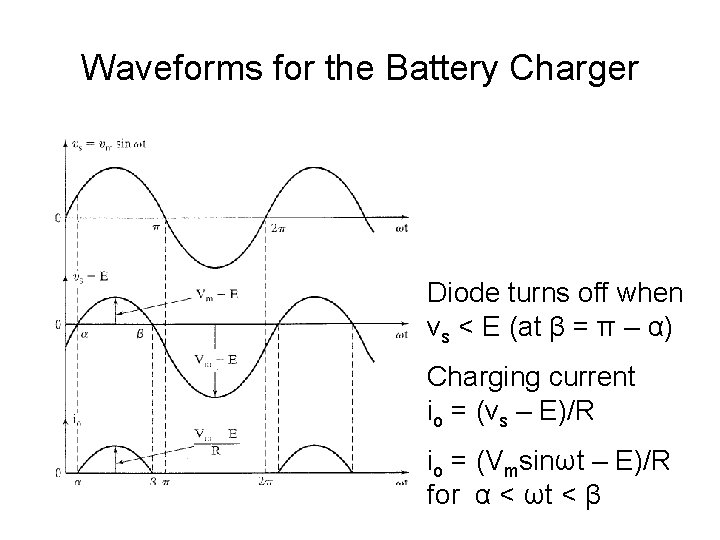
Waveforms for the Battery Charger Diode turns off when vs < E (at β = π – α) Charging current io = (vs – E)/R io = (Vmsinωt – E)/R for α < ωt < β
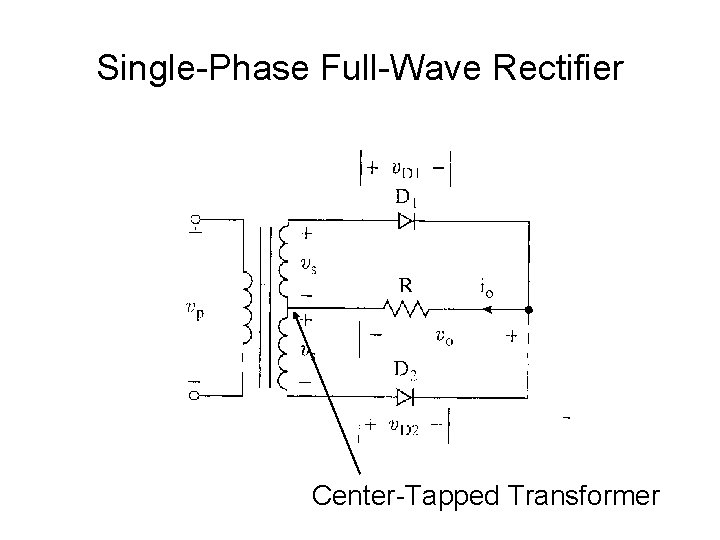
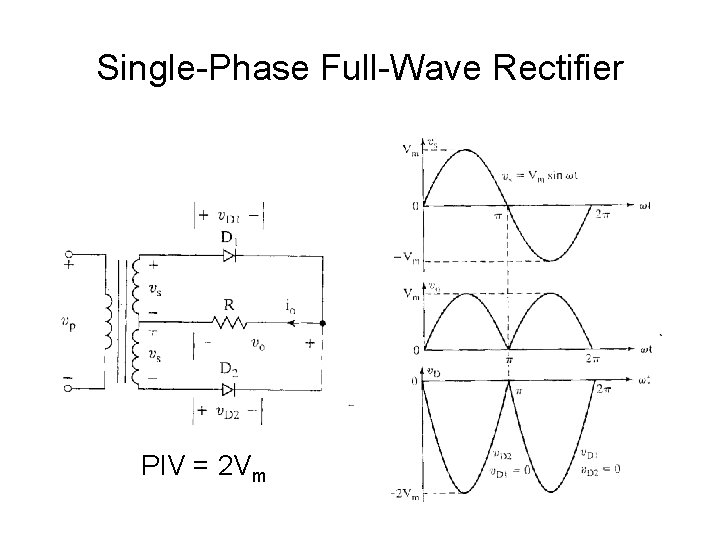
Single-Phase Full-Wave Rectifier Center-Tapped Transformer
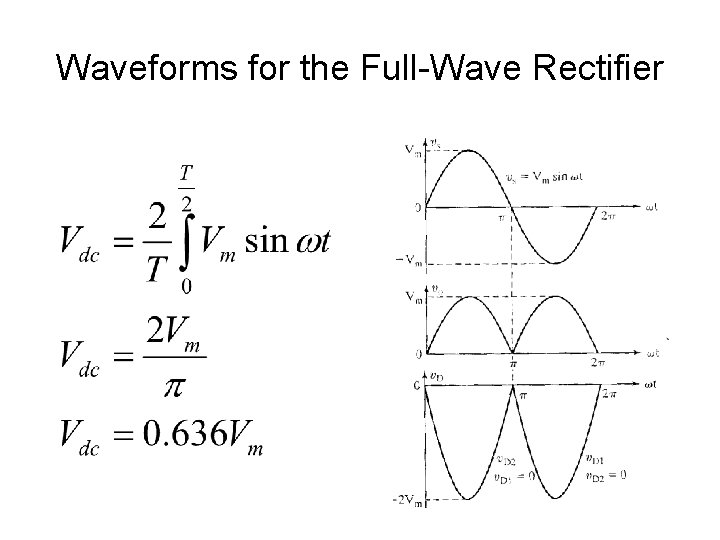
Waveforms for the Full-Wave Rectifier
Single-Phase Full-Wave Rectifier PIV = 2 Vm
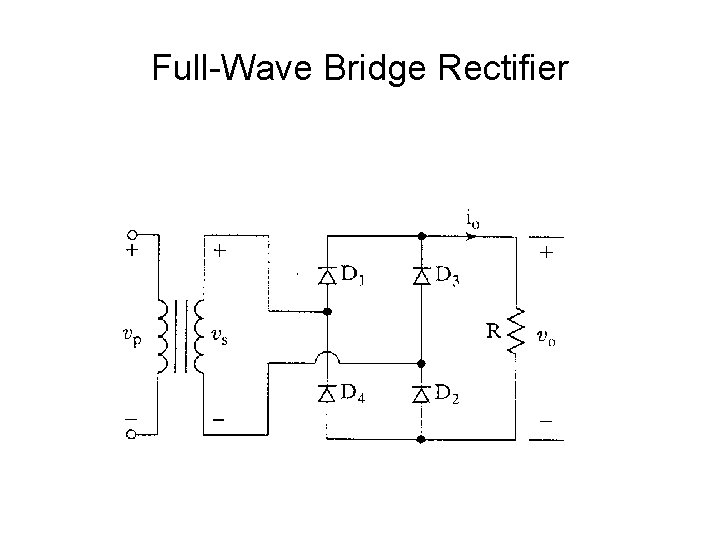
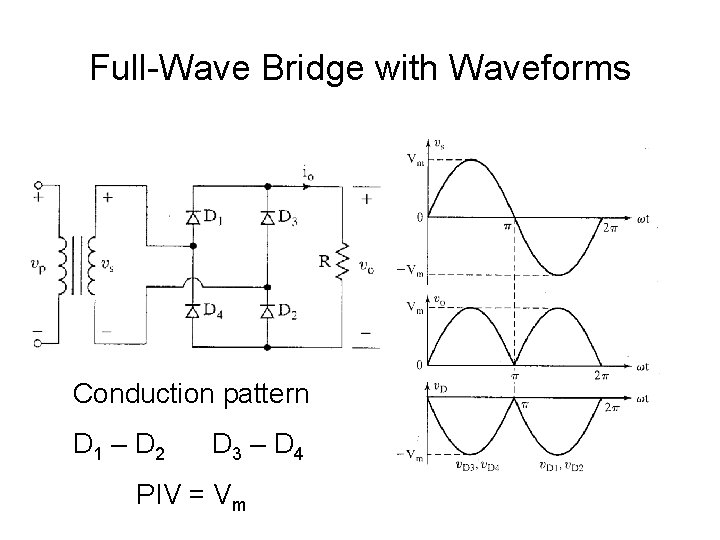
Full-Wave Bridge Rectifier
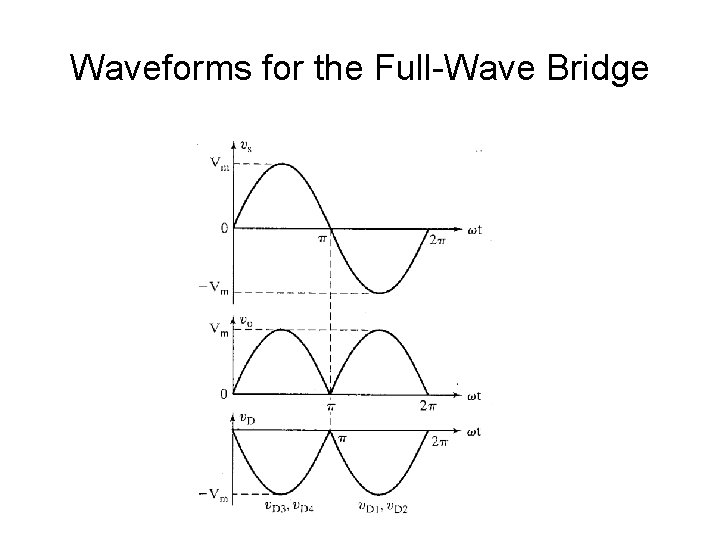
Waveforms for the Full-Wave Bridge
Full-Wave Bridge with Waveforms Conduction pattern D 1 – D 2 D 3 – D 4 PIV = Vm