
SINGLE PHASE TRANSFORMER 1 Describe Identify and Explain
SINGLE PHASE TRANSFORMER 1. Describe, Identify and Explain the basic construction 2. Identify the transformer components and Explain their functions 3. Identify and determine the equivalent circuits 4. Illustrate the Phasor Diagram 5. Define the Per unit system 6. Define and Calculate the efficiency and voltage regulation 7. Describe, explain and demonstrate the open circuit test and short circuit test 8. Describe, Identify and Explain the instrument transformer: class, burden and selection. 9. Describe and explain types of tap changer and their operations 10. Explain and describe the principle operation of autotransformer S. Ahmad DET 204/3
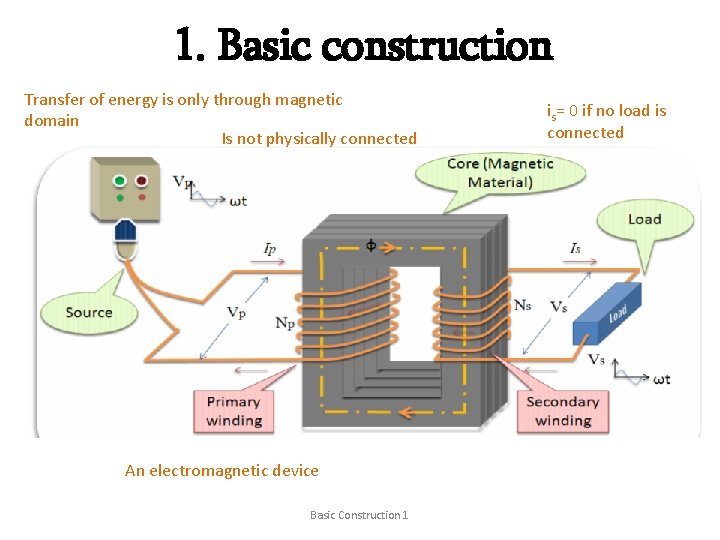
1. Basic construction Transfer of energy is only through magnetic domain Is not physically connected An electromagnetic device Basic Construction 1 is= 0 if no load is connected
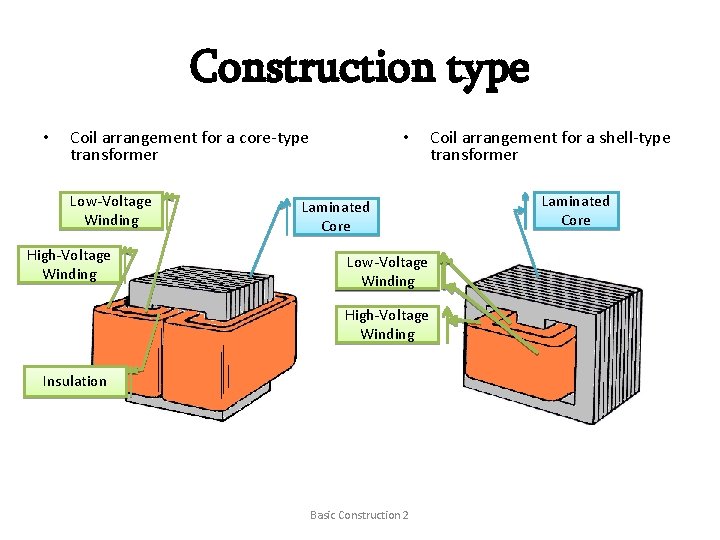
Construction type • Coil arrangement for a core-type transformer Low-Voltage Winding High-Voltage Winding • Laminated Core Low-Voltage Winding High-Voltage Winding Insulation Basic Construction 2 Coil arrangement for a shell-type transformer Laminated Core
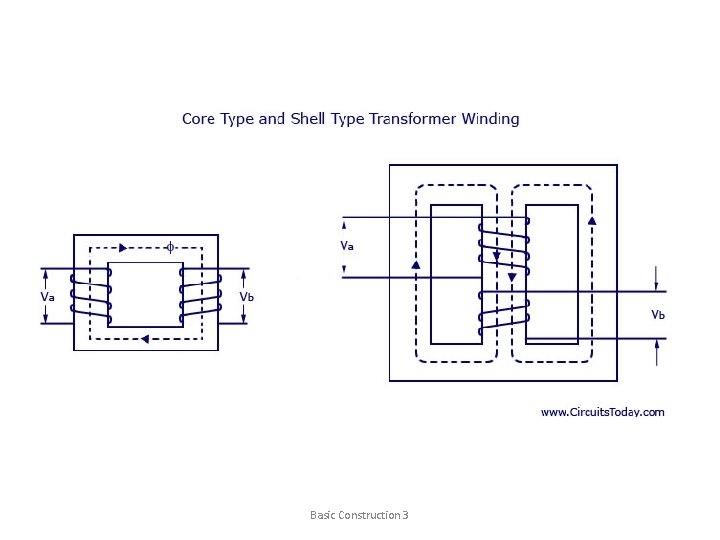
Basic Construction 3
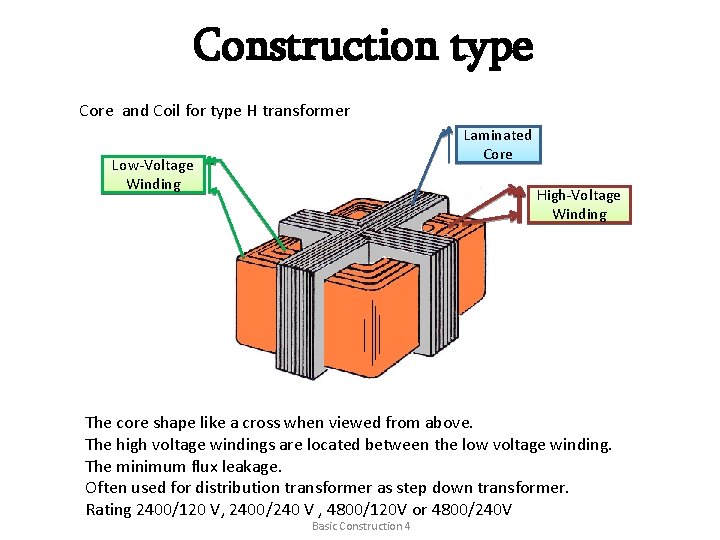
Construction type Core and Coil for type H transformer Laminated Core Low-Voltage Winding High-Voltage Winding The core shape like a cross when viewed from above. The high voltage windings are located between the low voltage winding. The minimum flux leakage. Often used for distribution transformer as step down transformer. Rating 2400/120 V, 2400/240 V , 4800/120 V or 4800/240 V Basic Construction 4
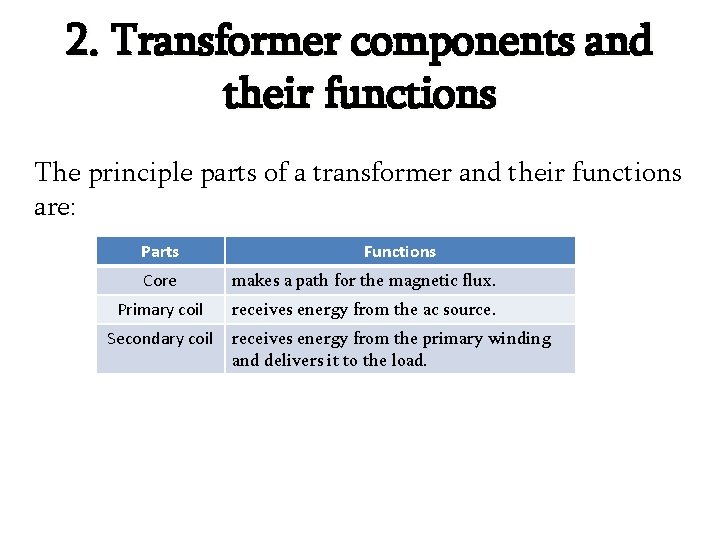
2. Transformer components and their functions The principle parts of a transformer and their functions are: Parts Functions Core makes a path for the magnetic flux. Primary coil receives energy from the ac source. Secondary coil receives energy from the primary winding and delivers it to the load.
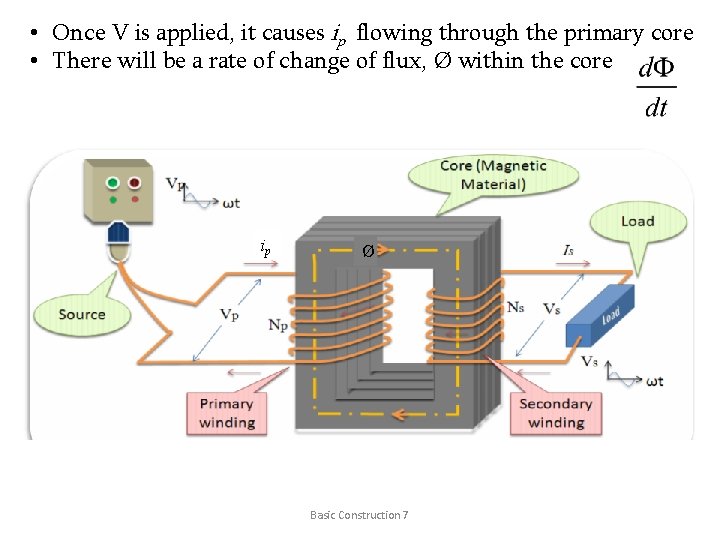
• Once V is applied, it causes ip flowing through the primary core • There will be a rate of change of flux, Ø within the core ip Ø Basic Construction 7
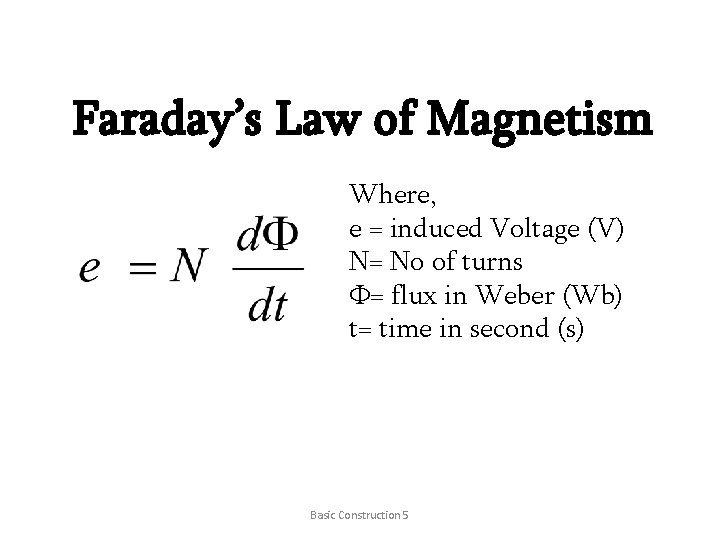
Faraday’s Law of Magnetism Where, e = induced Voltage (V) N= No of turns = flux in Weber (Wb) t= time in second (s) Basic Construction 5
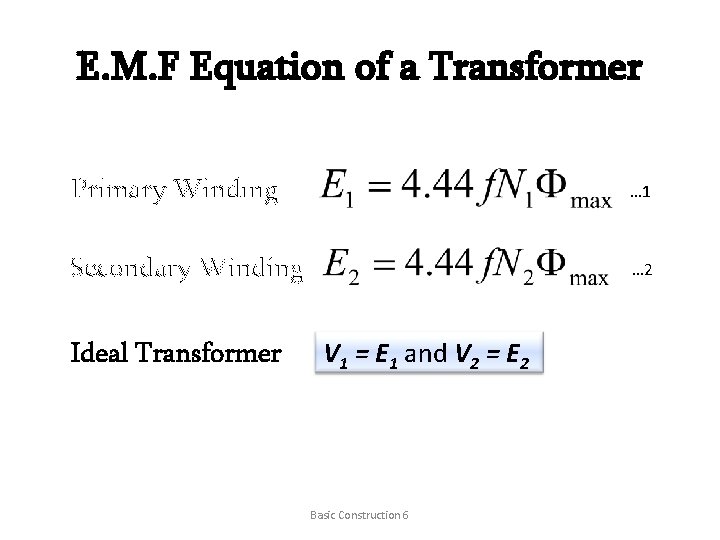
E. M. F Equation of a Transformer Primary Winding … 1 Secondary Winding … 2 Ideal Transformer V 1 = E 1 and V 2 = E 2 Basic Construction 6
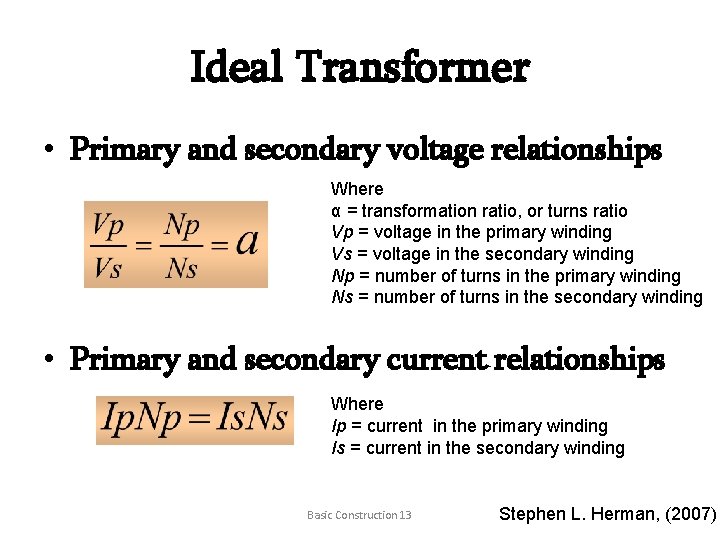
Ideal Transformer • Primary and secondary voltage relationships Where α = transformation ratio, or turns ratio Vp = voltage in the primary winding Vs = voltage in the secondary winding Np = number of turns in the primary winding Ns = number of turns in the secondary winding • Primary and secondary current relationships Where Ip = current in the primary winding Is = current in the secondary winding Basic Construction 13 Stephen L. Herman, (2007)
How these equations are derive? Basic Construction 8

Nameplate Data • In unit : VA/ k. VA/MVA Where V 1(rated) at primary winding V 2(rated) at secondary winding Basic Construction 14
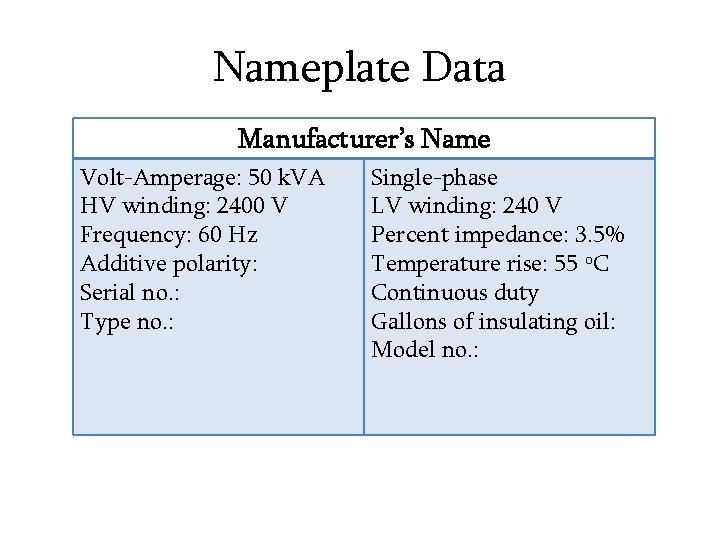
Nameplate Data Manufacturer’s Name Volt-Amperage: 50 k. VA HV winding: 2400 V Frequency: 60 Hz Additive polarity: Serial no. : Type no. : Single-phase LV winding: 240 V Percent impedance: 3. 5% Temperature rise: 55 o. C Continuous duty Gallons of insulating oil: Model no. :
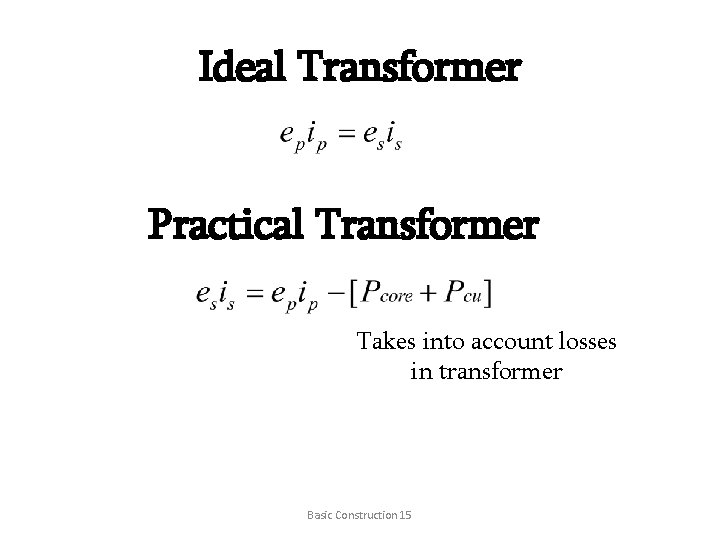
Ideal Transformer Practical Transformer Takes into account losses in transformer Basic Construction 15
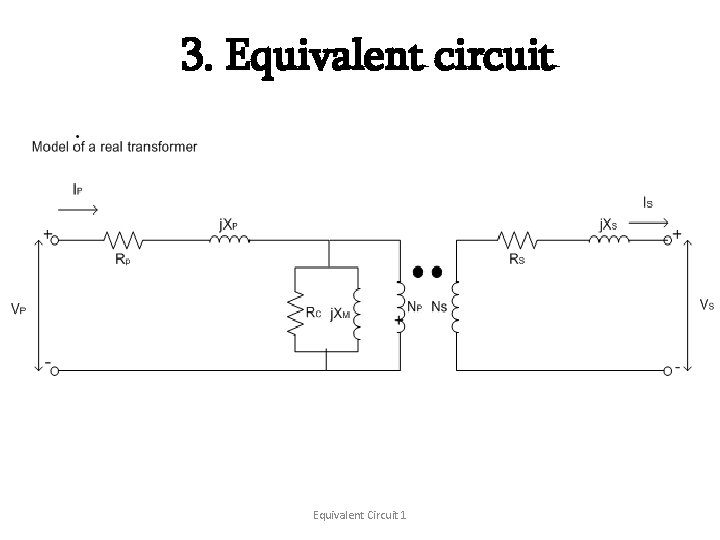
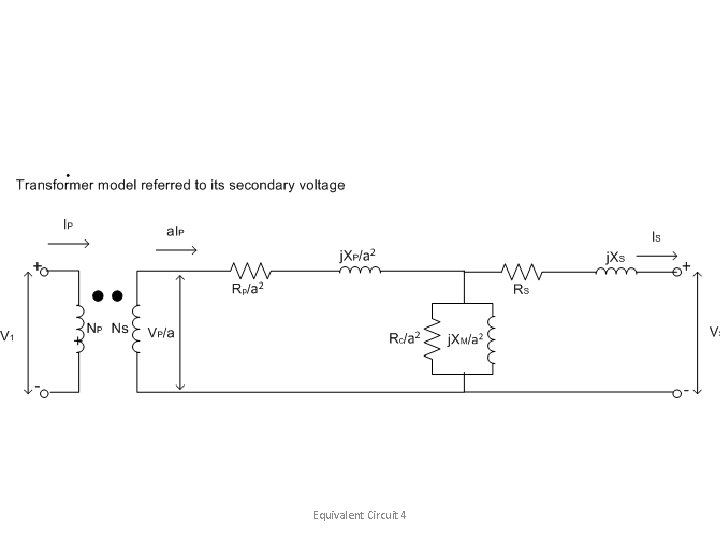
3. Equivalent circuit Equivalent Circuit 1
Why need Equivalent circuits • may be required to calculate total internal impedance of an electrical power transformer viewing from primary side or secondary side as per requirement. • Impedance extends the concept of resistance to AC circuits, and possesses both magnitude and phase, unlike resistance, which has only magnitude. Equivalent Circuit 2
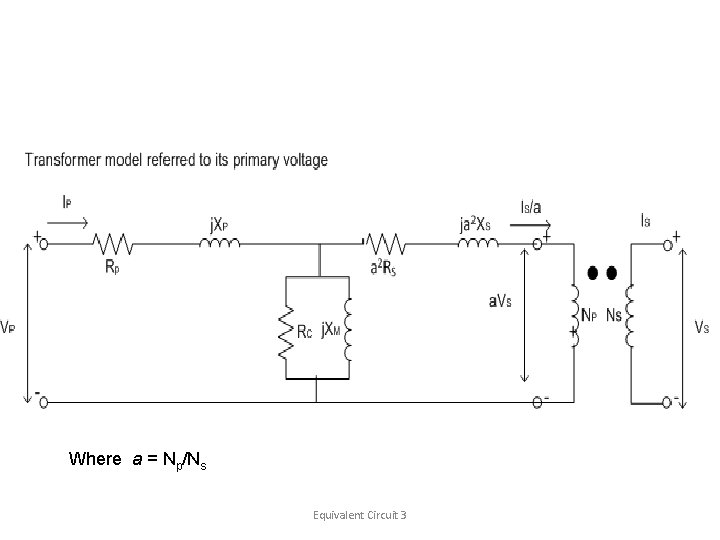
Where a = Np/Ns Equivalent Circuit 3
Equivalent Circuit 4

4. Transformer’s Phasor Diagram • By applying Kirchhoff’s Voltage Law to the equivalent circuit • The primary voltage can be found as Phasor Diagram 1
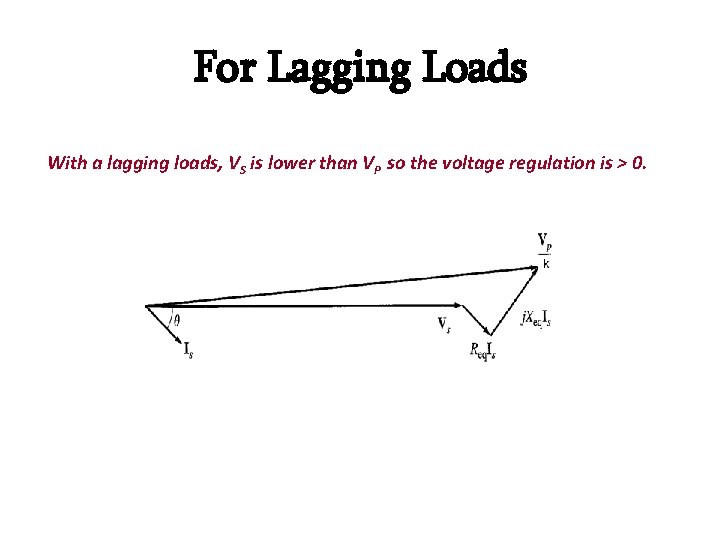
For Lagging Loads With a lagging loads, VS is lower than VP so the voltage regulation is > 0.
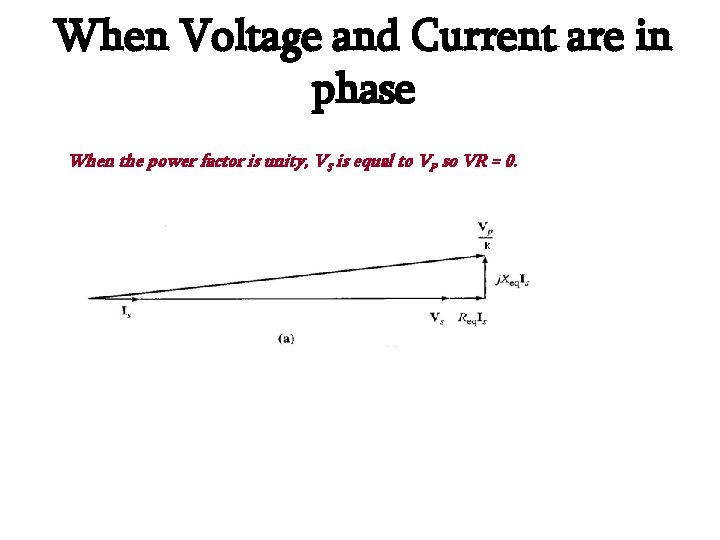
When Voltage and Current are in phase When the power factor is unity, VS is equal to VP so VR = 0.
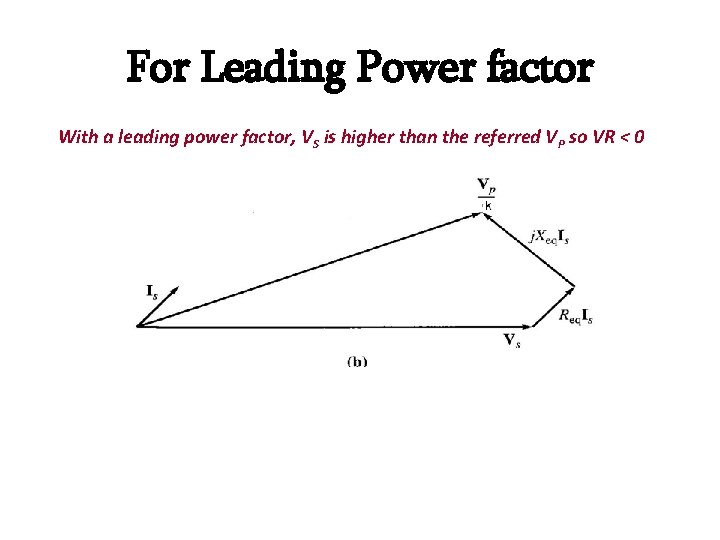
For Leading Power factor With a leading power factor, VS is higher than the referred VP so VR < 0
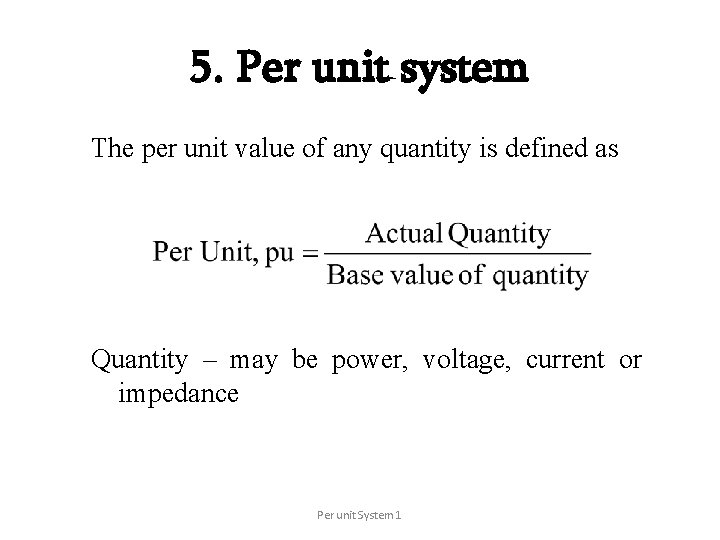
5. Per unit system The per unit value of any quantity is defined as Quantity – may be power, voltage, current or impedance Per unit System 1
Two major advantages in using a per unit system: 1. It eliminates the need for conversion of the voltages, currents, and impedances across every transformer in the circuit; thus, there is less chance of computational errors. 2. The need to transform from three phase to single phase equivalents circuits, and vise versa, is avoided with the per unit quantities; hence, there is less confusion in handling and manipulating the various parameters in three phase system. Per unit System 2
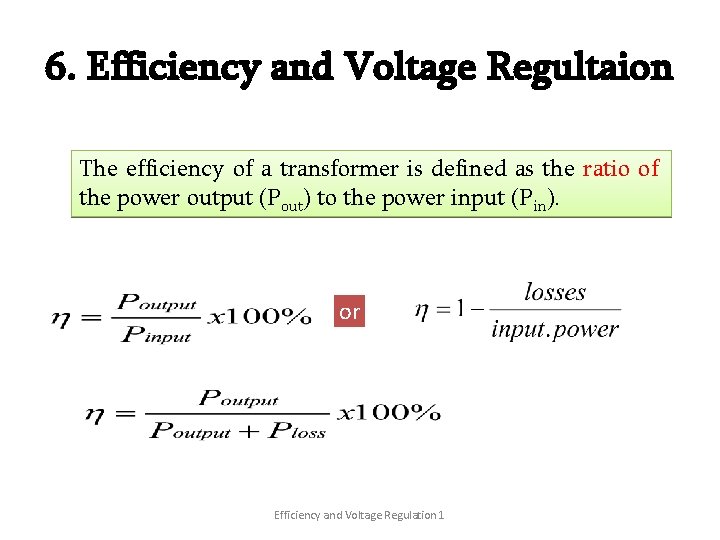
6. Efficiency and Voltage Regultaion The efficiency of a transformer is defined as the ratio of the power output (Pout) to the power input (Pin). or Efficiency and Voltage Regulation 1
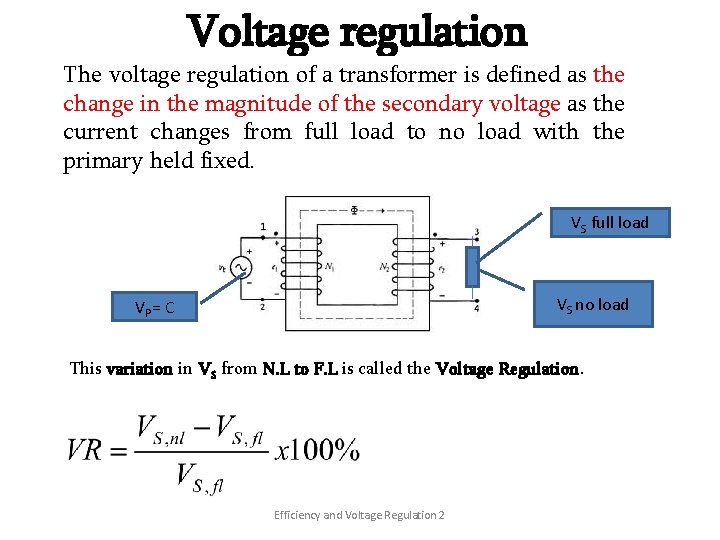
Voltage regulation The voltage regulation of a transformer is defined as the change in the magnitude of the secondary voltage as the current changes from full load to no load with the primary held fixed. VS full load VS no load VP= C This variation in VS from N. L to F. L is called the Voltage Regulation. Efficiency and Voltage Regulation 2
7. Open circuit test and Short circuit test These two tests are performed on a transformer to determine • Approximate value of inductances and resistances The power required for these Open Circuit test and Short Circuit test on transformer is equal to the power loss occurring in the transformer. Open circuit and Short circuit test 1
Open circuit test • Also known as No-load test • The main purpose of this test is to determine the N. L losses. • One transformer winding (usually high voltage winding) is open-circuited • The other winding is connected to full rated line voltage Open circuit and Short circuit test 2
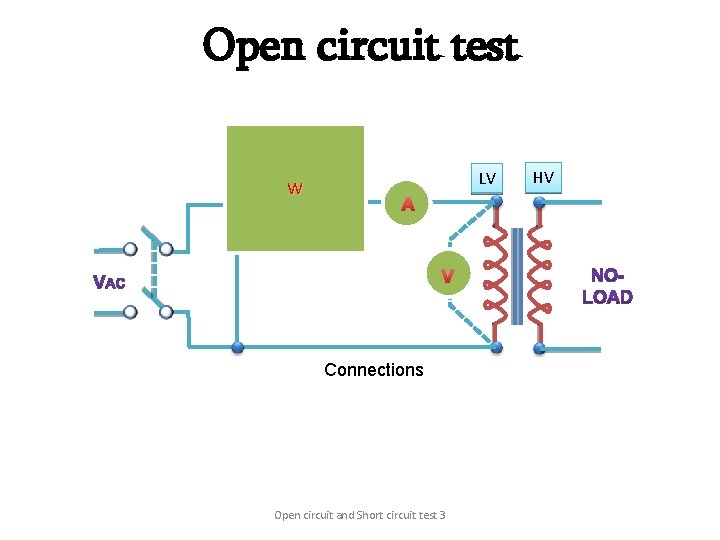
Open circuit test W W LV A V Connections Open circuit and Short circuit test 3 HV
Open circuit test • The measurement is normally done in the low-voltage winding (since lower voltages are easier to work with). • The information of RC and XM are usually found from this test (pg 90)
Short circuit test • Also known as Impedance Test • One transformer winding (usually low voltage winding) is short- circuited • The other winding is connected a variable voltage source Open circuit and Short circuit test 4
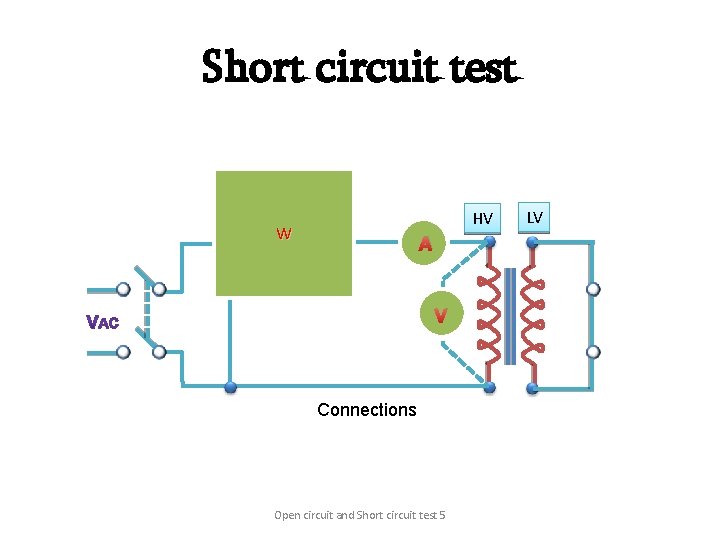
Short circuit test W W HV A V Connections Open circuit and Short circuit test 5 LV
Short circuit test • The measurement is normally done in the high-voltage winding (since lower current are easier to work with). • The information of Req and Xeq are usually found from this test. Open circuit and Short circuit test 6
8. Class, burden and selection There are two types of instrument transformers: 1. The instrument potential transformer (VT) 2. The instrument current transformer (CT)
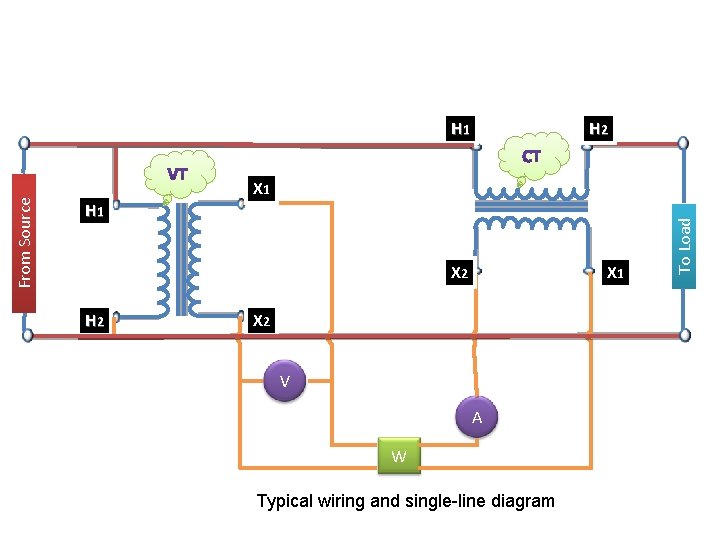
H 1 H 2 X 1 X 2 V A W Typical wiring and single-line diagram To Load From Source H 1
v. The primary winding of the VT is connected in parallel with the monitored circuit, while the primary winding of the CT is connected in series. v. Monitored device (are often connected to the secondary circuits) such as – Wattmeter – Power-factor meters – Voltmeters, ammeters and relay
Ø The burdens of the instruments of transformer is considered to everything connected externally to its terminal, such as monitoring devices, relays and pilot wiring. Ø The burdens are inductive and designated in term of VA
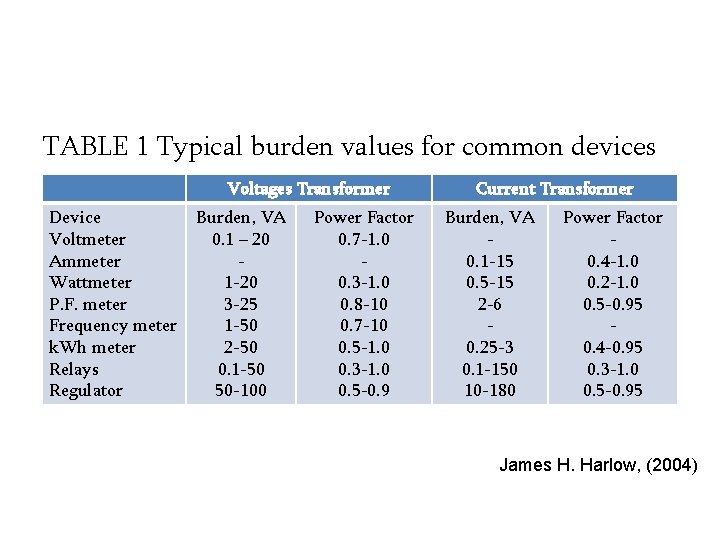
TABLE 1 Typical burden values for common devices Voltages Transformer Device Voltmeter Ammeter Wattmeter P. F. meter Frequency meter k. Wh meter Relays Regulator Burden, VA 0. 1 – 20 1 -20 3 -25 1 -50 2 -50 0. 1 -50 50 -100 Power Factor 0. 7 -1. 0 0. 3 -1. 0 0. 8 -10 0. 7 -10 0. 5 -1. 0 0. 3 -1. 0 0. 5 -0. 9 Current Transformer Burden, VA 0. 1 -15 0. 5 -15 2 -6 0. 25 -3 0. 1 -150 10 -180 Power Factor 0. 4 -1. 0 0. 2 -1. 0 0. 5 -0. 95 0. 4 -0. 95 0. 3 -1. 0 0. 5 -0. 95 James H. Harlow, (2004)
9. Tap changer and their operations • In previous lesson, the turns ratio of a given transformer was treated as though it were completely fixed. • In real distribution transformers, this is not quite true. • Distribution transformers have a series of taps in the windings to permit small change in the turns ratio of the transformer after it has left the factory.
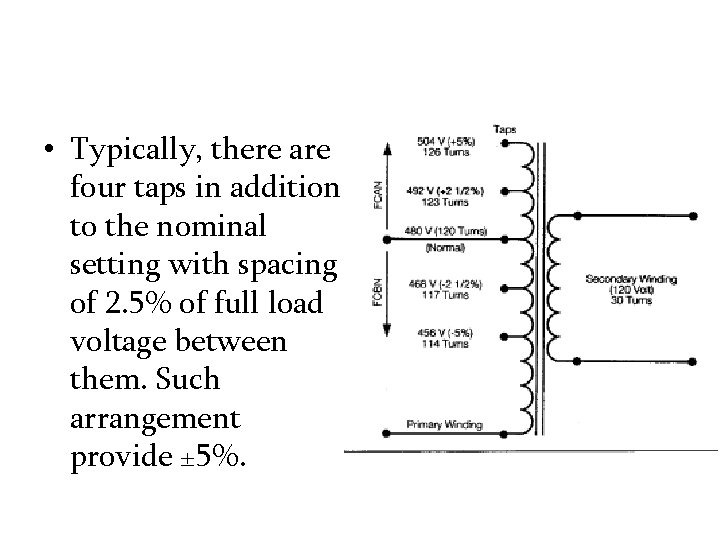
• Typically, there are four taps in addition to the nominal setting with spacing of 2. 5% of full load voltage between them. Such arrangement provide ± 5%.

• Taps on the transformer allow variations in local voltages • However, these taps normally cannot be changed while power is being applied to the transformer. • They must be set once, and left alone. • Sometimes a transformer is used on a power line whose voltage varies widely with load. • Such variations maybe due to high impedance between the generators on the power system and load. • Normal loads need an essentially constant voltage.
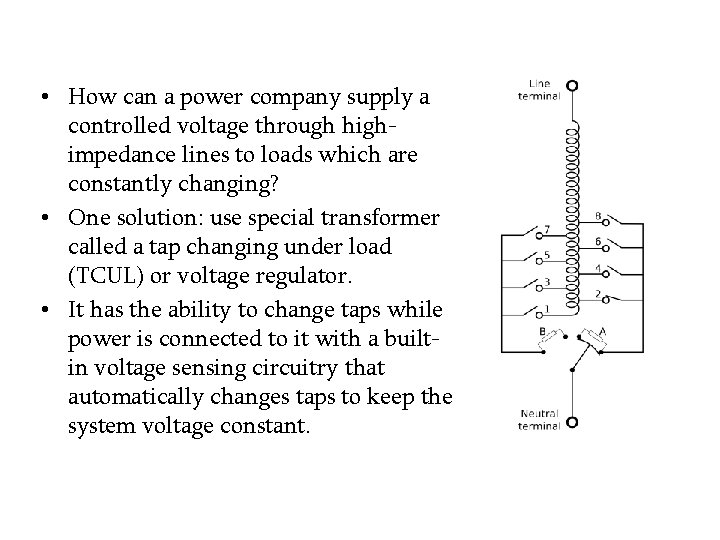
• How can a power company supply a controlled voltage through highimpedance lines to loads which are constantly changing? • One solution: use special transformer called a tap changing under load (TCUL) or voltage regulator. • It has the ability to change taps while power is connected to it with a builtin voltage sensing circuitry that automatically changes taps to keep the system voltage constant.
10. Principle operation of autotransformer • On some occasions, it is desirable to change voltage levels by only a small amount i. e to increase from – 110 to 120 V – 13. 2 to 13. 8 k. V • Since to wind a transformer with 2 full windings, each rated about the same voltage is wasteful and very expensive. • Therefore, a special-purpose transformer, the autotransformer, is used.
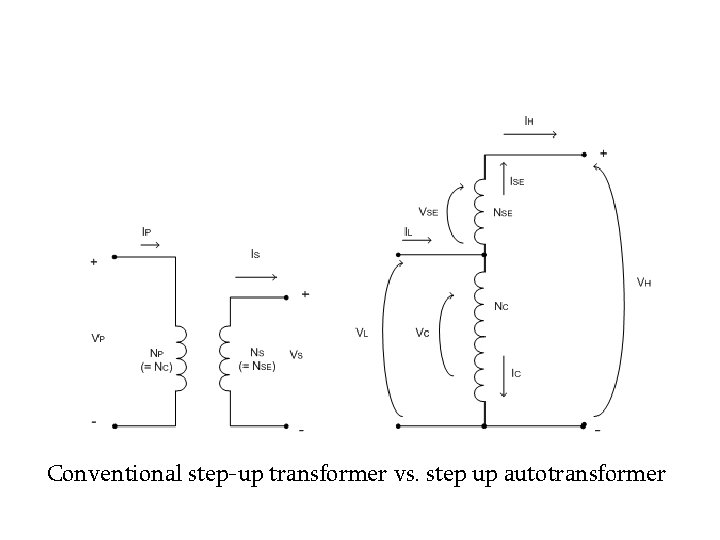
Conventional step-up transformer vs. step up autotransformer
- Slides: 44