
Single bunch instabilities during ramp s LIUSPS Beam
Single bunch instabilities during ramp s LIU-SPS Beam Dynamics Working Group 06/08/2015 A. Lasheen, T. Argyropoulos, T. Bohl, S. Hancock, E. Radvilas, E. Shaposhnikova, J. Varela, MD coordination team, operation team
Introduction and motivation q The SPS impedance was probed with special beam measurements (synchrotron frequency shift, long bunches…), and compared with simulations using the impedance model => reasonable agreement q The next step was to compare measurements and simulations with an accelerating ramp and for different configurations, using the latest impedance model. q The measurements were done during parallel MDs in order to have enough statistics. q Starting with single bunch for fast simulations and measurements, to start with the simplest case. 2
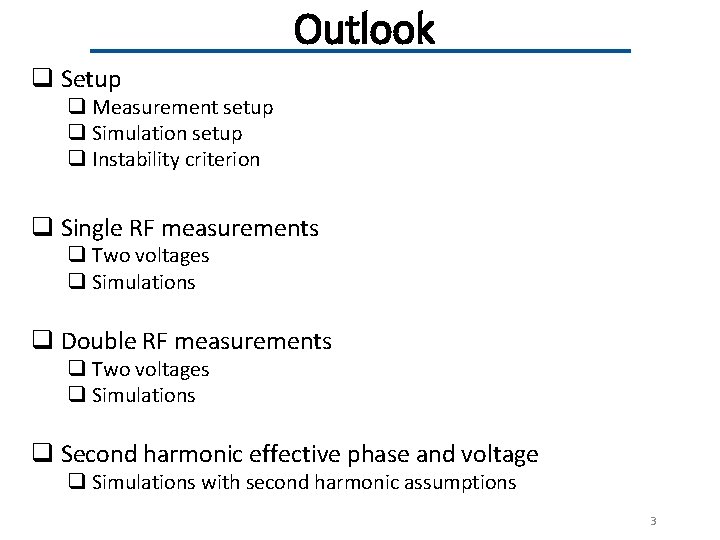
Outlook q Setup q Measurement setup q Simulation setup q Instability criterion q Single RF measurements q Two voltages q Simulations q Double RF measurements q Two voltages q Simulations q Second harmonic effective phase and voltage q Simulations with second harmonic assumptions 3
Setup
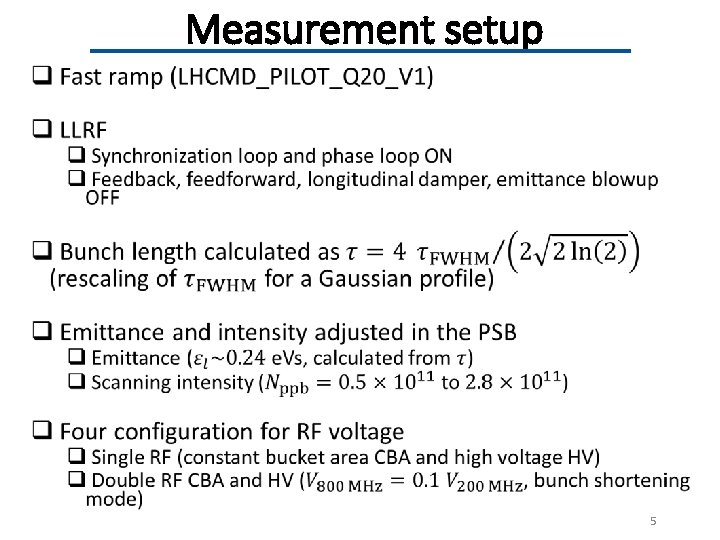
Measurement setup 5
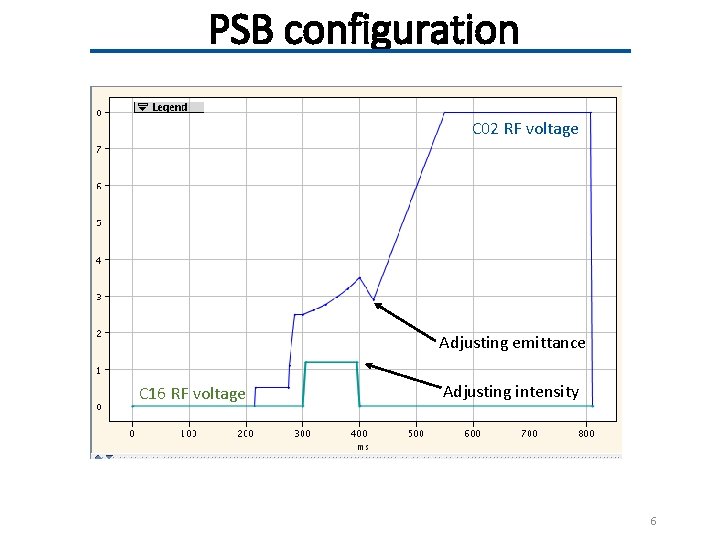
PSB configuration C 02 RF voltage Adjusting emittance C 16 RF voltage Adjusting intensity 6
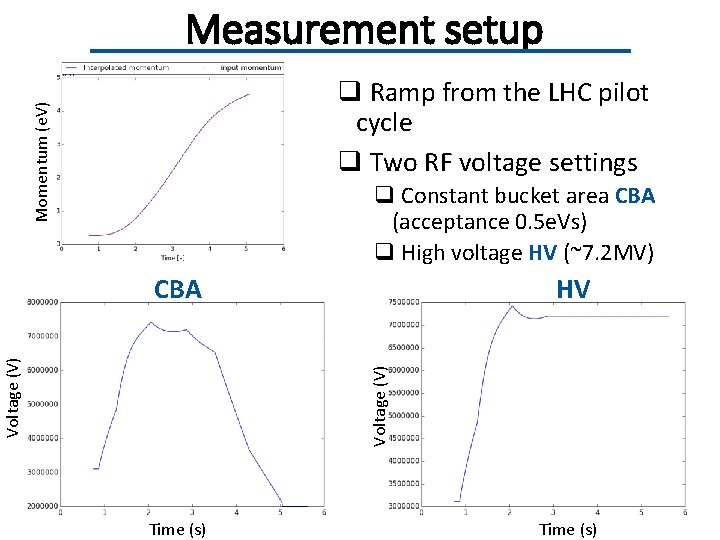
Measurement setup Momentum (e. V) q Ramp from the LHC pilot cycle q Two RF voltage settings q Constant bucket area CBA (acceptance 0. 5 e. Vs) q High voltage HV (~7. 2 MV) HV Voltage (V) CBA Time (s) 7
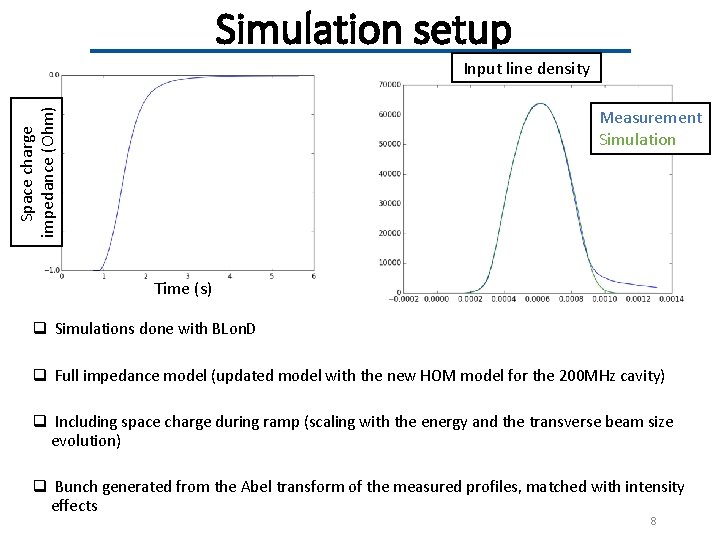
Simulation setup Space charge impedance (Ohm) Input line density Measurement Simulation Time (s) q Simulations done with BLon. D q Full impedance model (updated model with the new HOM model for the 200 MHz cavity) q Including space charge during ramp (scaling with the energy and the transverse beam size evolution) q Bunch generated from the Abel transform of the measured profiles, matched with intensity effects 8
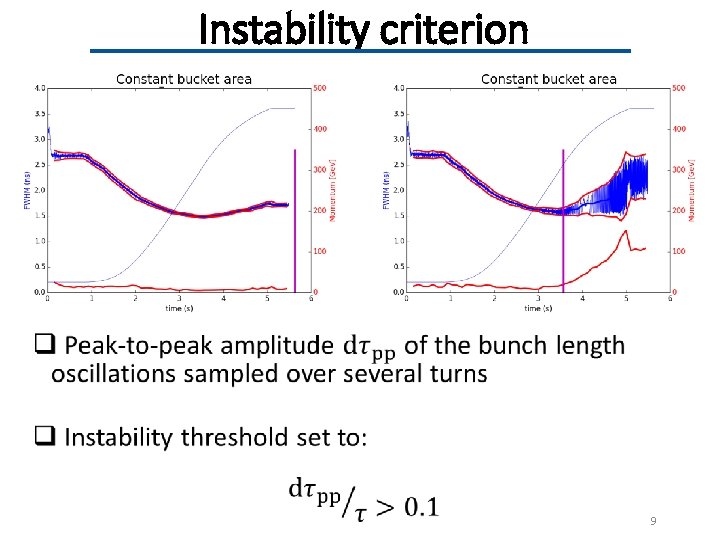
Instability criterion 9
Single RF
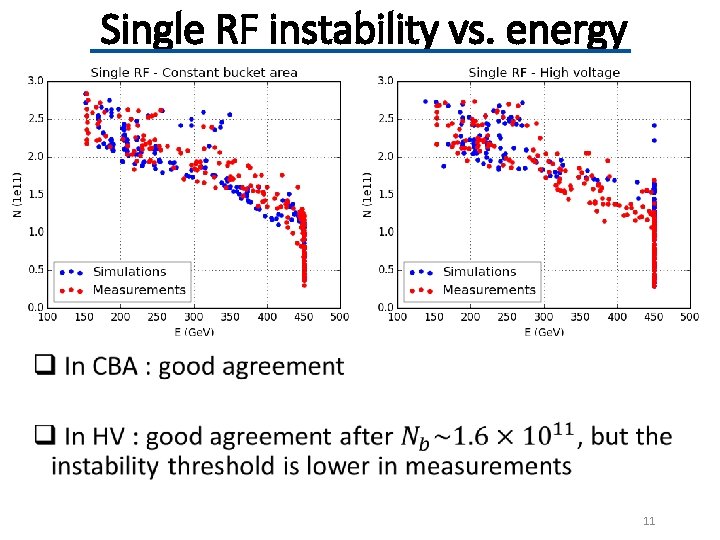
Single RF instability vs. energy 11
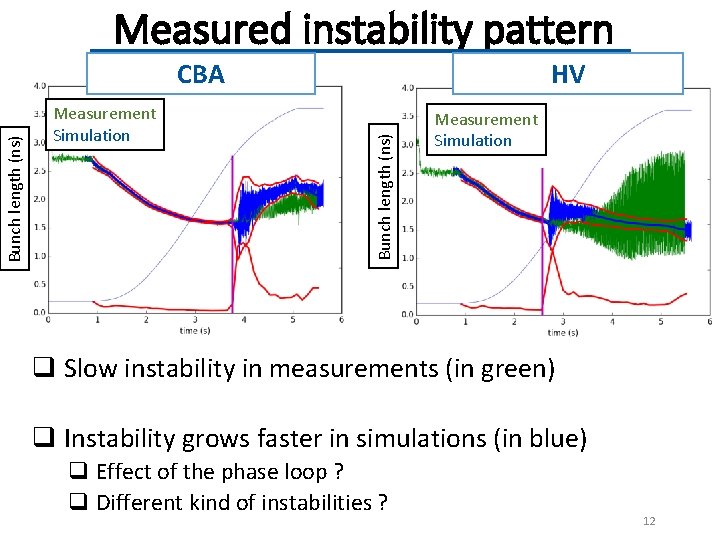
Measured instability pattern Measurement Simulation HV Bunch length (ns) CBA Measurement Simulation q Slow instability in measurements (in green) q Instability grows faster in simulations (in blue) q Effect of the phase loop ? q Different kind of instabilities ? 12
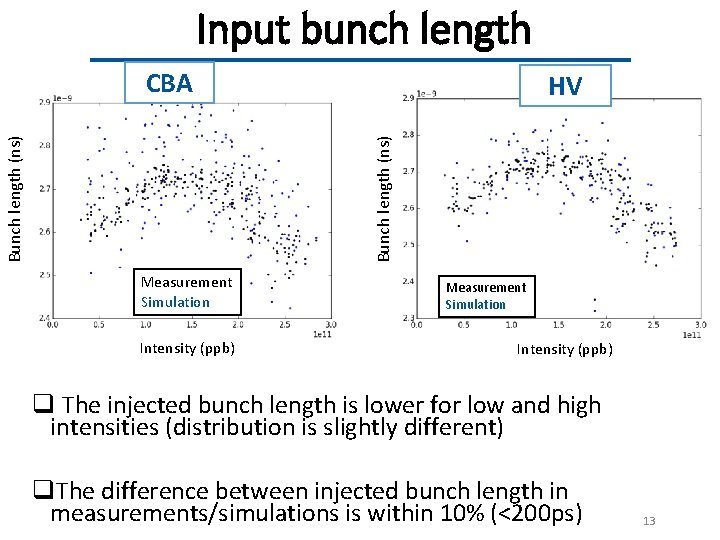
Input bunch length HV Bunch length (ns) CBA Measurement Simulation Intensity (ppb) q The injected bunch length is lower for low and high intensities (distribution is slightly different) q. The difference between injected bunch length in measurements/simulations is within 10% (<200 ps) 13
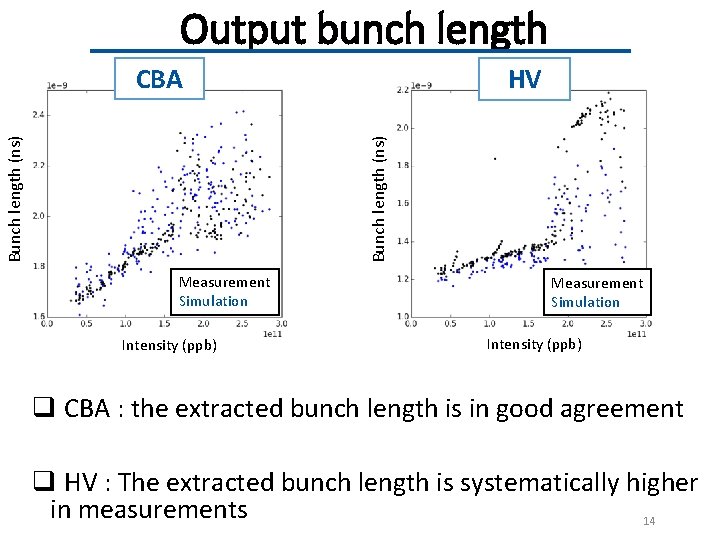
Output bunch length CBA Bunch length (ns) HV Measurement Simulation Intensity (ppb) q CBA : the extracted bunch length is in good agreement q HV : The extracted bunch length is systematically higher in measurements 14
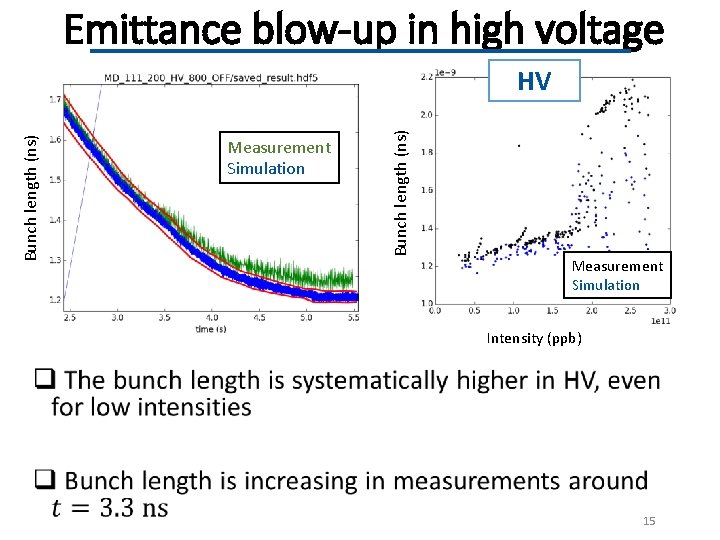
Emittance blow-up in high voltage Measurement Simulation Bunch length (ns) HV Measurement Simulation Intensity (ppb) 15
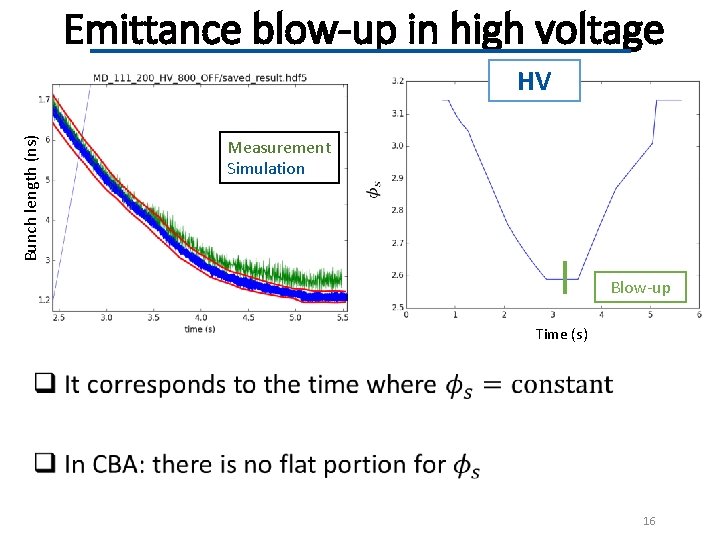
Emittance blow-up in high voltage Bunch length (ns) HV Measurement Simulation Blow-up Time (s) 16
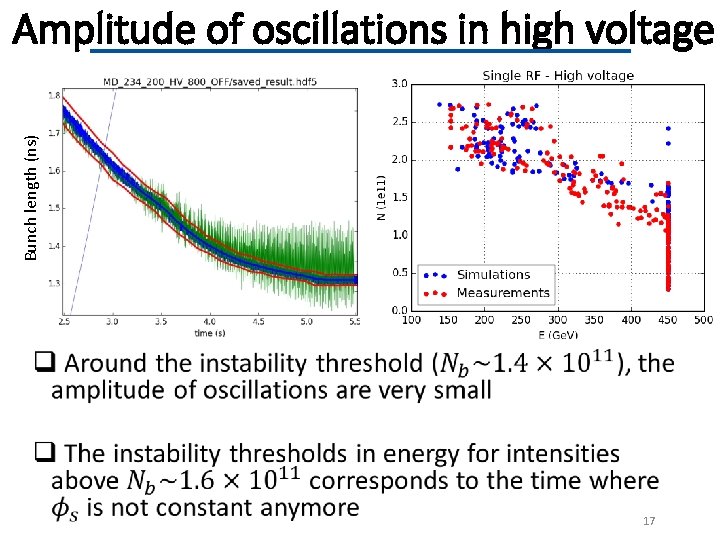
Bunch length (ns) Amplitude of oscillations in high voltage 17
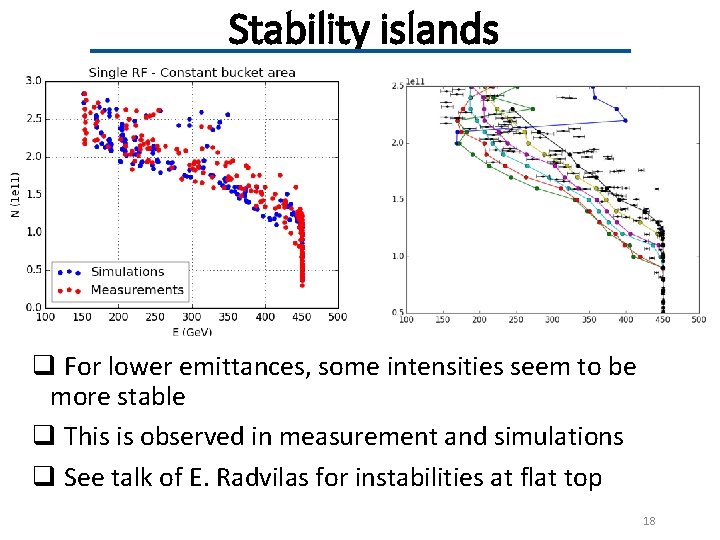
Stability islands q… q For lower emittances, some intensities seem to be more stable q This is observed in measurement and simulations q See talk of E. Radvilas for instabilities at flat top 18
Double RF
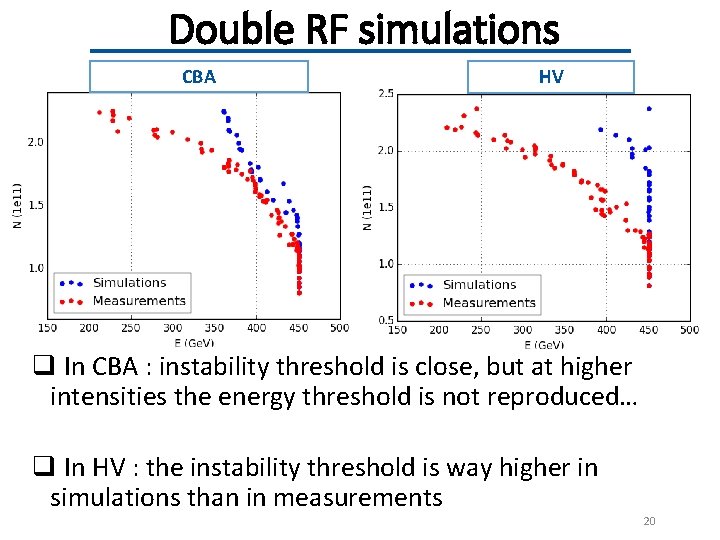
Double RF simulations CBA HV q In CBA : instability threshold is close, but at higher intensities the energy threshold is not reproduced… q In HV : the instability threshold is way higher in simulations than in measurements 20
Second harmonic effective voltage and phase
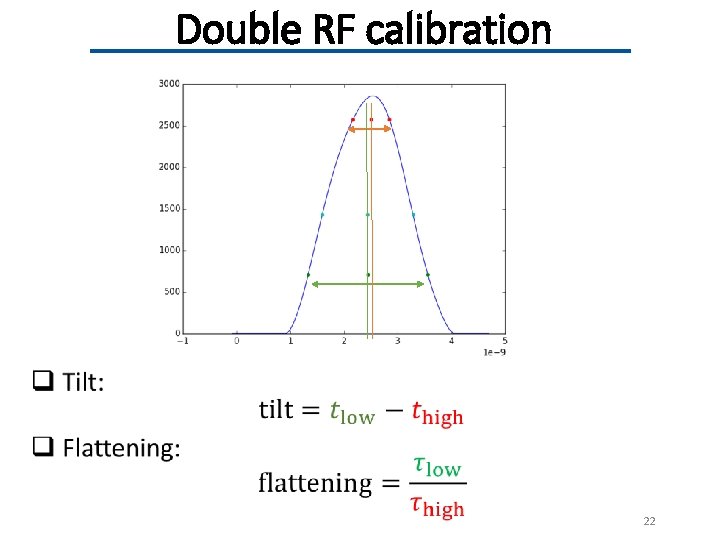
Double RF calibration 22
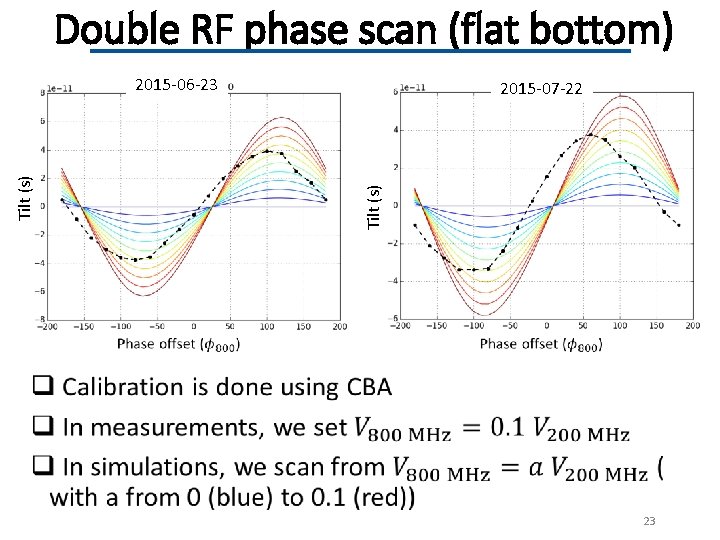
Double RF phase scan (flat bottom) 2015 -07 -22 Tilt (s) 2015 -06 -23 23
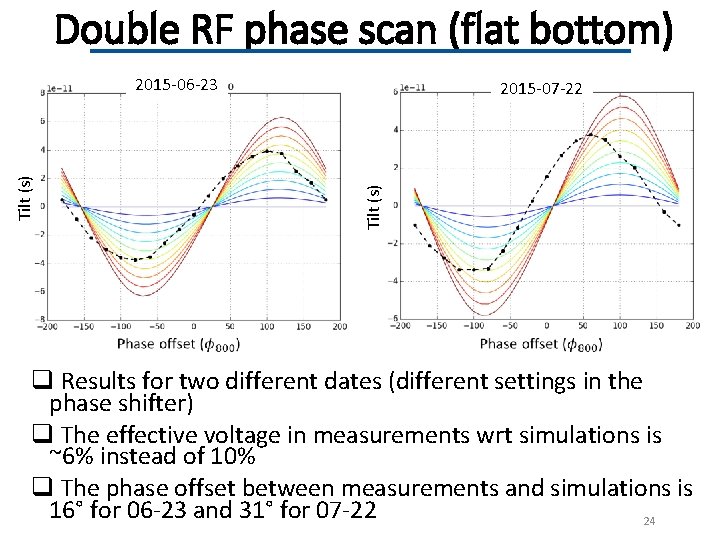
Double RF phase scan (flat bottom) 2015 -07 -22 Tilt (s) 2015 -06 -23 q Results for two different dates (different settings in the phase shifter) q The effective voltage in measurements wrt simulations is ~6% instead of 10% q The phase offset between measurements and simulations is 16° for 06 -23 and 31° for 07 -22 24
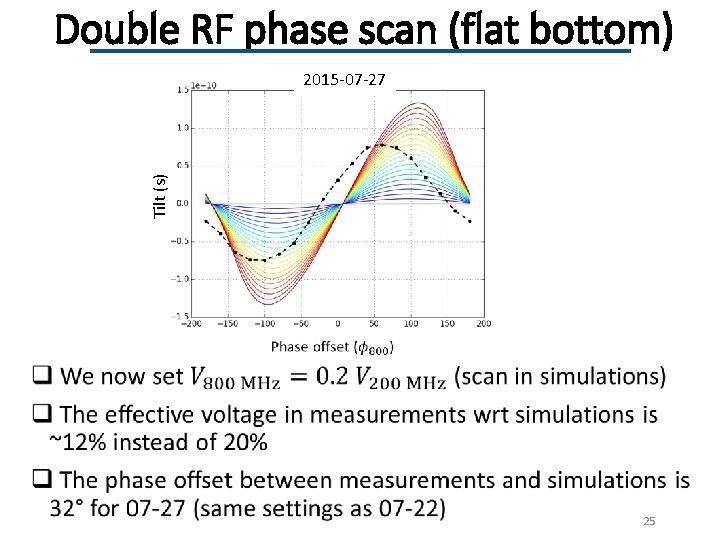
Double RF phase scan (flat bottom) Tilt (s) 2015 -07 -27 25
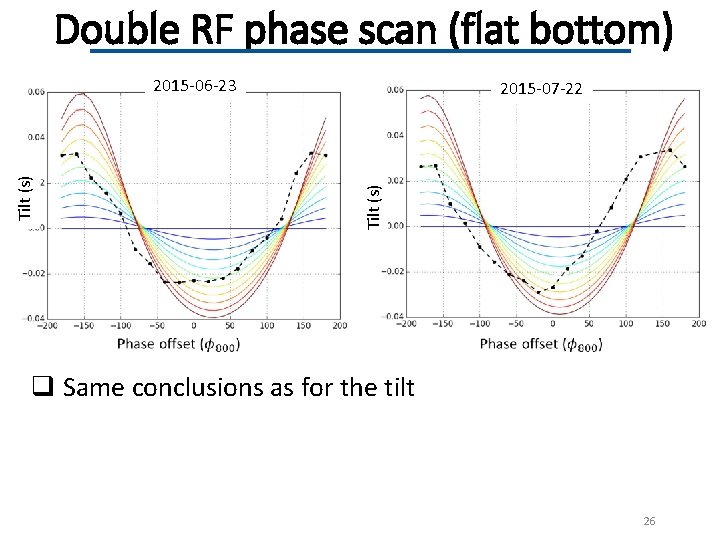
Double RF phase scan (flat bottom) 2015 -06 -23 2015 -07 -22 Tilt (s) q… q Same conclusions as for the tilt 26
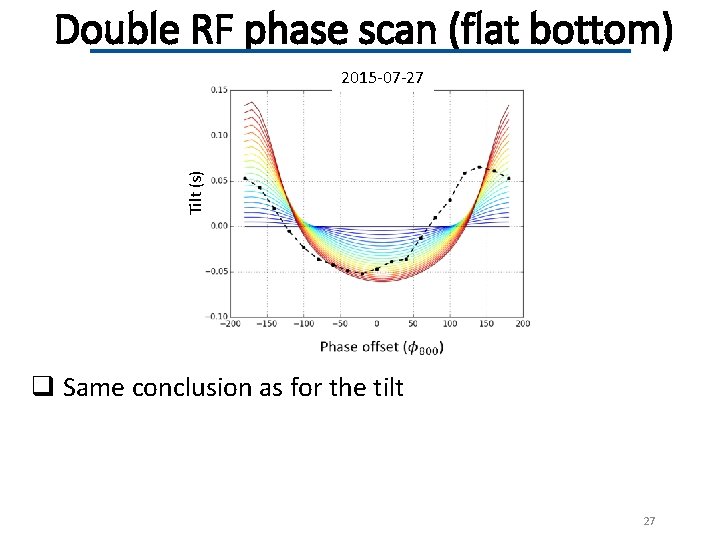
Double RF phase scan (flat bottom) Tilt (s) 2015 -07 -27 q Same conclusion as for the tilt 27
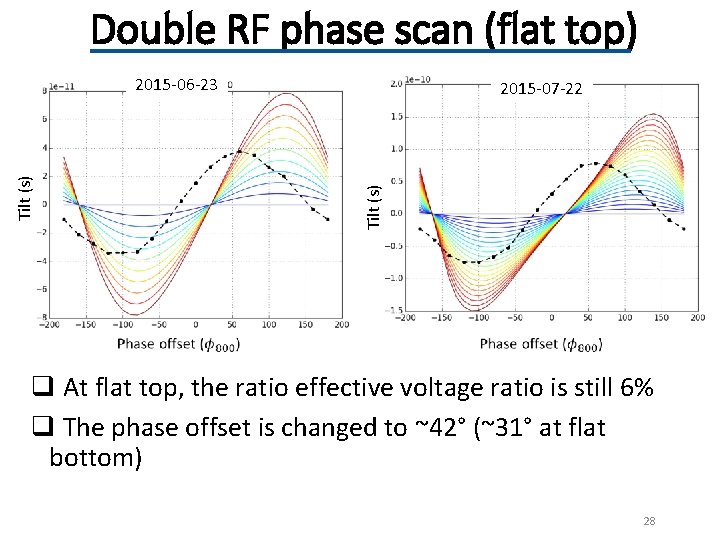
Double RF phase scan (flat top) 2015 -07 -22 Tilt (s) 2015 -06 -23 q At flat top, the ratio effective voltage ratio is still 6% q The phase offset is changed to ~42° (~31° at flat bottom) 28
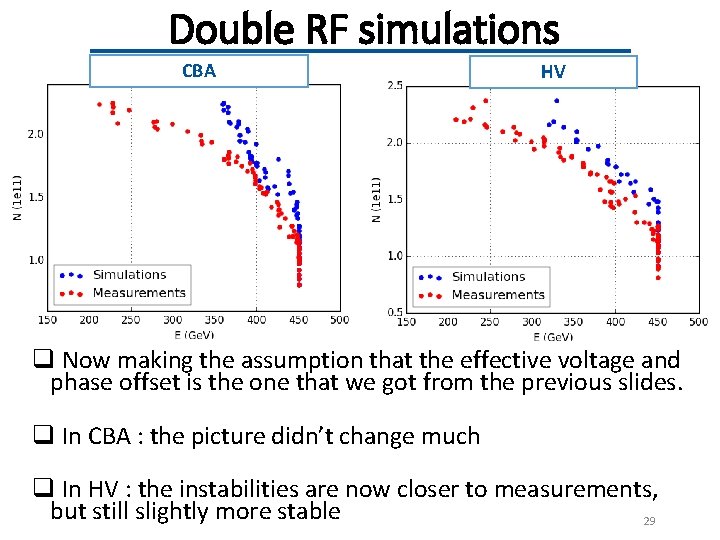
Double RF simulations CBA HV q Now making the assumption that the effective voltage and phase offset is the one that we got from the previous slides. q In CBA : the picture didn’t change much q In HV : the instabilities are now closer to measurements, but still slightly more stable 29
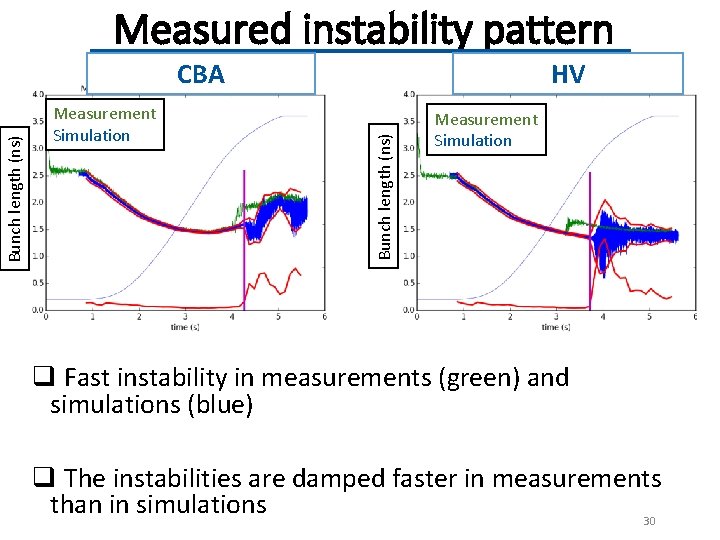
Measured instability pattern Measurement Simulation HV Bunch length (ns) CBA Measurement Simulation q Fast instability in measurements (green) and simulations (blue) q The instabilities are damped faster in measurements than in simulations 30
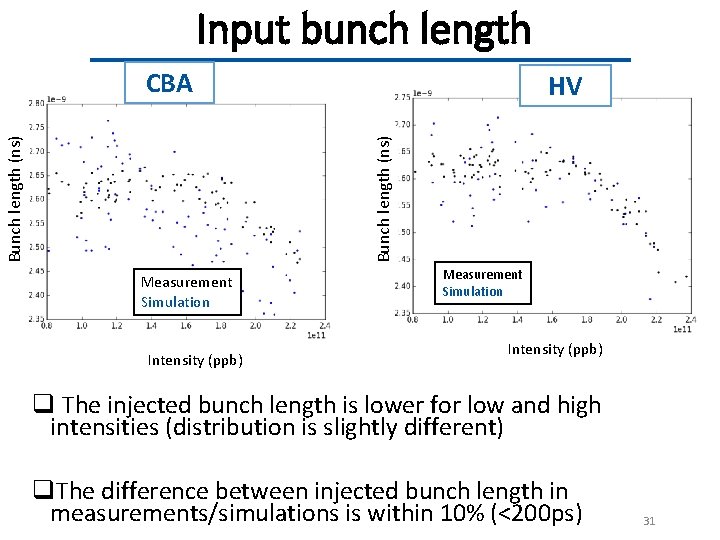
Input bunch length HV Bunch length (ns) CBA Measurement Simulation Intensity (ppb) q The injected bunch length is lower for low and high intensities (distribution is slightly different) q. The difference between injected bunch length in measurements/simulations is within 10% (<200 ps) 31
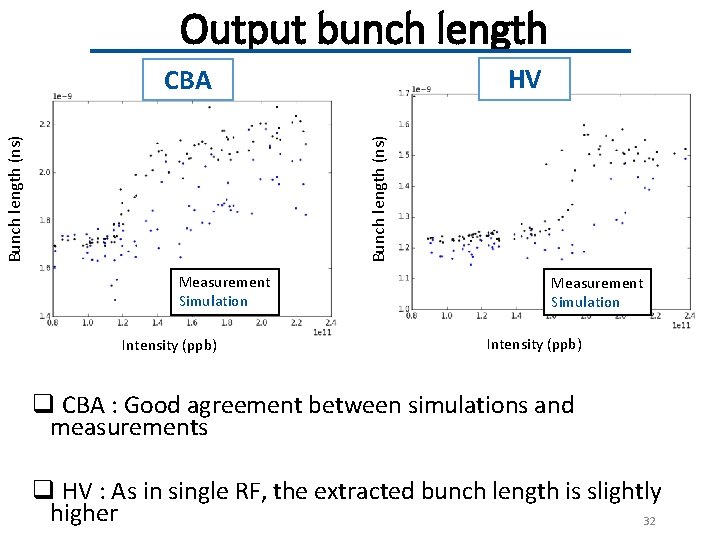
Output bunch length HV Bunch length (ns) CBA Measurement Simulation Intensity (ppb) q CBA : Good agreement between simulations and measurements q HV : As in single RF, the extracted bunch length is slightly higher 32
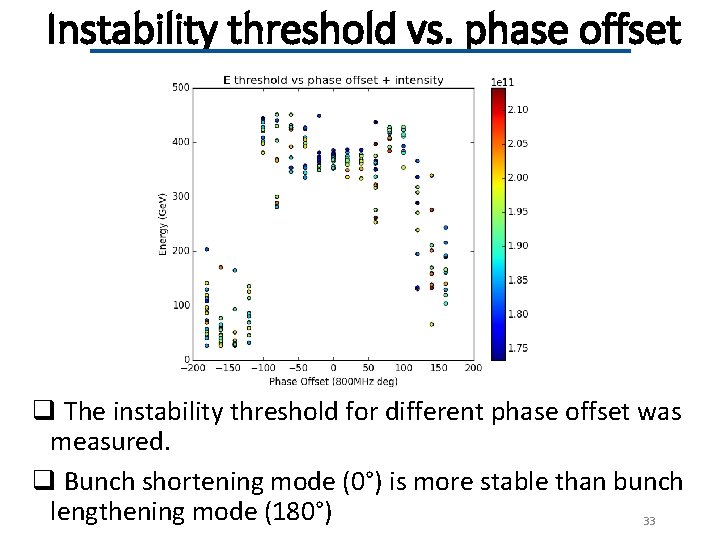
Instability threshold vs. phase offset q The instability threshold for different phase offset was measured. q Bunch shortening mode (0°) is more stable than bunch lengthening mode (180°) 33
Conclusions 34
Further steps and ideas q Multibunch (possible in this cycle ? ) q Missing impedance assumptions q Impedance reduction simulations q Including 800 MHz HOM q Comparison with the long LHC cycle q Scanning different emittances q Implementing phase loop q Correct the injected profiles with the pick-up transfer function 35
- Slides: 35