
Singapores National Marine Spatial Data Infrastructure NMSDI Initiative
- Slides: 14
Singapore’s National Marine Spatial Data Infrastructure (NMSDI) Initiative 6 th EAHC CHC Meeting Singapore
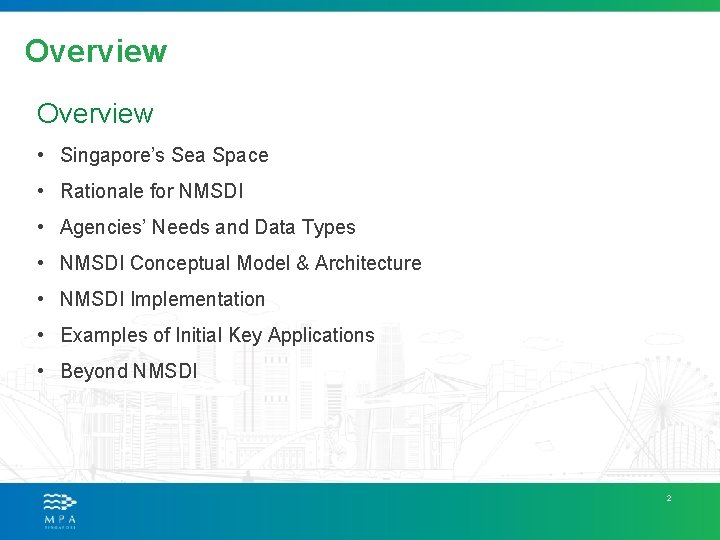
Overview • Singapore’s Sea Space • Rationale for NMSDI • Agencies’ Needs and Data Types • NMSDI Conceptual Model & Architecture • NMSDI Implementation • Examples of Initial Key Applications • Beyond NMSDI 2
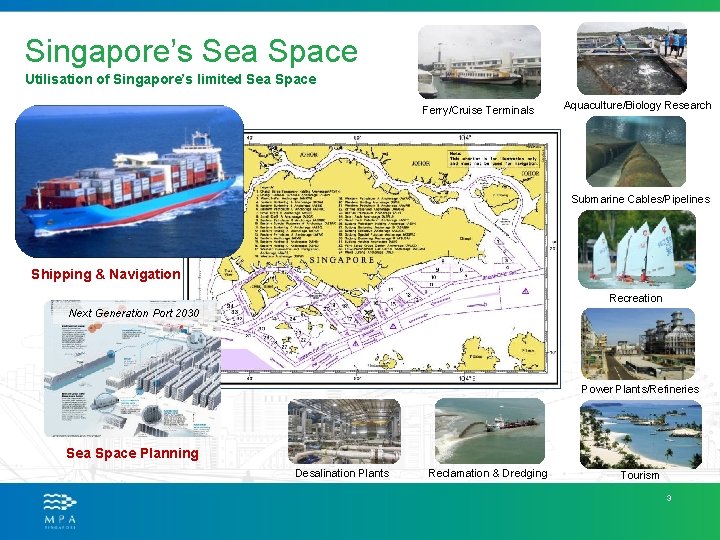
Singapore’s Sea Space Utilisation of Singapore’s limited Sea Space Ferry/Cruise Terminals Aquaculture/Biology Research Submarine Cables/Pipelines Shipping & Navigation Recreation Next Generation Port 2030 Power Plants/Refineries Sea Space Planning Desalination Plants Reclamation & Dredging Tourism 3
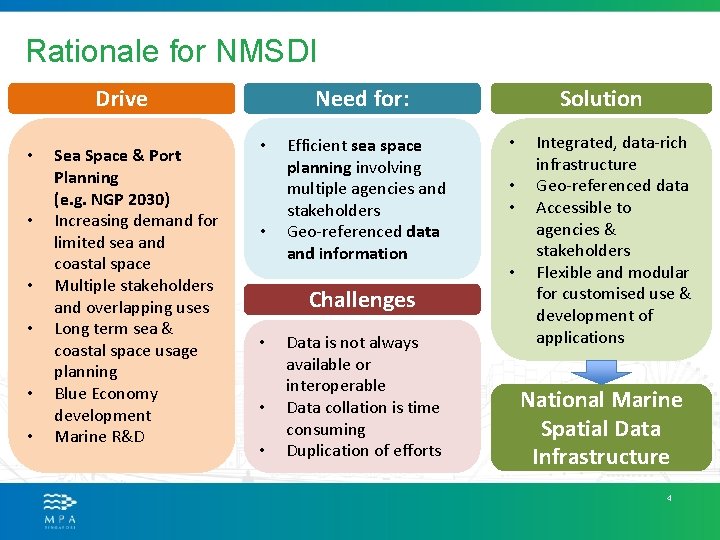
Rationale for NMSDI Drive • • • Sea Space & Port Planning (e. g. NGP 2030) Increasing demand for limited sea and coastal space Multiple stakeholders and overlapping uses Long term sea & coastal space usage planning Blue Economy development Marine R&D Need for: • • Efficient sea space planning involving multiple agencies and stakeholders Geo-referenced data and information Challenges • • • Data is not always available or interoperable Data collation is time consuming Duplication of efforts Solution • • Integrated, data-rich infrastructure Geo-referenced data Accessible to agencies & stakeholders Flexible and modular for customised use & development of applications National Marine Spatial Data Infrastructure 4
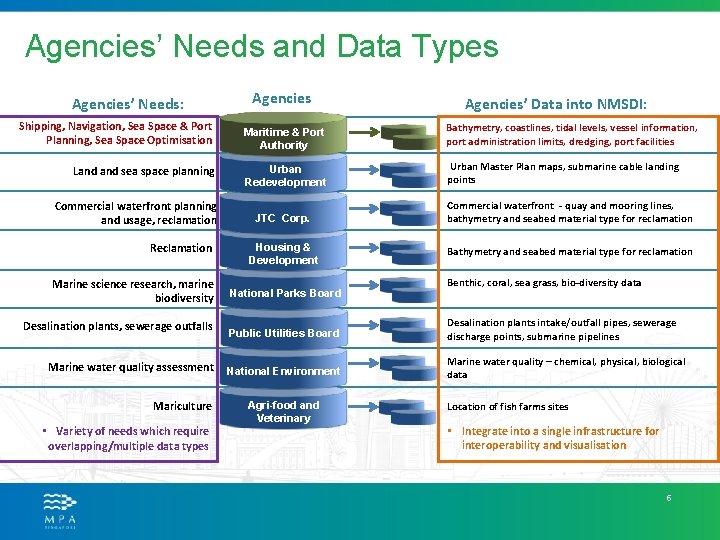
Agencies’ Needs and Data Types Agencies’ Needs: Agencies’ Data into NMSDI: Shipping, Navigation, Sea Space & Port Planning, Sea Space Optimisation Maritime & Port Authority Bathymetry, coastlines, tidal levels, vessel information, port administration limits, dredging, port facilities Land sea space planning Urban Redevelopment Urban Master Plan maps, submarine cable landing points Commercial waterfront planning and usage, reclamation Reclamation Marine science research, marine biodiversity Desalination plants, sewerage outfalls Marine water quality assessment Mariculture • Variety of needs which require overlapping/multiple data types JTC Corp. Housing & Development National Parks Board Commercial waterfront - quay and mooring lines, bathymetry and seabed material type for reclamation Benthic, coral, sea grass, bio-diversity data Public Utilities Board Desalination plants intake/outfall pipes, sewerage discharge points, submarine pipelines National Environment Marine water quality – chemical, physical, biological data Agri-food and Veterinary Location of fish farms sites • Integrate into a single infrastructure for interoperability and visualisation 5
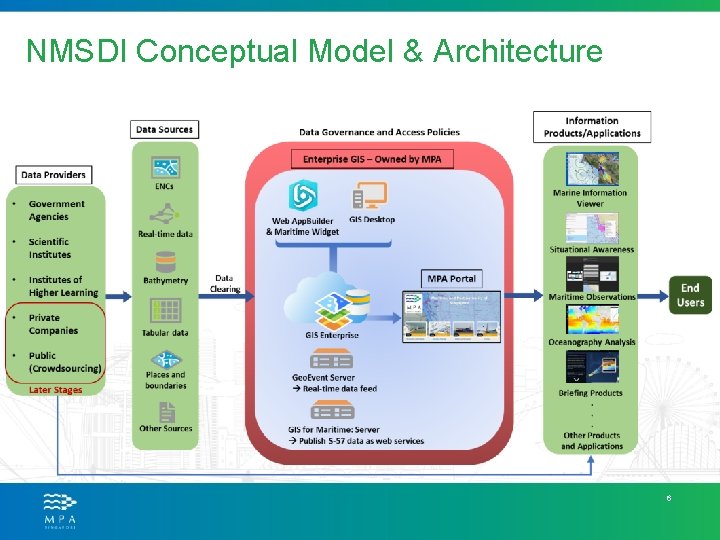
NMSDI Conceptual Model & Architecture 6
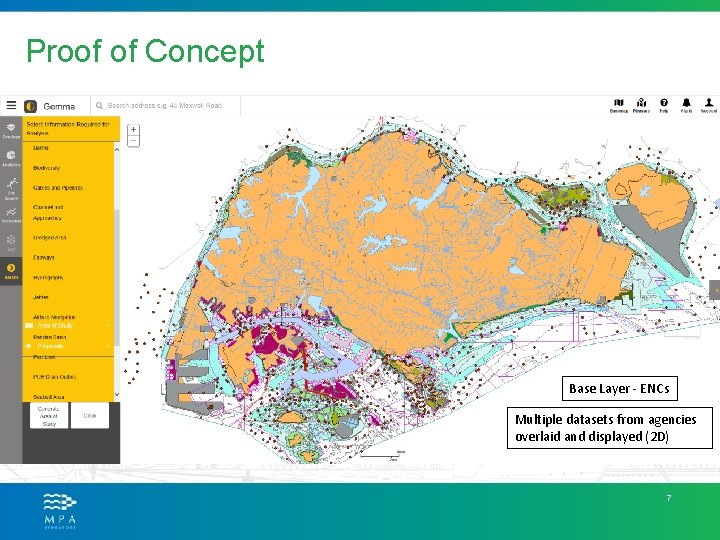
Proof of Concept Base Layer - ENCs Multiple datasets from agencies overlaid and displayed (2 D) 7
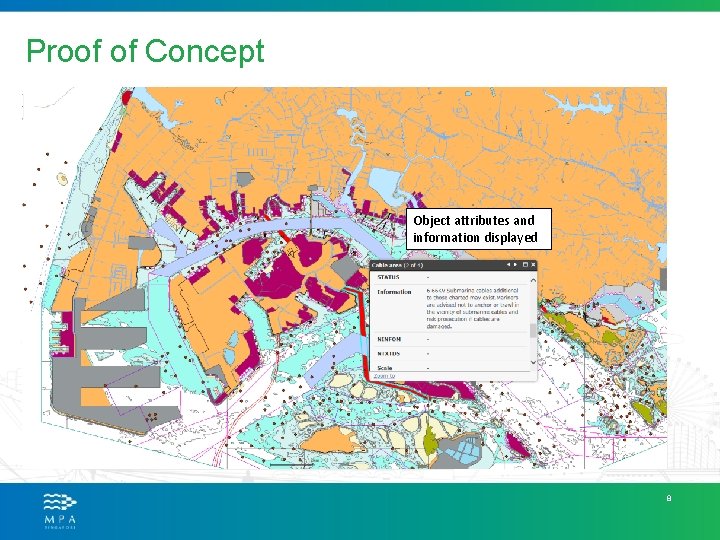
Proof of Concept Object attributes and information displayed 8
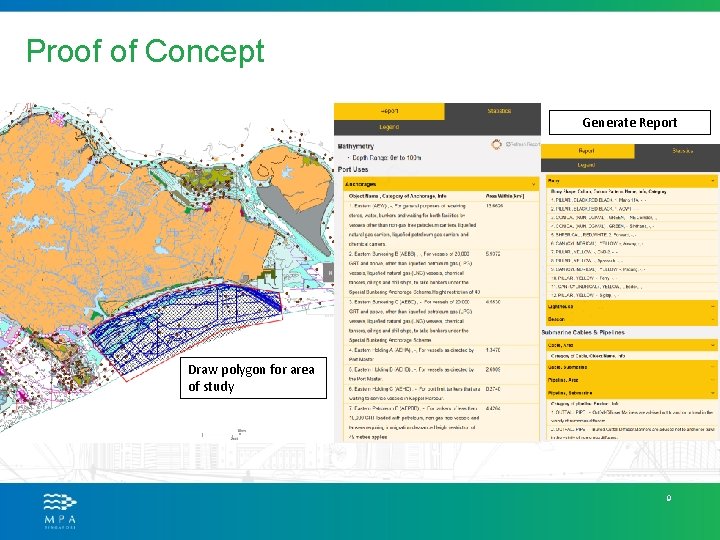
Proof of Concept Generate Report Draw polygon for area of study 9
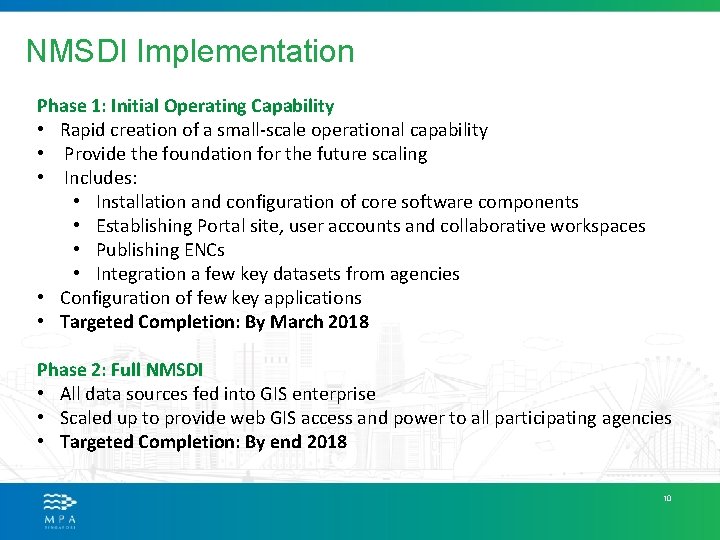
NMSDI Implementation Phase 1: Initial Operating Capability • Rapid creation of a small-scale operational capability • Provide the foundation for the future scaling • Includes: • Installation and configuration of core software components • Establishing Portal site, user accounts and collaborative workspaces • Publishing ENCs • Integration a few key datasets from agencies • Configuration of few key applications • Targeted Completion: By March 2018 Phase 2: Full NMSDI • All data sources fed into GIS enterprise • Scaled up to provide web GIS access and power to all participating agencies • Targeted Completion: By end 2018 10
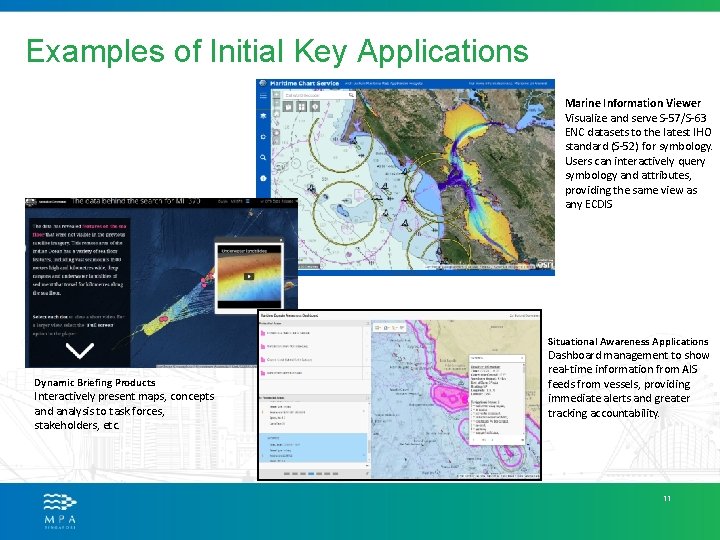
Examples of Initial Key Applications Marine Information Viewer Visualize and serve S-57/S-63 ENC datasets to the latest IHO standard (S-52) for symbology. Users can interactively query symbology and attributes, providing the same view as any ECDIS Situational Awareness Applications Dynamic Briefing Products Interactively present maps, concepts and analysis to task forces, stakeholders, etc. Dashboard management to show real-time information from AIS feeds from vessels, providing immediate alerts and greater tracking accountability. 11
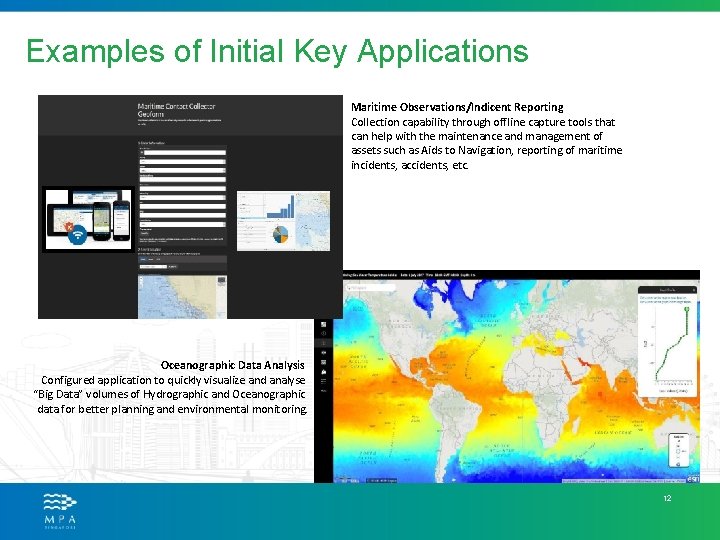
Examples of Initial Key Applications Maritime Observations/Indicent Reporting Collection capability through offline capture tools that can help with the maintenance and management of assets such as Aids to Navigation, reporting of maritime incidents, accidents, etc. Oceanographic Data Analysis Configured application to quickly visualize and analyse “Big Data” volumes of Hydrographic and Oceanographic data for better planning and environmental monitoring. 12
Beyond NMSDI • Towards a spatially-enabled nation • National level decision making • Cost effective businesses • Location and situational awareness • Integration with Land SDI • SG-Space (Singapore Land Authority) • Regional NMSDI • UN-GGIM Shared Guiding Principles • East Asia MSDI 13
For Information