
Singapore Pronatalist Policy LO to explain why Singapore




- Slides: 30
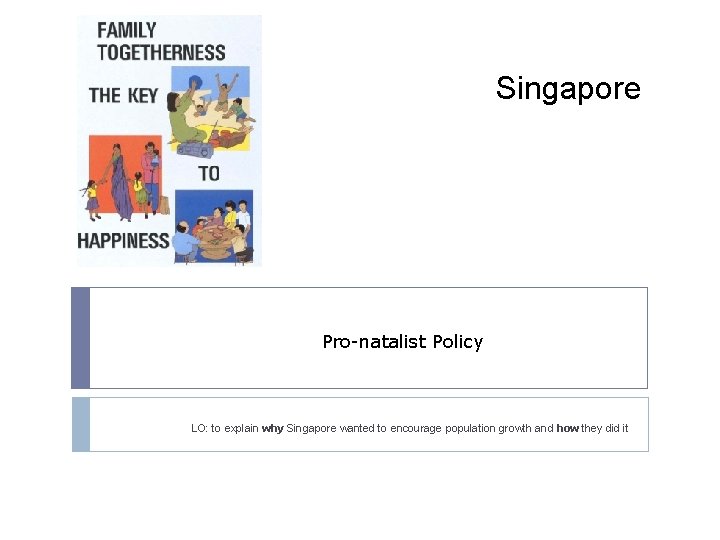
Singapore Pro-natalist Policy LO: to explain why Singapore wanted to encourage population growth and how they did it
Pro natalist policy �A policy that tries to increase birth rates. You can not force people to have children, so you have to offer incentives e. g. free education.
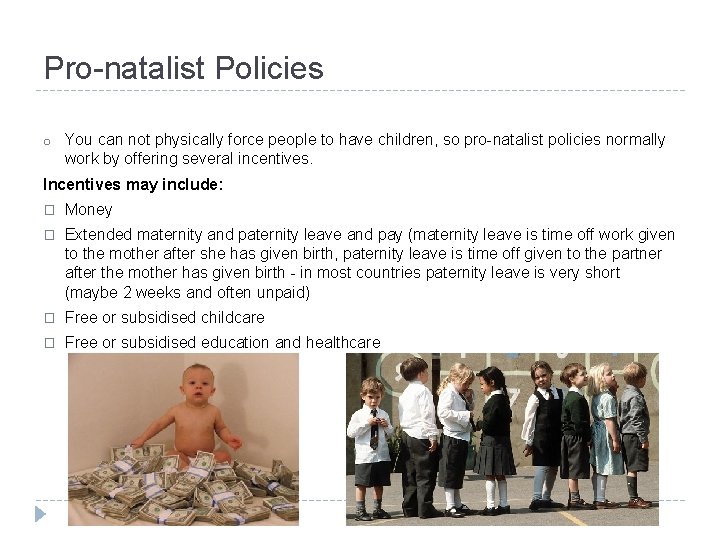
Pro-natalist Policies o You can not physically force people to have children, so pro-natalist policies normally work by offering several incentives. Incentives may include: � Money � Extended maternity and paternity leave and pay (maternity leave is time off work given to the mother after she has given birth, paternity leave is time off given to the partner after the mother has given birth - in most countries paternity leave is very short (maybe 2 weeks and often unpaid) � Free or subsidised childcare � Free or subsidised education and healthcare
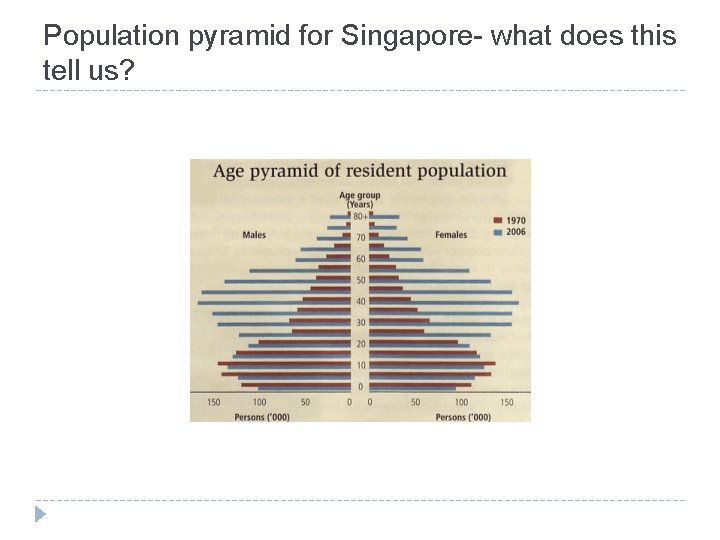
Population pyramid for Singapore- what does this tell us?
The policy…. . � Why did they decided they needed more babies…. ? � What did they do (what were the incentives? …. ? � Who did it involve…. . ? � Was it successful? …. ?
“To sustain growth and vitality in our economy, we need a growing population in Singapore with talents in every field. ” Said by Senior Minister Mr Goh Chok Tong on August 19 th, 2006
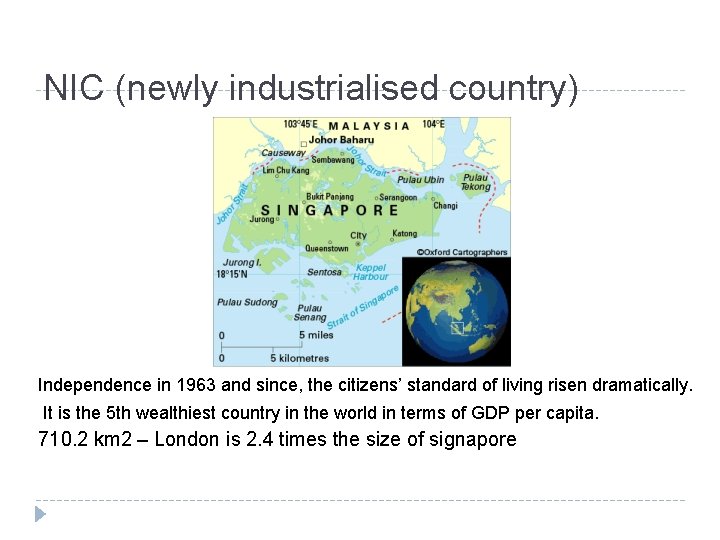
NIC (newly industrialised country) Independence in 1963 and since, the citizens’ standard of living risen dramatically. It is the 5 th wealthiest country in the world in terms of GDP per capita. 710. 2 km 2 – London is 2. 4 times the size of signapore
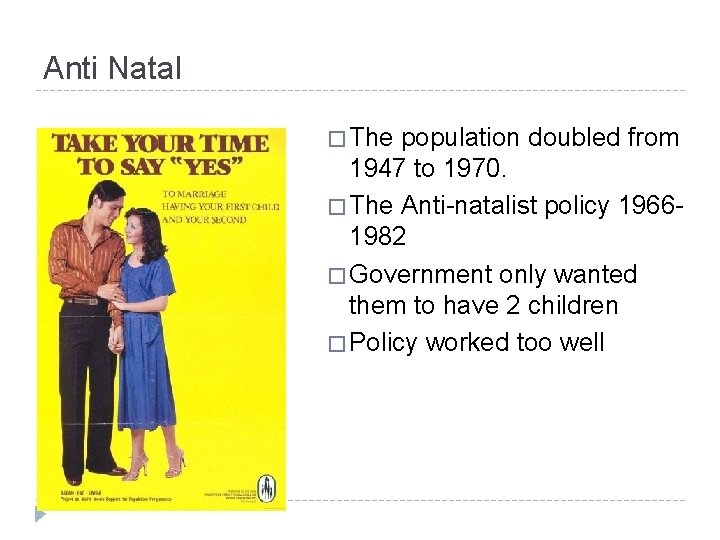
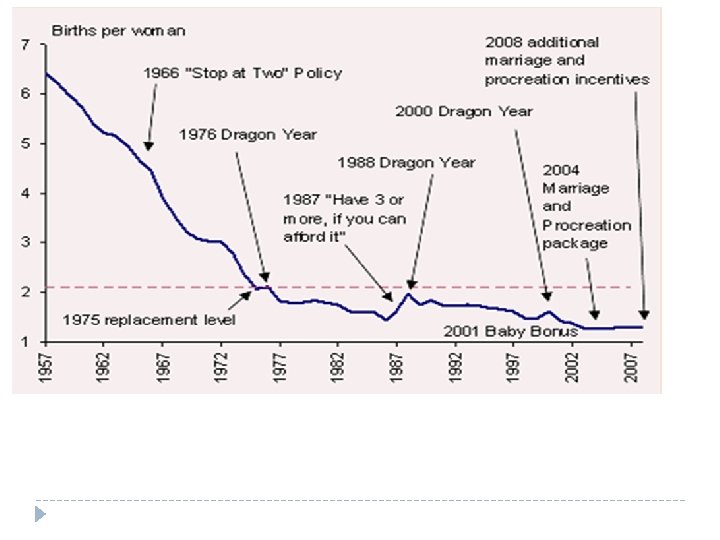
Anti Natal � The population doubled from 1947 to 1970. � The Anti-natalist policy 19661982 � Government only wanted them to have 2 children � Policy worked too well
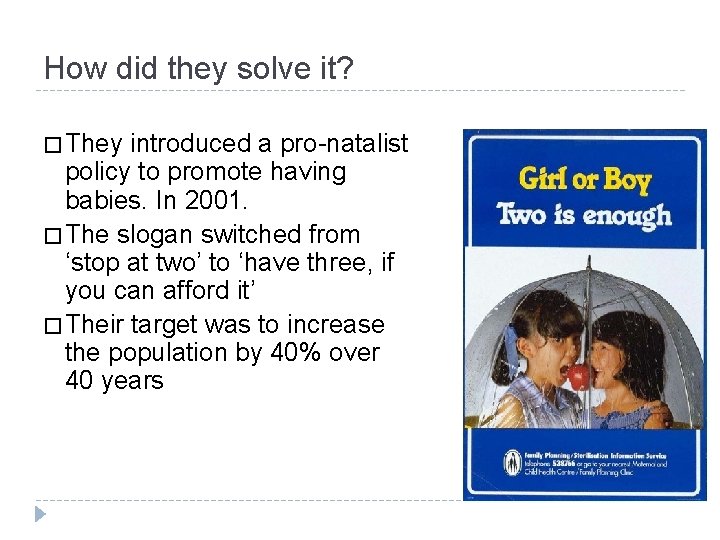
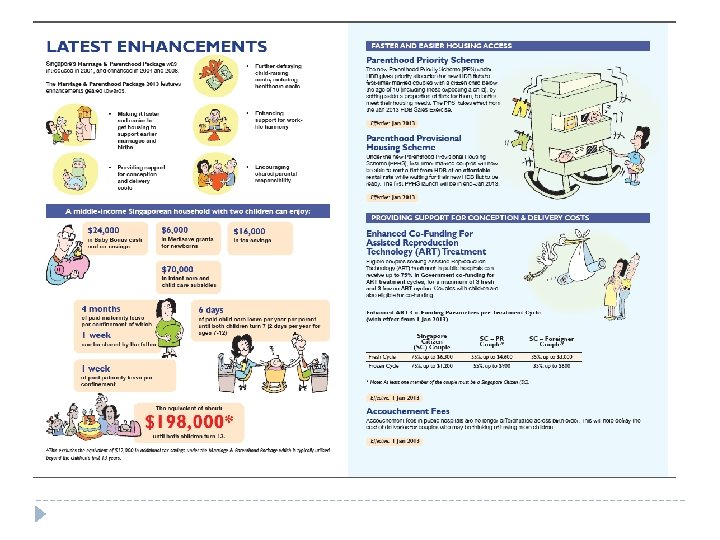
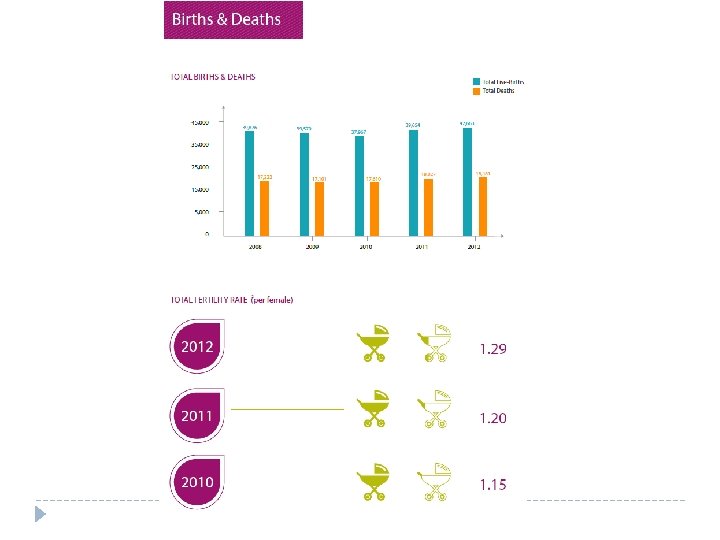
How did they solve it? � They introduced a pro-natalist policy to promote having babies. In 2001. � The slogan switched from ‘stop at two’ to ‘have three, if you can afford it’ � Their target was to increase the population by 40% over 40 years
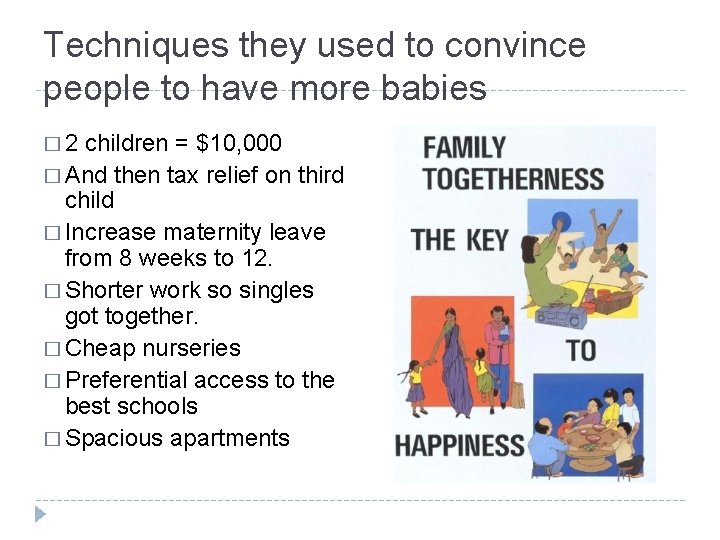
Techniques they used to convince people to have more babies � 2 children = $10, 000 � And then tax relief on third child � Increase maternity leave from 8 weeks to 12. � Shorter work so singles got together. � Cheap nurseries � Preferential access to the best schools � Spacious apartments
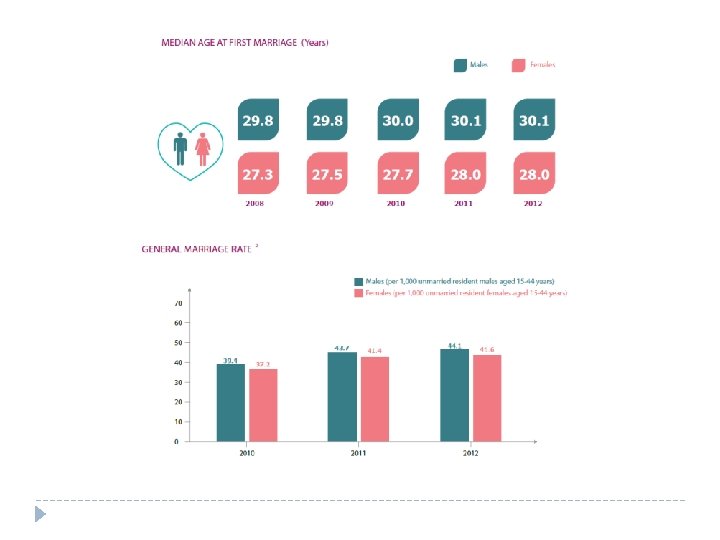
Problem 1 Social Barrier: � The highly educated women tend to have more difficulty with finding more suitable spouses.
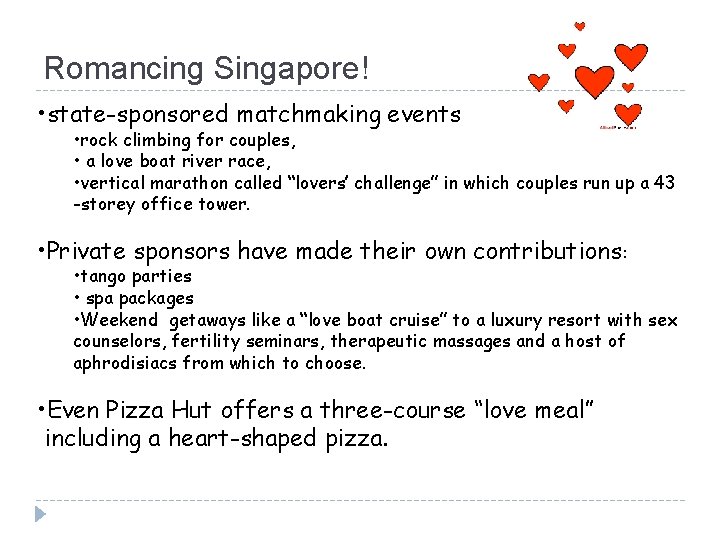
Romancing Singapore! • state-sponsored matchmaking events • rock climbing for couples, • a love boat river race, • vertical marathon called “lovers’ challenge” in which couples run up a 43 -storey office tower. • Private sponsors have made their own contributions: • tango parties • spa packages • Weekend getaways like a “love boat cruise” to a luxury resort with sex counselors, fertility seminars, therapeutic massages and a host of aphrodisiacs from which to choose. • Even Pizza Hut offers a three-course “love meal” including a heart-shaped pizza.
Problem 2 Life style choice: � Some people choose to remain single, get married older or have fewer children.
Romancing Singapore! • state-sponsored matchmaking events • rock climbing for couples, • a love boat river race, • vertical marathon called “lovers’ challenge” in which couples run up a 43 -storey office tower. • Private sponsors have made their own contributions: • tango parties • spa packages • Weekend getaways like a “love boat cruise” to a luxury resort with sex counselors, fertility seminars, therapeutic massages and a host of aphrodisiacs from which to choose. • Even Pizza Hut offers a three-course “love meal” including a heart-shaped pizza.
Problem 3 Financial Consideration: � High cost of living � Parents want higher standards for children therefore they work longer and have fewer babies.
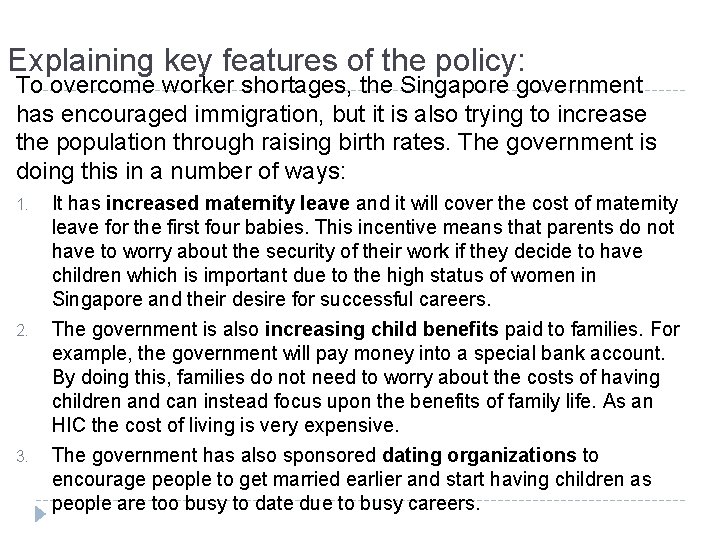
Explaining key features of the policy: To overcome worker shortages, the Singapore government has encouraged immigration, but it is also trying to increase the population through raising birth rates. The government is doing this in a number of ways: 1. 2. 3. It has increased maternity leave and it will cover the cost of maternity leave for the first four babies. This incentive means that parents do not have to worry about the security of their work if they decide to have children which is important due to the high status of women in Singapore and their desire for successful careers. The government is also increasing child benefits paid to families. For example, the government will pay money into a special bank account. By doing this, families do not need to worry about the costs of having children and can instead focus upon the benefits of family life. As an HIC the cost of living is very expensive. The government has also sponsored dating organizations to encourage people to get married earlier and start having children as people are too busy to date due to busy careers.
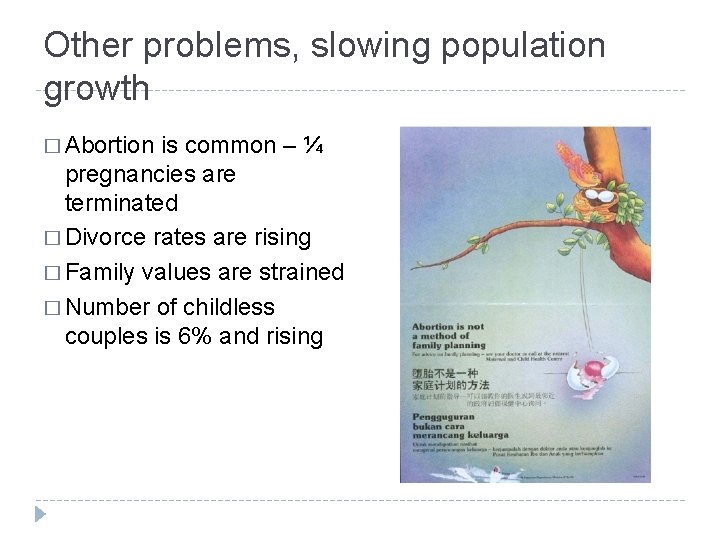
Other problems, slowing population growth � Abortion is common – ¼ pregnancies are terminated � Divorce rates are rising � Family values are strained � Number of childless couples is 6% and rising
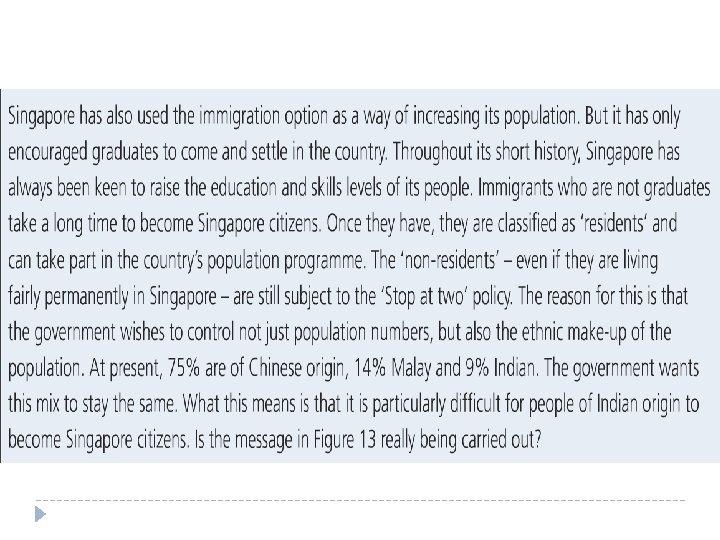
Were there other ways to boost Singapore’s population? � Singapore has experienced that importing foreigners can boost population size and sustain economic growth- but it is only encouraging graduates. � It already has a large amount of foreigners, only 74% are Singaporeans- the government wants the current cultural mix to stay the same- ‘foreigners’ are still subject to the ‘Stop at two’ policy � It could create a wide culture or conflict.
The policy…. . Write a bullet point summary of the main points from the Singapore case study Include: � Why did they decided they needed more babies…. ? � What did they do (what were the incentives? …. ? � Who did it involve…. . ? � Was it successful? …. ?