
Simultaneous optimization of photons and electrons for mixed
- Slides: 19
Simultaneous optimization of photons and electrons for mixed beam radiotherapy Theodoros Christodoulou
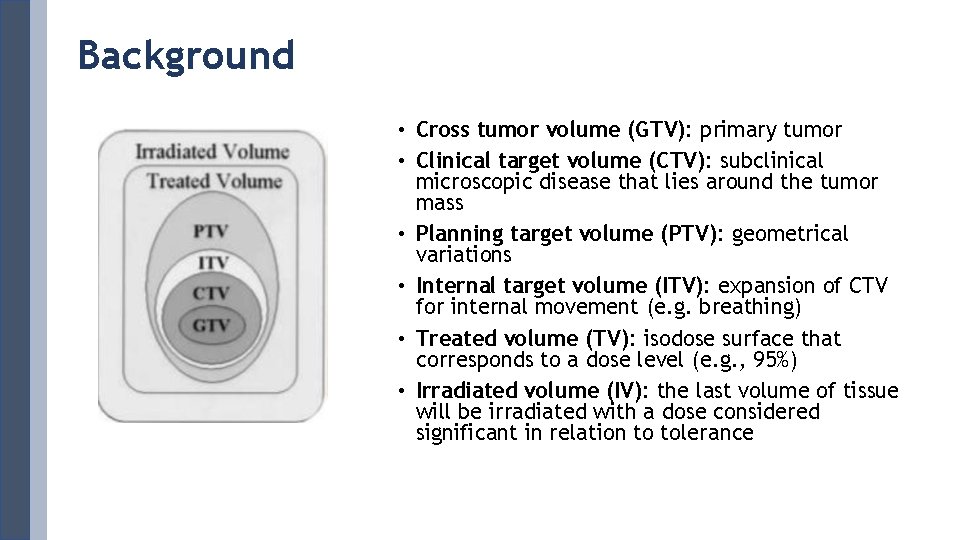
Background • Cross tumor volume (GTV): primary tumor • Clinical target volume (CTV): subclinical microscopic disease that lies around the tumor mass • Planning target volume (PTV): geometrical variations • Internal target volume (ITV): expansion of CTV for internal movement (e. g. breathing) • Treated volume (TV): isodose surface that corresponds to a dose level (e. g. , 95%) • Irradiated volume (IV): the last volume of tissue will be irradiated with a dose considered significant in relation to tolerance
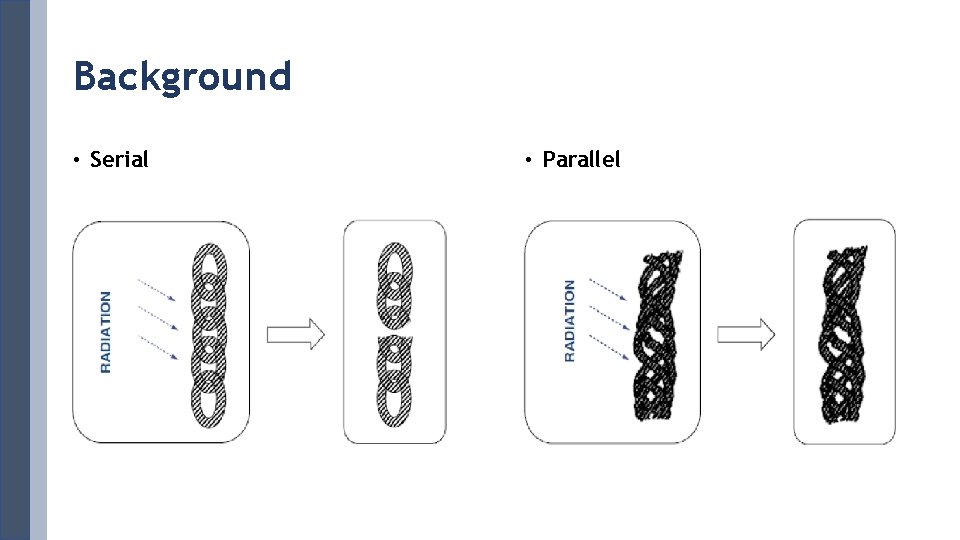
Background • Organs at risk (OAR): these tissues which usually are closed to the tumor or their radio sensitivity may have a significant outcome to the treatment planning or prescribed dose • Classification to OARs: − Serial: Whole organ is a continued unit, and damage to one point will cause complete damage to the organ (spinal cord, digestive system). − Parallel: Organ consists of several functional units and if one part is damaged, the rest of the organ will still be functioning and make up for the loss (lung, bladder). − Serial Parallel: fall in both categories, such as kidneys and heart
Background • Serial • Parallel
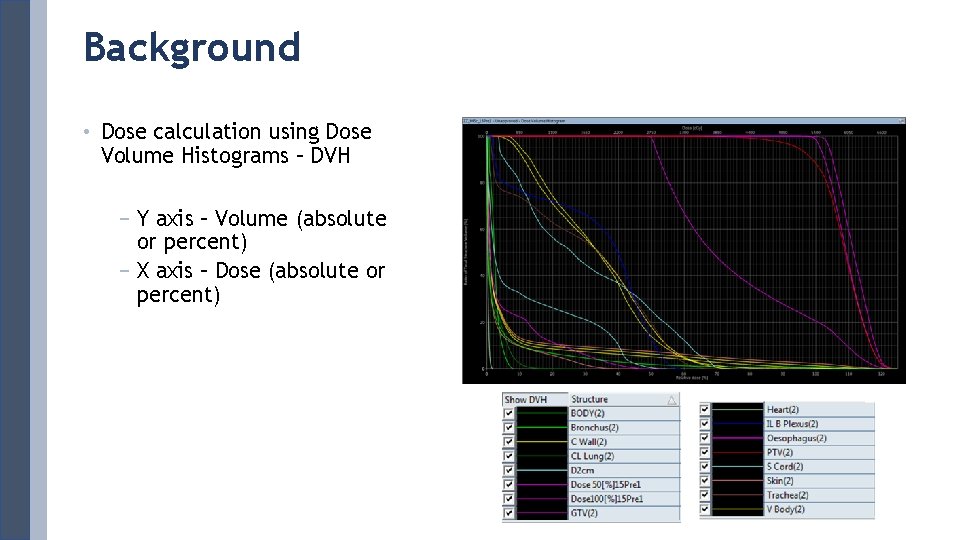
Background • Dose calculation using Dose Volume Histograms – DVH − Y axis – Volume (absolute or percent) − X axis – Dose (absolute or percent)
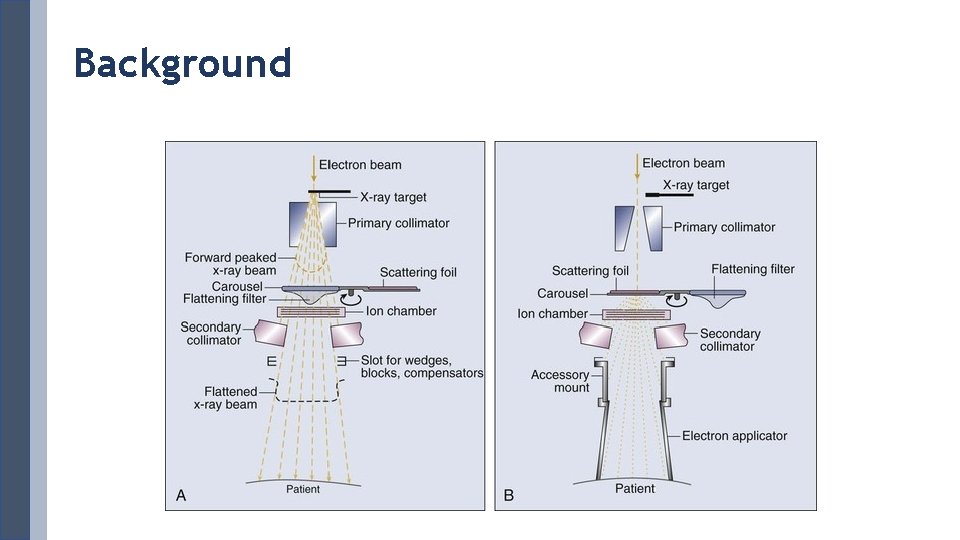
Background
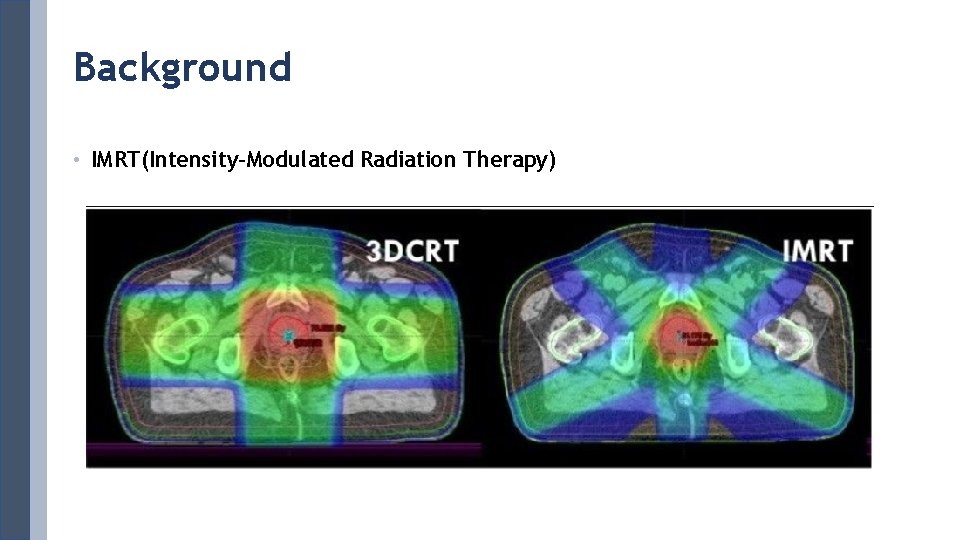
Background • IMRT(Intensity-Modulated Radiation Therapy)
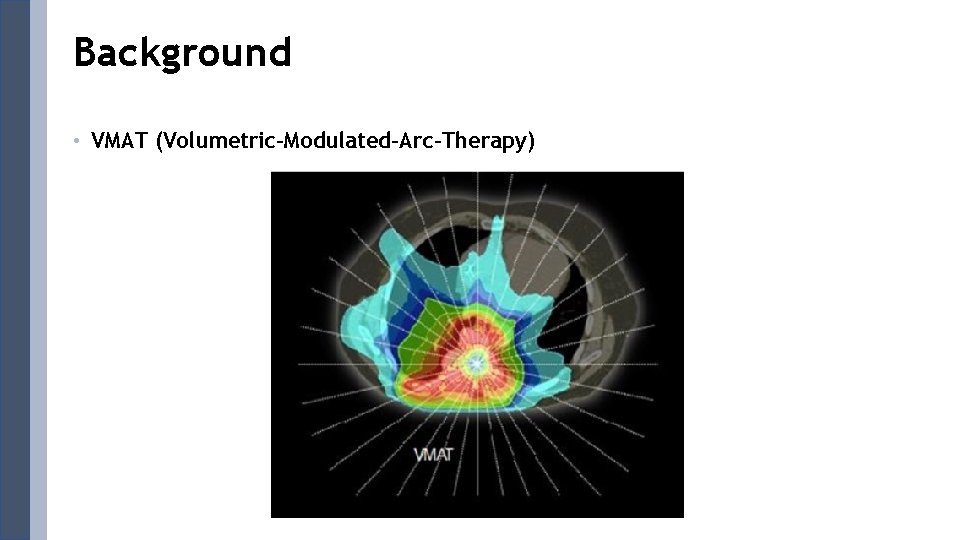
Background • VMAT (Volumetric-Modulated-Arc-Therapy)
Background • p. MLC: photon multileaf collimator − Lead leaves which shape the beam according to the tumor geometry − Method: step and shoot • Modulated electron radiotherapy (MERT) − Same idea as IMRT • e. MLC: electron multileaf collimator leaves located at the bottom of a 25 x 25 cm 2 applicator just a few cm from the patient surface
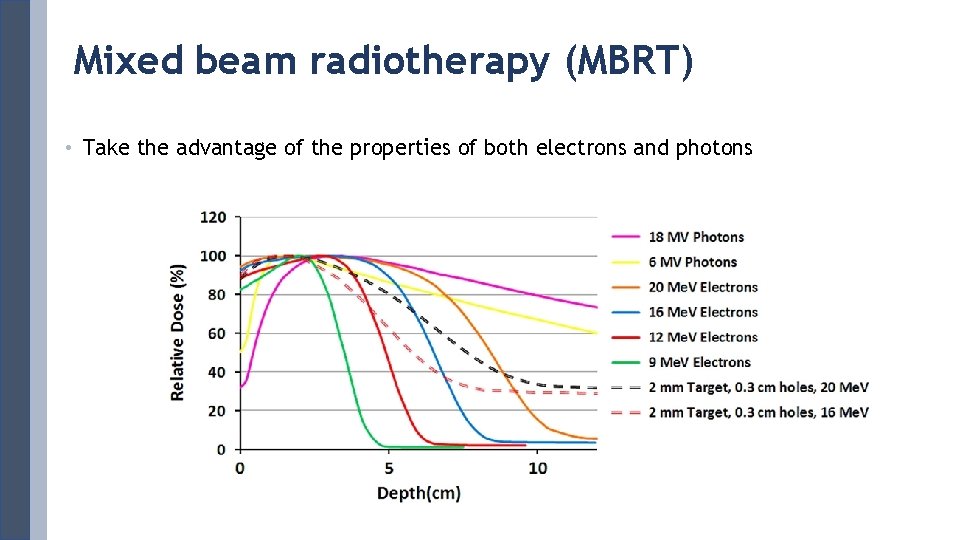
Mixed beam radiotherapy (MBRT) • Take the advantage of the properties of both electrons and photons
Mixed beam radiotherapy • AIM − develop an MC(monte carlo) beamlet based inverse TPP (treatment plan process) for MBRT performing simultaneous optimization of photon and electron apertures with a simulated annealing based DAO (direct aperture optimization) − apertures are determined to be delivered in a segmented manner and collimated with the p. MLC for both photon and electron beams
Methods • CT images imported into the research version of the Eclipse treatment planning system (Varian) • Contouring of the planning target volume (PTV) and the OARs • Isocenter of the photon fields is located in the PTV • Electron fields the isocenter is positioned such that the source to surface distance (SSD) is reduced leading to a smaller penumbra (widening of the beam due to scatter, affects electrons more)
Methods • Beamlet dose distributions are then calculated (Swiss Monte Carlo Plan) based on pre patient phase spaces − beamlet grid is positioned on the mid-plane of the p. MLC − Particles are transported throughthe treatment head and stored in the corresponding beamlet • When all dose distributions are calculated − simultaneous optimization of photon and electron apertures • (e. g number of apertures per field, weighting factors)
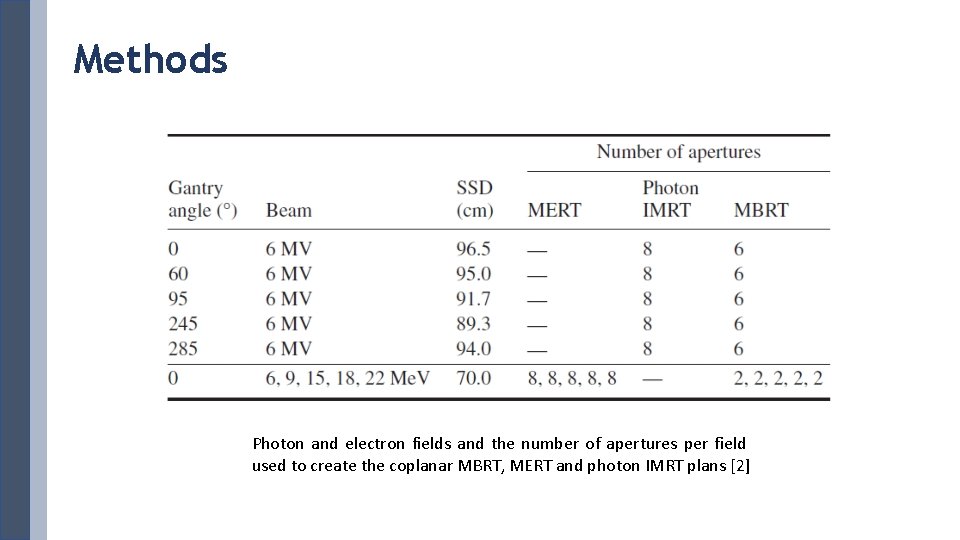
Methods Photon and electron fields and the number of apertures per field used to create the coplanar MBRT, MERT and photon IMRT plans [2]
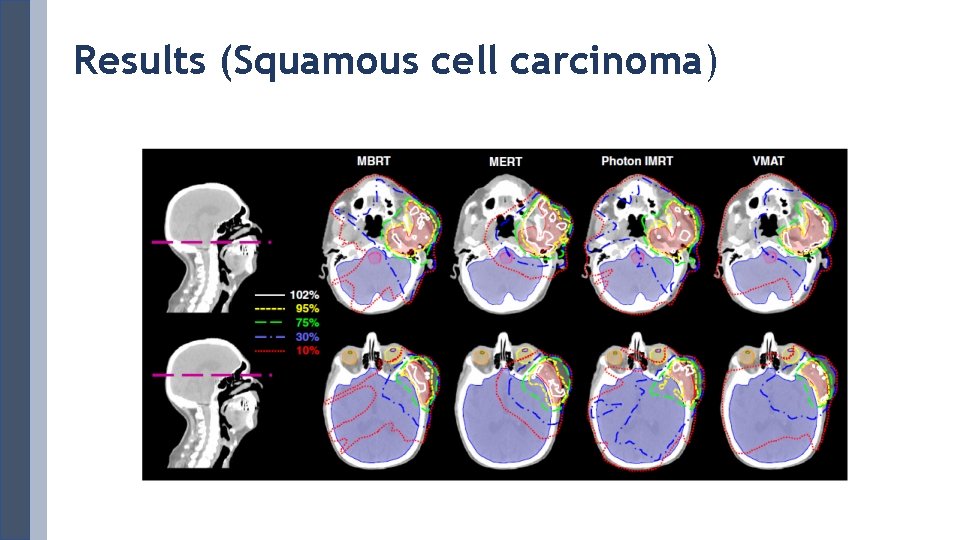
Methods • Two types of cancer are tested (Academically) − Chest wall − Squamous cell carcinoma • uncontrolled growth of abnormal cells arising in the squamous cells, which compose most of the skin’s upper layers (the epidermis). • Homogeneity Index (HI) for the PTV − HI = V 95% − V 107%, • (V 95%) percent volume that received at least 95% of the prescription dose • (V 107%) percent volume that received at least 107% of the prescription dose • OARs − Dmean to the organ at risk
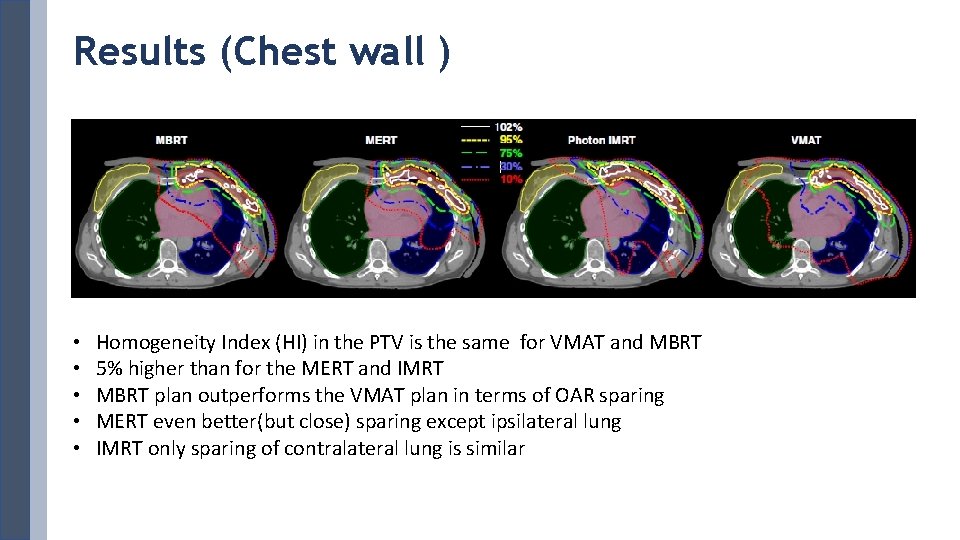
Results (Chest wall ) • • • Homogeneity Index (HI) in the PTV is the same for VMAT and MBRT 5% higher than for the MERT and IMRT MBRT plan outperforms the VMAT plan in terms of OAR sparing MERT even better(but close) sparing except ipsilateral lung IMRT only sparing of contralateral lung is similar
Results (Squamous cell carcinoma)
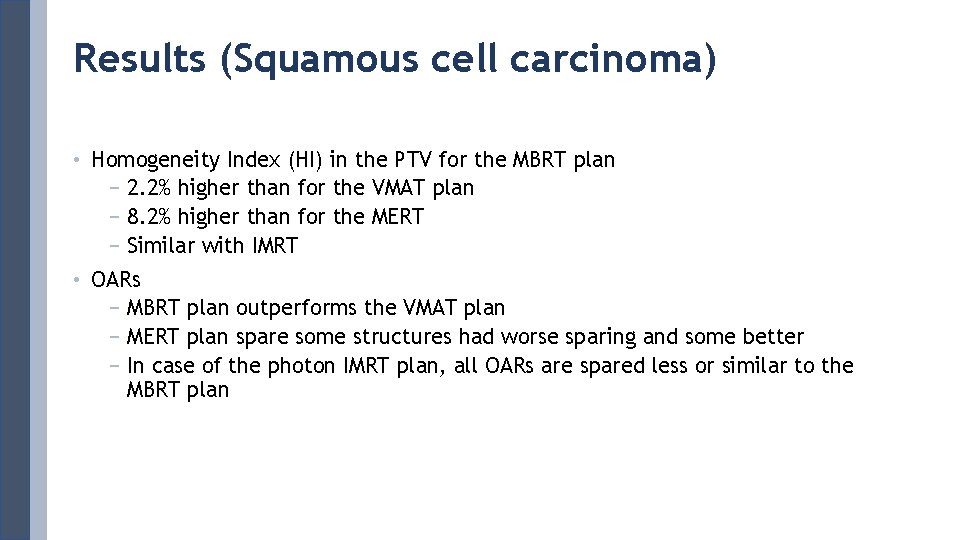
Results (Squamous cell carcinoma) • Homogeneity Index (HI) in the PTV for the MBRT plan − 2. 2% higher than for the VMAT plan − 8. 2% higher than for the MERT − Similar with IMRT • OARs − MBRT plan outperforms the VMAT plan − MERT plan spare some structures had worse sparing and some better − In case of the photon IMRT plan, all OARs are spared less or similar to the MBRT plan
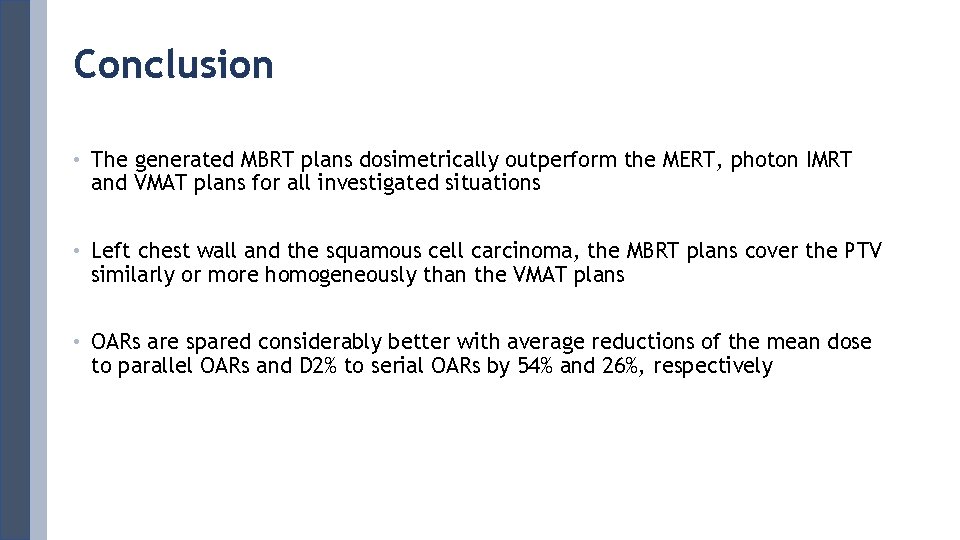
Conclusion • The generated MBRT plans dosimetrically outperform the MERT, photon IMRT and VMAT plans for all investigated situations • Left chest wall and the squamous cell carcinoma, the MBRT plans cover the PTV similarly or more homogeneously than the VMAT plans • OARs are spared considerably better with average reductions of the mean dose to parallel OARs and D 2% to serial OARs by 54% and 26%, respectively