
Simulations of LHC LongRange BeamBeam Compensation with DC
Simulations of LHC Long-Range Beam-Beam Compensation with DC and Pulsed Wires U. Dorda F. Zimmermann CERN – AB/ABP
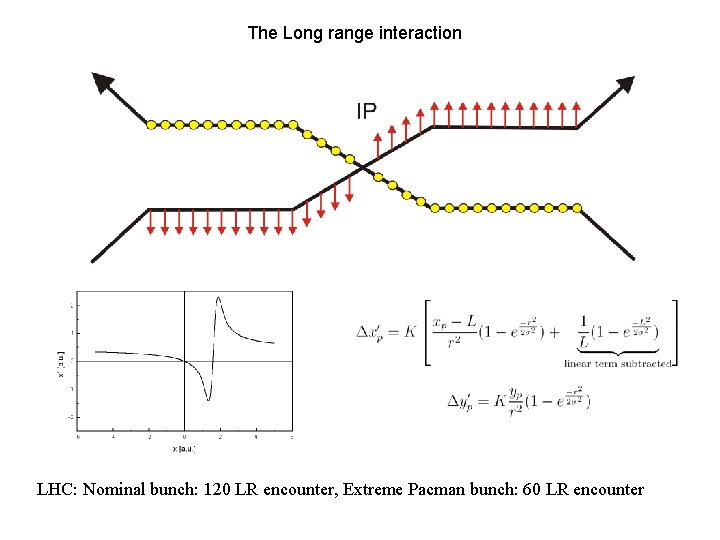
The Long range interaction LHC: Nominal bunch: 120 LR encounter, Extreme Pacman bunch: 60 LR encounter
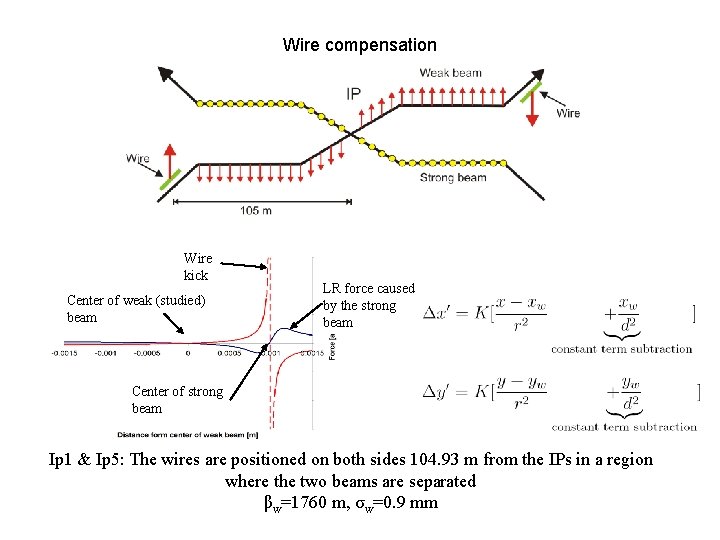
Wire compensation Wire kick Center of weak (studied) beam LR force caused by the strong beam Center of strong beam Ip 1 & Ip 5: The wires are positioned on both sides 104. 93 m from the IPs in a region where the two beams are separated βw=1760 m, σw=0. 9 mm
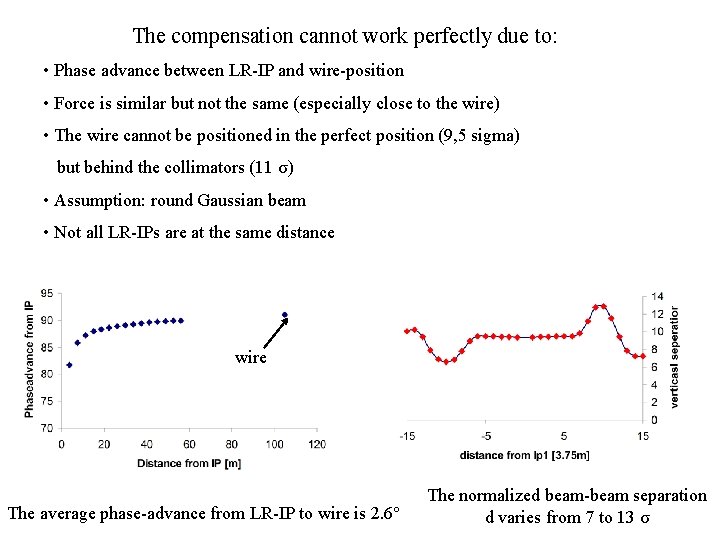
The compensation cannot work perfectly due to: • Phase advance between LR-IP and wire-position • Force is similar but not the same (especially close to the wire) • The wire cannot be positioned in the perfect position (9, 5 sigma) but behind the collimators (11 σ) • Assumption: round Gaussian beam • Not all LR-IPs are at the same distance wire The average phase-advance from LR-IP to wire is 2. 6º The normalized beam-beam separation d varies from 7 to 13 σ
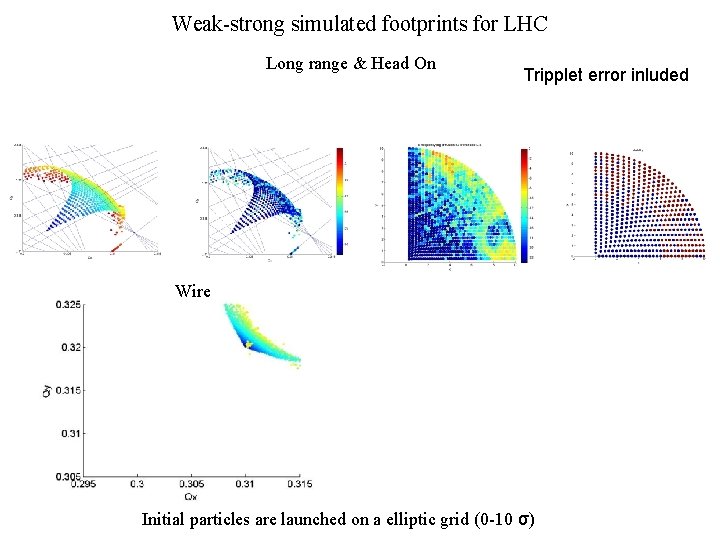
Weak-strong simulated footprints for LHC Long range & Head On Tripplet error inluded Wire Initial particles are launched on a elliptic grid (0 -10 σ)
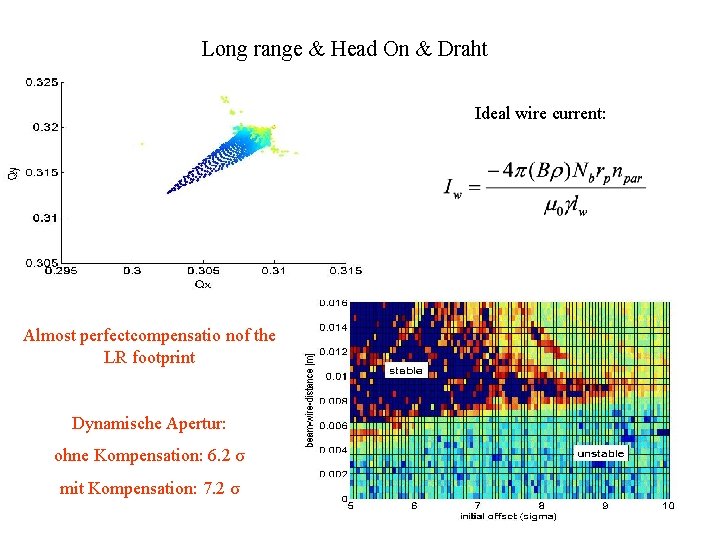
Long range & Head On & Draht Ideal wire current: Almost perfectcompensatio nof the LR footprint Dynamische Apertur: ohne Kompensation: 6. 2 σ mit Kompensation: 7. 2 σ
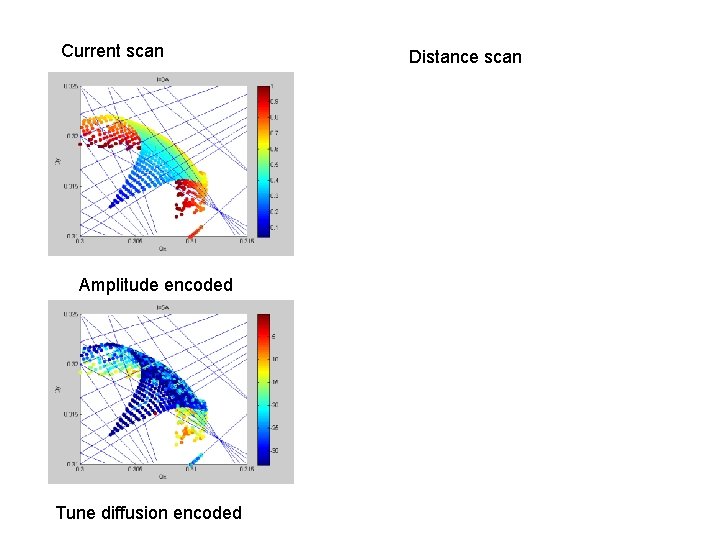
Current scan Amplitude encoded Tune diffusion encoded Distance scan
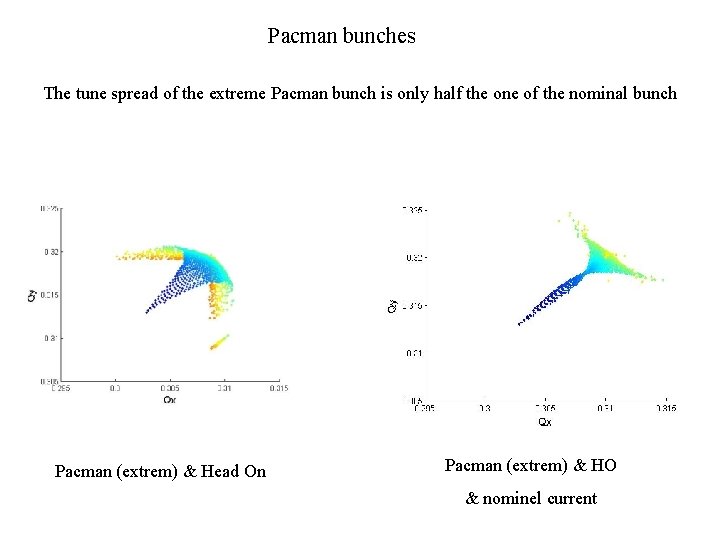
Pacman bunches The tune spread of the extreme Pacman bunch is only half the one of the nominal bunch Pacman (extrem) & Head On Pacman (extrem) & HO & nominel current
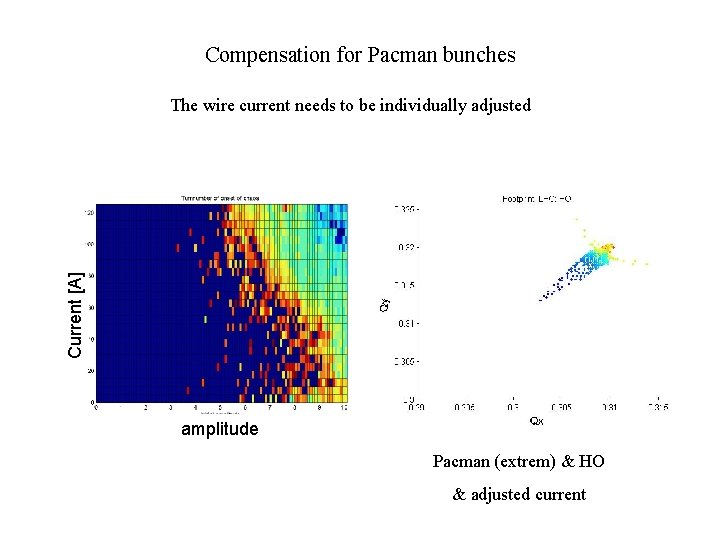
Compensation for Pacman bunches Current [A] The wire current needs to be individually adjusted amplitude Pacman (extrem) & HO & adjusted current
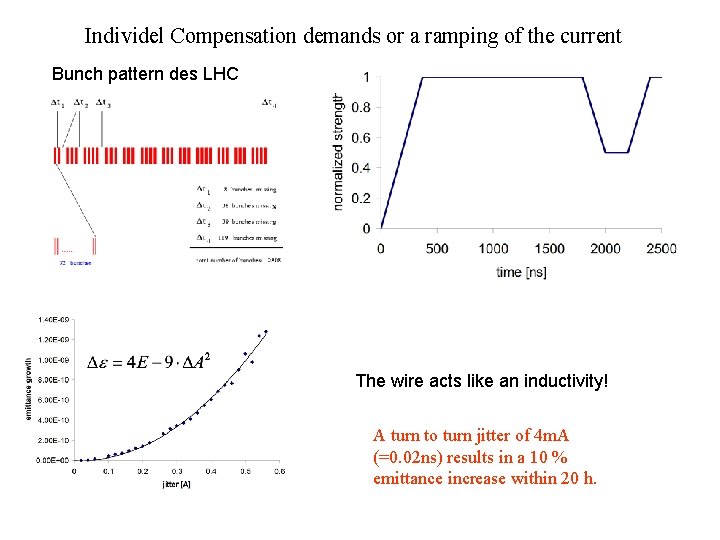
Individel Compensation demands or a ramping of the current Bunch pattern des LHC The wire acts like an inductivity! A turn to turn jitter of 4 m. A (=0. 02 ns) results in a 10 % emittance increase within 20 h.
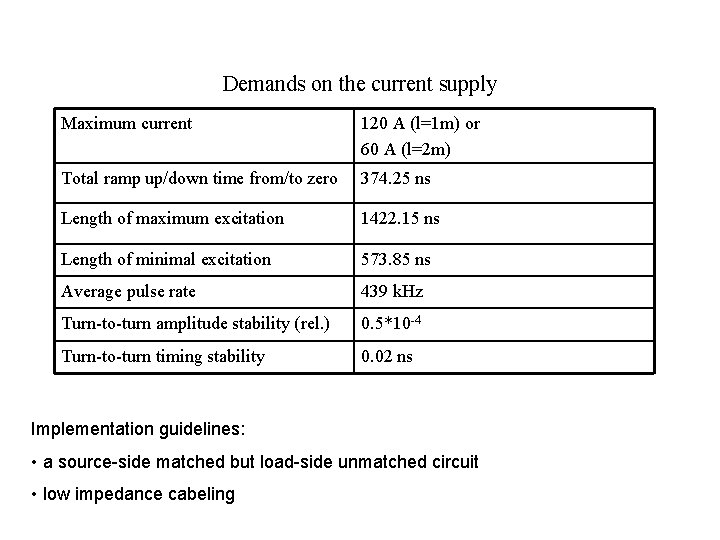
Demands on the current supply Maximum current 120 A (l=1 m) or 60 A (l=2 m) Total ramp up/down time from/to zero 374. 25 ns Length of maximum excitation 1422. 15 ns Length of minimal excitation 573. 85 ns Average pulse rate 439 k. Hz Turn-to-turn amplitude stability (rel. ) 0. 5*10 -4 Turn-to-turn timing stability 0. 02 ns Implementation guidelines: • a source-side matched but load-side unmatched circuit • low impedance cabeling
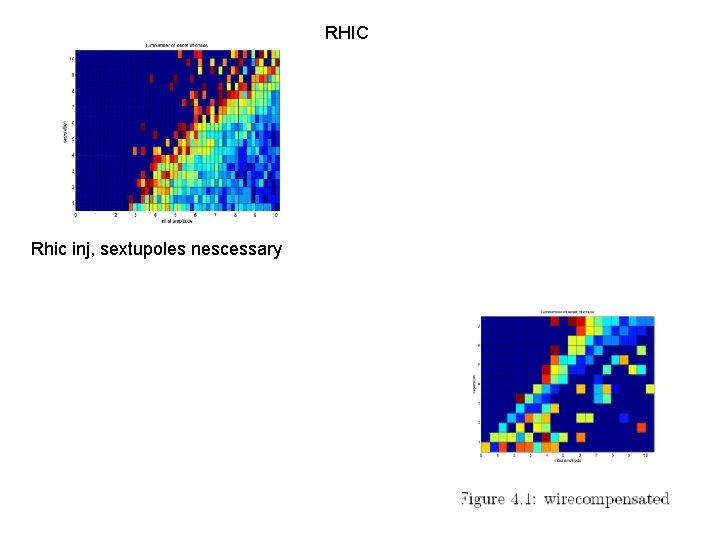
RHIC Rhic inj, sextupoles nescessary
Kompensations Experimente • Daphne: Drahtbestückung führt zu einem Beam-lifetime EPAC-paer referenz Anstieg um 30%. • Rhic: dedizierte single - encounter - LRBB – Experimente, EPAC referenz Einbau von Draht für Tests geplant. (next talk) Experiment und Simulationen zeigen bei Top-Energie kaum Instabilitäten • SPS: Draht-Draht Kompensationsexperimente – beam time?
- Slides: 13