
Simulation of the turbulent flow in a 3
Simulation of the turbulent flow in a 3 D channel and over a surface mounted cube Youngwook Kang, Cornell University Andrei Simion, The Cooper Union Svetlana V. Poroseva, CSIT, Florida State University
Objectives • • To become proficient in using Fluent and Gambit To get experience in: 1. acquiring numerical solutions of PDE 2. solving a CFD problem
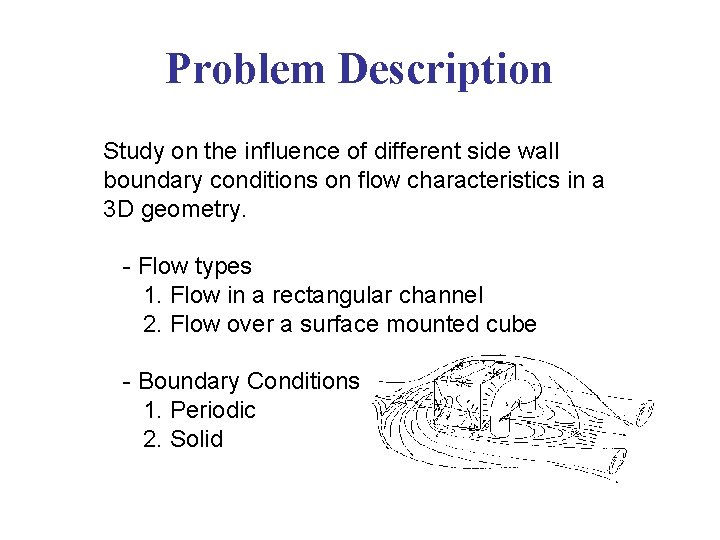
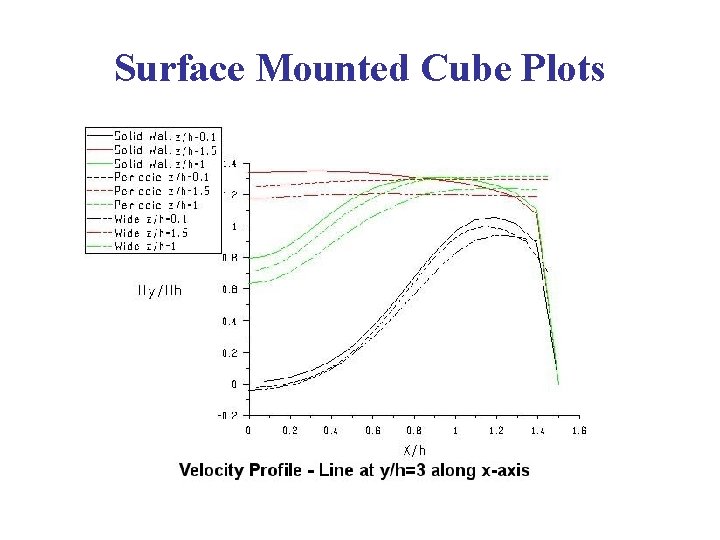
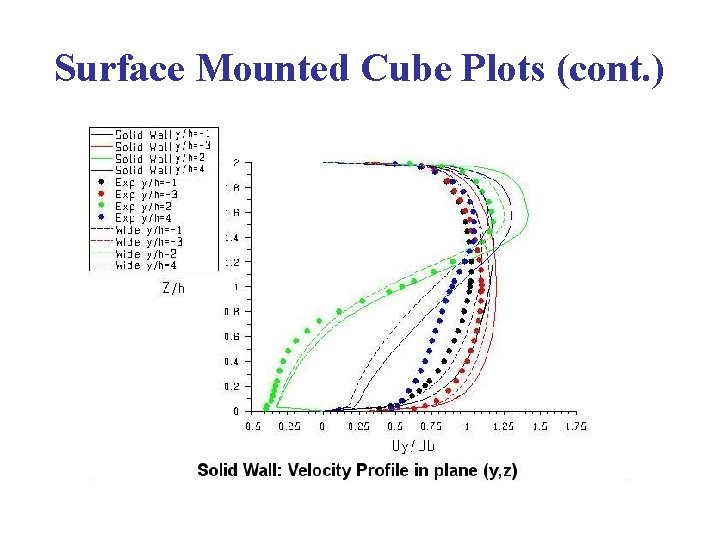
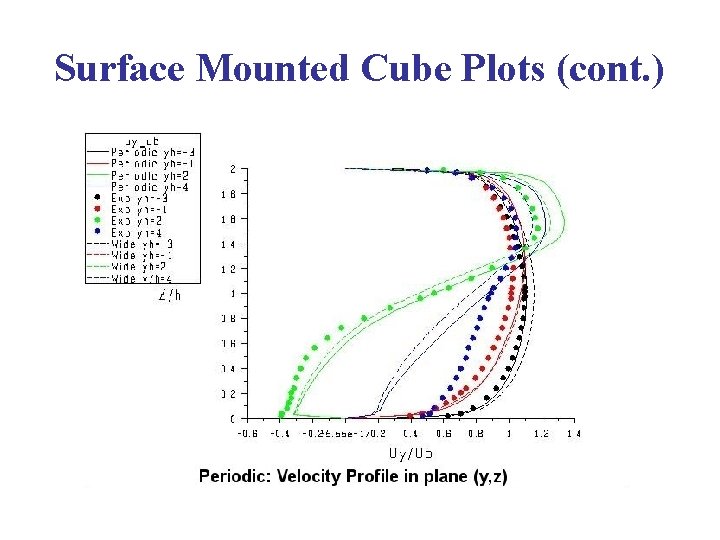
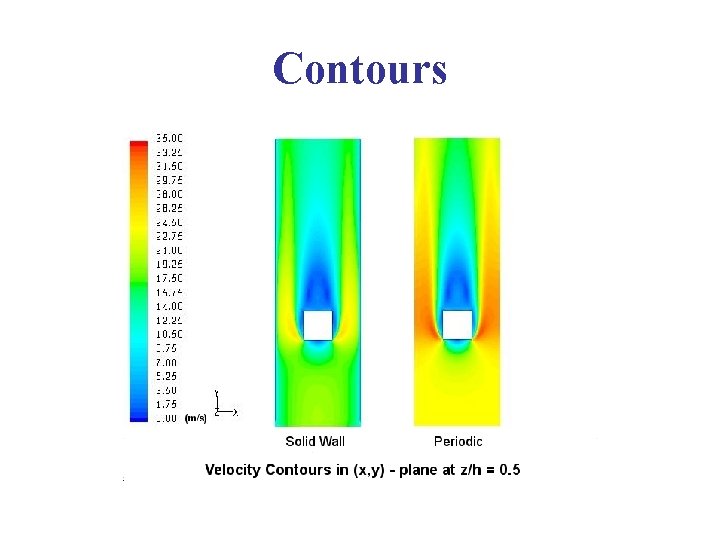
Problem Description Study on the influence of different side wall boundary conditions on flow characteristics in a 3 D geometry. - Flow types 1. Flow in a rectangular channel 2. Flow over a surface mounted cube - Boundary Conditions 1. Periodic 2. Solid
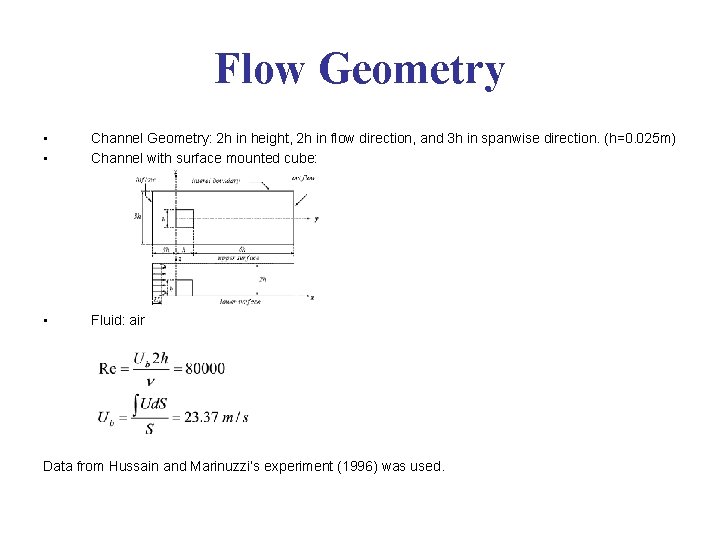
Flow Geometry • • Channel Geometry: 2 h in height, 2 h in flow direction, and 3 h in spanwise direction. (h=0. 025 m) Channel with surface mounted cube: • Fluid: air Data from Hussain and Marinuzzi’s experiment (1996) was used.
Turbulence Models
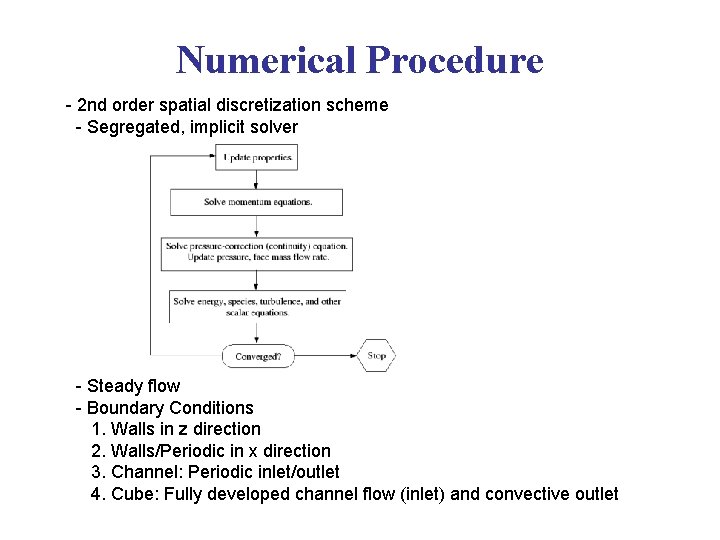
Numerical Procedure - 2 nd order spatial discretization scheme - Segregated, implicit solver - Steady flow - Boundary Conditions 1. Walls in z direction 2. Walls/Periodic in x direction 3. Channel: Periodic inlet/outlet 4. Cube: Fully developed channel flow (inlet) and convective outlet
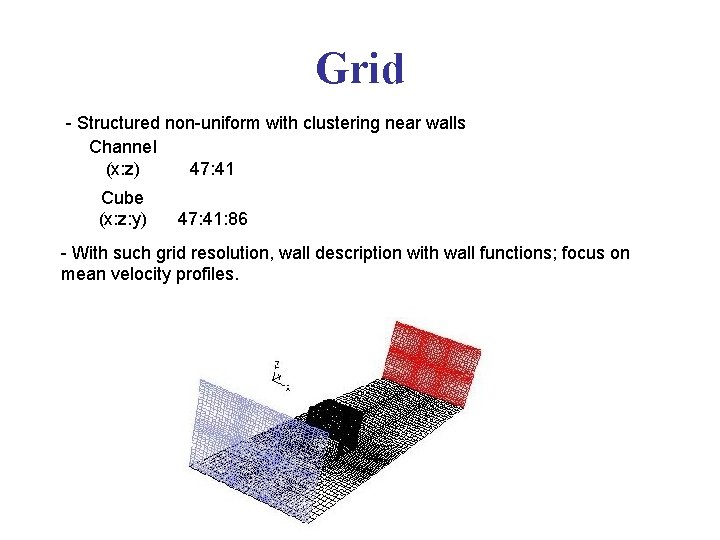
Grid - Structured non-uniform with clustering near walls Channel (x: z) 47: 41 Cube (x: z: y) 47: 41: 86 - With such grid resolution, wall description with wall functions; focus on mean velocity profiles.

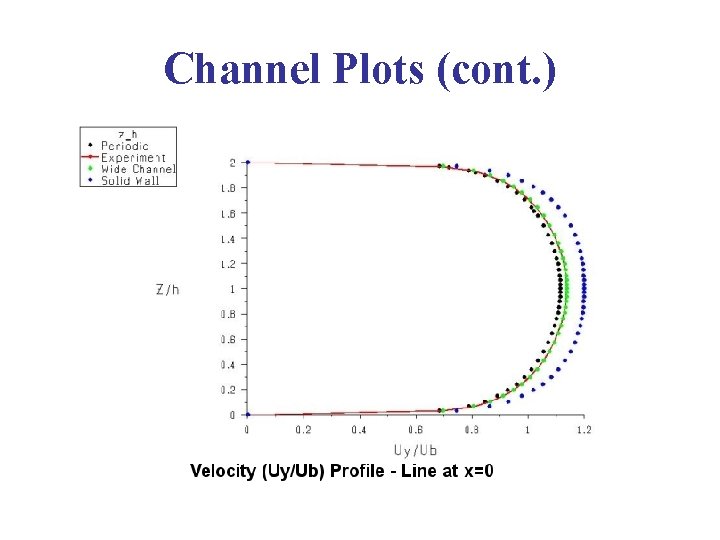
Channel Plots
Channel Plots (cont. )
Surface Mounted Cube Plots
Surface Mounted Cube Plots (cont. )
Surface Mounted Cube Plots (cont. )
Contours
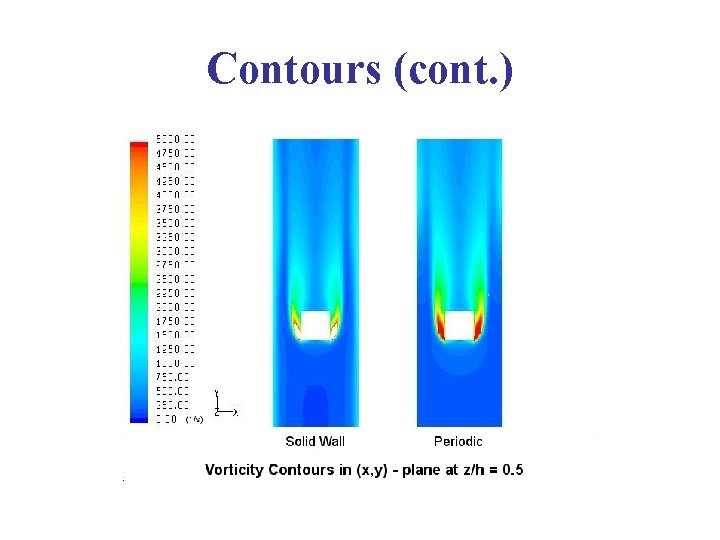
Contours (cont. )
Results and Conclusion • We have learned how to use Fluent and Gambit to design simple meshes and solve CFD problems in application to turbulence modeling. • Different boundary conditions on side walls have a great influence on the flow characteristics, such as velocity, vorticity, and turbulent kinetic energy.
- Slides: 15