
Simulation of Multiple Transmitter Communication System Using IT
- Slides: 30
Simulation of Multiple Transmitter Communication System Using IT++
Contributors l Chalmers University: Ali Behrevan, Thomas Eriksson l Bilkent University: Mustafa Durukal, Hakan Arslan, Gul Safak l POLITO: Daniel Bustos
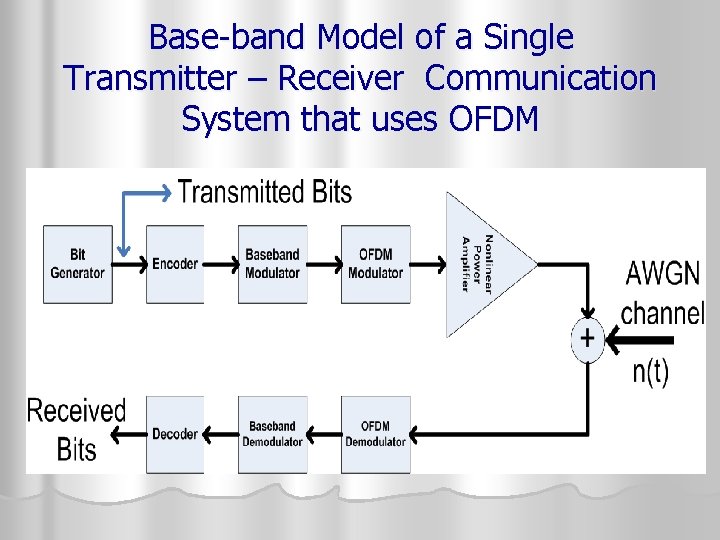
Base-band Model of a Single Transmitter – Receiver Communication System that uses OFDM
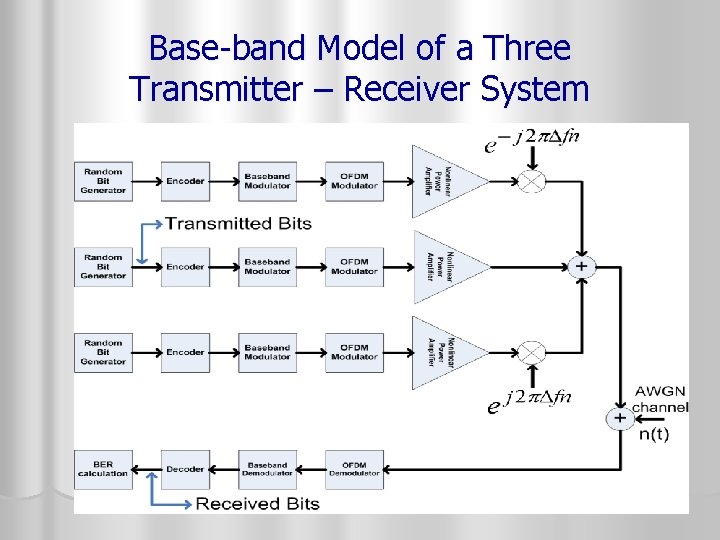
Two Sources of Distortion In The Received Signal l Additive noise channel between the transmitter and receiver sides l Nonlinearity of the power amplifier at the end of the transmitter side
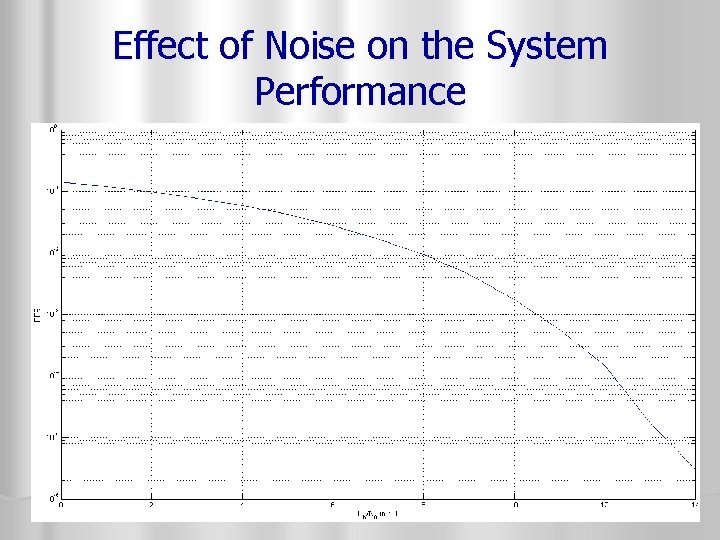
Effect of Noise on the System Performance
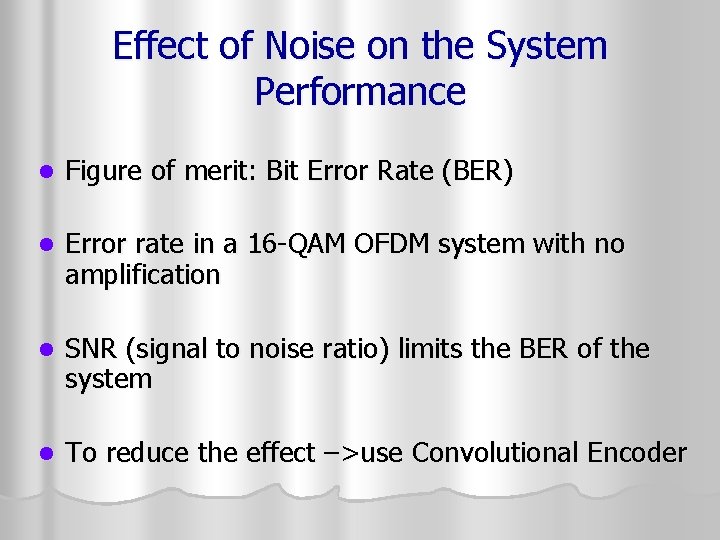
Effect of Noise on the System Performance l Figure of merit: Bit Error Rate (BER) l Error rate in a 16 -QAM OFDM system with no amplification l SNR (signal to noise ratio) limits the BER of the system l To reduce the effect –>use Convolutional Encoder
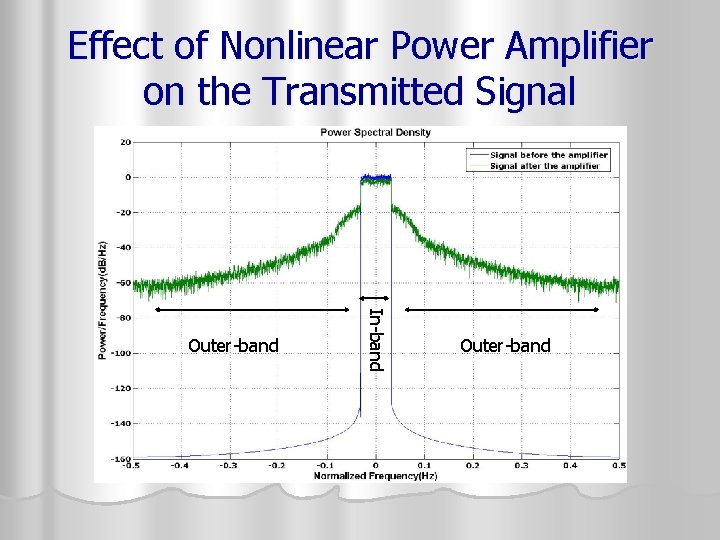
Effect of Nonlinear Power Amplifier on the Transmitted Signal In-band Outer-band
Base-band Model of a Three Transmitter – Receiver System
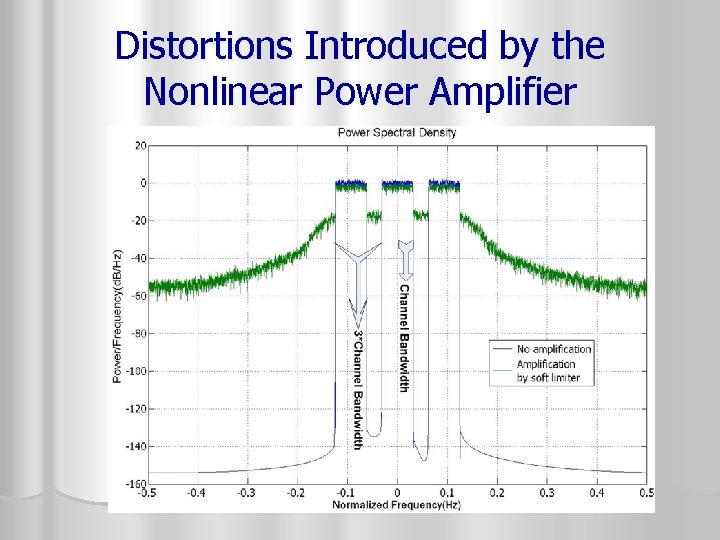
Distortions Introduced by the Nonlinear Power Amplifier l In a single transmitter – receiver system l l In-band distortion In a multiple transmitter – receiver system In-band distortion l Outer-band distortion l
Distortions Introduced by the Nonlinear Power Amplifier
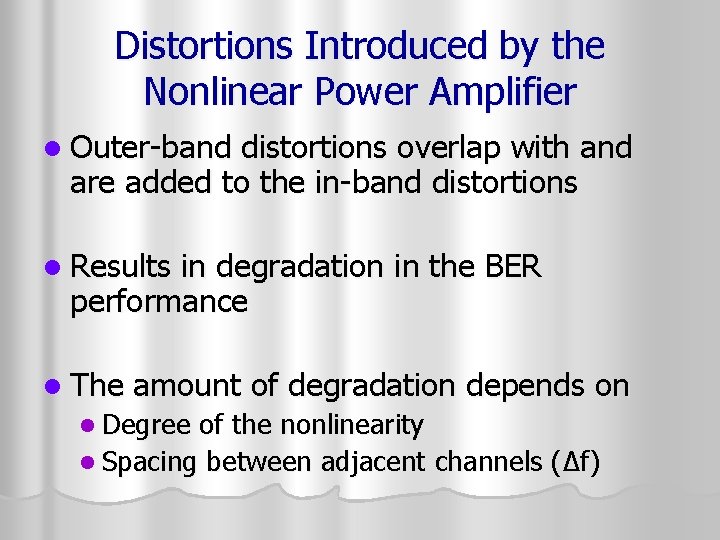
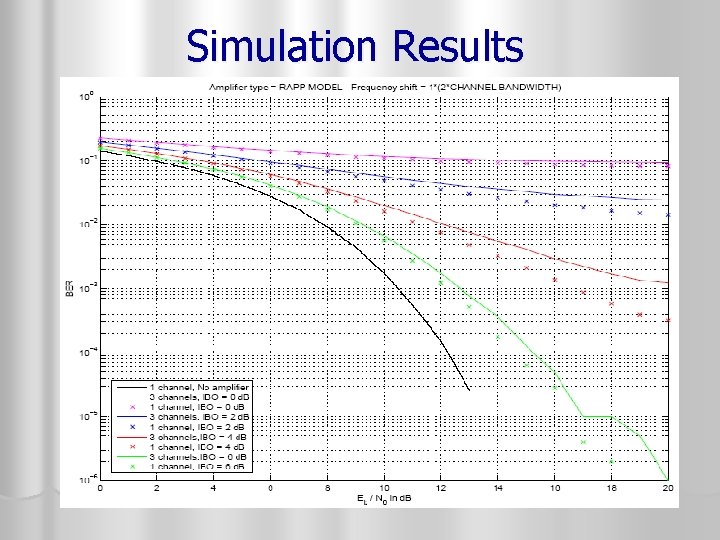
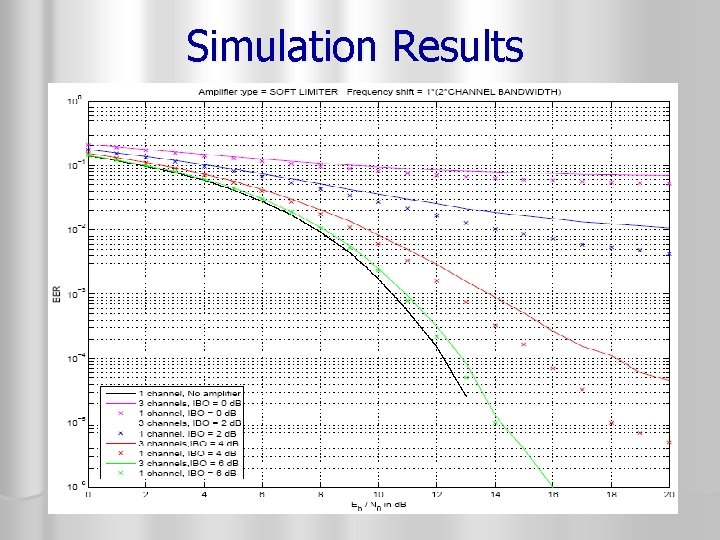
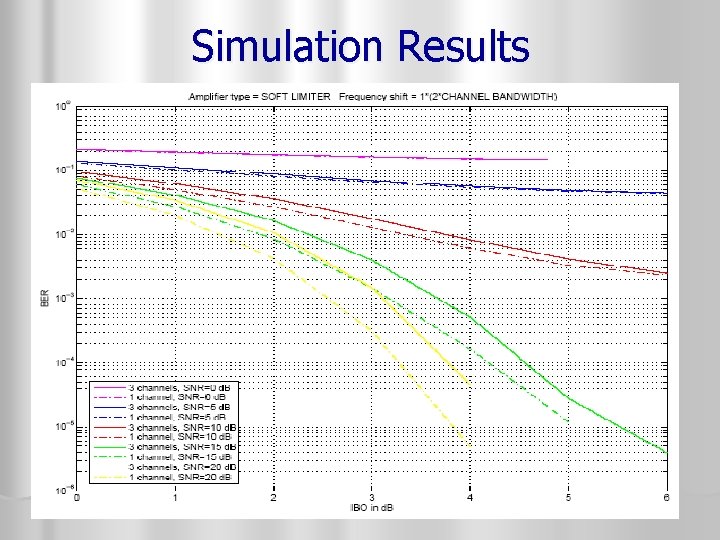
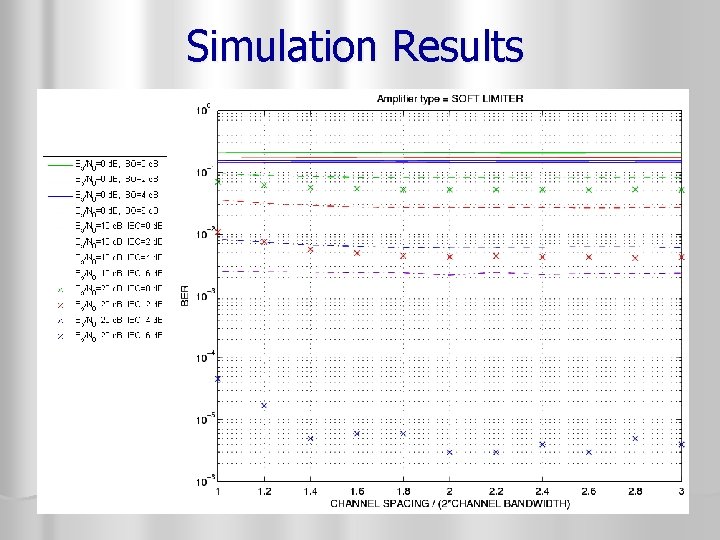
Distortions Introduced by the Nonlinear Power Amplifier l Outer-band distortions overlap with and are added to the in-band distortions l Results in degradation in the BER performance l The amount of degradation depends on l Degree of the nonlinearity l Spacing between adjacent channels (Δf)
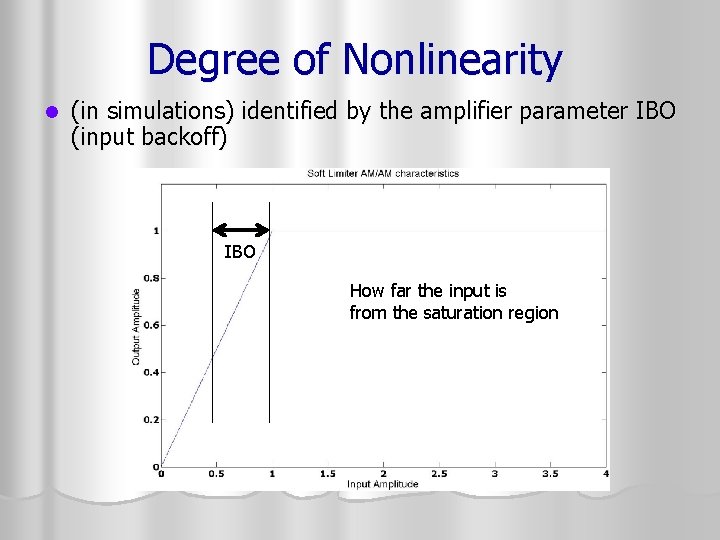
Degree of Nonlinearity l (in simulations) identified by the amplifier parameter IBO (input backoff) IBO How far the input is from the saturation region
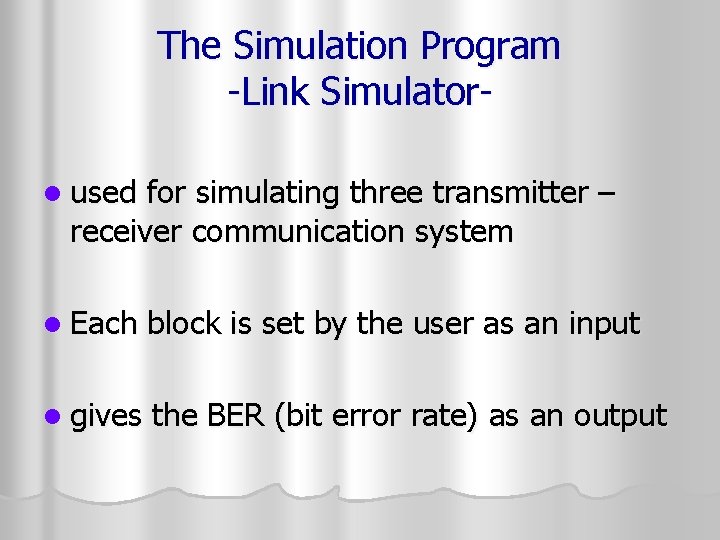
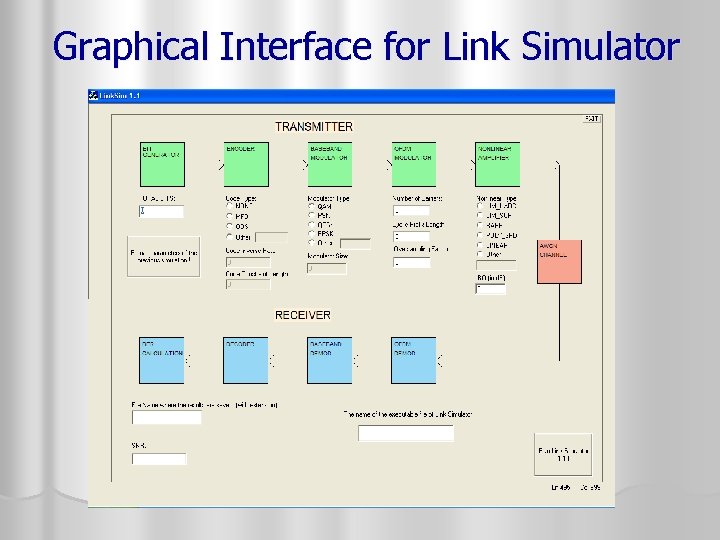
The Simulation Program -Link Simulatorl used for simulating three transmitter – receiver communication system l Each block is set by the user as an input l gives the BER (bit error rate) as an output
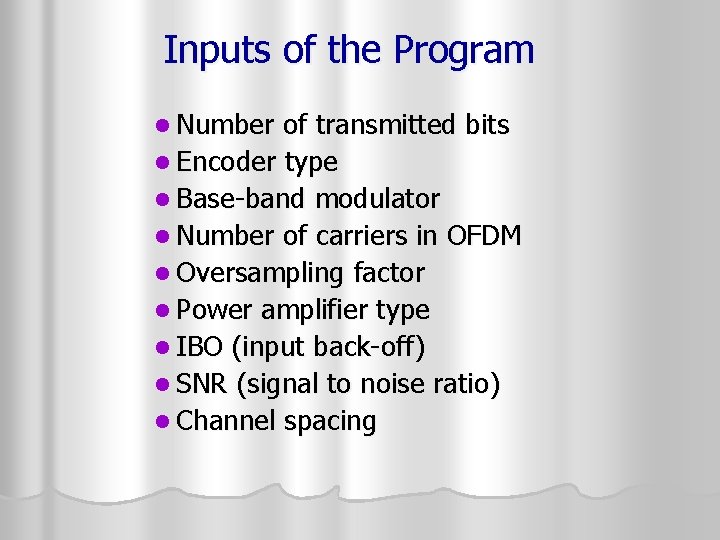
Inputs of the Program l Number of transmitted bits l Encoder type l Base-band modulator l Number of carriers in OFDM l Oversampling factor l Power amplifier type l IBO (input back-off) l SNR (signal to noise ratio) l Channel spacing
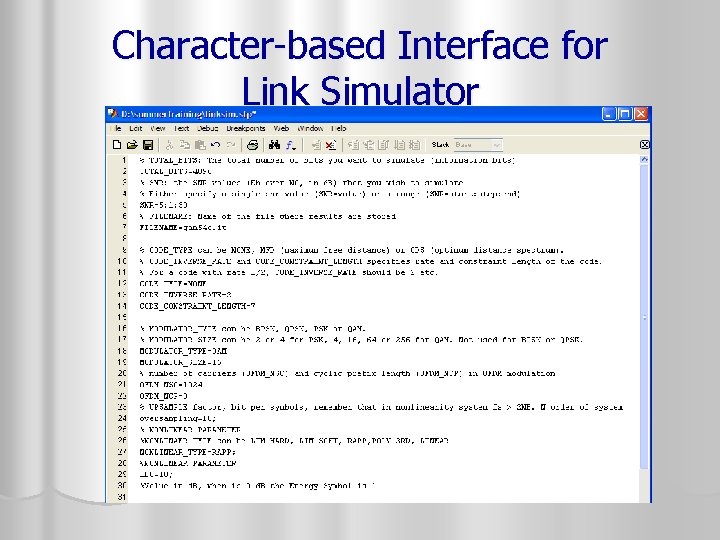
Character-based Interface for Link Simulator
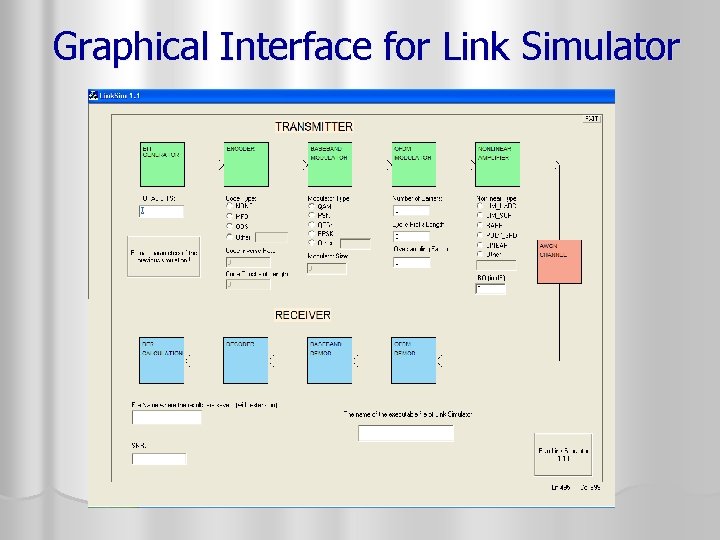
Graphical Interface for Link Simulator
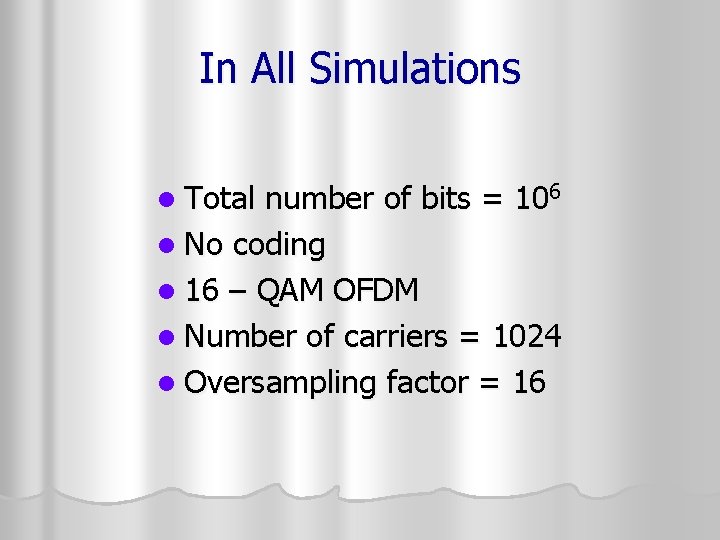
In All Simulations l Total number of bits = 106 l No coding l 16 – QAM OFDM l Number of carriers = 1024 l Oversampling factor = 16
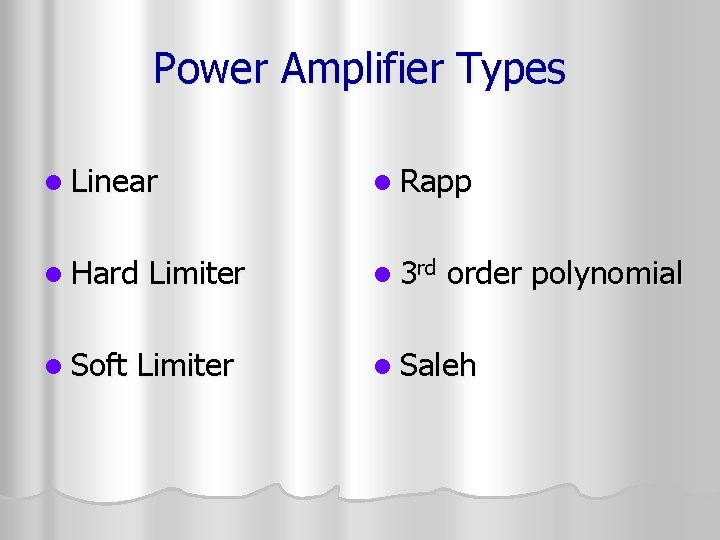
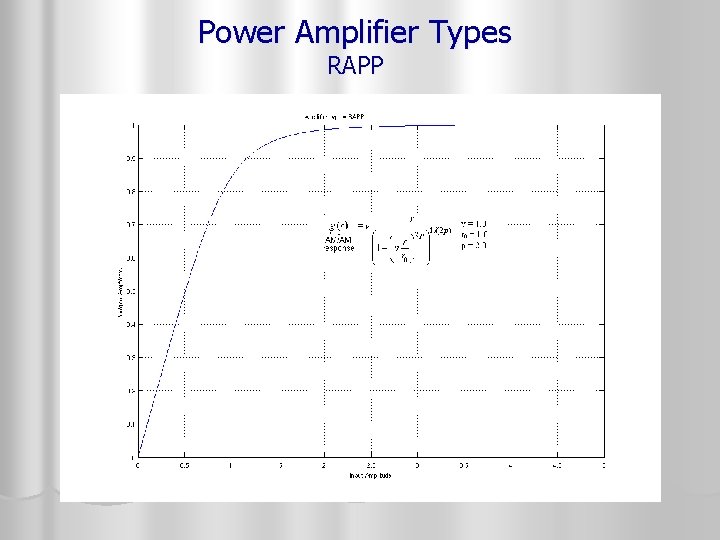
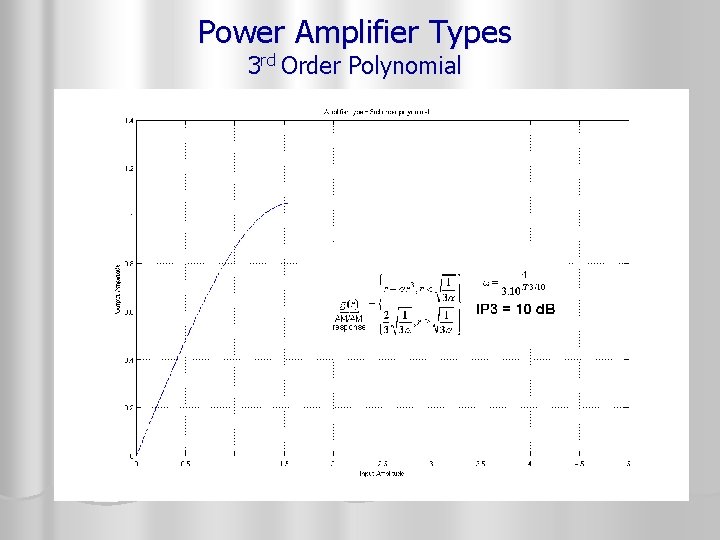
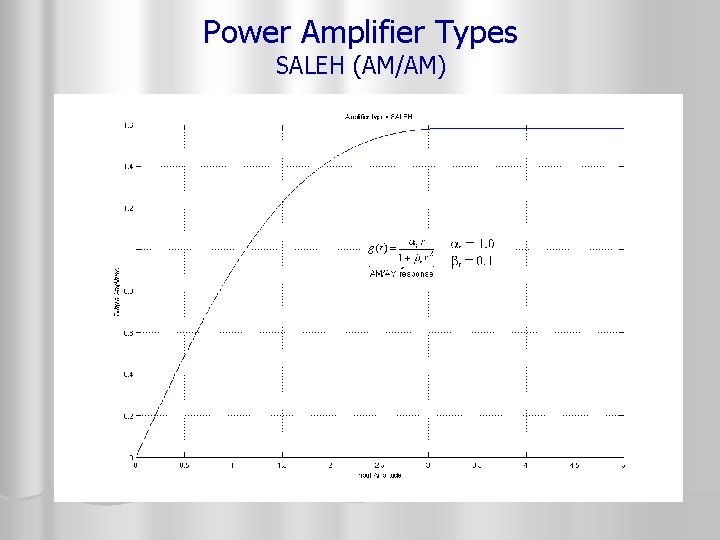
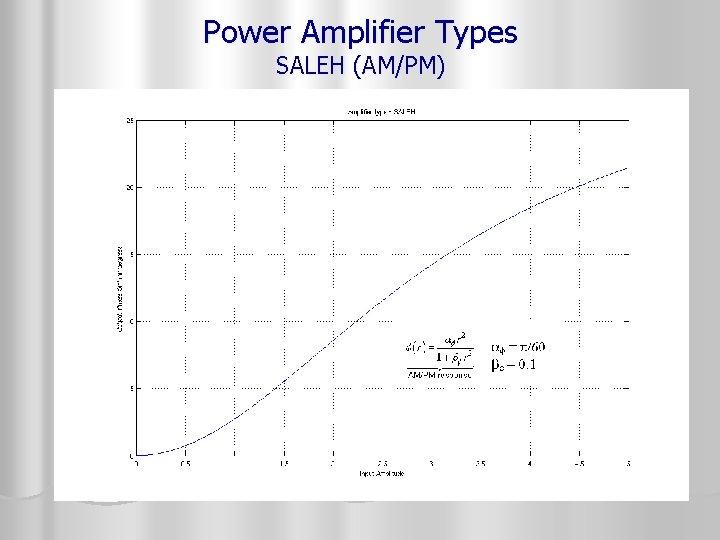
Power Amplifier Types l Linear l Rapp l Hard l 3 rd l Soft Limiter order polynomial l Saleh
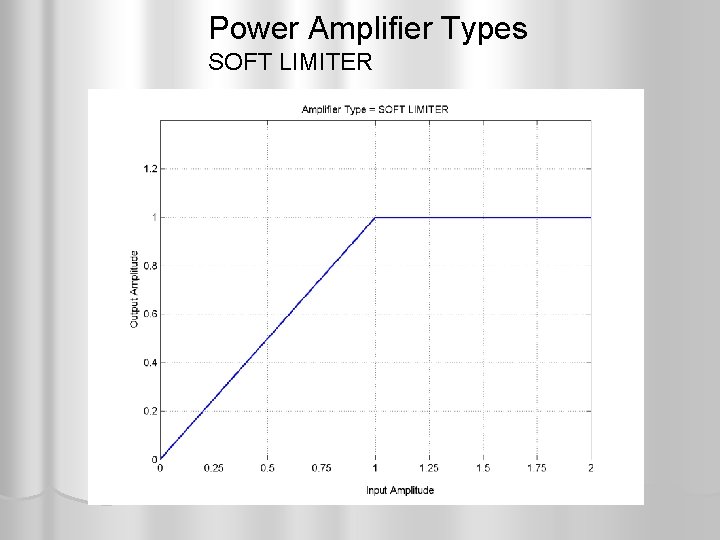
Power Amplifier Types SOFT LIMITER
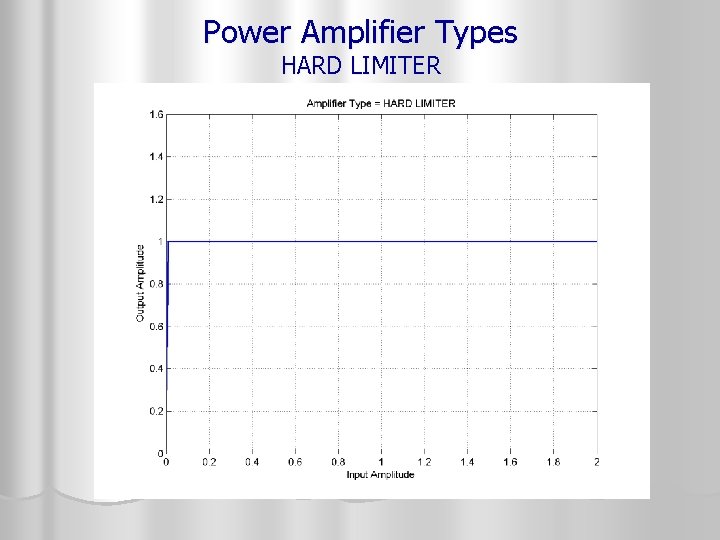
Power Amplifier Types HARD LIMITER
Power Amplifier Types RAPP
Power Amplifier Types 3 rd Order Polynomial
Power Amplifier Types SALEH (AM/AM)
Power Amplifier Types SALEH (AM/PM)
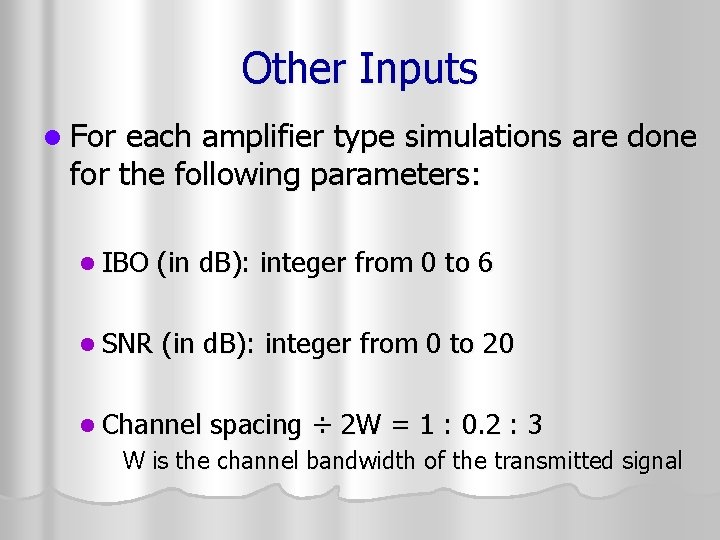
Other Inputs l For each amplifier type simulations are done for the following parameters: l IBO (in d. B): integer from 0 to 6 l SNR (in d. B): integer from 0 to 20 l Channel spacing ÷ 2 W = 1 : 0. 2 : 3 W is the channel bandwidth of the transmitted signal
Graphical Interface for Link Simulator
Simulation Results
Simulation Results
Simulation Results
Simulation Results