
Simulation of Moisture Ingression in Microelectronics Package to

- Slides: 13
Simulation of Moisture Ingression in Microelectronics Package to Correlate Accelerated Tests and Field Conditions Reliability COMSOL Conference Cambridge, September 24 -26, 2019 Simone Sala
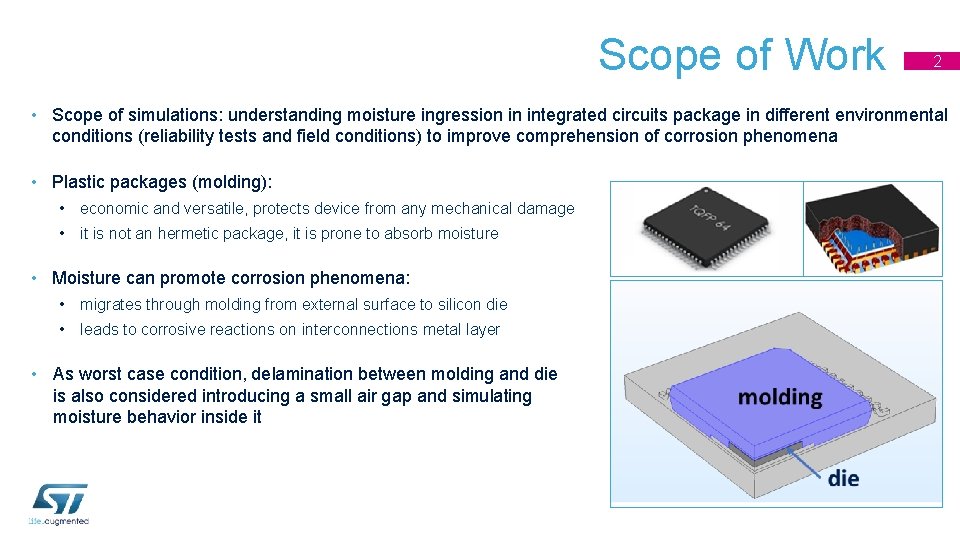
Scope of Work 2 • Scope of simulations: understanding moisture ingression in integrated circuits package in different environmental conditions (reliability tests and field conditions) to improve comprehension of corrosion phenomena • Plastic packages (molding): • economic and versatile, protects device from any mechanical damage • it is not an hermetic package, it is prone to absorb moisture • Moisture can promote corrosion phenomena: • migrates through molding from external surface to silicon die • leads to corrosive reactions on interconnections metal layer • As worst case condition, delamination between molding and die is also considered introducing a small air gap and simulating moisture behavior inside it
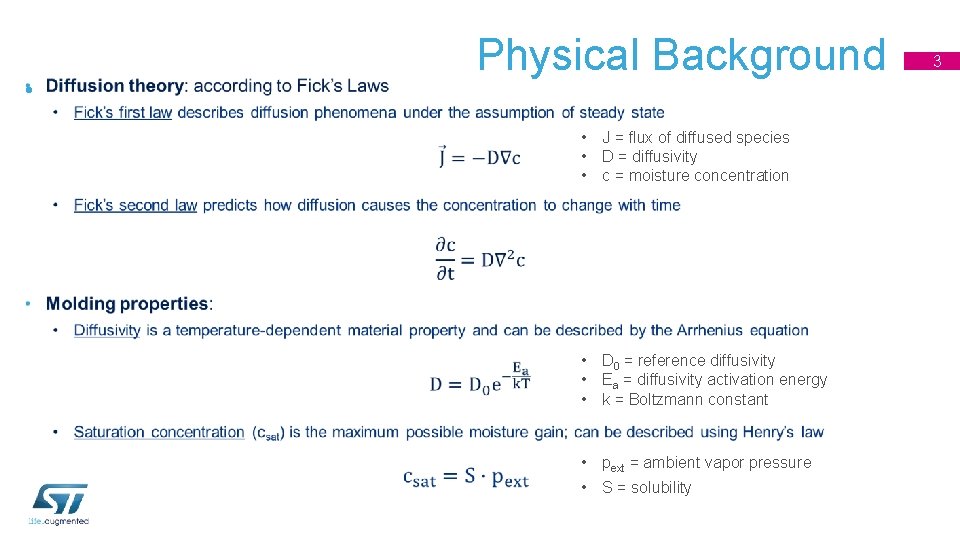
• Physical Background • J = flux of diffused species • D = diffusivity • c = moisture concentration • D 0 = reference diffusivity • Ea = diffusivity activation energy • k = Boltzmann constant • pext = ambient vapor pressure • S = solubility 3
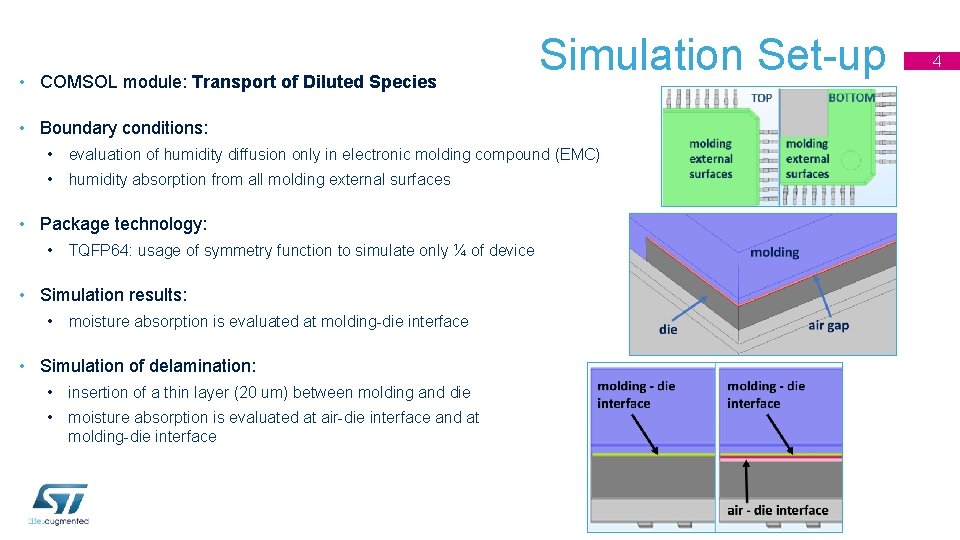
• COMSOL module: Transport of Diluted Species Simulation Set-up • Boundary conditions: • evaluation of humidity diffusion only in electronic molding compound (EMC) • humidity absorption from all molding external surfaces • Package technology: • TQFP 64: usage of symmetry function to simulate only ¼ of device • Simulation results: • moisture absorption is evaluated at molding-die interface • Simulation of delamination: • insertion of a thin layer (20 um) between molding and die • moisture absorption is evaluated at air-die interface and at molding-die interface 4
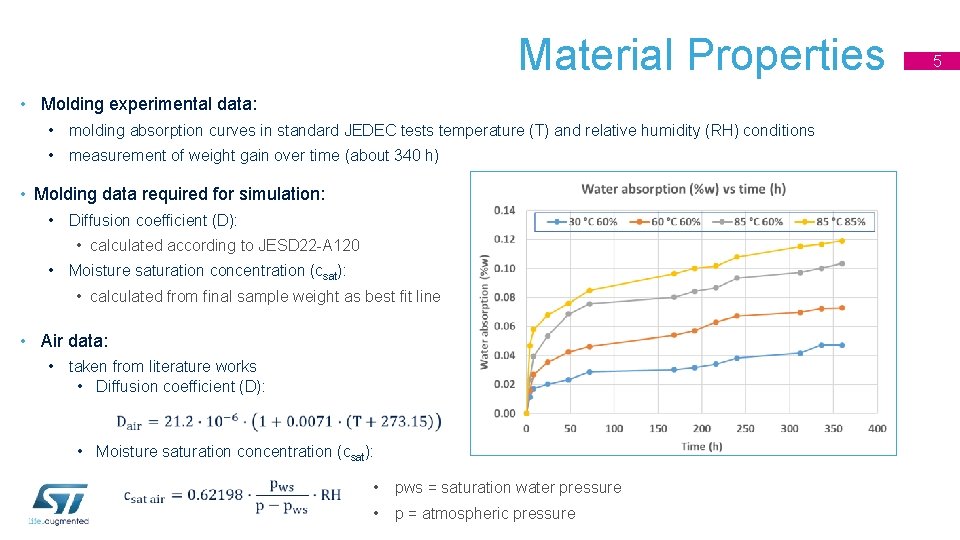
Material Properties • Molding experimental data: • molding absorption curves in standard JEDEC tests temperature (T) and relative humidity (RH) conditions • measurement of weight gain over time (about 340 h) • Molding data required for simulation: • Diffusion coefficient (D): • calculated according to JESD 22 -A 120 • Moisture saturation concentration (csat): • calculated from final sample weight as best fit line • Air data: • taken from literature works • Diffusion coefficient (D): • Moisture saturation concentration (csat): • pws = saturation water pressure • p = atmospheric pressure 5
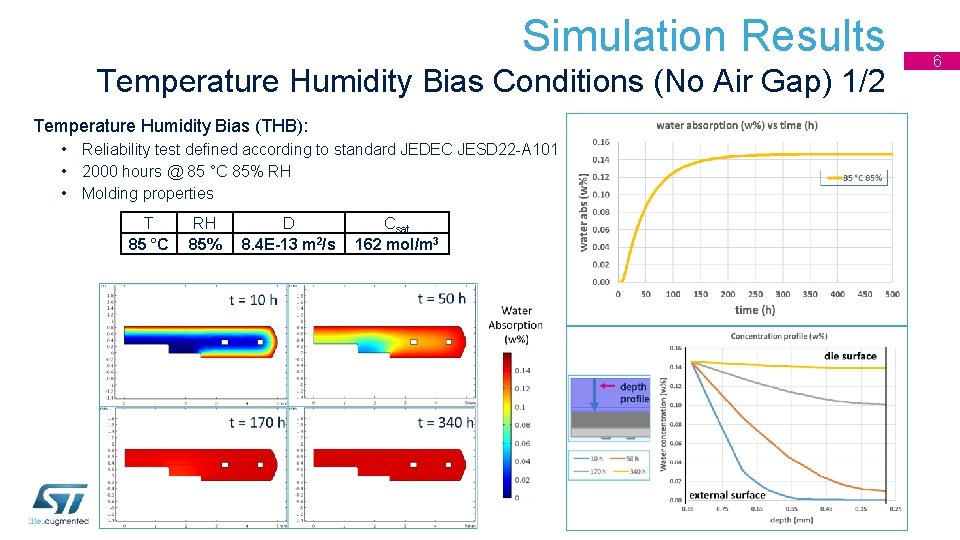
Simulation Results Temperature Humidity Bias Conditions (No Air Gap) 1/2 Temperature Humidity Bias (THB): • Reliability test defined according to standard JEDEC JESD 22 -A 101 • 2000 hours @ 85 °C 85% RH • Molding properties T 85 °C RH 85% D 8. 4 E-13 m 2/s Csat 162 mol/m 3 6
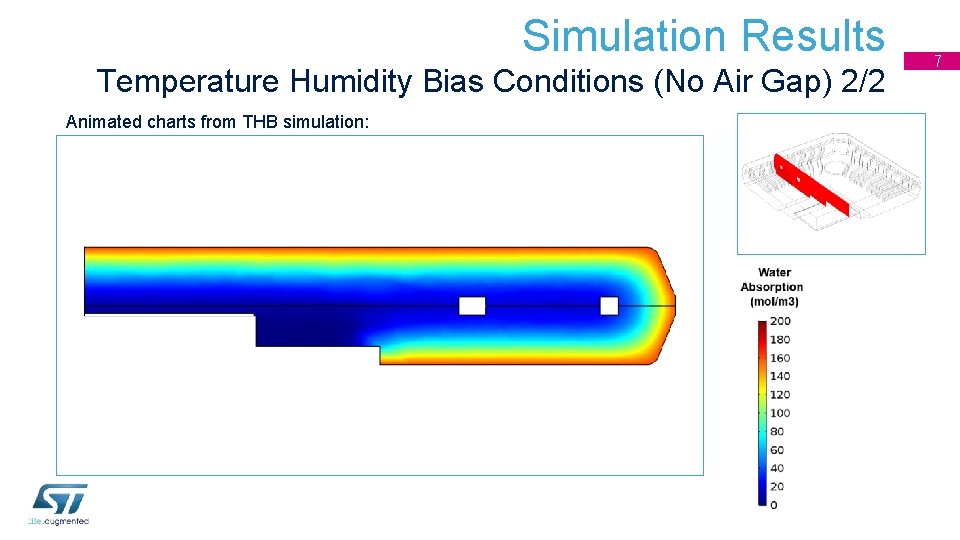
Simulation Results Temperature Humidity Bias Conditions (No Air Gap) 2/2 Animated charts from THB simulation: 7
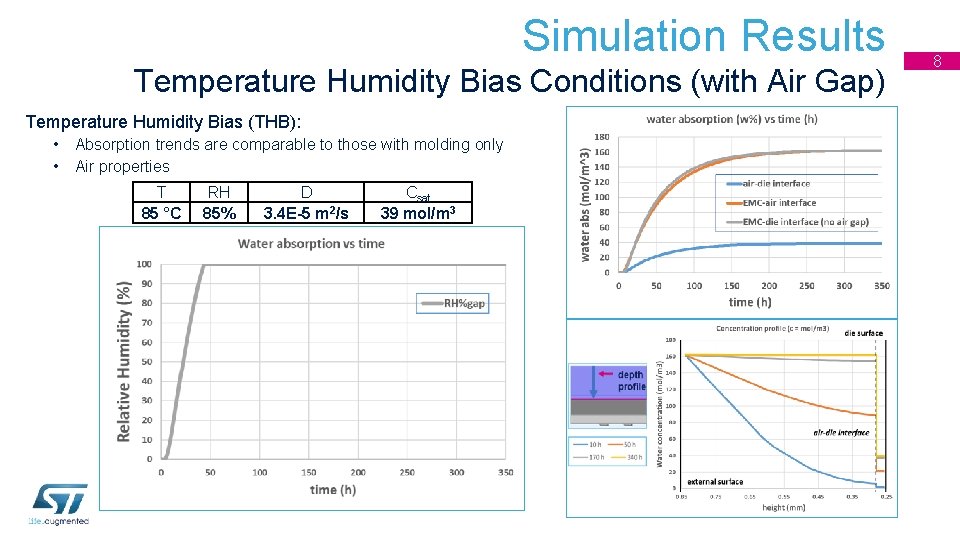
Simulation Results Temperature Humidity Bias Conditions (with Air Gap) Temperature Humidity Bias (THB): • Absorption trends are comparable to those with molding only • Air properties T 85 °C RH 85% D 3. 4 E-5 m 2/s Csat 39 mol/m 3 8
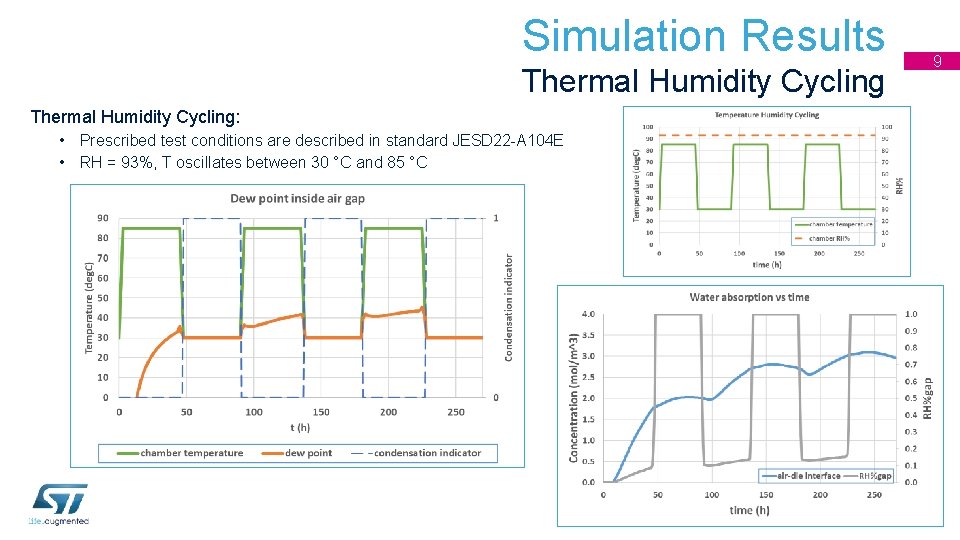
Simulation Results Thermal Humidity Cycling: • Prescribed test conditions are described in standard JESD 22 -A 104 E • RH = 93%, T oscillates between 30 °C and 85 °C 9
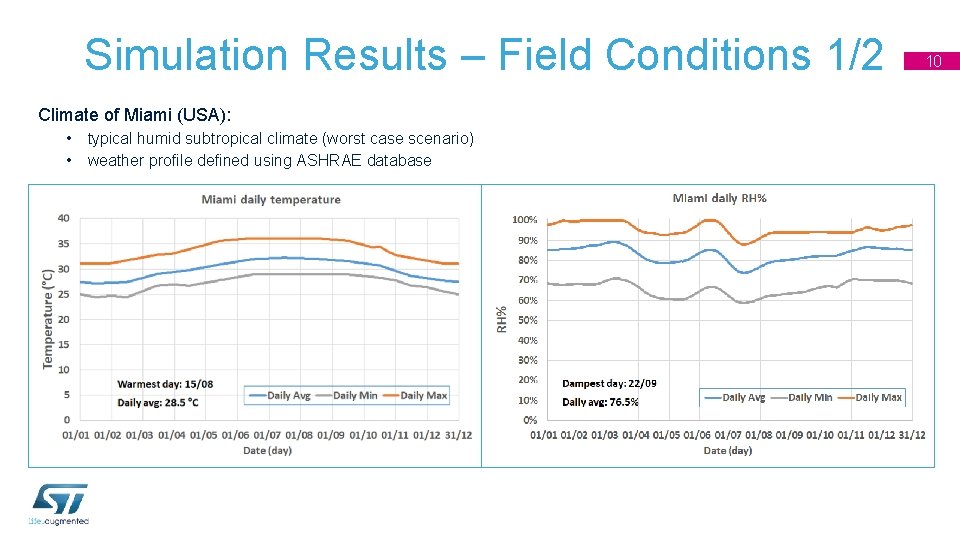
Simulation Results – Field Conditions 1/2 Climate of Miami (USA): • typical humid subtropical climate (worst case scenario) • weather profile defined using ASHRAE database 10
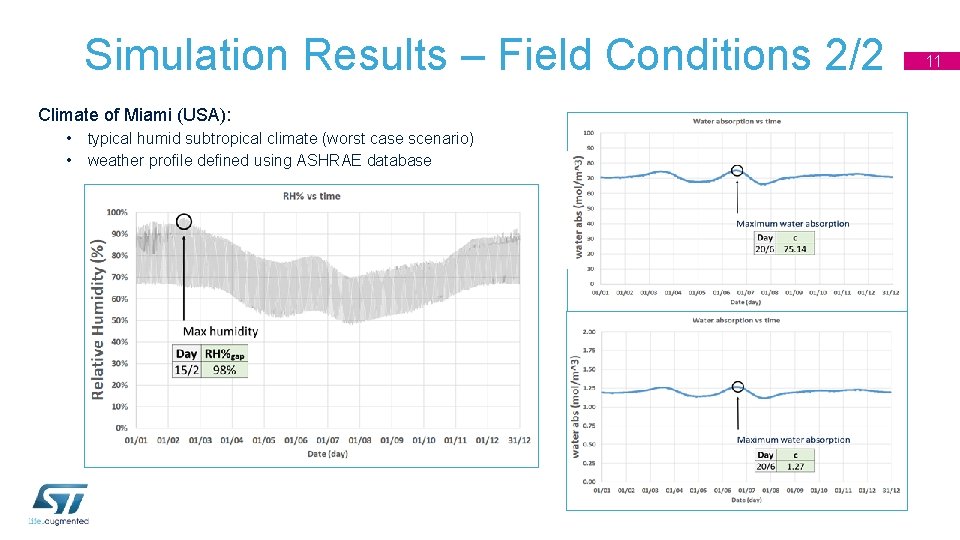
Simulation Results – Field Conditions 2/2 Climate of Miami (USA): • typical humid subtropical climate (worst case scenario) • weather profile defined using ASHRAE database 11
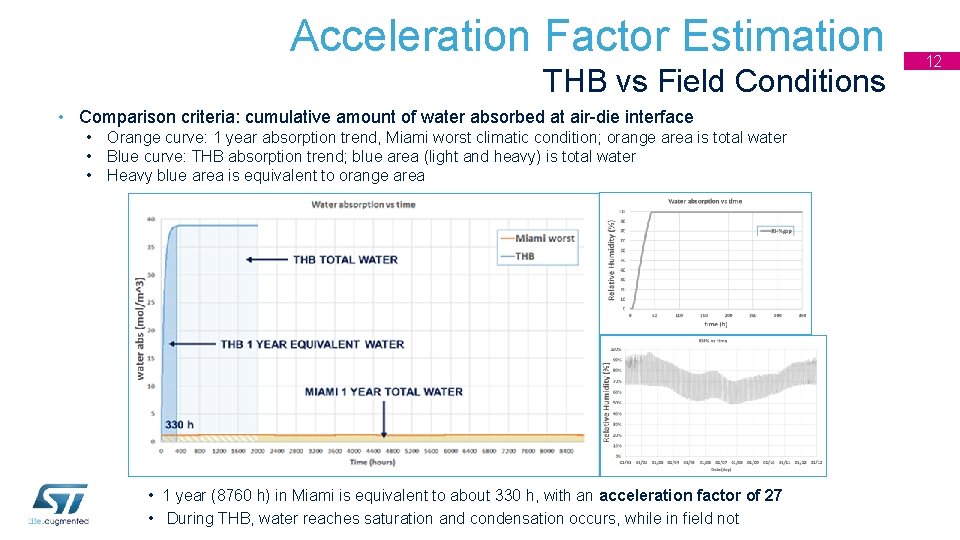
Acceleration Factor Estimation THB vs Field Conditions • Comparison criteria: cumulative amount of water absorbed at air-die interface • Orange curve: 1 year absorption trend, Miami worst climatic condition; orange area is total water • Blue curve: THB absorption trend; blue area (light and heavy) is total water • Heavy blue area is equivalent to orange area • 1 year (8760 h) in Miami is equivalent to about 330 h, with an acceleration factor of 27 • During THB, water reaches saturation and condensation occurs, while in field not 12
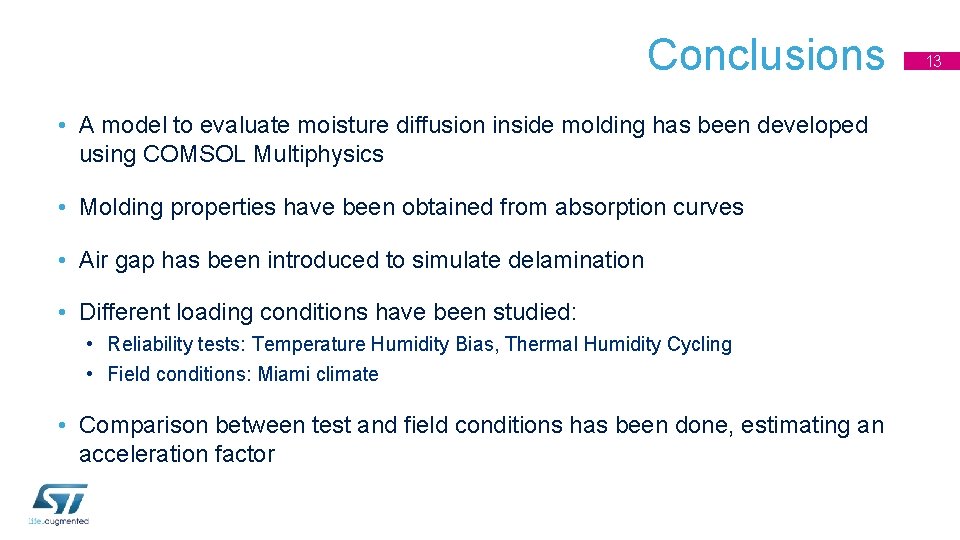
Conclusions • A model to evaluate moisture diffusion inside molding has been developed using COMSOL Multiphysics • Molding properties have been obtained from absorption curves • Air gap has been introduced to simulate delamination • Different loading conditions have been studied: • Reliability tests: Temperature Humidity Bias, Thermal Humidity Cycling • Field conditions: Miami climate • Comparison between test and field conditions has been done, estimating an acceleration factor 13