
Simulation of Memory Management Using Paging Mechanism in



- Slides: 36
Simulation of Memory Management Using Paging Mechanism in Operating Systems Tarek M. Sobh and Yanchun Liu Presented by: Bei Wang University of Bridgeport
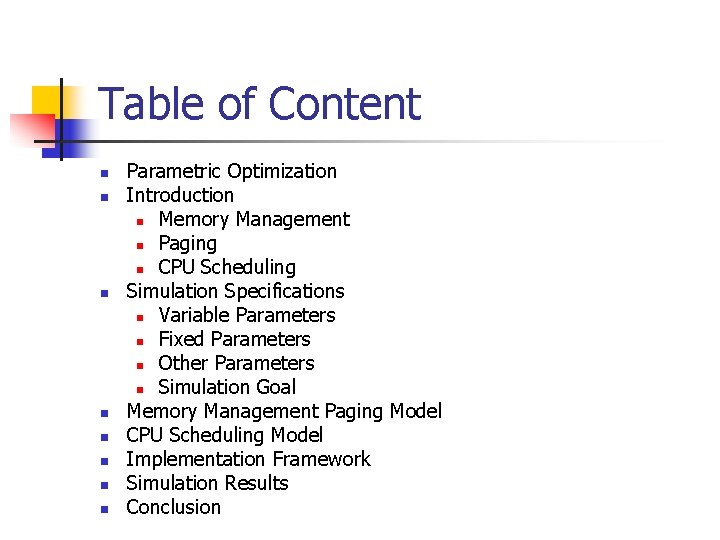
Table of Content n n n n Parametric Optimization Introduction n Memory Management n Paging n CPU Scheduling Simulation Specifications n Variable Parameters n Fixed Parameters n Other Parameters n Simulation Goal Memory Management Paging Model CPU Scheduling Model Implementation Framework Simulation Results Conclusion
Parametric Optimization An Alternative Approach of OS Study n n n What is the critical OS function? What are the parameters involved? How to measure the performance? What is the relationship between parameter and performance? How to achieve optimization using simulation techniques?
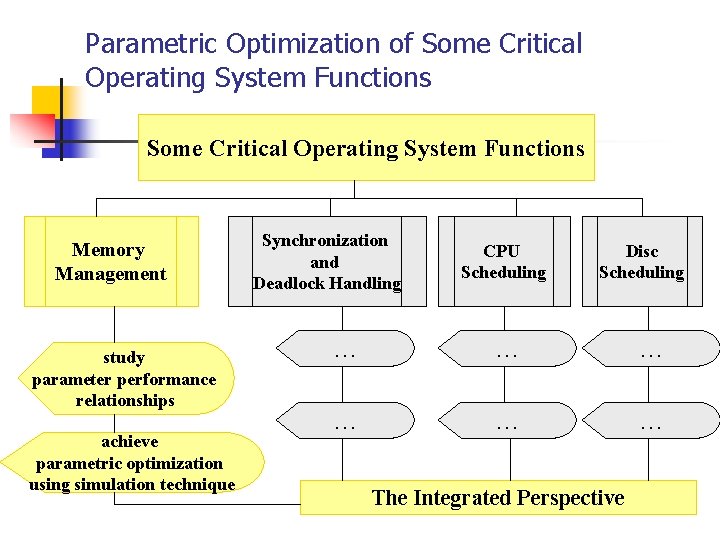
Parametric Optimization of Some Critical Operating System Functions Memory Management study parameter performance relationships achieve parametric optimization using simulation technique Synchronization and Deadlock Handling CPU Scheduling Disc Scheduling … … … The Integrated Perspective
Introduction n n Multi-Process OS Memory Management Paging Mechanism CPU Scheduling
Memory Management n n n Keep track of memory in use Memory allocation Manage swapping between main memory and disk
Memory Management (Cont. ) n Three disadvantage related to memory management are n n n Synchronization Redundancy Fragmentation
Memory Management (Cont. ) Parameters involved n n n n n Memory Size Disc access time (transfer time, latency and seek) Time slot for RR Compaction thresholds (percentage and hole size) RAM access time Fitting Algorithm Disc Scheduling algorithm choice (FIFO, SSTF, SCAN, LOOK, etc) Disc Structure and Capacity (Surfaces/tracks/etc. ) Disc writing mechanism (where to write back processed pages)
Paging n n Paging entails division of physical memory into many equal-sized frames When a process is to be executed, its pages are loaded into any available memory frames
Paging Parameters Involved The parameters involved in this memory management scheme are: n Page Size n Page Replacement Algorithms, such as First-In-First-Out, Least-Recent-Used, Least-Frequently-Used and Random
Paging Effect of Page Size n n n Large page size: internal fragmentation Small page size: requires large amounts of memory space to be allocated for page tables and more memory accesses potentially Finding an optimal page size: not easy, dependent on the process mix and the pattern of access.
Paging Effect of Page Replacement Algorithms n n n LRU, FIFO, LFU and Random replacement are four of the more common schemes in use LRU is often used and is considered to be quite good LRU may require substantial hardware assistance
Paging Performance Measures n n n Average Waiting Time Average Turnaround Time CPU utilization CPU throughput Replacement ratio (The ratio of number of page replacement to total number page accesses )
CPU Scheduling n n Round Robin Mechanism Scheduling Criteria
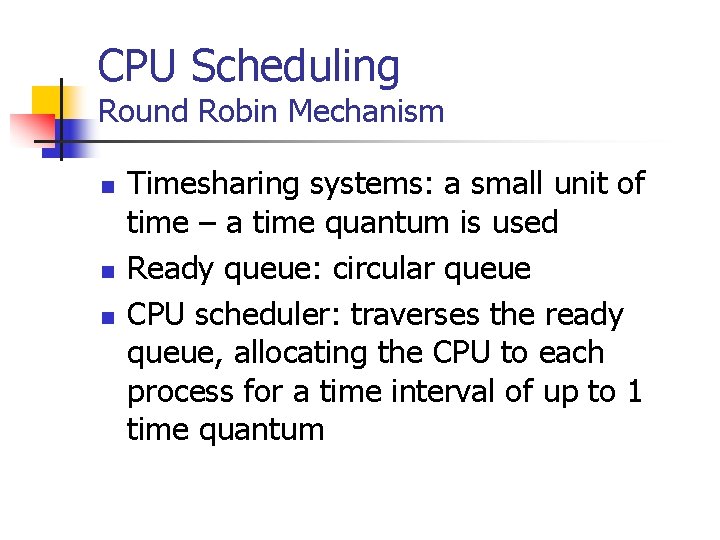
CPU Scheduling Round Robin Mechanism n n n Timesharing systems: a small unit of time – a time quantum is used Ready queue: circular queue CPU scheduler: traverses the ready queue, allocating the CPU to each process for a time interval of up to 1 time quantum
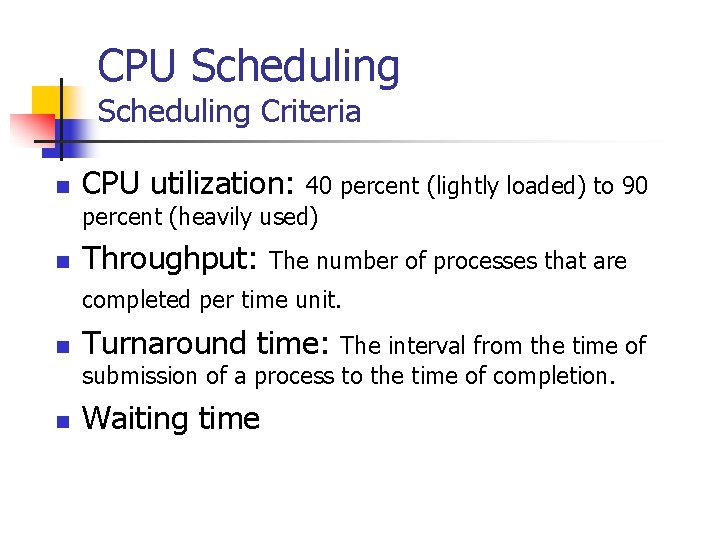
CPU Scheduling Criteria n CPU utilization: n Throughput: 40 percent (lightly loaded) to 90 percent (heavily used) The number of processes that are completed per time unit. n Turnaround time: n Waiting time The interval from the time of submission of a process to the time of completion.
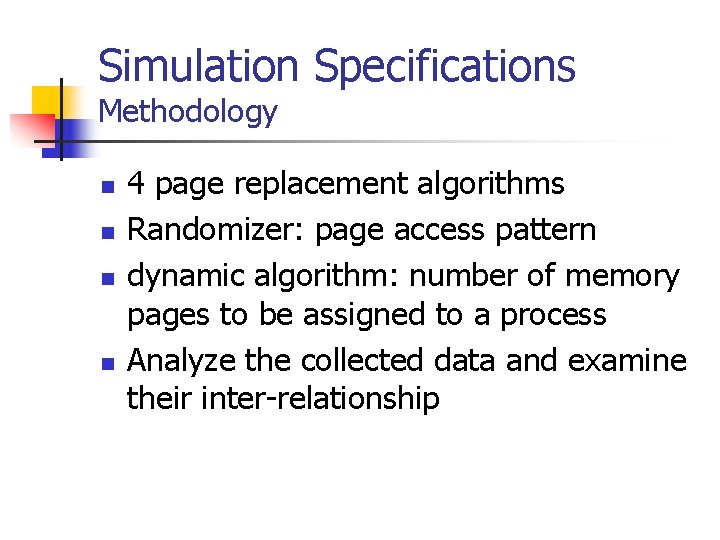
Simulation Specifications Methodology n n 4 page replacement algorithms Randomizer: page access pattern dynamic algorithm: number of memory pages to be assigned to a process Analyze the collected data and examine their inter-relationship
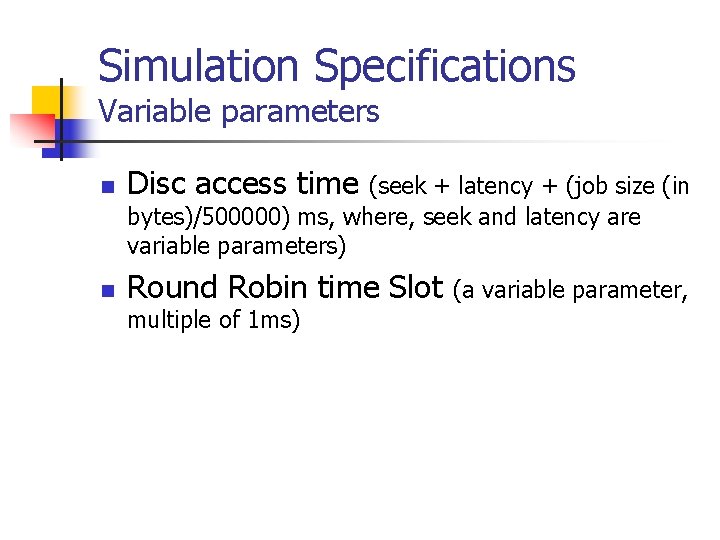
Simulation Specifications Variable parameters n Disc access time n Round Robin time Slot (seek + latency + (job size (in bytes)/500000) ms, where, seek and latency are variable parameters) multiple of 1 ms) (a variable parameter,
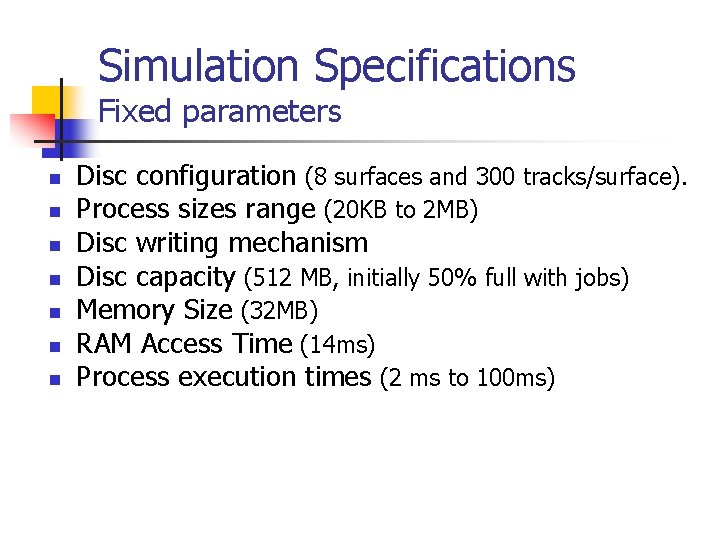
Simulation Specifications Fixed parameters n n n n Disc configuration (8 surfaces and 300 tracks/surface). Process sizes range (20 KB to 2 MB) Disc writing mechanism Disc capacity (512 MB, initially 50% full with jobs) Memory Size (32 MB) RAM Access Time (14 ms) Process execution times (2 ms to 100 ms)
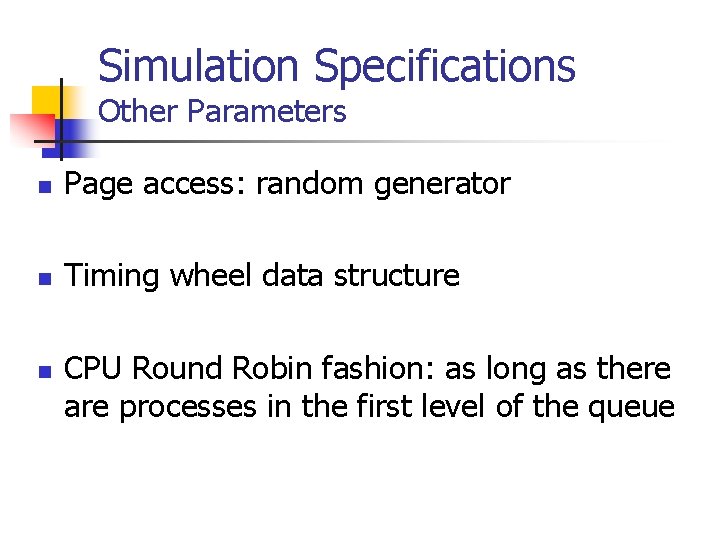
Simulation Specifications Other Parameters n Page access: random generator n Timing wheel data structure n CPU Round Robin fashion: as long as there are processes in the first level of the queue
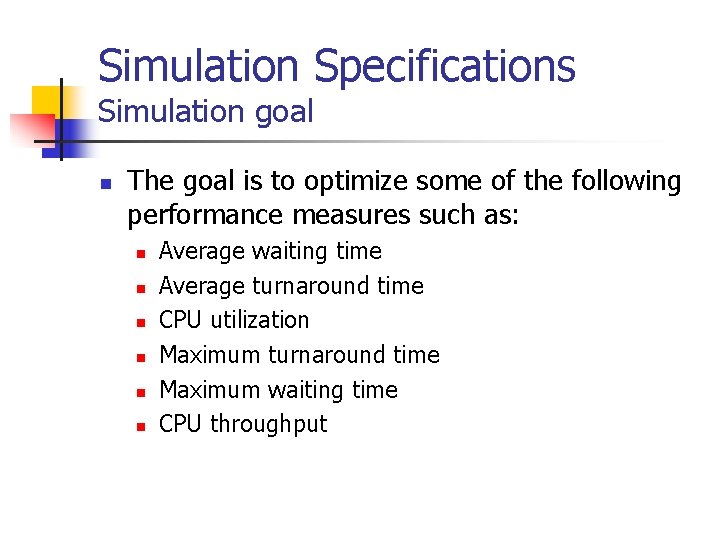
Simulation Specifications Simulation goal n The goal is to optimize some of the following performance measures such as: n n n Average waiting time Average turnaround time CPU utilization Maximum turnaround time Maximum waiting time CPU throughput
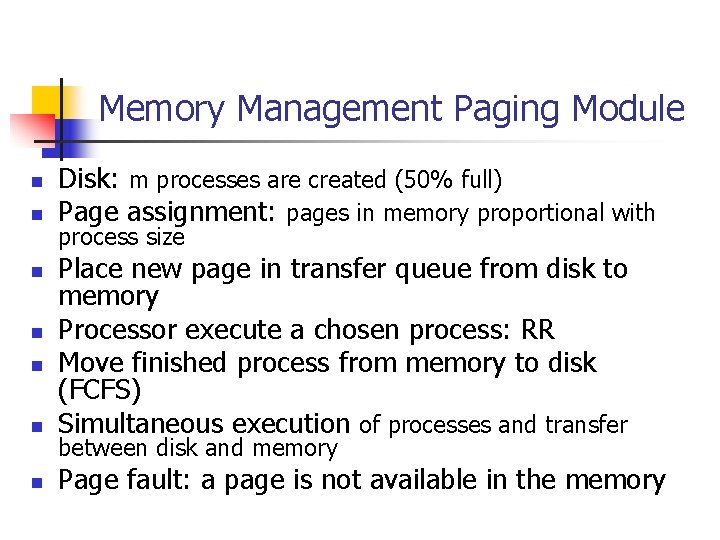
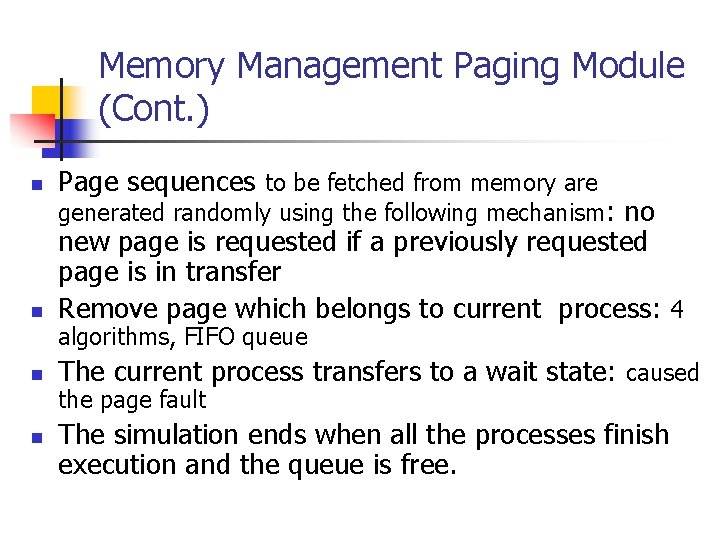
Memory Management Paging Module n n Disk: m processes are created (50% full) Page assignment: pages in memory proportional with process size n Place new page in transfer queue from disk to memory Processor execute a chosen process: RR Move finished process from memory to disk (FCFS) Simultaneous execution of processes and transfer n Page fault: a page is not available in the memory n n n between disk and memory
Memory Management Paging Module (Cont. ) n Page sequences to be fetched from memory are n new page is requested if a previously requested page is in transfer Remove page which belongs to current process: 4 n The current process transfers to a wait state: caused n generated randomly using the following mechanism: no algorithms, FIFO queue the page fault The simulation ends when all the processes finish execution and the queue is free.
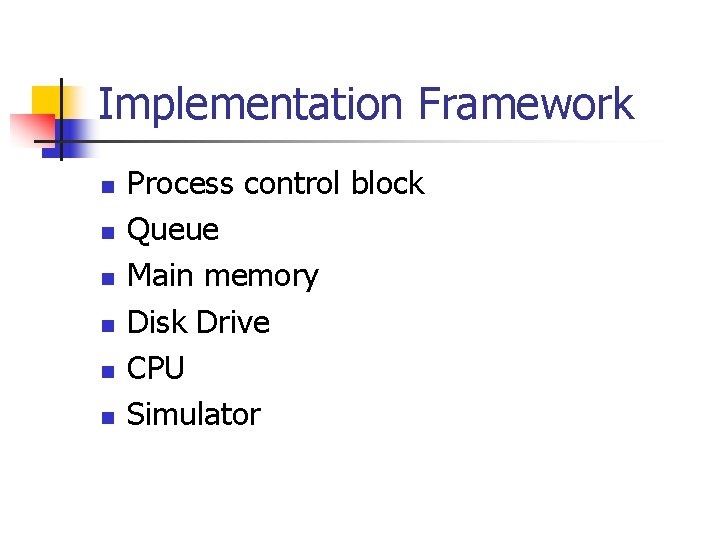
Implementation Framework n n n Process control block Queue Main memory Disk Drive CPU Simulator
Simulation Results n n n Different combinations of parameters Eliminate the worst performing parameter combinations For example, if the simulation shows that a large time slot is superior to small ones, only large time slots are used in the simulation.
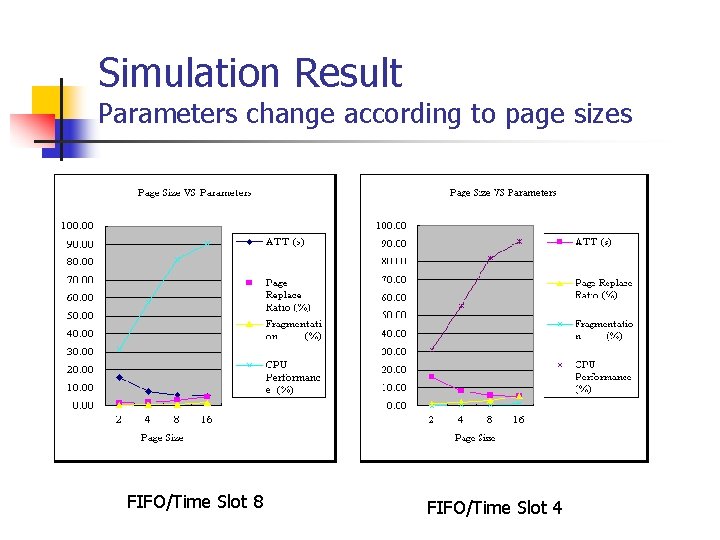
Simulation Result Parameters change according to page sizes FIFO/Time Slot 8 FIFO/Time Slot 4
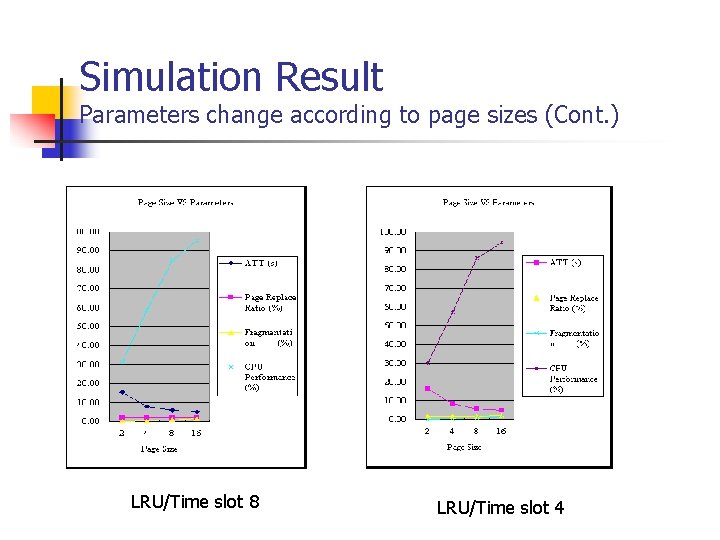
Simulation Result Parameters change according to page sizes (Cont. ) LRU/Time slot 8 LRU/Time slot 4
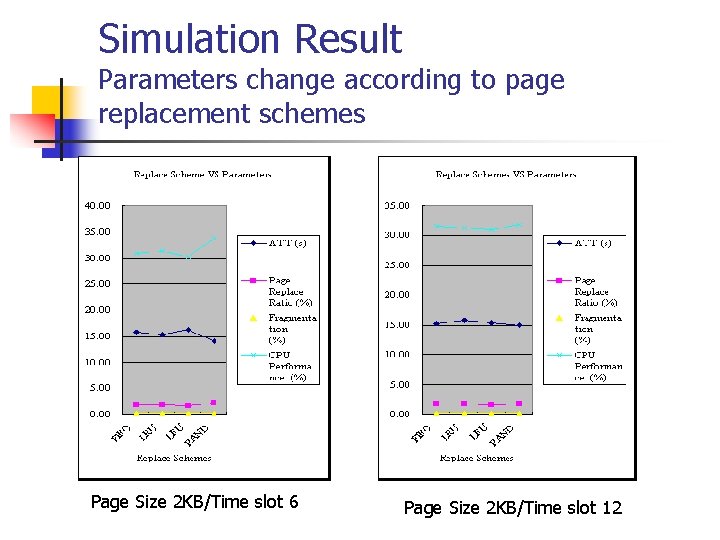
Simulation Result Parameters change according to page replacement schemes Page Size 2 KB/Time slot 6 Page Size 2 KB/Time slot 12
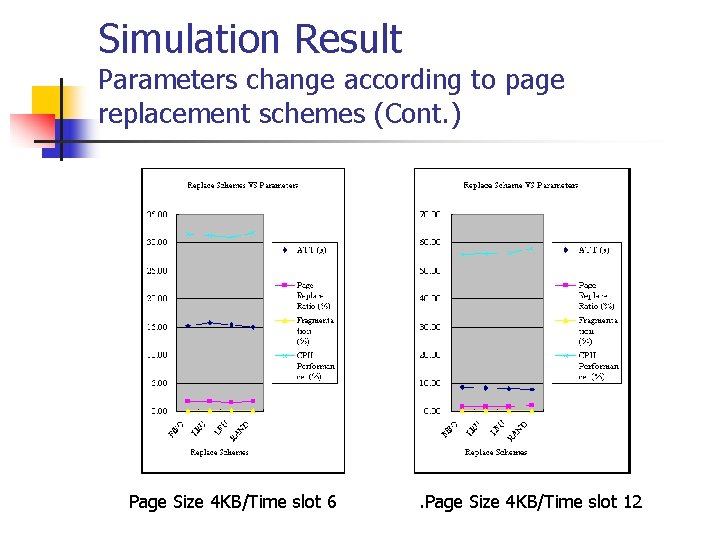
Simulation Result Parameters change according to page replacement schemes (Cont. ) Page Size 4 KB/Time slot 6 . Page Size 4 KB/Time slot 12
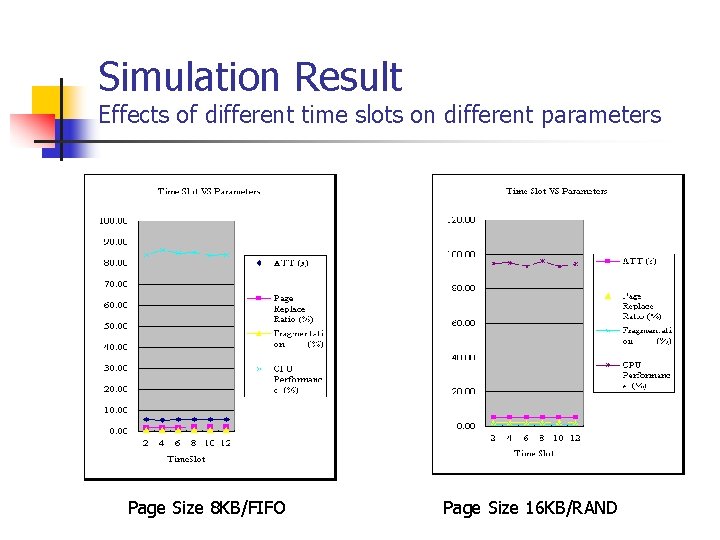
Simulation Result Effects of different time slots on different parameters Page Size 8 KB/FIFO Page Size 16 KB/RAND
Conclusion Parameter Analysis n n Page Size Page Replacement Algorithm Round Robin Time Slot Best Combination of parameters
Conclusion Parameter Analysis (Cont. ) n n n Smaller page: more references in memory longer ATT Smaller page: less internal fragmentation, more disk access time Large page: degeneration to continuous memory scheme; shorten ATT and increase CPU performance
Conclusion Parameter Analysis (Cont. ) n n n Random replacement performs best Page replacement ratio of LFU: high if page size >= 4 KB Small RR time slot: higher context switch time, low CPU utilization, high turnaround time and waiting time
Future Work n n Modify to serve a specific platform or system Test the parameters in extremely multiplexed systems Some other parameters could also be simulated For example, the disk drive searching mechanism affects the turn around time of a process
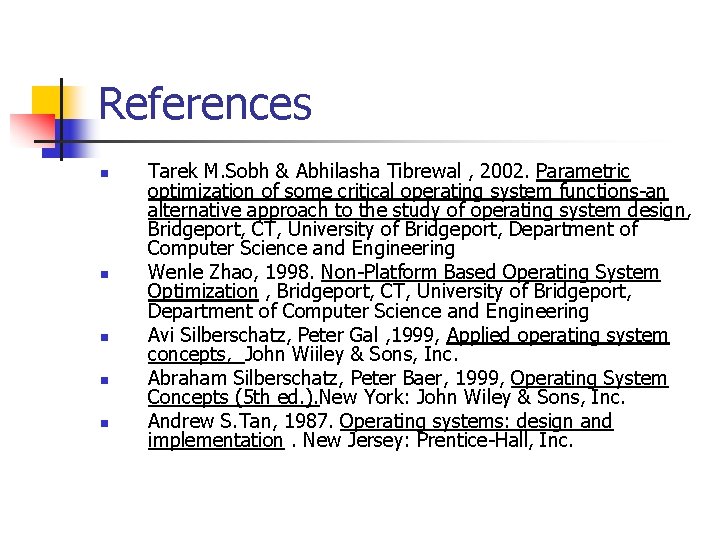
References n n n Tarek M. Sobh & Abhilasha Tibrewal , 2002. Parametric optimization of some critical operating system functions-an alternative approach to the study of operating system design, Bridgeport, CT, University of Bridgeport, Department of Computer Science and Engineering Wenle Zhao, 1998. Non-Platform Based Operating System Optimization , Bridgeport, CT, University of Bridgeport, Department of Computer Science and Engineering Avi Silberschatz, Peter Gal , 1999, Applied operating system concepts, John Wiiley & Sons, Inc. Abraham Silberschatz, Peter Baer, 1999, Operating System Concepts (5 th ed. ). New York: John Wiley & Sons, Inc. Andrew S. Tan, 1987. Operating systems: design and implementation. New Jersey: Prentice-Hall, Inc.
Thank You