
Simulation and calculation tools in building physics The
Simulation and calculation tools in building physics The Horror!!!!! Understanding Energy Modeling
Topics • Definition of energy modeling • Using energy modeling – Appropriate uses – Timing – Who does it • New construction applications • Existing building applications
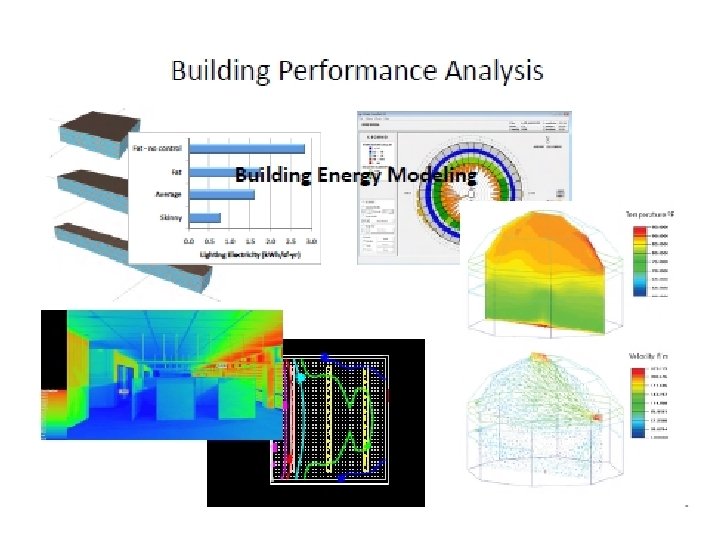
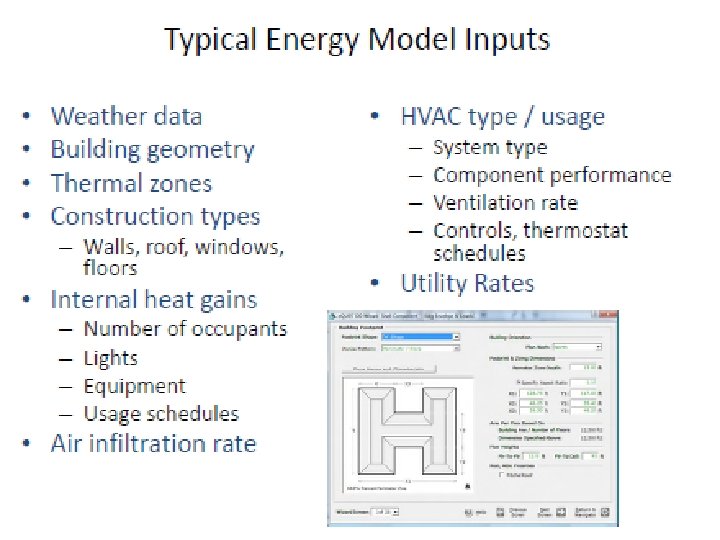
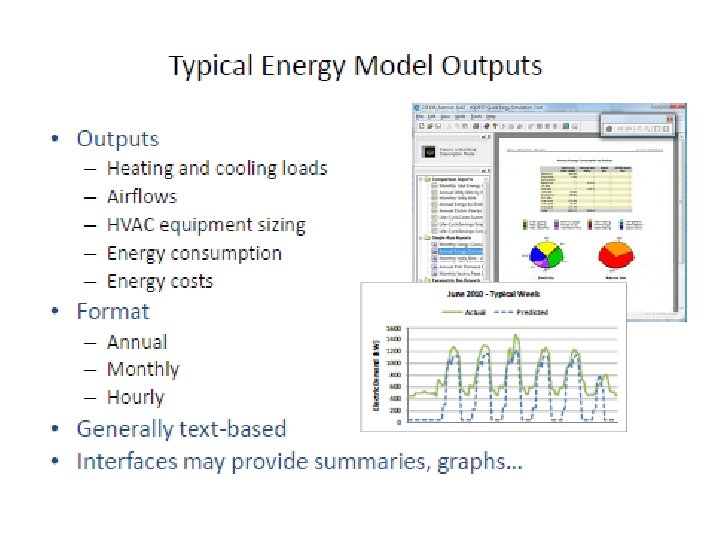
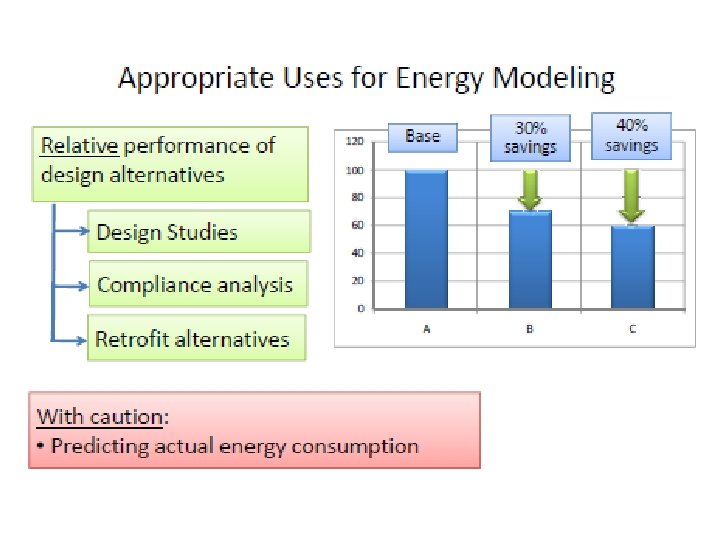
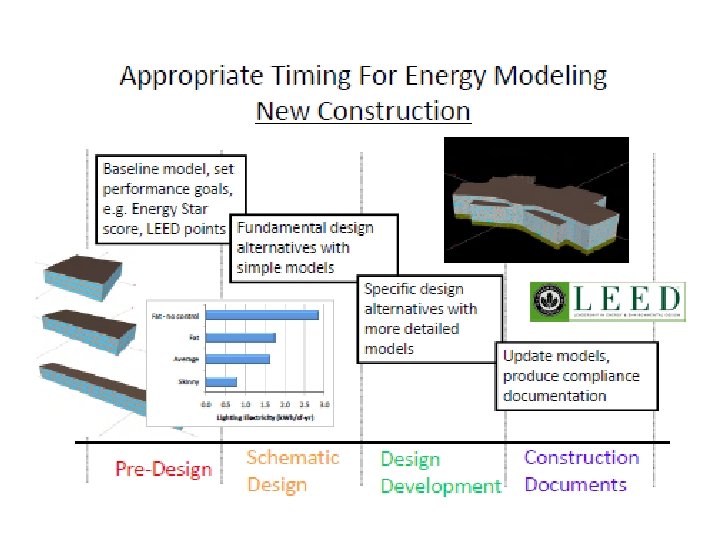
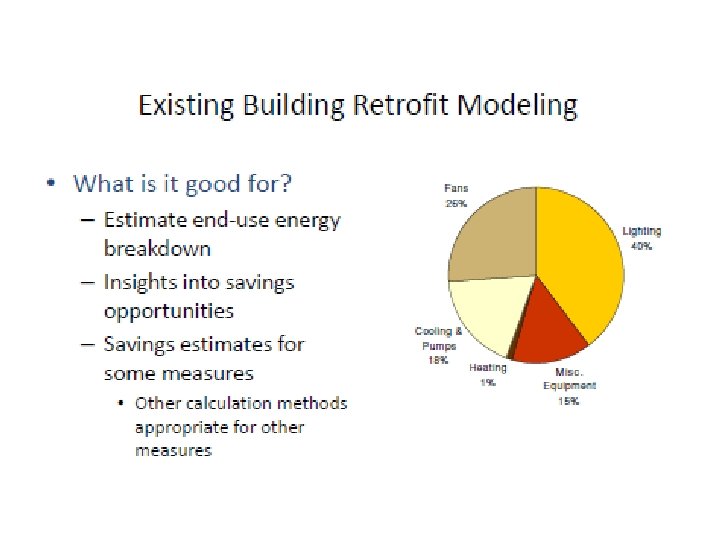
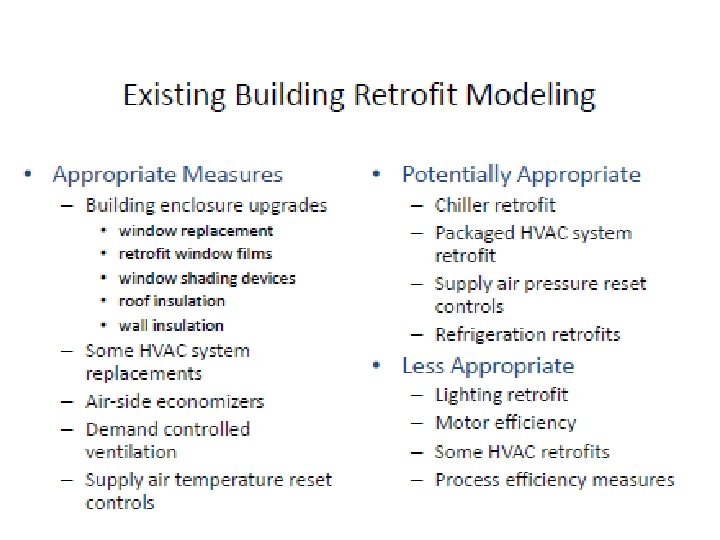
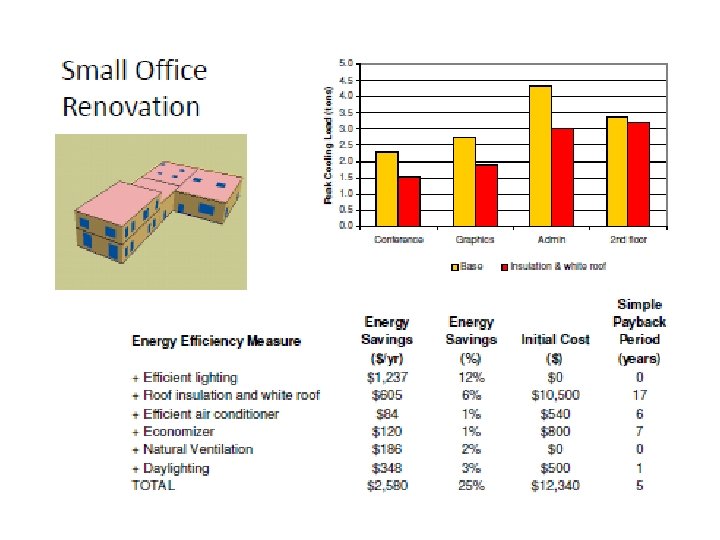
Building simulation tools What is Building Energy Modeling? Building energy estimation using a computer model of energy flow and processes Loads • Determine cooling and heating loads by mathematically simulating thermal performance of the building • Typically hour-by-hour for a full year Energy • Determine energy use over the course of a year by mathematically simulating the performance of HVAC equipment in response to these loads Cost • Calculate operating costs using the energy data
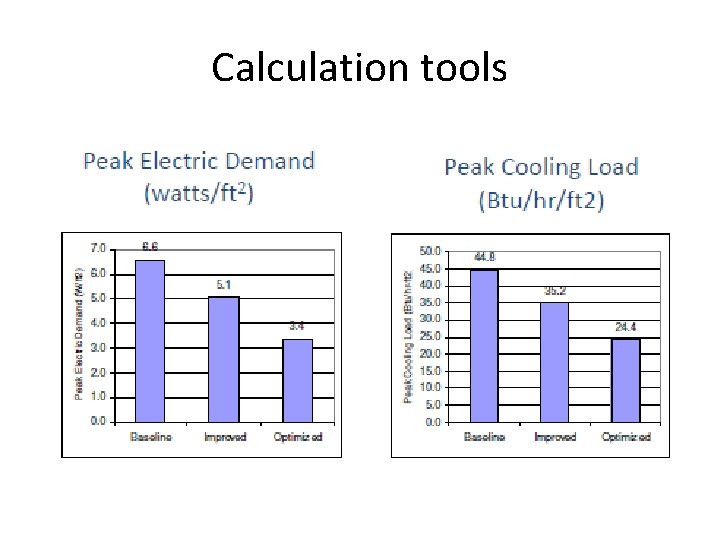
Calculation tools

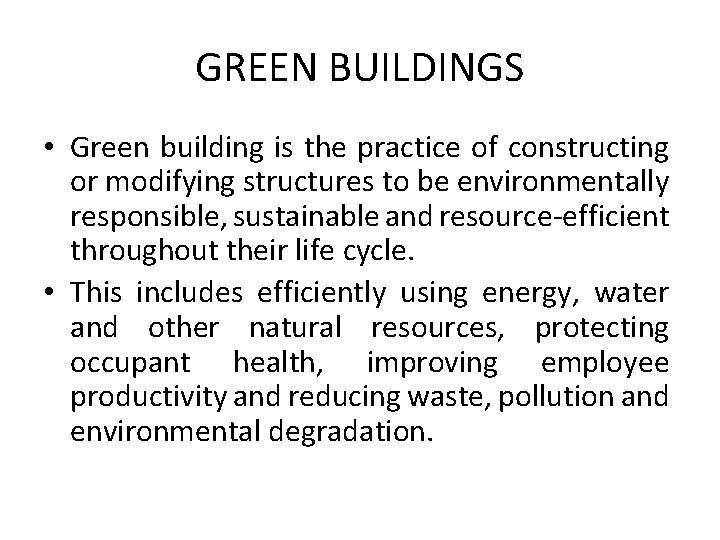
GREEN BUILDINGS • Green building is the practice of constructing or modifying structures to be environmentally responsible, sustainable and resource-efficient throughout their life cycle. • This includes efficiently using energy, water and other natural resources, protecting occupant health, improving employee productivity and reducing waste, pollution and environmental degradation.
Green building cerification systems • LEED®- Leadership in Energy and Environmental Design, from the United States and growing around the world • BREEAM® - Building Research Establishment Environmental Assessment Method, originating in the UK and growing throughout Europe • DGNB (Die Deutsche Gesellschaft für Nachhaltiges Bauen) • HQE® - haute qualité environnementale or high environmental quality, originating in France • OGNI • CASBEE
What are the benefits? • • Reduce energy use by 30– 50% Reduce CO 2 emissions by 35% Reduce waste output by 70% Reduce water usage by 40%
How do buildings become green-certified? A building can be green-certified by applying to one of the several certification agencies in existence today. Certification is typically a voluntary process and can be pursued by public or privately owned buildings such as schools and universities, government buildings, commercial offices, retail buildings, healthcare facilities, hotels, and private residences.
Simulation tools • • • Archi. Physik EDSL Tas DIALux Daysim An. Therm
Archi. Physik • Archi. PHYSIK is the program for building physical evidence to heat, humidity, noise and TAV (temperature amplitude ratio). Contents are all building codes and housing subsidies for Austria. Calculation models, printable forms and limits are selected by one of the project location. For the re-use of CAD data is a 3 D CAD interface. Its structures, areas and volumes are taken from the CAD or updated.
EDSL Tas is an industry-leading building modeling and simulation tool. Capable of performing dynamic thermal simulation for the world’s largest and most complex buildings, Tas allows designers to accurately predict energy consumption, CO 2 emissions, operating costs and occupant comfort.
Tas Building Designer 1. Heating & Cooling Loads with annual Energy Demand 2. Natural Ventilation and Passive Design 3. Natural Ventilation and Mixed Mode 4. Evaluating Ventilation Regimes 5. Empirical Validation 6. Simulation vs. Reality
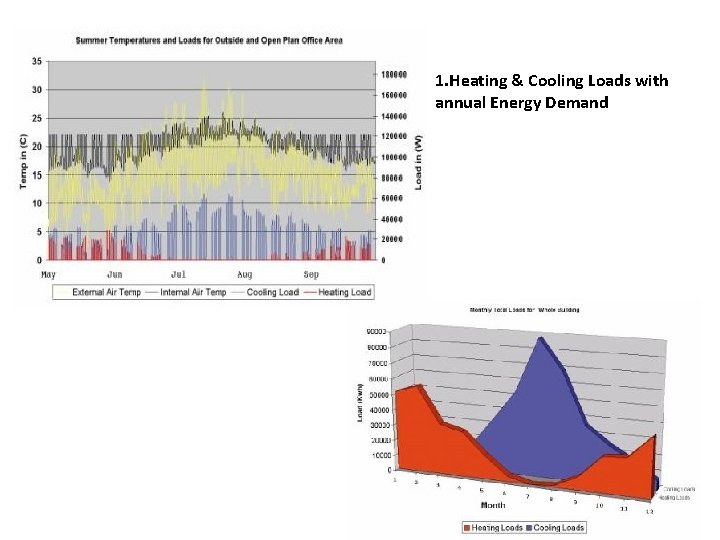
1. Heating & Cooling Loads with annual Energy Demand
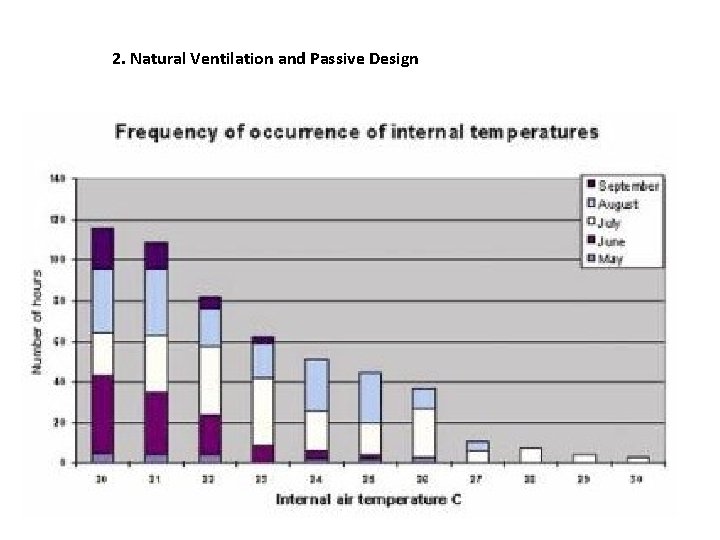
2. Natural Ventilation and Passive Design
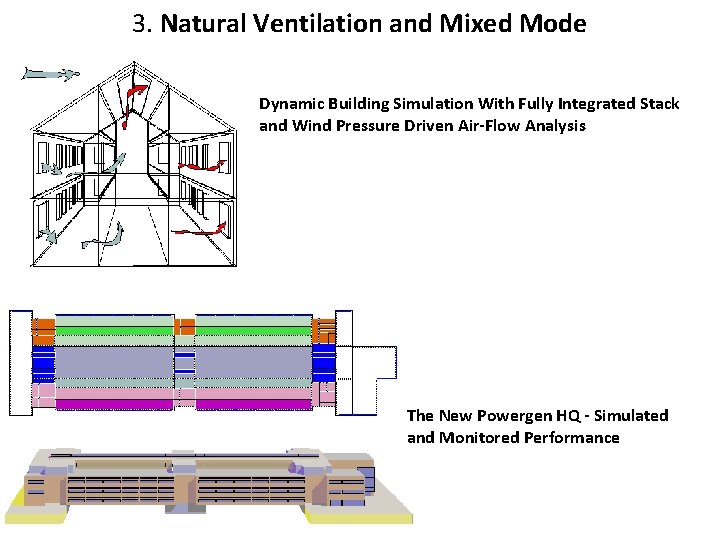
3. Natural Ventilation and Mixed Mode Dynamic Building Simulation With Fully Integrated Stack and Wind Pressure Driven Air-Flow Analysis The New Powergen HQ - Simulated and Monitored Performance
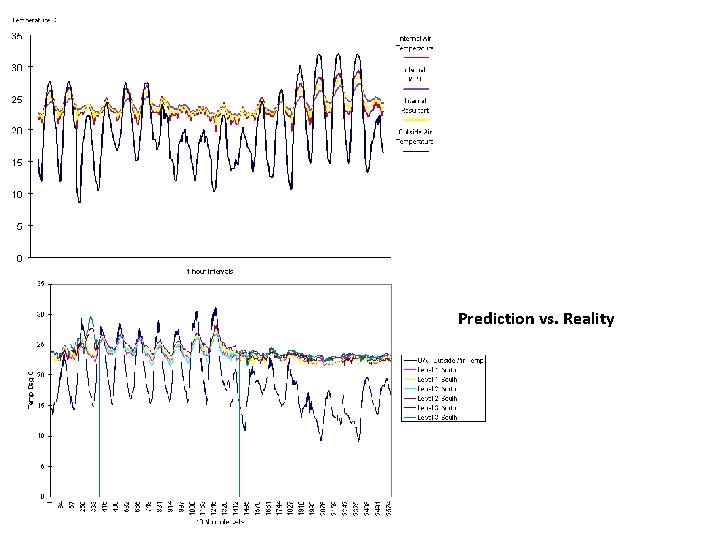
Prediction vs. Reality
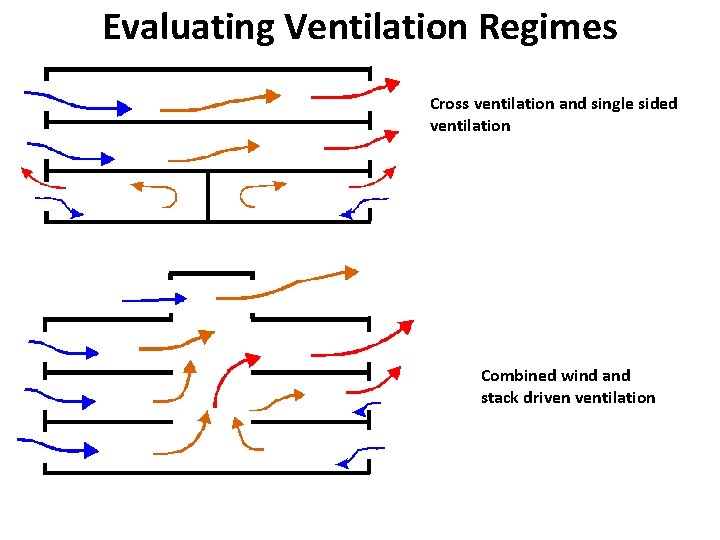
Evaluating Ventilation Regimes Cross ventilation and single sided ventilation Combined wind and stack driven ventilation
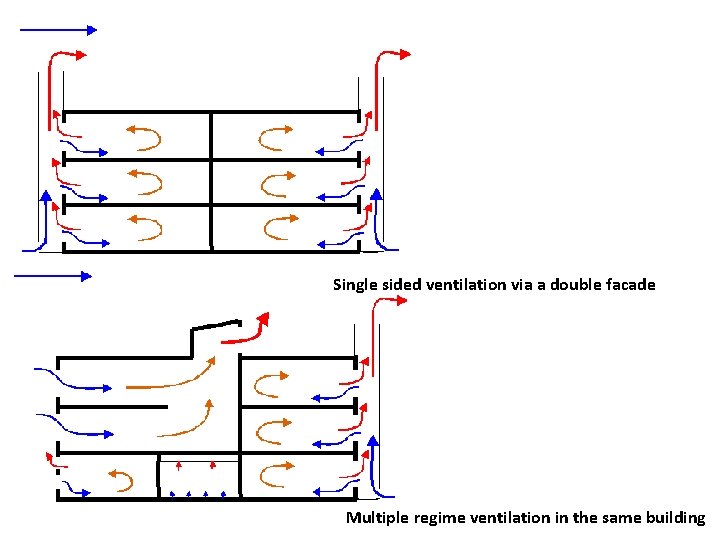
Single sided ventilation via a double facade Multiple regime ventilation in the same building
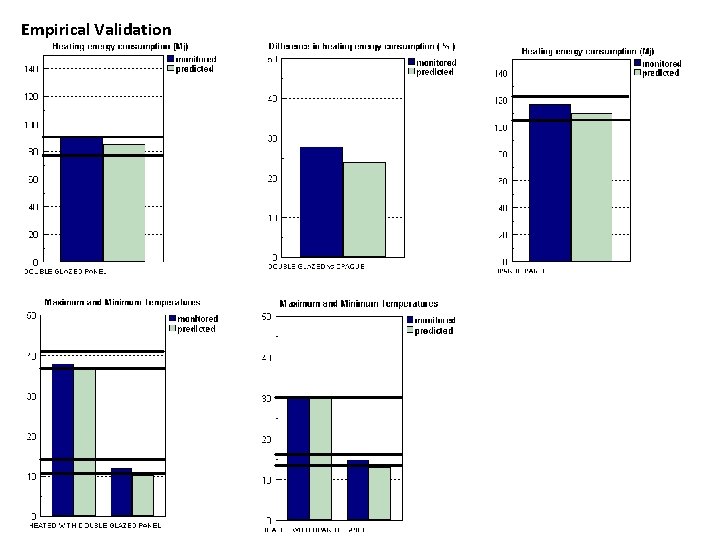
Empirical Validation
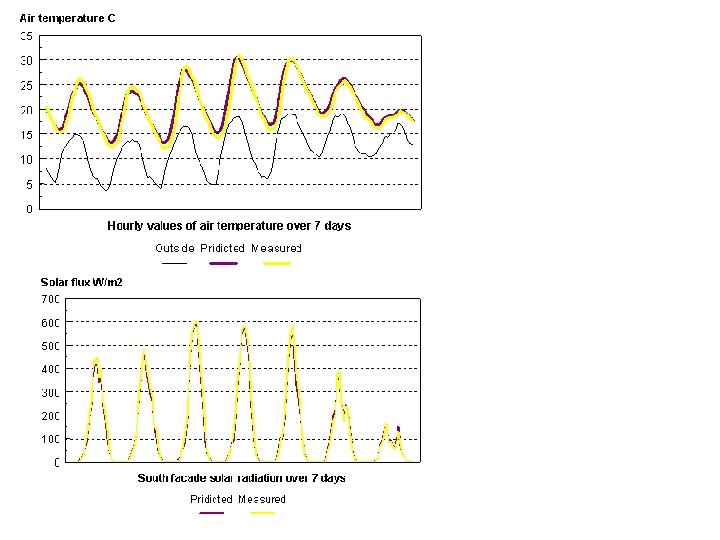
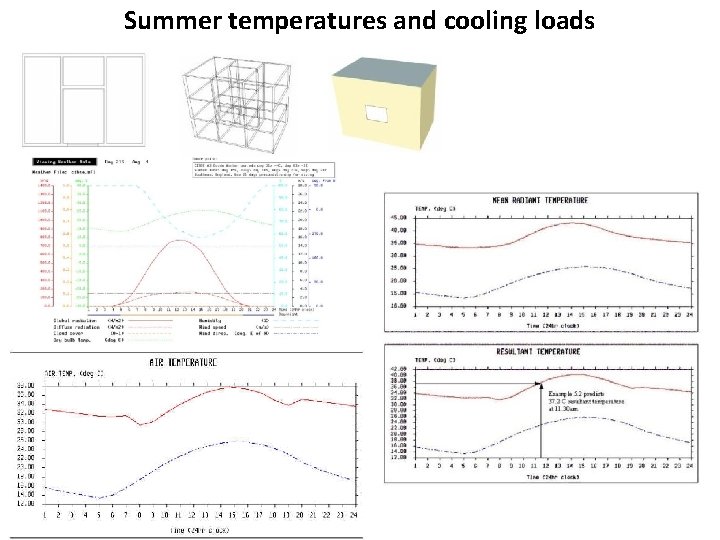
Summer temperatures and cooling loads
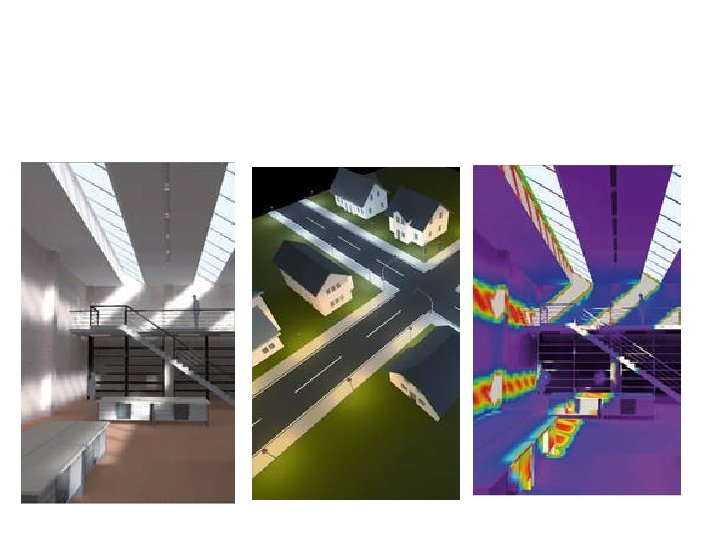
DIALux • It is developed for professional light planning is open to luminaries of all manufacturers. • Simple, effective and professional light planning • Latest luminaire data of the world's leading manufacturers • Energy evaluation • Coloured light scenes with LED or other colour changing luminaires • Planing whole buildings including outdoors spaces
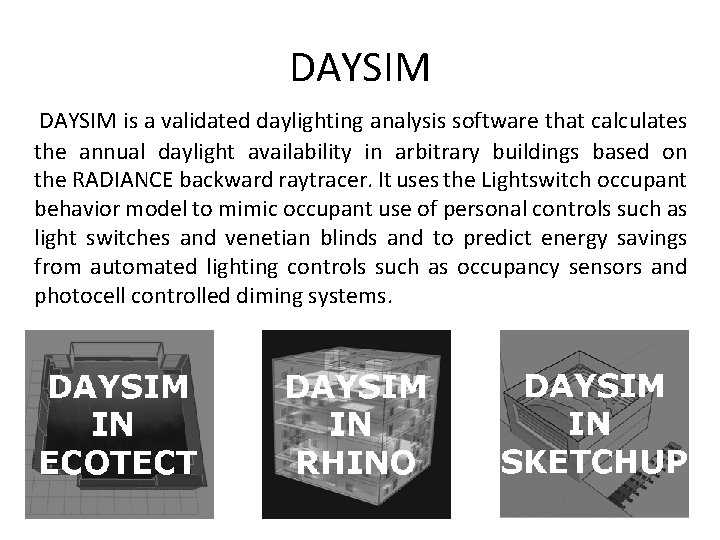
DAYSIM is a validated daylighting analysis software that calculates the annual daylight availability in arbitrary buildings based on the RADIANCE backward raytracer. It uses the Lightswitch occupant behavior model to mimic occupant use of personal controls such as light switches and venetian blinds and to predict energy savings from automated lighting controls such as occupancy sensors and photocell controlled diming systems.
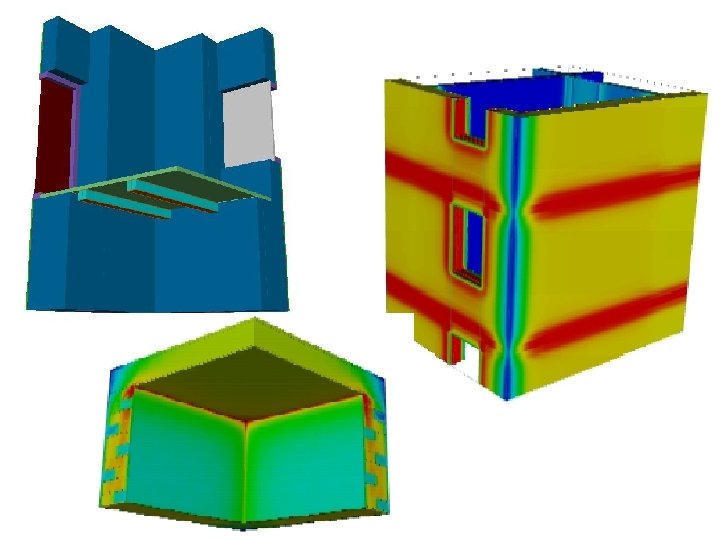
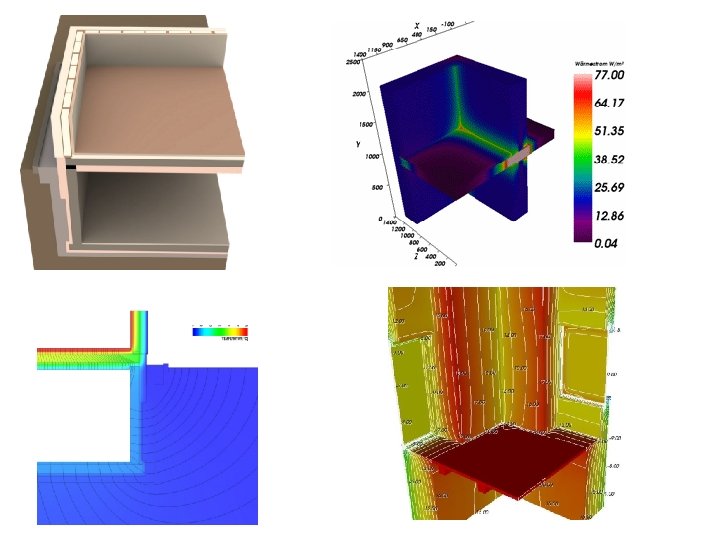
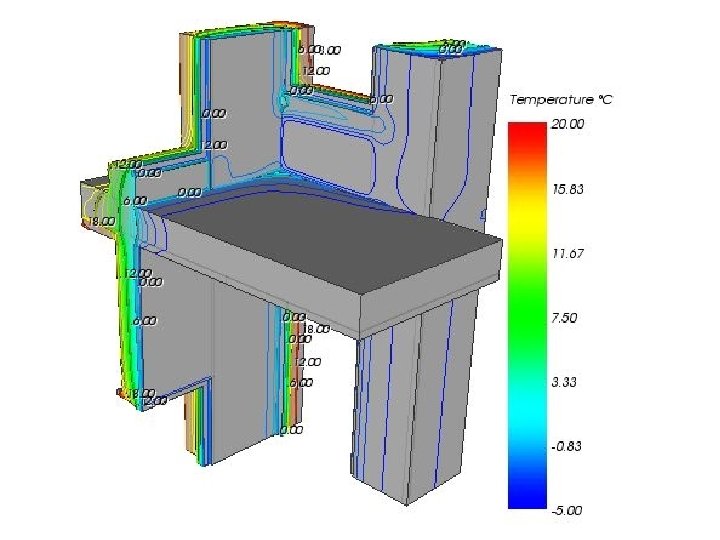
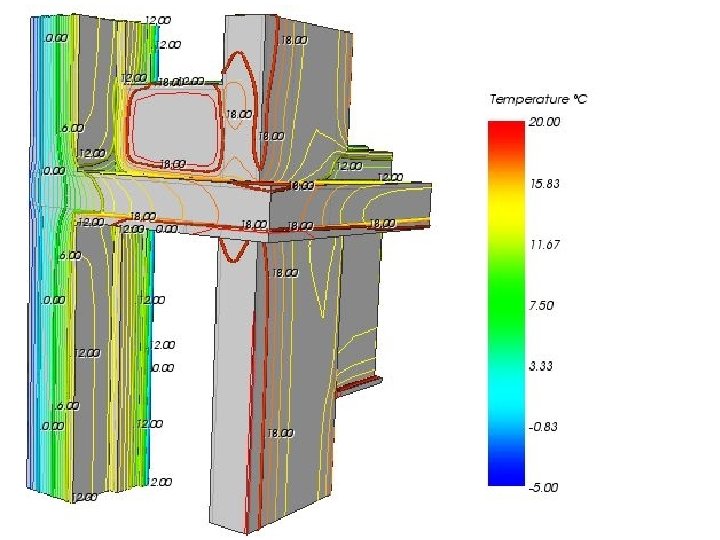
An. Therm (Thermal Heat Bridges) An. Therm (Analysis of Thermal behavior of Building Constructions with Heat Bridges) is a powerful program used for heat flow calculation in building construction elements - thermal heat bridges and vapor bridges. Thermal Bridge Assessment can be executed easily, quickly and precisely with An. Therm. This Thermal Heat / Cold Bridge Simulation Software calculates the distribution of temperature, heat streams and vapor diffusion streams within building components of arbitrary form and built as composite of arbitrary materials. Furthermore An. Therm can compute and evaluate the dew point values (condensing humidity) at all component surfaces as well as partial vapor pressure in components interior. This application is also suitable for analyzing dynamic behavior of building components (for periodic, harmonic, transient boundary conditions).
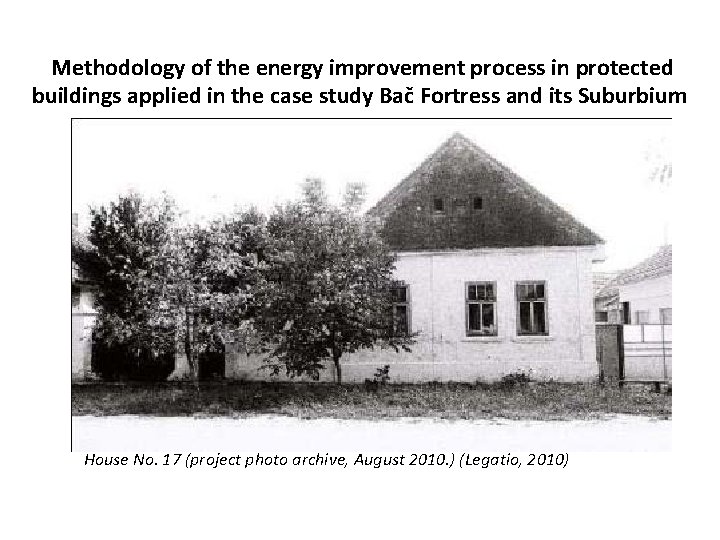
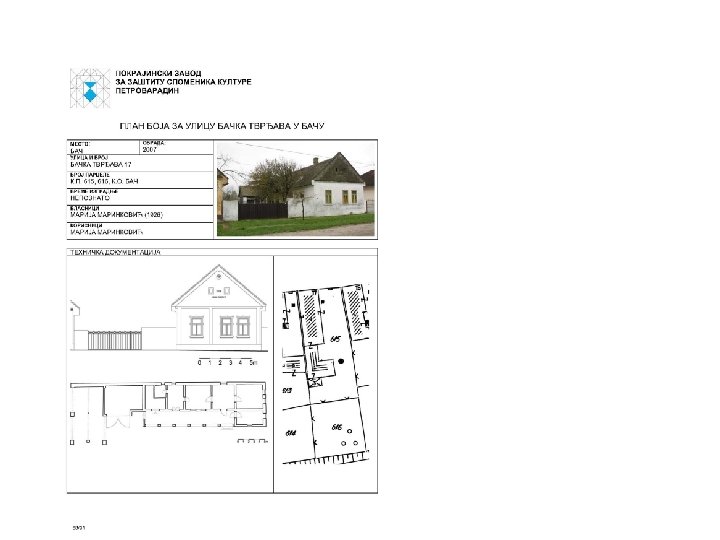
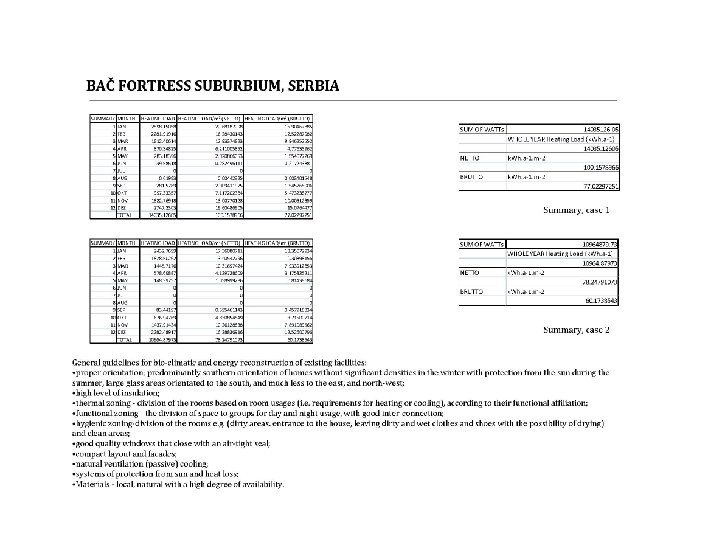
Methodology of the energy improvement process in protected buildings applied in the case study Bač Fortress and its Suburbium House No. 17 (project photo archive, August 2010. ) (Legatio, 2010)
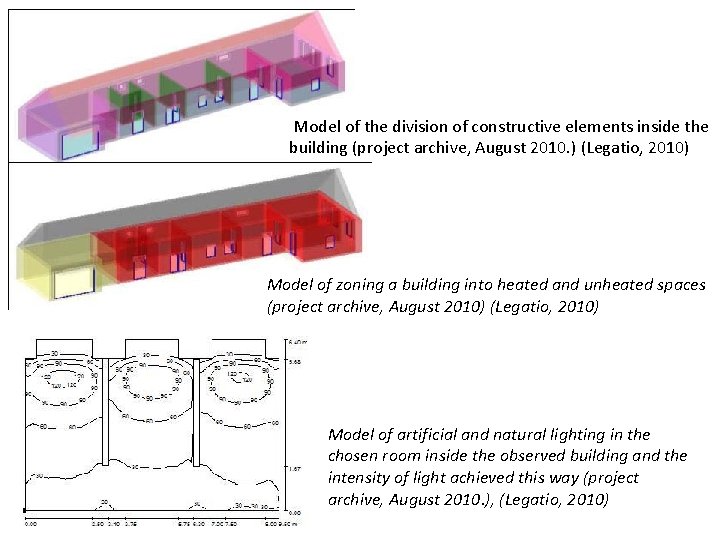
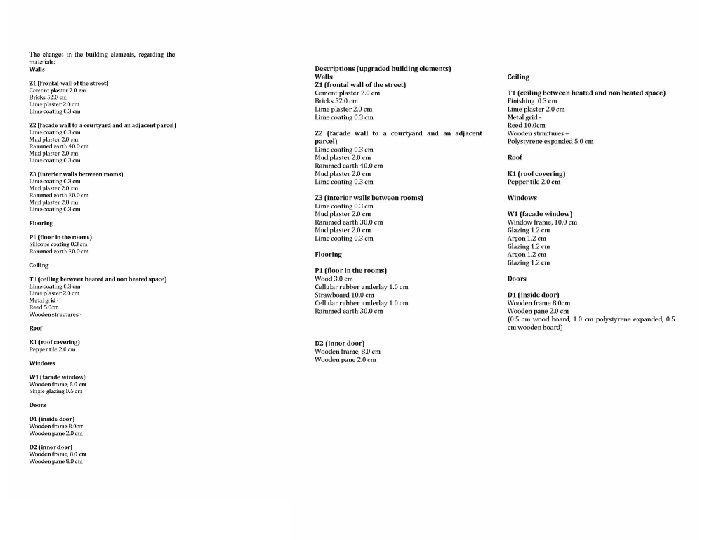
Model of the division of constructive elements inside the building (project archive, August 2010. ) (Legatio, 2010) Model of zoning a building into heated and unheated spaces (project archive, August 2010) (Legatio, 2010) Model of artificial and natural lighting in the chosen room inside the observed building and the intensity of light achieved this way (project archive, August 2010. ), (Legatio, 2010)

QUESTIONS?
- Slides: 51