
Simulation 101 Cecilia Bidigare Victoria Gaffney Kolb Learning
Simulation 101 Cecilia Bidigare & Victoria Gaffney

Kolb Learning Theory & Simulation Concrete Experience Apply knowledge to New Situation Active Experimentation Debriefing Reflective Observation Self Reflection Abstract Conceptualization

Simulation Modalities Low Fidelity Task trainers Case studies Mid Fidelity Electronic Health Records High Fidelity Sim. Mom Nursing Anne Sim Essential Sim. Jr & Hal
INACSL Standards of Best Practice: Simulation • Simulation design • Outcomes & Objectives • Facilitation • Debriefing • Participant evaluation • Professional integrity
INACSL Standards of Best Practice: Simulation Design • Perform a needs assessment • Measurable objectives • Create a scenario • Formative or summative evaluation • Simulation modality • Identify resources
Exemplar David Montanari • 19 years old • T 4 -5 burst fracture, right scapular fracture. • Atelectasis

Needs Assessment INACSL Standards of Best Practice: Simulation Design • Root cause or Gap analysis • • • Standardized test scores Surveys of stakeholders Outcome data Professional standards or practice guidelines Patient safety goals

• Structure the format of simulation as formative or INACSL Standards of Best Practice: Simulation Design summative • Select the modality/fidelity required to meet outcomes • Design a scenario • Structure the simulation experience – beginning, activities, and end • SCC Options: Sim Center, Hittner Simulation Lab, Apartment, Clinic Sim. Chart and Neehr Perfect
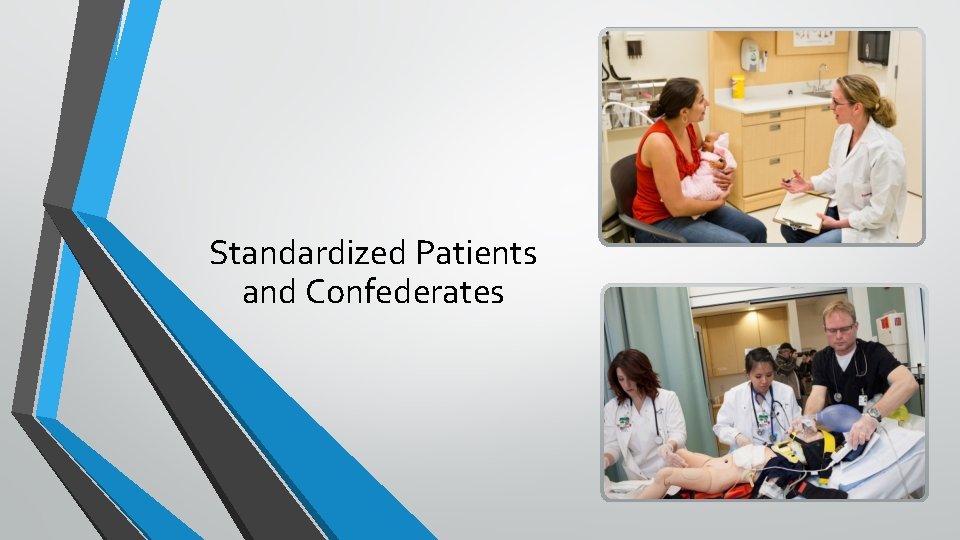
Standardized Patients and Confederates
Create measurable outcomes and objectives INACSL Standards of Best Practice: Outcomes & Objectives • Use needs assessment to develop the broad outcome of the simulation • • Develop simulation-specific objectives or goals “SMART” Goals: Specific, measurable, attainable, relevant, time-related
INACSL Standards of Best Practice: Simulation Facilitation Provide resources to prepare the participants to meet the objectives & outcomes • Begin the simulation with a pre-briefing • Follow the simulation with a debriefing • Evaluate the participant, facilitator, the simulation experience

Sim 102

• Facilitated by someone competent is the INACSL Standard of Best Practice: Debriefing debriefing process. • Supportive environment conducive to learning • Debriefer must be able to focus on students during simulation without interruption. • Debriefing based on a theoretical model. • Debriefing is congruent with learning objectives.
3 Approaches to Debriefing • Judgmental • Nonjudgmental • Debriefing with Good Judgment

Debriefing Models Debriefing with Good Judgment +/Delta GAS (Gather, Analyze, Summarize) Debriefing on Demand Co-Debriefing 3 D Model (Defuse, Discover, Deepen)

Debriefing with Good Judgment Trainee “Frames” Approach • A frame is the internal trainee environment • Perceptions , knowledge, assumptions, feeling, training etc. • Instructor role-”cognitive detective” • Tries to figure out frames through a stance of curiosity • Advocacy and Inquire model Frames to Actions to Results
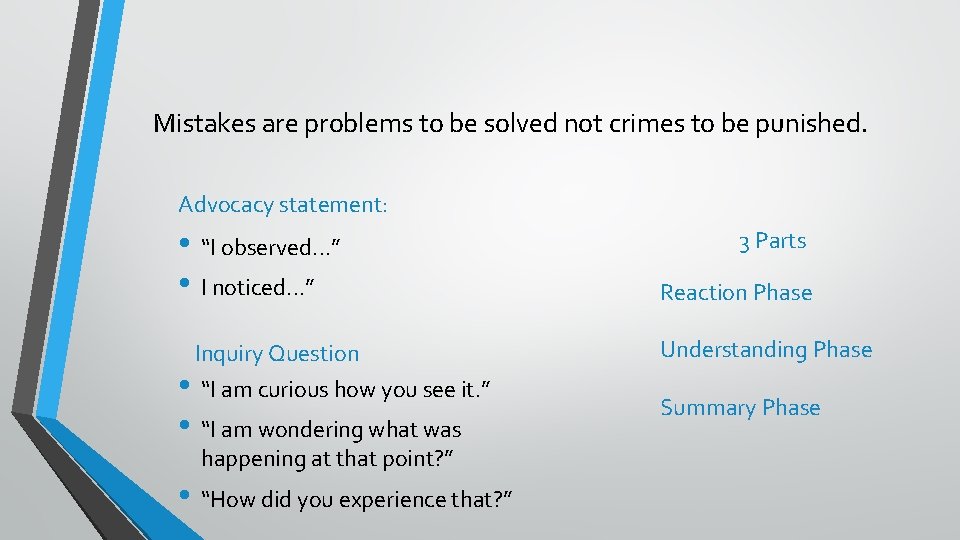
Mistakes are problems to be solved not crimes to be punished. Advocacy statement: • “I observed. . . ” • I noticed. . . ” Inquiry Question • “I am curious how you see it. ” • “I am wondering what was happening at that point? ” • “How did you experience that? ” 3 Parts Reaction Phase Understanding Phase Summary Phase

Video Recording For Debriefing
• Determines the evaluation method prior to the INACSL Standards of Best Practice: Participant Evaluation simulation. • Experiences may be formative. • Experiences may be summative. • High Stakes Evaluation

Evaluate simulation activities • Self-evaluation • Peer evaluation • Learner evaluation Modify simulation activities in response to feedback Communicate opportunities for practice and curricular improvement to responsible parties.
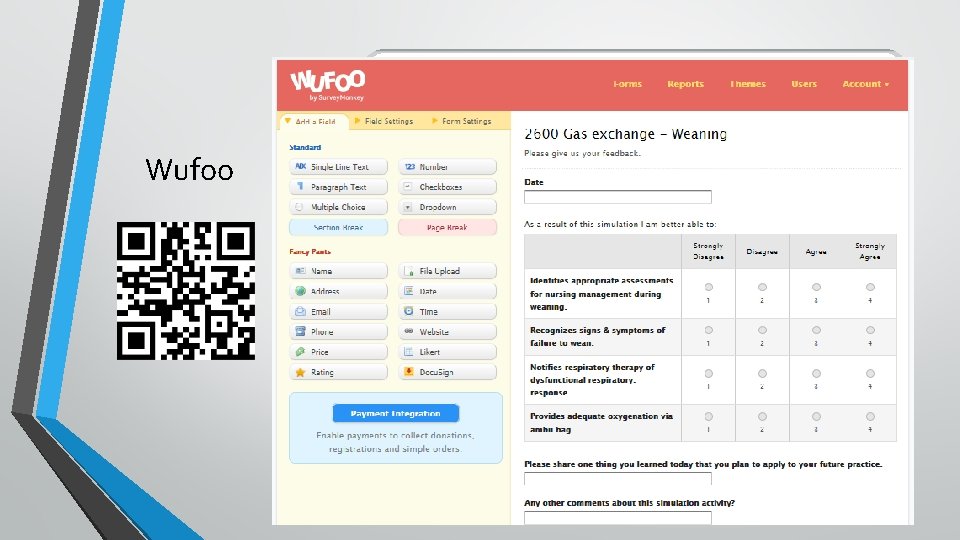
Wufoo
INACSL Standards of Best Practice: Professional integrity “the ethical behaviors and conduct that are expected of all involved throughout simulation-based experiences. ” (INACSL, p. S 30) Attributes of Professional integrity: • Role model attributes of professional integrity • Follow standards of practice, guidelines, principles and ethics. • Safe learning environment • Confidentiality
References International Nursing Association for Clinical Simulation and Learning’s Standards Committee. (2016). INACSL’s Standards of best practice: Simulation. Clinical Simulation in Nursing, 12(5), S 5 -S 33. http: //dx. doi. org/10. 1016/j. ecns. 2016. 09. 005 Manolis, C, Burns, DJ, Assudani, R, & Chinta, R. (2013). Assessing experiential learning styles: A methodological reconstruction and validation of the Kolb learning style inventory. Learning and Individual Differences, 23, 44 -52. Page, -Cutrara, K. (2015). Prebriefing in nursing simulation: A concept analysis. Clinical Simulation in Nursing, 11 (7), 335 -340. http: //dx. doi. org/10. 1016/j. ecns. 2015. 001 Palaganas, J. C. , Maxworthy, J. C. , Epps, C. A. , & Mancini, M. E. (2015). Defining excellence in simulation programs. Philadelphia: Wolters Kluwer.

References Poore, JA, Cullen, DL, & Schaar, GL. (2014). Simulation-based interprofessional education guided by Kolb’s Experiential Learning Theory. Clinical Simulation in Nursing, 10(5), e 241 -e 247. http: //dx. doi. org/10. 1016/j. ecns. 2014. 01. 004 Szyld, D. , & Rudolph, J. (2013). Debriefing with good judgment. In Levine, A. I. , De. Maria, S. , Schwartz, A. D. & Sim, A. J. (Eds. ), The comprehensive textbook of healthcare simulation. (pp. 85 -93). New York: Springer. Qayumi, K. , Pachev, G. , Zheng, B. , Koval, V. , Badiei, S. , & Cheng, A. (2014). Status of simulation in health care education: An international survey. Advances in Medical Education and Practice, 28 (5), 457 -67. doi: 10. 2147/AMEP. S 65451 Zigmont, JJ, Kappus, LJ, & Sudikoff, SN. (2011). Theoretical foundations of learning through simulation. Seminars in Perinatology, 35, 47 -51.
- Slides: 24