
Simpsons Paradox CH 3 Day 4 AP Statistics





- Slides: 11
Simpson’s Paradox CH. 3 Day 4 AP Statistics EQ: What is Simpson’s Paradox?
What is Simpson’s Paradox? A reversal of a decision based on finding different averages. Be careful when you average across different levels of a second variable. Unfair or silly averaging is used
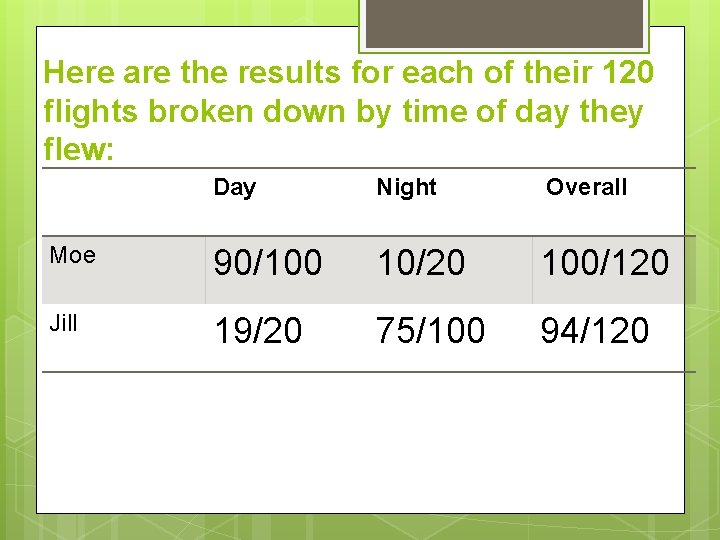
Suppose there are two pilots, Moe and Jill. Moe argues that he’s the better pilot since he managed to land 83% of his last 120 flights on time compared with Jill’s 78%.
Here are the results for each of their 120 flights broken down by time of day they flew: Day Night Overall Moe 90/100 10/20 100/120 Jill 19/20 75/100 94/120
Look at the day and night flights separately. Day Jill Moe Night
How can it be that Jill is better at both night and day flights, but Moe is better overall?
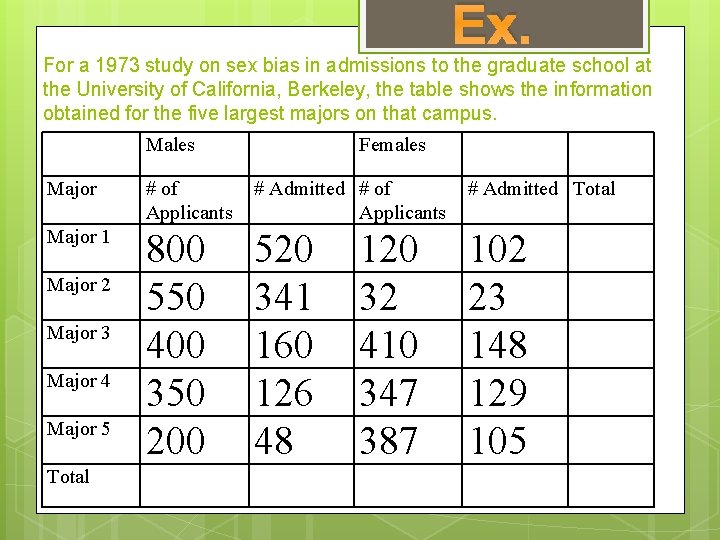
Ex. For a 1973 study on sex bias in admissions to the graduate school at the University of California, Berkeley, the table shows the information obtained for the five largest majors on that campus. Males Females Major # of Applicants # Admitted Total Major 1 800 550 400 350 200 520 341 160 126 48 102 23 148 129 105 Major 2 Major 3 Major 4 Major 5 Total 120 32 410 347 387
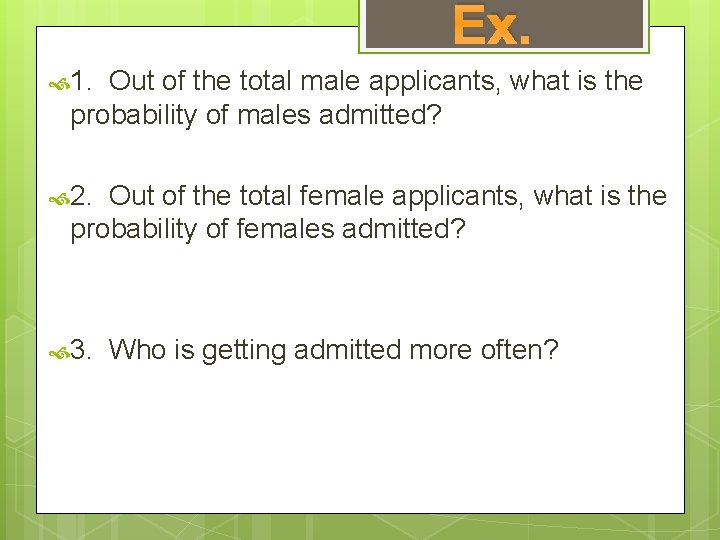
Ex. 1. Out of the total male applicants, what is the probability of males admitted? 2. Out of the total female applicants, what is the probability of females admitted? 3. Who is getting admitted more often?
Ex. Taking into account the lurking variable of major type, the table can be changed. Major 1 Major 2 Major 3 Major 4 Major 5 Total Admitted Denied Total
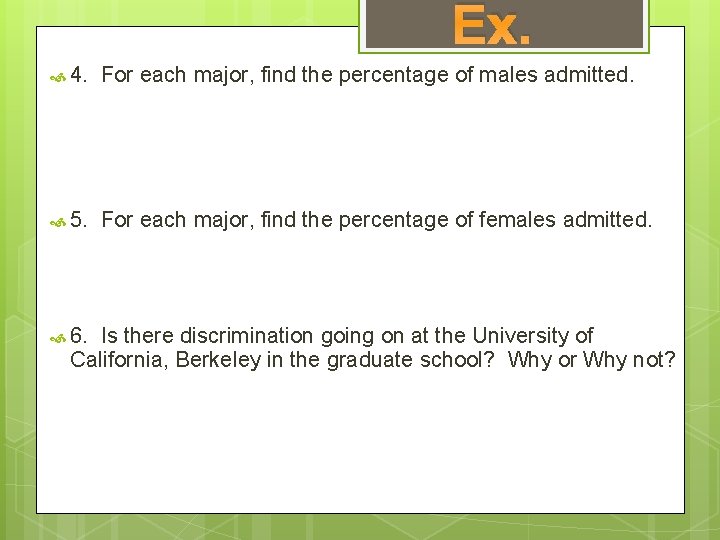
Ex. 4. For each major, find the percentage of males admitted. 5. For each major, find the percentage of females admitted. 6. Is there discrimination going on at the University of California, Berkeley in the graduate school? Why or Why not?
Homework P. 43 # 37, Worksheet